Door Repair and Replacement Services
By Housey · Last reviewed 31st of May 2026
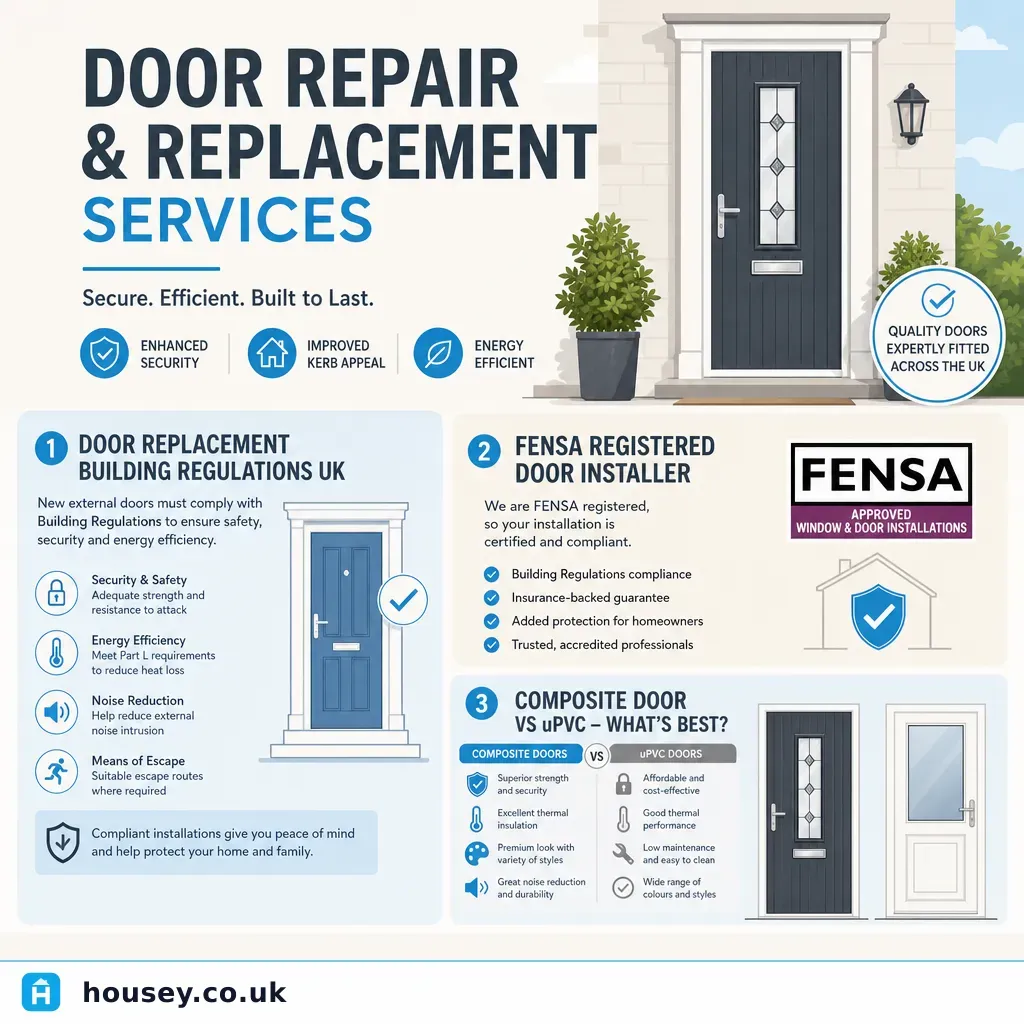
Door Repair and Replacement Services
Doors are among the most frequently used elements of any home, and problems — draught, sticking, rot, damage, or simple wear — tend to announce themselves at inconvenient moments. Whether you are dealing with a draughty external front door on a 1930s semi, a warped interior door following a bathroom leak, or a composite door that no longer closes cleanly, the choice between repair and full replacement carries real cost, security, and regulatory implications for UK homeowners.
Key points
- Replacement external doors with glazing must comply with Building Regulations Part Q (security) and Part L (thermal performance); the installer must be registered with FENSA or CERTASS, or you must notify your local building control authority before work starts.
- Composite and uPVC external doors generally have a lifespan of 25–35 years; timber doors can last considerably longer with regular maintenance but are more vulnerable to seasonal swelling and rot.
- Door adjustment — planing, hinge re-fitting, or draught-seal replacement — does not require building control notification and is classified as routine maintenance.
- A door showing visible frame rot beyond approximately 20% of its depth, or whose thermal seals have completely failed, is typically more cost-effective to replace than repair.
- Listed buildings and properties in conservation areas may face restrictions on the type or appearance of replacement doors; check with your local planning authority before ordering.
Repair or replace? How to decide
The most common question homeowners face is whether to repair an existing door or invest in full replacement. The right answer depends on the door's material, age, the nature of the fault, and whether the property carries any planning restrictions.
Decision tree
- Choose repair if the door frame is structurally sound, the fault is mechanical (stiff hinges, misaligned latch, failed weatherstripping), and the door is less than 15 years old.
- Choose replacement if there is significant frame rot or structural damage, thermal performance is clearly poor (condensation between double-glazed units, persistent cold spots around the frame), or the door predates current security standards.
- Consult a specialist first if the door opening shows signs of movement — diagonal cracks in the surrounding masonry or visibly uneven reveal gaps — as this may indicate a structural issue that door replacement alone will not resolve.
- Check with your local planning authority if the property is listed or in a conservation area, as uPVC replacements may not be permitted and could attract an enforcement notice.
Comparing door materials
Different materials suit different properties, budgets, and performance requirements. This comparison is intended as a practical guide for UK homeowners choosing a replacement external door.
Material | Best for | Not ideal for | Typical lifespan | Main consideration |
|---|---|---|---|---|
Composite | Most UK homes; security and thermal performance priority | Listed buildings where a timber appearance is required | 30–35 years | Look for PAS 24 or Secured by Design certification |
uPVC | Budget-conscious replacement; low maintenance | Period properties where character matters | 20–30 years | Must meet Part L U-value requirement (≤1.4 W/m²K for existing dwellings) |
Timber | Period, listed, or conservation area properties | Homeowners who prefer minimal maintenance | 40+ years with care | Regular painting or staining required; inspect base of frame annually for rot |
Aluminium | Contemporary builds, extensions, and large openings | Budget projects | 35–45 years | Thermal breaks are essential to prevent condensation and heat loss through frames |
What building regulations apply?
When replacing an external door — or any door containing glazing — Building Regulations apply under several parts:
- Part Q (Security): New or replacement external doors in dwellings must meet minimum security standards. Approved Document Q typically requires certification to PAS 24 or an equivalent standard such as Secured by Design.
- Part L (Conservation of Fuel and Power): Replacement doors in existing dwellings must achieve a U-value of 1.4 W/m²K or better, as set out in the 2021 edition of Approved Document L that came into effect in June 2022.
- Competent-person schemes: Installers registered with FENSA or CERTASS can self-certify compliance and issue a compliance certificate to the homeowner. If the installer is not registered with a competent-person scheme, you must apply to your local building control authority before works begin and obtain a completion certificate on finishing.
Internal door replacements without glazing do not typically require building control notification.
Choosing a door installer
Not all door installers carry the same level of accreditation or expertise. Before instructing anyone to replace an external door, work through this checklist.
Homeowner checklist: what to look for in a door installer
What to ask before accepting a quote
- Is the quoted door certified to PAS 24 or Secured by Design, and can you provide documentation?
- Does the price include removal and disposal of the existing door and frame?
- What U-value does the new door achieve, and does it comply with Part L?
- Who will issue the building regulations compliance certificate — you or a third party?
- Is the guarantee with the installer, the manufacturer, or both, and what happens if the installer ceases trading?
- Is VAT included in the quoted price?
- What is the lead time for the specific door leaf and frame profile?
When to get professional help
Most door repairs and replacements are routine, but a handful of situations call for specialist input before you proceed:
- If the door reveal shows diagonal cracking in surrounding brickwork or render, consult a chartered building surveyor or structural engineer before replacing the door — lintel movement or foundation settlement may be the underlying cause.
- If the property is Grade II listed or in a conservation area, seek pre-application advice from your local planning authority before ordering a replacement; unapproved changes can result in enforcement notices and costly reinstatement.
- If you are a leaseholder, check your lease carefully before replacing any external door; many residential leases require freeholder or managing agent consent for changes to the external fabric of the building.
How Housey can help
Housey connects homeowners with vetted, FENSA-registered window and door installers who can advise on the right door specification for your property, confirm building regulations compliance, and provide competitive written quotes. Submit your job details once and receive up to four quotes to compare.
Frequently asked questions
Does replacing a front door require building regulations approval?
Yes, if the replacement door contains glazing or if you are replacing an external door in a dwelling. The installer must either be registered with a competent-person scheme (FENSA or CERTASS) who can self-certify the work, or you must submit a building regulations application to your local authority before works start. Internal door replacements without glazing do not normally require notification.
How long does an external door replacement take?
A straightforward like-for-like external door replacement by a competent installer typically takes half a day to a full day. Bespoke sizes, non-standard frame profiles, or additional work such as new hardware or frame repairs can extend this. Lead times for bespoke composite or timber doors are often 4–8 weeks from order.
Can I carry out minor door repairs myself?
Minor adjustments — realigning hinges, lubricating a multipoint lock, replacing weatherstripping or a draught excluder — are generally within the capability of a practical homeowner. However, glazed unit replacement, structural frame repairs, and any work that affects the door's security certification should be carried out by a qualified installer to preserve PAS 24 certification and any applicable guarantee.
What is the difference between FENSA and CERTASS?
Both are government-authorised competent-person schemes for the replacement of windows and doors containing glazing. Installers registered with either scheme can self-certify compliance with relevant Building Regulations and issue a compliance certificate to the homeowner. Check the FENSA or CERTASS online registers to confirm a company's current registration status before instructing them.
Sources and further reading
- Building Regulations Approved Document Q: Security — GOV.UK
- Building Regulations Approved Document L: Conservation of Fuel and Power — GOV.UK
- FENSA: Check a company's registration — FENSA
- CERTASS: Find a member — CERTASS
- Secured by Design: Doors — Police Crime Prevention Initiatives
Useful next reads
 Improvement & Build
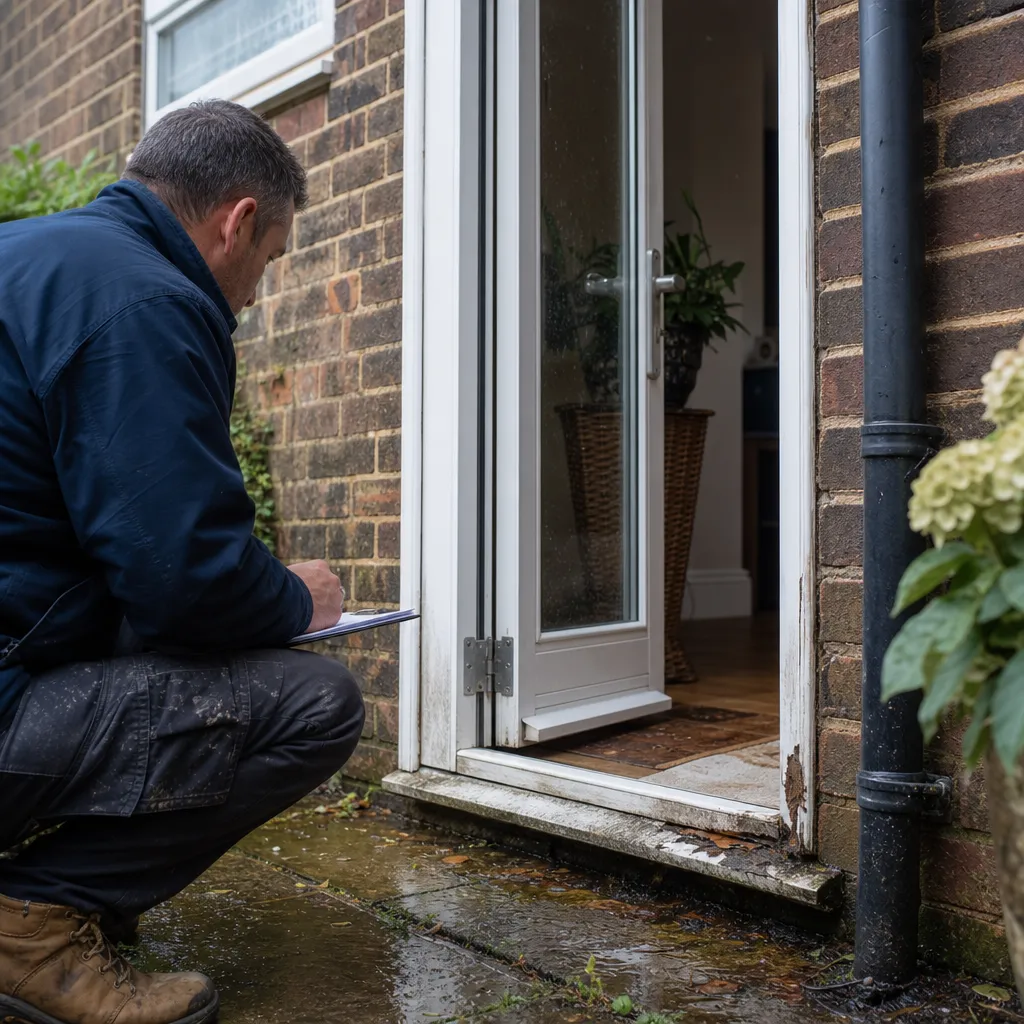
Fixing Leaking Back Doors and Water Ingress
Most leaking back doors in UK homes fail at one of three points: the threshold or door sill joint, the frame-to-masonry mastic seal, or the door weatherstrip.
 Improvement & Build
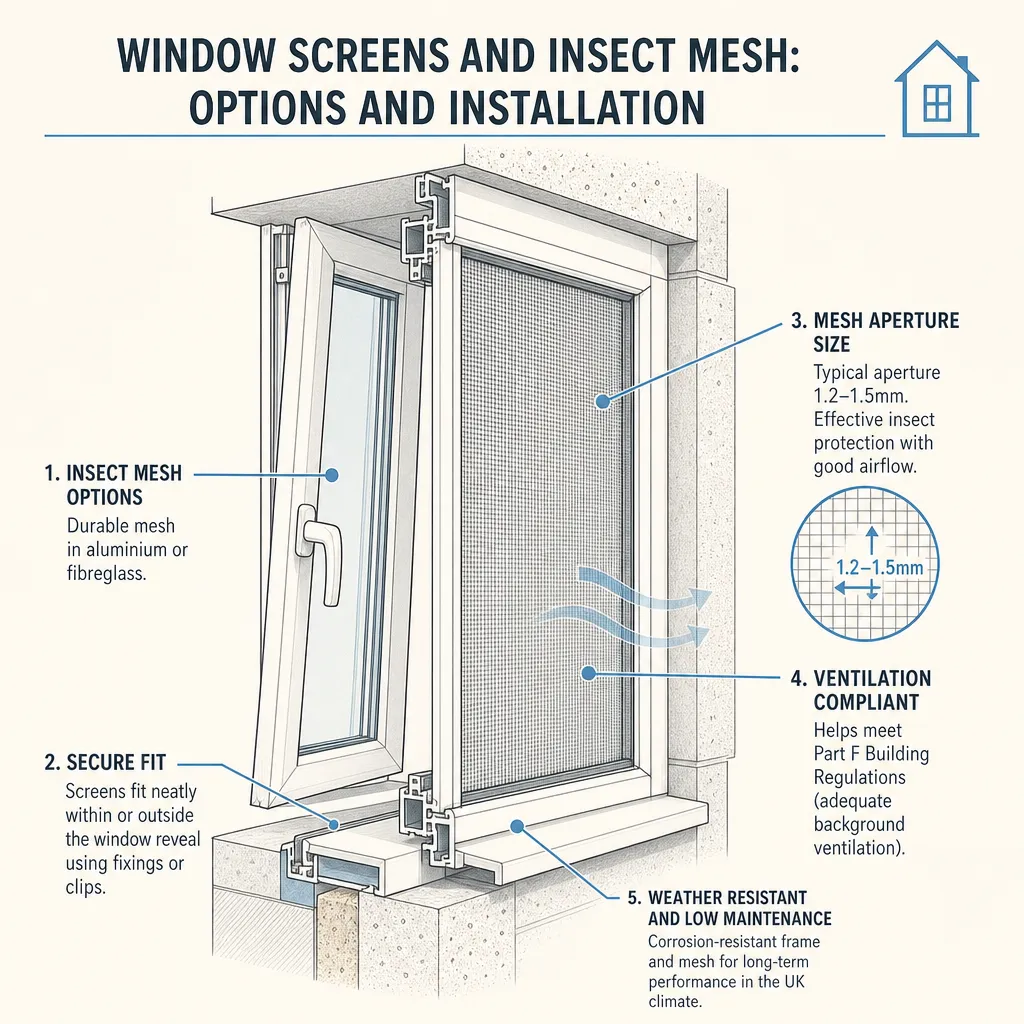
Window Screens and Insect Mesh: Options and Installation
UK window screens fall into four main types: fixed frame, roller retractable, pleated folding, and magnetic snap-fit.
 Improvement & Build
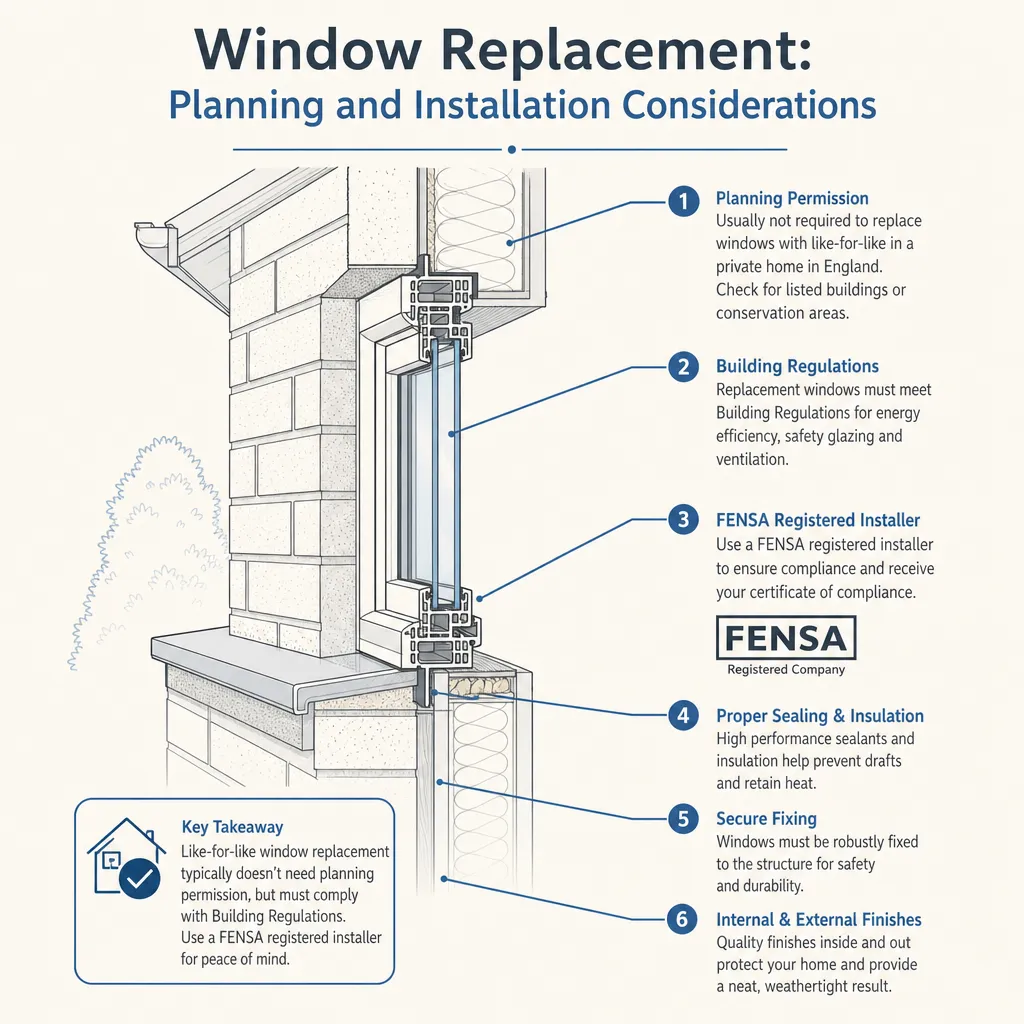
Window Replacement: Planning and Installation Considerations
Most window replacements in England fall under permitted development and do not need planning permission, though listed buildings, flats, and conservation areas are exceptions.
 Improvement & Build
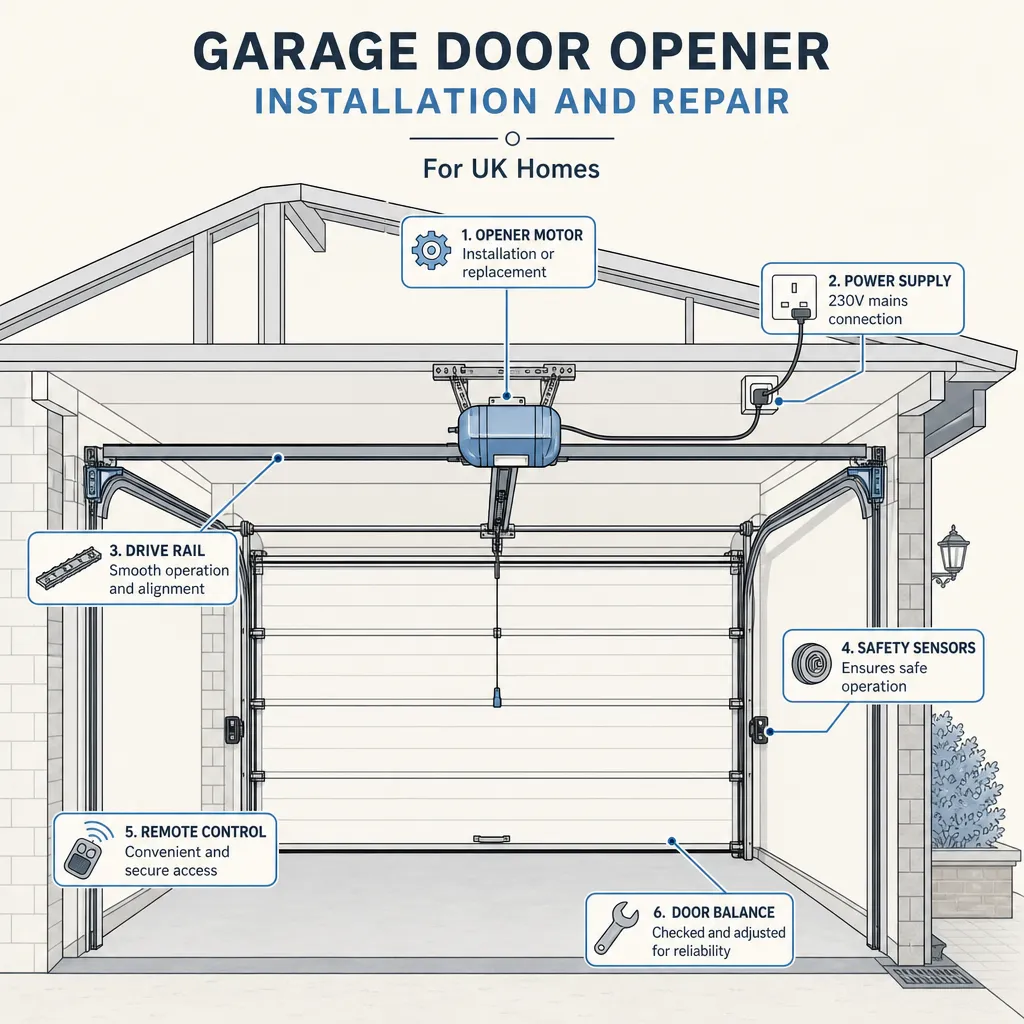
Garage Door Opener Installation and Repair
A garage door opener automates raising and lowering a garage door via an electric motor, drive rail, and remote or keypad control.
 Improvement & Build
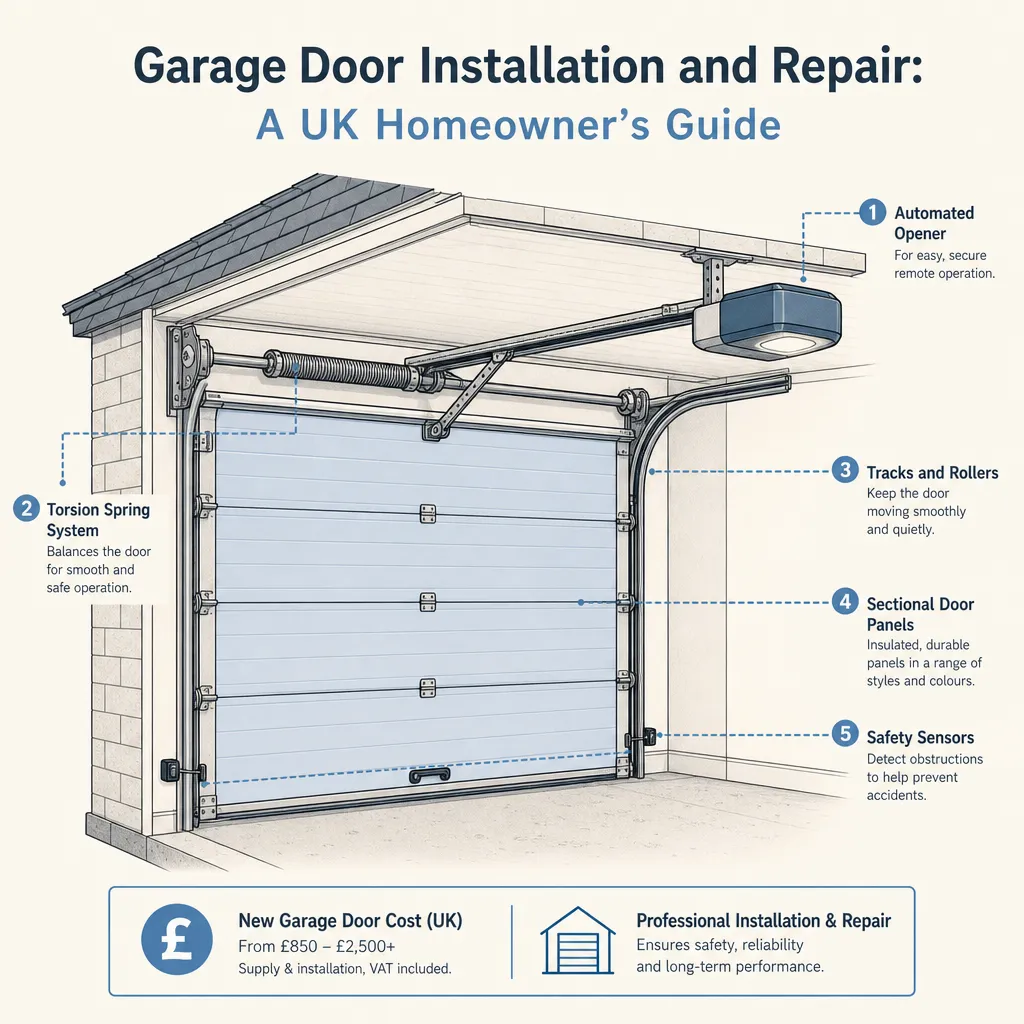
Garage Door Installation and Repair: A UK Homeowner's Guide
Garage doors in the UK come in five main types — up-and-over, roller, sectional, side-hinged, and canopy variants.