Garage Door Opener Installation and Repair
By Housey · Last reviewed 11th of May 2026
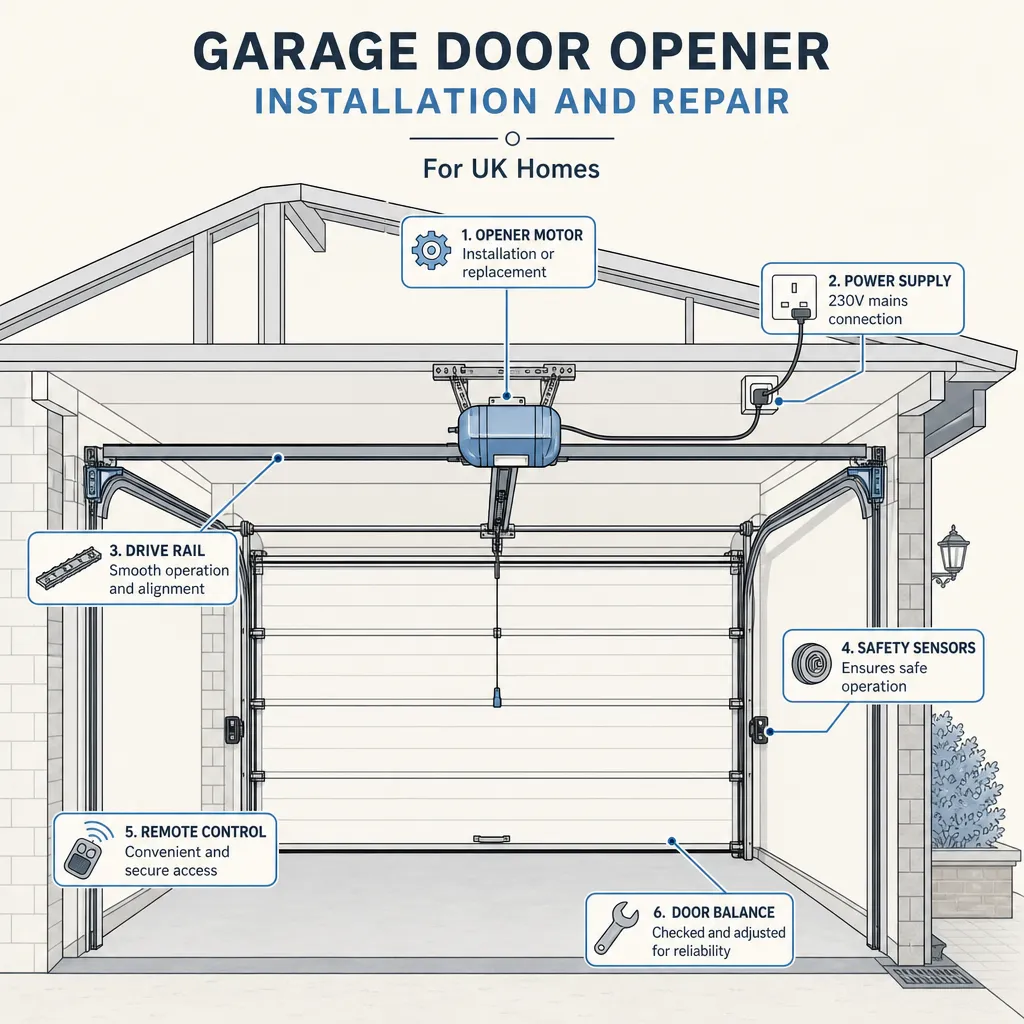
Garage Door Opener Installation and Repair
An automatic garage door opener transforms a daily task into a hands-free convenience — but many UK homeowners face a choice between fitting a new opener for the first time or diagnosing one that has become unreliable. Getting the right unit for your door type, having it correctly installed, and knowing when a fault is repairable rather than a signal to replace the whole system are all decisions worth taking time over.
Key points
- The three main residential drive types — chain, belt, and screw — differ in noise level, maintenance needs, and door compatibility; belt drive is generally quietest and best suited to attached or integral garages.
- UK garage door openers must comply with the Supply of Machinery (Safety) Regulations 2008, which requires CE or UKCA marking and a mandatory auto-reverse function that stops and reverses the door if it meets an obstruction.
- Installing an opener to a door that is unbalanced, has failing springs, or does not lift freely by hand will overwork the motor and shorten the opener's working life significantly.
- If a new electrical socket is required in the garage, the work must be carried out or certified by a Part P registered electrician (NICEIC or NAPIT) — a permanently run extension lead is not an acceptable substitute.
- Most residential installations take two to four hours for a competent engineer; allow additional time if new electrical work or door adjustments are needed first.
Types of garage door opener
Chain drive
Chain drive openers use a metal chain to move the trolley along a drive rail. They are robust and widely compatible with different door types but produce more noise and vibration than other systems — a relevant consideration if the garage shares a wall with a living room or bedroom. Chain drive units are generally the lowest-cost option.
Belt drive
Belt drive openers replace the metal chain with a reinforced rubber belt, producing significantly less noise and vibration. They are the recommended choice for attached garages and double garages where quieter operation matters. Expect to pay roughly 15–25% more than an equivalent chain drive unit.
Screw drive
Screw drive openers move the trolley via a threaded steel rod. Fewer moving parts can mean lower maintenance — but these units are sensitive to temperature fluctuations and are less commonly installed in the UK than chain or belt drive systems.
Direct drive (wall-mounted or jackshaft)
Direct drive or wall-mounted openers attach beside the door rather than hanging from the ceiling. They suit garages with limited headroom, high-lift configurations, or certain sectional door designs. Installation is more complex and typically costs more than ceiling-mounted units.
Drive type comparison
Drive type | Noise level | Indicative unit cost | Best suited to | Main drawback |
|---|---|---|---|---|
Chain drive | High | £100–£200 | Detached garages, budget installs | Noise and vibration |
Belt drive | Low | £150–£300 | Attached garages, double garages | Higher purchase cost |
Screw drive | Medium | £130–£250 | Garages with stable temperatures | Temperature sensitivity |
Direct / wall drive | Low | £200–£400 | Limited headroom, sectional doors | Higher installation cost |
Indicative UK costs for the unit only, last reviewed 2026-05-11. Exclude installation labour and VAT. Quotes vary by supplier and region.
Installation: what is involved
A typical garage door opener installation involves the following steps:
- Door assessment: The installer checks that the door is balanced, the springs are serviceable, and the tracks are straight. A door that does not lift freely by hand will overwork the motor from day one.
- Ceiling or wall mounting of the drive unit, aligned with the door's centre bracket.
- Fitting the drive rail and connecting the trolley to the door's top panel or header bracket.
- Electrical connection: Most openers plug into a standard 13A socket. If no socket is present in the garage, a Part P registered electrician must install one. Do not use a permanently run extension lead.
- Setting travel limits and force: The installer sets the fully open and fully closed positions, and adjusts the force setting so the auto-reverse activates correctly.
- Programming remote controls and keypads.
- Safety testing: The auto-reverse function should be tested by placing a flat solid object — typically a 50 mm board — under the door and confirming the door reverses on contact without excessive force.
Decision tree: install or repair?
- Choose installation if your door currently operates manually and you want automation, or if an existing opener is more than 10–12 years old and repair costs would exceed roughly half the price of a new unit.
- Choose repair if the door operated correctly until recently, the unit is under seven years old, and the fault is clearly limited to one component such as a remote control, wall button, safety sensor, or trolley carriage.
- Get a professional assessment first if the door is difficult to lift by hand, makes grinding or scraping sounds, or has a visibly damaged or broken spring — these are door issues, not opener issues, and must be resolved before any motor work begins.
- Check the power supply before calling anyone — a tripped circuit breaker or failed socket will produce the same symptoms as a broken motor unit.
Common faults and repair options
Symptom | Likely cause | DIY check possible? | Professional fix needed? |
|---|---|---|---|
Remote works, wall button does not (or vice versa) | Wall button wiring or button failure | Check terminals for loose connections | Usually minor — replace button |
Door moves partway then stops or reverses | Travel limits incorrect, obstruction, or weak spring | Check track for objects; consult manual | Adjust limits or inspect springs |
Door reverses immediately on closing | Safety sensor misaligned or dirty | Clean sensor lenses; check alignment LED | Realign sensors |
Opener runs but door does not move | Trolley carriage or coupling failure | Check trolley coupling is engaged via manual release cord | Replace trolley carriage |
Grinding or straining sound | Door out of balance or spring failure | Disconnect opener; test door manually — should lift freely | Spring replacement — professional only |
No power at all | Fuse, socket, or circuit board failure | Check socket with another appliance; try unit reset | Replace circuit board or full unit |
Note: Torsion spring replacement is not a DIY task. Garage door springs store significant mechanical energy and can cause serious injury if released in an uncontrolled manner. Always use a qualified garage door engineer for spring work.
What to ask before accepting a quote
- What drive type and brand are you proposing, and why is it appropriate for my door type and garage layout?
- Does the unit carry UKCA or CE marking and comply with the Supply of Machinery (Safety) Regulations 2008?
- Will you test and document the auto-reverse function as part of the installation?
- If electrical work is needed, are you Part P registered (NICEIC or NAPIT), and will I receive a compliance certificate?
- Will you assess the door's balance, springs, and tracks before fitting the opener?
- What warranty is provided on the unit and on the installation labour?
- Is VAT included in the quoted price, and what could change the price or timeline once work begins?
When to get professional help
- If you suspect a broken or worn torsion spring — do not attempt to repair or replace it yourself.
- If no power socket is currently installed in the garage — the electrical work must be carried out by a Part P registered electrician.
- If the door is warped, damaged, or tracking incorrectly — the door itself must be repaired or replaced before any opener is fitted.
- If the existing opener strains, makes abnormal sounds, or trips its thermal overload regularly — this points to a door problem requiring diagnosis before any motor work is considered.
How Housey can help
Housey can help you find experienced garage door engineers and installers in your area for new opener installation, fault diagnosis, or repair. Submit a quote request, compare local professionals, and check their qualifications and customer reviews before committing to any work.
Frequently asked questions
Do I need building regulations approval to install a garage door opener?
In most cases, no. Adding an electric opener to an existing garage door does not require a building control application. However, if a new electrical circuit is needed, the electrician must either notify building control or be registered with a Part P competent person scheme such as NICEIC or NAPIT to self-certify the work. A simple plug-in installation to an existing socket does not trigger notification.
How long does a garage door opener last?
Most mid-range residential openers are rated for 10,000–15,000 operating cycles. In typical domestic use, this translates to roughly 8–15 years. Units fitted to poorly balanced doors, used more frequently, or installed in damp garages tend to fail sooner. Servicing the door springs and tracks annually helps extend the opener's working life considerably.
Can I install a garage door opener myself?
Some homeowners install plug-in openers following manufacturer instructions. However, correct limit and force adjustment, sensor alignment, and auto-reverse safety testing are important and easy to get wrong. If electrical work beyond a plug-in socket is required, a qualified electrician must be involved. A poor installation can compromise the auto-reverse safety function required under UK product safety regulations.
What is the difference between a one-piece and a sectional garage door for opener purposes?
A one-piece up-and-over door requires a specialised arm attachment and may restrict compatible opener models. Sectional doors — which fold into horizontal panels — are generally more compatible with a wider range of ceiling-mounted openers and offer better energy efficiency and security. If replacing both door and opener, discuss compatibility with your installer before purchasing either component.
Sources and further reading
- Supply of Machinery (Safety) Regulations 2008 — legislation.gov.uk
- Approved Document P: Electrical Safety in Dwellings — GOV.UK / MHCLG
- NICEIC: Find a registered electrician — NICEIC
- NAPIT: Competent persons scheme — NAPIT
Useful next reads
 Improvement & Build
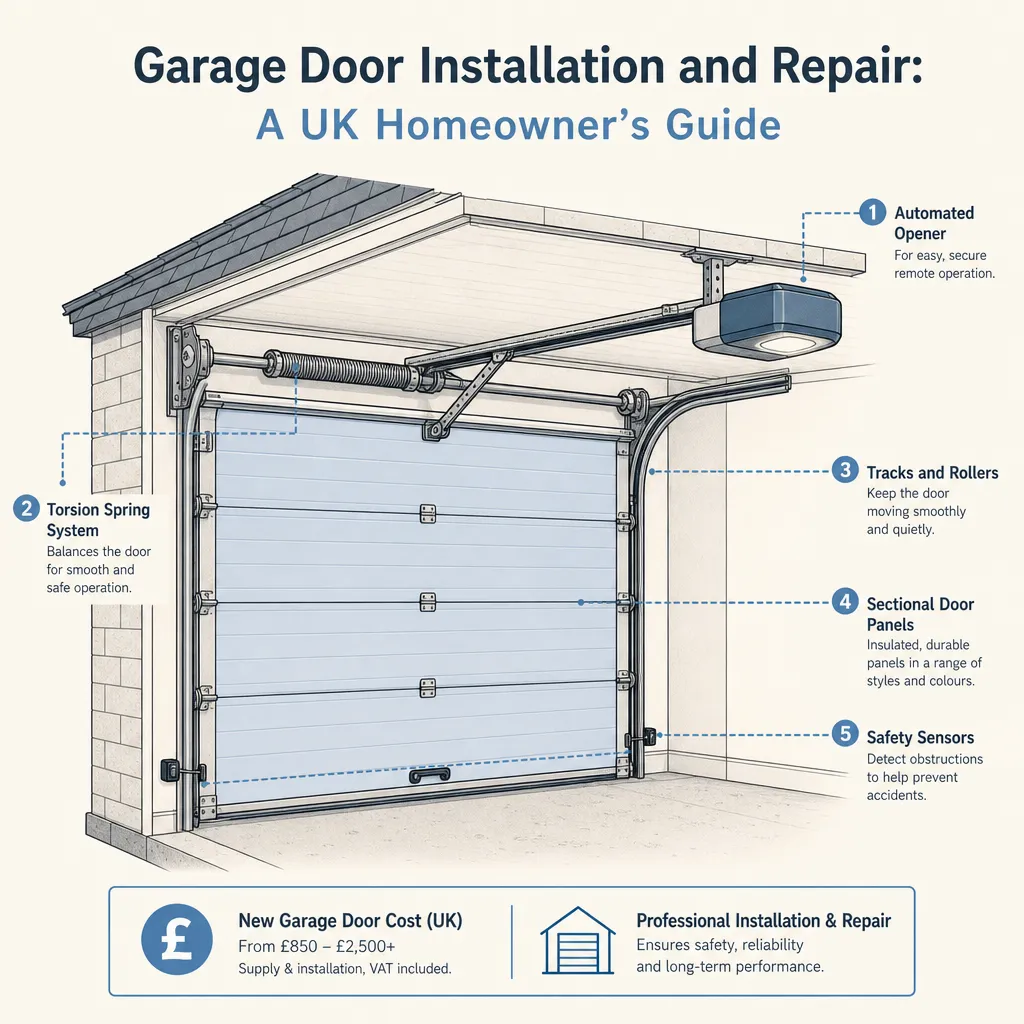
Garage Door Installation and Repair: A UK Homeowner's Guide
Garage doors in the UK come in five main types — up-and-over, roller, sectional, side-hinged, and canopy variants.
 Improvement & Build
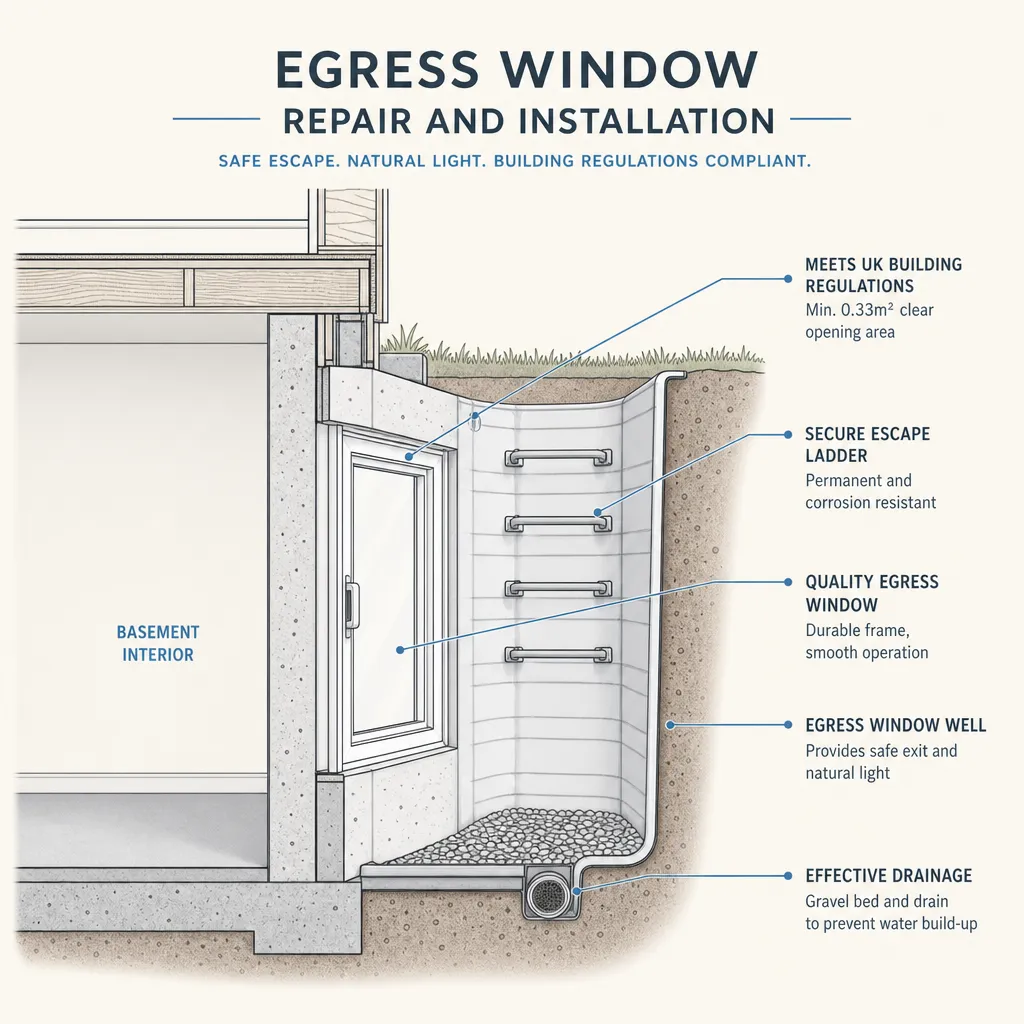
Egress Window Repair and Installation
An egress window is a window large enough to serve as an emergency escape route from a habitable room.
 Improvement & Build
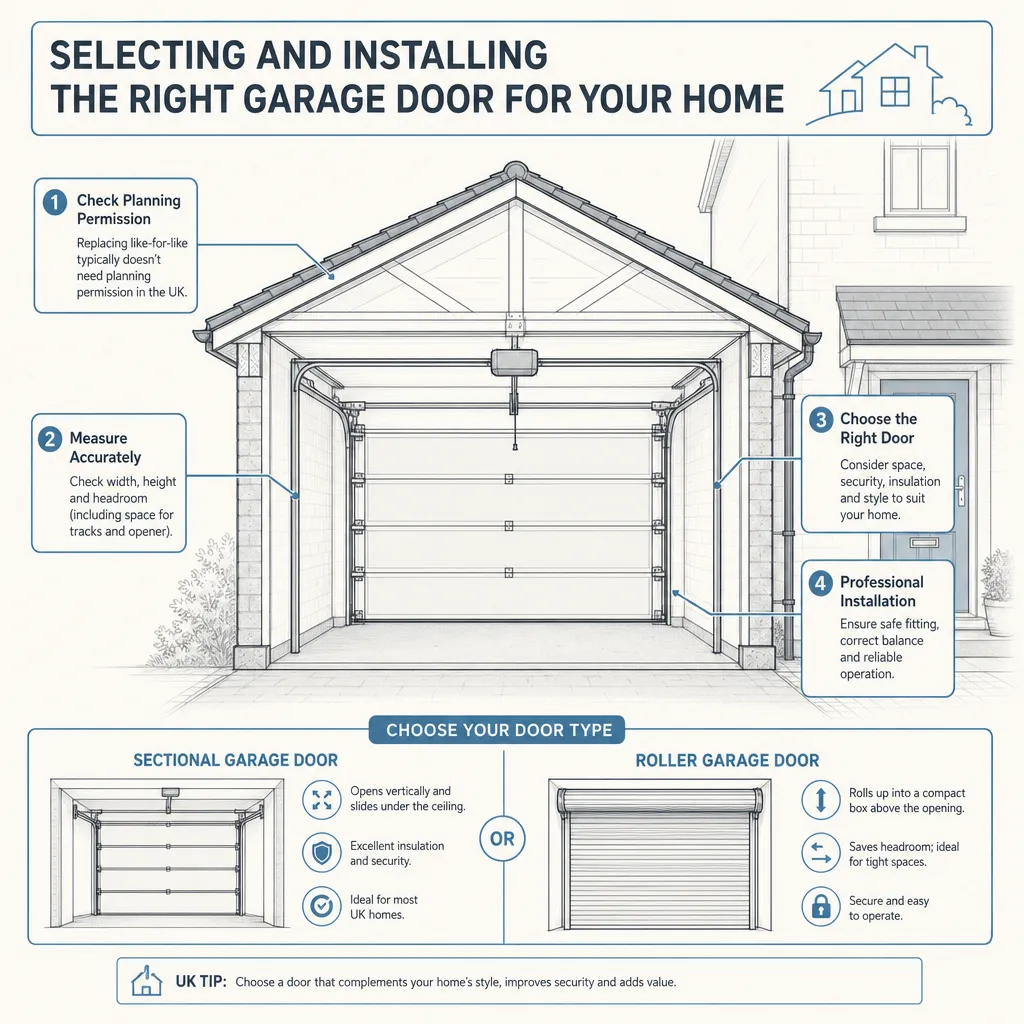
Selecting and Installing the Right Garage Door for Your Home
Choosing the right garage door depends on available headroom, opening width, security needs, and budget.
 Improvement & Build
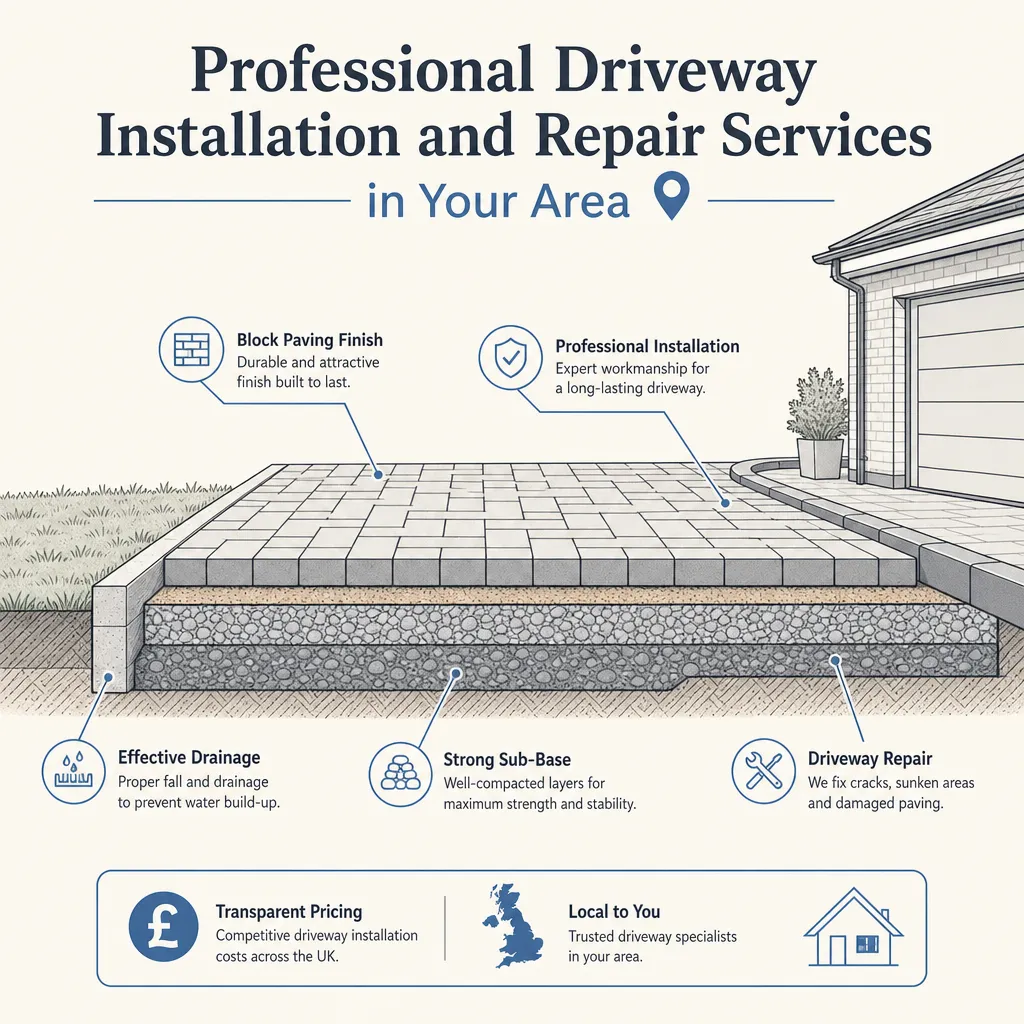
Professional Driveway Installation and Repair Services in Your Area
Driveway installation in the UK involves choosing a surface material — block paving, tarmac, resin, or gravel — and ensuring it meets drainage requirements.
 Improvement & Build
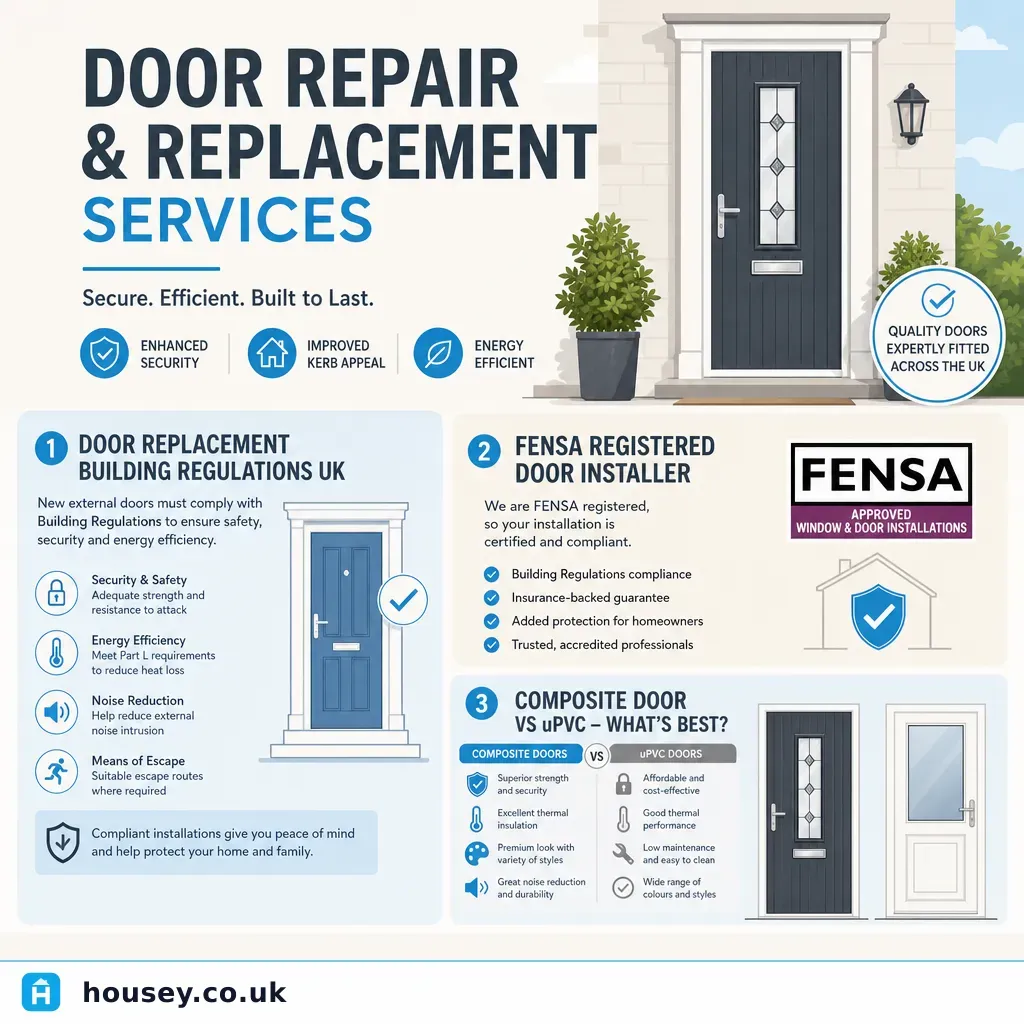
Door Repair and Replacement Services
For most UK homes, door repair is cost-effective when the frame is sound and the fault is mechanical.