Door Screen Installation and Mesh Door Costs
By Housey · Last reviewed 6th of May 2026
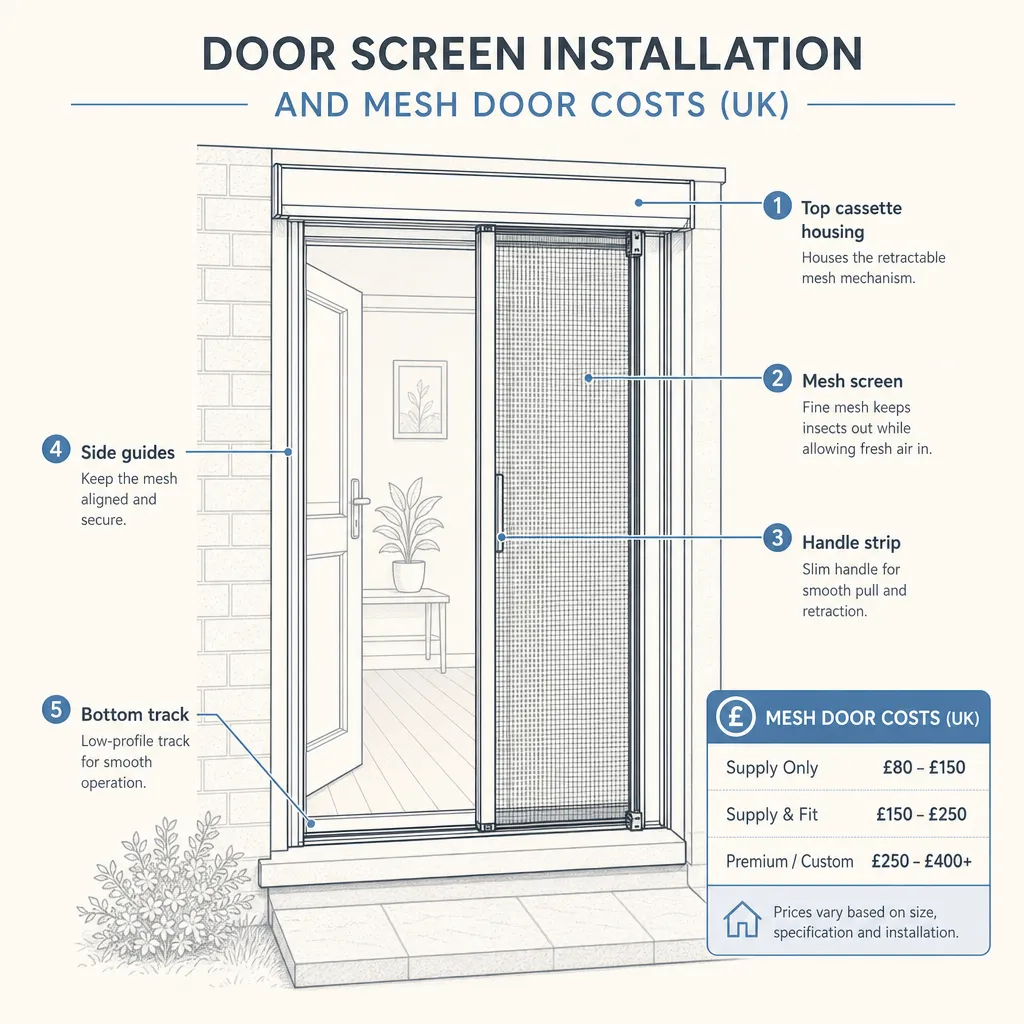
Door Screen Installation and Mesh Door Costs
Fly screens and mesh door inserts are a practical upgrade for UK homeowners who want to keep insects out while maintaining ventilation — particularly useful during warmer months when leaving patio or back doors open becomes habitual. The range of products available has expanded considerably, from simple magnetic panels suited to renters through to motorised retractable systems designed for bi-fold and large sliding door openings, and the costs and installation requirements vary just as widely.
Key points
- The vast majority of door screen installations do not require planning permission under permitted development rights, provided no permanent structural alteration is made to the opening or building fabric.
- Four main screen types are widely available in the UK: magnetic press-fit panels, hinged frame screens, roller or retractable screens, and pleated folding screens — each suits different door configurations and usage patterns.
- Indicative supply-and-fit costs range from around £60–£150 for a basic magnetic panel to £300–£700+ for a professionally installed retractable roller screen (last reviewed 2026-05-06; costs vary by door size, mesh type, and installer).
- Retractable screens fitted to bi-fold or large sliding patio doors can cost £500–£1,500+ depending on the number of panels and mechanism type.
- Properties that are listed or in a conservation area may need local authority approval before fitting externally visible screens; check with your local planning authority before proceeding.
Types of door screen available in the UK
Choosing the right screen type depends on how frequently the door is used, the door's size and configuration, and whether you want a permanent fixture or a seasonal option that can be removed.
Screen type | Typical installed cost | Best for | Not ideal for |
|---|---|---|---|
Magnetic press-fit panel | £60–£150 | Temporary or seasonal use, renters, single doors | Windy locations; high foot-traffic openings |
Hinged frame screen (aluminium) | £150–£350 | Single doors with permanent screening needs | Inward-opening doors where space is limited |
Roller or retractable screen | £300–£700+ | Frequent use, neat appearance when retracted | Higher maintenance; mechanism can jam over time |
Pleated folding screen | £400–£900+ | Bi-fold and wide openings, high-use doors | More expensive; specialist installation required |
Full-width multi-panel retractable | £500–£1,500+ | Wide bi-fold or sliding patio doors | Requires professional measurement and fitting |
Do you need planning permission for a door screen?
In most cases, fitting a door screen to a residential property in England does not require planning permission. Screen installations that do not involve permanent structural alterations to the opening, frame, or building fabric are generally considered permitted development.
However, you should check with your local planning authority before proceeding if:
- The property is listed — any alteration to the exterior of a listed building, however minor, may require listed building consent.
- The property is in a conservation area — some conservation area conditions restrict external alterations visible from the street.
- The property is a leasehold flat — your lease may require landlord or management company consent for external alterations.
- The screen involves fixing into brickwork or masonry in a way that constitutes a more substantial permanent alteration.
Rules vary by local authority and property history, so checking before you proceed is worthwhile if there is any doubt.
Worked UK property scenario
Scenario: A homeowner in a 1980s detached house in the East Midlands wants to fit a screen to their rear patio single door. They use the door frequently throughout summer and want a solution that retracts cleanly when not in use.
Recommended approach: A retractable roller screen, professionally fitted to the outer face of the existing door frame. Indicative cost: £350–£500 supply and fit, including an aluminium housing cassette and fibreglass mesh. No planning permission is required. No FENSA registration is required, as no glazed units are involved. Installation typically takes 2–3 hours.
If the same property had bi-fold patio doors instead of a single door, a pleated folding or multi-panel retractable system would be more appropriate, at an indicative cost of £700–£1,500+ depending on the number of door panels and the mechanism specification.
What mesh material options are available?
The mesh type affects ventilation, durability, insect exclusion, and cost:
- Fibreglass mesh — the most common option; good ventilation, corrosion-resistant, and suited to most domestic applications.
- Aluminium mesh — more durable in coastal or high-wind locations; slightly higher cost than fibreglass.
- Stainless steel mesh — the most durable option; used in security applications or homes where pets scratch the screen.
- Pollen-filter mesh — finer weave that reduces airborne pollen as well as insects; particularly useful for households with allergy sufferers.
- Pet-resistant reinforced mesh — a mid-range option designed to resist scratching and impact from dogs and cats.
What to ask before accepting a quote
- Is the screen frame powder-coated aluminium, or a lesser material?
- What mesh type is included — fibreglass, aluminium, pollen-filter, or pet-resistant?
- Is the screen custom-measured to your door, or a standard-size catalogue product?
- Does the quote include fixings, seals, and any surface preparation?
- What is the warranty on the screen frame and the mechanism (for roller or retractable types)?
- Is VAT included in the quoted price?
- Will the screen affect the door's existing weatherproofing or draught seals?
- Can the screen be removed and stored seasonally if required?
Can I fit a door screen myself?
Many screen types are designed with DIY installation in mind:
- Magnetic panel screens — suitable for most DIYers; attach with magnets or adhesive strips; no specialist tools needed.
- Hinged frame screens — moderate DIY skill required; involves drilling into the door frame; straightforward with basic tools.
- Retractable or roller screens — professional fitting is recommended for accurate measurement and mechanism alignment, though competent DIYers can manage a standard single-door installation.
- Pleated folding screens for bi-fold doors — professional installation is strongly recommended; incorrect fitting can affect the primary door's operation and void the screen's warranty.
If in doubt, engage a professional — incorrect fitting can damage the door frame or leave gaps that defeat the screen's purpose entirely.
When to get professional help
Seek a professional installer if:
- The door is a bi-fold, multi-panel sliding, or large-format configuration — professional measurement is essential for a weathertight fit.
- The property is listed or in a conservation area — confirm the planning position before ordering.
- You want a retractable system with a housing cassette — precise fitting is needed to prevent the mechanism from jamming.
- The door frame is UPVC — drilling incorrectly into UPVC can crack or weaken the frame profile.
- You want a screen that integrates with the door's existing weatherstrip or draught seals without compromising their performance.
How Housey can help
For professionally measured and fitted door screens — particularly on bi-fold or large patio doors — Housey can connect you with qualified window and door installers who can supply and fit the right screen for your door type and property.
Frequently asked questions
Do door screens reduce airflow?
All mesh screens reduce airflow compared to a fully open door. Standard fibreglass mesh typically reduces airflow by around 30–40%, while finer pollen-filter mesh can restrict it more noticeably. Retractable screens can be fully retracted when ventilation is the priority and insects are not active, making them the most flexible option for frequent summer use.
How long does a professionally fitted door screen last?
A quality aluminium-framed screen with fibreglass or aluminium mesh, professionally fitted, typically lasts 10–20 years with basic maintenance such as occasional cleaning of the mesh and track. Retractable mechanisms may require servicing or spring replacement after 5–10 years of regular use, depending on frequency of operation.
Will a door screen fit a bi-fold door?
Yes — pleated folding screens and multi-panel retractable systems are specifically designed for bi-fold and wide sliding door openings. These require professional measurement and installation. Indicative costs start at around £500 for a standard bi-fold opening and increase with the number of panels and mechanism complexity.
Are door screens effective against UK insects?
Standard fibreglass mesh with an 18×16 mesh count effectively excludes most common UK insects, including flies, mosquitoes, wasps, and midges. For properties near water or woodland where smaller insects are prevalent, a finer mesh count such as 20×20 provides better exclusion. Pollen-filter mesh also reduces airborne allergens.
Does fitting a door screen affect home insurance?
In most cases, fitting a door screen does not affect standard home insurance. However, if the screen modifies a door that contributes to your home's security — for example, a rear door covered by a policy condition requiring a specific lock standard — check with your insurer before installation to avoid inadvertently voiding a condition.
Sources and further reading
- Planning Portal: Permitted Development Rights for Householders — Planning Portal
- GOV.UK: Listed Buildings and Conservation Areas — GOV.UK
- Energy Saving Trust: Ventilation and Air Quality in the Home — Energy Saving Trust
- Allergy UK: Managing Allergens in the Home — Allergy UK
Useful next reads
 Improvement & Build
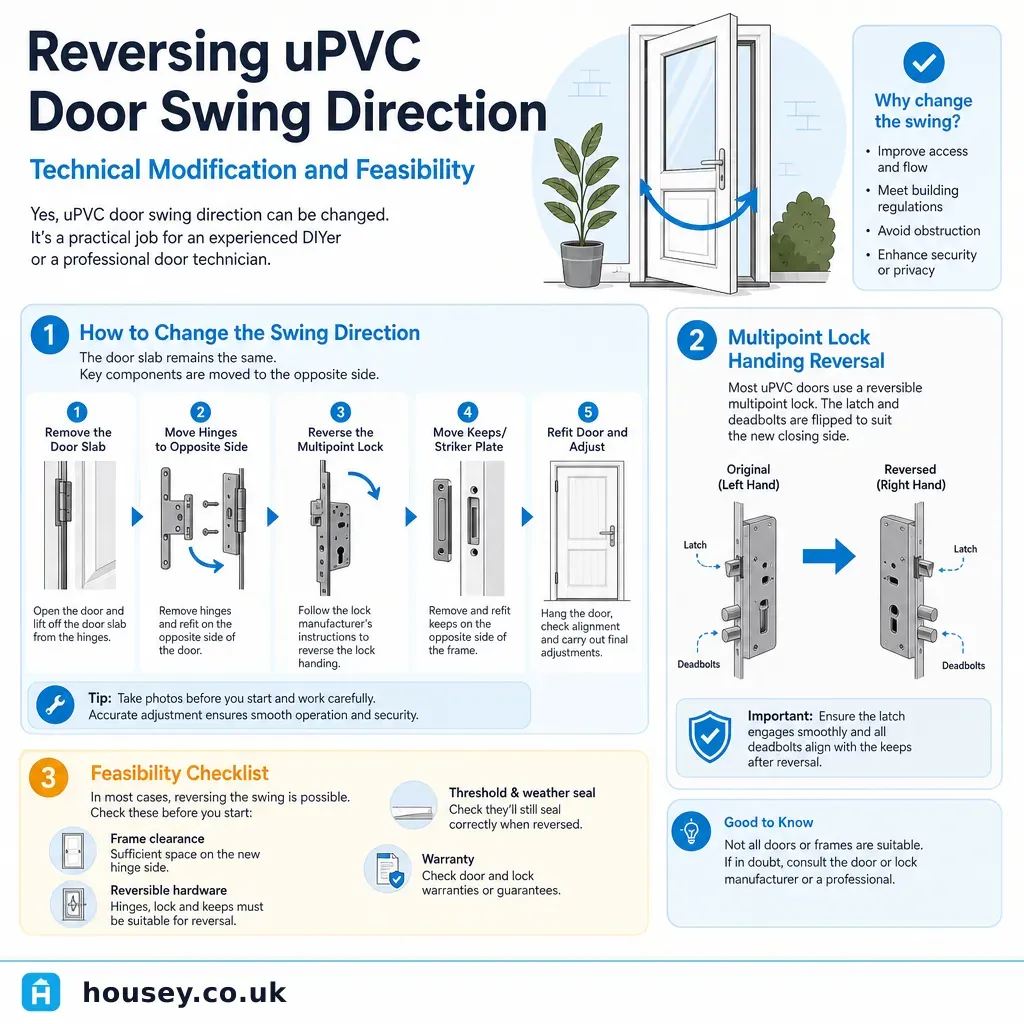
Reversing uPVC Door Swing Direction: Technical Modification and Feasibility
Reversing a uPVC door's swing direction is sometimes possible but depends on whether the frame profile is symmetrical and whether the multipoint lock is available in the opposite hand.
 Improvement & Build
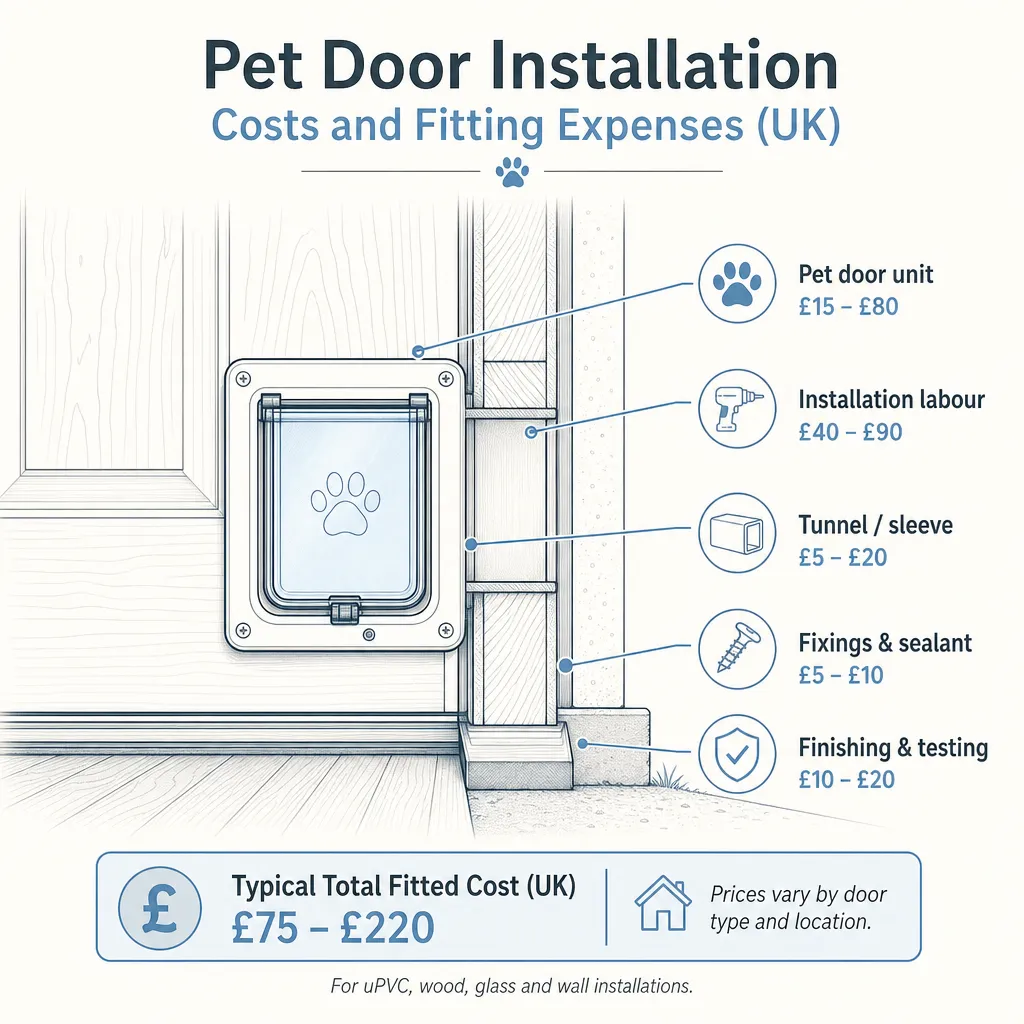
Pet Door Installation Costs and Fitting Expenses
Pet door installation in the UK typically costs £50–£300 depending on door material, pet door size, and whether glazing needs to be cut.
 Improvement & Build
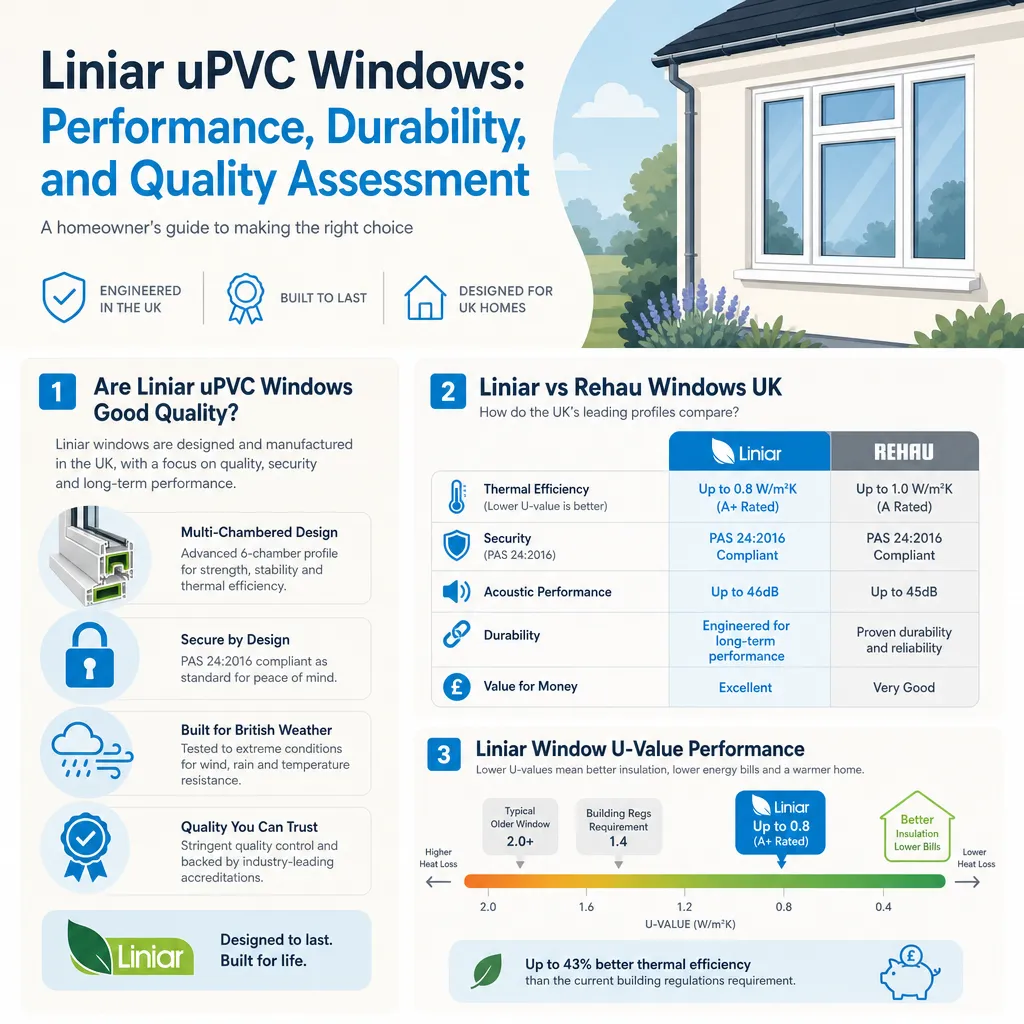
Liniar uPVC Windows: Performance, Durability, and Quality Assessment
Liniar uPVC window profiles are manufactured in the UK using multi-chambered, foamed frames.
 Improvement & Build
Garden Tap Installation with Hot and Cold Water: Plumbing Options
Adding a cold garden tap is a common DIY project, but routing hot water outdoors requires a plumber to connect to your domestic hot water system and comply with the Water Supply (Water Fittings) Regulations 1999.
 Improvement & Build
Sealing and Maintaining Historic Leaded Glass Windows: Preservation and Performance
Leaded glass windows are maintained using traditional linseed oil cement — not silicone or modern sealants, which prevent natural movement in the lead came.