Pet Door Installation Costs and Fitting Expenses
By Housey · Last reviewed 6th of May 2026
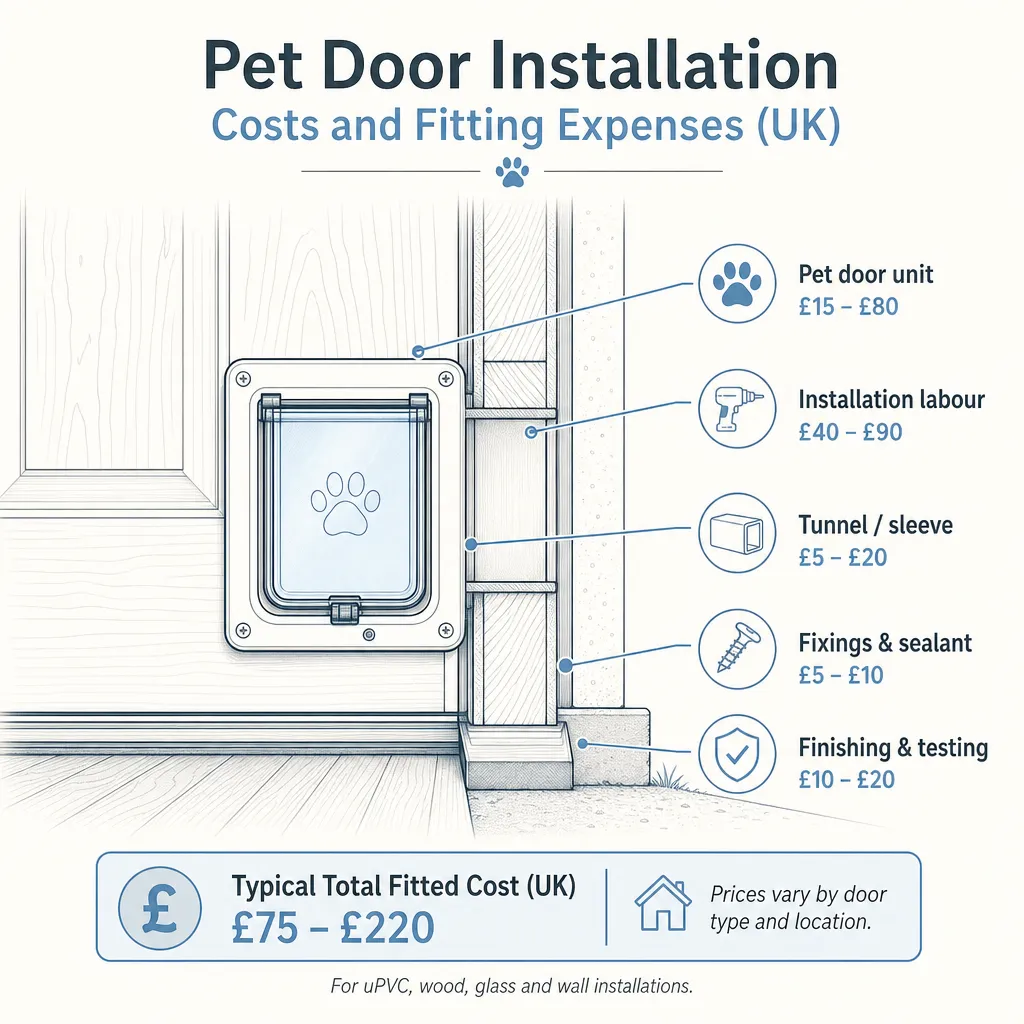
Pet Door Installation Costs and Fitting Expenses
Installing a pet door is a practical upgrade many UK homeowners consider when a cat or dog needs independent garden access. The right approach — and the right budget — depends on your door material, pet size, and whether you are cutting into timber, uPVC, double glazing, or a wall. Getting the specification wrong can mean damaged glazing, a voided door warranty, or a draughty opening that undermines your EPC rating.
Key points
- A standard cat flap fitted in a timber or uPVC door typically costs £50–£100 installed; larger dog doors or more complex installations cost more.
- Fitting a pet door into a double-glazed unit requires the glass pane to be replaced — not drilled — adding £100–£200 or more to the job.
- Microchip-activated pet doors (£60–£180 unit cost) prevent other animals entering and reduce draughts compared with basic flaps.
- Wall installations require a masonry tunnel kit and are more labour-intensive, usually costing £200–£500+ depending on wall thickness.
- Leasehold flats and listed buildings may have restrictions on modifying external doors — check your lease or local planning authority before ordering.
What types of pet door are available?
Type | Best for | Not ideal for | Approximate unit cost |
|---|---|---|---|
Standard 4-way locking flap | Small cats, mild climates | Large dogs, draughty homes | £15–£40 |
Magnetic or collar-activated | Homes with multiple pets | Gardens visited by neighbourhood cats | £30–£80 |
Microchip-activated | Security-conscious owners, deterring intruders | Very large breeds (limited size range) | £60–£180 |
Large dog door (tunnel flap) | Medium to large dogs | Narrow doors, double-glazed panels | £50–£150 |
Wall installation kit | Brick or block walls with no suitable door | Cavity walls without specialist lining | £60–£200+ |
Indicative UK unit costs, last reviewed 2026-05-06. Fitting costs are additional.
How much does pet door installation cost in the UK?
Most straightforward fittings take one to two hours. Labour costs vary by door material and complexity.
Timber door: The simplest installation. A carpenter or window installer typically charges £50–£80 for labour. Total fitted: approximately £70–£120.
uPVC door: Cutting into uPVC requires care to avoid cracking the panel. Labour: £60–£100. Total fitted: approximately £80–£140.
Double-glazed door or panel: The insulated glass unit (IGU) must be replaced with a factory-fitted pet door panel — on-site drilling destroys the sealed air gap. Replacement glazing costs £100–£250 depending on size. Total: approximately £150–£350+.
Brick or cavity wall: Requires a core drill, masonry tunnel kit, and finishing on both sides. Total: typically £200–£500 depending on wall thickness.
Indicative UK costs, last reviewed 2026-05-06. Quotes vary by region and installer.
Which pet door option is right for your home?
- Choose a standard flap in your door if you have a timber or solid uPVC door panel and a cat or small dog.
- Choose a microchip door if neighbourhood cats, foxes, or other animals are a nuisance, or if you need to manage multiple pets separately.
- Ask an installer about glass replacement if your door has a double-glazed panel — never attempt to cut or drill the glass yourself.
- Consider a wall installation if no suitable door leads to the garden, or if your door is composite or fire-rated.
- Check your lease first if you live in a leasehold flat — many leases require written landlord consent before altering external doors.
- Contact your local planning authority if your home is listed or in a conservation area before making any external alterations.
Does fitting a pet door affect door performance or warranty?
A correctly fitted flap in a standard timber or uPVC door will not significantly affect thermal or security performance if a quality draught-excluding unit is used. However:
- Cutting into a warranted composite door panel may void the manufacturer warranty — confirm before proceeding.
- A poorly fitted flap can increase heat loss and affect your EPC rating, relevant if you have ECO4 or other energy-efficiency funding.
- Most insurers require external doors to meet a minimum security standard. A 4-way locking or microchip flap with a solid cover generally satisfies this — notify your insurer as a precaution.
Red flags: when to pause before fitting
- The door or frame is rotten, warped, or structurally unsound — fitting a flap makes both problems worse.
- Your door is a fire door (marked FD30 or FD60 on the edge) — modifications can compromise its rated performance and require assessment by a competent professional.
- The glazed panel is leaded, obscure-patterned, or heritage glass — replacement will be more specialist and costly.
- There is visible damp or staining below the proposed cut site on a wall — investigate before drilling.
- The outer wall is solid masonry — specialist tunnel lining is needed to prevent cold bridging and moisture ingress.
When to get professional help
Most cat flap installations in timber or uPVC doors are within the skillset of a competent carpenter or window installer. Always use a qualified professional for:
- Double-glazed units requiring glass panel replacement.
- Wall installations in masonry or solid-wall construction.
- Fire-rated doors or composite doors with active manufacturer warranties.
- Any installation in a leasehold property where written consent may be required first.
How Housey can help
Housey can connect you with experienced window and door installers in your area for pet door fitting, glazed unit replacement, or wall installations. Request and compare quotes before committing to any work.
Frequently asked questions
Can a cat flap be fitted into a double-glazed door?
Yes, but the glass panel cannot be drilled on site without destroying the sealed unit. The glazing must be replaced with a new pane that has the pet door factory-fitted. This typically adds £100–£250 for the replacement glass, on top of fitting costs. Your installer should measure the panel and order the correct unit before any work begins.
Do I need planning permission to install a pet door?
In most cases, no. Fitting a pet door is generally treated as routine maintenance and does not require planning permission. However, if your property is listed or within a conservation area, check with your local planning authority before altering any external door or wall, as permitted development rights may be restricted.
What size pet door do I need for my dog?
Measure your dog's width at the widest point — usually the shoulders — and height from the floor to the top of their back. Add at least 25mm to each measurement for clearance. Most medium-sized dogs such as Labradors and Springer Spaniels need a large or extra-large flap; giant breeds may require a wall-mounted tunnel unit.
Will fitting a pet door affect my home insurance?
A locking pet door should not invalidate your home insurance, but check your policy wording. Insurers typically require external doors to meet a minimum security standard. A microchip-activated or 4-way locking flap with a solid closing cover generally satisfies most requirements. Notify your insurer of any external door modification as a precaution.
Can I install a pet door myself?
Fitting a basic flap in a timber door is a feasible DIY task for a confident homeowner with the right tools. However, double-glazed panel replacement, wall installations, fire-rated doors, and warranted composite doors should all be handled by a qualified professional to avoid voiding warranties or compromising performance.
Sources and further reading
- Permitted development rights for householders — technical guidance — GOV.UK
- Draught-proofing your home — Energy Saving Trust
- Consumer guidance on glazing — Glass and Glazing Federation
Useful next reads
 Improvement & Build
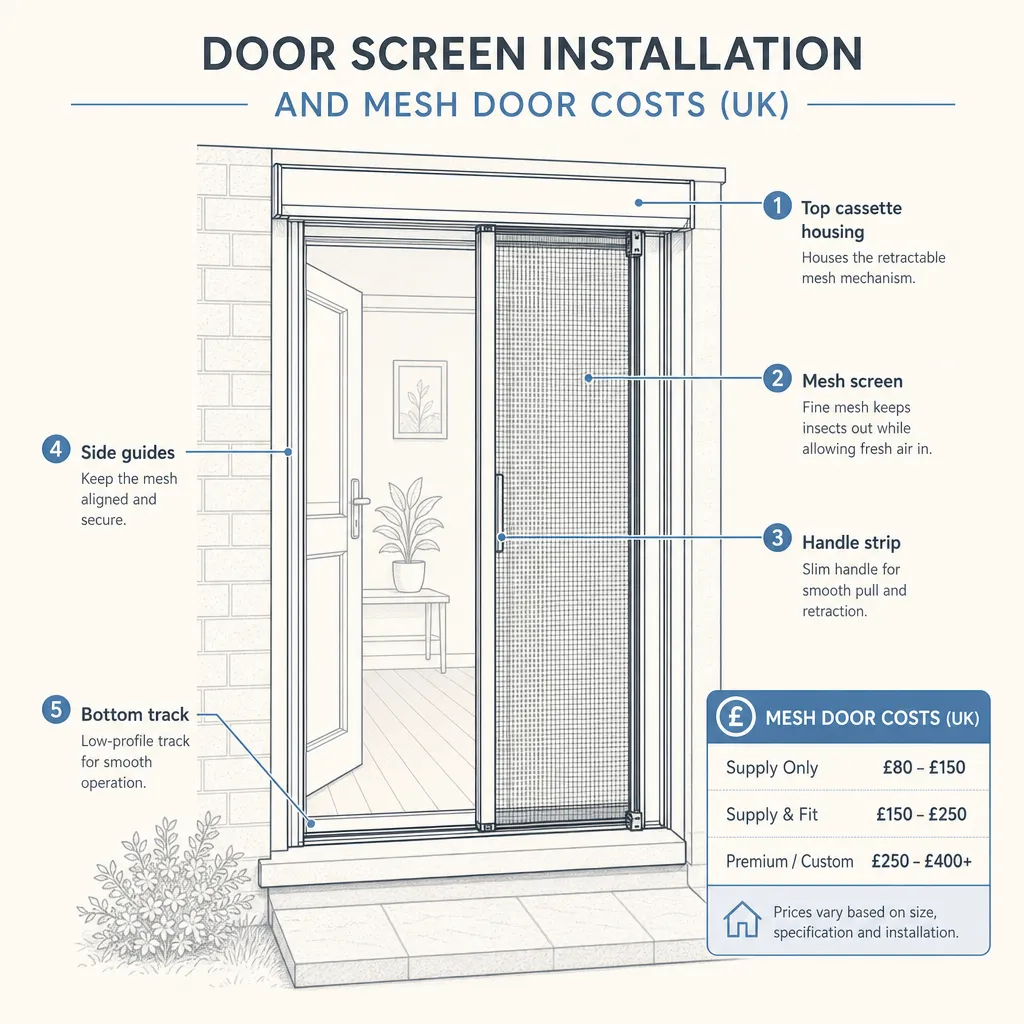
Door Screen Installation and Mesh Door Costs
Door screen installation in the UK costs roughly £60–£150 for a basic magnetic panel screen up to £300–£700 for a professionally fitted retractable roller screen, and £500–£1,500+ for bi-fold door systems.
 Improvement & Build
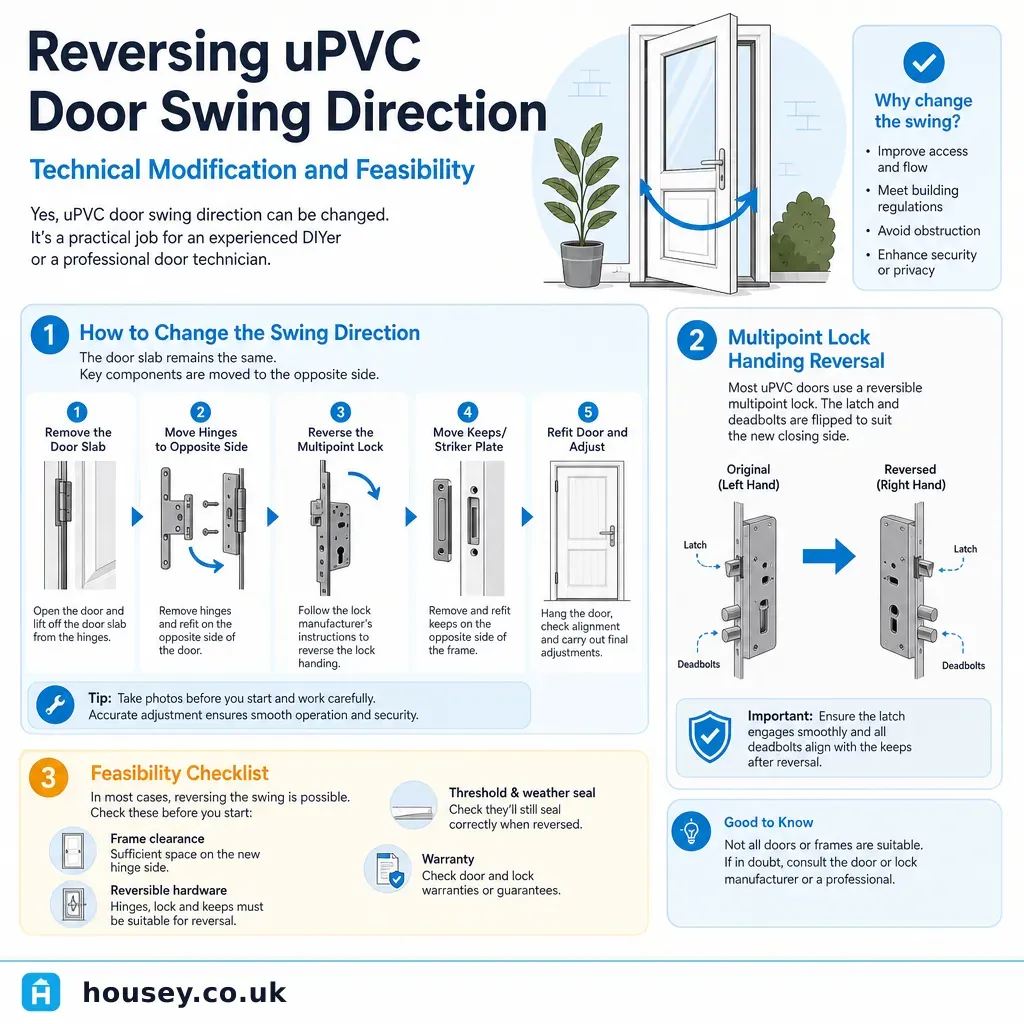
Reversing uPVC Door Swing Direction: Technical Modification and Feasibility
Reversing a uPVC door's swing direction is sometimes possible but depends on whether the frame profile is symmetrical and whether the multipoint lock is available in the opposite hand.
 Improvement & Build
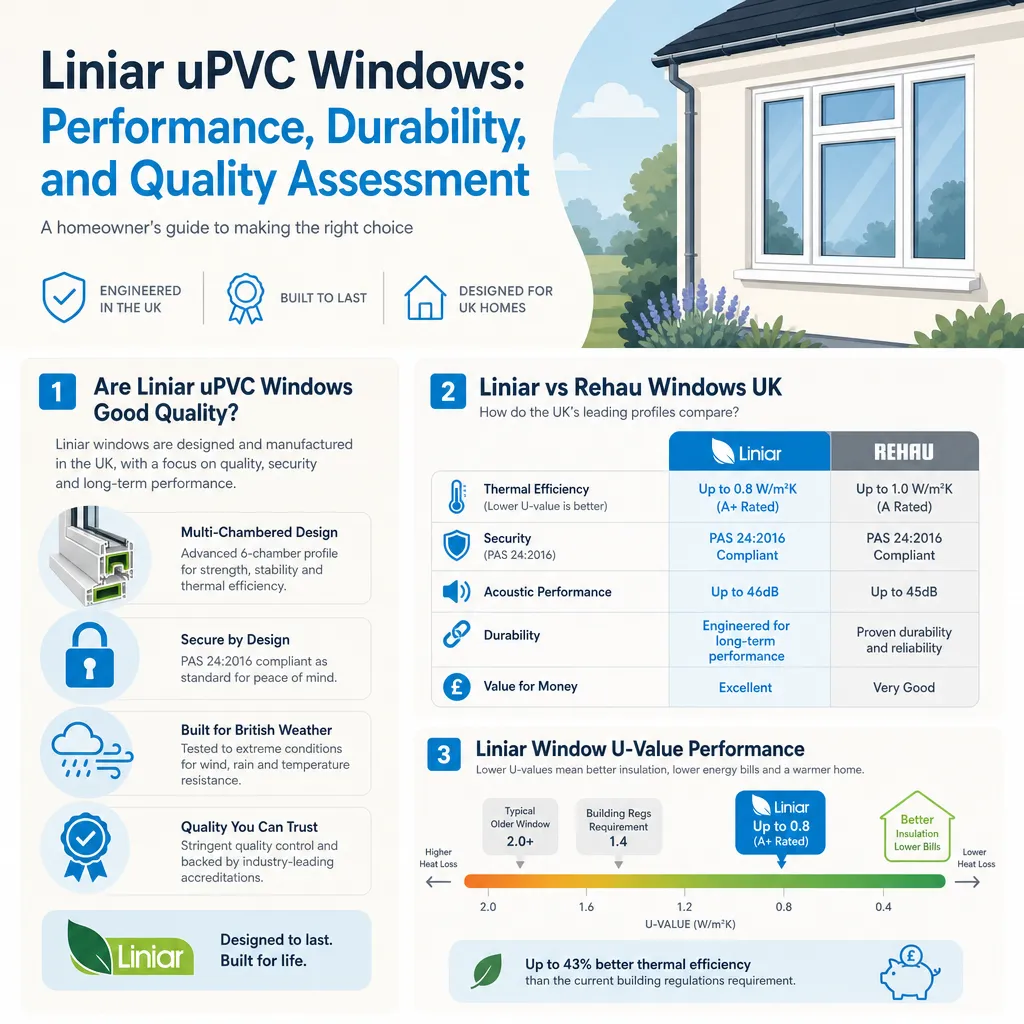
Liniar uPVC Windows: Performance, Durability, and Quality Assessment
Liniar uPVC window profiles are manufactured in the UK using multi-chambered, foamed frames.
 Improvement & Build
Garden Tap Installation with Hot and Cold Water: Plumbing Options
Adding a cold garden tap is a common DIY project, but routing hot water outdoors requires a plumber to connect to your domestic hot water system and comply with the Water Supply (Water Fittings) Regulations 1999.
 Improvement & Build
Sealing and Maintaining Historic Leaded Glass Windows: Preservation and Performance
Leaded glass windows are maintained using traditional linseed oil cement — not silicone or modern sealants, which prevent natural movement in the lead came.