Reversing uPVC Door Swing Direction: Technical Modification and Feasibility
By Housey · Last reviewed 4th of May 2026
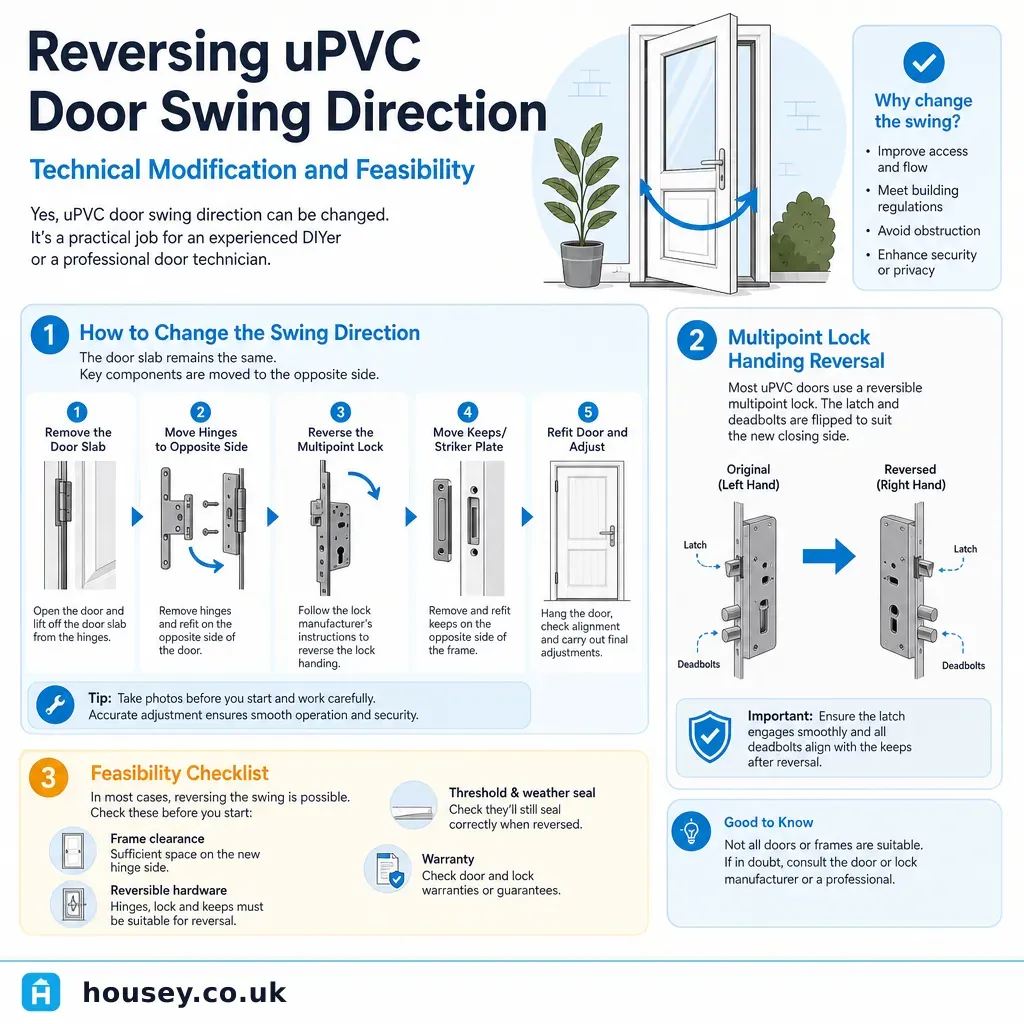
Reversing uPVC Door Swing Direction: Technical Modification and Feasibility
uPVC doors are manufactured to a specific hand — the direction in which they open is determined at the point of production, with frame profiles, reinforcing steel inserts, and hardware positions all configured for one opening direction. When a renovation reconfigures a hallway or porch, or when a new owner simply finds the existing swing inconvenient, reversing the door becomes an attractive option. Whether it is genuinely achievable depends on several technical factors that can only be assessed by inspecting the specific door unit on site.
Key points
- Most uPVC door frames are handed — hinge positions and multipoint lock keeps are routed or formed during manufacture for one specific opening direction and cannot simply be reversed without new hardware or a replacement frame.
- The multipoint locking mechanism is explicitly handed left or right; reversing the swing almost always requires replacing the lock with a correctly handed equivalent meeting the same security standard.
- The door slab can sometimes be reused if its profile is symmetrical, but decorative features, off-centre glazing, and letterbox positions often make reversal visually or functionally impractical.
- Building Regulations Approved Document B (fire safety) and Approved Document M (accessibility) may restrict the opening direction of certain entrance doors — check before committing to any modification.
- In frames more than 10–15 years old, or where wear and distortion are visible, full replacement is usually more cost-effective than modification and will also improve thermal performance under Part L.
What determines whether a uPVC door swing can be reversed?
The frame profile
uPVC door frames are extruded with steel reinforcing inserts and pre-routed channels for hinge pads and multipoint lock keeps. In most standard UK residential installations, these features are specific to one hand. Using the same frame on the opposite hand would leave hinge rebates and keep slots in the wrong positions, affecting both security and weatherproofing.
Some manufacturers produce reversible frames with symmetrical profiles and pre-drilled positions on both sides, but these are less common in standard residential installations. The only reliable way to confirm is to check the manufacturer's data sheet or ask a specialist installer to inspect the existing frame in person before any decision is made.
The multipoint locking mechanism
The multipoint lock is typically the most significant constraint. These mechanisms contain internal gearboxes and shoot-bolt arrangements designed for one hand only — a left-hand lock cannot be retrofitted into a right-hand door and vice versa. If you reverse the swing, the lock must be replaced with a correctly handed equivalent, and the keeps (strike plates) within the frame must be repositioned or replaced accordingly.
Where the original door was fitted to a specific security standard such as PAS 24 or BS 3621 — often required by home insurers or specified in building regulations for certain new-build or renovation projects — the replacement lock must meet the same standard.
The door slab
Some uPVC door slabs have symmetrical cross-sections and can theoretically be rehung on the opposite side. However, decorative mouldings, off-centre glass panels, letterboxes, and handle cutouts are frequently asymmetric. If these features are not centred on the slab, reversing it will result in a visible mismatch — the letterbox may end up at an unusual height, or a glazed panel may sit closer to one edge than expected.
Threshold and weather sealing
Reversing the swing changes which side the door closes against the threshold bar and compression weather seal. New threshold hardware is usually required, and the perimeter gaskets around the frame may need adjusting or replacing to restore the door's weatherproofing and draught-exclusion performance.
Decision tree: can my uPVC door swing be reversed?
- Does the frame have symmetrical hinge positions and pre-drilled keeps on both sides? → If yes, reversal may be feasible with new hardware. Ask a specialist to confirm the reinforcing insert positions before proceeding.
- Is the multipoint lock available in the opposite hand from the same or a compatible manufacturer? → If yes, the lock can be swapped. Confirm the replacement meets your insurer's security requirements (PAS 24 or BS 3621 as applicable).
- Is the door slab symmetrical, with no off-centre glazing, panel features, or letterbox? → If yes, the slab may be reusable. Check that handle and cylinder positions will work correctly in the reversed configuration.
- Is the door a fire door (rated FD30 or FD60), or does it form the primary means of escape from the property? → Do not proceed without specialist advice. Modification may void the fire certification, and Building Regulations Approved Document B may restrict the direction of opening.
- Is the frame more than 10–15 years old, or does it show distortion, UV degradation, or seal failure? → Full replacement is likely more cost-effective. A new door set will also bring the installation up to current Part L thermal performance standards.
Comparison: reversible versus non-reversible uPVC door scenarios
Scenario | Reversal feasible? | Typical approach | Key consideration |
|---|---|---|---|
Standard front door, frame under 10 years, symmetrical slab | Possibly — needs on-site frame check | Replace lock, hinges, keeps, and threshold bar | Confirm steel reinforcement is symmetrical in the frame |
Side door with off-centre glazed panel | Unlikely without visible mismatch | Replace door set | Glazing position will appear wrong if slab is reversed |
Internal garage-to-house fire door (FD30 or FD60 rated) | Not without specialist input | Engage a certified fire door specialist | Modification may void fire rating and breach Part B |
Older uPVC door (10+ years, worn seals, distorted frame) | Not cost-effective | Replace with new door set | New installation also improves thermal performance under Part L |
Composite door on uPVC frame | Frame constraints apply as above; slab is usually asymmetric | Assess frame and slab separately | Composite slab typically cannot be mirrored; slab replacement likely |
What the modification process typically involves
If a site assessment confirms reversal is feasible, a specialist installer will generally:
- Remove the door slab and inspect it for symmetry and reusability.
- Reposition or replace the hinge pads and backing plates within the frame.
- Replace the multipoint lock with the correctly handed equivalent.
- Reposition or replace the lock keeps (strike plates) in the frame.
- Rehang the door slab with new or repositioned hinges.
- Fit a new threshold bar and confirm weather seal compression on all four sides.
- Test the door for smooth multipoint engagement, correct draught exclusion, and security.
Indicative UK costs, last reviewed 2026-05-04: a straightforward swing reversal on a modern standard uPVC door typically costs £150–£400 for labour and hardware, depending on complexity, the lock specification, and the region. These are estimates only — obtain itemised quotes before committing to any work. Source: installer quote data, Housey marketplace 2026.
What to ask before hiring an installer
- Can you inspect the frame on site and confirm whether the profile is suitable for reversal?
- Will the existing door slab be reusable, or is a replacement needed?
- Which specific hardware components will be replaced, and what security standard do they meet?
- Does the replacement lock meet or exceed the original specification (PAS 24 or BS 3621 where required)?
- Does any aspect of this work require building regulations notification?
- Is VAT included in the quoted price?
- What warranty applies to the new hardware and to the installation work?
When to get professional help
Consult a qualified window and door installer rather than attempting this modification yourself if:
- You are unsure whether your frame profile is handed or symmetrical.
- The door is a fire door (FD30 or FD60 rated) — DIY modification may void the fire rating.
- The door serves as the primary means of escape from the property.
- You are unfamiliar with the multipoint lock type and cannot confirm the correct replacement specification.
- The frame shows signs of distortion that could compromise the new hardware positions or security.
Incorrect installation of a multipoint lock can create security vulnerabilities and may invalidate home insurance cover for forced-entry claims. Always use an installer experienced with the specific uPVC profile and locking system involved.
How Housey can help
If you are unsure whether your uPVC door can be reversed — or if you need a specialist to assess, carry out the modification, or supply and fit a replacement door set — Housey can connect you with qualified window and door installers in your area. Request and compare quotes before committing to any work.
Frequently asked questions
Is reversing a uPVC door swing a job I can do myself?
For most homeowners, this is not a straightforward DIY project. The multipoint locking system is complex, and incorrect installation can compromise security and may void home insurance cover. If the door is a fire door or serves as a means of escape, professional installation is essential. A specialist installer can usually complete a straightforward reversal in a half-day visit where the frame is suitable.
Do I need to notify building control if I reverse a uPVC door swing?
In most cases, reversing the swing of an existing external door does not require a building regulations application. However, if the door is a fire door within an escape route, or if the work forms part of a larger renovation subject to Part L requirements, check with a building control body before proceeding to confirm whether notification is needed.
Will reversing the door swing affect my home insurance?
It may, if the replacement lock does not meet the security standard of the original. Many home insurance policies require external door locks to comply with BS 3621 or PAS 24. Always confirm the specification of the replacement hardware with your installer and check your policy wording carefully before any modification work begins.
Can I reverse the swing on a composite door?
Composite door slabs are usually asymmetric, with glass panels, letterboxes, or decorative features that cannot simply be mirrored. Reversing a composite door typically means replacing the slab entirely. The existing uPVC or aluminium frame may be reusable depending on its profile — a specialist installer should assess both components separately before any work is planned.
How long does a uPVC door swing reversal take?
A straightforward reversal on a modern standard door — where the frame profile is suitable and the replacement hardware is readily available — typically takes two to four hours for an experienced installer. If the frame needs modification or the door slab requires replacing, allow for a longer visit or a second appointment. Your installer should give a firm time estimate after a brief on-site assessment.
Sources and further reading
Useful next reads
 Improvement & Build
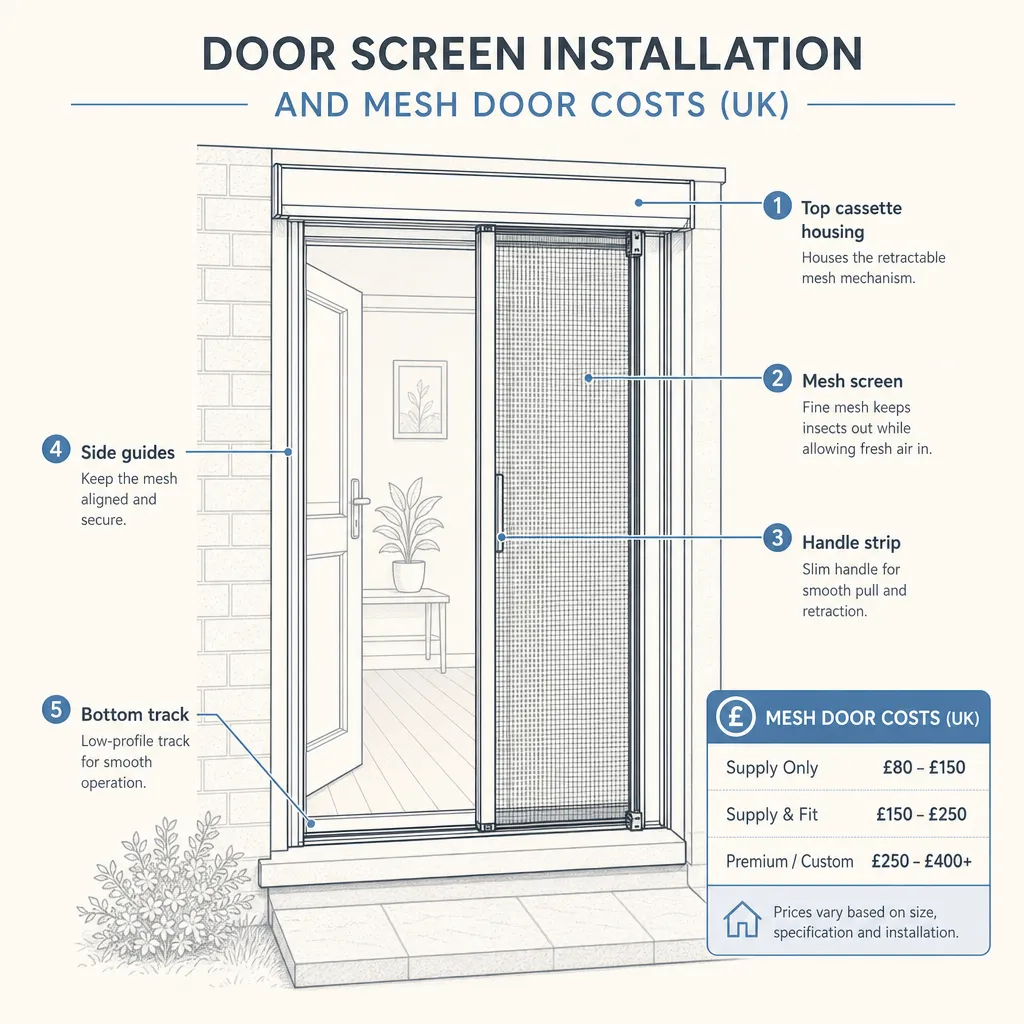
Door Screen Installation and Mesh Door Costs
Door screen installation in the UK costs roughly £60–£150 for a basic magnetic panel screen up to £300–£700 for a professionally fitted retractable roller screen, and £500–£1,500+ for bi-fold door systems.
 Improvement & Build
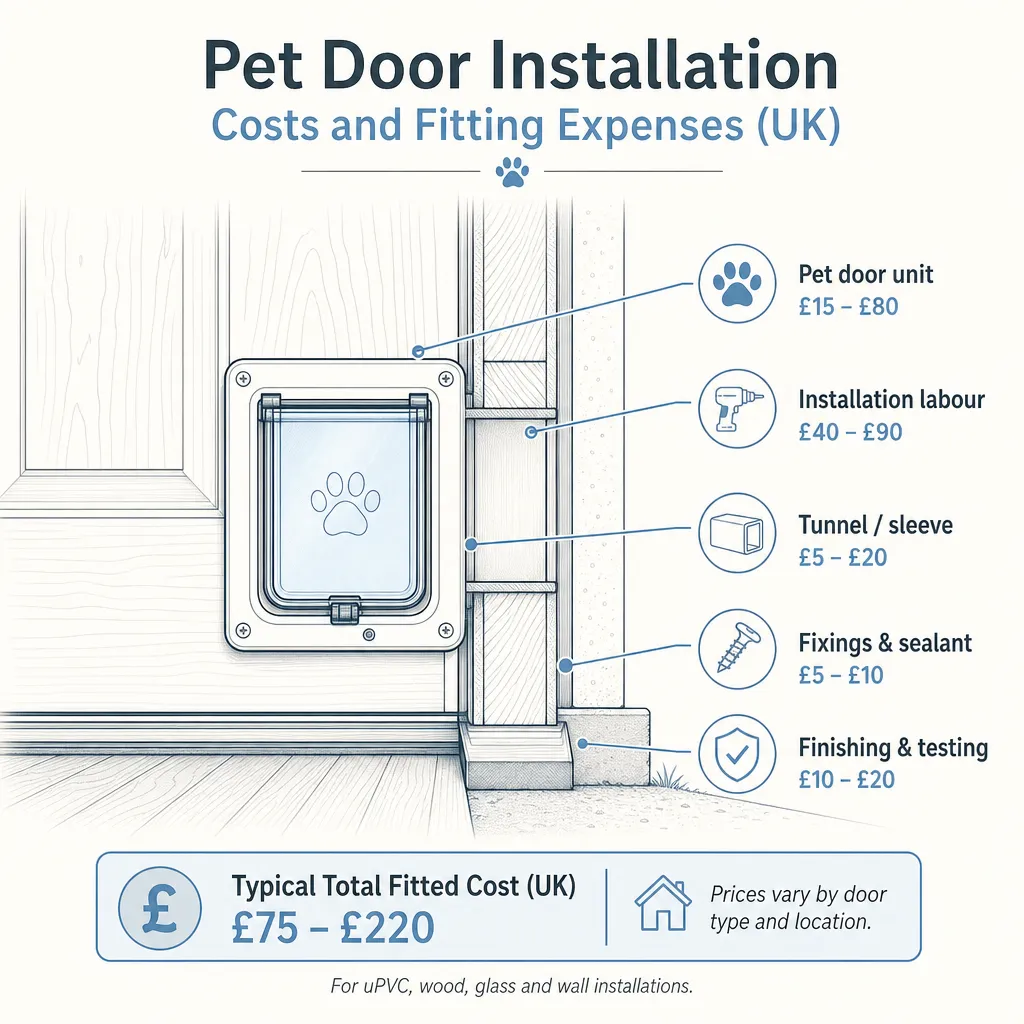
Pet Door Installation Costs and Fitting Expenses
Pet door installation in the UK typically costs £50–£300 depending on door material, pet door size, and whether glazing needs to be cut.
 Improvement & Build
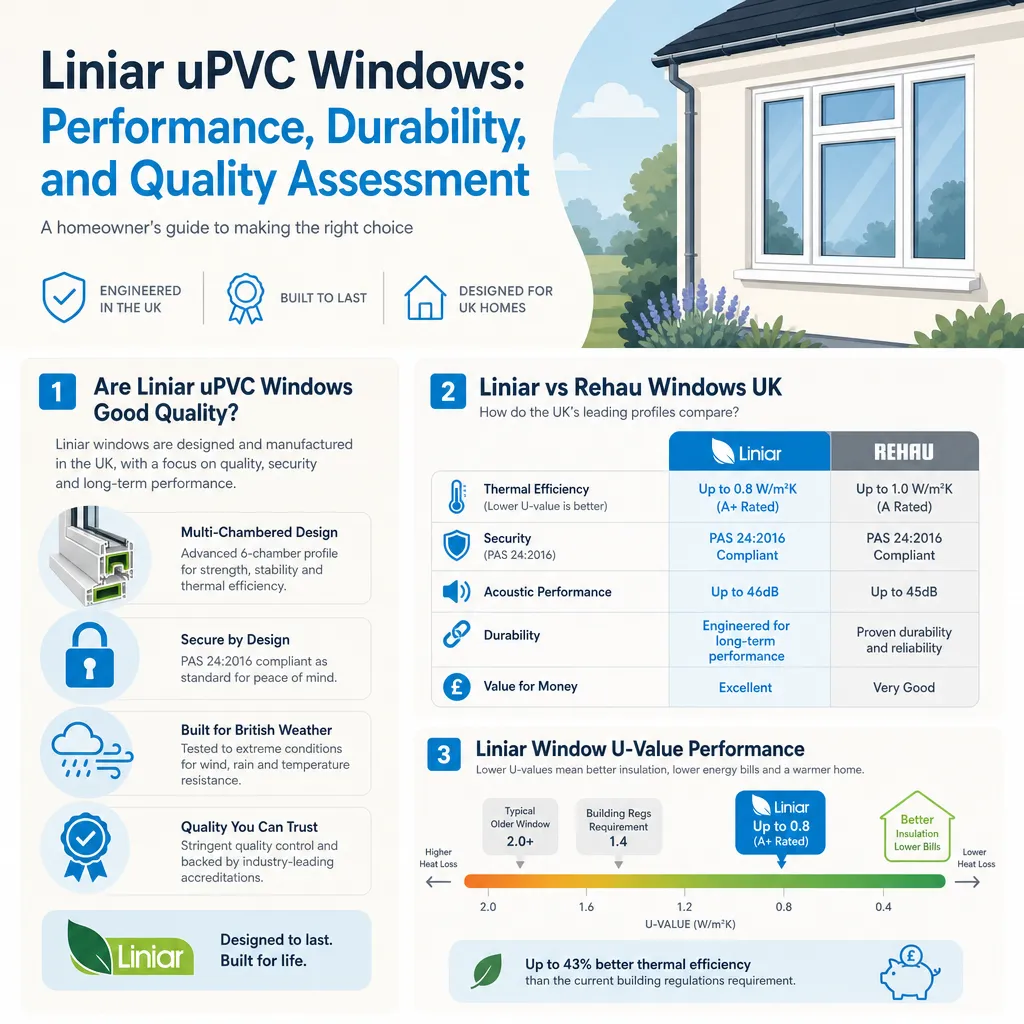
Liniar uPVC Windows: Performance, Durability, and Quality Assessment
Liniar uPVC window profiles are manufactured in the UK using multi-chambered, foamed frames.
 Improvement & Build
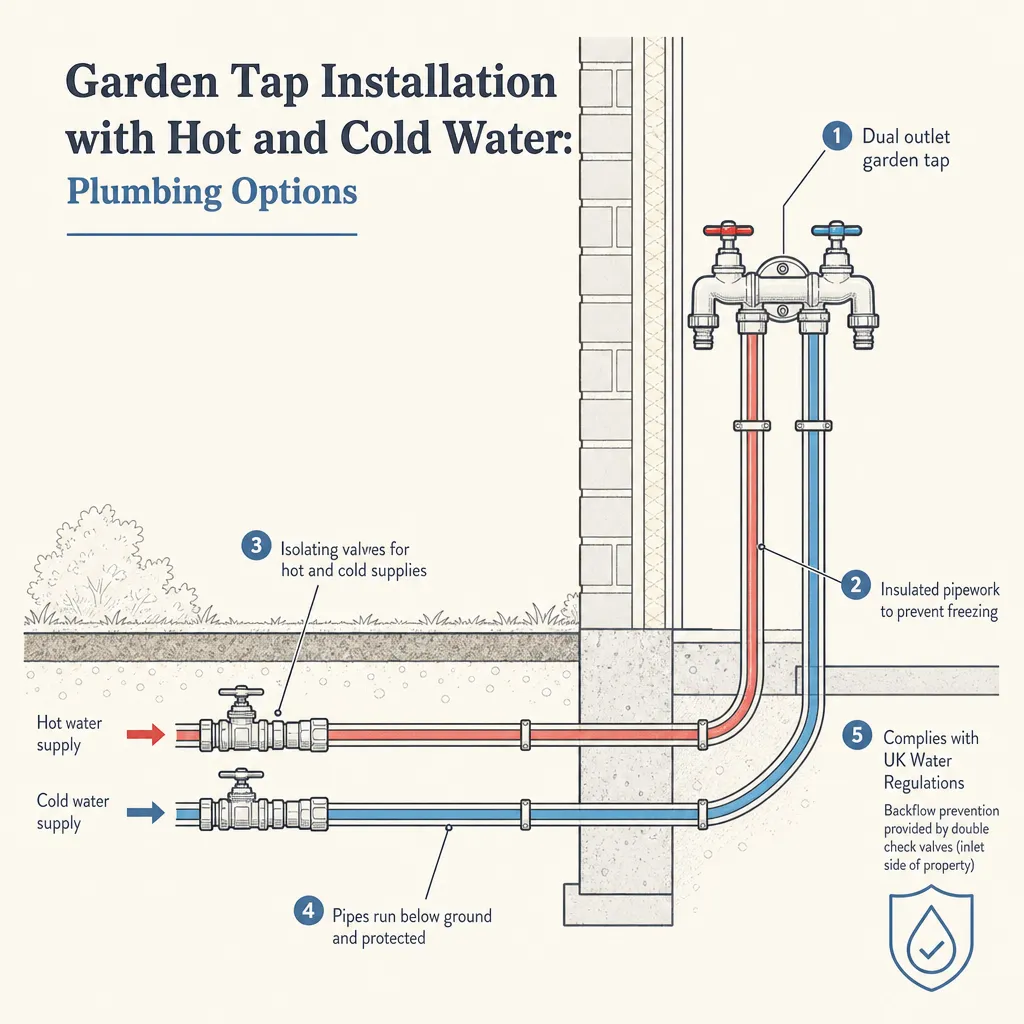
Garden Tap Installation with Hot and Cold Water: Plumbing Options
Adding a cold garden tap is a common DIY project, but routing hot water outdoors requires a plumber to connect to your domestic hot water system and comply with the Water Supply (Water Fittings) Regulations 1999.
 Improvement & Build
Sealing and Maintaining Historic Leaded Glass Windows: Preservation and Performance
Leaded glass windows are maintained using traditional linseed oil cement — not silicone or modern sealants, which prevent natural movement in the lead came.