Door Weather Stripping: Improving Insulation and Energy Efficiency
By Housey · Last reviewed 10th of May 2026
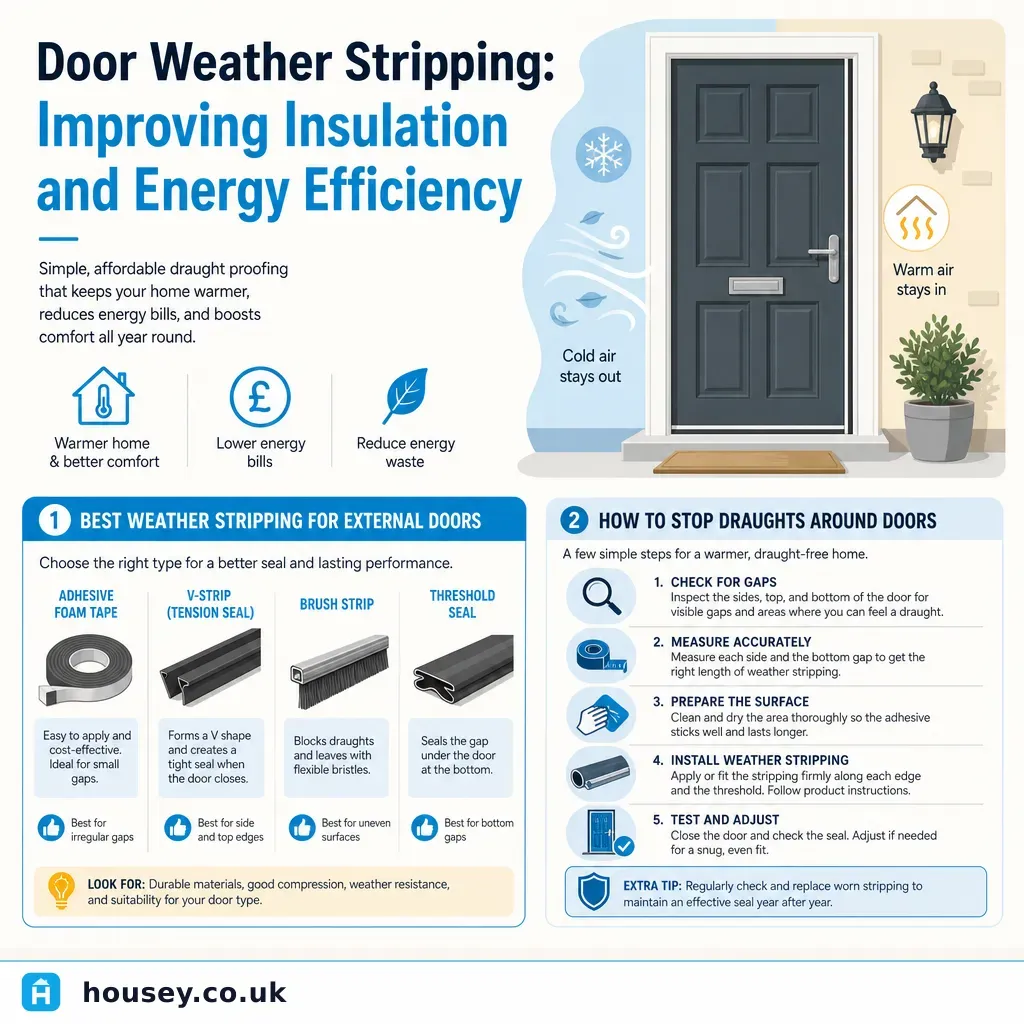
Door Weather Stripping: Improving Insulation and Energy Efficiency
Draughts through external doors are among the most straightforward and affordable sources of heat loss to address in a UK home. The topic usually surfaces when energy bills are rising, a home energy assessment flags air leakage, or a homeowner starts planning wider retrofit works such as insulation or a new heating system. Sealing doors well supports every other energy measure — there is little point in improving a boiler or insulating walls if warm air is still escaping around the frame.
Key points
- Draught-proofing doors and windows in a typical UK semi-detached home can save approximately £45 per year on energy bills, according to the Energy Saving Trust (2024 estimate).
- Building Regulations Part L sets a maximum air permeability of 10 m³/(h·m²) at 50 Pa for new or replacement external door installations.
- Self-adhesive foam tape typically lasts 1–2 years; rubber compression strips can last 5–10 years when correctly fitted to a square, undamaged frame.
- Brush pile seals are generally the best choice for letter plates and door sides where the gap is uneven; compression seals suit door tops and flat-bottomed stops on square frames.
- The threshold gap at the bottom of an external door is usually the single largest source of draught loss — a drop-down or surface-mounted threshold seal is often the most impactful first step.
Why door draughts cost more than you might expect
Warm air escapes through gaps and cold air enters, creating not only heat loss but draughts that make rooms feel uncomfortable even when the thermostat is correctly set. In older UK properties — Victorian terraces, 1930s semis, and pre-war solid-wall houses in particular — original door frames are rarely perfectly square, and gaps widen as the building settles with seasonal movement.
Air leakage can account for a significant proportion of a home's total heat loss. The Energy Saving Trust notes that for an uninsulated, draughty UK home, air infiltration may contribute up to 15–25% of total heat loss. Doors — especially heavily used front and back doors — are a common weak point alongside chimneys and skirting boards.
Types of weather stripping: which product works where
Different sealing products suit different parts of a door. Choosing the wrong type often means poor adhesion, rapid wear, or seals so tightly compressed that the door becomes difficult to close.
Seal type | Best for | Not ideal for | Typical lifespan |
|---|---|---|---|
Self-adhesive foam tape | Letter-plate inner flaps, rarely used secondary doors | External heavy-use doors — compresses and degrades under repeated use | 1–2 years |
Rubber compression strip | Door tops, sides, and stops on reasonably square frames | Uneven or warped frames where poor contact reduces sealing effectiveness | 5–10 years |
Brush pile (wiper) seal | Letter plates, door sides on older frames with uneven gaps | Locations needing an airtight seal — brush strips reduce but do not eliminate airflow | 5–8 years |
Silicone wiper strip | Door bottom where a threshold seal is impractical | Outward-opening doors where the wiper fouls the threshold | 3–7 years |
Drop-down threshold seal | Bottom of external doors — firm seal when door closes | Doors with uneven floors or raised thresholds needing bespoke fitting | 10+ years |
Indicative product lifespans, last reviewed 2026-05-10. Results vary with frame condition, door use frequency, and exposure.
Which doors should you prioritise first?
Not every door in a UK home loses equal amounts of heat. Work through this checklist to focus effort where it matters most:
- External doors first — front door, back door, and any door between a heated and unheated space (such as a door leading to an integral garage or uninsulated utility room).
- Letter plates — factory-fitted letter plate brushes on original doors often flatten over years and are rarely replaced; upgrading to a quality double-brush letter plate is usually low cost and high impact.
- The threshold gap — hold a piece of tissue paper near the bottom of a closed external door on a windy day; any movement indicates a gap worth sealing.
- Check squareness before buying — a warped or settled frame will produce uneven contact with compression strips; a carpenter may need to plane or rehang the door before sealing is effective.
- Internal doors to unheated spaces — loft hatches and doors into uninsulated extensions or garages are often overlooked but can be significant routes for heat loss.
- Patio and French doors — the meeting stile where two leaves come together is a common draught point; brush-pile or compression seals at the meeting edge are often the first seal to fail.
How to tell whether existing seals are failing
Weather stripping degrades gradually, so problems build unnoticed. Signs that seals need replacing:
- Visible daylight around the closed door frame.
- A draught felt by hand at the top, sides, or bottom of the door when closed.
- Peeling, crumbling, or permanently flattened foam tape.
- A brush pile seal worn flat or with bare patches.
- The door closing more easily than it used to — often a sign that compression has been lost.
- Condensation or water ingress at the door threshold or frame corners.
A lit incense stick held around the frame on a cold, windy day can reveal leakage points that are not immediately obvious.
DIY or professional installation?
Most weather stripping is designed for DIY, but results depend on frame condition and squareness.
Choose DIY when:
- The frame is square and in good structural condition.
- The gap is consistent around the door.
- The product requires only adhesive or simple screw fixings.
- You are replacing like-for-like seals on an undamaged door.
Opt for professional installation when:
- The frame is warped, out of square, or showing signs of rot.
- Previous DIY seals have failed repeatedly.
- You are fitting a drop-down threshold seal that requires the door height to be adjusted.
- The door forms part of a fire-rated assembly — fire-rated intumescent seals must be correctly specified and fitted.
When to get professional help
Most draught-proofing is low-risk practical work, but a few situations call for specialist input:
- Frame rot or structural damage — sealing over a rotting frame traps moisture and accelerates deterioration; repair or replace the frame before sealing.
- Fire doors — fire-rated assemblies in flats and multi-occupancy buildings require certified intumescent seals fitted to specification; do not substitute standard draught-proofing products.
- Listed buildings or conservation areas — some local planning authorities restrict alterations to original door furniture; check before making changes.
- End-of-life door — if the door itself is failing, a new, well-fitted door with factory-installed seals will usually outperform remedial sealing of the old one.
How Housey can help
If you need a new door installed with proper factory-fitted seals, or if your existing frame needs professional assessment, window and door installers on Housey can provide quotes for supply and installation. For a broader view of where your home is losing energy — including doors, loft, walls, and heating — an energy-efficiency consultant can produce a prioritised retrofit plan with costed recommendations.
Frequently asked questions
How much can draught-proofing my doors save on energy bills?
The Energy Saving Trust estimates that draught-proofing doors and windows across a typical UK semi-detached home saves around £45 per year on energy bills (2024 estimate). The saving varies with home size, severity of existing draughts, number of external doors, and fuel type. Older properties with original frames and worn seals tend to see the greatest improvement.
Can I draught-proof a door myself, or do I need a professional?
Most weather stripping products are designed for DIY installation and require only basic tools. Foam tape and brush-pile strips are particularly straightforward. However, if the frame is warped, rotten, or out of square, or if you are fitting a drop-down threshold seal that requires the door to be re-hung, a carpenter or window and door installer will achieve a better result. Fire doors in flats always require certified products fitted correctly.
Does draught-proofing affect ventilation in my home?
Sealing draughts around doors reduces uncontrolled air leakage, which differs from controlled ventilation. Controlled ventilation — via trickle vents in windows or a mechanical ventilation system — should not be blocked. If your home is already quite airtight, such as a modern new-build, discuss ventilation adequacy with an energy consultant before significantly tightening the building envelope further.
What is the best type of weather stripping for a letterbox?
A double-brush letter plate — with brush seals on both the inner flap and a second sealing flap — is generally the most effective and durable option. Single-brush factory-fitted flaps on older doors often flatten over time. Look for a product with a full-width brush seal rather than just a rubber flap, as brush pile tolerates movement and varying contact pressure better than rigid alternatives.
Sources and further reading
- Draught proofing — Energy Saving Trust
- Building Regulations Approved Document L: Conservation of Fuel and Power — GOV.UK
- Improve your home's energy efficiency — GOV.UK
- Grants for home improvements — Citizens Advice
Useful next reads
 Energy & Retrofit
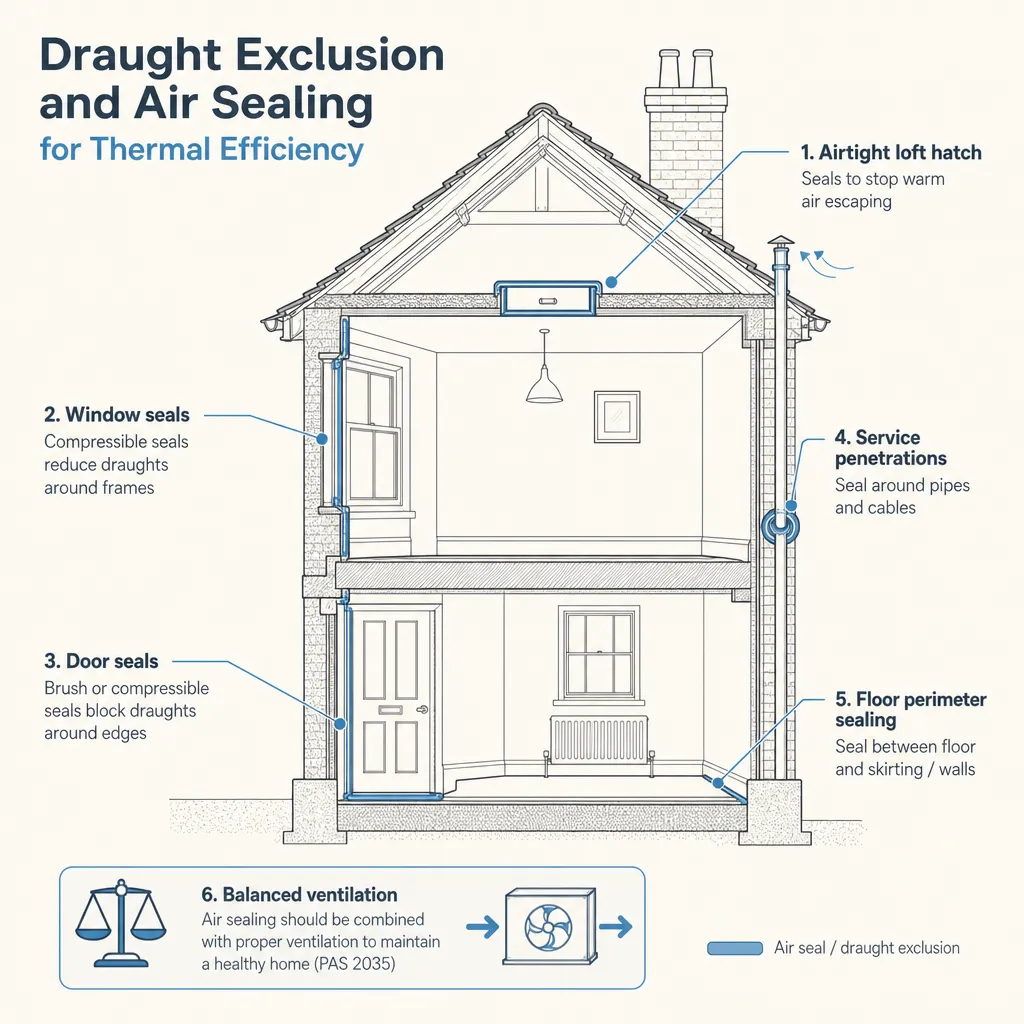
Draught Exclusion and Air Sealing for Thermal Efficiency
Draught proofing and air sealing can cut uncontrolled heat loss by 15–25% in a typical UK home, but sealing a building too tightly without reviewing ventilation risks condensation, mould, and poor air quality.
 Energy & Retrofit
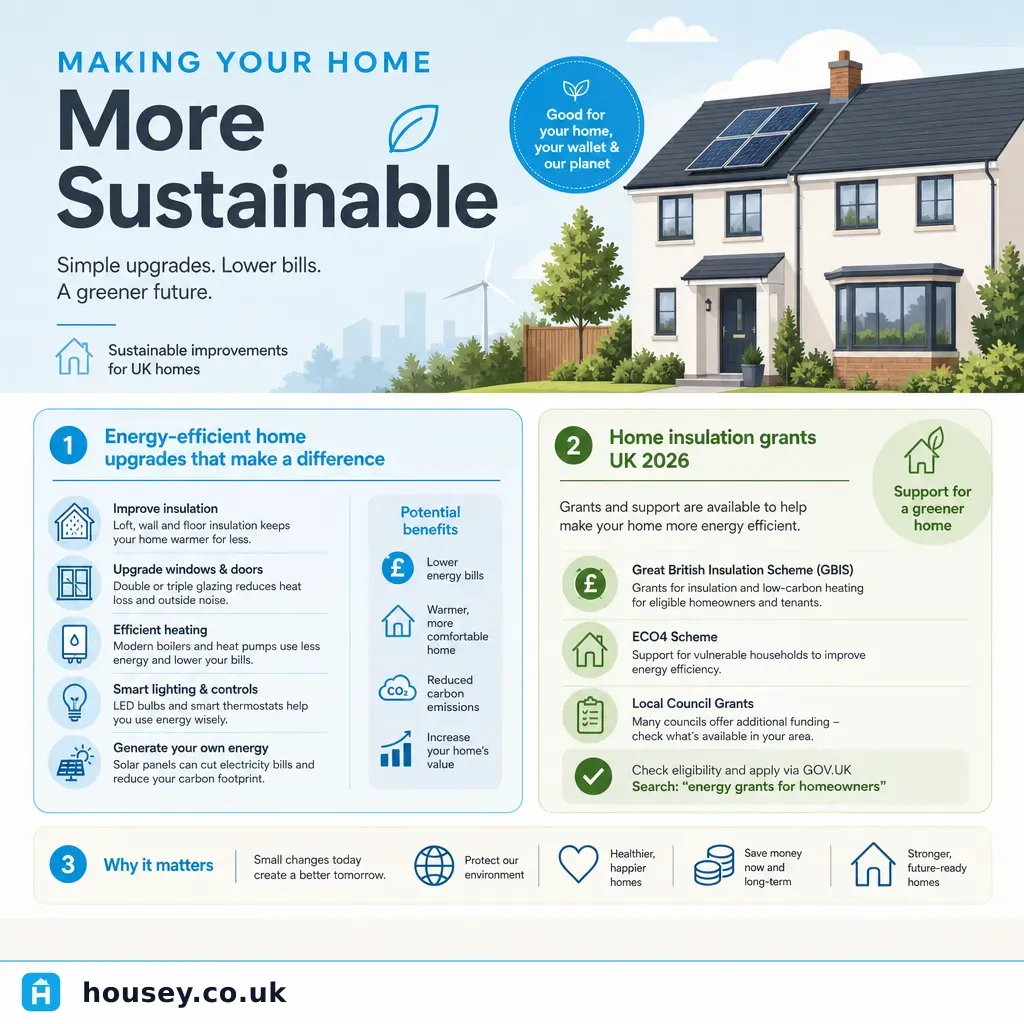
Making your home more sustainable
Making a UK home more sustainable usually starts with fabric-first improvements such as insulation, draught-proofing, and efficient glazing before adding renewable energy systems like solar panels or a heat pump.
 Energy & Retrofit
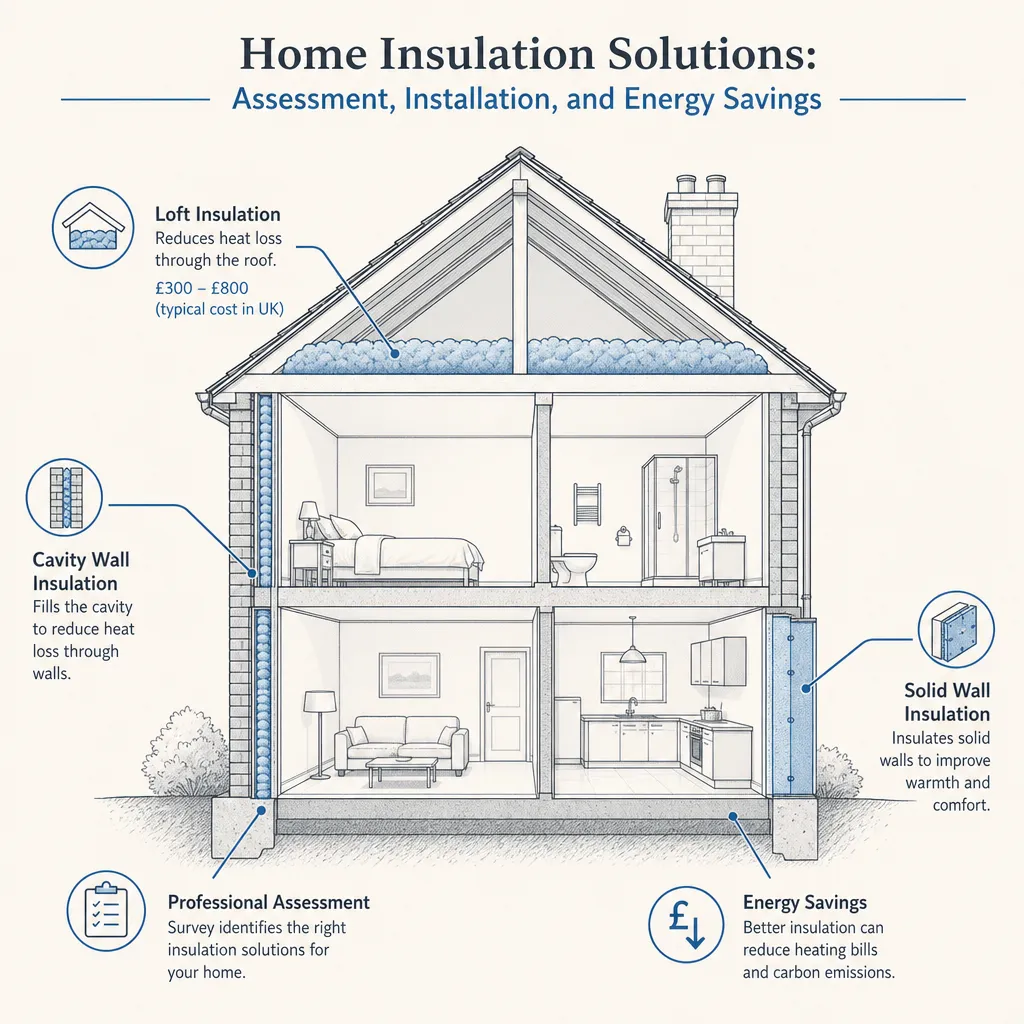
Home Insulation Solutions: Assessment, Installation, and Energy Savings
Home insulation in the UK covers loft, cavity wall, solid wall, and floor insulation.
 Energy & Retrofit
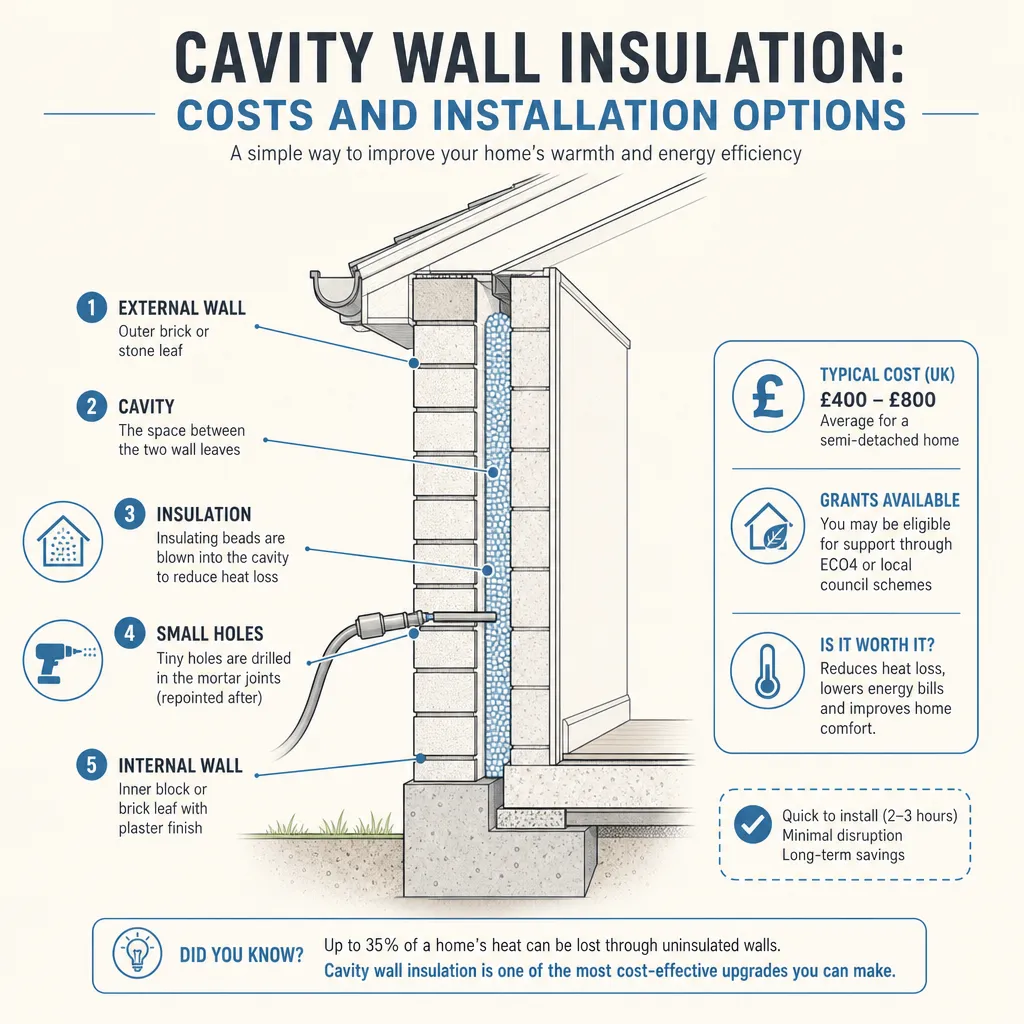
Cavity Wall Insulation: Costs and Installation Options
Cavity wall insulation typically costs £400–£1,200 for a standard UK semi-detached home, though eligible households may pay nothing under ECO4.
 Energy & Retrofit
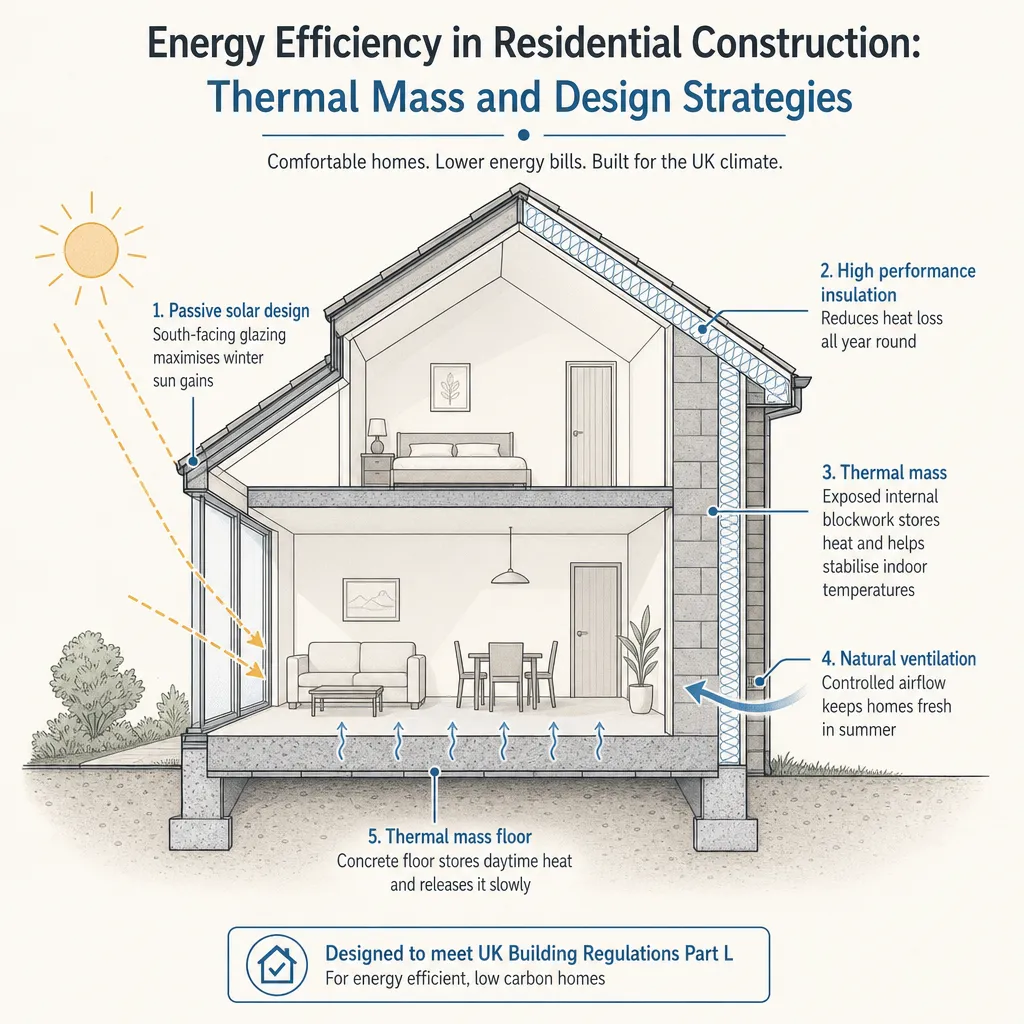
Energy Efficiency in Residential Construction: Thermal Mass and Design Strategies
Thermal mass — the capacity of dense materials such as concrete, brick, and screed to absorb and slowly release heat — reduces temperature swings and can lower heating demand when correctly combined with insulation and controlled ventilation.