Home Insulation Solutions: Assessment, Installation, and Energy Savings
By Housey · Last reviewed 31st of May 2026
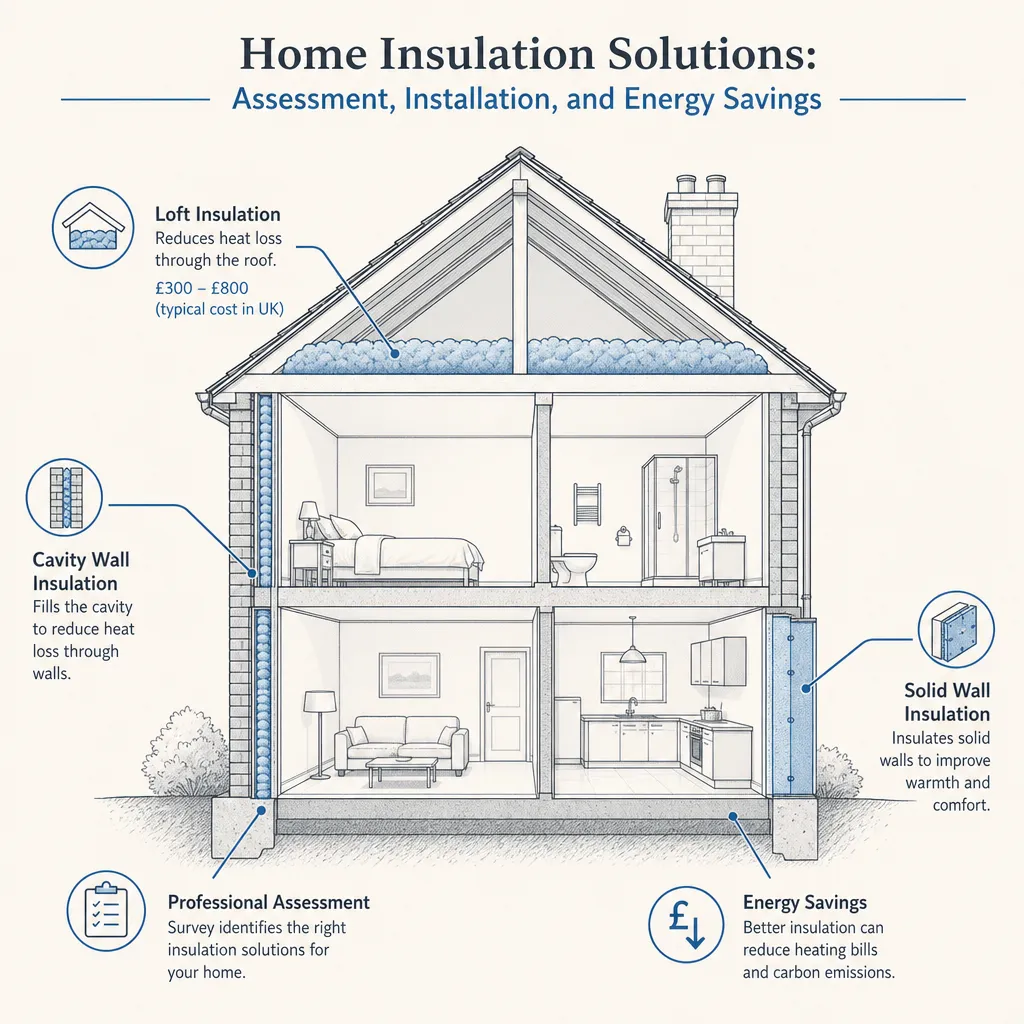
Home Insulation Solutions: Assessment, Installation, and Energy Savings
Poorly insulated homes account for a significant share of the UK's domestic energy waste — and with fuel bills remaining high, more homeowners are reviewing whether their walls, roof, and floors are working as effectively as they should. Whether you're responding to a poor EPC rating, preparing for a retrofit assessment, or looking to reduce heat loss in a Victorian terrace or 1930s semi, choosing the right insulation type and installer matters both for comfort and for long-term building performance.
Key points
- Building Regulations Approved Document L requires a minimum U-value of 0.16 W/m²K for pitched roof insulation when upgrading existing dwellings.
- PAS 2035:2023 is the British Standard governing domestic retrofit, and all ECO4-funded work must comply with it.
- Cavity wall insulation is only suitable where the wall cavity is clear, undamaged, and at least 50 mm wide — a pre-installation borescope survey is required before work begins.
- Solid wall insulation (internal or external) carries a condensation and moisture risk if not designed and detailed correctly; a qualified retrofit assessor should review the specification.
- TrustMark registration is required for installers delivering government-funded schemes such as ECO4 and the Great British Insulation Scheme.
Which type of insulation does your home need?
The correct insulation measure depends on your property's construction, age, and existing energy performance. Most UK homes built before 1920 have solid walls; those built between roughly 1920 and 1995 typically have cavity walls. Homes built after 2000 may already have insulation installed to Building Regulations standards, though the specification may not meet current Part L targets.
Insulation type | Suited to | Typical U-value achievable | Key considerations |
|---|---|---|---|
Loft insulation (mineral wool) | Most homes with accessible loft space | 0.11–0.16 W/m²K | Relatively straightforward; check existing depth and roof ventilation |
Cavity wall insulation | Homes with unfilled cavities of 50 mm or more | 0.27–0.45 W/m²K | Cavity condition survey required; unsuitable for exposed or persistently wet elevations |
External wall insulation (EWI) | Solid-wall homes | 0.18–0.30 W/m²K | Changes external appearance; may need planning permission in conservation areas |
Internal wall insulation (IWI) | Solid-wall homes where EWI is impractical | 0.18–0.30 W/m²K | Reduces room dimensions; vapour control layer essential to manage moisture risk |
Floor insulation | Suspended timber ground floors | 0.18–0.25 W/m²K | Access required beneath; may affect skirtings and fitted furniture |
Roof room or flat roof insulation | Rooms in roof; flat roofs | 0.18 W/m²K | Cold-deck or warm-deck design choice affects moisture risk significantly |
How are U-values used in retrofit decisions?
A U-value measures how readily a building element conducts heat — the lower the number, the better the insulation performance. Approved Document L sets threshold U-values for works on existing dwellings. When upgrading a pitched roof, the target is 0.16 W/m²K; for cavity walls, 0.55 W/m²K is the current minimum threshold, though doing better is encouraged where cost-effective.
For fully funded retrofit schemes, PAS 2035 requires a retrofit coordinator to assess the whole property — not just individual measures — to avoid introducing moisture, ventilation, or structural problems by insulating without considering the building as a system. This whole-house approach is what distinguishes compliant retrofit from ad hoc insulation work.
Government funding and eligibility
Several government-backed schemes can reduce or eliminate the cost of insulation for eligible homeowners:
- ECO4 (Energy Company Obligation 4): Targets fuel-poor households and those with low EPC ratings (D, E, F, or G). Eligible homeowners may receive fully funded cavity wall, solid wall, or loft insulation. All work must comply with PAS 2035 and use TrustMark-registered contractors.
- Great British Insulation Scheme (GBIS): Covers a broader range of households and focuses on single-measure insulation improvements. Check GOV.UK for current availability and deadlines.
- Home Upgrade Grant (HUG): Targeted at low-income households in off-gas-grid properties in England, delivering insulation alongside other low-carbon measures.
Eligibility depends on property EPC rating, household income, and benefit status. Your local council or an ECO-registered assessor can confirm what you may qualify for before any work is agreed.
What does an insulation assessment involve?
Before installation, a professional insulation assessment typically includes:
- Visual inspection of the roof, walls, and floors
- Borescope inspection of the cavity (for cavity wall assessments)
- Review of the existing EPC or energy performance data
- Moisture and damp checks, particularly for solid-wall properties
- Consideration of ventilation — insulating a home without managing airflow can cause condensation and damage to the building fabric
For properties where multiple measures are being installed, a full PAS 2035 retrofit assessment by a qualified retrofit assessor is advisable. This produces a Whole House Plan that sequences measures in a safe and effective order, reducing the risk of unintended consequences.
Homeowner checklist: preparing for insulation work
Red flags to watch for
- An installer who does not carry out a pre-installation survey of the cavity or loft condition before quoting
- Quotes that do not specify product type, thickness, or the U-value to be achieved
- No mention of moisture, ventilation, or damp checks before solid-wall insulation work
- Pressure to accept funding or start work immediately, without time to review the proposal
- No TrustMark registration or relevant accreditation for ECO4 or GBIS-funded work
- Unusually low prices with no explanation of what is excluded
Important limitations
This article provides general information about home insulation options in the UK. Insulation specifications, funding eligibility, and regulatory requirements vary significantly by property type, location, wall construction, and condition. Solid wall insulation and flat roof insulation carry particular moisture risks if incorrectly specified. A qualified retrofit assessor or surveyor should assess your property before any work begins. This article does not constitute technical, regulatory, or financial advice.
When to get professional help
You should seek professional advice before proceeding if:
- Your home has an existing history of damp, condensation, or moisture problems
- You are considering solid wall insulation, whether internal or external
- Your property is in a conservation area or is listed (planning permission may be required for external changes)
- Your property has non-standard construction such as prefabricated concrete, steel frame, or timber frame
- You want to access ECO4, GBIS, or other government-funded schemes
- Your EPC is rated F or G and you are a landlord — Minimum Energy Efficiency Standards (MEES) obligations may apply
What to ask a qualified professional
- What is my current wall construction type and estimated U-value?
- Do I need a PAS 2035 retrofit assessment before any measures are installed?
- Will this insulation measure affect the ventilation or moisture balance of the building?
- What accreditations do you hold, and are you TrustMark-registered?
- Will the work require Building Regulations approval, and who arranges the completion certificate?
- What product warranty and installation guarantee does the work carry?
How Housey can help
Housey connects homeowners with qualified professionals for insulation assessments and insulation installation. If you are considering a whole-house approach or want to access government-funded schemes, you can also find retrofit assessors who can produce a PAS 2035-compliant Whole House Plan, helping you sequence measures safely and make the most of available funding.
Frequently asked questions
How much does home insulation cost in the UK?
Indicative UK costs, last reviewed 2026-05-31. Loft insulation typically costs £300–£600 for a semi-detached home. Cavity wall insulation ranges from £400–£1,000. External solid wall insulation can cost £8,000–£22,000 depending on property size and specification. ECO4 and GBIS may cover all or part of the cost for eligible households. Always get multiple quotes and ask for itemised breakdowns specifying product, thickness, and U-value.
Does home insulation add value to my property?
Improving your EPC rating can make a property more attractive to buyers and, in some markets, may support a higher asking price. The effect varies by location, property type, and buyer demand. Insulation alone does not guarantee a valuation uplift. EPC improvements are increasingly relevant to landlord compliance under Minimum Energy Efficiency Standards and to some mortgage product eligibility criteria.
Do I need planning permission for home insulation?
Most loft and cavity wall insulation does not require planning permission. External wall insulation changes the external appearance of a building and may require permission if you live in a conservation area, own a listed building, or if permitted development rights have been restricted. Always check with your local planning authority before starting any external works.
What is PAS 2035 and why does it matter?
PAS 2035:2023 is the British Standard for domestic retrofit. It sets out how retrofit projects should be assessed, designed, installed, and evaluated to avoid problems such as moisture damage, overheating, or inadequate ventilation. All ECO4-funded work must comply with PAS 2035, and it is considered best practice for any retrofit project involving multiple measures or solid-wall properties.
Sources and further reading
- Building Regulations Approved Document L — GOV.UK
- ECO4 scheme guidance — GOV.UK
- Great British Insulation Scheme — GOV.UK
- PAS 2035 Retrofit Standard — BSI Group
- TrustMark — find a registered installer — TrustMark
- EPC Register — GOV.UK
Useful next reads
 Energy & Retrofit
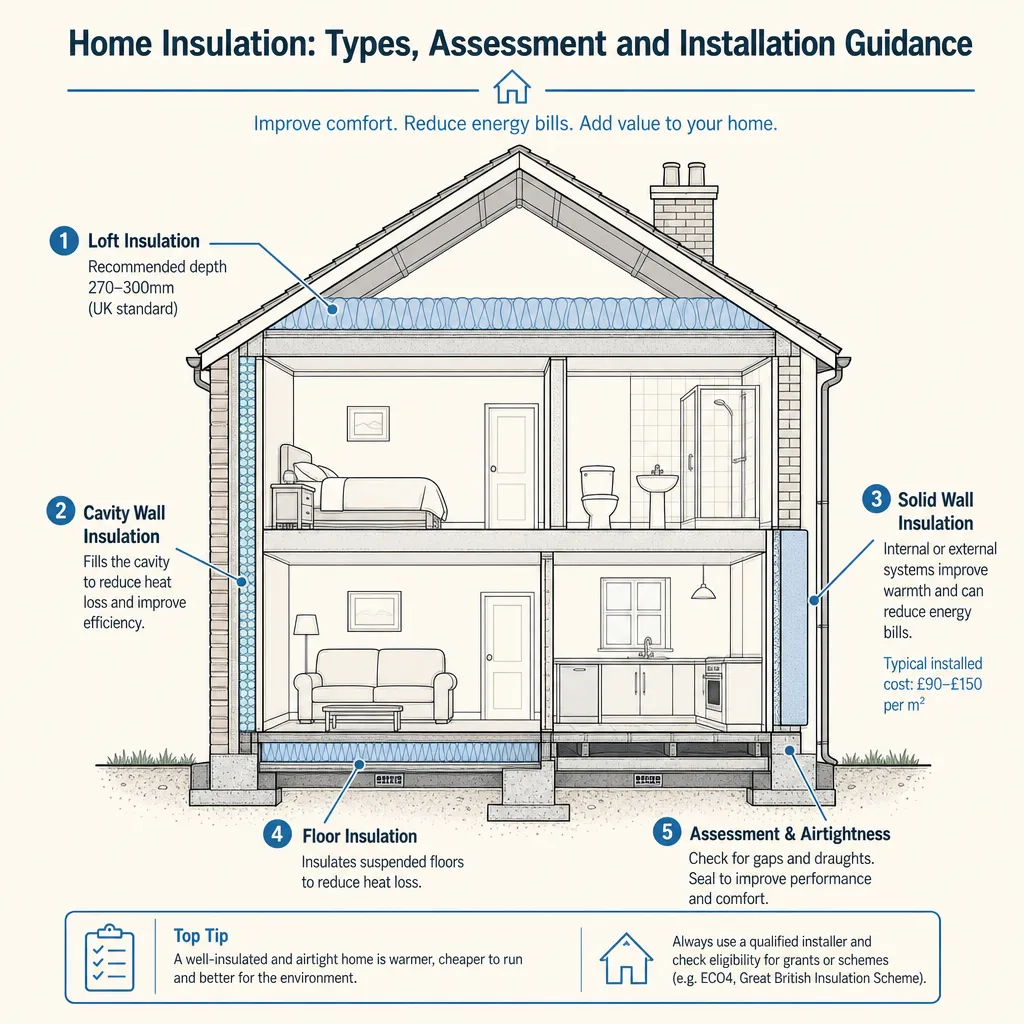
Home Insulation: Types, Assessment and Installation Guidance
Home insulation reduces heat loss through walls, roofs, and floors.
 Energy & Retrofit
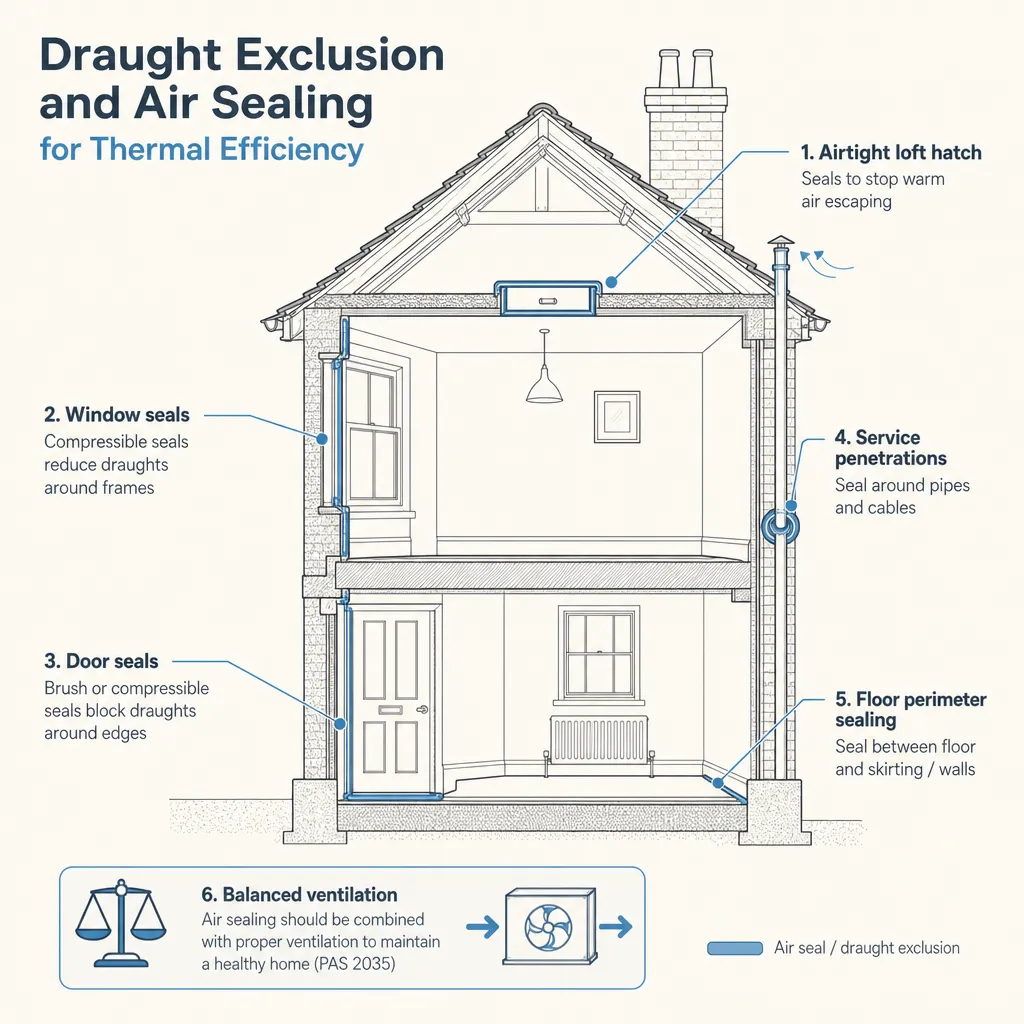
Draught Exclusion and Air Sealing for Thermal Efficiency
Draught proofing and air sealing can cut uncontrolled heat loss by 15–25% in a typical UK home, but sealing a building too tightly without reviewing ventilation risks condensation, mould, and poor air quality.
 Energy & Retrofit
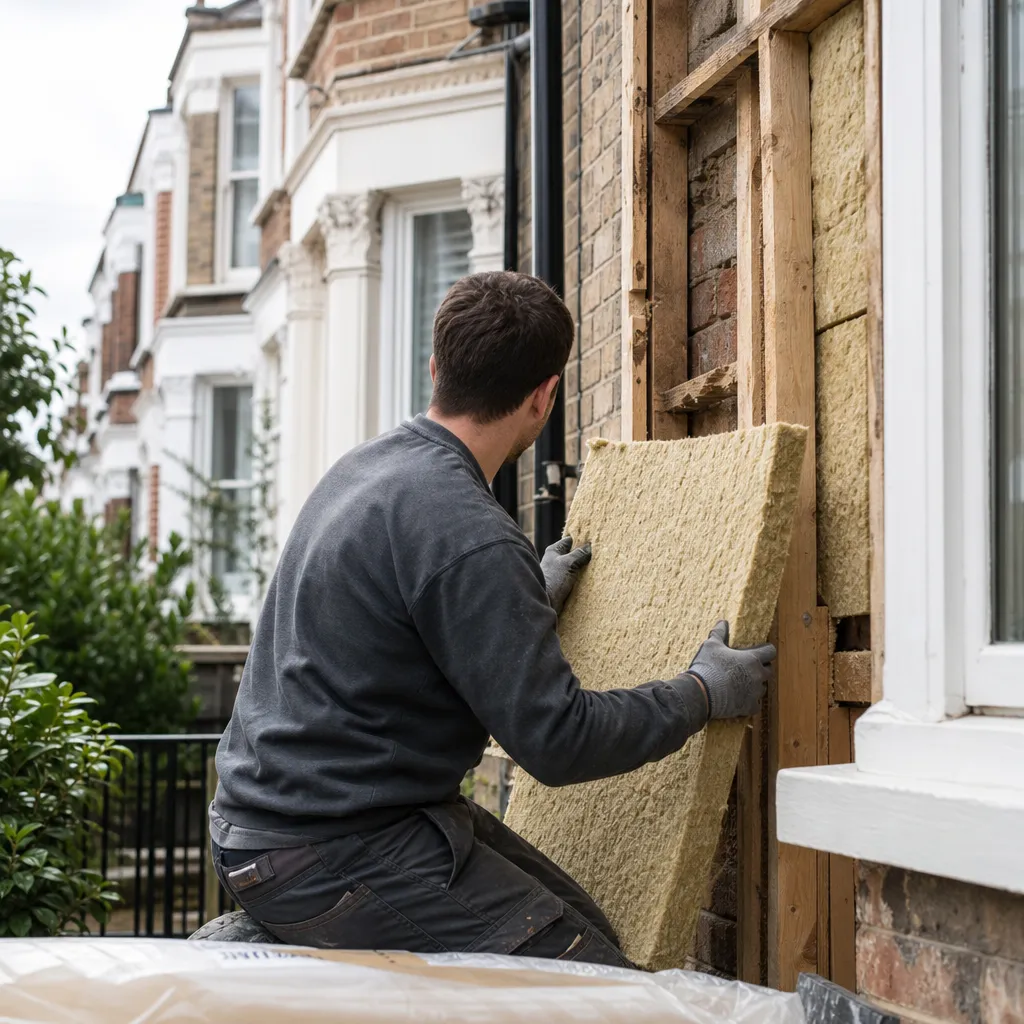
Selecting the Right Insulation for Your Home: Types and Benefits
Most UK homes benefit from loft insulation (270mm mineral wool recommended), cavity wall fill for post-1920 properties, or solid wall insulation — either EWI or IWI — for Victorian and Edwardian homes.
 Energy & Retrofit
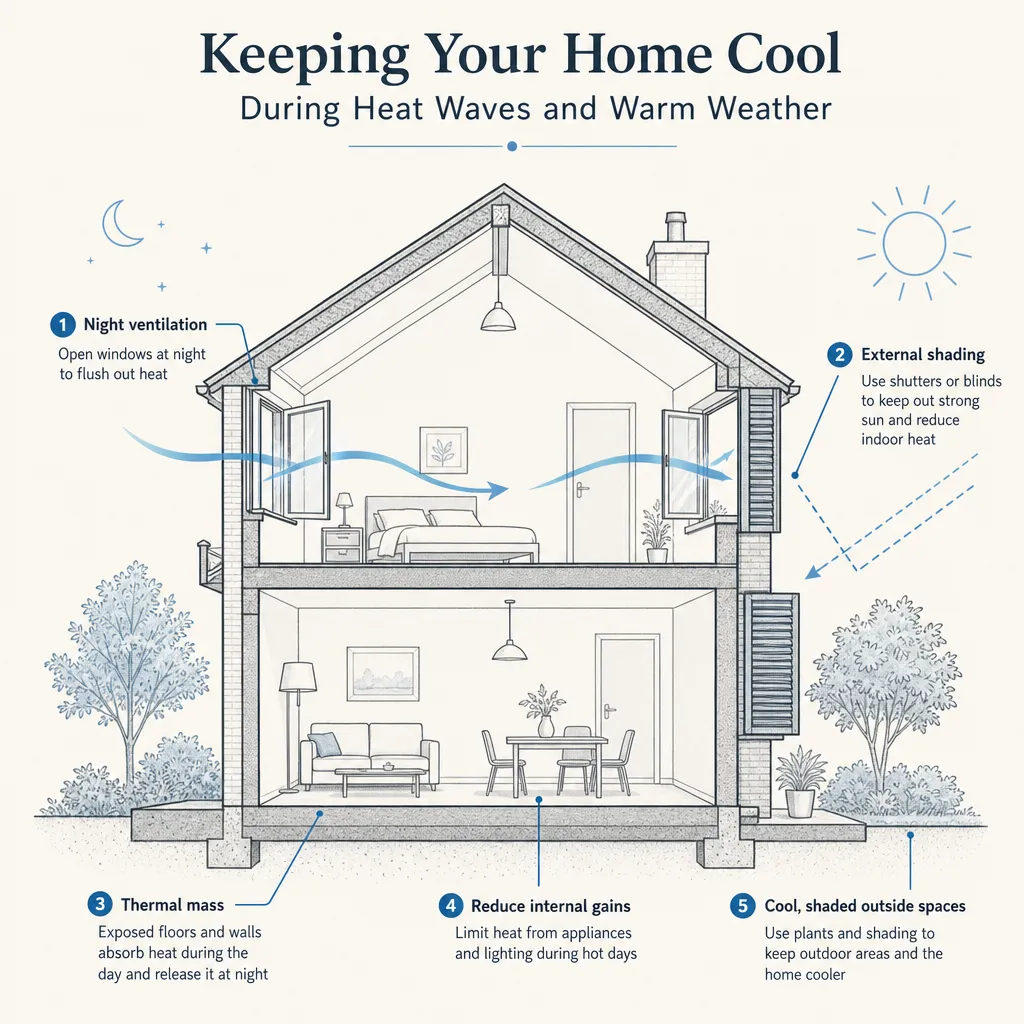
Keeping Your Home Cool During Heat Waves and Warm Weather
The most effective free strategy for cooling a UK home during hot weather is night-time cross-ventilation: open windows on opposite sides of the house once outdoor temperatures fall, then close them in the morning to trap cooler air.
 Energy & Retrofit
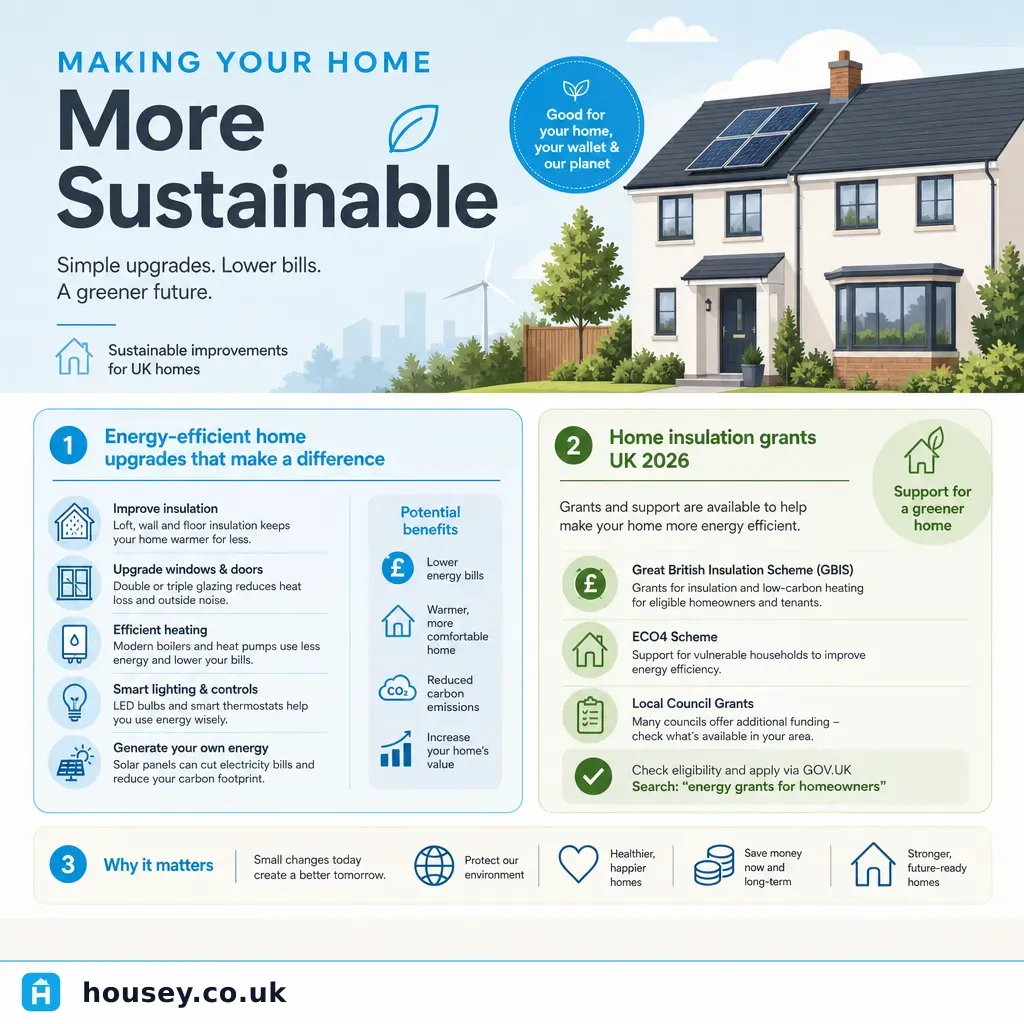
Making your home more sustainable
Making a UK home more sustainable usually starts with fabric-first improvements such as insulation, draught-proofing, and efficient glazing before adding renewable energy systems like solar panels or a heat pump.