Energy Efficiency in Residential Construction: Thermal Mass and Design Strategies
By Housey · Last reviewed 24th of May 2026
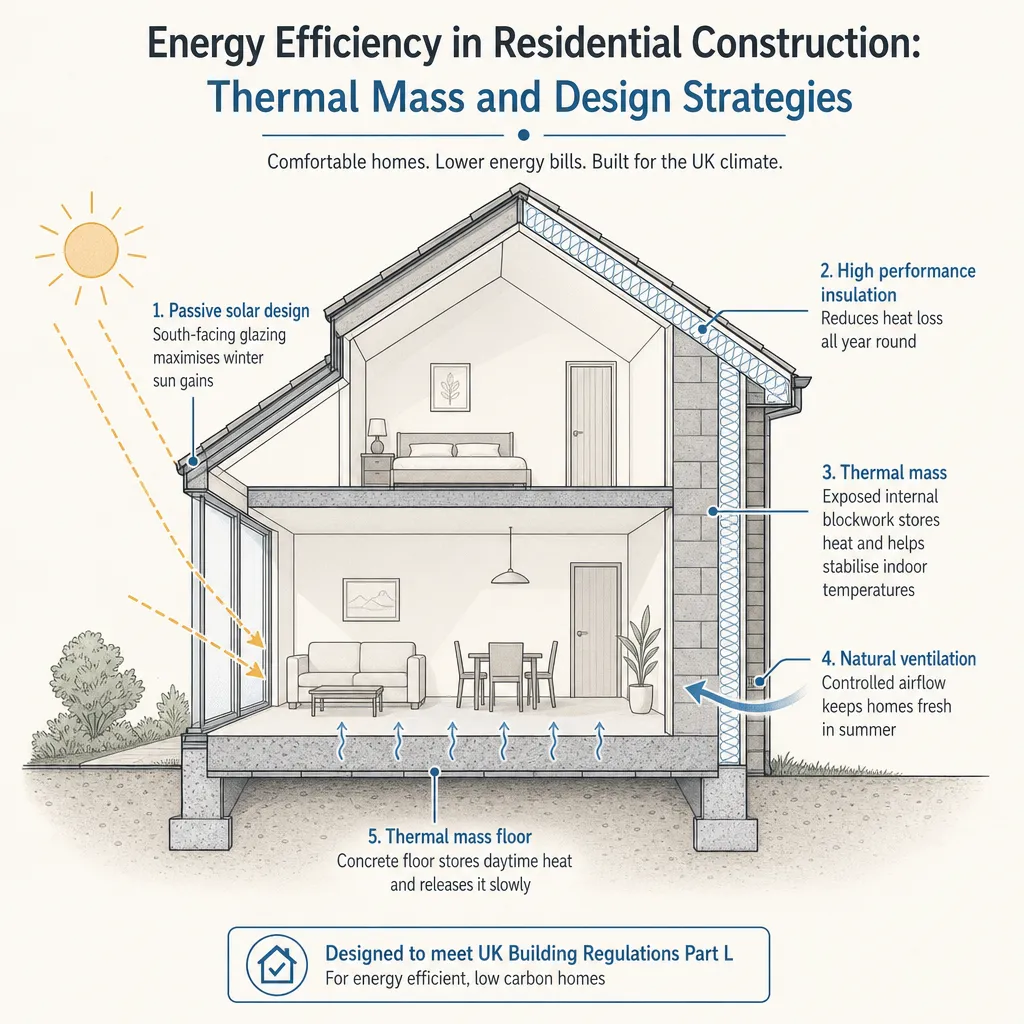
Energy Efficiency in Residential Construction: Thermal Mass and Design Strategies
Decisions made at the design stage of a new build or extension have a far greater impact on long-term energy performance than any retrofit measure applied afterwards. For UK homeowners, self-builders, and developers, understanding how thermal mass interacts with insulation, glazing, ventilation, and orientation can mean the difference between a home that performs as designed and one that delivers high bills or uncomfortable temperatures. Building Regulations Part L sets the minimum standard, but the most energy-efficient homes go considerably further.
Key points
- Building Regulations Part L (Conservation of Fuel and Power) sets minimum energy performance standards for new dwellings in England; equivalent regulations apply in Wales (Part L), Scotland (Section 6), and Northern Ireland (Part F).
- The Standard Assessment Procedure (SAP) is the UK government's approved method for rating the energy performance of dwellings; all new homes must achieve a minimum SAP score before building control sign-off.
- Thermal mass — the ability of a material to absorb, store, and slowly release heat — can reduce peak summer temperatures and moderate heating demand in winter when correctly combined with insulation and controlled ventilation.
- The Future Homes Standard (England) is expected to require new homes to produce 75–80% fewer carbon emissions than those built to 2013 standards; self-builders and developers should account for this direction of travel in current specifications.
- Building Regulations Approved Document O (Overheating), which came into force in June 2022, requires overheating assessments for new homes in England — thermal mass is one compliance tool but is not sufficient alone.
What is thermal mass and why does it matter in UK homes
Thermal mass describes a material's capacity to absorb and store heat energy, then release it slowly as temperatures drop. Dense materials — concrete, brick, stone, rammed earth — have high thermal mass. Lightweight materials — timber frame, lightweight steel, plasterboard — have low thermal mass.
In a UK climate, thermal mass works most effectively when three conditions are met:
- The building is well insulated, so stored heat is not rapidly lost through the fabric.
- The building is orientated to admit low winter sun and limit summer overheating.
- Ventilation is controlled so that night-time cooling can flush heat from high-mass elements during summer.
Poorly deployed thermal mass — for instance, in an uninsulated solid-wall property — can work against occupant comfort by absorbing heat that is then slowly lost through the wall to the outside rather than being released beneficially into the interior.
Thermal mass materials: a comparison
Material | Thermal mass level | Typical UK application | Key considerations |
|---|---|---|---|
Dense concrete block (inner leaf) | High | Inner leaf of cavity walls, ground floor slabs | Effective when insulated externally; less effective with internal insulation only |
Brick | Moderate to high | Solid walls, inner leaf of cavity walls | Solid-wall brick has high mass but poor insulation unless retrofitted |
Screed over concrete slab | High | Ground floors, especially with underfloor heating | Good for even heat distribution; slow thermal response time |
Rammed earth or stabilised earth | High | Specialist self-build | Niche UK application; specialist structural and thermal design required |
Timber frame | Low | Widespread in Scotland, growing across England | Fast thermal response; pairs well with high insulation levels |
Lightweight steel frame | Low | Modern modular construction | Requires careful thermal bridge design to avoid cold spots |
Insulated concrete formwork (ICF) | High, with integrated insulation | Self-build new builds | Combines high mass and high insulation in one system |
Key passive design strategies for UK homes
Orientation and glazing. South-facing glazing admits low winter sun, contributing to useful solar gains. CIBSE guidance recommends limiting east and west-facing glazing to reduce unwanted summer gains, and carefully sizing south glazing to balance winter benefit against summer overheating risk assessed under Part O.
Fabric-first approach. Approved Document L requires a Fabric Energy Efficiency Standard (FEES) in addition to a carbon target. A fabric-first approach prioritises high-performance walls, roofs, floors, and windows — minimising energy demand before adding renewable technology such as solar panels or heat pumps.
Airtightness and ventilation. Part L requires new homes to be air-pressure tested at completion. A typical target is 5 m³/h/m² at 50 Pa; more ambitious designs aim for 1–2 m³/h/m² (approaching Passivhaus levels). As airtightness improves, controlled mechanical ventilation with heat recovery (MVHR) is usually required to maintain air quality.
Thermal bridging. Heat loss at structural junctions — wall-to-floor, wall-to-roof, around window reveals — can account for 20–30% of total fabric heat loss in a well-insulated building. Approved Document L requires junction details to be calculated or recognised default psi-values used in the SAP calculation.
Overheating mitigation. Part O requires new homes to be assessed against overheating criteria. High-mass construction can help, but external shading, controlled window sizing, and cross-ventilation provision are also key to a compliant and comfortable design.
Design checklist for energy-efficient residential construction
Use this checklist when briefing an architect, designer, or energy consultant:
Thermal mass in common UK house types
Victorian solid-wall terrace. High thermal mass but very poor insulation; the mass benefit is largely negated by rapid heat loss through uninsulated walls. External or internal wall insulation is needed before thermal mass can be used to advantage.
1930s cavity-wall semi-detached. Moderate mass in the inner blockwork leaf. Cavity fill and supplementary internal or external insulation significantly improve performance, allowing the existing mass to work more effectively with a modern heating system.
1990s timber-frame estate house. Low mass but generally better insulated than masonry peers of the same era. A concrete screed ground floor can add useful thermal mass, particularly for underfloor heating systems.
New-build self-build. The greatest design freedom. An ICF structure provides both high mass and high insulation in a single system. A timber-frame structure with a concrete slab floor gives a practical hybrid approach suited to Part L compliance and beyond.
When to get professional help
An energy-efficiency consultant or SAP assessor should be involved from the earliest design stage of any new build, extension, or major renovation where Part L compliance is required. Professional input is particularly important when:
- The project is a new dwelling requiring a full SAP assessment and Part O overheating check.
- You are targeting Passivhaus or near-Passivhaus standard and need certified design input.
- The property has unusual orientation, shading, or massing that makes standard approaches unreliable.
- You are specifying an air-source or ground-source heat pump and need the fabric and thermal mass to be matched to the system's low-flow-temperature operating characteristics.
- You want to future-proof the design against upcoming Future Homes Standard requirements.
How Housey can help
Getting thermal mass and energy design right starts with qualified advice early in the process. Housey can connect you with energy-efficiency consultants who can review your design, carry out SAP calculations, advise on Part L and Part O compliance, and help you make the right fabric and system choices from the outset — before decisions become costly to reverse.
Frequently asked questions
Does thermal mass make a home harder to heat?
Not if designed correctly. High-mass buildings take longer to warm from cold, so they suit steady, low-temperature heating rather than intermittent bursts. Paired with a well-insulated fabric and a heat pump providing consistent low output, thermal mass helps maintain even temperatures and reduces energy demand. Intermittent heating of a high-mass, under-insulated home is considerably less effective.
Is thermal mass relevant for UK extensions?
Yes. An extension with a concrete slab floor and dense blockwork inner leaf will moderate temperatures more effectively than a lightweight timber-frame extension, particularly in summer. Insulation and glazing specification matters at least as much as mass — check your architect has carried out a Part O overheating assessment and specified appropriate shading or ventilation accordingly.
What U-values does Part L require for new homes in England?
Under Approved Document L 2021 (England), indicative limiting fabric U-values are: external walls 0.26 W/m²K, roofs 0.16 W/m²K, ground floors 0.18 W/m²K, windows 1.6 W/m²K. The actual specification depends on the SAP calculation for the specific design. Always check current approved documents on GOV.UK, as these values may be updated.
What is the Future Homes Standard?
The Future Homes Standard is the UK government's plan for England to require new homes to produce 75–80% fewer carbon emissions than those built to 2013 standards, with no fossil-fuel heating connections. Transitional provisions are in place and the full standard is expected by 2025/2026. Self-builders and developers should factor the direction of travel into current specifications.
Sources and further reading
- Approved Document L: Conservation of Fuel and Power — GOV.UK
- Approved Document O: Overheating — GOV.UK
- Standard Assessment Procedure (SAP) — GOV.UK / BRE
- Energy Saving Trust: Heating and insulation guidance — Energy Saving Trust
- CIBSE Guide A: Environmental Design — CIBSE
Useful next reads
 Energy & Retrofit
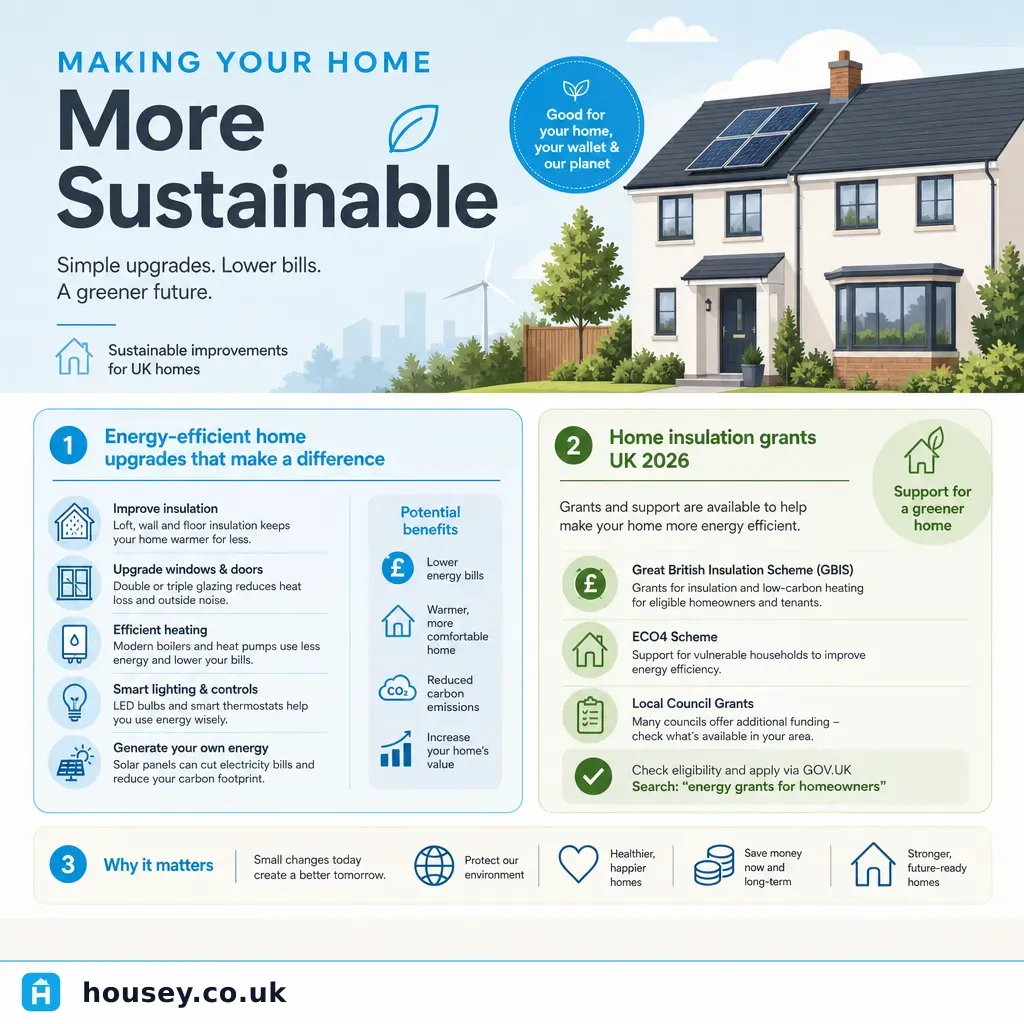
Making your home more sustainable
Making a UK home more sustainable usually starts with fabric-first improvements such as insulation, draught-proofing, and efficient glazing before adding renewable energy systems like solar panels or a heat pump.
 Energy & Retrofit
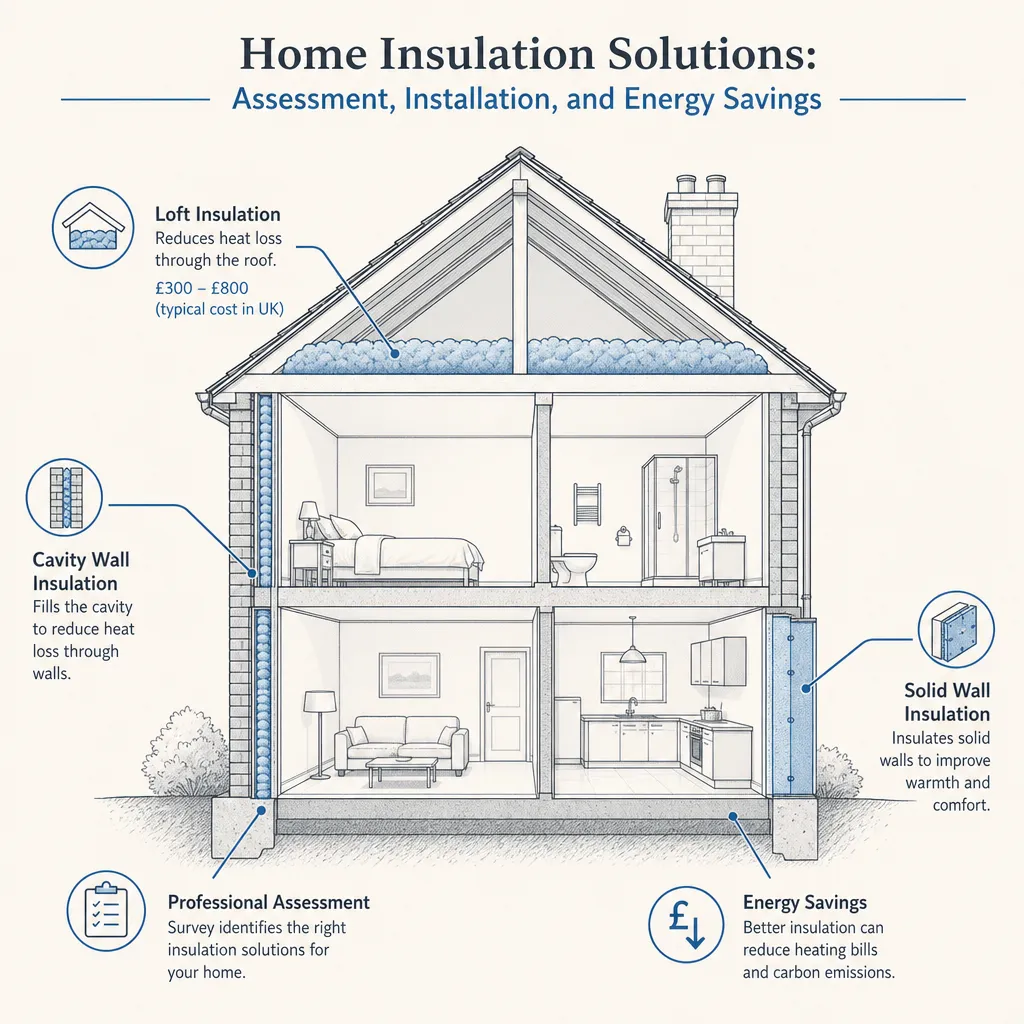
Home Insulation Solutions: Assessment, Installation, and Energy Savings
Home insulation in the UK covers loft, cavity wall, solid wall, and floor insulation.
 Energy & Retrofit
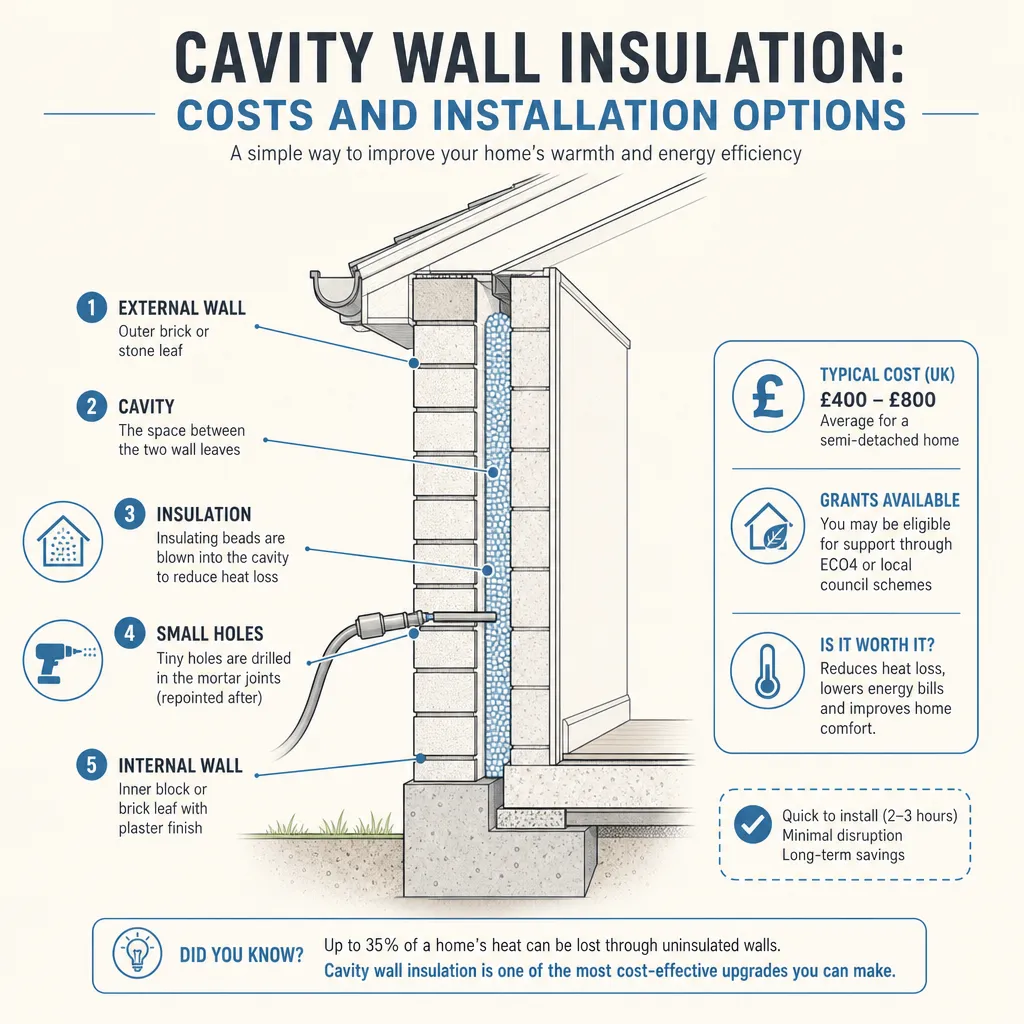
Cavity Wall Insulation: Costs and Installation Options
Cavity wall insulation typically costs £400–£1,200 for a standard UK semi-detached home, though eligible households may pay nothing under ECO4.
 Energy & Retrofit
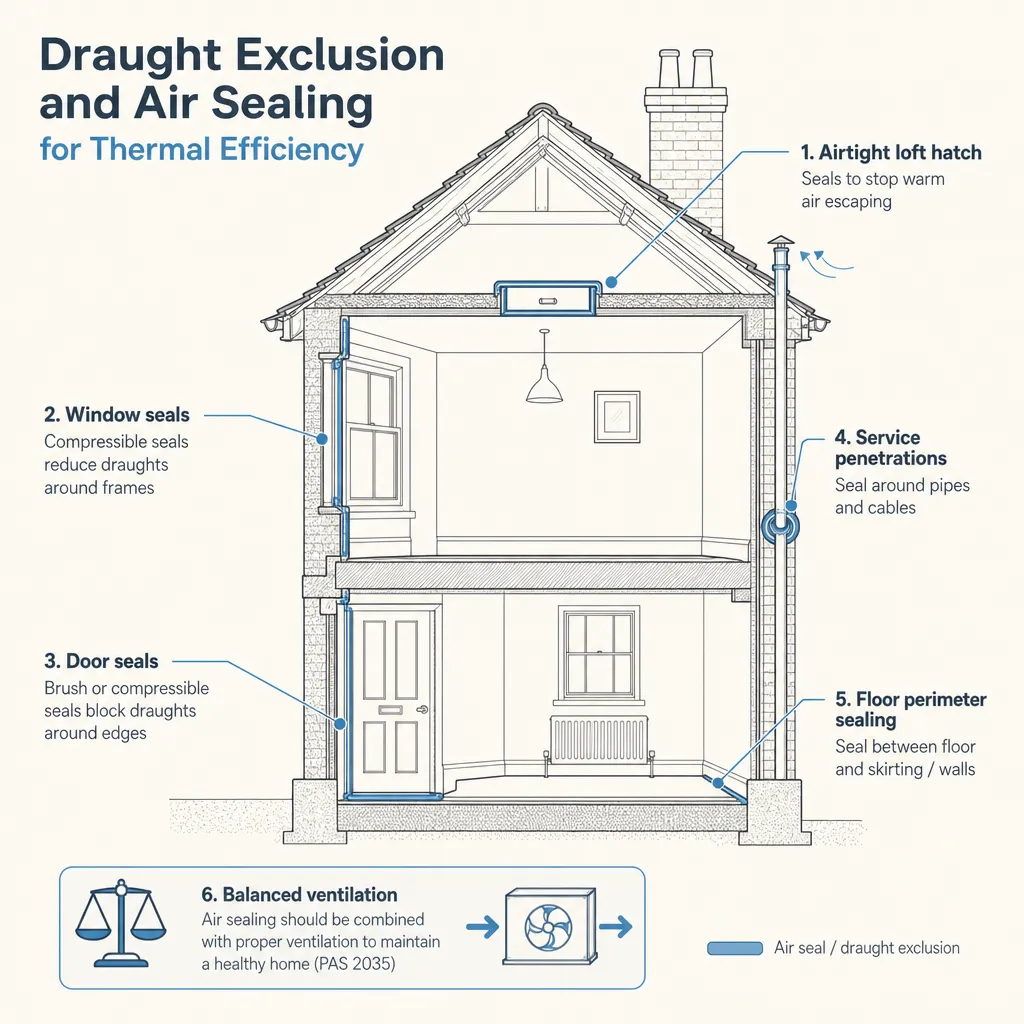
Draught Exclusion and Air Sealing for Thermal Efficiency
Draught proofing and air sealing can cut uncontrolled heat loss by 15–25% in a typical UK home, but sealing a building too tightly without reviewing ventilation risks condensation, mould, and poor air quality.
 Energy & Retrofit
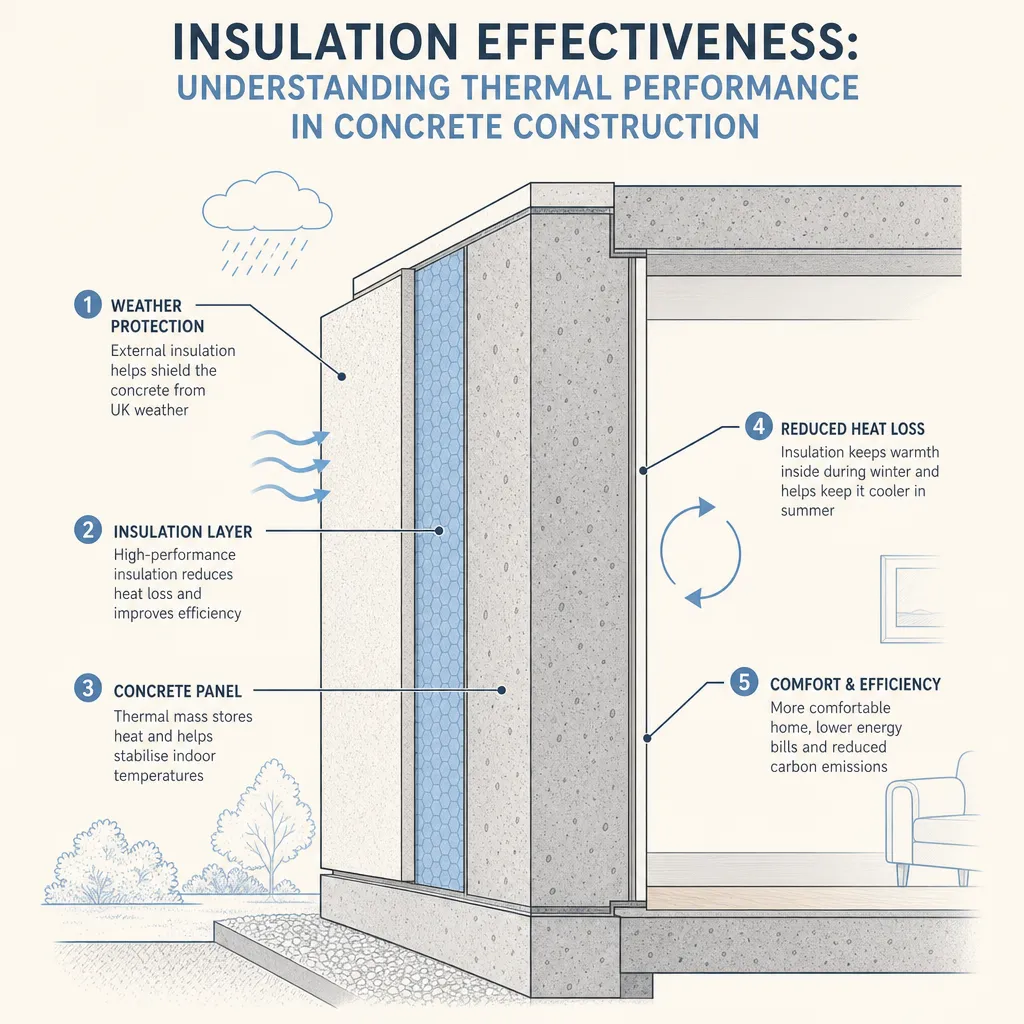
Insulation Effectiveness: Understanding Thermal Performance in Concrete Construction
Concrete is around 30–60 times more thermally conductive than mineral wool insulation.