Doorbell Installation Costs and Smart Doorbell Fitting in the UK
By Housey · Last reviewed 6th of May 2026
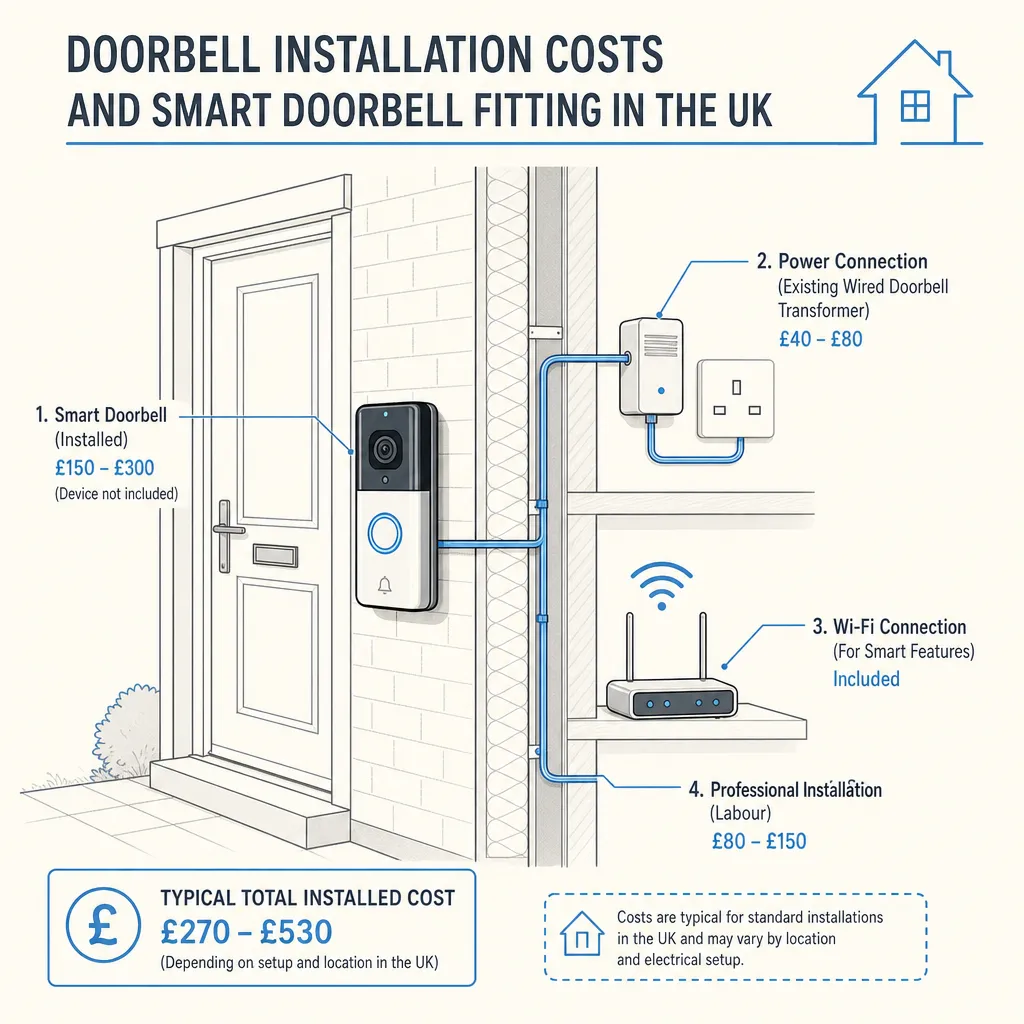
Doorbell Installation Costs and Smart Doorbell Fitting in the UK
Whether you're replacing a broken chime, adding a video doorbell for security, or fitting a system at a newly renovated entrance, the type of doorbell you choose will determine whether this is a DIY weekend job or a task for a qualified electrician. The rise of smart video doorbells — from Ring and Nest to Arlo and Eufy — has made the decision more complex, with compatibility checks, transformer ratings, and data-privacy considerations all playing a part before you buy.
Key points
- Battery-powered wireless doorbells cost £20–£80 for the unit and are DIY-installable without any electrical qualification.
- Hardwired smart video doorbells (Ring Video Doorbell Pro, Google Nest Doorbell Wired) cost £100–£300 for the device; professional fitting typically adds £50–£150.
- Most hardwired smart doorbells require a transformer rated at 16–24V AC and at least 10VA — older UK transformers are typically 8V and often need upgrading.
- Any new cable runs or work at the consumer unit must be carried out by a Part P-registered electrician under Building Regulations (England and Wales).
- Properties in conservation areas may have restrictions on visible external camera devices — check with your local planning authority before installation.
Types of doorbell: which is right for your home?
There are four main types of doorbell system, each with a different cost profile and installation requirement.
Type | Typical unit cost | Fitting method | Electrician needed? | Best for |
|---|---|---|---|---|
Wireless/battery | £20–£80 | Wall-mount + receiver plug-in | No (DIY) | Renters, quick upgrades, no existing wiring |
Wired (traditional) | £30–£100 | Hardwired to existing chime transformer | Usually no, if using existing cable | Reliable connection, homes with working chime wiring |
Smart video (battery) | £80–£200 | Wall-mount, charges periodically | No (DIY) | Security, remote answering, flexibility |
Smart video (hardwired) | £100–£300 | Hardwired to compatible transformer (16–24V AC) | Yes, if new wiring or transformer upgrade needed | Always-on power, continuous recording, higher-end devices |
Indicative UK costs, last reviewed 2026-05-06. Costs vary by brand, model, and retailer.
For homes without existing doorbell wiring, a wireless or battery-powered smart doorbell is usually the most practical choice. Where a hardwired connection already exists, upgrading to a wired smart doorbell is often straightforward — provided the transformer is compatible.
Does doorbell installation require an electrician?
This depends on the type of installation and the scope of work.
No electrician needed for battery-powered wireless doorbells, which operate entirely on low-voltage battery power. The push button attaches to the wall with screws, and the chime unit plugs into a standard socket.
An electrician is usually needed when:
- You are running new cable from the consumer unit or from an existing circuit.
- The existing doorbell transformer needs replacing — typically 8V AC on older UK homes, but smart doorbells require 16–24V AC and a minimum of 10VA.
- You are installing a hardwired smart doorbell in a home with no existing doorbell wiring.
Building Regulations Part P (England and Wales) requires that certain electrical work in dwellings — including new circuits and cable runs — is either carried out by a Part P-registered electrician or notified to the local building control authority. Doorbell transformer replacements and new cable runs to external fixtures typically fall within notifiable scope. Use a NICEIC- or NAPIT-registered electrician to ensure the work is self-certified.
In Scotland, electrical work is covered by the Building (Scotland) Regulations 2004, which similarly require compliance with BS 7671 and, for notifiable work, use of a competent person.
Smart doorbell compatibility: what to check before buying
If your home has existing doorbell wiring, run through this checklist before purchasing a hardwired smart doorbell:
- Locate your existing doorbell transformer — often found in the attic, airing cupboard, or near the consumer unit.
- Check the transformer output voltage and VA rating. Most smart doorbells need 16–24V AC and at least 10VA (labelled on the transformer casing).
- Confirm your existing wiring is two-core and undamaged. Properties built before 1970 may have rubber-insulated cable that has degraded with age.
- Check Wi-Fi compatibility — some smart doorbells only connect to 2.4GHz networks. Confirm signal strength at the front door location.
- If your property is a leasehold flat, confirm that any external modifications are permitted by the landlord or management company.
- If the property is in a conservation area or is listed, confirm that fitting an external camera does not require planning consent.
What affects the cost of doorbell installation?
Device cost: Budget £20–£80 for a wireless doorbell, £80–£200 for a battery smart doorbell, or £100–£300 for a hardwired smart doorbell. Subscription costs for cloud video storage (Ring Protect, Nest Aware) add £3–£10 per month ongoing.
Labour: A like-for-like swap of an existing wired doorbell — same cable, transformer already compatible — typically takes under an hour and costs £50–£80 for a local electrician's call-out. Installing new wiring from scratch may take 2–4 hours and cost £100–£250 depending on cable routing and wall construction.
Transformer upgrade: Replacing an older 8V transformer with a 16–24V AC unit typically costs £15–£40 for the part, plus labour.
Extras: Chime extender units (£15–£40), junction boxes for flush mounting, and making good after surface cable runs will add to the total.
Indicative UK costs, last reviewed 2026-05-06. Always obtain at least two quotes before commissioning work.
When to get professional help
Use a Part P-registered electrician to carry out or sign off doorbell installation if:
- You need to run new wiring through walls, ceilings, or floors.
- Your existing transformer needs replacing with a higher-voltage unit.
- You are unsure whether existing wiring is safe — particularly in properties built before 1970, where rubber-insulated cable may still be present.
- The installation involves any work in a bathroom or kitchen, which is always notifiable under Part P.
- You are a tenant — always obtain landlord or managing agent permission before commissioning any wiring work.
How Housey can help
Housey connects UK homeowners with qualified local tradespeople for electrical and home-improvement work. If your doorbell project requires a Part P-registered electrician — to run new wiring, upgrade a transformer, or fit a hardwired smart video doorbell — Housey can help you request and compare quotes from local providers.
Frequently asked questions
Do I need planning permission to install a video doorbell?
Planning permission is not usually required for a video doorbell. However, properties in conservation areas or listed buildings may face restrictions on visible external devices. Check with your local planning authority before installation. If the camera captures images of public spaces, UK GDPR obligations may also apply — the ICO publishes specific guidance for domestic CCTV users.
Can I install a Ring or Nest doorbell myself?
Battery-powered Ring and Nest doorbells are designed for DIY installation and do not require an electrician. Hardwired versions connect to an existing doorbell transformer; if the transformer needs replacing or new cable is required, the work is notifiable under Building Regulations Part P and should be carried out by a NICEIC- or NAPIT-registered electrician.
Does hardwired doorbell installation need to be notified to building control?
It depends on the scope. Replacing a like-for-like doorbell on existing wiring is generally not notifiable. Installing new cable runs, upgrading a transformer, or touching the consumer unit may be notifiable under Part P. A Part P-registered electrician can self-certify the work, removing the need for a separate building control application.
How long does doorbell installation take?
A wireless or battery-powered doorbell takes 15–30 minutes to fit. Replacing an existing wired doorbell with a compatible smart model typically takes 1–2 hours including a transformer check. Installing new wiring from scratch may take 2–4 hours depending on the cable route and wall construction.
Sources and further reading
- Building Regulations Approved Document P: Electrical Safety — GOV.UK
- Find a registered electrician — NICEIC
- Domestic CCTV systems: guidance for people using CCTV — Information Commissioner's Office
- DIY electrical work guidance — Electrical Safety First
Useful next reads
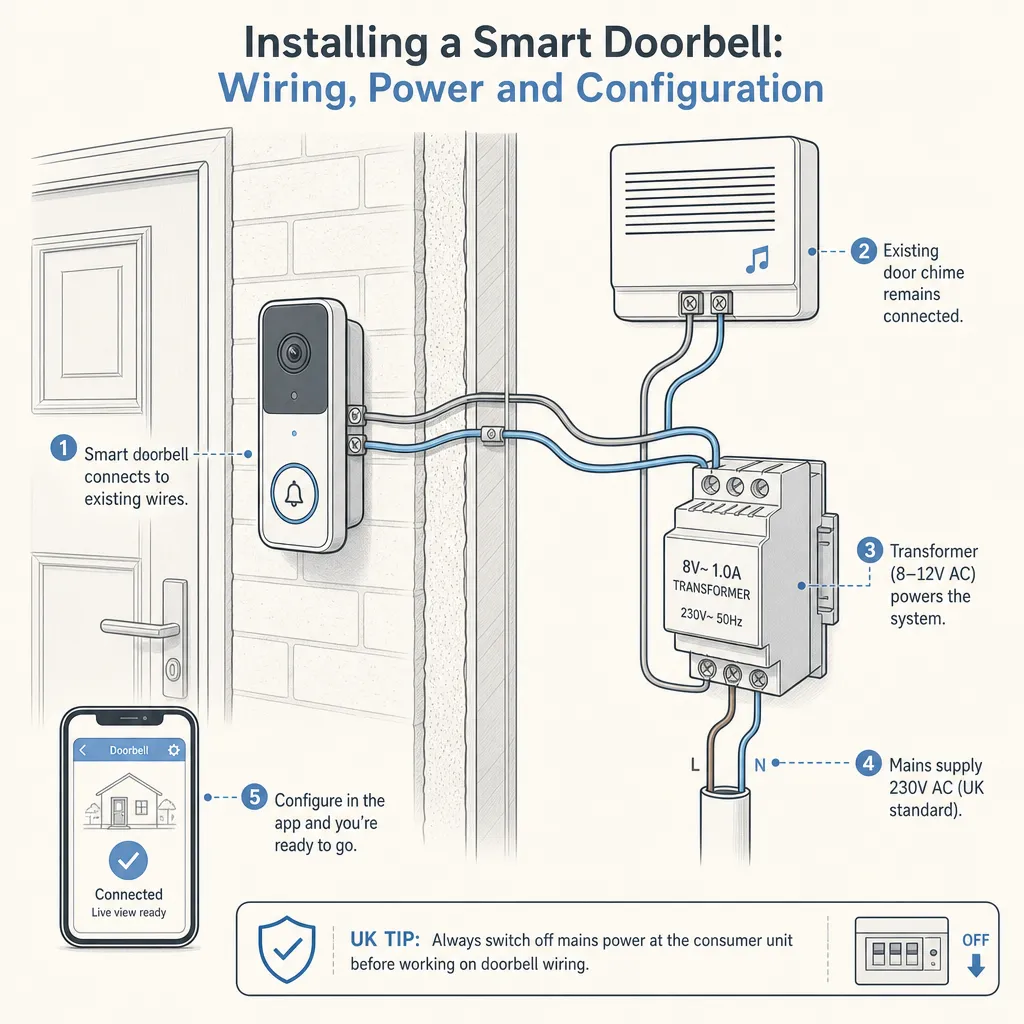 Improvement & Build
Installing a Smart Doorbell: Wiring, Power and Configuration
Most smart doorbells can be installed without an electrician, using either built-in rechargeable batteries or an existing 8–24V AC doorbell transformer.
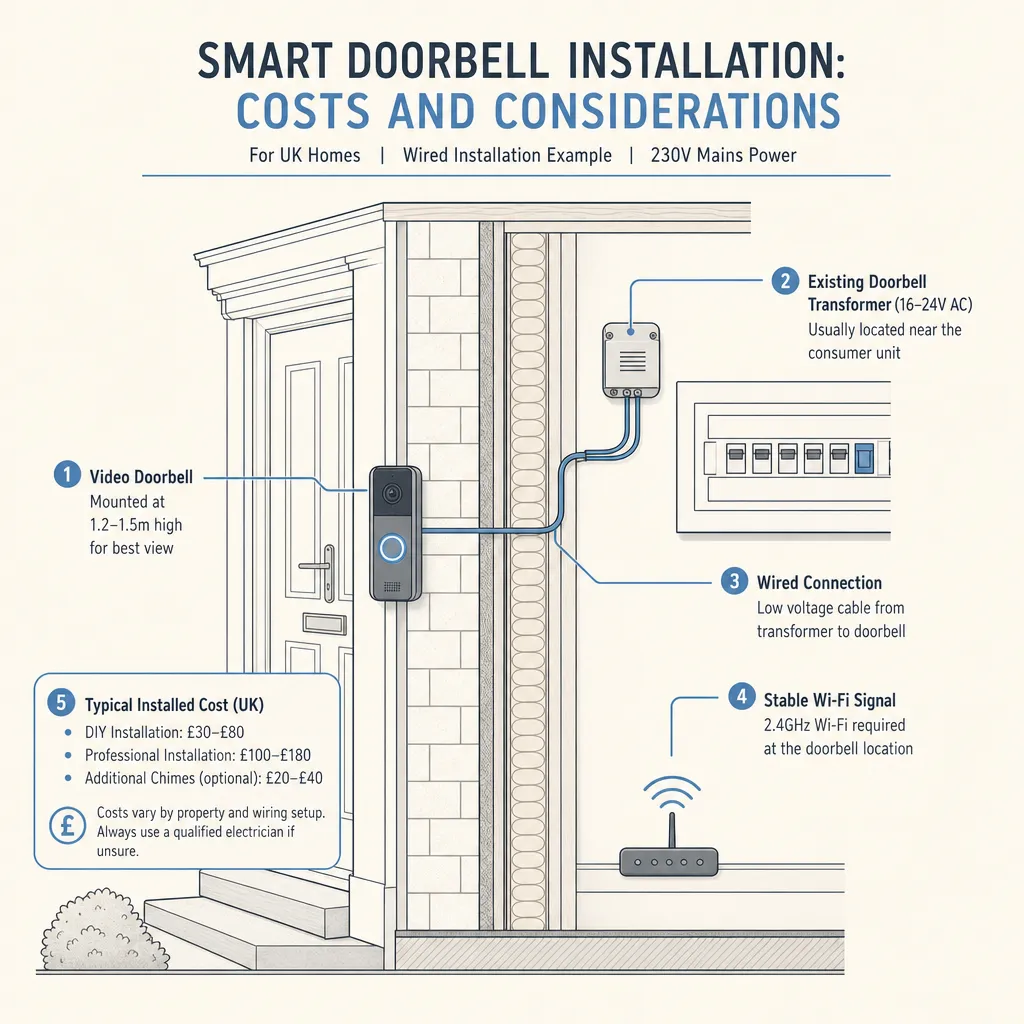 Improvement & Build
Smart Doorbell Installation: Costs and Considerations
A battery-powered smart doorbell can usually be self-installed without any electrical qualification.
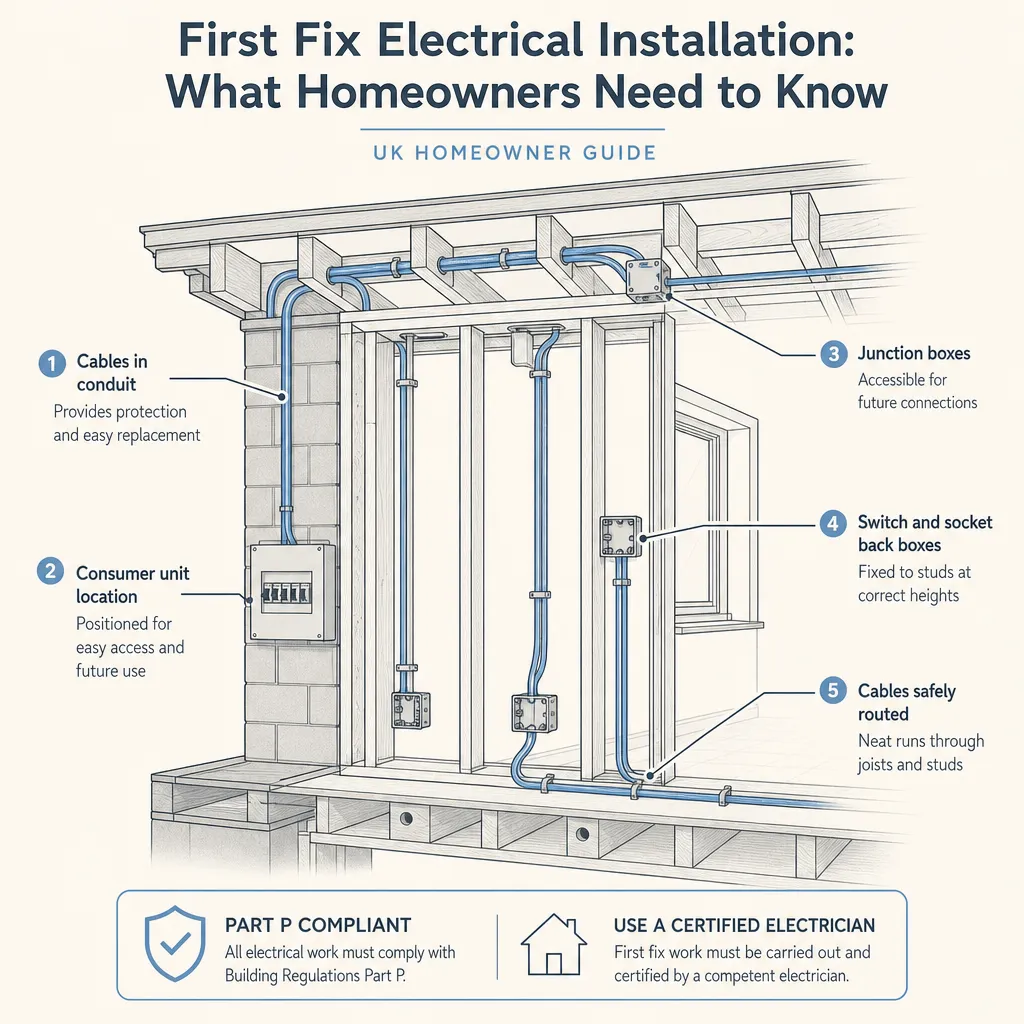 Improvement & Build
First Fix Electrical Installation: What Homeowners Need to Know
First fix electrical installation covers all the cabling, back boxes, and consumer unit preparation installed before walls are plastered or boarded.
 Improvement & Build
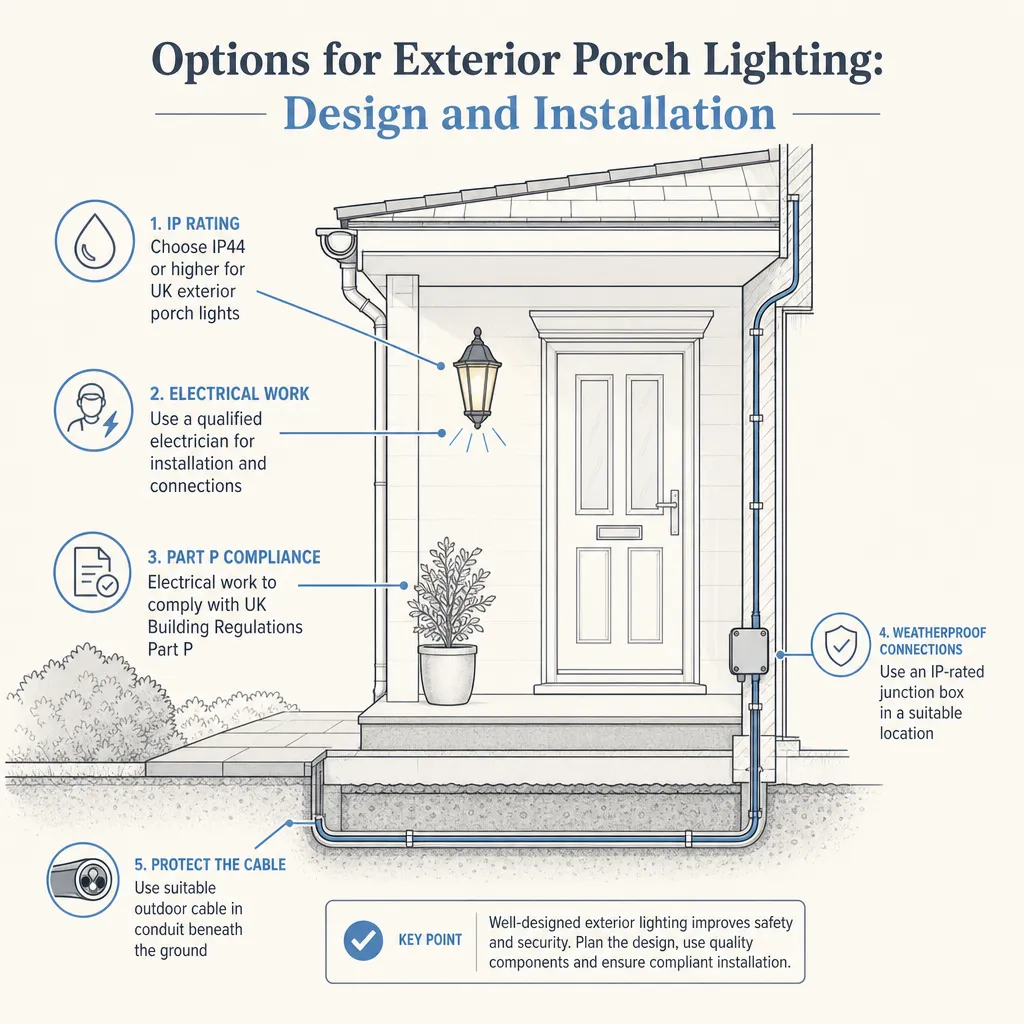
Options for Exterior Porch Lighting: Design and Installation
For most UK porches, a mains-wired LED wall lantern or bulkhead fitting with at least an IP44 rating is the most reliable choice.
 Improvement & Build
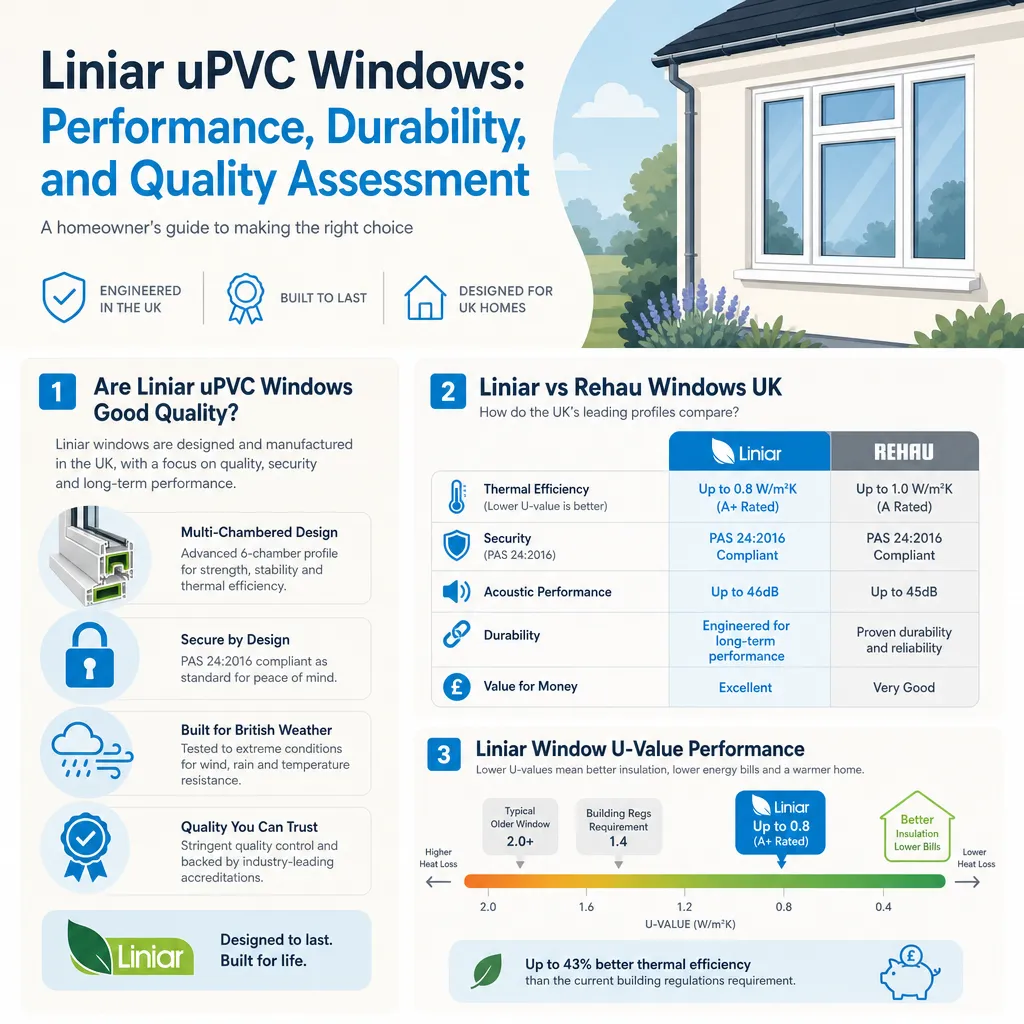
Liniar uPVC Windows: Performance, Durability, and Quality Assessment
Liniar uPVC window profiles are manufactured in the UK using multi-chambered, foamed frames.