Options for Exterior Porch Lighting: Design and Installation
By Housey · Last reviewed 26th of May 2026
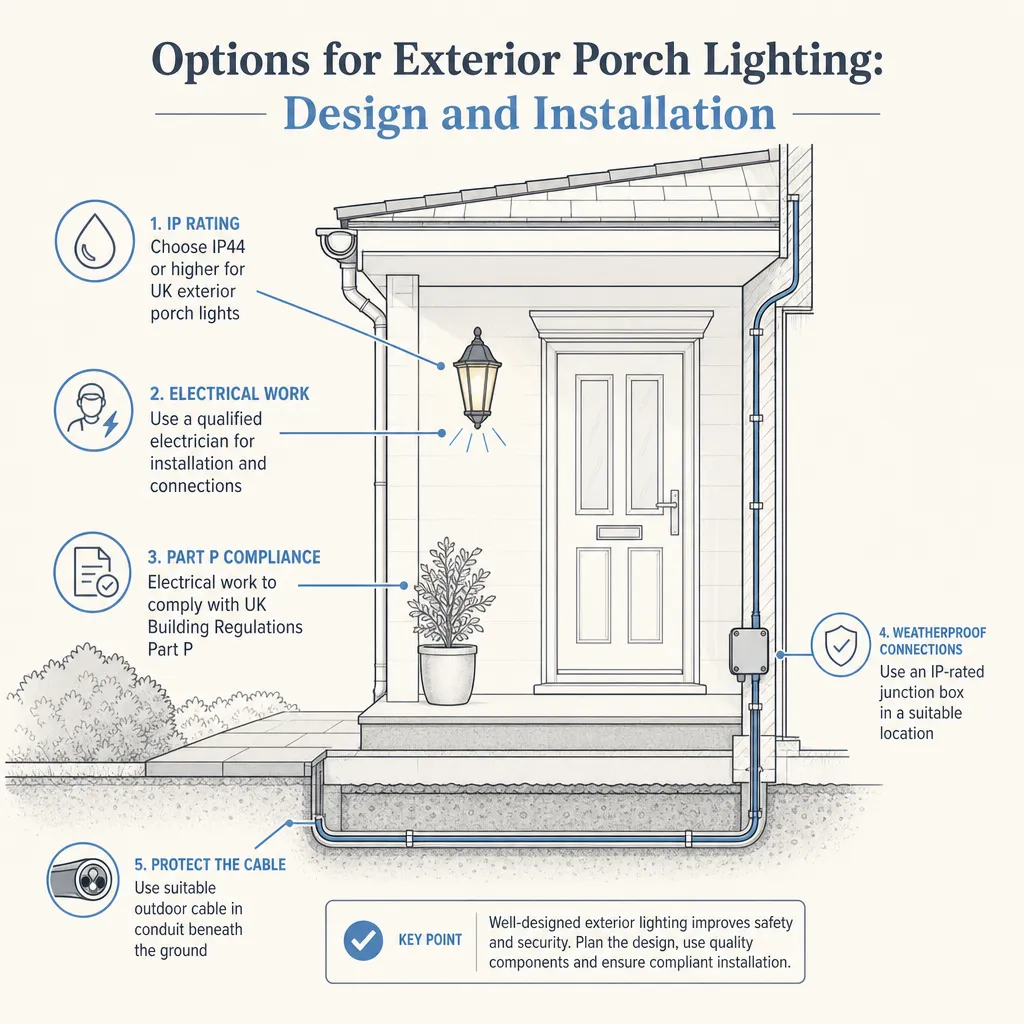
Options for Exterior Porch Lighting: Design and Installation
Upgrading porch lighting is one of the more immediately rewarding home improvements — it affects kerb appeal, security, and how welcoming a property feels after dark. The question typically arises when fitting out a new porch, replacing a tired wall lantern, or adding motion-activated lighting after a security review. Getting the choice right means matching the light type and position to the way the space is actually used, while staying within the rules on electrical safety and, in some locations, planning.
Key points
- All outdoor light fittings must carry at least an IP44 ingress-protection rating; fittings within 0.6m of a water source require IP65 or higher under BS 7671 wiring regulations.
- New wiring or circuit extensions for exterior lights in a dwelling are notifiable under Building Regulations Part P; work must be carried out by a registered competent person or notified to building control.
- LED porch lanterns typically consume 4–15W against 40–100W for equivalent incandescent fittings, cutting running costs by 70–90%.
- PIR motion sensors on porch lights have adjustable detection ranges typically between 3m and 15m and a hold time of 10 seconds to 10 minutes, set by a dial on most units.
- In a conservation area or for a listed building, external lighting is not automatically permitted development; check with your local planning authority before installing prominent or bright fittings.
What type of porch light suits your home?
The best fitting depends on your porch configuration, wiring situation, and style preferences. The four main categories are:
Wall lanterns and bulkhead fittings are the most common choice for UK porches. Traditional lantern styles suit Victorian and Edwardian terraces; low-profile bulkhead fittings work well on modern properties. Both are typically mains-wired, providing reliable year-round illumination.
Ceiling downlights work where a porch has an enclosed soffit or ceiling. They create a cleaner look and can be directed to illuminate a door number or pathway as well as the entrance itself.
PIR security lights combine a floodlight with a passive infrared sensor. These suit detached or semi-detached properties where the sensor has sufficient clear space to detect movement at useful distances without false triggers from passing traffic or nearby trees.
Solar and battery-powered lights require no new wiring but are limited by battery capacity and the amount of daylight available to recharge panels — a real constraint in northern England and Scotland during winter months.
Comparison: wired vs solar/battery for UK porch lighting
Factor | Mains-wired | Solar / battery |
|---|---|---|
Reliability in winter | High — unaffected by daylight levels | Reduced — shorter days limit charge |
Installation complexity | Higher — electrical work usually needed | Low — no wiring required |
Ongoing running cost | Low (LED) | Near-zero |
Light output options | Full range, from dim to bright floodlight | Generally limited to lower outputs |
Regulatory requirements | Part P compliance for new circuits | None for fitting (no new circuit) |
Best for | Primary entrance lights, security floods | Accent lighting, pathway marking |
Not ideal for | Complex rewires on a tight budget | Main entrance security in cloudy regions |
Understanding IP ratings for outdoor use
IP (Ingress Protection) ratings tell you how well a fitting resists dust and water. The number format is IP followed by two digits: the first covers solids and dust, the second covers water penetration.
For a UK porch:
- IP44 — the minimum for most sheltered porch applications. Protects against solid objects over 1mm and water splashing from any direction.
- IP54 — better dust protection; suitable for porches exposed to wind-driven rain.
- IP65 — fully dust-tight and resistant to water jets; appropriate for very exposed positions, open car ports, or any location with direct rainfall.
Fittings rated only IP20 or IP23 are intended for indoor use only and must never be fitted in an external porch, even one that appears sheltered.
Electrical regulations and Part P compliance
Installing a new exterior light that extends or creates a new circuit in your home is notifiable work under Part P of the Building Regulations in England. This means:
- A registered competent person (for example, an NICEIC- or NAPIT-registered electrician) can self-certify the work without involving building control.
- Alternatively, you can use an unregistered electrician and notify your local authority building control department, who will inspect the work and issue a completion certificate for a fee.
- Swapping a like-for-like fitting on an existing, unmodified switch circuit is generally not notifiable, but the replacement fitting must still meet the correct IP rating for its location.
The GOV.UK guidance on Building Regulations Approved Document P sets out which electrical work is notifiable. Electrical Safety First also publishes accessible homeowner guidance.
Hiring an unregistered electrician for notifiable work and failing to inform building control can cause difficulties when selling the property, as a completion certificate will be required to satisfy conveyancing searches.
Positioning and design: getting it right
Where you place the fitting matters as much as which product you choose:
- Height: wall lanterns are typically positioned at 1.8–2.4m above finished floor level to keep the light source above eye line while illuminating the door and step area.
- Shadows: a single central fitting directly above a door can create unflattering shadows on faces; two lower flanking lights often give better facial illumination, which also improves video doorbell performance.
- Layering: combining a main wall lantern with low-level path or step lights creates a more considered, welcoming entrance than relying on a single bright fitting.
- Smart controls: many LED porch fittings are compatible with smart dimmer switches, timer apps, and voice assistants — useful for simulating occupancy during absences.
Homeowner checklist before buying or fitting porch lights
When to get professional help
Most porch lighting projects are straightforward, but involve a registered electrician for any of the following:
- You need a new circuit run from the consumer unit.
- The current location has no existing power supply.
- The existing wiring is older than 25 years or uses rubber-insulated cables.
- You want to install a smart lighting system integrated with other home circuits.
- The porch forms part of a recent extension where building control sign-off is still pending.
If you have any concerns about the safety of existing wiring, ask an NICEIC- or NAPIT-registered electrician to carry out a Minor Electrical Installation Works Certificate or, for older properties, an Electrical Installation Condition Report (EICR).
How Housey can help
Housey connects UK homeowners with vetted local tradespeople, including registered electricians experienced in exterior lighting and porch installations. Whether you are upgrading an existing fitting or planning a new lighting scheme as part of a wider project, finding the right professional at the outset ensures the work is carried out safely and correctly certified.
Frequently asked questions
Do I need planning permission to install porch lights in the UK?
In most cases, external lighting on a house is permitted development in England and does not require planning permission, provided it is not a listed building and the installation does not cause unreasonable light pollution. In conservation areas, the local planning authority may impose restrictions. Always check with your LPA if in any doubt.
Can I fit an outdoor porch light myself?
You can replace a like-for-like fitting on an existing switch circuit without notifying building control, provided you use a fitting with the correct IP rating and follow safe working practices. Any work that creates or extends a circuit is notifiable under Part P of the Building Regulations and should be carried out by a registered competent person.
What wattage LED is best for a porch light?
For most residential porches, a fitting consuming 6–12W (equivalent to a 40–60W incandescent) provides sufficient illumination. Security floodlights with PIR sensors typically range from 10W to 50W. Avoid over-lighting the entrance, which can cause glare and may disturb neighbours, particularly in densely built areas.
How well do solar porch lights work in UK winters?
Performance drops significantly from November to February across most of the UK. Solar panels on a north-facing wall may generate very little charge on overcast days. If you need reliable nightly illumination at the main entrance, a mains-wired or battery-powered fitting with replaceable batteries is considerably more dependable through winter months.
Sources and further reading
- Building Regulations Approved Document P: Electrical Safety — GOV.UK
- Electrical safety in the home — Electrical Safety First
- BS 7671 Requirements for Electrical Installations — IET
- Outdoor lighting: planning permission guidance — Planning Portal
Useful next reads
 Improvement & Build
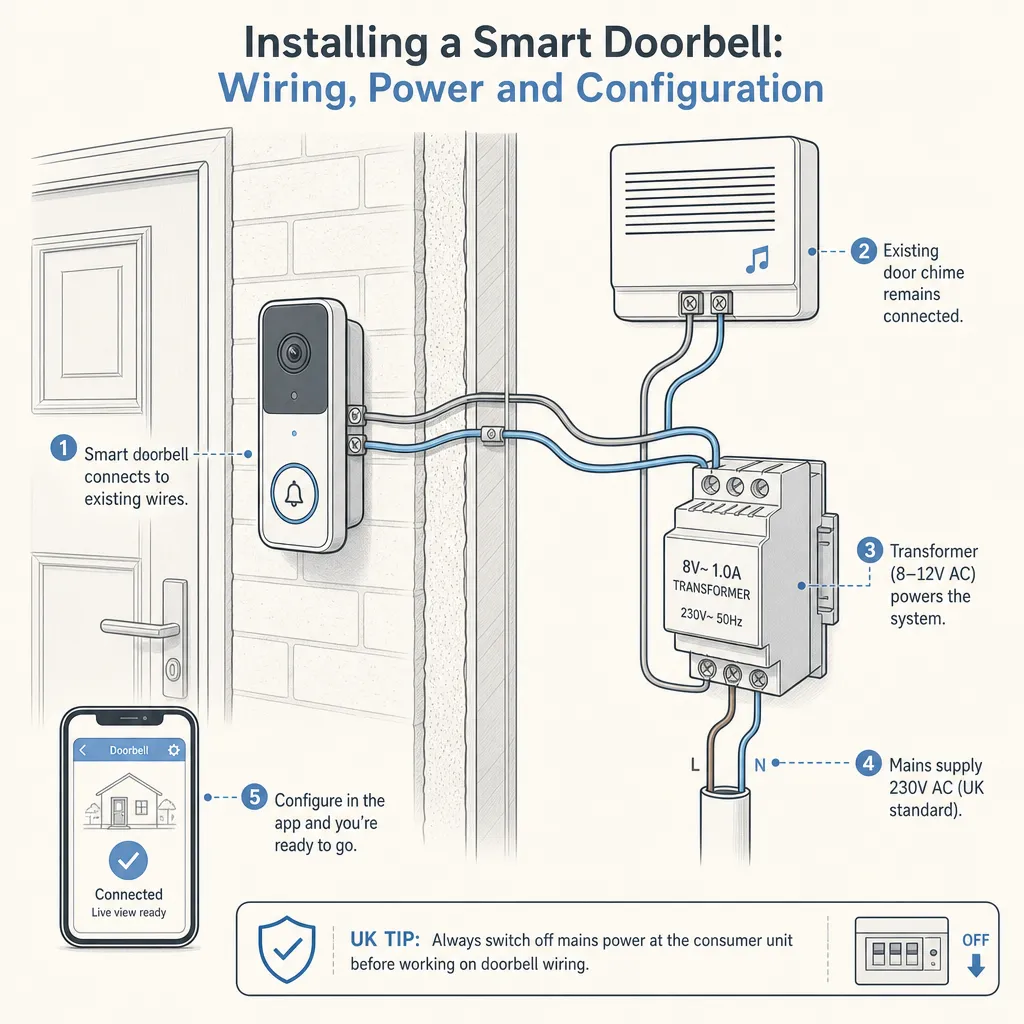
Installing a Smart Doorbell: Wiring, Power and Configuration
Most smart doorbells can be installed without an electrician, using either built-in rechargeable batteries or an existing 8–24V AC doorbell transformer.
 Improvement & Build
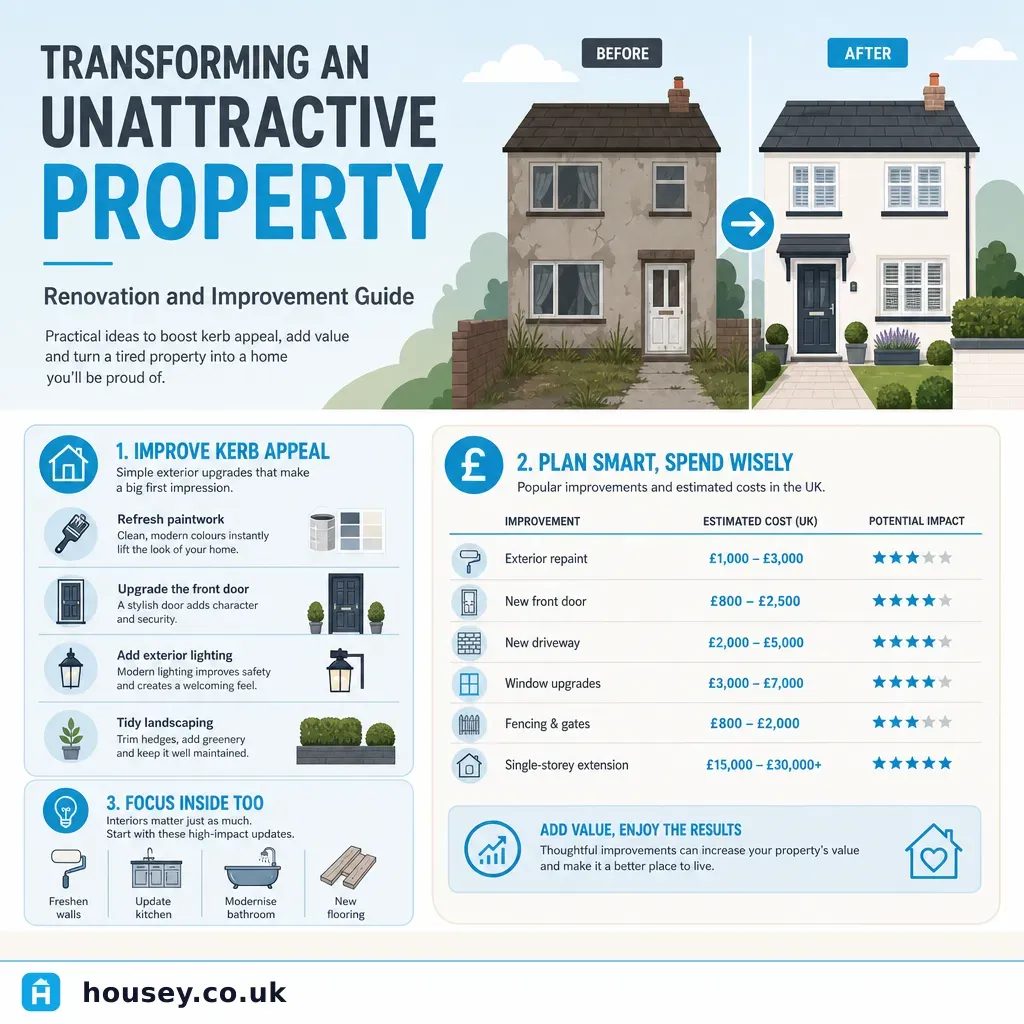
Transforming an Unattractive Property: Renovation and Improvement Guide
Transforming an unattractive UK property usually starts with surface-level improvements — render, windows, doors, and front landscaping — before tackling structural changes like extensions.
 Improvement & Build
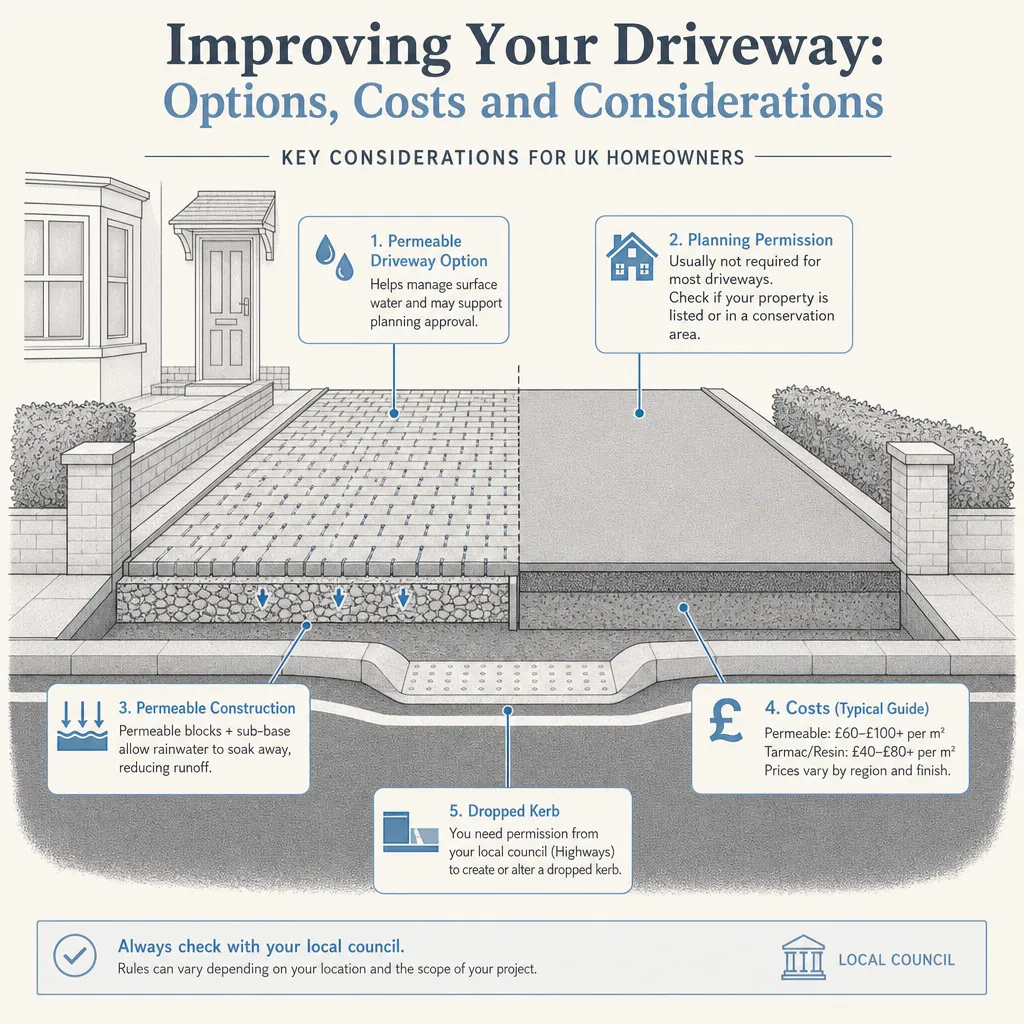
Improving Your Driveway: Options, Costs and Considerations
Installing a new driveway with a non-permeable surface larger than 5m² over a front garden in England requires planning permission unless water drains to a permeable area.
 Improvement & Build
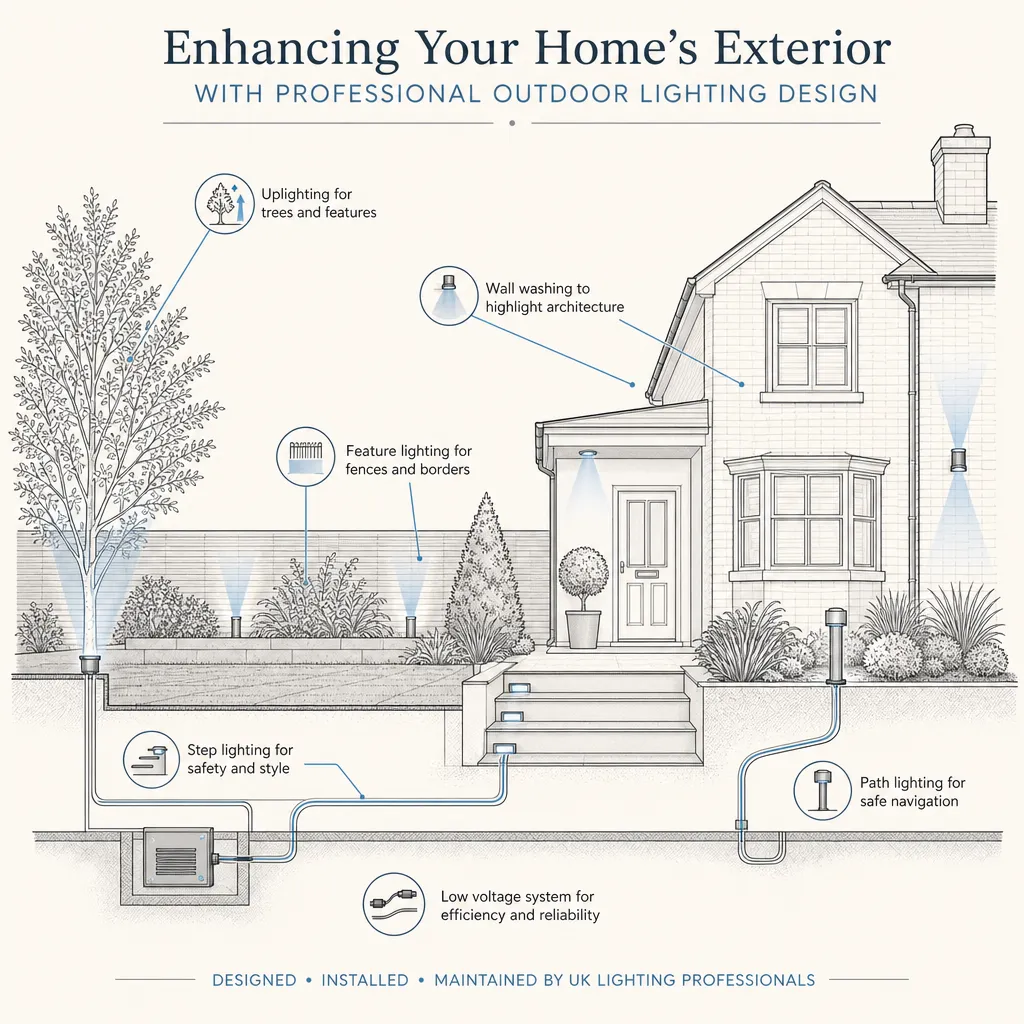
Enhancing Your Home's Exterior with Professional Outdoor Lighting Design
Professional outdoor lighting design improves kerb appeal, extends garden use after dark, and deters intruders.
 Improvement & Build
Spring Garden Transformations: Design Ideas to Enhance Your UK Property
Spring is the best time to transform a UK garden, with mild temperatures and longer days ideal for planting and landscaping.