Smart Doorbell Installation: Costs and Considerations
By Housey · Last reviewed 30th of May 2026
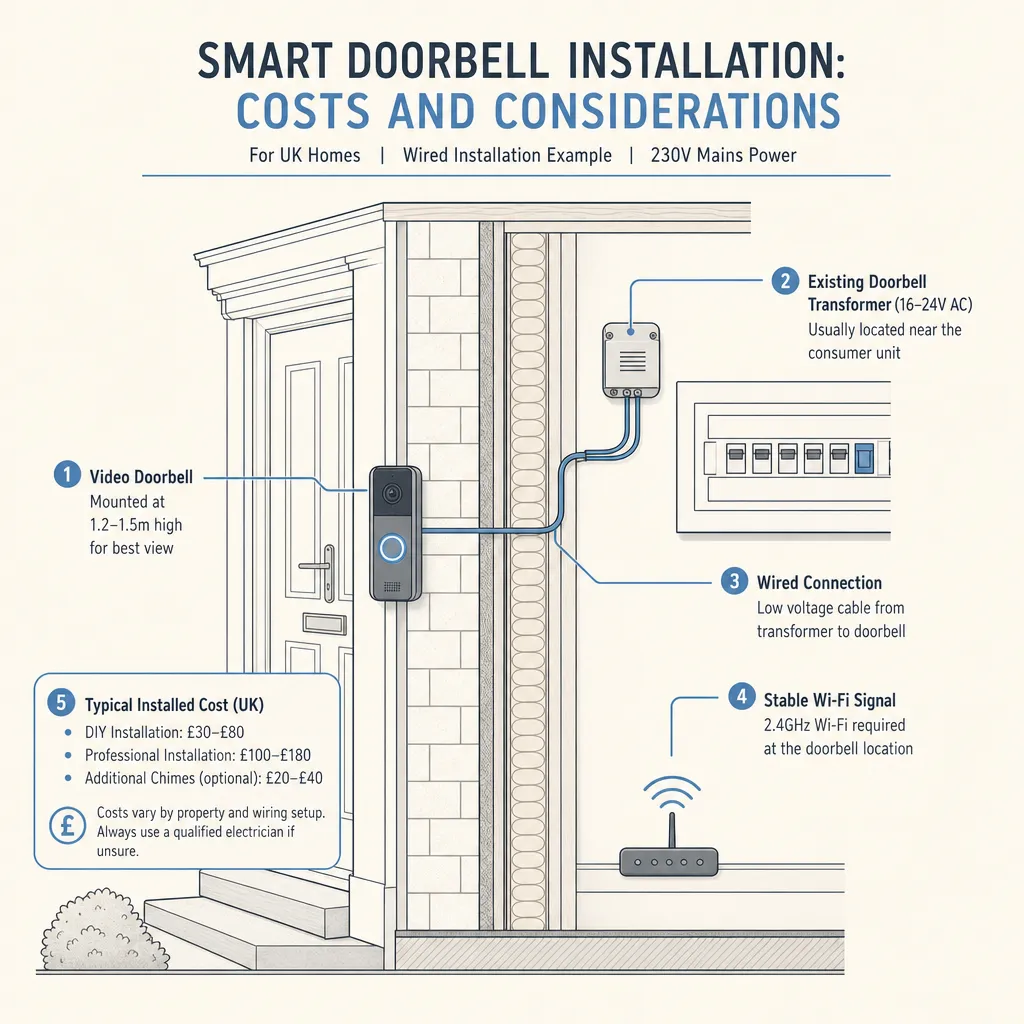
Smart Doorbell Installation: Costs and Considerations
Replacing a traditional doorbell with a smart video model has become one of the most popular small home upgrades in the UK, driven by the convenience of monitoring deliveries and visitors remotely. Whether you are fitting a battery-powered device or wiring a hardwired model into an existing doorbell circuit, the installation route — and its cost — depends heavily on what wiring, if any, is already in place. Understanding this before purchasing saves both time and unexpected electrician call-outs.
Key points
- Wired smart doorbells require a transformer supplying 8–24V AC; many older UK homes have a 4–6V DC chime transformer that needs upgrading before a smart doorbell will function correctly.
- Battery-powered (wireless) smart doorbells can usually be self-installed without any electrical qualification, as no new wiring is involved.
- Professional labour to install and wire a smart doorbell typically costs £50–£150 depending on whether transformer replacement or new cable runs are needed (Indicative UK costs, last reviewed 2026-05-30).
- Running new wiring in special locations — such as under plaster or through walls near sinks — is notifiable work under Part P of the Building Regulations in England and Wales.
- Most smart doorbells require a Wi-Fi signal of at least -65 dBm at the front door; signal drop through solid stone or brick walls is a common cause of unreliable operation.
Wired vs wireless: which type suits your home?
The first decision is whether to go wired or battery-powered. Each approach has distinct advantages and constraints for UK properties.
Feature | Wired smart doorbell | Wireless (battery) smart doorbell |
|---|---|---|
Power source | Existing doorbell wiring (8–24V AC) | Rechargeable battery (typically 6–12 months per charge) |
Installation complexity | May need transformer upgrade or new cable | Screw-mount only — no wiring required |
Best for | Homes with existing doorbell wiring in good condition | Homes with no existing wiring, renters, or period properties |
Not ideal for | Homes with legacy 4–6V DC chimes or no existing wiring | Properties with thick stone walls affecting battery life |
Ongoing maintenance | None once fitted | Periodic recharging or battery swaps |
Part P implications | Possible if new wiring is run | Not applicable |
Which type should you choose?
- Choose a wired model if you have modern 8–24V AC doorbell wiring, want continuous power, and prefer not to recharge batteries periodically.
- Choose a wireless/battery model if no existing wiring is present, you rent and cannot alter wiring, or the installation point is far from existing cabling.
- Ask a qualified electrician if your existing transformer rating is uncertain — fitting a wired smart doorbell to an incompatible low-voltage DC chime is a common cause of device damage and malfunction.
- Check with your local planning authority if the property is listed or in a conservation area before fitting any external camera device.
What does smart doorbell installation cost in the UK?
Installation cost depends primarily on whether new wiring, a transformer upgrade, or simply a device swap is required.
Device costs: Entry-level battery models start around £50–£80, while premium wired models with HDR cameras and local storage can cost £150–£250 or more. Check current retailer pricing before budgeting, as device prices change frequently.
Installation labour (Indicative UK costs, last reviewed 2026-05-30):
- Straightforward device swap using existing compatible wiring: £50–£80 for an electrician's call-out.
- Transformer replacement only: £80–£120 including parts.
- New cable run required: £100–£200+ depending on access difficulty and cable run length.
Running new low-voltage cable in a solid-wall Victorian terrace is typically more involved — and more expensive — than the same job in a 1990s cavity-wall home, where cable can often be routed more easily through the cavity.
Do you need an electrician?
For battery-powered smart doorbells, no electrician is required. The device is powered by an internal battery and the installation is mechanical — attaching a mounting bracket and connecting to an existing chime, or dispensing with the chime entirely.
For wired models, the position is more nuanced:
- Swapping like-for-like (same voltage, same connections): low-voltage doorbell circuits are generally not notifiable under Part P of the Building Regulations, so a competent DIYer can carry out a straightforward device swap.
- Running new cable in special locations: if cable needs to be concealed under plaster or run within a zone near a sink or bath, this is notifiable work under Part P and should be carried out by a Part P-registered electrician.
- Transformer replacement: if the existing transformer is worn or incompatible, replacing it is low-voltage work — but if you are unsure about the overall wiring condition, an electrician's assessment is sensible before you begin.
Homeowner checklist before buying a smart doorbell
Work through the following before purchasing:
Camera placement and data protection
Smart doorbells with cameras can capture footage beyond your own property boundary. The Information Commissioner's Office (ICO) notes that where footage extends to public space or neighbouring property, data protection obligations under UK GDPR may apply. In practice this usually means angling the camera to minimise capture of neighbouring gardens, windows, or the public pavement, and handling any stored footage responsibly.
When to get professional help
Most battery-powered installations are genuinely straightforward. Seek a qualified electrician if:
- You are unsure whether your existing wiring is AC or DC, or what voltage the transformer supplies.
- The transformer is old, corroded, or has no readable label.
- New wiring needs to be run under plaster, through walls, or near a sink or bathroom.
- Your home was built before 1950 and the internal wiring has not been recently inspected.
- You want confidence that the existing low-voltage circuit is safe before adding new devices.
If you have any doubt about the overall condition of your home's electrical installation, an Electrical Installation Condition Report (EICR) can identify underlying issues before any new devices are connected to the system.
How Housey can help
If your smart doorbell installation requires electrical work beyond a straightforward device swap, Housey can connect you with qualified local electricians. For older properties where you want confidence in the existing wiring first, an Electrical Installation Condition Report (EICR) carried out by a registered electrician will identify any underlying issues before new devices are added.
Frequently asked questions
Do I need to tell my neighbour about a smart doorbell camera?
There is no legal obligation to notify neighbours, but it is courteous to do so, particularly if the camera's field of view includes shared areas or neighbouring property. The ICO recommends angling cameras to focus on your own property wherever possible, and footage should be stored securely rather than shared publicly without careful consideration.
Can I install a smart doorbell in a rented property?
A battery-powered smart doorbell can usually be fitted using standard screw fixings, though you should check your tenancy agreement and obtain your landlord's permission before making any fixings to external walls or door frames. Wiring modifications are generally not permitted without explicit landlord consent.
My smart doorbell keeps going offline — what causes this?
The most common causes are an insufficient Wi-Fi signal at the front door, a low or depleted battery, or a transformer supplying the wrong voltage to a wired model. A Wi-Fi extender or mesh node positioned near the front of the house often resolves persistent signal drop issues.
Are smart doorbells covered by home insurance?
Many home contents insurance policies cover smart doorbells as part of standard contents cover. Confirm with your insurer, particularly for externally mounted devices, as some policies treat external fixtures differently from internal contents. Check the policy wording carefully before assuming coverage applies.
Sources and further reading
- Building Regulations Part P: Electrical safety in dwellings — GOV.UK
- Domestic CCTV and smart camera guidance — Information Commissioner's Office
- Home electrical safety guidance — Electrical Safety First
Useful next reads
 Improvement & Build
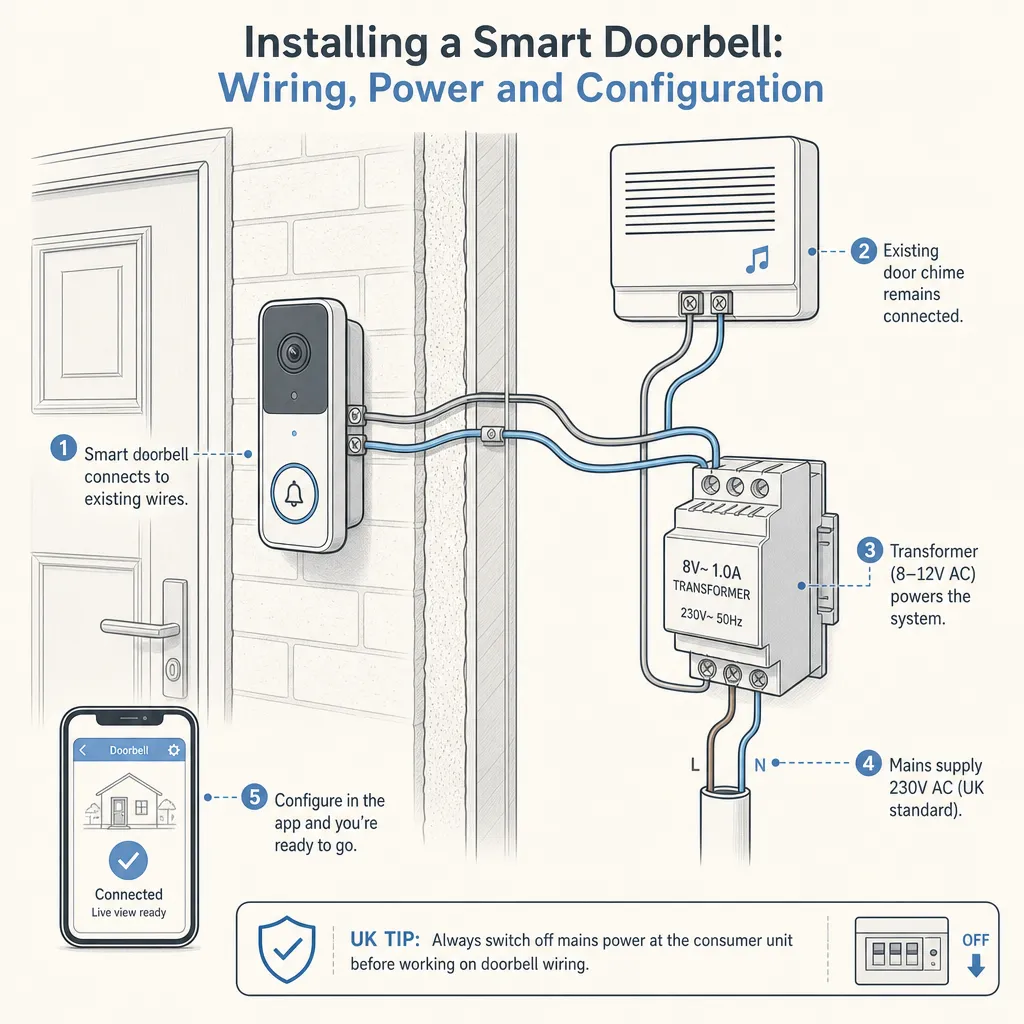
Installing a Smart Doorbell: Wiring, Power and Configuration
Most smart doorbells can be installed without an electrician, using either built-in rechargeable batteries or an existing 8–24V AC doorbell transformer.
 Improvement & Build
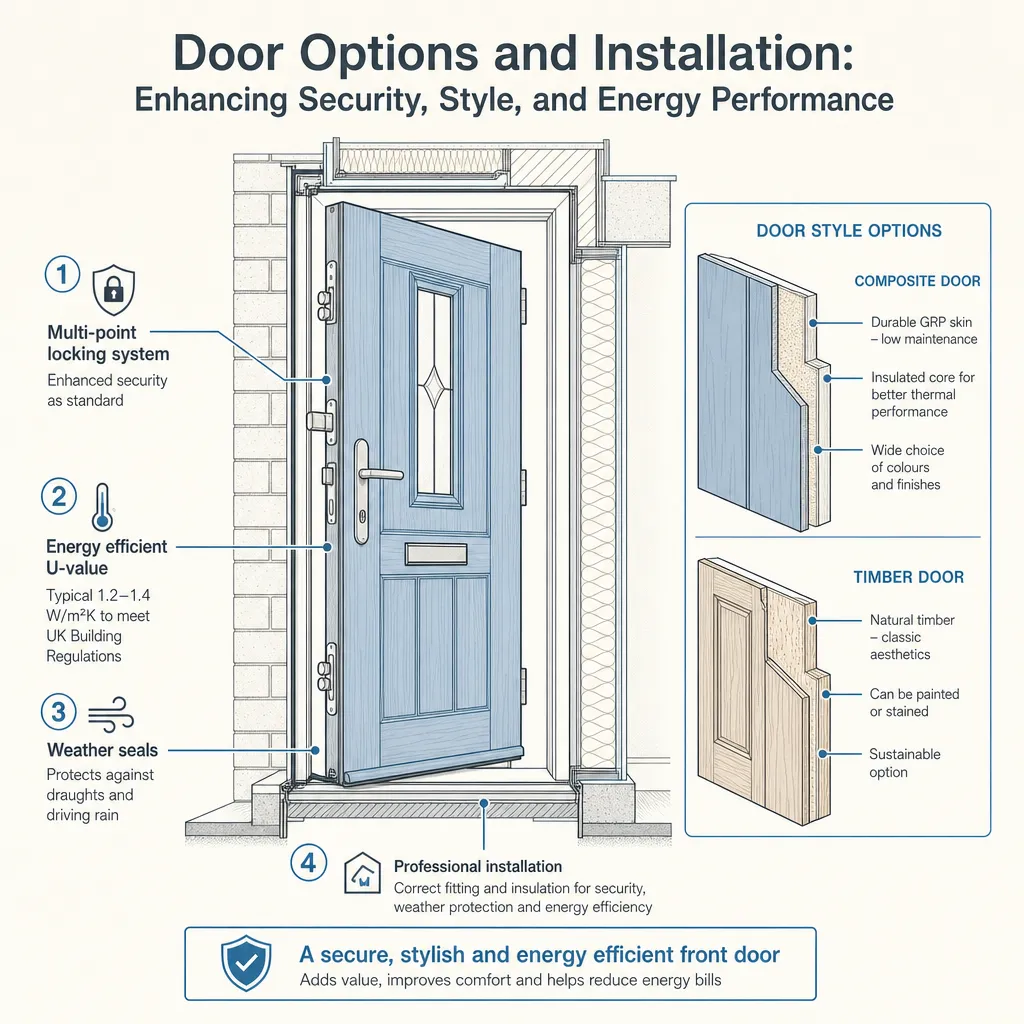
Door Options and Installation: Enhancing Security, Style, and Energy Performance
Choosing a new external door involves balancing security ratings, thermal performance, and style.
 Improvement & Build
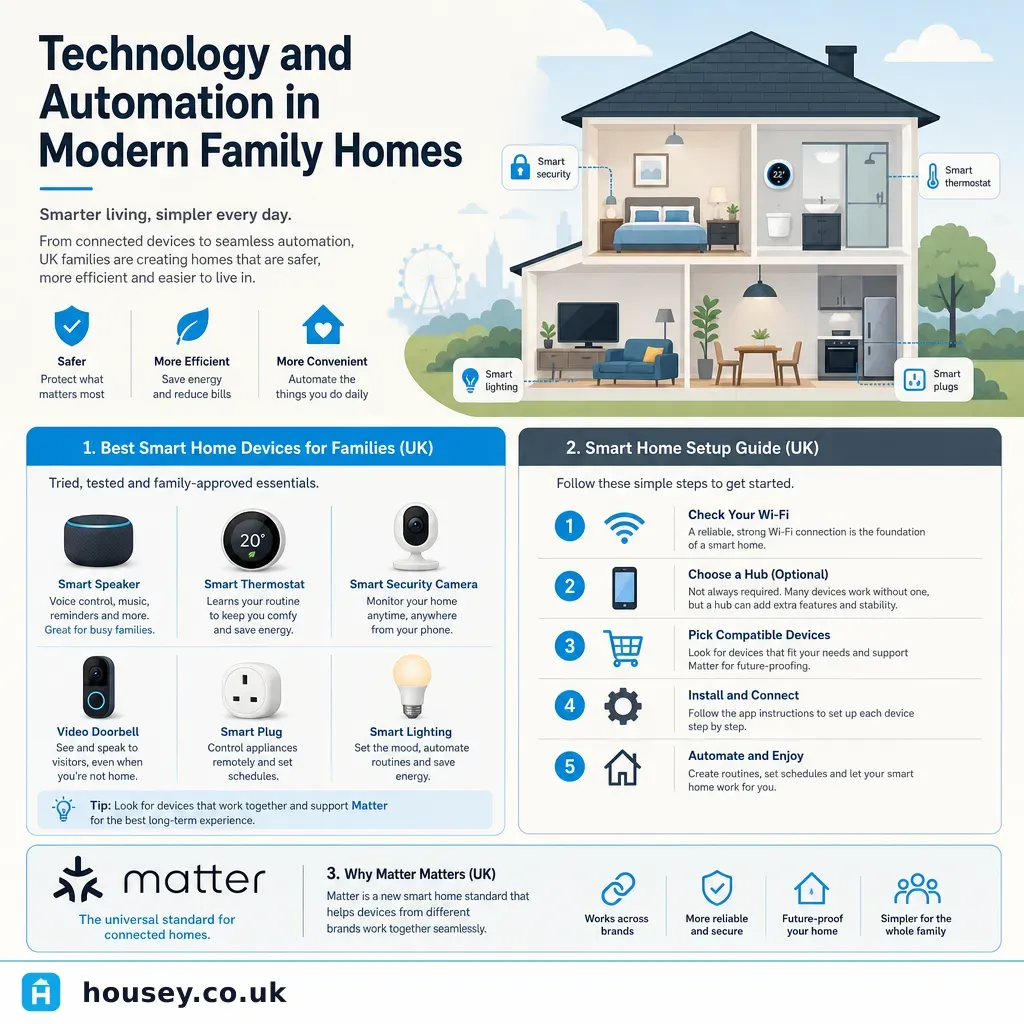
Technology and Automation in Modern Family Homes
Smart home technology lets UK families automate lighting, heating, security, and entertainment from a single app or voice command.
 Improvement & Build
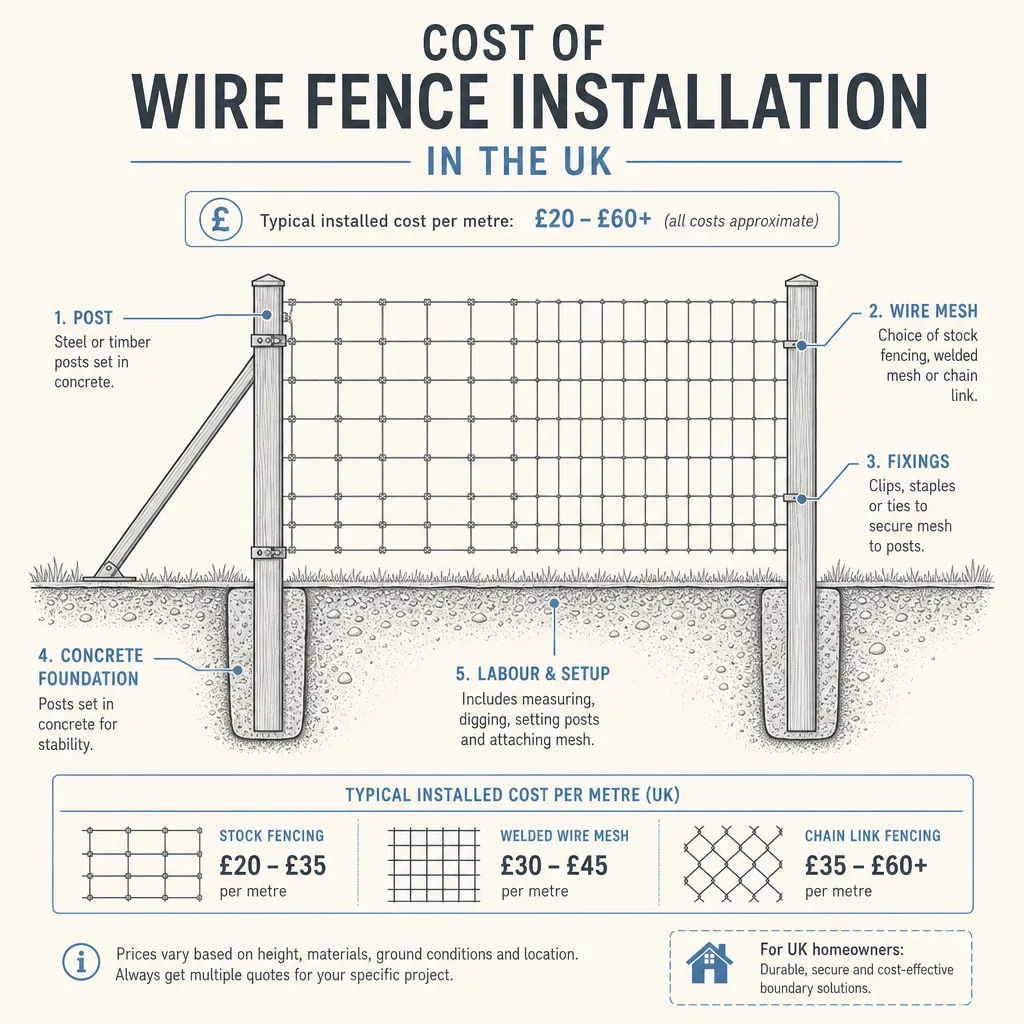
Cost of Wire Fence Installation in the UK
Wire fence installation in the UK typically costs £8–18 per metre for stock fencing, £15–35 per metre for chain-link, and £20–45 per metre for welded wire mesh panels, all installed.
 Improvement & Build
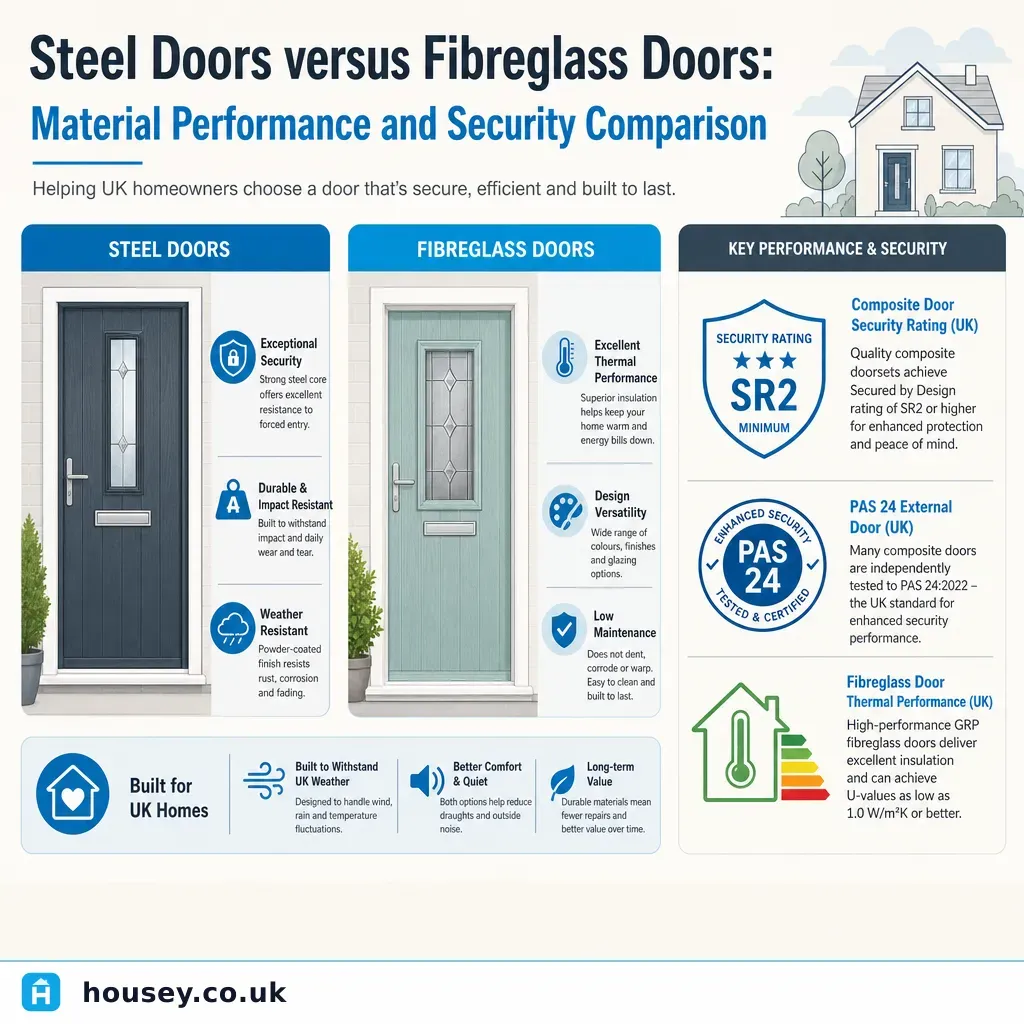
Steel Doors versus Fibreglass Doors: Material Performance and Security Comparison
Steel external doors offer higher forced-entry resistance and suit commercial-grade security requirements.