First Fix Electrical Installation: What Homeowners Need to Know
By Housey · Last reviewed 19th of May 2026
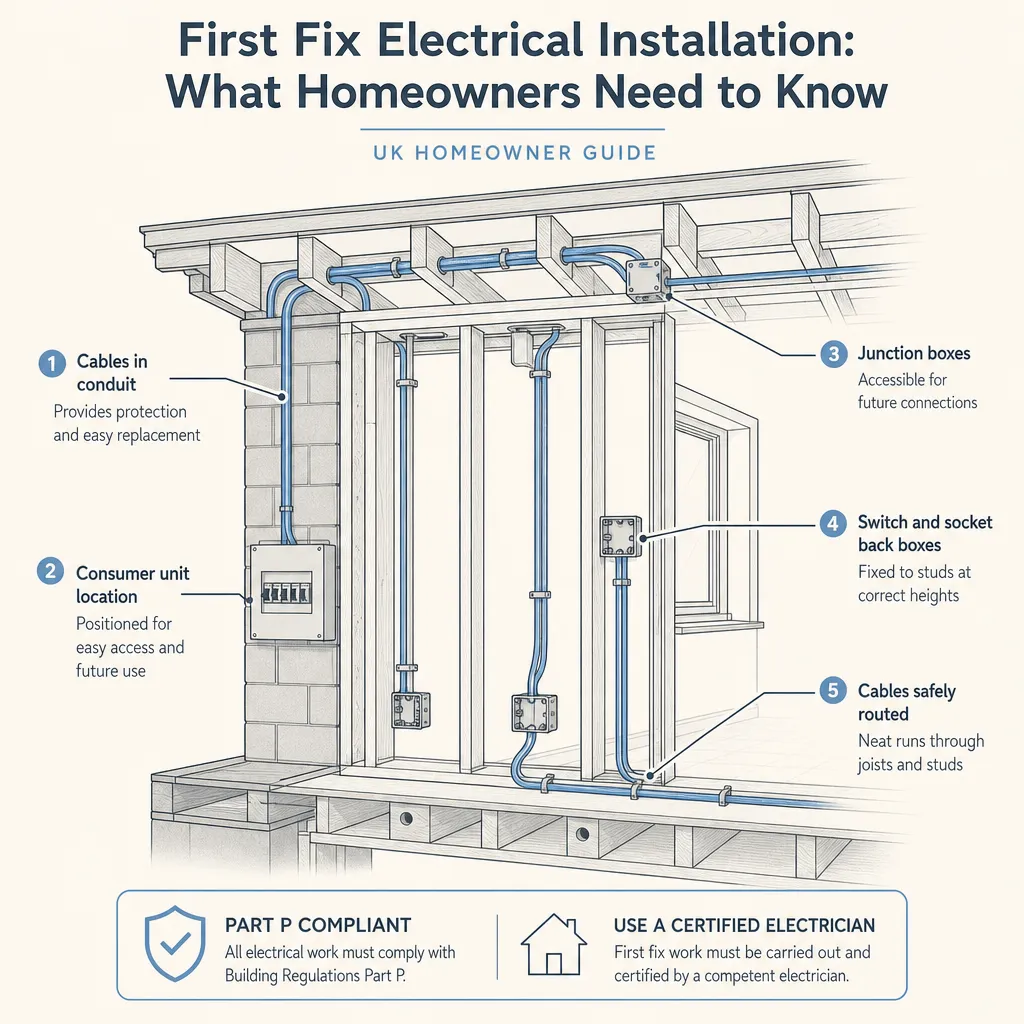
First Fix Electrical Installation: What Homeowners Need to Know
First fix electrical work is one of the most consequential stages of any renovation or new build — it establishes the hidden infrastructure that will power your home for decades. Whether you are managing a kitchen extension, a full refurbishment, or a loft conversion, understanding what first fix electrical installation involves and what the law requires helps you hold contractors to account and avoid costly rework before the plasterboard goes up.
Key points
- First fix electrical installation covers all cabling, conduit, back boxes, and consumer unit preparation installed before walls are plastered or boarded.
- Most first fix electrical work is notifiable under Part P of the Building Regulations (England and Wales), requiring either a registered competent-person electrician or a building control inspection.
- Competent Person Scheme operators for electrical work include NICEIC, NAPIT, ELECSA, and BSI Assurance — a registered electrician self-certifies the work and notifies building control automatically, without a separate application.
- All electrical installation must comply with BS 7671 (IET Wiring Regulations), currently the 18th Edition (Amendment 2, 2022).
- Failing to use a registered contractor or obtain building control certification can cause problems when you sell: solicitors routinely request electrical completion certificates as part of conveyancing.
What is first fix electrical installation?
First fix electrical installation is everything done before walls are plastered, boarded, or tiled. Typically this includes:
- Running cable routes through joists, studs, and walls
- Fitting back boxes for sockets, switches, and light fittings
- Installing consumer unit (fuseboard) housings and isolators
- Positioning and connecting junction boxes
- Laying conduit where required for protection or future access
Second fix follows once the plasterwork is complete: fitting socket faceplates, switches, light fittings, and connecting the consumer unit. An Electrical Installation Certificate (EIC) covers the entire installation — both stages — and is issued once testing and inspection are complete.
First fix vs second fix: what is the difference?
Stage | When it happens | What is included | Certification |
|---|---|---|---|
First fix | Before plasterwork | Cables, back boxes, consumer unit prep, conduit | Covered under the final EIC at completion |
Second fix | After plasterwork | Sockets, switches, light fittings, consumer unit connection | Covered under the final EIC at completion |
Testing and inspection | After second fix | Dead testing, live testing, verification | EIC issued by registered electrician |
Does first fix electrical work need building regulations approval?
Yes, in most cases. Part P of the Building Regulations (England) covers electrical installations in dwellings. Notifiable work under Part P includes:
- New circuits in any room
- Any circuit in a kitchen, bathroom, or garden (regardless of length)
- Consumer unit (fuseboard) replacement or addition
- Work in special locations such as bathrooms and swimming pools
Non-notifiable work includes like-for-like replacement of accessories such as sockets and switches outside kitchens and bathrooms, and repair of existing circuits. All work — notifiable or not — must comply with BS 7671.
There are two compliant routes for notifiable work:
- Use a registered competent-person electrician (NICEIC, NAPIT, ELECSA, or BSI Assurance). They self-certify the work, register it with their scheme, and notify building control automatically. You receive an Electrical Installation Certificate.
- Notify building control yourself before work starts, using a non-registered electrician. Building control inspects at first fix stage, again at second fix, and issues a completion certificate. This adds cost and scheduling complexity.
For most homeowners, route one is simpler and typically no more expensive than route two once inspection fees are included.
Which professional do I need?
Scenario | Professional | Key credential |
|---|---|---|
New circuits, consumer unit, full rewire | Part P-registered electrician | NICEIC / NAPIT / ELECSA / BSI Assurance |
Condition report on existing installation | Registered electrician | NICEIC / NAPIT |
Electrical design for larger or complex projects | Electrical engineer or qualified designer | CIBSE / IET membership |
Building control notification (non-registered route) | Local Authority Building Control or Approved Inspector | N/A |
Red flags during first fix electrical work
Before plastering or boarding up, check for these warning signs — they are much cheaper to address before the walls close:
- Cable runs that pass through joists at less than 50 mm depth without mechanical protection (fire and mechanical damage risk)
- Consumer unit positioned without adequate clearance or in a location that fails Part P requirements
- No record of where cables have been run, which creates hazards for future work
- Missing or incorrectly sized back boxes for the specified socket and switch types
- No visible earthing or bonding on metal pipework or structural elements
- Contractor cannot provide evidence of Competent Person Scheme registration
If you spot any of these, do not allow walls to be closed up. Raise concerns in writing before work progresses.
Important limitations
This article provides general information about first fix electrical installation in England and Wales. Electrical regulations, local building control requirements, and scheme rules can vary by property type and project scope. Scotland, Wales, and Northern Ireland have separate regulatory frameworks. Nothing here constitutes electrical or safety advice for a specific property. All notifiable work must be assessed and certified by a Part P-registered professional.
What to ask a qualified professional
Before engaging an electrician for first fix electrical work, ask:
- Are you registered with a Part P Competent Person Scheme, and which one?
- Will you provide an Electrical Installation Certificate on completion of the full installation?
- Will you notify building control, or do I need to do that separately?
- What access do you need before and during plastering, and when will second fix follow?
- Is the design compliant with the 18th Edition of BS 7671 (Amendment 2, 2022)?
- Who is responsible for testing and inspecting the installation before handover?
- What are your terms if rework is needed once walls are closed?
When to get professional help
Electrical installation is not DIY territory for notifiable work. You need a registered professional if you are adding a new circuit in any room, replacing or upgrading a consumer unit, or installing electrical systems in an extension, loft conversion, or outbuilding.
If you are buying a property where there is no EIC for previous electrical work, commission an Electrical Installation Condition Report (EICR) to check the safety and compliance of the existing installation before exchange.
How Housey can help
Housey connects you with Part P-registered electricians and building professionals across the UK. Whether you need a specialist to carry out first fix electrical work on your renovation project, or require building regulations drawings to support a building control application, you can compare quotes from vetted local professionals through our platform.
Frequently asked questions
Do I need planning permission for first fix electrical work?
No — electrical installation inside a dwelling does not require planning permission. However, most notifiable work under Part P of the Building Regulations, including new circuits and consumer unit replacements, must be carried out by a registered competent-person electrician who self-certifies, or notified to your local building control body before work begins.
Can I do first fix electrical work myself?
You may carry out non-notifiable like-for-like replacement work, but adding new circuits, replacing a consumer unit, or working in a kitchen, bathroom, or garden is notifiable under Part P and must be certified by a registered professional. DIY notifiable work that lacks an Electrical Installation Certificate will create problems when you come to sell the property.
What certificate should I receive after electrical installation?
You should receive an Electrical Installation Certificate (EIC) covering the full installation. This is issued by the registered electrician and lodged with their Competent Person Scheme — NICEIC, NAPIT, ELECSA, or similar. Keep it with your property documents, as solicitors routinely request it during conveyancing.
What is the 18th Edition of BS 7671?
BS 7671 is the IET's standard for electrical installations in the UK. The 18th Edition, including Amendment 2 (2022), is the current version and sets the technical requirements all new electrical work must meet. Your registered electrician should confirm that their design and installation comply with this edition.
What happens if electrical work has been done without a certificate?
If previous owners had notifiable electrical work done without an EIC, you can commission an Electrical Installation Condition Report (EICR) to check safety and compliance, ask the original contractor to retrospectively certify if they remain registered, or request a building control inspection. A registered electrician can advise on the most practical route for your property.
Sources and further reading
- Approved Document P: Electrical safety — GOV.UK
- Competent Person Schemes — GOV.UK
- BS 7671 IET Wiring Regulations — IET
- Find a registered electrician — NICEIC
- Electrical safety guidance for homeowners — Electrical Safety First
Useful next reads
 Improvement & Build
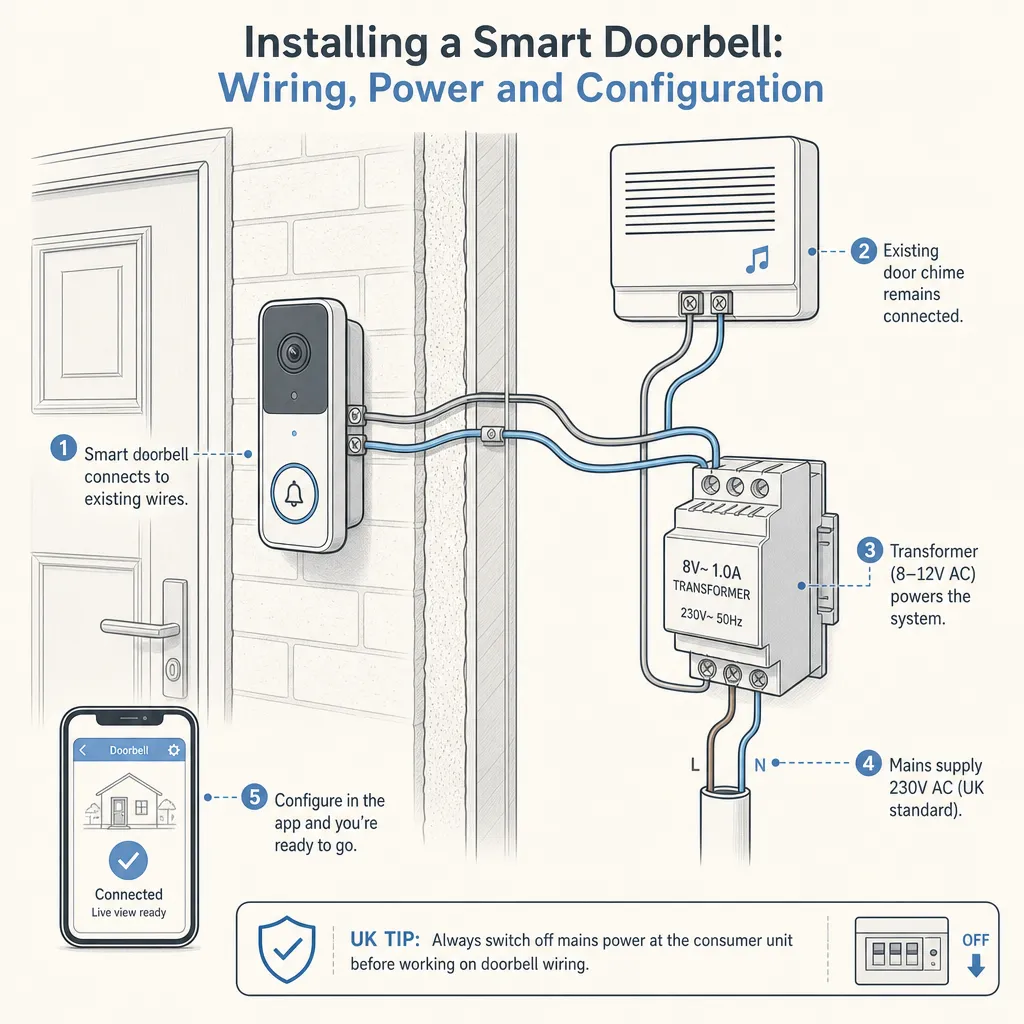
Installing a Smart Doorbell: Wiring, Power and Configuration
Most smart doorbells can be installed without an electrician, using either built-in rechargeable batteries or an existing 8–24V AC doorbell transformer.
 Improvement & Build
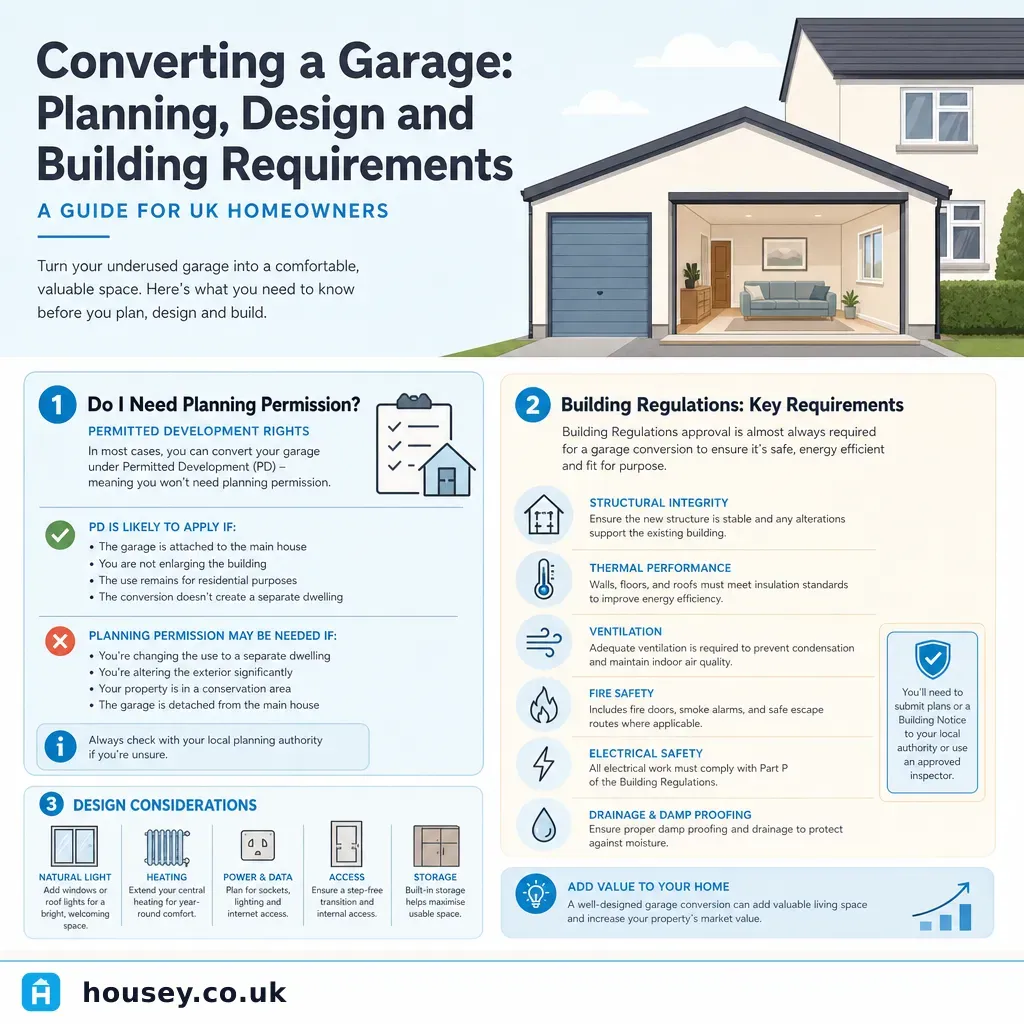
Converting a Garage: Planning, Design and Building Requirements
Most garage conversions in England do not need planning permission under permitted development rights, but all conversions require Building Regulations approval covering structure, thermal insulation, fire safety, and ventilation.
 Improvement & Build
Understanding Construction Timelines for New Build Homes
Building a new home in the UK typically takes 12–24 months from planning approval to practical completion, though smaller projects can complete in 6–12 months.
 Improvement & Build
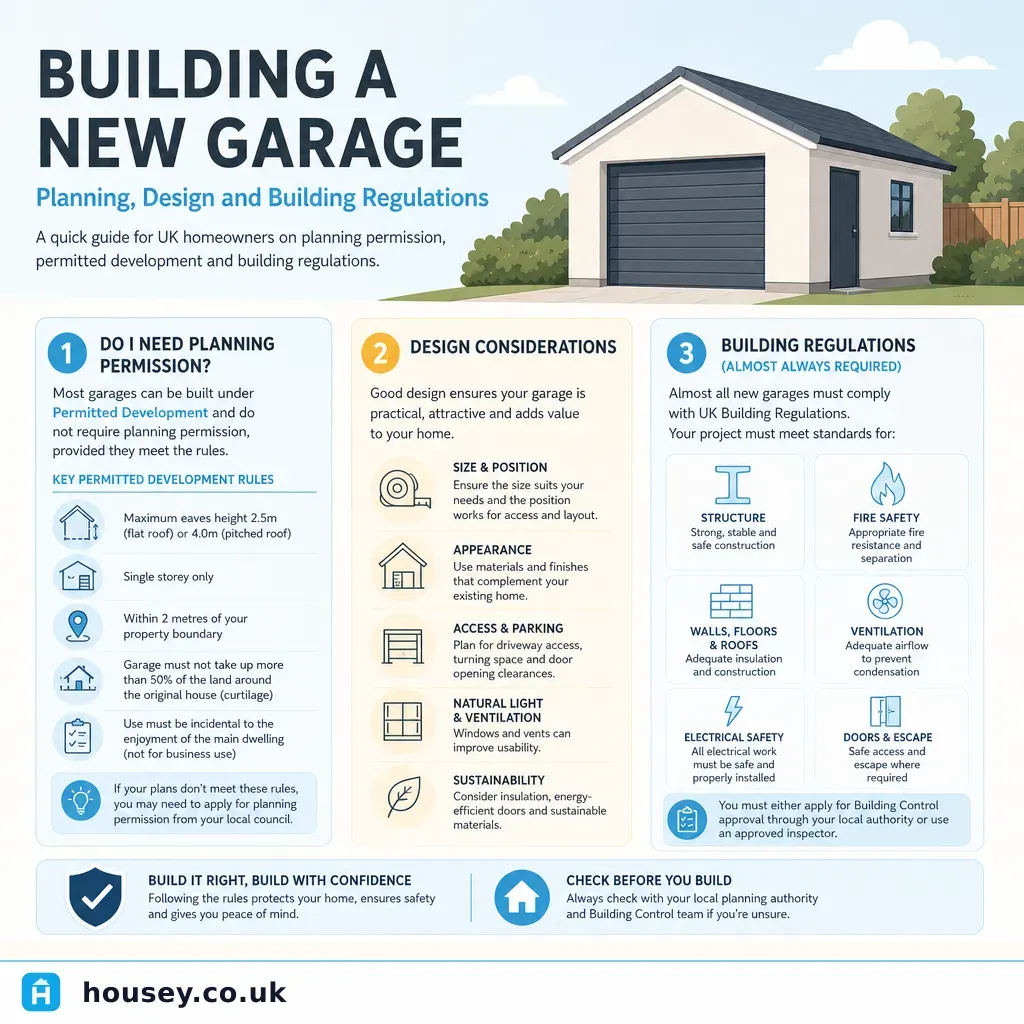
Building a New Garage: Planning, Design and Building Regulations
Most new detached garages in England qualify as permitted development and do not need planning permission, provided they stay within size, height, and coverage limits and are not within 5m of the dwelling.
 Improvement & Build
Planning a Demolition Project: Regulations, Safety and Site Clearance
Demolishing a building in England requires a Section 80 building control notice served at least six weeks before work starts, a Refurbishment and Demolition asbestos survey before any demolition begins, and compliance with CDM 2015.