Dormer Window Installation Costs and Options
By Housey · Last reviewed 7th of May 2026
Dormer Window Installation Costs and Options
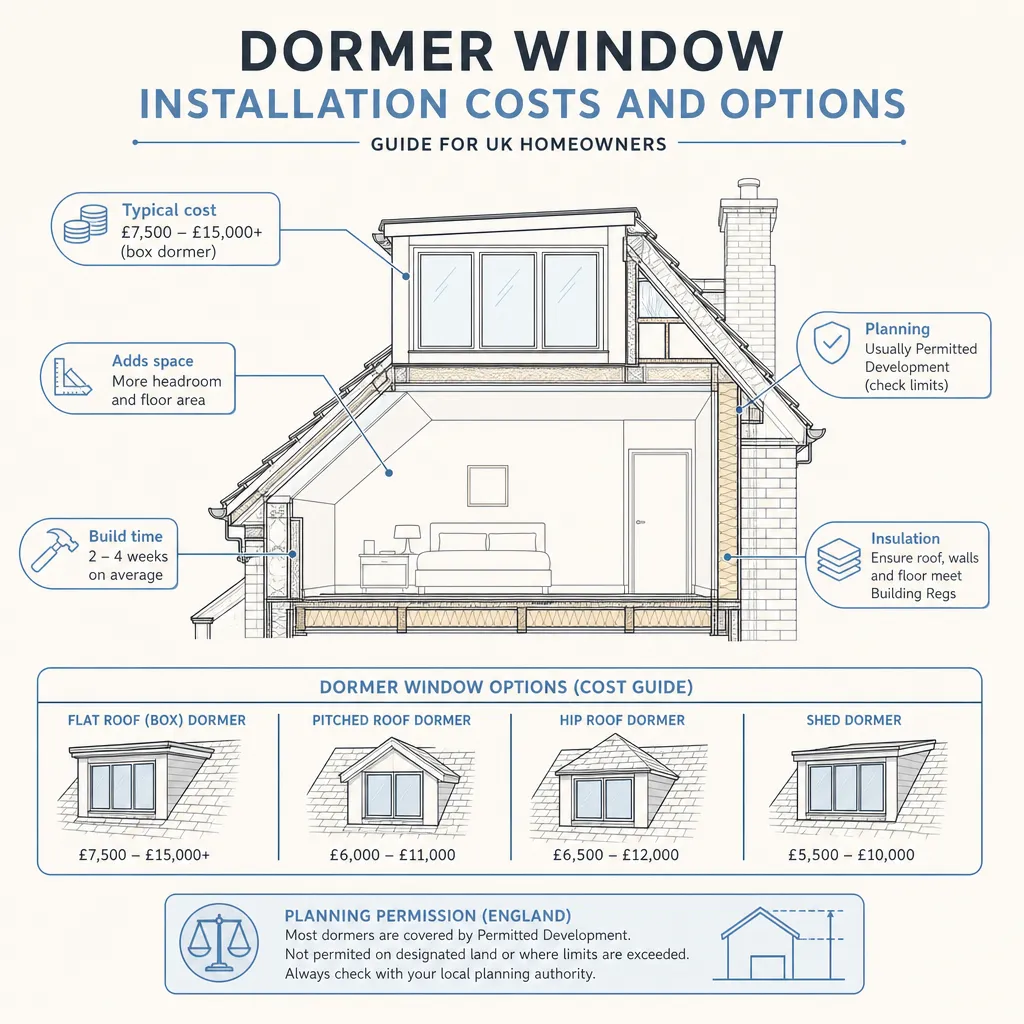
Dormer windows are one of the most popular ways to add usable headroom and natural light to a loft space, yet costs and complexity vary considerably depending on the type of dormer, the existing roof structure, and local planning requirements. Whether you are converting a loft for the first time or replacing a failing dormer, understanding the options and likely expenditure before approaching contractors will help you get meaningful, comparable quotes.
Key points
- Box dormers are the most cost-effective way to maximise floor space, typically costing £10,000–£25,000 installed depending on size and specification (indicative UK costs, last reviewed 2026-05-07).
- Most dormer windows on a principal or highway-facing elevation require full planning permission; rear-elevation dormers may qualify as permitted development under Class B of the Town and Country Planning (General Permitted Development) (England) Order 2015.
- Building Regulations approval is mandatory for all dormer installations — Approved Documents A (structure), B (fire safety), F (ventilation), and L (energy efficiency) all apply.
- Under Approved Document L (2021 edition), replacement or new roof windows must achieve a whole-window U-value no worse than 1.4 W/m²K.
- Party Wall Act 1996 notices may be required in semi-detached or terraced properties if the works affect the party wall or are within 3 m of a neighbouring foundation.
Types of dormer window
Choosing the right dormer type affects both the planning position and the budget. The table below compares the main options.
Dormer type | Best for | Not ideal for | Indicative installed cost* | Planning note |
|---|---|---|---|---|
Box (flat-roof) dormer | Maximising floor area and headroom | Listed buildings, conservation areas | £10,000–£25,000 | Often permitted development on rear; full PP on front |
Shed (full-width) dormer | Converting the whole loft floor plate | Narrow or shallow roof pitches | £15,000–£40,000 | Usually requires full planning permission |
Gabled (pitched-roof) dormer | Traditional character, heritage settings | Small roof spaces | £12,000–£28,000 | More sympathetic in design terms; check with LPA |
Hipped dormer | Period properties, avoiding ridge impact | Complex roofscapes | £14,000–£30,000 | Varies; always confirm with LPA |
Eyebrow dormer | Decorative rooflight; minimal space gain | Practical loft habitation | £8,000–£18,000 | Usually minor works; verify locally |
*Indicative UK costs, last reviewed 2026-05-07. Figures exclude VAT, scaffolding (allow £1,000–£3,000 extra), structural engineer fees (allow £500–£1,500), and planning application fees (£258 for a householder application in England as of 2025). Costs vary by region, roof pitch, materials specification, and contractor. Obtain at least three quotes before committing.
What affects the cost of a dormer window?
Several factors push quotes higher or lower:
Size and glazing specification: A single roof window in a modest box dormer costs far less than a full-width shed dormer with multiple units or folding doors to a Juliet balcony. Triple glazing and thermally broken frames add upfront cost but improve energy performance and comfort.
Roof structure: If existing rafters need to be upsized or a structural ridge beam introduced — common in full loft conversions — costs rise and structural calculations become necessary before building control approval can be granted.
Materials: Lead flashings, zinc, or GRP (glass-reinforced plastic) are the common choices for the flat section of a box dormer. Lead is traditional and long-lasting but carries a material premium. GRP is popular for its seamless, watertight finish. Matching tiles or slates to the existing roof covering adds cost to gabled or hipped dormers.
Location: Contractors in London and the South East typically charge 20–35% more than the national average for comparable work. Difficult access or exposed sites attract further premiums.
Planning and building control: Full planning permission adds drawing costs and an 8–12 week determination period. Building control fees for a loft conversion typically range from £700–£1,500 through a local authority building control body; registered building inspectors (formerly approved inspectors) may offer competitive alternatives.
Planning permission: permitted development or full application?
Under Class B of Schedule 2 to the GPDO 2015, a dormer may be permitted development on a house (not a flat) if it:
- Is on a roof slope that does not front a highway.
- Does not protrude above the highest part of the existing roof.
- Does not increase the cubic content of the original roof by more than 40 m³ (terraced) or 50 m³ (detached or semi-detached).
- Does not incorporate a balcony, verandah, or raised platform.
- Is set back at least 20 cm from the eaves.
Choose your route based on these criteria:
- Permitted development: Apply for a Lawful Development Certificate (LDC) from your local planning authority — not legally required, but strongly recommended before work starts and essential for sale or remortgage.
- Full planning permission: Required if the property is in a conservation area, subject to an Article 4 direction removing PD rights, the dormer faces a highway, or the volume limits are exceeded.
- Listed buildings: Full listed building consent is required regardless of size, position, or materials.
Always verify with your local planning authority (LPA) and the Planning Portal before starting work.
Building Regulations requirements
Building Regulations approval is not optional for dormer installations. A Full Plans application (checked in advance) or a Building Notice (inspected as work progresses) are the two routes. Key Approved Documents that apply:
- Approved Document A (Structure): Any opening in the roof must be structurally supported. Changes to rafters, ceiling joists, or load-bearing elements require structural calculations from a competent person.
- Approved Document B (Fire safety): Escape routes, fire-resistant construction, and smoke detection must meet requirements — particularly where the loft becomes a habitable room.
- Approved Document F (Ventilation): Background ventilation and, where the room will be occupied, appropriate extract provision are required.
- Approved Document L (Energy efficiency): New windows and roof elements must meet current U-value targets. Whole-window U-values must be no worse than 1.4 W/m²K under the 2021 edition.
Your building control body will inspect at key stages and issue a completion certificate on satisfactory completion. This certificate is important — mortgage lenders and buyers will ask for it.
What to ask before accepting a quote
Use this checklist when comparing quotes from builders and roofers:
- Is the price fixed or estimated? What circumstances would trigger additional charges?
- Who will design the structural elements — is a structural engineer's fee included, or is it separate?
- Will the contractor manage the planning application and building control submissions, or is that your responsibility?
- What roof covering materials are specified, and will they match the existing roof?
- How will the property be weatherproofed if the roof is opened during works?
- What is the scaffolding arrangement, and who is responsible for the cost?
- What workmanship guarantee is offered, and for how long?
- Is the contractor insured for this type of structural roofwork — can they provide evidence?
- Is VAT included in the quoted figure?
When to get professional help
A dormer is a structurally significant alteration. Seek qualified input if:
- The existing roof structure shows signs of sagging, spread, or previous ad-hoc alteration.
- The property is semi-detached or terraced — Party Wall Act 1996 notices may be needed if the works affect the party wall or are within 3 m of a neighbouring foundation.
- You are uncertain whether permitted development applies — an LDC application costs far less than retrospective enforcement action or an indemnity policy at sale.
- The loft will become a habitable room — building control inspections and a completion certificate are essential for future sale or remortgage.
- The property is listed or in a conservation area — additional consents may be required and standard permitted development rights will not apply.
How Housey can help
Housey can connect you with vetted window and door installers and experienced roofers who carry out dormer window installations across the UK. If your project involves a full loft conversion or wider structural works, you can also request quotes from extension builders. Requesting quotes from multiple contractors allows you to compare specifications, materials, and prices before committing.
Frequently asked questions
Do I need planning permission for a dormer window?
Not always. Rear dormers on houses (not flats) often qualify as permitted development under the GPDO 2015, provided volume, height, and design restrictions are met and the property is not listed or in a conservation area. A front-elevation dormer almost always requires full planning permission. Confirm with your local planning authority and consider applying for a lawful development certificate before starting work.
How long does a dormer installation take?
A single box dormer, once planning and building control are in place, typically takes two to four weeks on site. A full-width shed dormer combined with a complete loft conversion may take six to twelve weeks. If full planning permission is required, add eight to twelve weeks for the application before work can begin.
Can I have a dormer on a leasehold flat?
Permitted development rights for dormers do not apply to flats. If the roof forms part of a block, any alterations require freeholder consent, building control approval, and almost certainly full planning permission. Check your lease carefully and speak to your freeholder and solicitor before commissioning any work.
Does a dormer window need a structural engineer?
In most cases, yes. Creating an opening in a roof slope, supporting dormer cheeks, and potentially altering ceiling joists or introducing a ridge beam all carry structural implications that building control will require evidence for. Your building contractor should be able to coordinate structural calculations, but confirm this is included in their scope before signing a contract.
Will a dormer add value to my property?
A well-designed dormer that creates a usable habitable room — particularly a bedroom — can add meaningful value, but outcomes depend on location, property type, and the local market. Estate agents often quote a 10–20% uplift for a good quality loft conversion, though this is not guaranteed. A RICS-registered valuer will assess the finished space on its own merits.
Sources and further reading
- Planning Portal — Loft Conversion Planning Permission — Planning Portal
- Town and Country Planning (General Permitted Development) (England) Order 2015 — legislation.gov.uk
- Approved Document L: Conservation of Fuel and Power (2021) — GOV.UK
- Approved Document A: Structure — GOV.UK
- Party Wall etc. Act 1996 — Guidance — GOV.UK
Useful next reads
 Improvement & Build
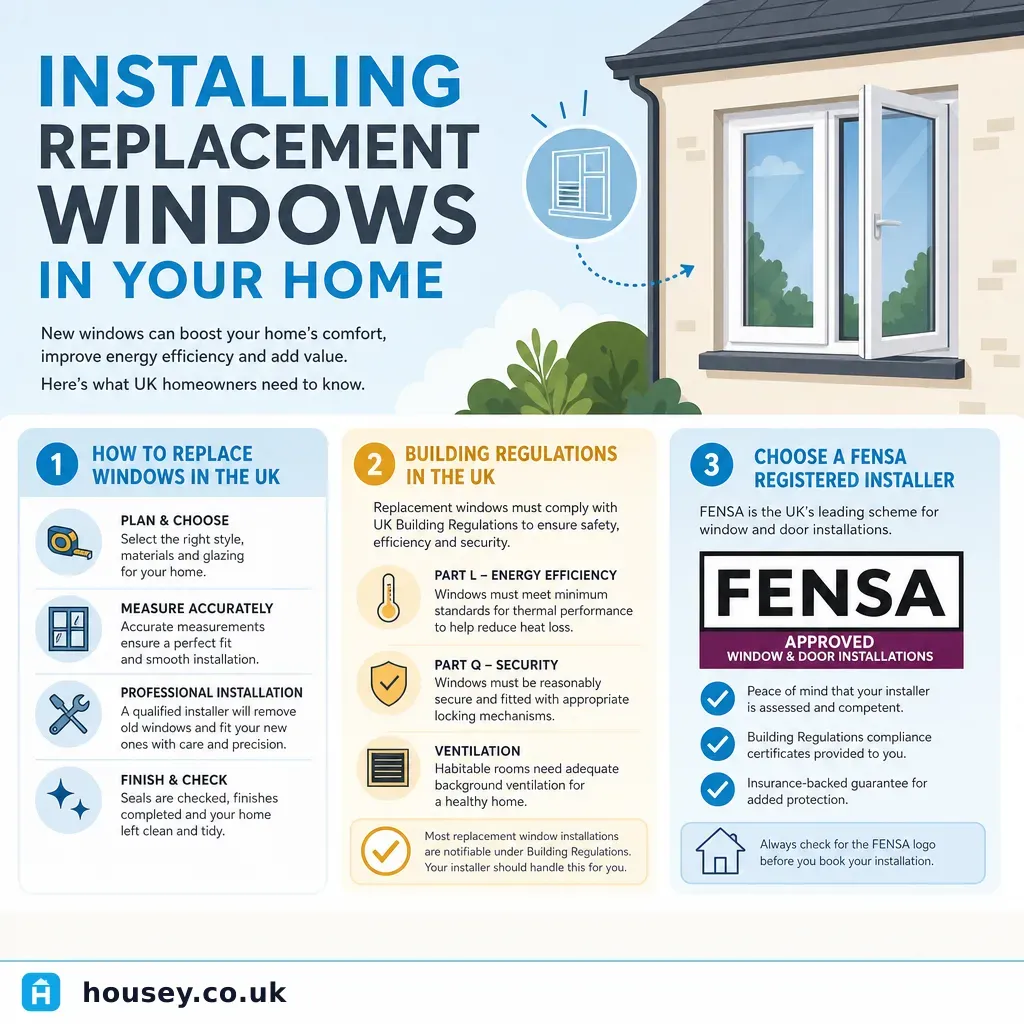
Installing Replacement Windows in Your Home
Replacing windows in the UK requires compliance with Building Regulations Part L — a minimum centre-pane U-value of 1.
 Improvement & Build
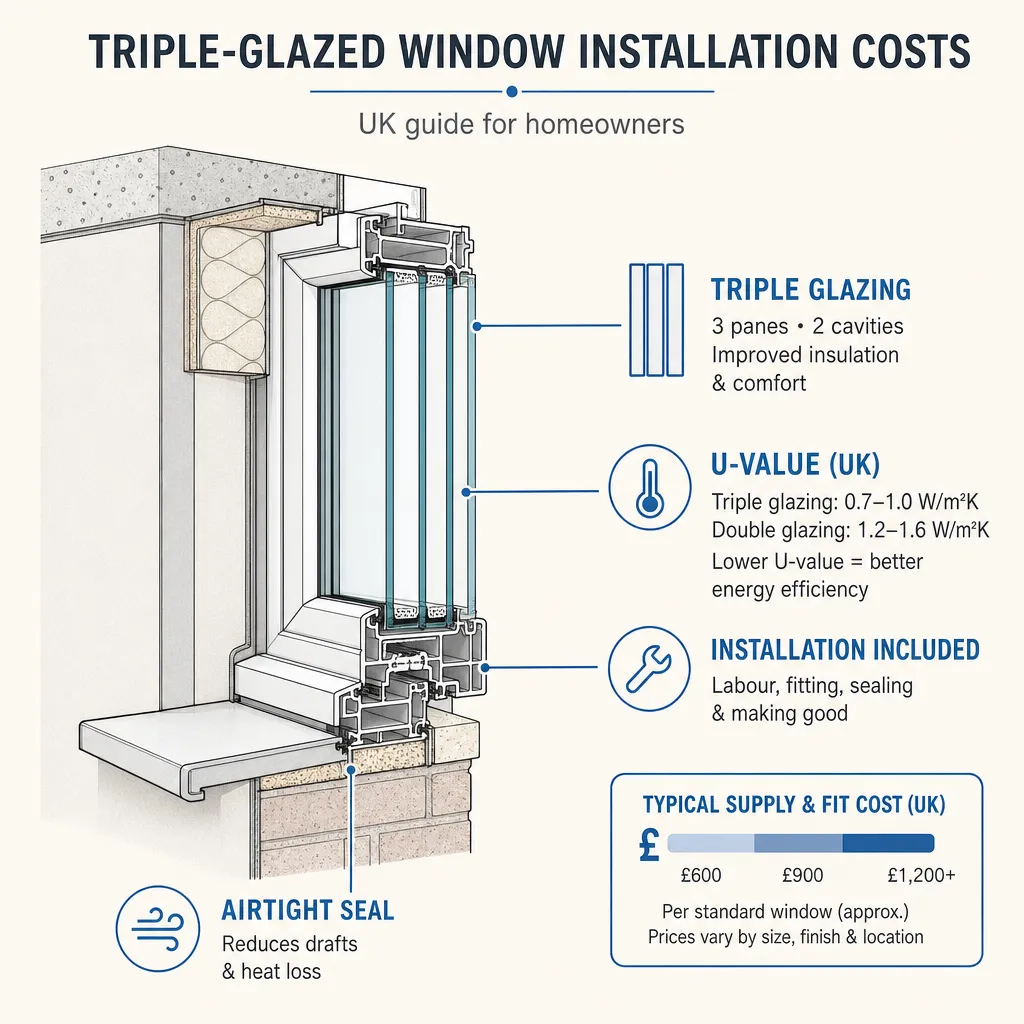
Triple-Glazed Window Installation Costs
Triple-glazed window installation in the UK typically costs £800–£1,800 per window, depending on size, frame material, and glazing specification.
 Improvement & Build
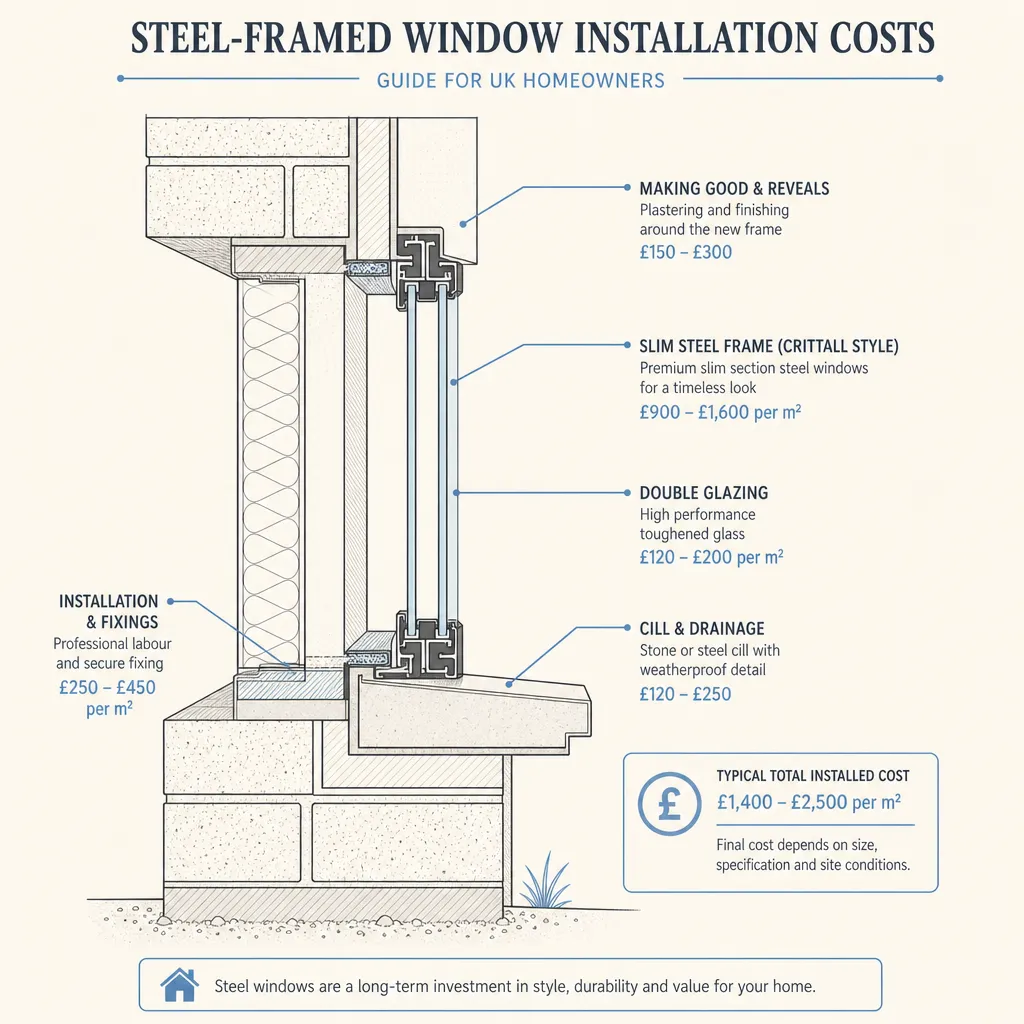
Steel-Framed Window Installation Costs
Steel-framed windows cost between £800 and £3,500 or more per window installed in the UK, depending on size, profile type, glazing specification, and whether old frames need removing.
 Improvement & Build
Laundry Room Renovation and Fitting Costs
A basic UK laundry room fit-out typically costs £2,000–£6,000 where plumbing and electrics are already in place, rising to £8,000–£15,000 or more when structural work, new drainage connections, or new electrical circuits are needed.
 Improvement & Build
Widening Doorways: Cost Estimates and Structural Considerations
A doorway in a non-load-bearing partition can usually be widened for £500–£1,500.