Dormer Window Installation and Roof Modification Costs in the UK
By Housey · Last reviewed 6th of May 2026
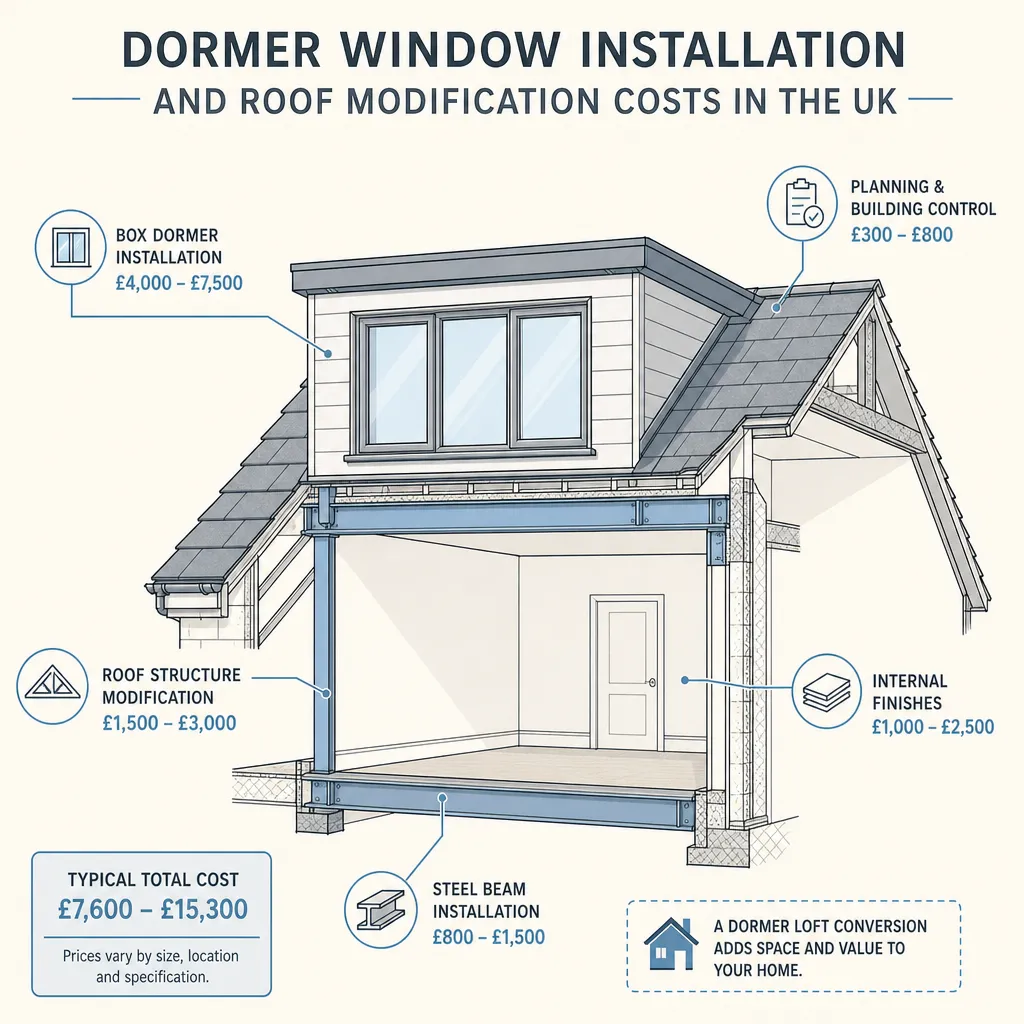
Dormer Window Installation and Roof Modification Costs in the UK
A dormer window is one of the most effective ways to add usable headroom and natural light to a loft space, but it is also a significant structural and waterproofing undertaking that sits at the intersection of planning regulation, Building Regulations compliance, and specialist roofing craft. Whether you are converting a pitched roof for the first time or extending an existing loft, understanding the cost drivers, regulatory requirements, and the professionals involved will help you commission the work correctly and avoid costly mistakes.
Key points
- Dormer window costs in the UK typically range from £15,000 to £45,000 depending on type, size, and location — London and the South East attract a 20–30% premium (Indicative UK costs, last reviewed 2026-05-06).
- Most dormer installations require Building Regulations approval under Approved Documents A (Structure), B (Fire), C (Moisture), L (Energy), and F (Ventilation).
- Rear dormers on houses may qualify as permitted development under Schedule 2, Part 1, Class B of the Town and Country Planning (General Permitted Development) (England) Order 2015, but strict volume, height, and materials conditions apply.
- Conservation areas, Article 4 Direction areas, listed buildings, and flats cannot use permitted development rights for dormer windows.
- Lead flashing at the dormer abutment is a critical waterproofing detail; failure at this junction is one of the most common sources of long-term roof leaks in converted properties.
Types of dormer window and what they cost
The shape, structural approach, and position of the dormer significantly affects both cost and planning risk.
Dormer type | Description | Typical cost range | Planning risk | Best for |
|---|---|---|---|---|
Flat-roof box dormer | Vertical front face, flat roof | £15,000–£35,000 | Moderate — height and volume limits apply | Maximum headroom and floor area |
Shed/catslide dormer | Shallow pitched roof continuing from the main slope | £18,000–£40,000 | Lower if positioned to rear within PD limits | Blending with the existing roofline |
Gable-fronted dormer | Pitched gable on the front face of the dormer | £20,000–£45,000 | Moderate | Traditional appearance on detached properties |
Hip-to-gable dormer | Converts a hipped roof end to a vertical gable wall | £20,000–£45,000 | Higher — typically requires planning permission | Semi-detached or detached homes with a hipped roof |
L-shaped dormer | Wraps around a rear corner combining rear and side return | £30,000–£60,000 | Higher — side element often requires planning | Large loft conversions requiring maximum space |
Roof light (Velux) | Flush with roof slope — not a dormer | £1,500–£5,000 | Low — usually permitted development | Adding light without altering the roofline |
Indicative UK costs, last reviewed 2026-05-06. Figures include typical structural, roofing, and basic internal finishing. Full loft conversion fit-out (staircase, electrics, plasterwork) is additional. Always obtain at least three quotes.
Does a dormer window need planning permission?
When permitted development may apply (England only): Under Schedule 2, Part 1, Class B of the Town and Country Planning (General Permitted Development) (England) Order 2015, a rear dormer on a house may not require planning permission if:
- The dormer does not exceed the highest point of the existing roof.
- The total volume added by all roof extensions does not exceed 40 cubic metres for a terraced house or 50 cubic metres for a detached or semi-detached house.
- The dormer is not on the principal elevation (front) or a side elevation facing a highway.
- Materials are similar in appearance to the existing house.
- The dormer is set back at least 20cm from the eaves.
- No raised platforms or balconies are created.
Planning permission is required if:
- The property is in a conservation area, World Heritage Site, National Park, or Area of Outstanding Natural Beauty.
- The building is listed (any grade).
- The property is a flat or maisonette.
- An Article 4 Direction removes permitted development rights — common in many London boroughs and historic town centres.
- The dormer is on the front elevation or a principal side elevation visible from a highway.
- A previous roof extension has already used the permitted volume allowance.
Always verify the permitted development position for your specific property with the local planning authority (LPA) or a planning consultant before starting work. A householder planning application in England costs £258 (2026 fee schedule — confirm current fees at planning.data.gov.uk).
Building Regulations: what approval is required?
Building Regulations approval is required for almost all dormer window installations. The relevant Approved Documents include:
- Part A (Structure): The dormer frame, structural beam, and modified rafters must be designed by a structural engineer to carry additional loads safely.
- Part B (Fire safety): Means of escape, fire stopping between compartments, and glazing requirements in escape routes.
- Part C (Moisture): Weatherproofing at the dormer junction, including lead flashing specification.
- Part L (Energy): Thermal performance of the new glazing and construction must meet current U-value requirements — check the current version of Approved Document L for the applicable standard.
- Part F (Ventilation): Adequate ventilation for any new habitable space created.
A Full Plans Building Regulations application is generally recommended for structural roof work, as it allows the design to be checked and approved before construction begins. Use either local authority building control (LABC) or a private approved inspector registered with CICAIR.
Which professionals do you need?
Professional | Role | Typically needed for |
|---|---|---|
Architect or architectural technologist | Design drawings, planning application, Building Regulations package | Recommended for all dormer projects; required where planning permission is needed |
Structural engineer | Calculations for new beams, modified rafters, and loads | Required for Building Regulations approval on almost all dormers |
Specialist roofer | Roof stripping, dormer frame, felting, tiling or slating, lead flashing | All dormer installations |
Carpenter or joiner | Dormer frame, window installation, internal lining | All dormer installations |
Extension builder or main contractor | Project coordination, brickwork, internal fit-out | Larger dormers and full loft conversion projects |
Building control inspector | Inspections at key build stages — mandatory for sign-off | All Building Regulations-notifiable dormer works |
What affects the cost of dormer installation?
- Dormer type and size: A small flat-roof box dormer on a two-bedroom terrace costs considerably less than a full-width L-shaped dormer on a large semi-detached house.
- Roofing material: Natural slate and clay tiles cost significantly more than concrete tiles or flat-roof single-ply membranes.
- Structural complexity: If existing roof timbers are undersized, rotten, or subject to previous amateur repair, additional remedial structural work will be needed.
- Internal fit-out: A full loft conversion — insulation, boarded floor, staircase, electrics, plasterwork — substantially increases the total cost beyond the dormer itself.
- Scaffolding: Full scaffold is usually required and adds £1,500–£4,000 depending on the height of the property and scaffold duration.
- Professional fees: Architect or architectural technologist fees for drawings and planning typically range from £1,500 to £5,000; structural engineer fees from £500 to £2,000.
- Location: London and the South East typically attract a 20–30% premium over comparable projects in the Midlands or North of England.
Important limitations
This article provides general information about dormer window installation in England. Planning and Building Regulations rules vary by property, tenure, local planning authority, and designation. Permitted development rights may have been removed or restricted by an Article 4 Direction in your area. Rules differ in Scotland, Wales, and Northern Ireland — check with Planning Scotland, Planning Portal Wales, or the Department for Infrastructure (Northern Ireland) respectively. This article does not constitute planning, structural, or building control advice. A qualified professional should assess your specific property before any design or construction work is commissioned.
What to ask a qualified professional
Before instructing an architect, roofer, or builder for a dormer project, ask:
- Does this specific dormer qualify as permitted development on my property, or does it need a planning application?
- Will you submit the Building Regulations application, or must I appoint a structural engineer separately?
- What structural calculations are required, who provides them, and are they included in your fee?
- What U-values will the new glazing and roof construction achieve, and do they satisfy current Approved Document L requirements?
- How will the dormer junction be weatherproofed — what flashing specification is proposed, and is a guarantee or insurance-backed warranty available?
- What building control inspection stages are required, and who arranges site access?
- Is scaffolding included in the quote, and what assumptions on scaffold duration have been made?
- What is the exact scope of the quote — does it include making good, internal lining, and window finishing?
When to get professional help
Always use qualified professionals for dormer window installation — this is not DIY territory. Seek professional advice before proceeding if:
- You are unsure whether the dormer qualifies as permitted development — an incorrect assumption can result in an enforcement notice requiring removal at your cost.
- Existing roof timbers show signs of rot, insect damage, or previous amateur repair — a RICS-regulated surveyor or structural engineer should assess the structure before design work begins.
- Any contractor quotes without discussing Building Regulations approval — this is a legal requirement and its absence from a quote should prompt serious questions.
- There are signs of existing damp, mould, or poor ventilation in the loft space — adding a dormer above an unresolved moisture problem can significantly worsen the situation.
- The property is in a conservation area or is listed and you have not confirmed the planning position with the local planning authority.
How Housey can help
Housey can connect you with specialist roofers and experienced extension builders who regularly work on dormer window installations and loft conversion projects across the UK. Request quotes from local specialists who can advise on planning requirements, structural design, and Building Regulations approval for your specific property.
Frequently asked questions
How long does dormer window installation take?
A standard box dormer typically takes 2–4 weeks for the structural and roofing work. If a full loft conversion fit-out is included — insulation, boarding, staircase, plasterwork, and electrics — the total project time is usually 6–12 weeks. Where a planning application is required, add 8–13 weeks to the programme before construction can begin.
Does a dormer window add value to my property?
A well-built dormer that creates usable habitable space — particularly an additional bedroom — can add meaningful value. Estate agents and surveyors often quote an uplift of 10–20% in suitable markets, though this varies significantly by location, finish, and demand. A poorly built or uncertified dormer may create problems at point of sale and could reduce value.
Can I add a rear dormer to a terraced house without planning permission?
Rear dormers on terraced houses are common in the UK and often fall within permitted development. The total volume added by all roof extensions must not exceed 40 cubic metres for a terraced house, the dormer must not exceed the highest point of the existing roof, and the property must not be in a conservation area or subject to an Article 4 Direction.
What is the difference between a dormer window and a roof light?
A roof light (such as a Velux window) sits flush with the existing roof slope and does not alter the roofline. A dormer window projects vertically outward from the roof, creating additional internal headroom and floor area. Roof lights are simpler and cheaper — usually permitted development — while dormers cost significantly more but deliver far greater usable space.
Do I need a structural engineer for a dormer window?
Almost always, yes. A dormer creates new structural loads on the roof — typically requiring a new ridge beam or trimmer and modifications to existing rafters. A structural engineer provides the calculations needed for Building Regulations approval. Without these, a building control inspector will not sign off the work and the dormer will remain uncertified at point of sale.
Sources and further reading
- Town and Country Planning (General Permitted Development) (England) Order 2015, Schedule 2, Part 1, Class B — legislation.gov.uk
- Loft conversion: permission guidance — Planning Portal
- Building Regulations Approved Document A: Structure — GOV.UK
- Building Regulations Approved Document L: Conservation of fuel and power — GOV.UK
- Local Authority Building Control — LABC
- Find a RICS-regulated firm — RICS
Useful next reads
 Improvement & Build
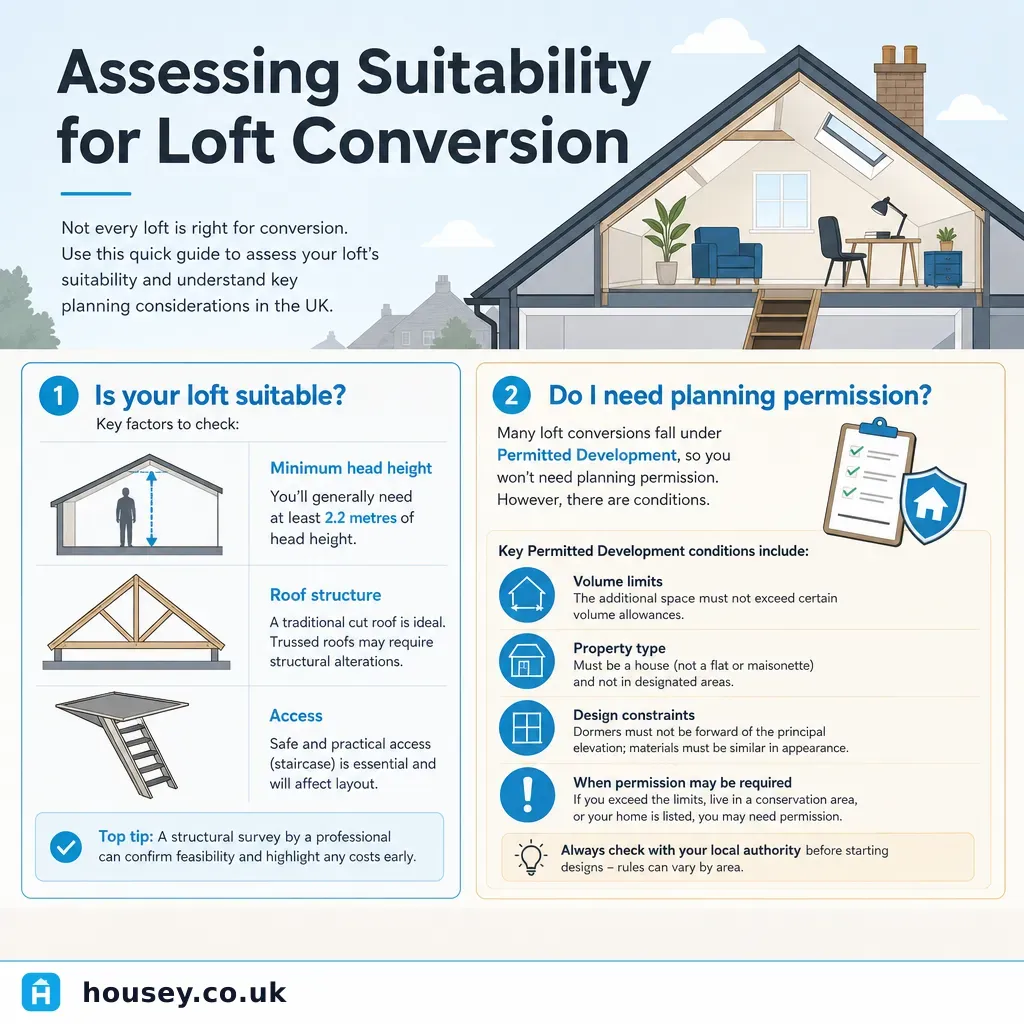
Assessing Suitability for Loft Conversion
Most loft conversions need a minimum ridge height of around 2.
 Improvement & Build
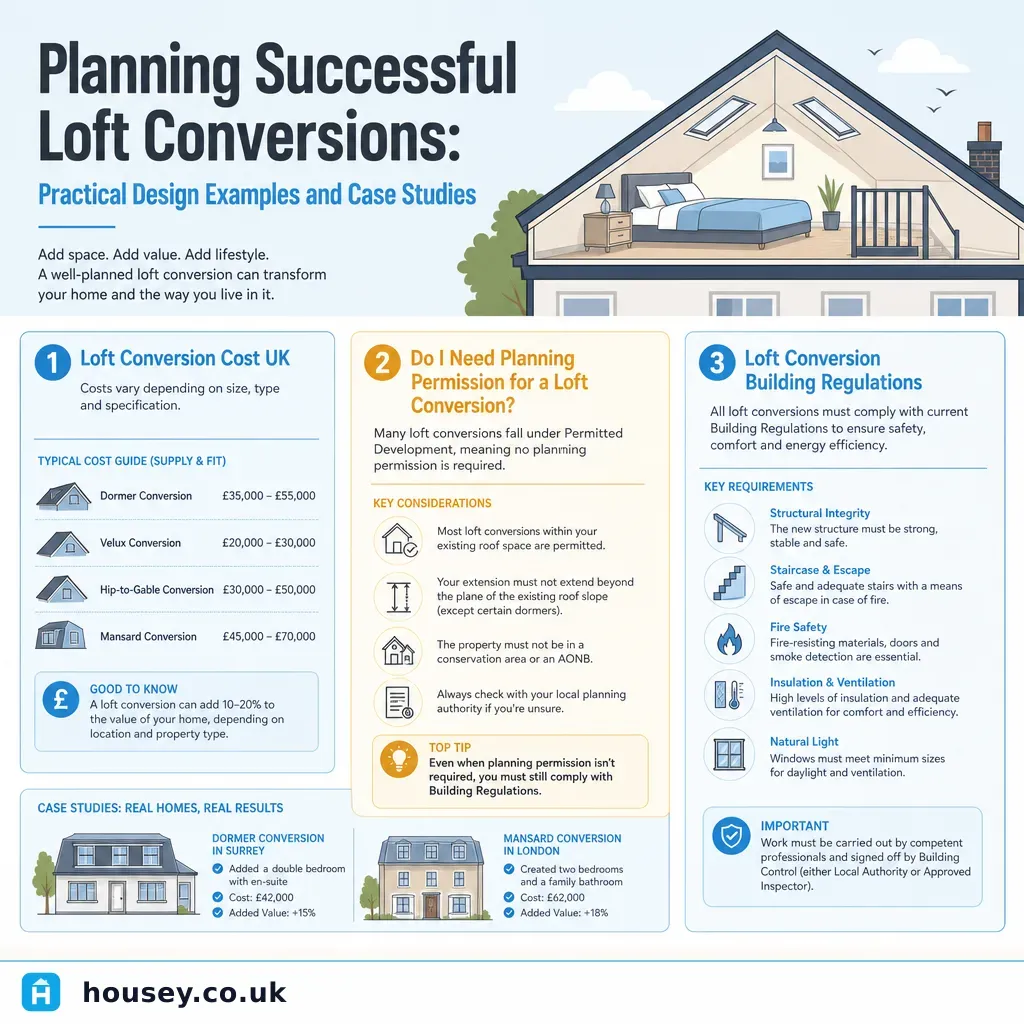
Planning Successful Loft Conversions: Practical Design Examples and Case Studies
Most UK loft conversions are permitted development and do not need planning permission, provided they remain within the volume allowances — 40 m³ for terraced houses and 50 m³ for detached or semi-detached properties.
 Improvement & Build
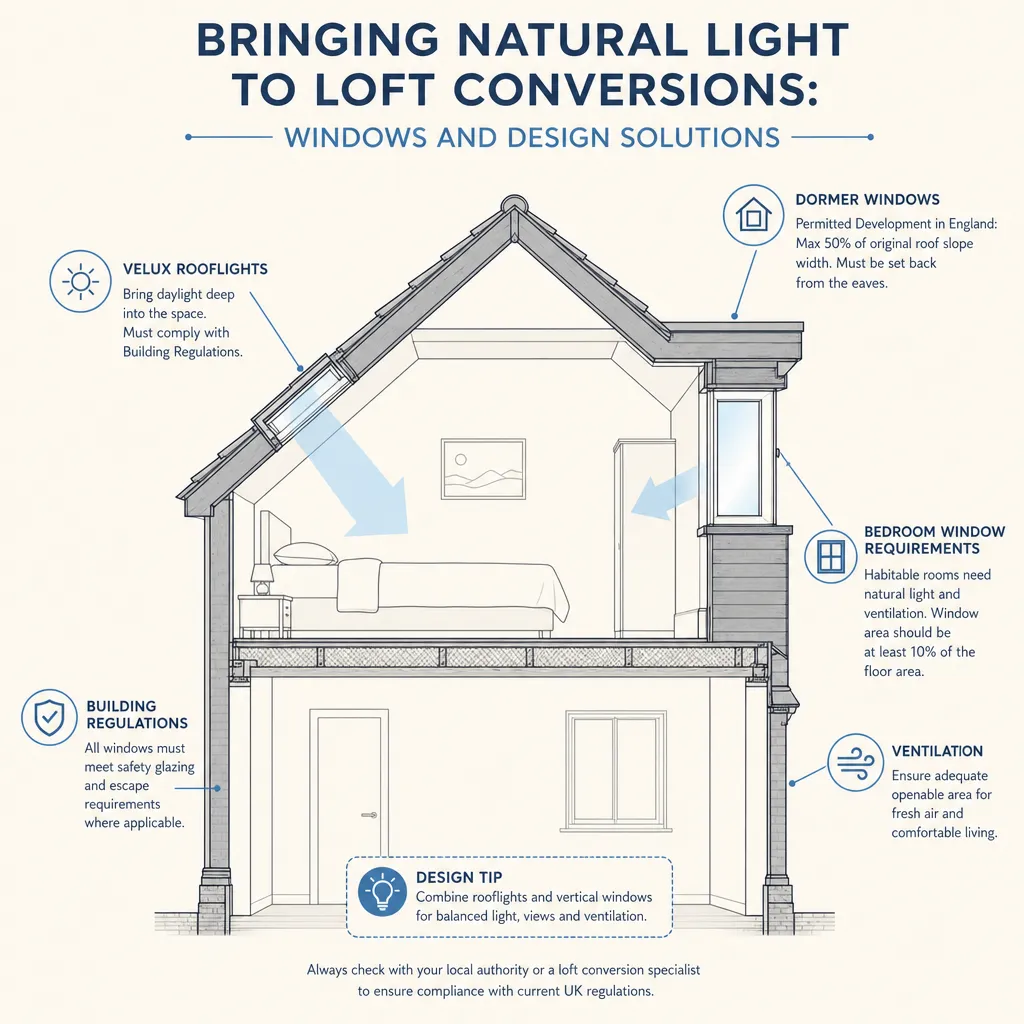
Bringing Natural Light to Loft Conversions: Windows and Design Solutions
Natural light in a loft conversion is usually achieved through roof lights, dormer windows, or gable-end glazing.
 Improvement & Build
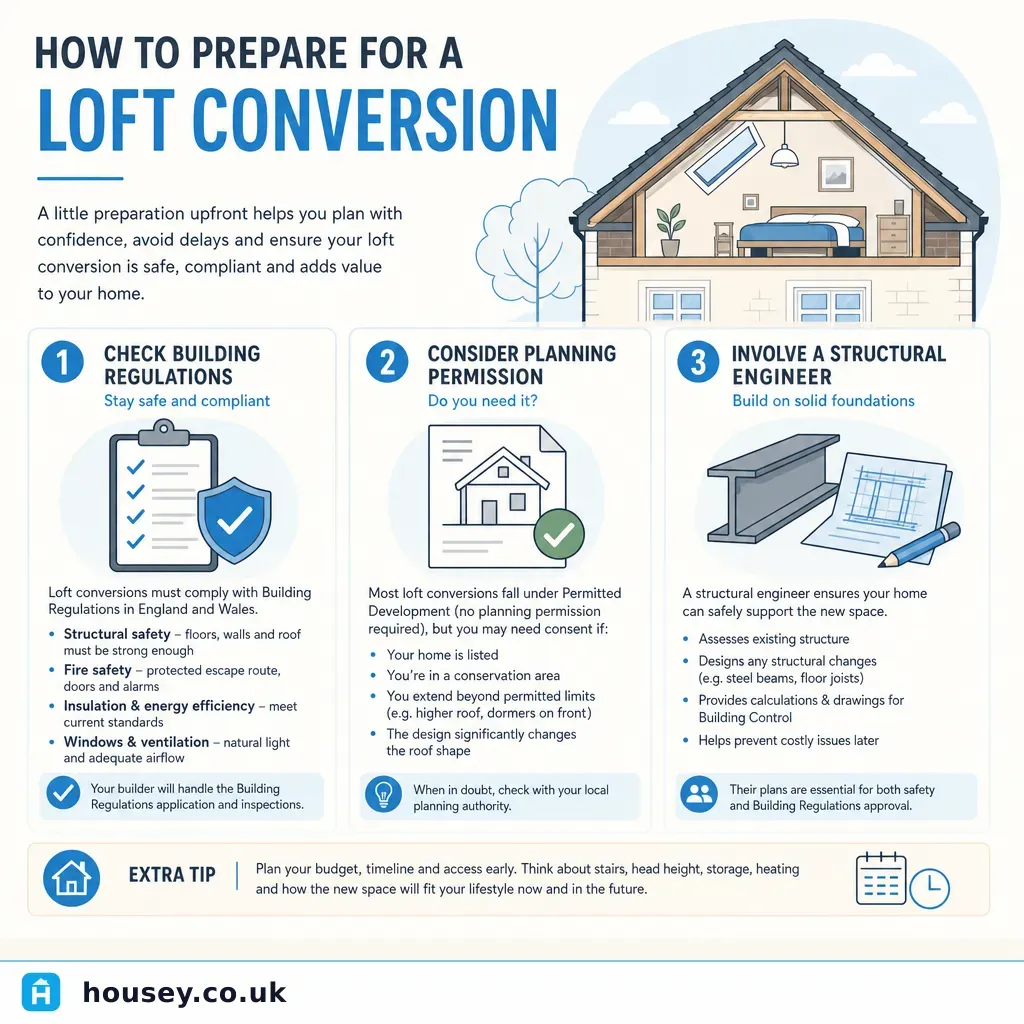
How to Prepare for a Loft Conversion
Before a loft conversion starts, you need a structural engineer to assess your roof, a Building Regulations application covering Parts A, B, F, K, and L, and — where a shared party wall is involved — a notice served under the Party Wall etc.
 Improvement & Build
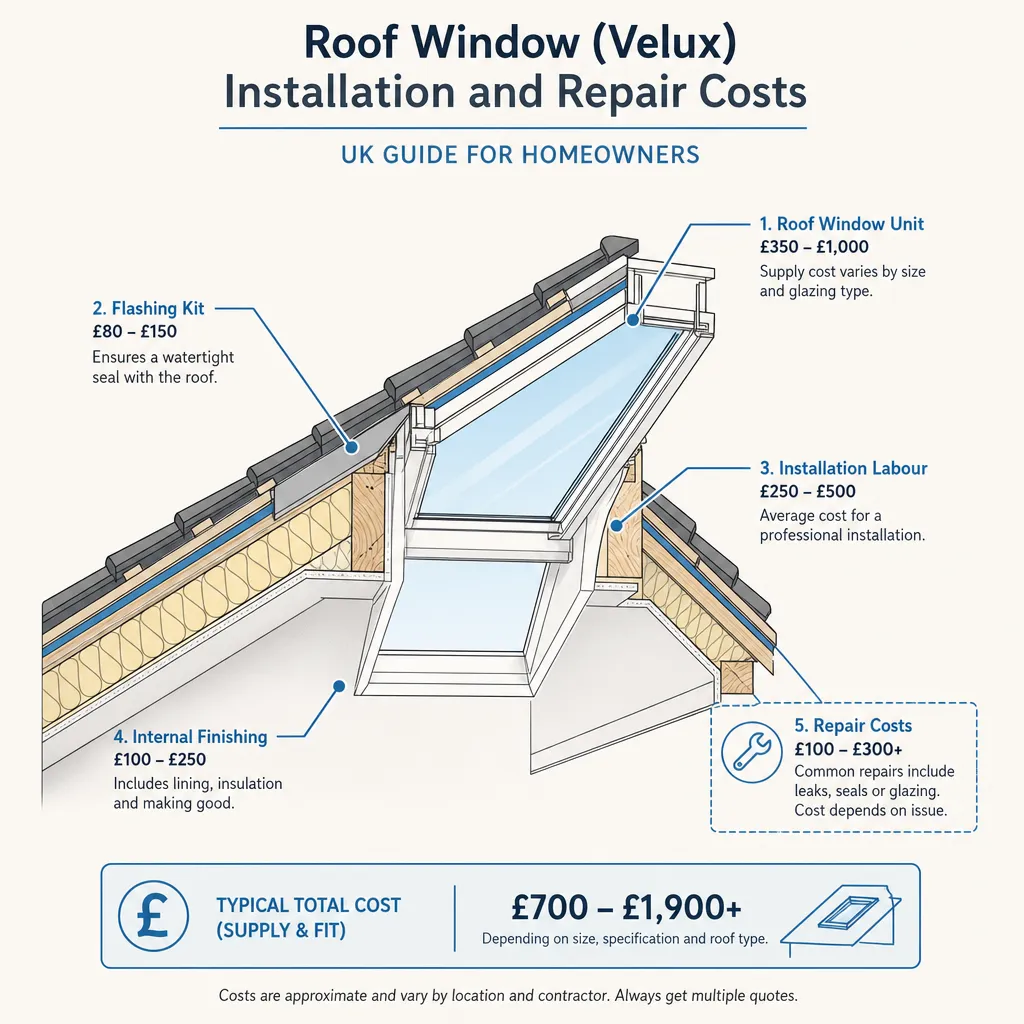
Roof Window (Velux) Installation and Repair Costs
Roof windows in the UK cost £500–£2,100 per window to supply and install on a pitched roof, depending on size and specification.