How to Prepare for a Loft Conversion
By Housey · Last reviewed 19th of May 2026
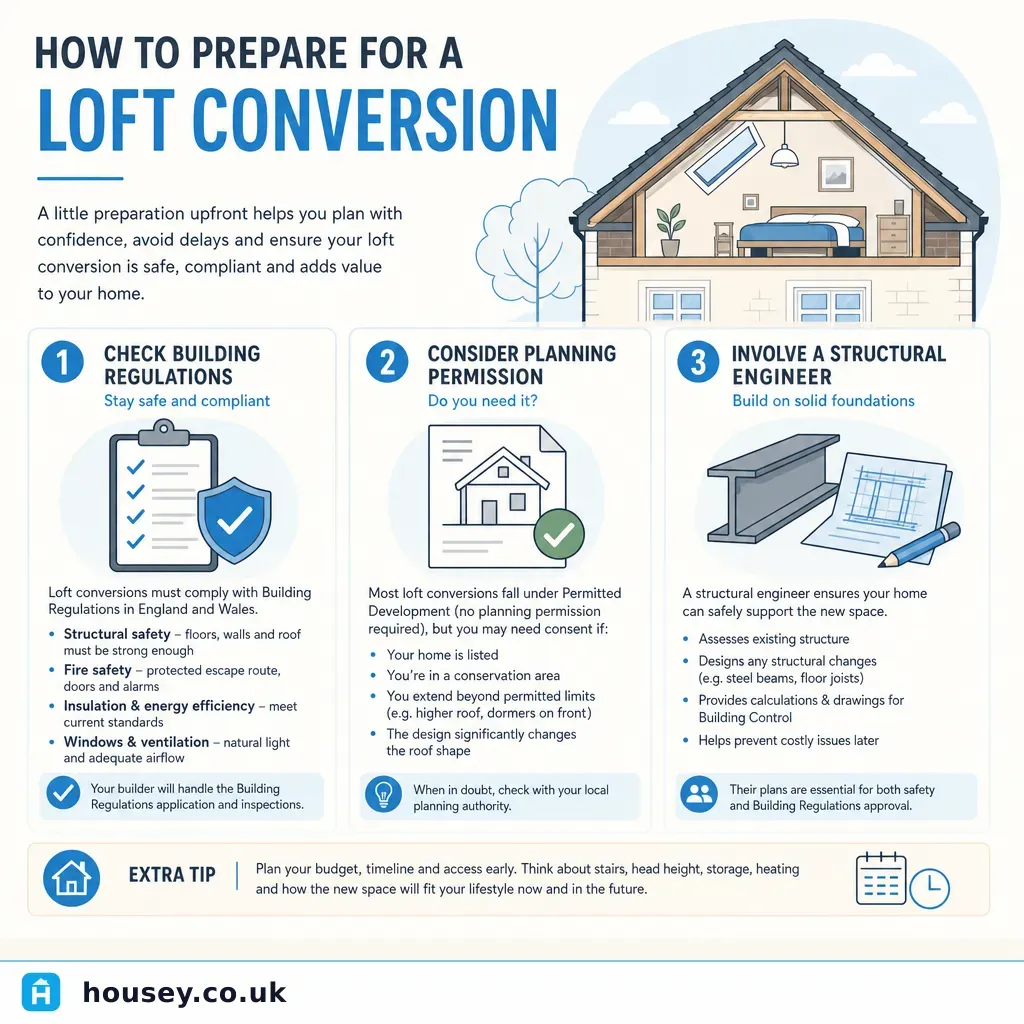
How to Prepare for a Loft Conversion
A loft conversion is one of the most disruptive but space-efficient improvements a UK homeowner can make — adding a usable bedroom, study, or bathroom without altering the property's footprint. Whether you own a Victorian terrace, a 1930s semi, or a post-war detached, the preparation stage is where projects succeed or stall: understanding what your roof structure allows, which permissions apply, and which professionals to instruct will save time, money, and considerable stress before a single joist is cut.
Key points
- Most loft conversions in England fall under permitted development (Class B of the GPDO 2015), allowing up to 40 m³ of additional roof space for terraced houses and 50 m³ for detached and semi-detached houses.
- All loft conversions require Building Regulations approval in England, covering Parts A (structure), B (fire safety), F (ventilation), K (protection from falling), and L (energy efficiency).
- A structural engineer must calculate loads for new floor joists, steel beams (RSJs), and any modifications to the roof structure before work begins.
- Where a loft conversion involves works to a party wall, a Party Wall Notice must be served under the Party Wall etc. Act 1996 at least two months before work starts.
- The minimum habitable head height under Building Regulations guidance is typically 2.2 m over at least half the converted floor area.
Is my loft suitable for conversion?
Three factors largely determine whether a loft conversion is straightforward or complex:
- Head height: measure from the top of the ceiling joists to the underside of the ridge. A clear height of approximately 2.2–2.4 m before conversion is a useful working minimum — below 2 m, the project is usually uneconomic.
- Roof structure: traditional cut roofs (common in pre-1960s properties) are easier to convert than trussed rafter roofs found in most homes built after the mid-1960s. Trussed roofs can be converted but require engineered structural solutions that increase cost.
- Roof pitch: steeper pitches provide more usable volume. A pitch below around 30° severely limits usable floor area.
Decision tree: which loft conversion type suits your property?
- Velux / roof light conversion — choose if the existing roof structure is sound, head height is adequate, and you want the most cost-effective option with minimal external impact.
- Rear dormer — choose if head height is marginal or you want full-height vertical walls. The most common conversion type in the UK; usually falls within permitted development at the rear.
- Hip-to-gable conversion — choose for semi-detached or detached homes with a hipped end roof. Gains significant volume by converting the sloping end to a vertical gable; usually requires planning permission.
- Mansard conversion — choose for maximum volume in urban terraces. Involves rebuilding the rear slope at a steep angle (typically 72°) with a near-flat top; almost always requires planning permission.
- Consult a structural engineer if there is any sign of existing roof movement, cracking, or rot, or if load-bearing elements are to be removed.
Loft conversion types: a comparison
Type | Typical cost range | Planning permission usually needed? | Best for | Not ideal for |
|---|---|---|---|---|
Velux / roof light | £20,000–£35,000 | No (PD) | High head height, low disruption | Low-pitch roofs, maximum space gain |
Rear dormer | £30,000–£50,000 | No (PD for rear) | Most UK terraces and semis | Front elevations, conservation areas |
Hip-to-gable | £35,000–£55,000 | Usually yes | Semis and detacheds with hipped roofs | Terraced houses (no hip end) |
Mansard | £45,000–£70,000+ | Almost always yes | Maximum space in urban terraces | Rural properties, tight budgets |
L-shaped dormer | £45,000–£65,000 | Usually no (PD if rear) | Victorian and Edwardian terraces with rear return | Modern estates without rear return |
Indicative UK costs, last reviewed 2026-05-19. Costs vary significantly by location, specification, and contractor. Obtain at least three quotes.
Planning permission and permitted development
Under Class B of Schedule 2 to the Town and Country Planning (General Permitted Development) (England) Order 2015, a loft conversion is permitted development (no planning permission needed) provided:
- The additional roof space does not exceed 40 m³ for a terraced house or 50 m³ for a semi-detached or detached house.
- No part of the new structure extends beyond the plane of the existing roof slope facing a highway.
- No new structure exceeds the height of the existing roof ridge.
- Side-facing windows are obscure-glazed and non-opening below 1.7 m from the floor.
- Materials are similar in appearance to the existing house.
Properties in conservation areas, national parks, AONBs, and listed building curtilages have restricted or removed PD rights. Check with your local planning authority before assuming permitted development applies.
Building regulations: what is covered
All loft conversions require Building Regulations approval regardless of whether planning permission is needed. The relevant Approved Documents include:
- Part A (Structure): new floor joists, steel beams, and modified rafters must be structurally engineered to carry the new loads.
- Part B (Fire safety): a loft bedroom requires a protected escape route — typically a 30-minute fire-protected corridor and staircase to the final exit, with fire doors and mains-wired interlinked smoke alarms at each storey.
- Part F (Ventilation): habitable rooms and bathrooms need specified background and purge ventilation rates.
- Part K (Protection from falling): stairs must meet minimum pitch, width, headroom, and handrail requirements.
- Part L (Energy efficiency): new rooflights, dormer windows, and exposed roof insulation must meet minimum U-value standards.
A building control consultant can advise on which application route to use (local authority building control or a registered approved inspector) and will carry out staged inspections during the works.
The Party Wall etc. Act 1996
If your loft conversion involves works to a shared party wall — for example, cutting in to carry a new steel beam or trimming timbers on the wall line — you must serve a Party Wall Notice at least two months before work starts. Your neighbour can consent in writing, appoint their own surveyor, or agree to a single agreed surveyor. Failure to serve notice does not make the work unlawful but can lead to injunctions and significant delays. A project manager with loft conversion experience will typically coordinate this process as part of the pre-start programme.
Pre-conversion homeowner checklist
Use this checklist before instructing a contractor:
Important limitations
This article provides general information about loft conversion preparation in England. Building Regulations requirements, permitted development criteria, fire safety standards, and structural requirements depend on the specific property, its construction history, and the scope of works. Rules in Scotland, Wales, and Northern Ireland differ from those in England. Nothing in this article constitutes structural, legal, or fire-safety advice. Always engage a qualified structural engineer, an approved building control body, and experienced contractors before committing to a loft conversion project.
When to get professional help
Always involve a structural engineer and a building control body for a loft conversion — there is no safe DIY route for structural alterations of this type. Seek additional professional advice if:
- The loft shows signs of existing movement, rot, or insect damage to roof timbers.
- You are considering a hip-to-gable or mansard conversion that will likely need planning permission.
- The property is listed or in a conservation area.
- You are unsure whether prior works have consumed your permitted development volume allowance.
- The loft has been partially modified by a previous owner without building control sign-off.
What to ask a qualified professional
Before instructing any contractor or design professional, ask:
- Has a structural engineer assessed the existing roof structure, floor joists, and foundations for the proposed conversion type?
- Which Parts of the Building Regulations apply to this project, and who will submit and manage the application?
- Does my conversion fall within Class B permitted development, or will a planning application be needed?
- If party walls are involved, when should the Party Wall Notice be served, and who will act as surveyor?
- What fire safety measures will be required, including protected escape routes, fire doors, and smoke alarm specification?
- Will I receive all completion certificates, building control sign-off, and structural calculations on practical completion?
How Housey can help
A loft conversion needs the right team from the start. Housey connects you with vetted loft conversion companies who manage design, structural engineering, building control, and construction under one contract. If you want independent oversight throughout the project, a project manager can coordinate contractors, manage the building control process, and ensure the Party Wall procedure is correctly followed. For properties where building regulations compliance is complex, a building control consultant can advise on requirements before you commit to a design.
Frequently asked questions
How long does a loft conversion take?
Most UK loft conversions take between six and twelve weeks from the start of on-site work, depending on complexity and the contractor's schedule. A straightforward Velux conversion may take four to six weeks; a full mansard can take twelve to sixteen weeks. Design, structural engineering, and building regulations approval typically add a further four to eight weeks before work begins on site.
Will a loft conversion increase my council tax?
A loft conversion that creates additional habitable space may lead the Valuation Office Agency to reassess and increase your council tax band, typically when the property is next sold. The increase is not automatic or immediate but is a known risk for significant additions that raise the property's value relative to others in the same band.
Do I need an architect for a loft conversion?
Formal RIBA architect involvement is not a legal requirement, but you will need detailed drawings and structural calculations for the Building Regulations application. Many loft conversion specialists employ in-house architectural technologists and structural engineers as part of their package. For complex conversions or listed buildings, independent professional input from a RIBA-registered architect is advisable.
Can I carry out a loft conversion on a leasehold property?
Yes, but freeholder consent must be obtained before work starts, and the lease should be reviewed for any restrictions on structural alterations. The lease may require a licence to alter, which can involve a fee and conditions on construction and finishes. Take legal advice before instructing any contractors, as unauthorised works can constitute a breach of lease.
Sources and further reading
- Town and Country Planning (GPDO) 2015, Schedule 2, Class B — legislation.gov.uk
- GOV.UK: building regulations approval — GOV.UK
- Planning Portal: loft conversions — Planning Portal
- Party Wall etc. Act 1996 explanatory booklet — GOV.UK
- Approved Document B: fire safety in dwellings — GOV.UK / MHCLG
Useful next reads
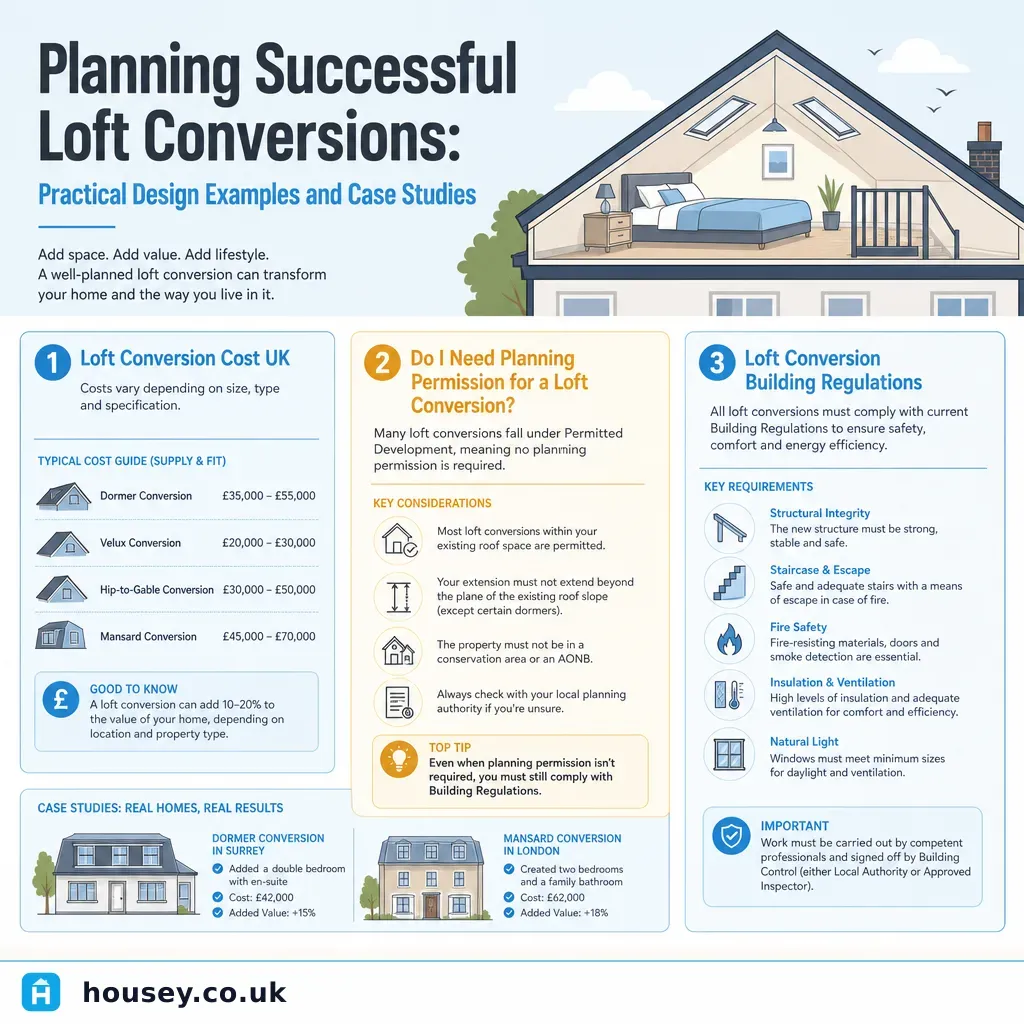 Improvement & Build
Planning Successful Loft Conversions: Practical Design Examples and Case Studies
Most UK loft conversions are permitted development and do not need planning permission, provided they remain within the volume allowances — 40 m³ for terraced houses and 50 m³ for detached or semi-detached properties.
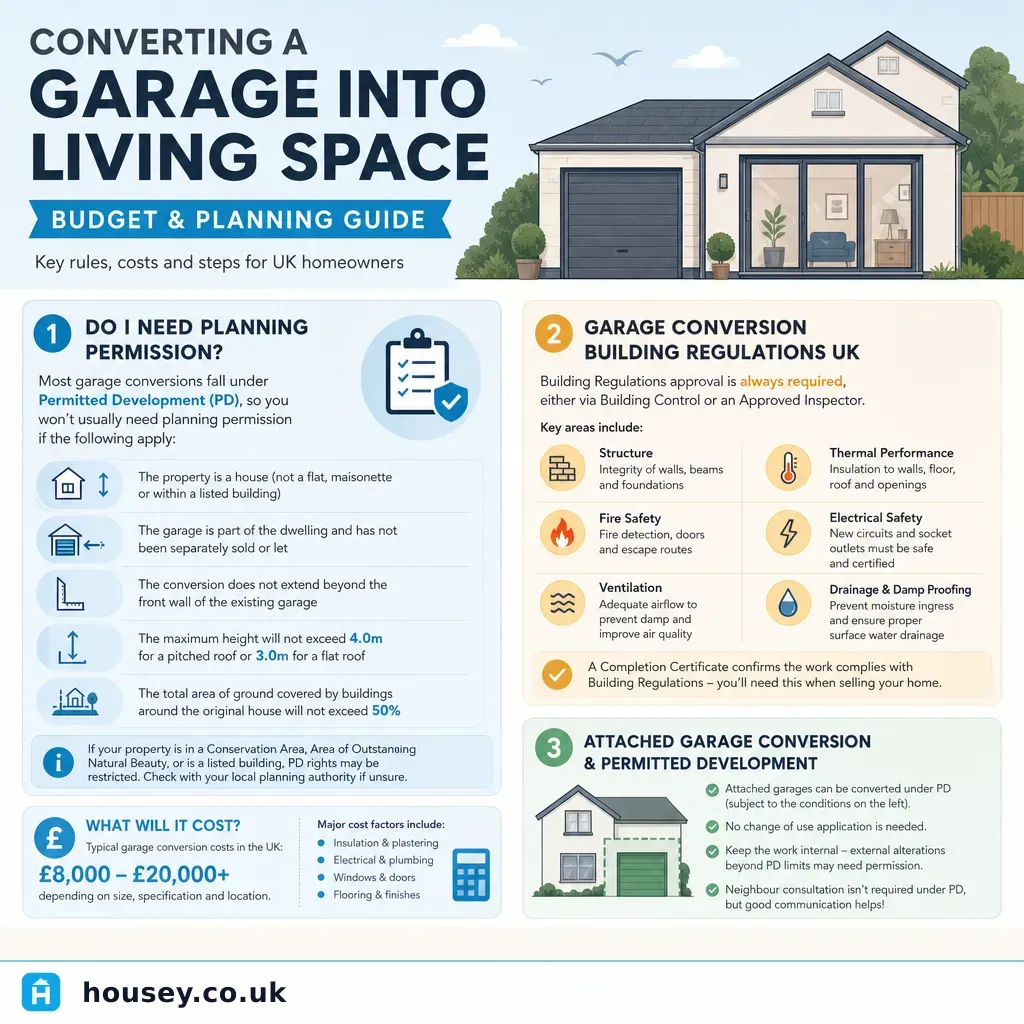 Improvement & Build
Converting a Garage into Living Space: Budget and Planning Guide
A single-garage conversion typically costs £8,000–£20,000 in the UK.
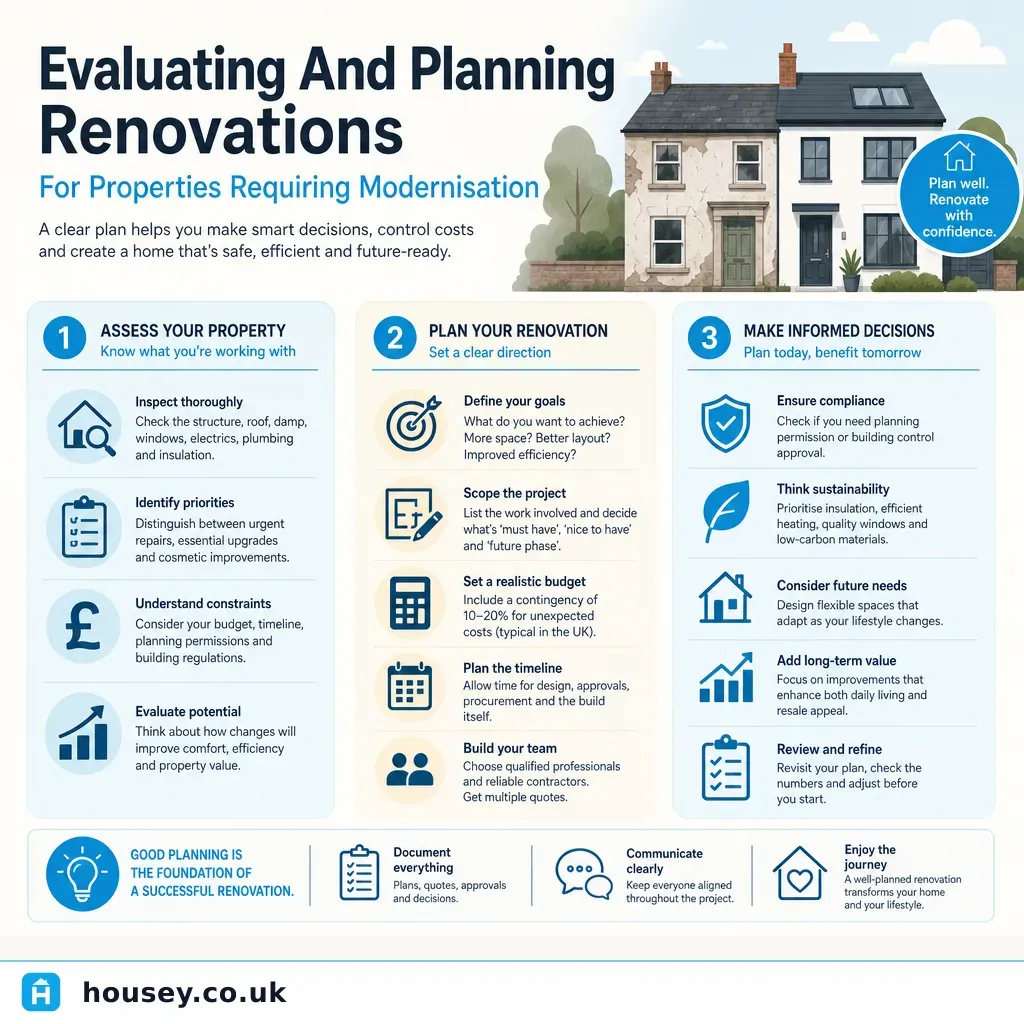 Improvement & Build
Evaluating And Planning Renovations For Properties Requiring Modernisation
Start by commissioning a condition survey — RICS Level 3 for pre-1919 properties — to identify structural defects, damp, and services issues before finalising a budget.
 Improvement & Build
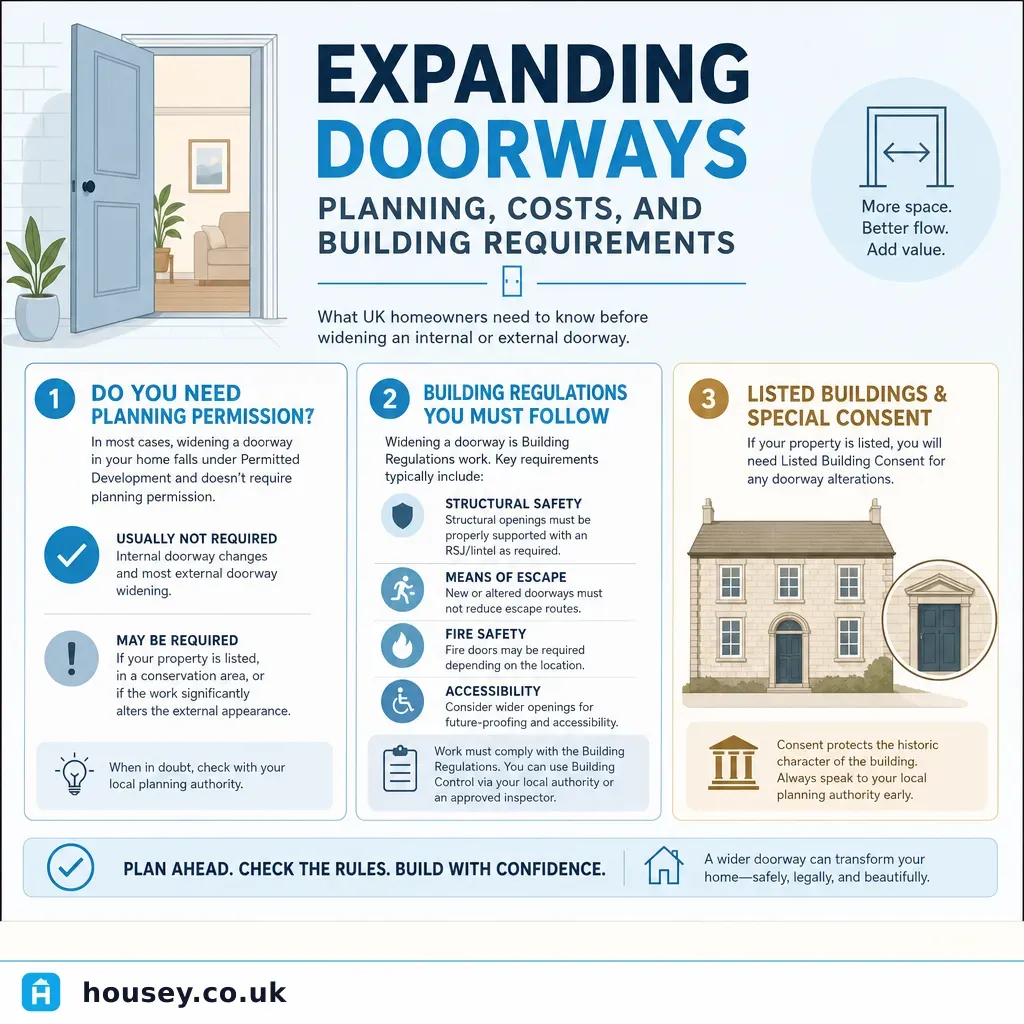
Expanding Doorways: Planning, Costs, and Building Requirements
Expanding a doorway in a load-bearing wall requires Building Regulations Part A approval and a structural engineer's lintel design.
 Improvement & Build
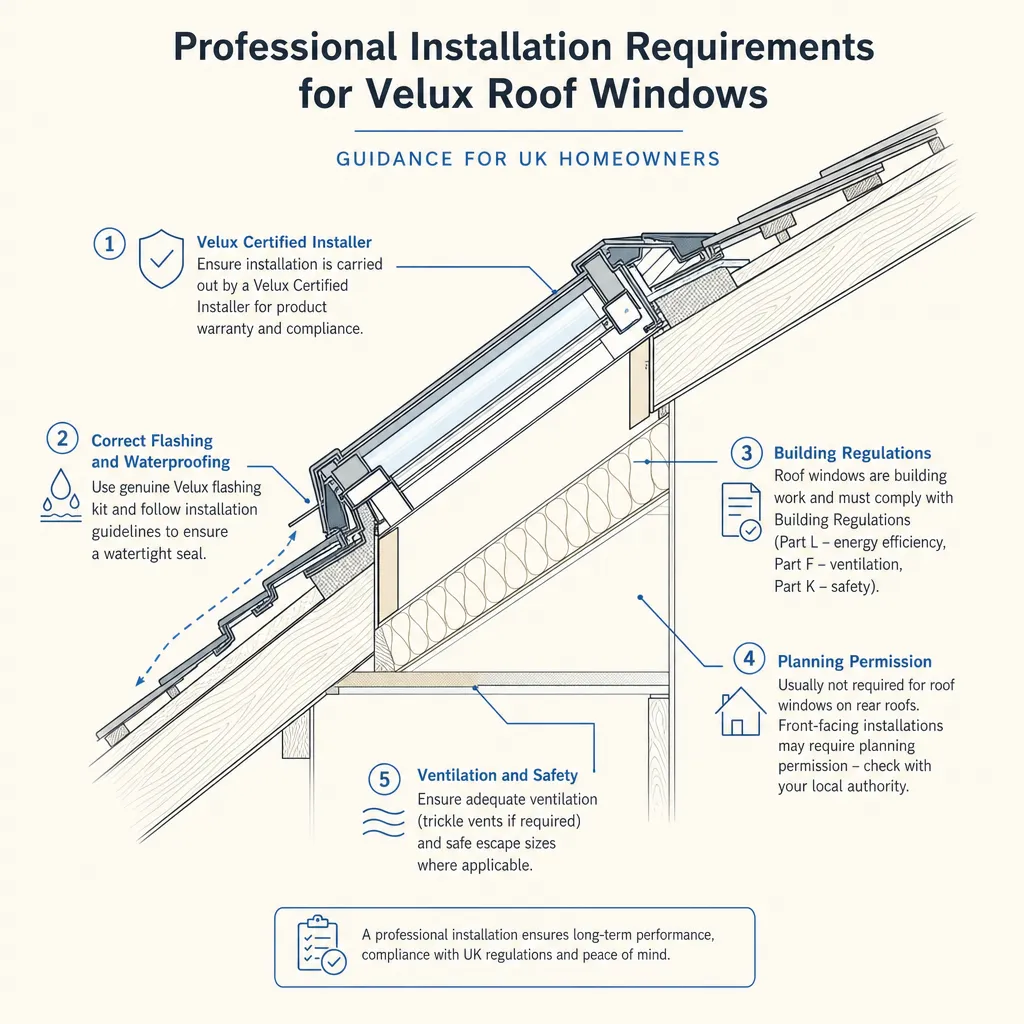
Professional Installation Requirements for Velux Roof Windows
Velux roof windows installed as replacements in the same opening usually fall under permitted development, but new openings or changes on listed buildings or in conservation areas require planning permission.