Roof Window (Velux) Installation and Repair Costs
By Housey · Last reviewed 11th of May 2026
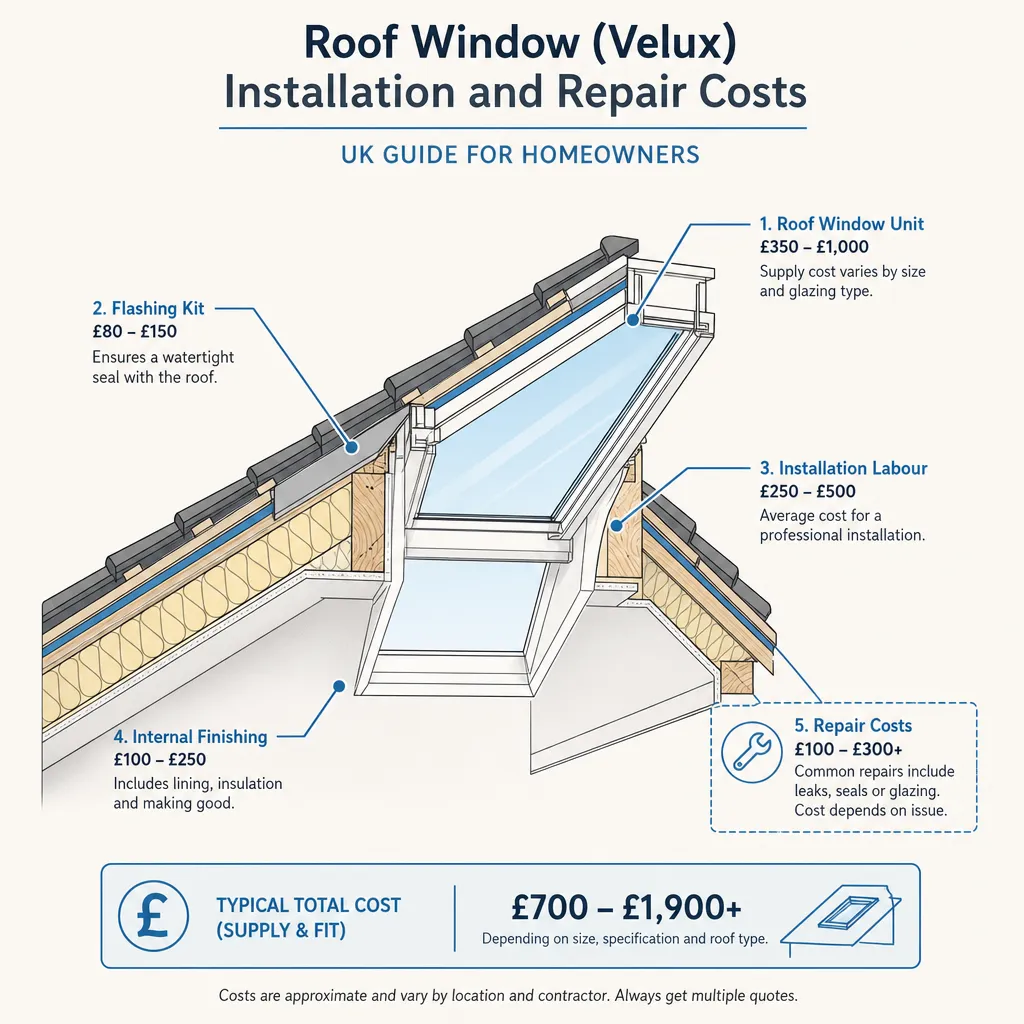
Roof Window (Velux) Installation and Repair Costs
Roof windows — commonly known as Velux windows after the leading manufacturer — are one of the most practical ways to bring natural light and ventilation into a loft conversion, attic room, or top-floor space. They are also widely used on flat-roof extensions and garden rooms where conventional vertical windows are not feasible. Whether you are replacing a failed unit, fitting new windows as part of a loft conversion, or repairing a leaking skylight, the costs involved vary considerably depending on window type, access difficulty, and whether any rafters need modification.
Key points
- Standard pitched-roof window supply and installation costs range from approximately £500 to £2,100 per window, depending on size, specification, and whether the unit is manual or electric (Indicative UK costs, last reviewed 2026-05-11).
- Replacement windows in existing dwellings must achieve a U-value of no more than 1.4 W/m²K under Approved Document L (2021 edition) — confirm compliance with the manufacturer before ordering.
- Installing a roof window that does not project more than 150mm above the existing roofline is usually permitted development for a dwelling house, but conservation areas, listed buildings, and certain designated areas commonly remove or restrict this right.
- Flat-roof rooflights require a raised kerb construction above the waterproofing membrane and typically cost more per unit than pitched-roof windows of equivalent size.
- Repairs — covering flashing re-dressing, seal replacement, glazing unit renewal, or mechanism repair — typically cost £150–£600 per window depending on the fault and roof access (Indicative UK costs, last reviewed 2026-05-11).
Types of roof window and indicative UK costs
Pitched roof windows
The most common type, fitted between rafters at the angle of the roof pitch. Available as manual centre-pivot or top-hung, and in electrically operated or solar-powered versions. Triple glazing, anti-condensation glass, and integrated blinds are popular upgrades.
Type | Unit price | Installation | Total indicative cost |
|---|---|---|---|
Manual centre-pivot (600 × 780 mm) | £300–£550 | £200–£400 | £500–£950 |
Manual centre-pivot (940 × 1140 mm) | £500–£900 | £300–£500 | £800–£1,400 |
Electric or solar-operated | £700–£1,500 | £350–£600 | £1,050–£2,100 |
Window with integrated roller blind | £600–£1,200 | £300–£550 | £900–£1,750 |
Indicative UK costs, last reviewed 2026-05-11. Unit prices include standard flashing kit. Excludes internal plasterboard reveal, lining, or any rafter modification work.
Flat-roof rooflights
Flat-roof rooflights sit on a raised kerb above the roof surface, using structural glass, polycarbonate, or GRP domes. Common on single-storey rear extensions, orangeries, and garden rooms.
Type | Unit price | Kerb and installation | Total indicative cost |
|---|---|---|---|
Polycarbonate dome (600 × 900 mm) | £200–£500 | £300–£600 | £500–£1,100 |
GRP or acrylic dome (900 × 1200 mm) | £400–£900 | £400–£700 | £800–£1,600 |
Flat glass opening rooflight (900 × 900 mm) | £800–£2,500 | £600–£1,200 | £1,400–£3,700 |
Bespoke structural glass lantern | £3,000–£10,000+ | £1,500–£4,000 | £4,500–£14,000+ |
Indicative UK costs, last reviewed 2026-05-11. Kerb construction costs vary with waterproofing membrane type (felt, GRP, or EPDM). Prices cover supply and installation of the rooflight unit only.
Planning permission and building regulations
When is planning permission required?
Installing a roof window on a standard pitched roof is usually permitted development for a dwelling house under Schedule 2, Part 1, Class B of the Town and Country Planning (General Permitted Development) (England) Order 2015, provided:
- The window does not protrude more than 150mm above the plane of the existing roof.
- The highest point of the window sits no higher than the highest part of the roof.
- The property is not a listed building and is not in a conservation area, Area of Outstanding Natural Beauty, World Heritage Site, or National Park — in these locations, permitted development rights for roof alterations are often restricted or removed.
- Side-facing roof windows must be obscure glazed and non-opening below 1.7m from floor level if they overlook a neighbouring property.
Always check with your local planning authority (LPA) before fitting a roof window if you are unsure of your property's planning designation or history.
When do building regulations apply?
- Replacement in an existing opening: The new window must achieve U-value ≤1.4 W/m²K under Part L. Formal notification may not always be required for a like-for-like replacement, but thermal compliance must still be met.
- New opening cut into an existing roof: Part A (structure) applies if rafters are cut or notched; the trimmer arrangement must be structurally adequate.
- Bathroom or habitable room: Part F (ventilation) applies — if the roof window is the primary source of purge ventilation, the opening area must be adequate for the room size.
- Loft conversion: All roof windows forming part of the conversion are assessed within the overall building regulations application.
Contact your local authority building control (LABC) or an approved inspector before starting work if there is any doubt.
Roof window repairs: common faults and costs
What typically goes wrong
Leaking at the flashing. The most frequent cause of roof window water ingress. The lead or aluminium flashing at the window perimeter degrades, lifts, or cracks over time. Repair usually means re-dressing or replacing the flashing kit.
Failed perimeter seal. The EPDM or foam seal around the glass unit deteriorates, allowing draughts or minor water ingress. A minor repair, but it requires safe rooftop access.
Broken or stiff operating mechanism. Centre-pivot hinges and locking bars can seize or break, particularly in older windows. Mechanisms are often replaceable without changing the whole frame.
Condensation between panes. Indicates a failed sealed glazing unit. The unit can often be replaced independently of the frame if the frame itself remains structurally sound.
Cracked or broken glass. Manufacturer replacement units are available for most current models. Safety glazing (toughened or laminated) is required under Building Regulations.
Indicative repair costs
Repair type | Indicative cost |
|---|---|
Flashing re-dress or repair | £150–£400 |
Full flashing kit replacement | £250–£600 |
Perimeter seal replacement | £80–£200 |
Operating mechanism replacement | £100–£300 |
Replacement sealed glazing unit | £150–£500 |
Full window replacement (like-for-like) | £500–£1,500 including fitting |
Indicative UK costs, last reviewed 2026-05-11. Access difficulty, roof pitch, and any scaffold requirement significantly affect repair costs.
Homeowner checklist: before you get quotes
What to ask before accepting a quote
- Will any rafters need to be cut or modified, and if so, how will the structural integrity of the roof be maintained?
- What flashing system are you specifying — the manufacturer's own kit, or a third-party alternative?
- Is VAT included in the quoted price?
- What building regulations notifications are required, and will you manage these?
- What warranty does the manufacturer offer on the window, and what installation guarantee do you provide?
- Will the internal reveal, lining, and any redecoration be included, or is this a separate trade?
- Is the price based on ladder access, or will scaffolding be required — and if so, is that cost included?
When to get professional help
Most roof window installations and straightforward repairs can be handled by a competent roofer experienced with skylight products. Seek specialist advice in these situations:
- If rafters need to be cut or repositioned to fit a larger window — an experienced roof carpenter or structural engineer should specify the trimmer arrangement before work proceeds.
- If your flat roof shows signs of widespread membrane failure (bubbling, ponding water, or large surface cracks) — address this as part of the rooflight installation rather than leaving it as a separate future job.
- If you suspect asbestos-containing materials in older flat-roof construction, ceiling tiles, or valley linings — do not disturb any suspect material. Arrange a survey by an accredited asbestos surveyor before any roofwork proceeds.
- If the property is listed or in a conservation area — consult your local planning authority and consider engaging a conservation-accredited surveyor or architect before specifying any product.
How Housey can help
Housey connects you with experienced roofers and window and door installers who can supply, fit, and certify roof window installations in line with building regulations. Compare up to four quotes from vetted local specialists before deciding.
Frequently asked questions
How long does a roof window installation take?
A single standard pitched-roof window typically takes half a day to a full day for an experienced roofer, not including the internal reveal and plastering. Multiple windows or flat-roof rooflights may take one to two days for the external work. Loft conversion roof windows are usually scoped as part of the wider conversion programme.
Can I install a Velux window myself?
Velux publishes installation guides and the products are designed to be fitted by competent tradespeople. However, roofwork involves working at height — the Health and Safety Executive's Working at Height Regulations 2005 apply in domestic settings as well as commercial. For most homeowners, instructing a qualified roofer is the safer and more practical choice.
Do I need building regulations approval for a replacement roof window?
If you are replacing a window like-for-like in the same position and size, formal notification may not always be required. However, if the new window is larger, rafters must be modified, or the work is in a habitable or wet room, Part A, Part L, or Part F compliance needs to be demonstrated. Contact your local authority building control if in doubt before starting work.
How do I know if my roof window needs replacing or just repairing?
If the frame is rotten, warped, or structurally compromised, replacement is usually more cost-effective than repair. If only the flashing, seal, glazing unit, or mechanism is faulty, repair is typically the better option. A roofer experienced with roof windows should be able to advise after an inspection — ideally in daylight so the external flashing condition can be properly assessed.
Are flat-roof rooflights more expensive to install than pitched-roof windows?
Yes, typically. Flat-roof rooflights require a constructed kerb above the roof surface, specialist waterproofing detailing around the kerb perimeter, and often higher-specification glass for weather resistance. These factors make flat-roof installations more expensive per unit than pitched-roof windows of equivalent size, with the cost gap widening further for structural glass or bespoke lanterns.
Sources and further reading
- Roof alterations: permitted development rights — Planning Portal
- Town and Country Planning (General Permitted Development) (England) Order 2015 — legislation.gov.uk
- Approved Document L: conservation of fuel and power — GOV.UK
- Approved Document F: ventilation — GOV.UK
- Working at height: a brief guide — Health and Safety Executive
Useful next reads
 Improvement & Build
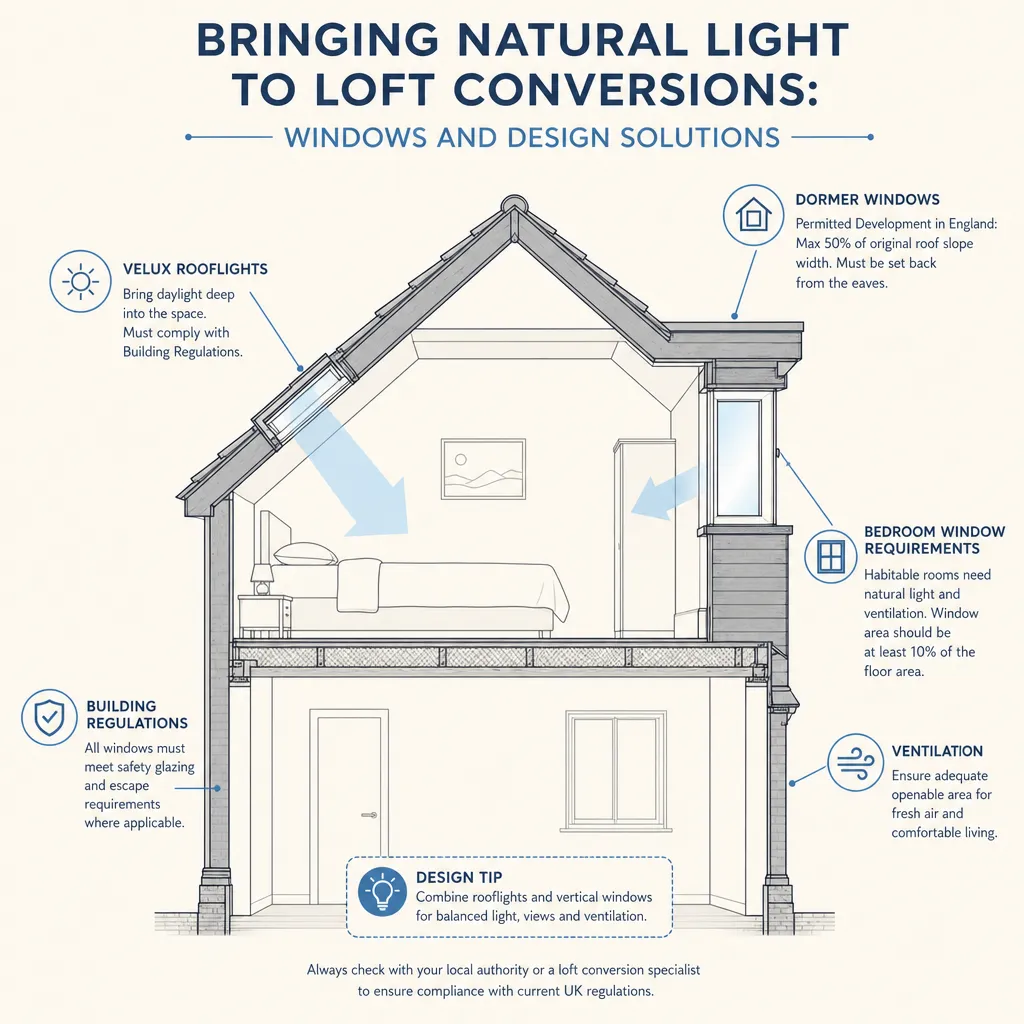
Bringing Natural Light to Loft Conversions: Windows and Design Solutions
Natural light in a loft conversion is usually achieved through roof lights, dormer windows, or gable-end glazing.
 Improvement & Build
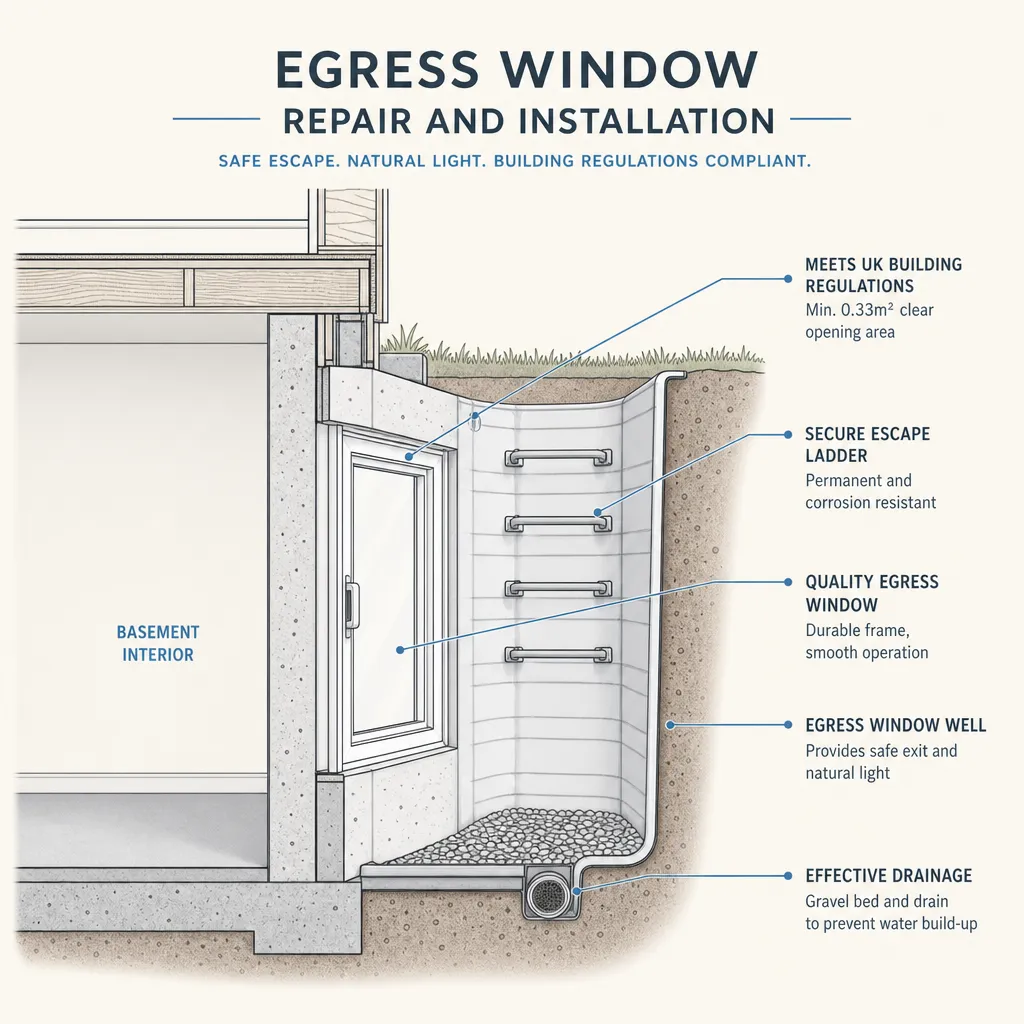
Egress Window Repair and Installation
An egress window is a window large enough to serve as an emergency escape route from a habitable room.
 Improvement & Build
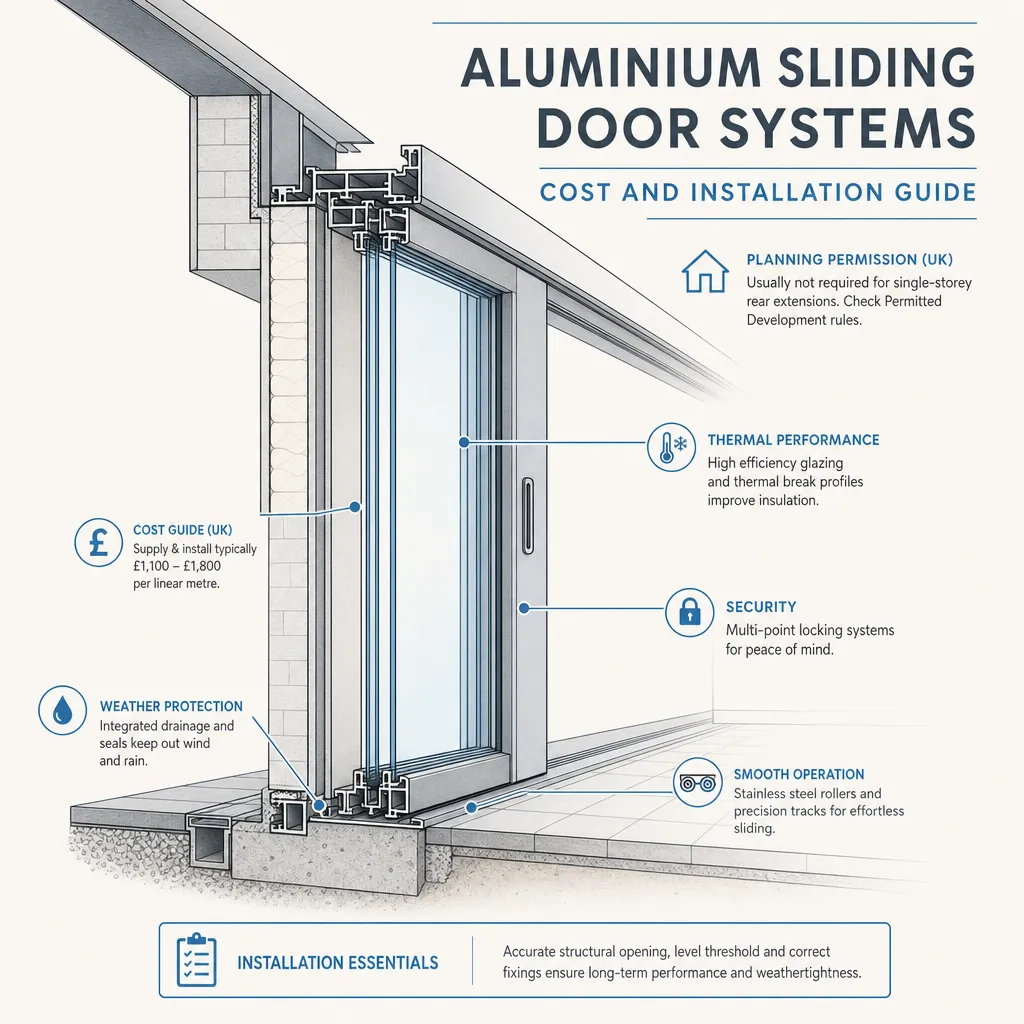
Aluminium Sliding Door Systems: Cost and Installation Guide
Aluminium sliding doors typically cost £2,500–£7,000 supply and fitted for a standard opening.
 Improvement & Build
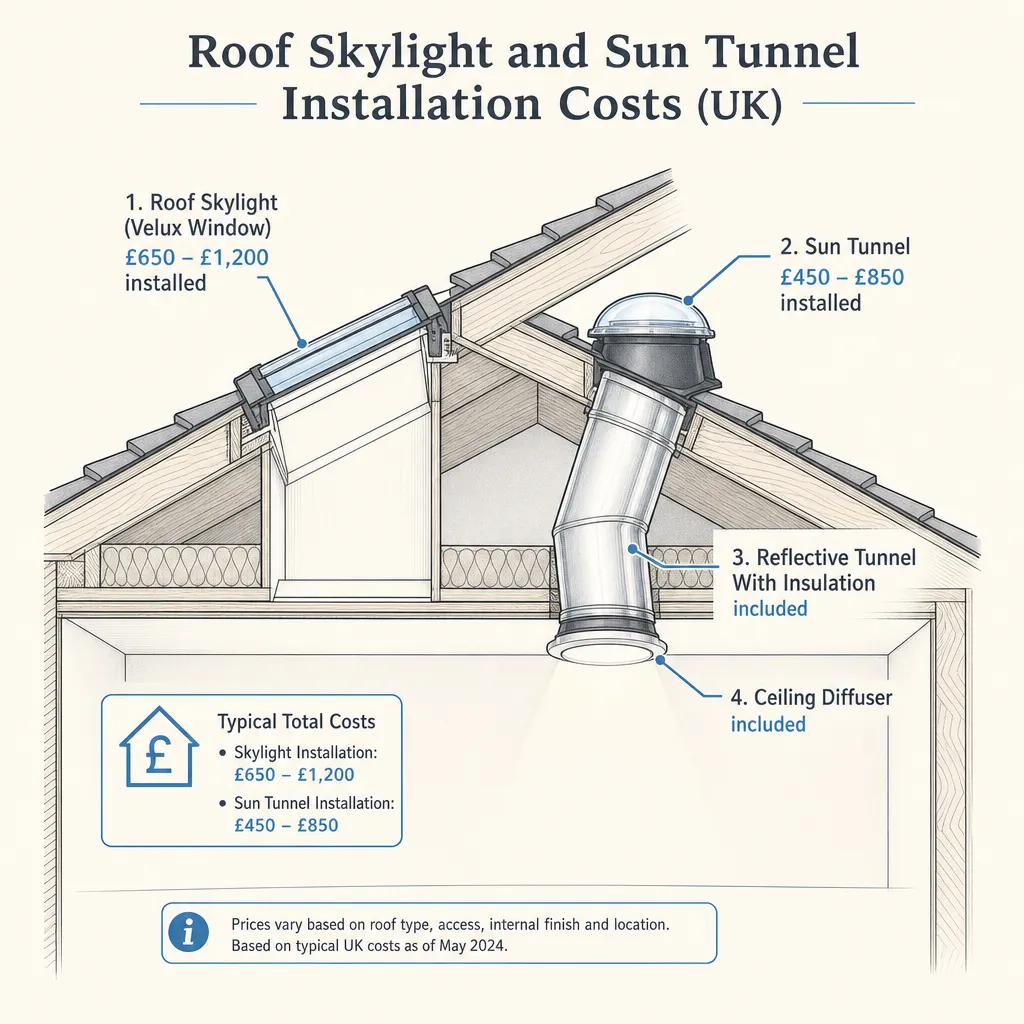
Roof Skylight and Sun Tunnel Installation Costs
A standard pitched-roof skylight costs £800–£3,000 installed in the UK, including flashings and basic making good.
 Improvement & Build
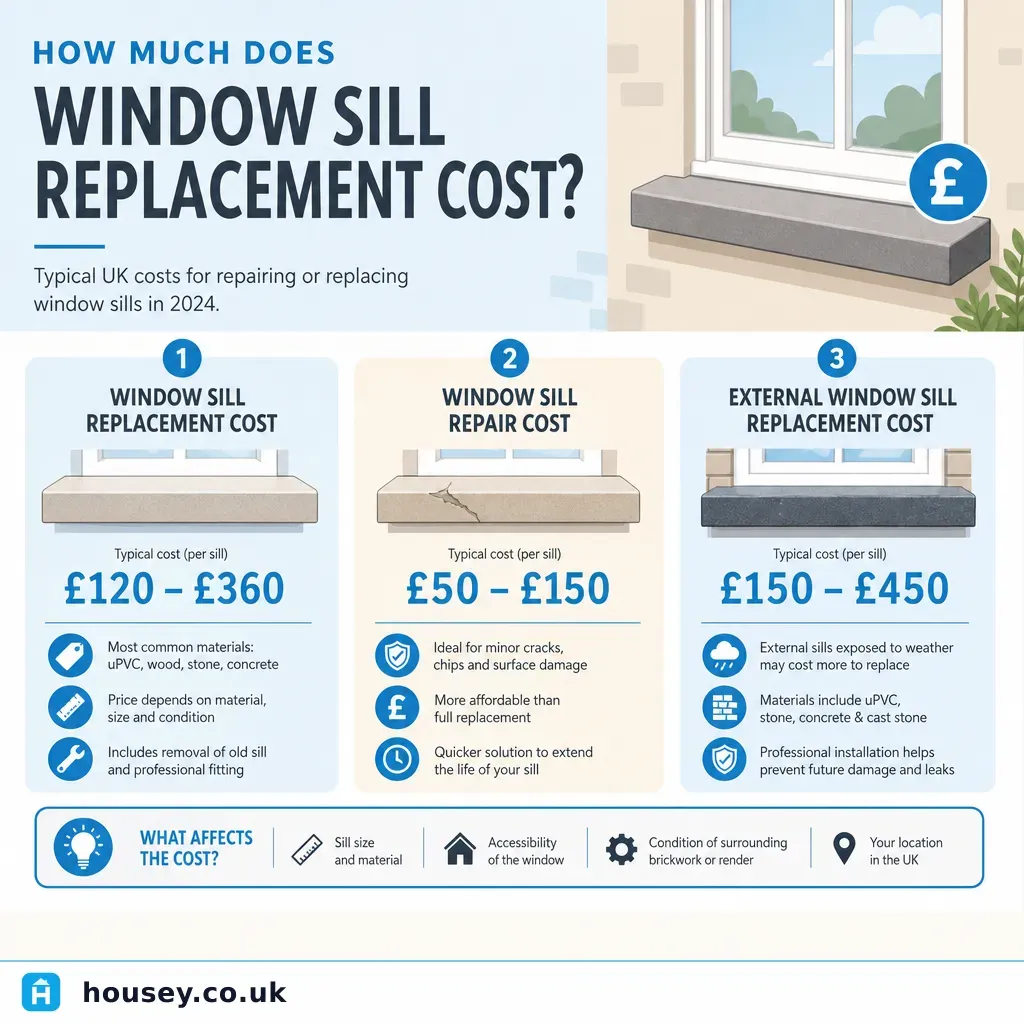
How much does window sill replacement cost
Window sill replacement in the UK typically costs £100–£400 per sill for a standard installation, depending on the material — uPVC, timber, stone, or composite — and whether the sill is internal or external.