Double-Glazed Door Installation and Fitting Costs
By Housey · Last reviewed 6th of May 2026
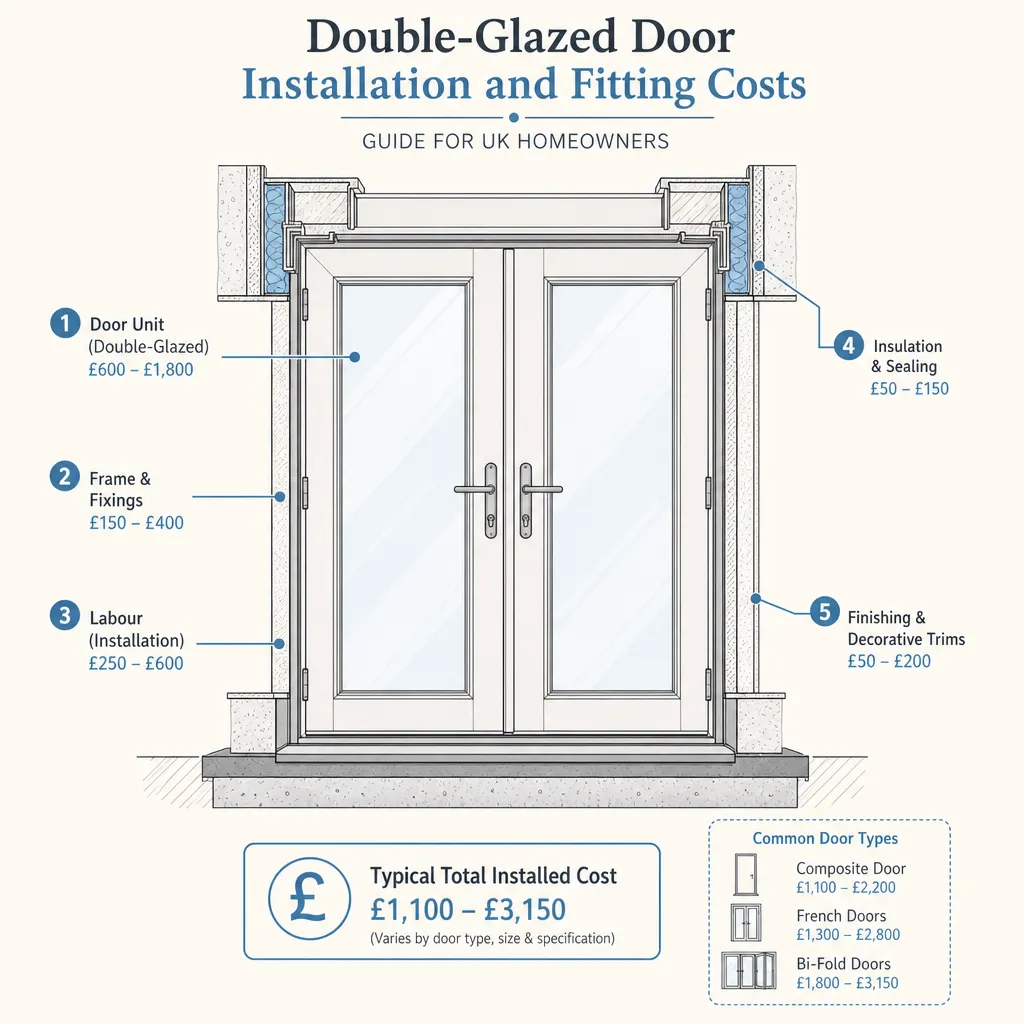
Double-Glazed Door Installation and Fitting Costs
Replacing or adding an external glazed door is a decision most UK homeowners face when a current door fails thermally, becomes a security concern, or when a new opening is needed — perhaps following a rear extension or to improve garden access. The range of products is wide, from standard composite front doors to large bi-fold sets spanning several metres, and the price range is equally broad. Understanding the key cost drivers before requesting quotes will help you compare like for like and avoid surprises once work is underway.
Key points
- Replacement glazed external doors are notifiable under Building Regulations in England; FENSA- or CERTASS-registered installers self-certify compliance and issue a certificate required by a buyer's solicitor on conveyancing.
- Replacement doors must meet a U-value of ≤1.4 W/m²K under Approved Document L (2021 edition, England); separate requirements apply in Wales and Scotland.
- Composite doors are the most popular choice for entrance doors in the UK — a GRP outer skin over a foam-filled core provides good thermal performance and low maintenance, with multi-point locking to PAS 24 typically included.
- Indicative installed costs range from £800–£1,800 for a composite front door to £4,500–£8,000 for a large aluminium bi-fold set (Indicative UK costs, last reviewed 2026-05-06).
- Creating a new opening or enlarging an existing one in any wall requires a structural engineer's calculations and building control approval before any brickwork is removed.
What types of double-glazed door are available?
Composite doors are the current market standard for entrance doors. A GRP outer skin wraps an insulated foam core and a timber frame, giving the appearance of painted timber with the durability of a modern manufactured door. Security hardware to PAS 24 is usually included. Available in a wide range of colours and panel styles.
uPVC doors are the lowest-cost option and widely available. They are thermally efficient and require little maintenance but offer fewer design options and are generally perceived as lower quality than composite for entrance doors.
Aluminium doors are specified for contemporary and architect-designed homes. Aluminium framing is slimmer than uPVC, allowing larger glazing areas, and is used extensively for patio, bi-fold, and large sliding door sets.
Timber doors are chosen for character, conservation-area compliance, or listed buildings. They require more maintenance and cost more to supply and fit, but offer traditional aesthetics that modern alternatives cannot replicate.
Door type comparison table
Door type | Typical installed cost | Frame options | Best for | Not ideal for |
|---|---|---|---|---|
Composite entrance door (single) | £800–£1,800 | GRP/foam/timber core | Front or rear entrance; security; low maintenance | Wide openings; minimalist aesthetics |
uPVC entrance door (single) | £500–£1,200 | uPVC | Budget replacements; back door | High-end aesthetics; conservation areas |
French doors (double, outward-opening) | £1,500–£3,000 | uPVC, aluminium, timber | Garden access; rear of property | Exposed or very windy sites |
Patio or sliding doors | £1,500–£3,500 | uPVC, aluminium | Maximising light; smaller gardens | Full-width clear opening requirement |
Bi-fold doors (3–4 panels) | £2,500–£5,000 | Aluminium, uPVC | Large rear openings; open-plan living | Tight budgets; frequent individual access |
Bi-fold doors (5–6 panels) | £4,500–£8,000+ | Aluminium | Large rear extensions; significant glazing areas | Small openings |
Aluminium entrance door (single) | £1,500–£3,500 | Aluminium | Contemporary aesthetics; slim sightlines | Budget projects |
Timber entrance door (single) | £1,200–£3,000+ | Hardwood or softwood | Listed or conservation buildings; traditional aesthetics | Low-maintenance preference |
Indicative UK costs, last reviewed 2026-05-06. Prices cover supply and installation; structural works and ancillary repairs are additional. Ranges reflect regional variation and specification. Obtain at least three quotes.
What drives the cost of glazed door installation?
Door type and size is the primary variable. A standard composite entrance door is a single panel with a single-point frame; a large bi-fold set involves multiple panels, a structural head, and a threshold, all of which add cost and fitting time.
Glazing specification affects both price and performance. Argon-filled double glazing with a low-emissivity (low-e) coating is standard. Triple glazing improves U-values further but adds weight and cost. The proportion of glazing in the door panel also matters — a nearly full-glass door gains more solar heat but loses more at night, which is worth considering for north-facing openings.
Security hardware is often bundled into composite door prices but should be confirmed explicitly. Multi-point locking to PAS 24 is the current standard for front doors; Secured by Design (SBD) accreditation is available from some manufacturers and may be specified on new-build estates.
Structural work is the biggest wildcard. If you are enlarging an existing opening or creating one in a load-bearing wall, a structural engineer must specify the lintel or steelwork, and building control approval is required separately from the FENSA certification that covers the door unit itself.
Threshold design matters more than buyers often anticipate. Bi-fold and large sliding doors need a weather-tight threshold. Low-profile thresholds usually cost more but improve usability and weatherproofing considerably.
Worked example: adding bi-fold doors to a 1990s detached house in Surrey
A homeowner in Guildford is having a 3.6-metre rear opening formed in a non-load-bearing cavity-brick wall to install four-panel aluminium bi-fold doors onto a new patio.
Item | Estimated cost |
|---|---|
4-panel aluminium bi-fold door set (supply and install, A-rated) | £4,000–£6,000 |
Structural engineer calculations for new lintel | £400–£700 |
Lintel supply and installation (bricklayer) | £600–£1,200 |
Making good internal plasterwork and external rendering | £300–£600 |
Building control application and inspection | £200–£400 |
Total indicative range | £5,500–£8,900 |
Indicative UK costs, last reviewed 2026-05-06. Quotes will vary significantly by installer, specification, and structural requirements.
Building Regulations, FENSA, and compliance certificates
Replacing a glazed external door is notifiable work under Building Regulations in England. The simplest route is to use a FENSA- or CERTASS-registered installer, who will self-certify compliance, notify building control, and issue you a compliance certificate. This certificate must be provided to a buyer's solicitor on the sale of your property.
For new openings in load-bearing walls, FENSA certification covers only the door unit itself — the structural works require a separate building control application and sign-off. Make sure you understand which elements your installer is certifying and which require separate notification before work starts.
Red flags when getting glazed door quotes
Watch for these warning signs when comparing quotes from glazed door installers:
- No mention of FENSA or building control: A reputable installer will address certification automatically. If it is not raised, ask directly before proceeding.
- Vague structural scope: If the quote involves any wall opening or enlargement, structural works and engineer calculations must be itemised explicitly.
- No U-value stated: Any new glazed door must achieve ≤1.4 W/m²K. If a supplier cannot confirm the U-value of their product, treat that as a concern.
- Unusually low price for bi-fold or large sliding sets: Low prices can reflect reduced panel thickness, glazing specification, or hardware quality that only becomes apparent after installation.
- No written specification: Always ask for a written specification covering the exact product, glazing specification, hardware, and any exclusions. Verbal agreements are difficult to enforce.
- Payment in full upfront: Reputable installers typically ask for a deposit (commonly 25–50%) with the balance on completion. Avoid paying in full before work starts.
- No warranty documentation: Frame guarantees of 10 years and sealed-unit guarantees are standard from reputable manufacturers. Ask for warranty terms in writing before signing.
Homeowner checklist before ordering a glazed door
When to get professional help
Installing a replacement door in an existing opening is a straightforward trade operation. The following scenarios require additional professional input before proceeding:
- New or enlarged openings in any wall: Engage a structural engineer before any brickwork is disturbed, even for walls believed to be non-load-bearing.
- Listed buildings: Listed building consent is required for any alteration to an external door — contact your LPA and consider a heritage consultant before ordering.
- Conservation areas: Check permitted development rights and whether a specific frame colour, design, or material is required by your local authority.
- Suspected dampness or rot around the existing frame: A damp and timber specialist should assess the extent of any water damage before a new frame is fitted over an existing problem.
- Poorly fitting doors after recent structural movement: Sticking or misaligned doors can indicate subsidence or settlement — a RICS-registered surveyor or structural engineer should assess the cause before any door installation.
How Housey can help
Housey makes it straightforward to compare quotes from vetted window and door installers across the UK. You describe your project, and Housey connects you with up to four relevant, qualified installers who can visit, measure, and provide itemised quotes — so you can compare like for like and make an informed decision.
Frequently asked questions
Does replacing a glazed door need planning permission in the UK?
In most cases, replacing an existing external door with a similar glazed door is permitted development in England and does not require planning permission. Exceptions apply to listed buildings, which require listed building consent for any external alteration, and sometimes to properties in conservation areas where specific materials or designs may be specified. Always check with your Local Planning Authority before ordering if you are unsure.
How long does it take to install replacement glazed doors?
A straightforward composite or uPVC entrance door replacement typically takes half a day to one day. French or patio doors in an existing opening usually take one to two days. Bi-fold or large sliding door sets, particularly where a new opening is involved, can take three to five days or more once structural works are complete.
Are bi-fold doors energy efficient?
Modern aluminium bi-fold doors with thermally broken frames and A-rated double glazing can achieve U-values around 1.2–1.4 W/m²K for the overall unit — broadly comparable with quality double-glazed windows. The key factors are the thermal break in the frame, the glazing specification, and the threshold design. Cheaper bi-fold sets may lack adequate thermal breaks, resulting in cold bridging and condensation at the frame edges.
What is the difference between French doors and bi-fold doors?
French doors are two panels that open outward or inward on hinges, similar to a pair of large casement windows. Bi-fold doors have multiple panels that fold and stack to one side, giving a nearly full-width clear opening. French doors are typically cheaper and simpler; bi-fold doors provide a wider clear opening but cost considerably more and involve more complex installation.
Do I need a structural engineer for bi-fold door installation?
If you are fitting bi-fold doors into an existing opening of adequate size, you may not need a structural engineer — but confirm this with a builder or your installer, as the lintel above the opening must be suitable for the new door load. If you are enlarging an existing opening or creating a new one, a structural engineer's calculations are required, and building control approval will also be needed.
Sources and further reading
- Building Regulations Approved Document L (2021 edition) — GOV.UK, U-value requirements for replacement doors in England.
- FENSA: Glazed door replacement and certification — FENSA, competent person scheme covering glazed doors and windows.
- Secured by Design: Door security standards — Police-backed initiative, PAS 24 and SBD certification guidance for entrance doors.
- Windows and doors in listed buildings — Historic England, guidance on alterations to listed and conservation-area properties.
- Draught-proofing and energy performance of doors — Energy Saving Trust, general guidance on thermal performance and draught reduction.
Useful next reads
 Improvement & Build
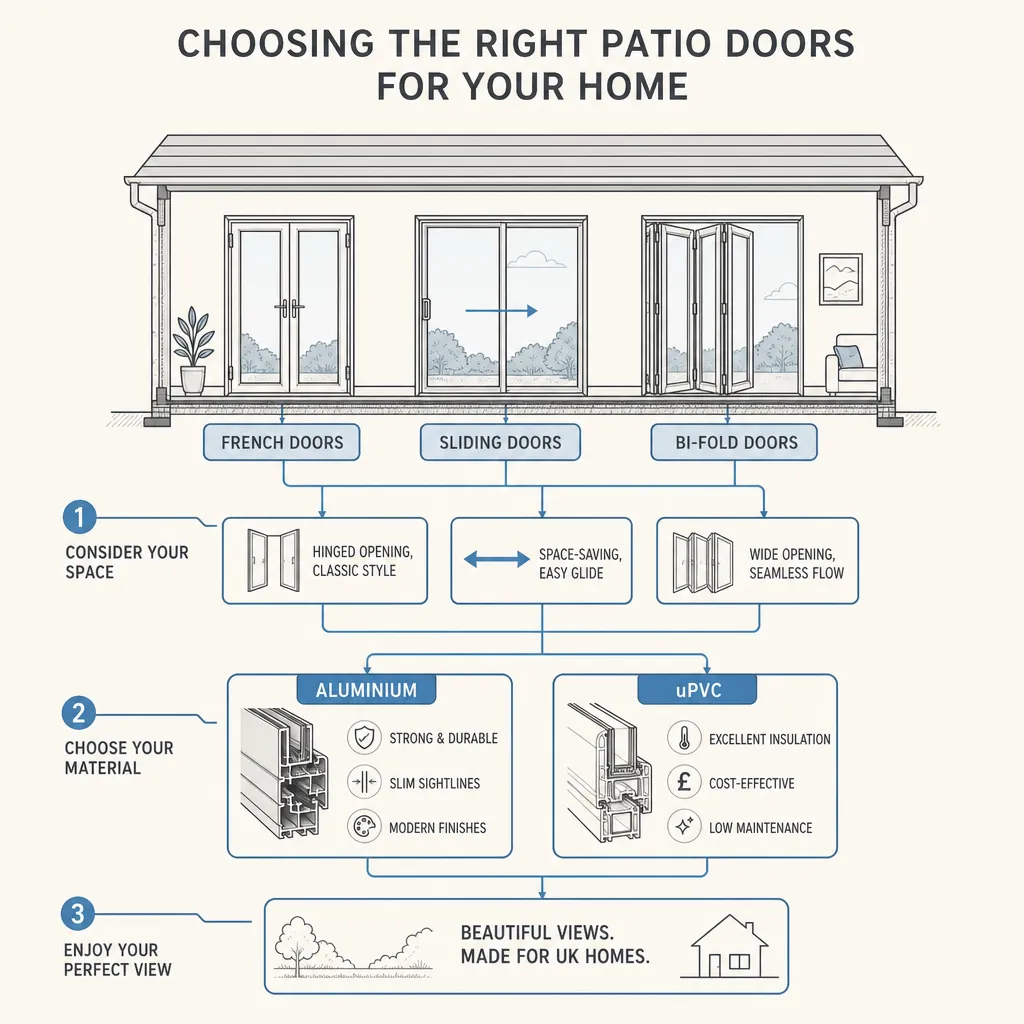
Choosing the Right Patio Doors for Your Home
The right patio doors depend on your opening width, available swing space, home style, and budget.
 Improvement & Build
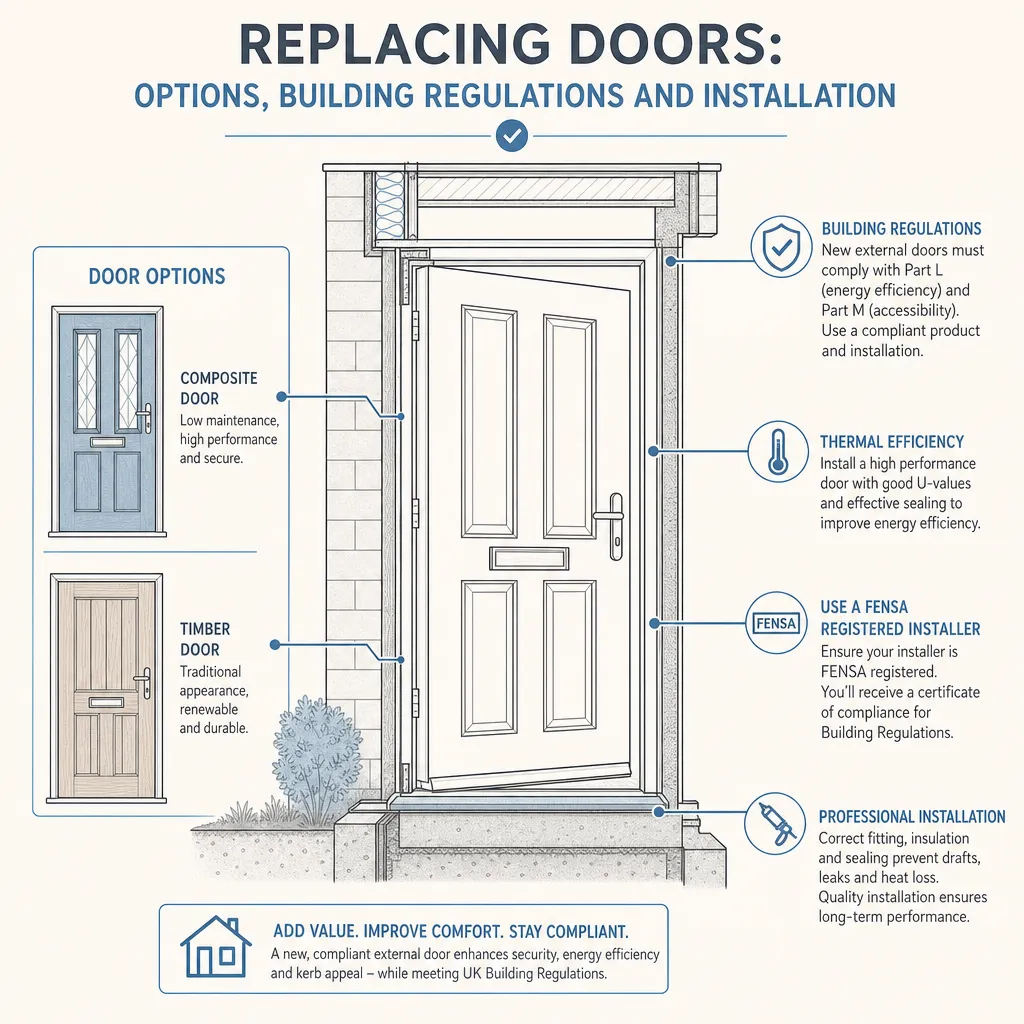
Replacing Doors: Options, Building Regulations and Installation
Replacing an external door in England requires compliance with Building Regulations Part L (minimum U-value 1.
 Improvement & Build
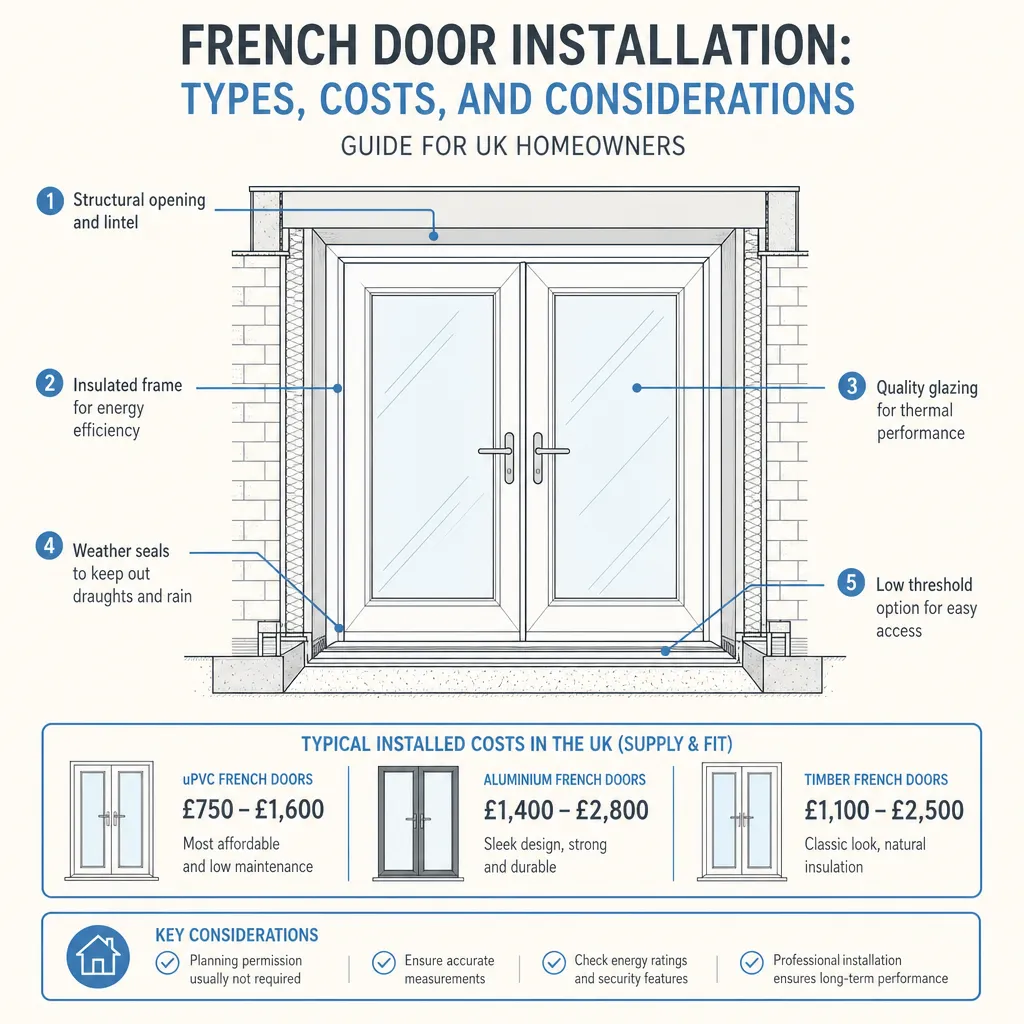
French Door Installation: Types, Costs, and Considerations
French doors in the UK cost roughly £1,500–£3,000 for uPVC and £2,500–£6,000 or more for aluminium or timber, installed.
 Improvement & Build
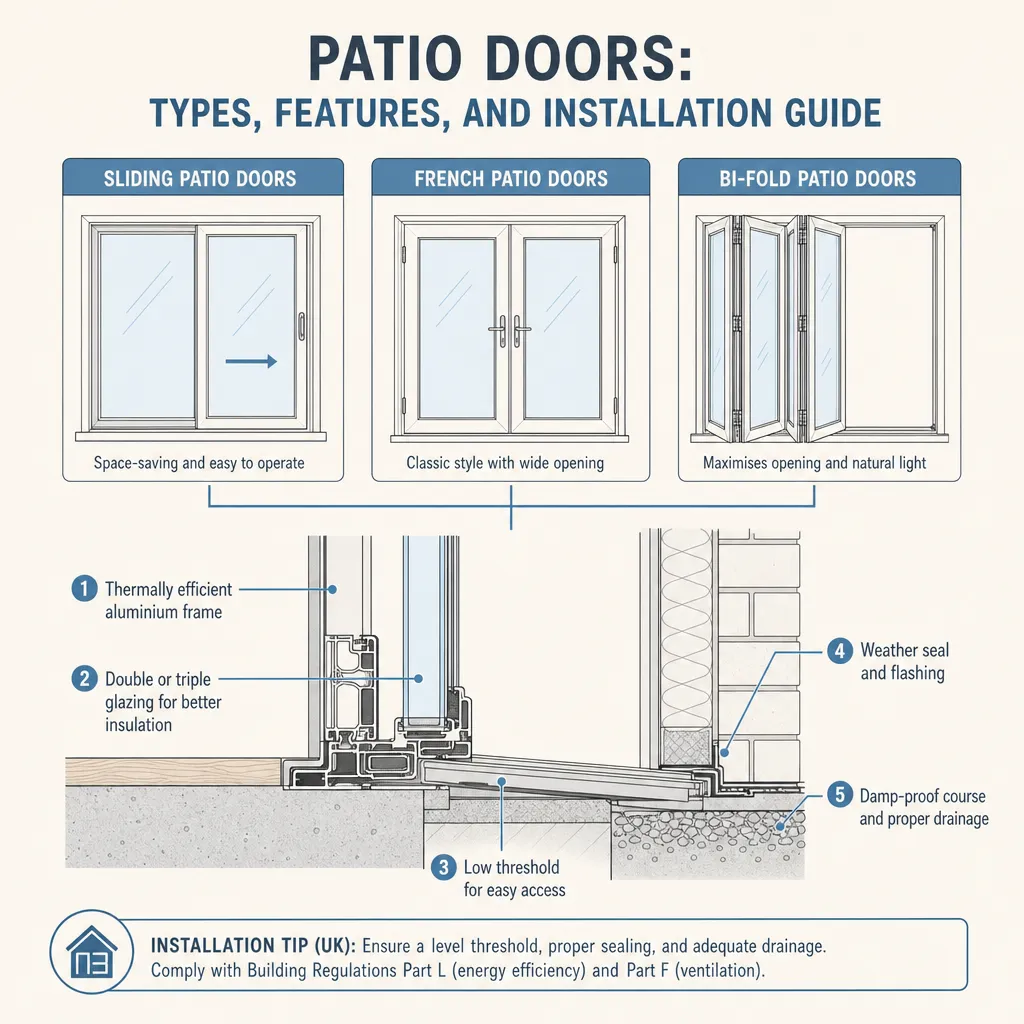
Patio Doors: Types, Features, and Installation Guide
UK patio doors come as sliding, French, or bifold systems.
 Improvement & Build
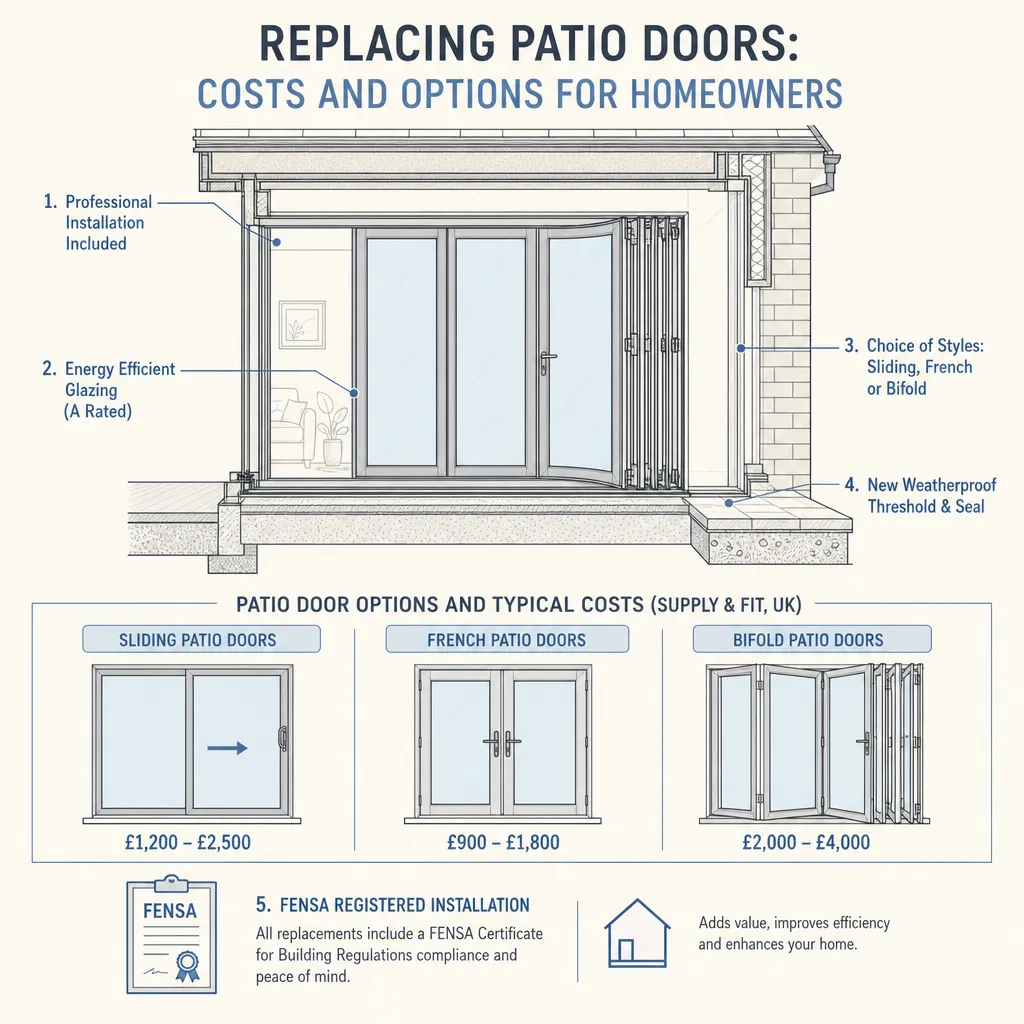
Replacing Patio Doors: Costs and Options for Homeowners
Replacing patio doors in the UK costs roughly £1,200–£2,500 for uPVC sliding or French doors, rising to £4,000–£9,000+ for aluminium bifold doors, including supply and installation.