Double-Glazed Window Replacement and Installation Costs
By Housey · Last reviewed 6th of May 2026
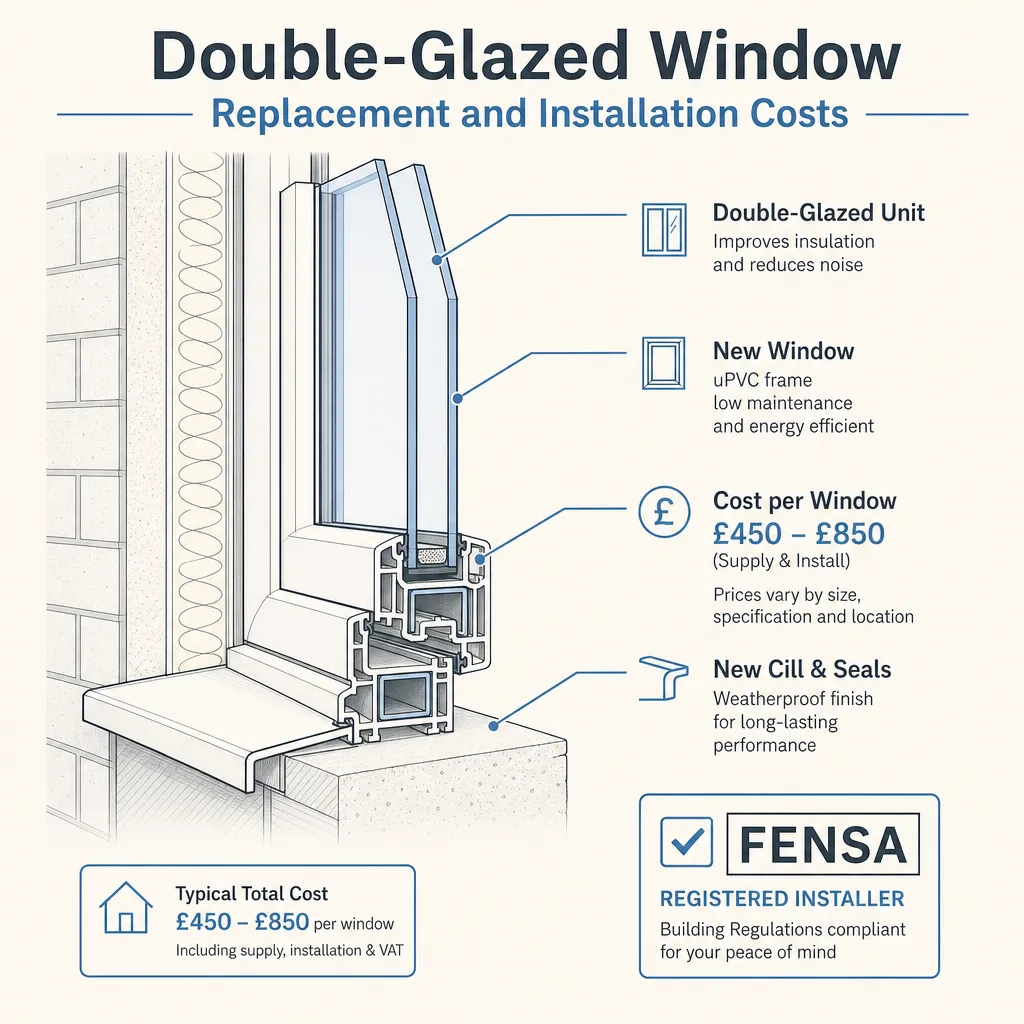
Double-Glazed Window Replacement and Installation Costs
Replacing windows is one of the most common home improvement projects in the UK, typically prompted by draughts, condensation between panes, or a failed energy-performance assessment. The cost varies considerably depending on frame material, glazing specification, window style, and the number of openings being replaced — so understanding what drives the price is more useful than any single headline figure.
Key points
- Replacement windows must achieve a U-value of ≤1.4 W/m²K under Building Regulations Part L (2021 edition, England); separate requirements apply in Wales and Scotland.
- Installation must be carried out by a FENSA- or CERTASS-registered contractor, or notified to your local building control authority, to obtain a compliance certificate needed on any future sale.
- uPVC is the most common frame choice; timber and aluminium cost more to supply and fit but may be required in conservation areas or for listed buildings.
- Indicative installed costs range from roughly £300–£500 per uPVC casement window to £500–£1,200 for timber, excluding ancillary repairs (Indicative UK costs, last reviewed 2026-05-06).
- The Energy Saving Trust estimates that replacing single glazing with A-rated double glazing can save a detached home around £195 per year on heating bills; savings are smaller when replacing older double glazing with new double glazing.
What affects the cost of replacing double-glazed windows?
The installed price of replacement double glazing depends on several interacting factors rather than a single rate per window.
Frame material is usually the biggest variable. uPVC is the cheapest and most widely available option. Timber requires more skilled labour and ongoing maintenance. Aluminium sits between the two in cost and suits contemporary aesthetics.
Window style affects both materials and fitting time. A standard casement window is simpler and faster to fit than a vertical sliding sash or a flush-casement unit replicating period joinery. Bay windows, bow windows, and large picture windows require additional structural consideration and typically cost significantly more.
Glazing specification also varies. Standard double glazing — two panes with an argon-filled cavity and low-emissivity coating — is the baseline. Triple glazing adds cost but achieves lower U-values, which may be specified in new builds or high-performance retrofit projects. Acoustic laminated glass, obscure glass for bathrooms, or toughened safety glass for low-level openings each add to the unit cost.
Ancillary works — replacing a rotten sill, repairing a damaged lintel, or making good internal plasterwork — are charged separately and are easy to underestimate at the quoting stage.
Frame material comparison
Frame material | Typical installed cost per window | Typical lifespan | Maintenance needs | Conservation area / listed building suitability |
|---|---|---|---|---|
uPVC | £300–£500 | 20–30 years | Very low | Restricted — check with LPA |
Aluminium | £400–£800 | 30–45 years | Low | Often acceptable — check with LPA |
Timber | £500–£1,200 | 30–60+ years (maintained) | Moderate–high | Usually required |
Composite (timber core, GRP outer) | £600–£1,400 | 30–50 years | Low–moderate | Sometimes accepted — check with LPA |
Indicative UK costs, last reviewed 2026-05-06. Costs cover supply and installation; ancillary repairs are additional. Ranges reflect regional variation and specification differences. Obtain at least three quotes.
Window style and approximate costs
Casement windows (the standard hinged side-opening type) represent the lowest-cost option. Tilt-and-turn windows cost slightly more to manufacture. Vertical sliding sash windows — common in Victorian and Edwardian terraces — typically add 20–50% to the cost of an equivalent-sized casement because of the more complex mechanism and, in conservation areas, the need to match original profiles precisely.
Bay and bow windows are quoted per project rather than per pane, because of the structural framework involved. A typical three-section bay in uPVC might cost £1,200–£3,000 installed, depending on size and whether brickwork repairs are involved.
Worked example: a 1930s semi-detached in the East Midlands
A homeowner in Nottingham has a 1930s semi-detached with 12 openings: eight standard casements, two small top-lights, and a two-section bay at the front. She is replacing failed double glazing with new A-rated uPVC units throughout.
Item | Estimated cost |
|---|---|
8 × standard casement (uPVC, A-rated) | £3,200–£4,000 |
2 × top-light casement (uPVC, A-rated) | £400–£600 |
Bay window (two sections, uPVC, existing brickwork) | £1,400–£2,200 |
Ancillary: two rotten sills replaced | £300–£500 |
FENSA certificate (included by installer) | £0 |
Total indicative range | £5,300–£7,300 |
Indicative UK costs, last reviewed 2026-05-06. Actual quotes will vary by installer and local market.
Building Regulations, FENSA, and compliance certificates
Replacing windows in England is notifiable work under Building Regulations. In practice, FENSA- or CERTASS-registered installers self-certify compliance and issue you a compliance certificate, which you must provide to a buyer's solicitor on any future sale of the property. If you use an unregistered installer, you must apply to your local authority building control department for a completion certificate — this adds cost and delays.
The certificate confirms that the windows meet the thermal performance requirements of Approved Document L (2021 edition for England). For a straightforward replacement, always verify that your installer appears on the FENSA database or with CERTASS before proceeding.
If your property is in a conservation area or is listed, the planning implications are separate from Building Regulations. Contact your Local Planning Authority before ordering, as certain frame types, colours, or glazing bar patterns may not receive consent.
Homeowner checklist before ordering replacement windows
What to ask before accepting a quote
- What is the exact specification of the glazing unit (gas fill, low-e coating, spacer bar type)?
- Who manufactures the sealed unit, and what is the sealed-unit guarantee period?
- Is the price per window fixed, or could it change once the old frames are removed?
- Who is responsible for making good internal plasterwork and external rendering?
- What is the lead time, and how long will installation take per day?
- Is waste disposal of old frames and glass included?
- Is VAT included in the quoted price?
When to get professional help
Replacing standard windows in a conventionally built home is a well-understood trade process, but several scenarios warrant additional professional input before you commit:
- Structural openings: If you want to enlarge an existing opening or add a new one, a structural engineer's calculations are required before any brickwork is removed.
- Listed buildings: A conservation officer at your LPA and, in some cases, a heritage consultant should be involved before you choose any specification.
- Suspected damp or rot: If frames are failing because of water ingress into the surrounding structure, a damp and timber specialist should assess the cause before new windows are fitted over an existing problem.
- Flat or failing lintels: If there is visible cracking or movement above an opening, a structural engineer should advise before installation proceeds.
How Housey can help
If you are ready to get quotes for double-glazed window replacement, Housey connects you with vetted window and door installers who can assess your property, confirm the right specification, and provide itemised quotes. Comparing at least three quotes from FENSA-registered businesses is the most reliable way to get a fair price for your project.
Frequently asked questions
Do I need planning permission to replace my windows in the UK?
In most cases, no. Replacing like-for-like windows in England is permitted development and does not require planning permission. The main exceptions are listed buildings, which always require listed building consent, and properties in conservation areas where original windows may be protected. Check with your Local Planning Authority before ordering if you are unsure.
How long do replacement double-glazed windows last?
A well-manufactured uPVC sealed unit typically lasts 20–25 years before the hermetic seal degrades and internal condensation develops. The frames themselves often last longer. Timber frames with regular maintenance can last 50 years or more. Guarantees of 10 years on sealed units and frames are standard from reputable manufacturers.
Can I replace windows myself to save money?
Technically, a competent homeowner can replace windows, but you would need to notify your local authority building control department and pay for an inspection to obtain a compliance certificate. Most homeowners find that using a FENSA-registered installer is simpler and not significantly more expensive once the building control fee is factored in.
What is the difference between A-rated and A+-rated double glazing?
Window Energy Ratings (WER) are calculated by the British Fenestration Rating Council (BFRC) and balance solar gain against heat loss. A-rated windows meet the current standard comfortably; A+-rated windows offer marginally better performance. For most UK homes, A-rated units are sufficient to meet Part L and achieve good thermal performance without paying a premium for A+.
Will new double-glazed windows reduce my heating bills noticeably?
Savings depend on what you are replacing. Upgrading from single glazing to A-rated double glazing in a detached home may save around £195 per year, based on Energy Saving Trust estimates. If you are replacing failed double glazing with new double glazing, savings are smaller but still meaningful — and the elimination of draughts often improves comfort noticeably.
Sources and further reading
- Building Regulations Approved Document L (2021 edition) — GOV.UK, sets U-value requirements for replacement windows in England.
- FENSA: Competent Person Scheme — FENSA, explains registration, certificates, and the consumer verification database.
- Double glazing and energy savings — Energy Saving Trust, indicative annual savings by property type.
- Window Energy Ratings — British Fenestration Rating Council, the rating scheme for window thermal performance.
- Windows in historic buildings — Historic England, guidance on windows in listed and conservation-area properties.
Useful next reads
 Improvement & Build
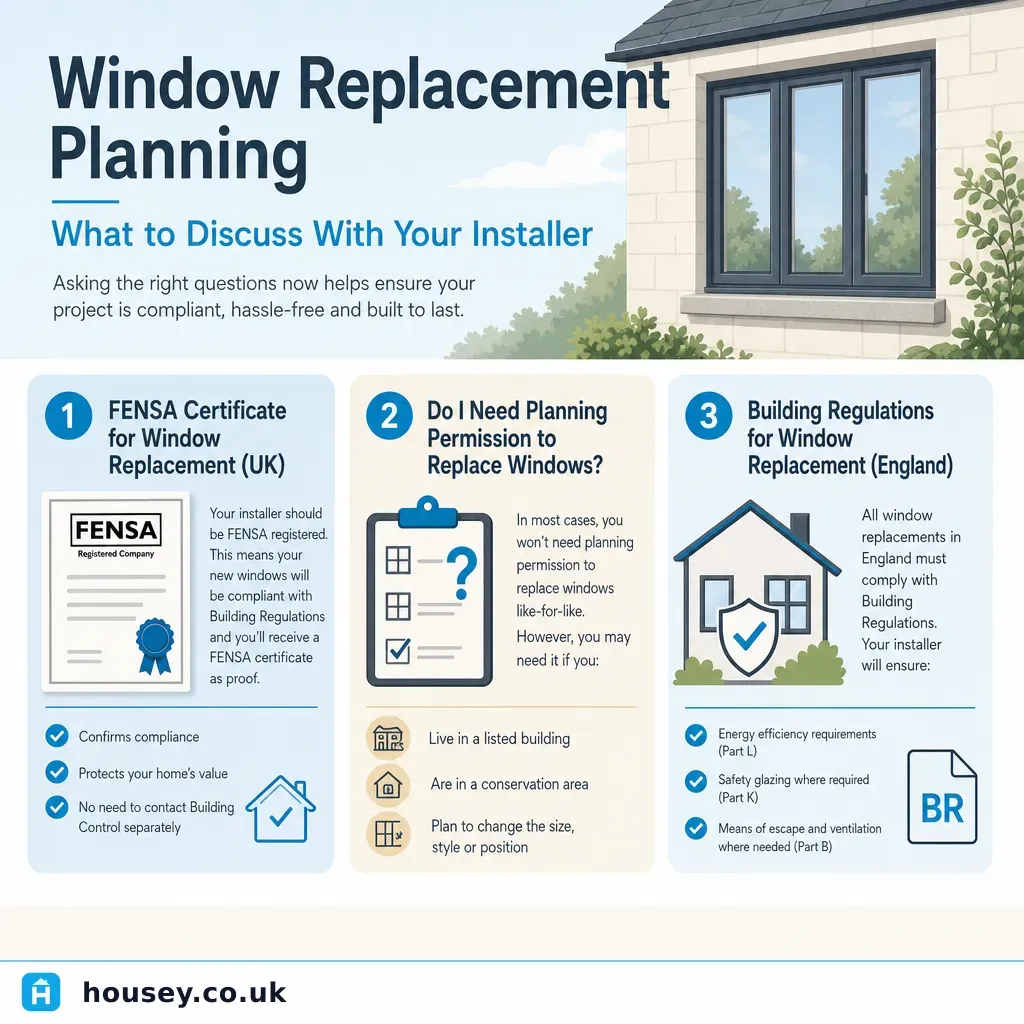
Window Replacement Planning: What to Discuss With Your Installer
Most window replacements in England fall under permitted development rights and do not require planning permission, but they must comply with Building Regulations Part L and Part K.
 Improvement & Build
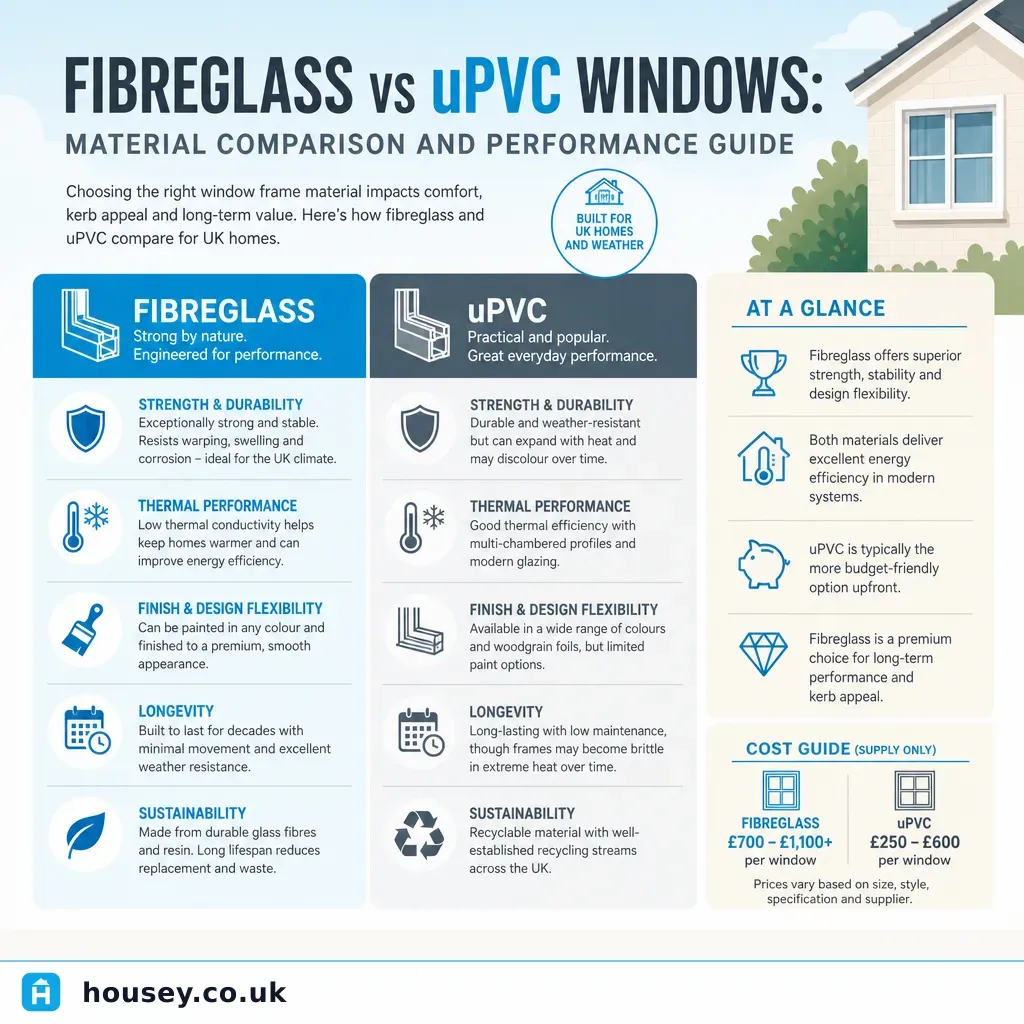
Fibreglass vs uPVC Windows: Material Comparison and Performance Guide
In the UK, vinyl windows are sold as uPVC — the dominant frame material for replacement windows.
 Improvement & Build
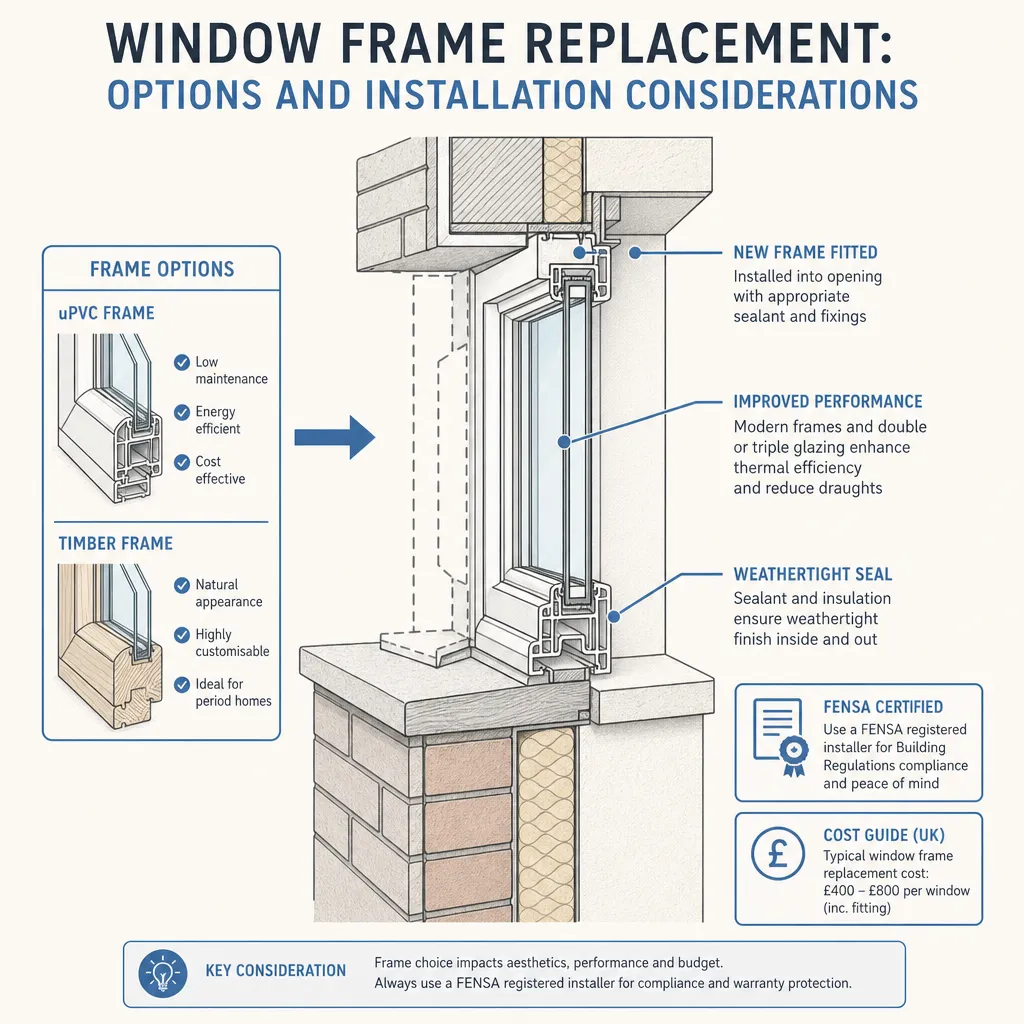
Window Frame Replacement: Options and Installation Considerations
Replacing window frames in the UK requires compliance with Part L of the Building Regulations and, in most cases, a FENSA or Certass certificate.
 Improvement & Build
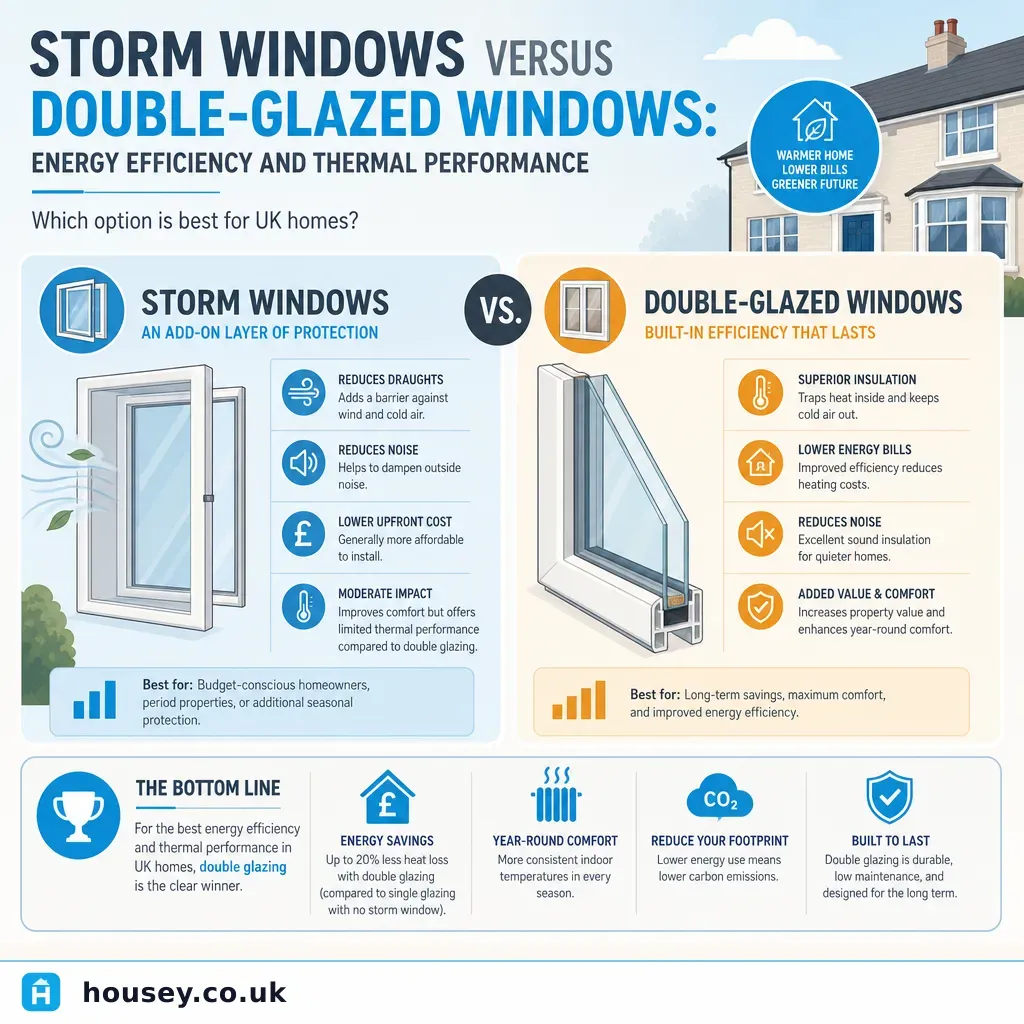
Storm Windows versus Double-Glazed Windows: Energy Efficiency and Thermal Performance
In the UK, storm windows are usually called secondary glazing — a supplementary inner pane fitted inside your existing window reveal.
 Improvement & Build
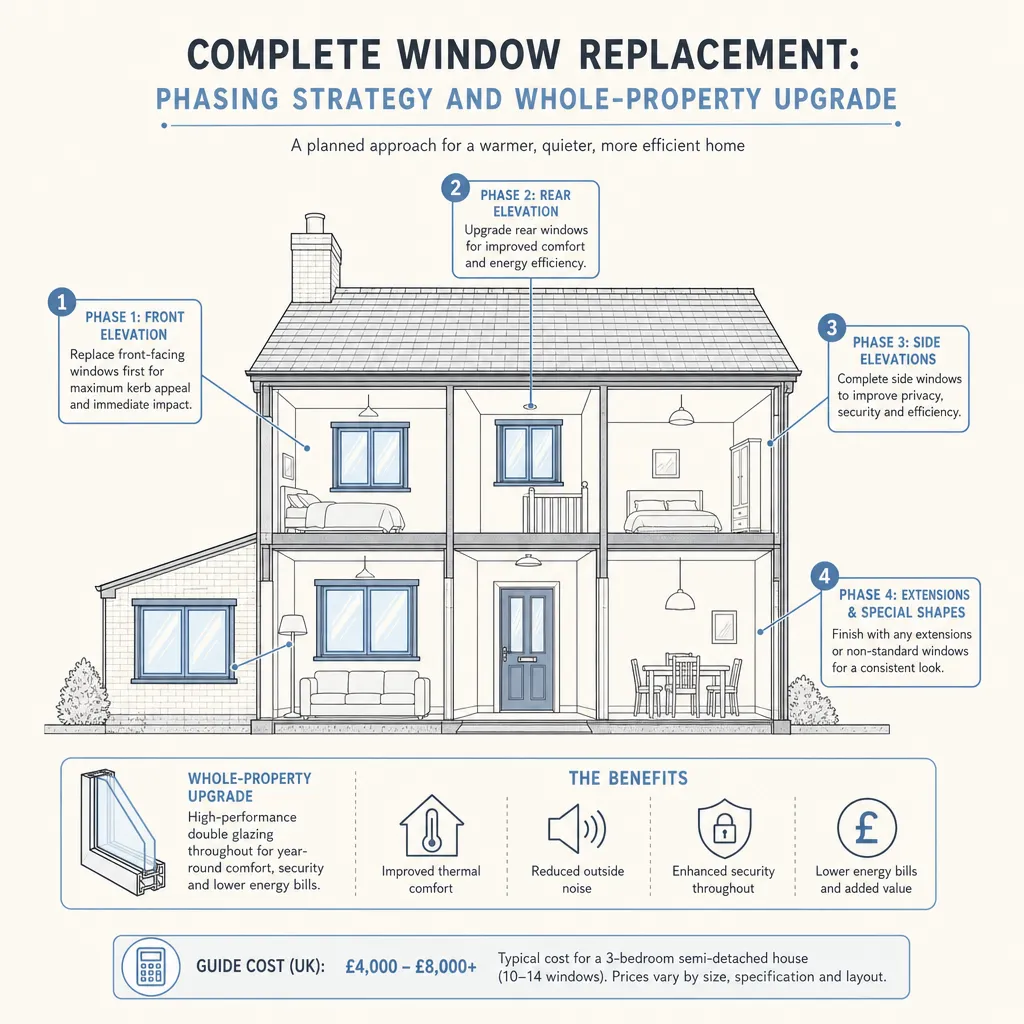
Complete Window Replacement: Phasing Strategy and Whole-Property Upgrade
Replacing all windows in a UK home requires FENSA or CERTASS-registered installers to certify compliance with Building Regulations Part L.