Storm Windows versus Double-Glazed Windows: Energy Efficiency and Thermal Performance
By Housey · Last reviewed 24th of May 2026
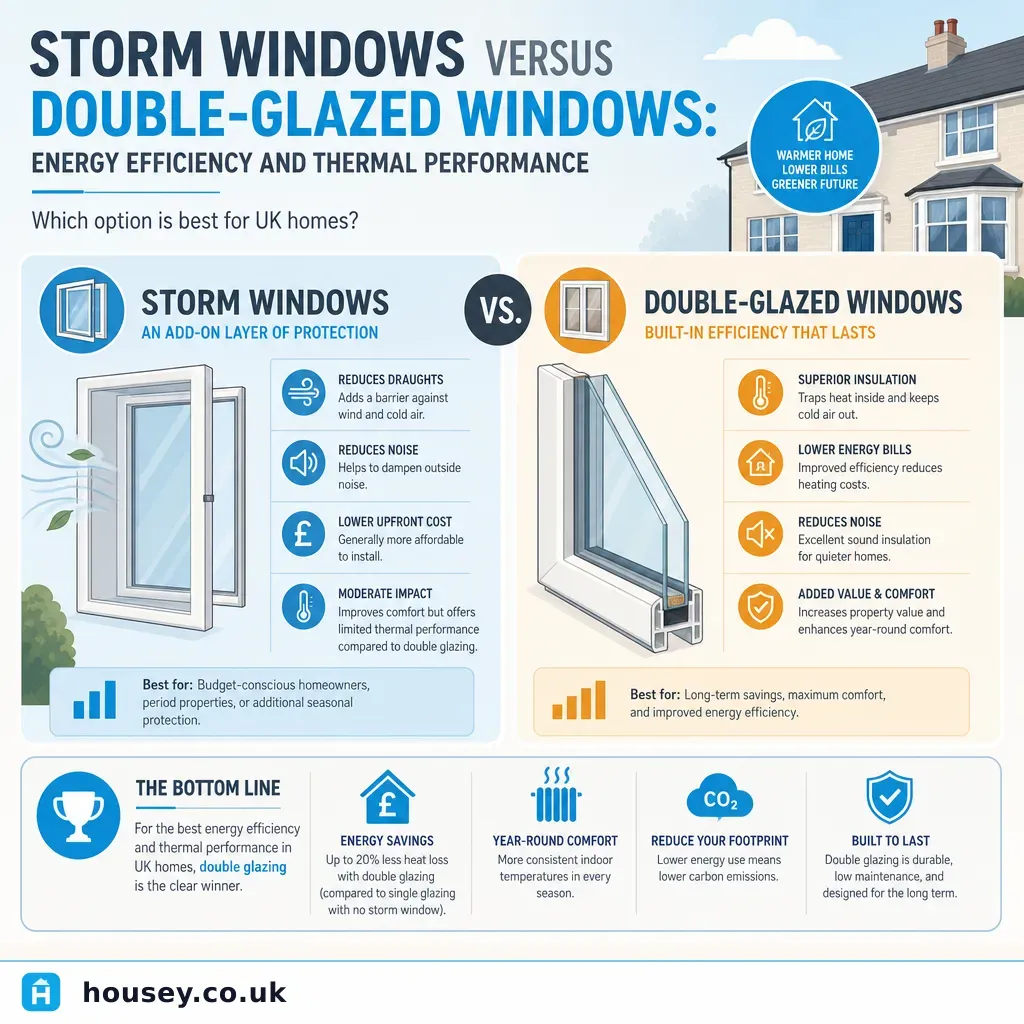
Storm Windows versus Double-Glazed Windows: Energy Efficiency and Thermal Performance
Improving window insulation is one of the most common home-improvement decisions UK homeowners face, particularly in older properties where draughty single-glazed sashes or rattling steel Crittal frames lose significant heat every winter. The choice usually comes down to two broad approaches: secondary glazing — the UK equivalent of what North Americans call storm windows — or full double-glazed replacement units. Each suits different property types, planning situations, and budgets, and the decision has lasting consequences for comfort, running costs, and planning compliance.
Key points
- Modern double-glazed sealed units achieve centre-pane U-values of 1.0–1.2 W/m²K; secondary glazing typically reaches 1.2–1.8 W/m²K, depending on air gap width and glass specification
- Building Regulations Approved Document L1B sets a maximum whole-window U-value of 1.6 W/m²K for replacement windows in existing English dwellings (effective April 2022)
- Double glazing installations must be registered under a competent person scheme — FENSA or Certass — or covered by a local authority building control application in England and Wales
- Listed buildings and Article 4 direction areas often cannot replace original windows with uPVC double glazing without listed building consent or planning permission — secondary glazing is frequently the only compliant route
- Acoustic secondary glazing with an air gap of 100 mm or more can reduce external noise by up to 45 dB, making it particularly effective for road-facing Victorian or Edwardian terraces
What are storm windows, and what is the UK equivalent?
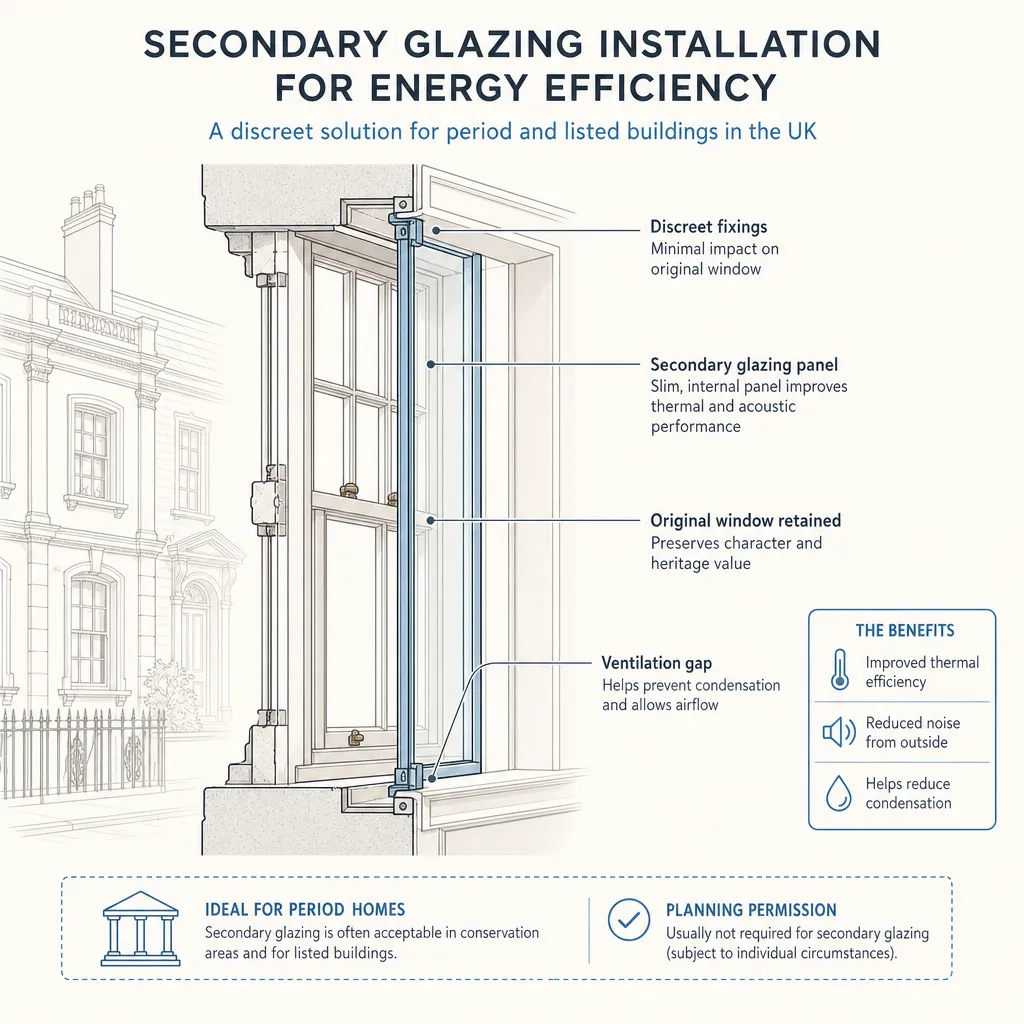
The term "storm window" originates in North American construction, where a secondary sash is fitted to the outside of an existing window to create an insulating air gap. In the UK, the functional equivalent is secondary glazing — a supplementary inner pane or frame mounted inside the existing window reveal, leaving the primary window intact.
Secondary glazing differs from double glazing in one critical way: it is a retrofit addition, not a replacement. The original window remains in place. This distinction matters for listed buildings, conservation areas, and properties with attractive or historic timber frames worth preserving.
How do they compare on thermal performance?
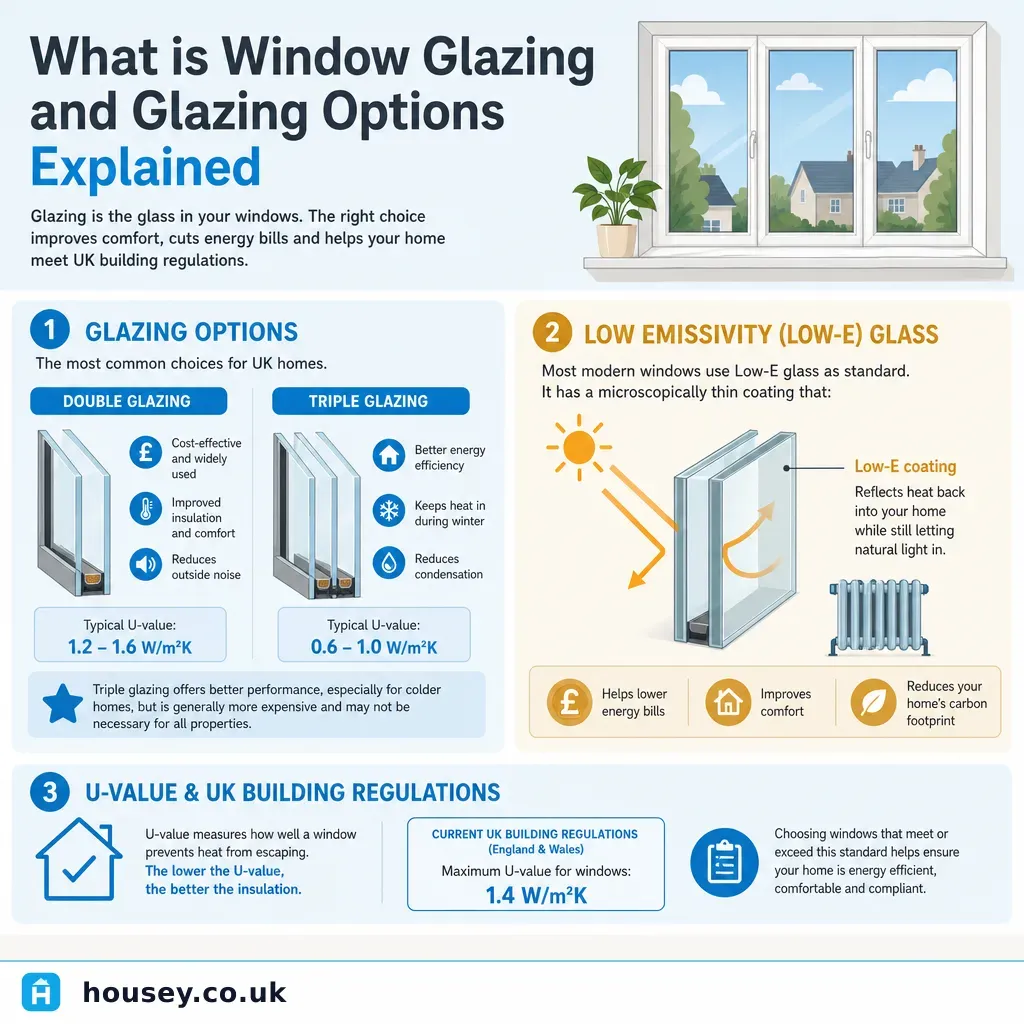
The key metric for window insulation is the U-value — the rate at which heat passes through the assembly, measured in watts per square metre per degree Kelvin (W/m²K). A lower figure means better insulation.
Glazing option | Typical U-value (W/m²K) | Air gap | Argon fill available? | Low-E glass option? |
|---|---|---|---|---|
Single glazing (existing) | 4.8–5.5 | None | No | No |
Secondary glazing (storm window equivalent) | 1.2–1.8 | 20–200 mm | Rarely | Yes (select suppliers) |
Double-glazed sealed unit (standard) | 1.4–1.6 | 16 mm | Yes | Yes |
Double-glazed sealed unit (high performance) | 0.9–1.2 | 16–20 mm | Yes | Yes |
Triple glazing | 0.5–0.8 | 2 × 16 mm | Yes | Yes |
U-values vary by product specification, frame material, and installation quality. Centre-pane values are lower than whole-window values, which include the frame.
Secondary glazing with a wider air gap performs particularly well for acoustic insulation, though it rarely matches the thermal performance of a high-specification sealed unit with argon fill and a low-emissivity coating. Some secondary glazing suppliers now offer low-E glass as an upgrade, which narrows the thermal gap considerably.
Which option should you choose?
The right choice depends on your property type, planning constraints, and priorities.
- Choose double glazing if your existing windows are beyond economic repair, your property is not listed and is not in a conservation area, you want the best long-term thermal performance per pound invested, or you are planning other works that will already disturb window openings.
- Choose secondary glazing if your property is listed or in a conservation area where replacing the primary window would require consent, you want to preserve attractive original timber sashes or steel frames, you rent and cannot alter the primary window without the landlord's agreement, or acoustic performance is your main concern.
- Ask a planning officer or heritage consultant if you are unsure whether your property falls within a conservation area or is affected by an Article 4 direction, or if the property appears on a local list.
- Check with your local planning authority before ordering any products for a listed or conservation area property — requirements vary by council and by individual building.
Building Regulations and competent person schemes
Replacing windows in England is notifiable under Building Regulations unless a competent person scheme installer self-certifies compliance. FENSA and Certass are the two principal schemes for window installers in England and Wales; membership means the installer can certify that the replacement meets Part L thermal standards without a separate building control application from you.
If the installer is not registered with a competent person scheme, a full plans or building notice application to your local building control body is required before work begins. Always request the FENSA or Certass certificate on completion — your conveyancer will need it when you sell.
Secondary glazing is generally not classified as a replacement window and does not usually trigger the same notification requirements. If you are unsure, check with your local building control body before proceeding.
Cost considerations
Indicative UK costs, last reviewed 2026-05-24.
- Secondary glazing (per opening): approximately £200–£600 supply and fit, depending on opening size, operation type (lift-out, side-hung, vertical slide), and glass specification
- Double glazing replacement (per opening): approximately £400–£900 for a standard casement in uPVC; timber-effect or real timber frames cost more
- Triple glazing uplift: typically 15–25% above an equivalent double-glazed unit
Prices vary significantly by region, property access, frame condition, and specification. Always obtain at least three quotes. Costs shown are exclusive of VAT, which currently applies at 20% on most home-improvement works for existing dwellings.
When to get professional help
If your windows are in a listed building or conservation area, consult your local planning authority or a heritage architect before ordering any products. An installer unfamiliar with listed building consent requirements could leave you facing an enforcement notice and an obligation to reinstate the original windows.
Seek professional advice if:
- Window openings show signs of structural movement — cracking around reveals, bowing lintels, or frames that no longer close squarely
- Original timber frames are heavily decayed and may need structural assessment before or alongside glazing works
- You are uncertain whether the installation requires a building control application or a competent person certificate
How Housey can help
Housey connects you with vetted window and door installers who can assess your property, advise on the right glazing solution for your planning situation, and provide itemised quotes covering supply, installation, and the necessary FENSA or Certass certification.
Frequently asked questions
Are storm windows available in the UK?
The term 'storm window' is rarely used in the UK. The functional equivalent is secondary glazing — a supplementary inner frame fitted inside the existing window reveal. Several UK manufacturers produce secondary glazing systems designed for timber sashes, steel Crittal frames, and standard casements, available through specialist glazing suppliers and from double-glazing installers who offer secondary glazing as an alternative to full replacement.
Does secondary glazing require planning permission?
Secondary glazing fitted internally does not usually require planning permission or a building control notification. However, if your property is listed, any alteration — including internal secondary glazing — may require listed building consent. Properties in conservation areas may also face additional restrictions. Check with your local planning authority before proceeding, particularly for listed or historic buildings.
Will double glazing reduce my energy bills?
Replacing single glazing with quality double glazing can meaningfully reduce heat loss through windows, but windows typically account for around 10–15% of a home's total heat loss. The Energy Saving Trust notes that draught-proofing and loft insulation often deliver better cost-per-pound payback. Actual bill savings depend on the original windows, heating system, and how well the rest of the building envelope is insulated.
Do I need a FENSA certificate when I sell my home?
Yes. If replacement windows were fitted after April 2002 in England and Wales, a FENSA certificate, Certass certificate, or local authority building control completion certificate is required as evidence of Building Regulations compliance. Your conveyancer will request this document. If the certificate has been lost, retrospective regularisation from the local building control authority or indemnity insurance may be available.
Sources and further reading
Useful next reads
 Improvement & Build
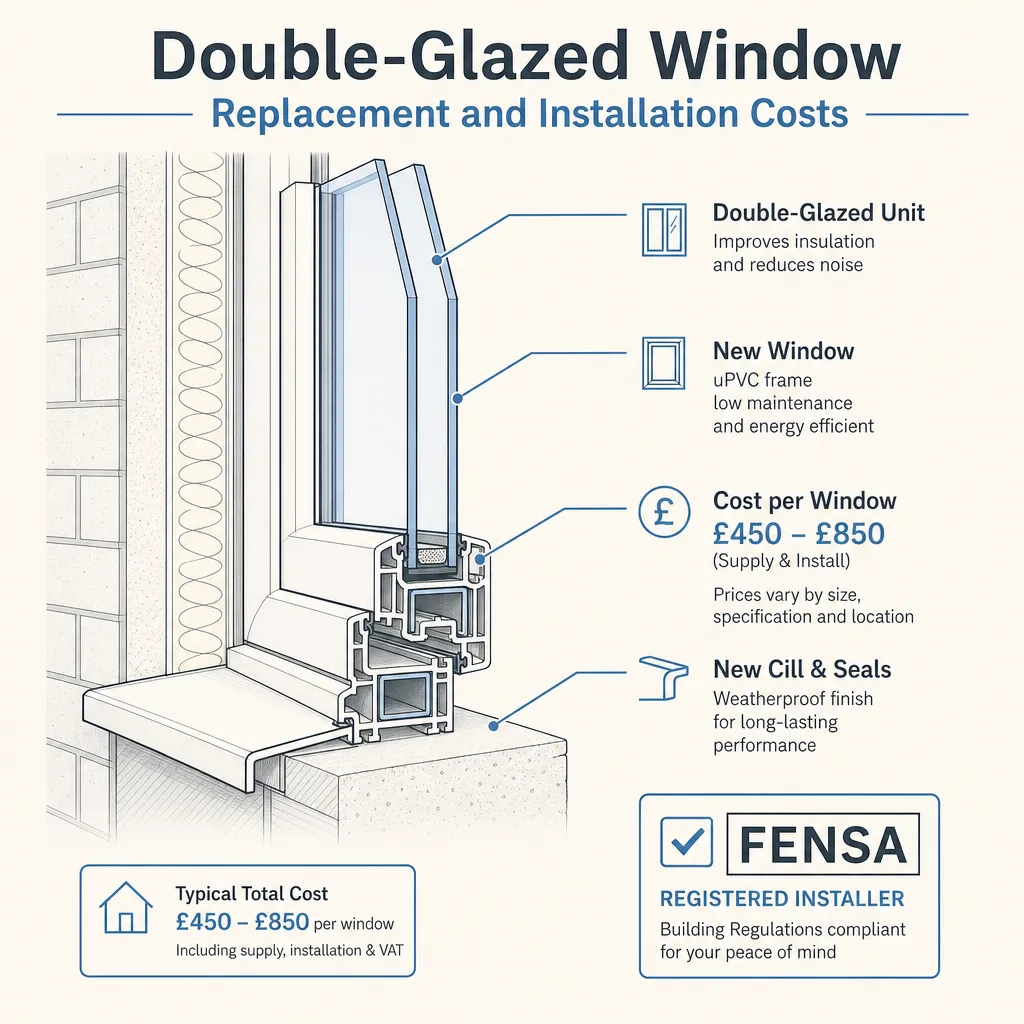
Double-Glazed Window Replacement and Installation Costs
Replacing double-glazed windows in a typical UK home costs roughly £300–£600 per uPVC casement window installed, rising to £500–£1,200 for timber and £400–£800 for aluminium.
 Improvement & Build
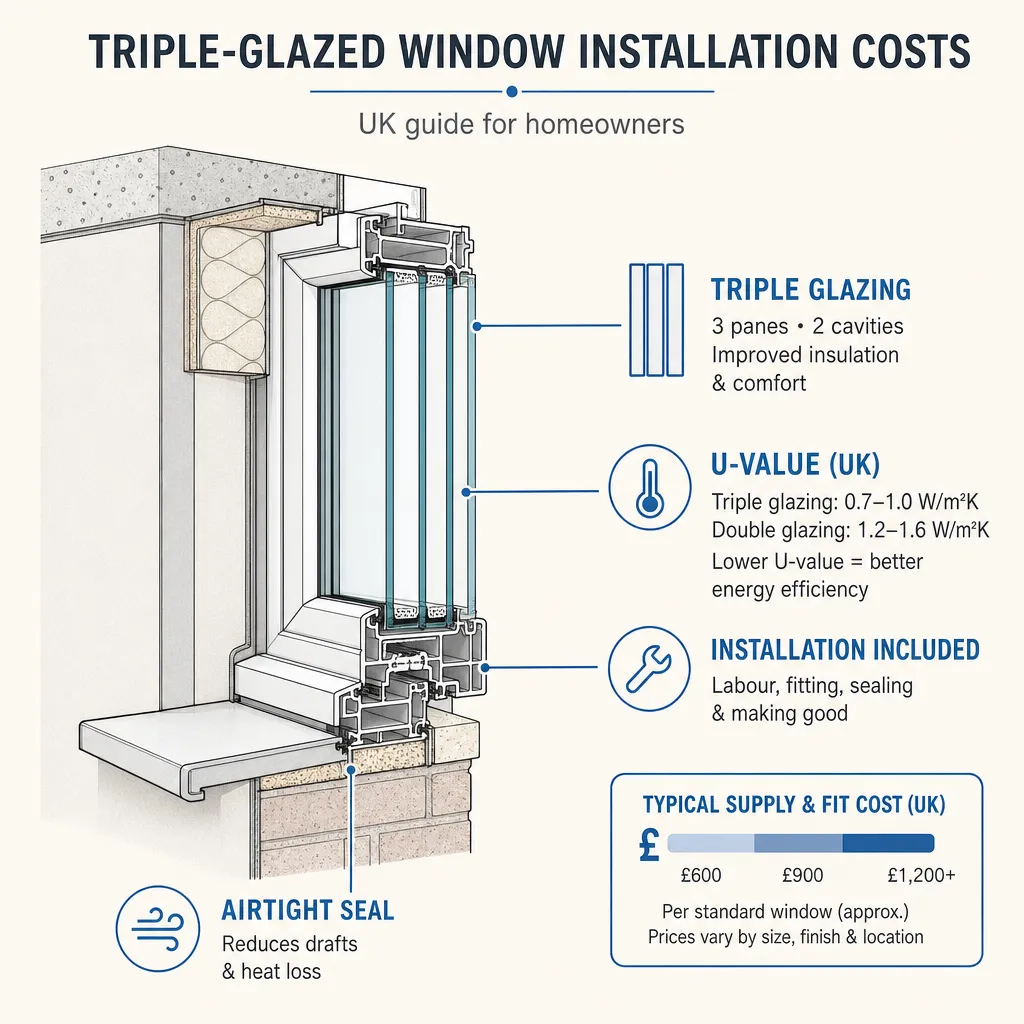
Triple-Glazed Window Installation Costs
Triple-glazed window installation in the UK typically costs £800–£1,800 per window, depending on size, frame material, and glazing specification.
 Improvement & Build
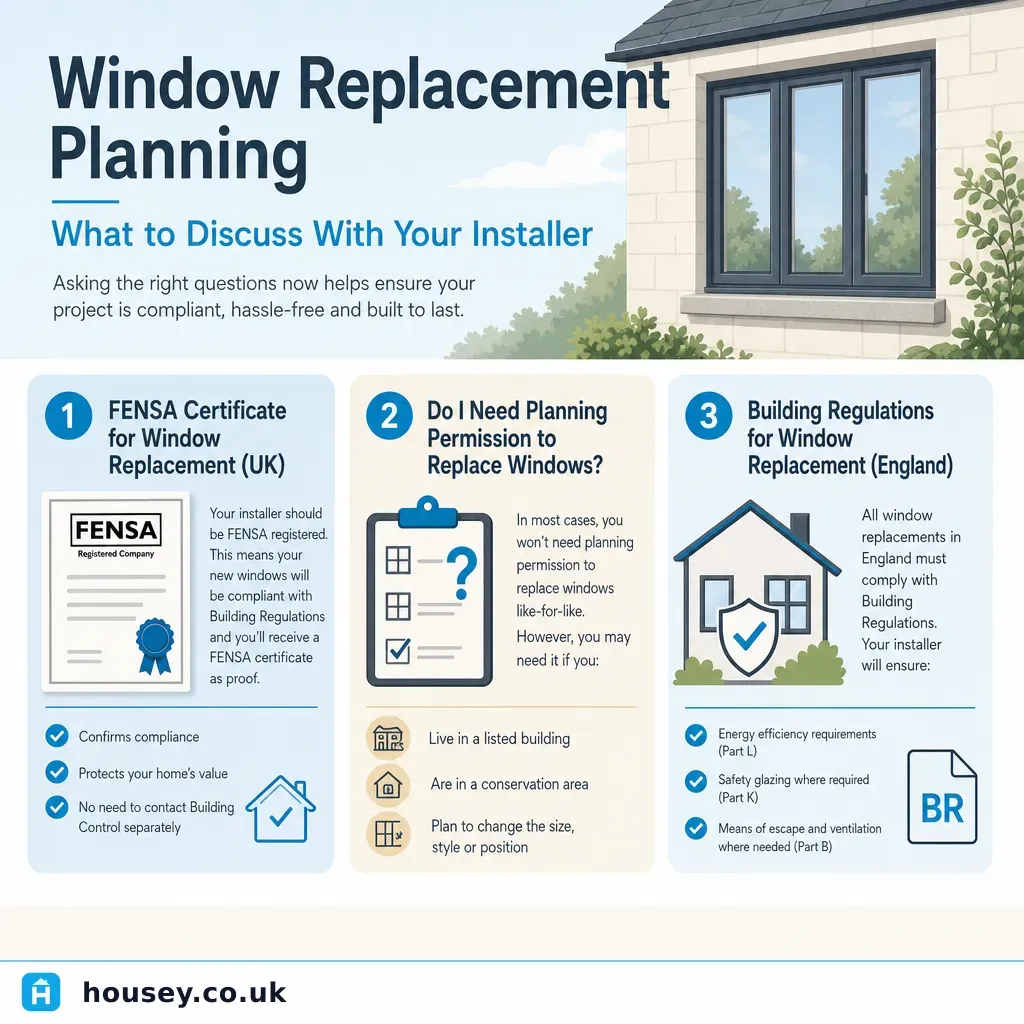
Window Replacement Planning: What to Discuss With Your Installer
Most window replacements in England fall under permitted development rights and do not require planning permission, but they must comply with Building Regulations Part L and Part K.
 Improvement & Build
Secondary Glazing Installation for Energy Efficiency
Secondary glazing adds a separate inner pane to an existing window, improving thermal performance without replacing the original frame.
 Improvement & Build
What is window glazing and glazing options explained
Window glazing refers to the sealed glass unit fitted within a window frame.