Drain Unblocking and Sewage Clearance Costs
By Housey · Last reviewed 6th of May 2026
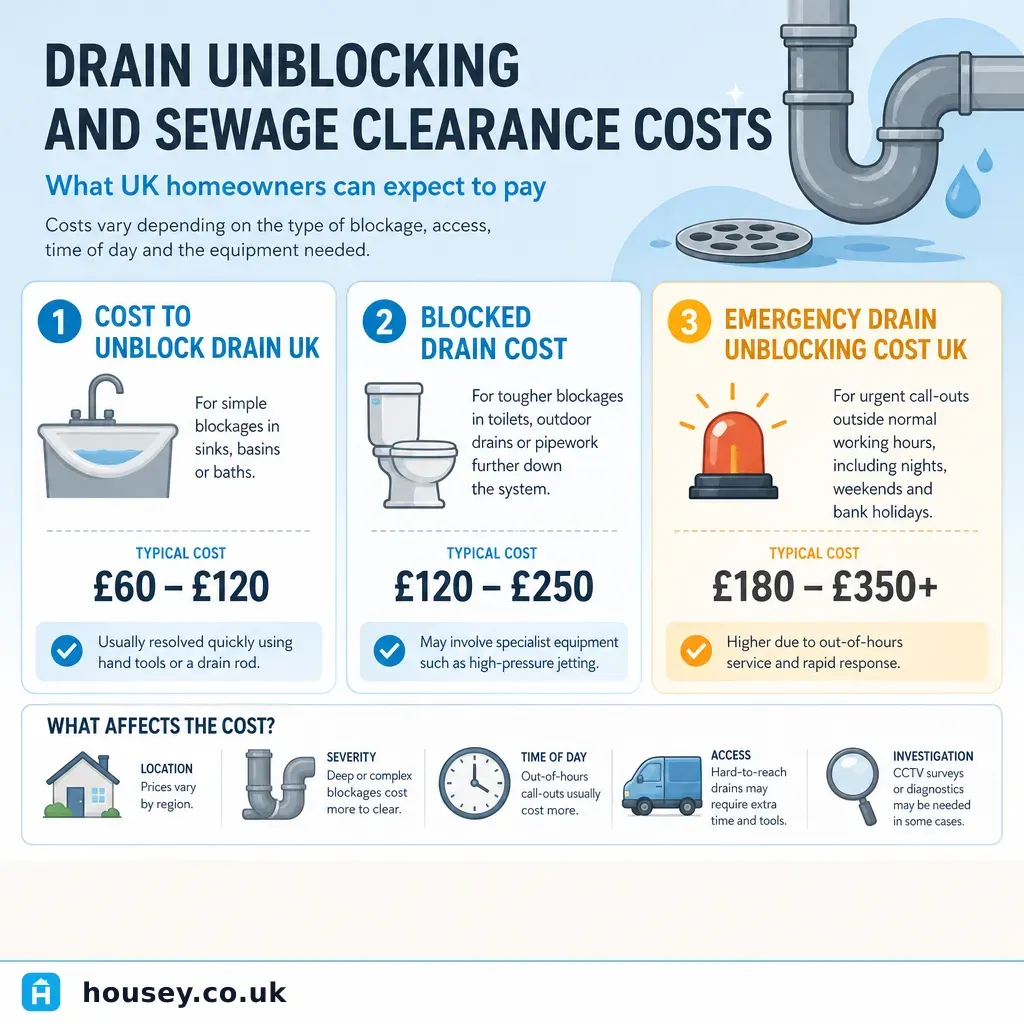
Drain Unblocking and Sewage Clearance Costs
A blocked drain can range from a slow-emptying sink to raw sewage backing up through a ground-floor toilet — and the cost of clearing it varies just as widely. Understanding what drives the price, when a blockage is your legal responsibility to fix, and how to compare quotes prevents you from overpaying for work that may be your water company's obligation rather than yours.
Key points
- Simple internal blockages (sink, bath, or toilet) cleared by a contractor typically cost £80–£200 during standard working hours; out-of-hours emergency rates are commonly 50–100% higher.
- High-pressure water jetting — the most effective method for stubborn blockages, compacted grease, or sewage build-up in the main drain run — typically costs £100–£300 for a domestic drain.
- Under the Water Industry Act 1991 (as amended in 2011), lateral drains from your property boundary to the public sewer are the water company's responsibility in England and Wales — contact your water company first if multiple fixtures or neighbouring properties are affected.
- A CCTV drain survey (£100–£300) is advisable after clearing a recurring blockage to identify any underlying structural cause such as root ingress or pipe collapse.
- Always ask for a written, itemised quote separating call-out fee, labour, method used, VAT, and disposal charges before authorising any work.
What drives the cost of unblocking a drain?
Several factors affect how much a contractor will charge, and understanding them helps you assess whether a quote is fair.
Location of the blockage An internal blockage at a U-bend under a kitchen sink is faster to clear than one 10 metres along an underground drain run. Deeper blockages, restricted access, or situations involving multiple sections all increase time and cost.
Method required
- Manual rodding: suitable for simple blockages close to an accessible point. Usually the lowest-cost option.
- High-pressure water jetting: more effective for compacted grease, silt, root ingress, or sewage build-up in the main run. Most professional drainage contractors use jetting as their standard approach.
- Electro-mechanical cleaning (drain snake): useful for partial blockages in smaller-diameter pipes where jetting pressure is not appropriate.
Time of day and urgency Emergency call-outs outside normal working hours attract higher rates. A sewage backup late on a Saturday evening will cost significantly more than a blocked sink on a Tuesday morning.
Waste disposal If the contractor removes significant debris, silt, or pumps out sewage, waste disposal costs may be added separately to the invoice.
Decision tree: who should you call first?
Before paying for a private call-out, work through this to avoid paying for work that may not be your responsibility.
- Is sewage backing up into the property or overflowing at ground level? — Contact your water company's emergency line immediately. If the blockage is in the public sewer or lateral drain, they should clear it at no charge. Confirm the section is on private pipework before calling a private contractor.
- Are multiple properties or neighbouring addresses affected? — This points to the public sewer. Call the water company first, not a private contractor.
- Is only one fixture blocked (e.g. a single sink or toilet)? — Try a plunger. If that fails after a reasonable attempt, a plumber or drainage contractor can clear it.
- Are multiple internal fixtures backing up but neighbours are unaffected? — The blockage is likely in your private drain run. Contact a drainage contractor for rodding or jetting.
- Has the same drain blocked two or more times in the past 12 months? — Request a CCTV drain survey to rule out root ingress, partial pipe collapse, or a bellied (sagging) section that traps solids.
- Is there a foul smell but no visible blockage? — Check seldom-used drains by pouring water in to refill the trap. If the smell persists, a drainage contractor can investigate for a cracked pipe or ventilation issue.
Indicative costs for drain unblocking
Indicative UK costs, last reviewed 2026-05-06. Prices vary by region, contractor, severity, and access conditions. Obtain at least two or three quotes where time allows.
Service | Typical daytime cost | Notes |
|---|---|---|
Manual rodding (internal) | £80–£150 | Sink, bath, or toilet trap |
High-pressure water jetting (external drain) | £100–£300 | Most effective for main drain runs |
Emergency call-out (out of hours) | £150–£450+ | Premium applies evenings, weekends, bank holidays |
Sewage pump-out | £200–£600 | Depends on volume and disposal costs |
CCTV survey (post-clearance) | £100–£300 | Recommended for recurring or unexplained blockages |
Drain clearance + CCTV survey (combined) | £200–£500 | Many contractors offer this as a package |
What to ask before booking a drainage contractor
- What is the call-out fee, and is it deducted from the total if work proceeds?
- Is jetting or rodding included in the quoted price, or charged separately depending on which method is needed?
- Are there additional charges for waste disposal, access equipment, or materials?
- Is VAT included in the quoted price?
- Do you work on a fixed-price or time-and-materials basis for this type of job?
- If the drain blocks again within 30 days, is there a return call-out charge?
- Are you a member of the NADC or another recognised drainage trade body, and do you carry adequate public liability insurance?
Common mistakes that cost homeowners money
Calling a private contractor before checking with the water company If the blockage is in the lateral drain or public sewer, your water company will clear it without charge. Calling a private contractor first could mean paying for work that was never your liability.
Using chemical drain cleaners repeatedly Caustic and acid-based cleaners can damage older clay, cast-iron, and lead pipework over time. Repeated use can also mask a structural problem that will worsen without proper investigation and repair.
Ignoring a recurring blockage A drain that blocks every few months is usually signalling an underlying structural problem — root ingress, pipe collapse, or a bellied section that traps solids. A CCTV drain survey is usually more cost-effective than a succession of individual call-outs.
Accepting a verbal quote without a written breakdown Always ask for a written quote that separates call-out fee, labour, jetting or rodding, VAT, and any disposal charges before authorising the contractor to begin work.
When to get professional help
A simple blocked sink can sometimes be cleared with a plunger without professional help. Engage a qualified drainage contractor when:
- Sewage is backing up into the property (also notify your water company)
- Multiple fixtures are affected, suggesting a blockage in the main drain run
- The blockage cannot be cleared by a plunger after a reasonable attempt
- The problem has recurred more than once in 12 months without an identified cause
- The drain is in a shared or hard-to-access location requiring specialist equipment
Look for a contractor who is a member of the National Association of Drainage Contractors (NADC), which requires members to carry public liability insurance and follow industry standards for safe working and waste disposal.
How Housey can help
Housey lets you request quotes from qualified drainage contractors in your area for drain unblocking, high-pressure jetting, sewage clearance, and follow-up CCTV surveys. Compare prices from vetted local contractors in one place before committing to any call-out.
Frequently asked questions
Is drain unblocking covered by home insurance?
Some home insurance policies include home emergency cover or underground drainage cover as standard or as an optional add-on. Coverage varies widely — check the policy wording for 'drain' or 'sewer' sections and pay attention to exclusions for gradual blockage or damage from inappropriate items. A drainage contractor can provide a written report suitable for making a claim if needed.
How long does drain unblocking take?
A straightforward blockage cleared by rodding or jetting typically takes 30 minutes to 2 hours, depending on access and severity. If a CCTV survey is carried out afterwards, allow an additional 30–60 minutes. Sewage pump-outs or blockages with difficult access can take considerably longer, so ask the contractor for an estimated time before they begin.
Can a blocked drain cause structural damage?
Yes, in some circumstances. A sustained blockage combined with a cracked or leaking pipe can saturate the surrounding ground. In older properties, this can undermine footings or cause clay soils to shrink and swell. If you notice ground movement or persistent damp near foundations alongside a drainage problem, ask a drainage contractor or structural engineer to assess the situation.
What causes recurring drain blockages?
The most common causes are grease and food waste accumulation in kitchen drains, root ingress from nearby trees, partial pipe collapse or deformation creating a low point where solids collect, and displaced joints due to ground movement. A CCTV drain survey will identify which is responsible and guide the appropriate repair to stop the problem recurring.
Sources and further reading
- Water Industry Act 1991 — legislation.gov.uk
- Sewer flooding and blockages — Ofwat
- National Association of Drainage Contractors (NADC) — NADC
- Building Regulations Approved Document H: Drainage and Waste Disposal — GOV.UK
- Consumer Council for Water — sewer flooding — CCWater
Useful next reads
 Improvement & Build
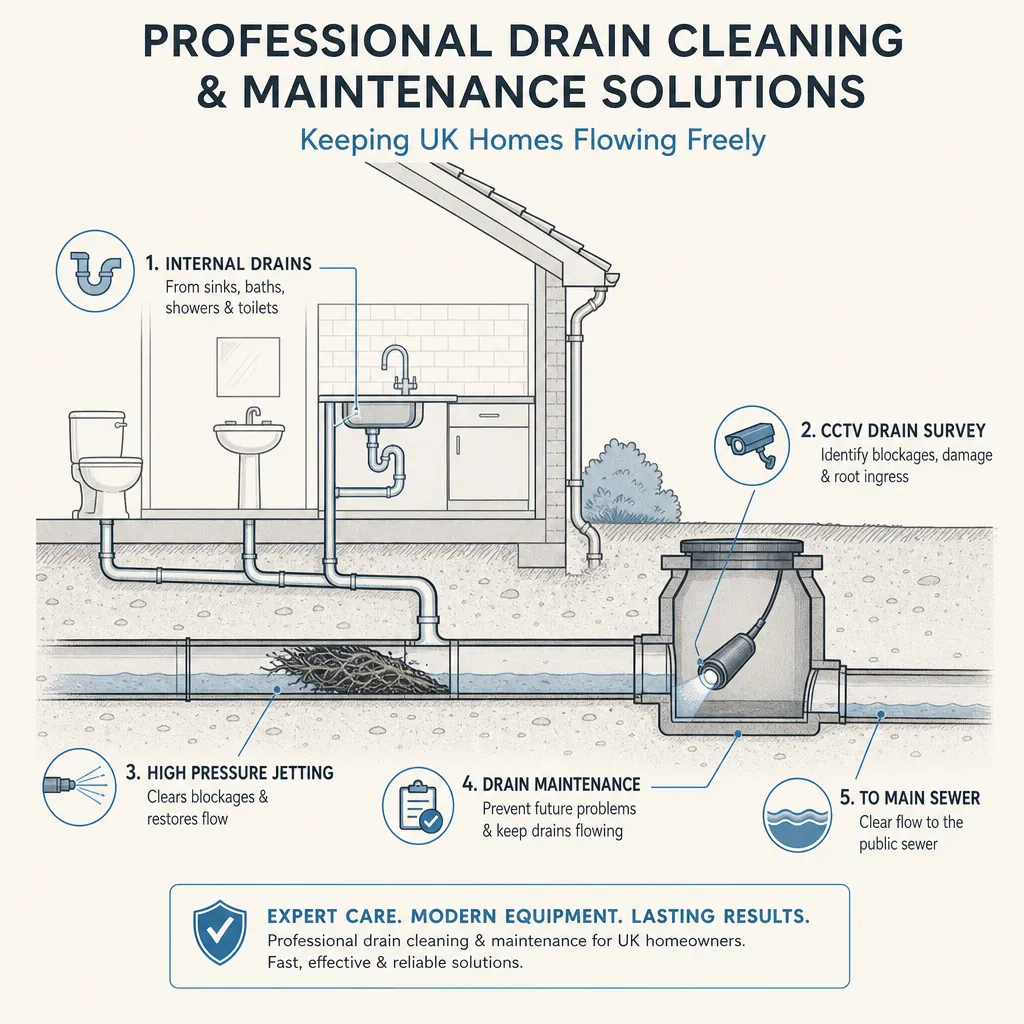
Professional Drain Cleaning and Maintenance Solutions
Professional drain cleaning uses methods including high-pressure water jetting, electromechanical rodding, CCTV surveys, and no-dig lining repairs.
 Improvement & Build
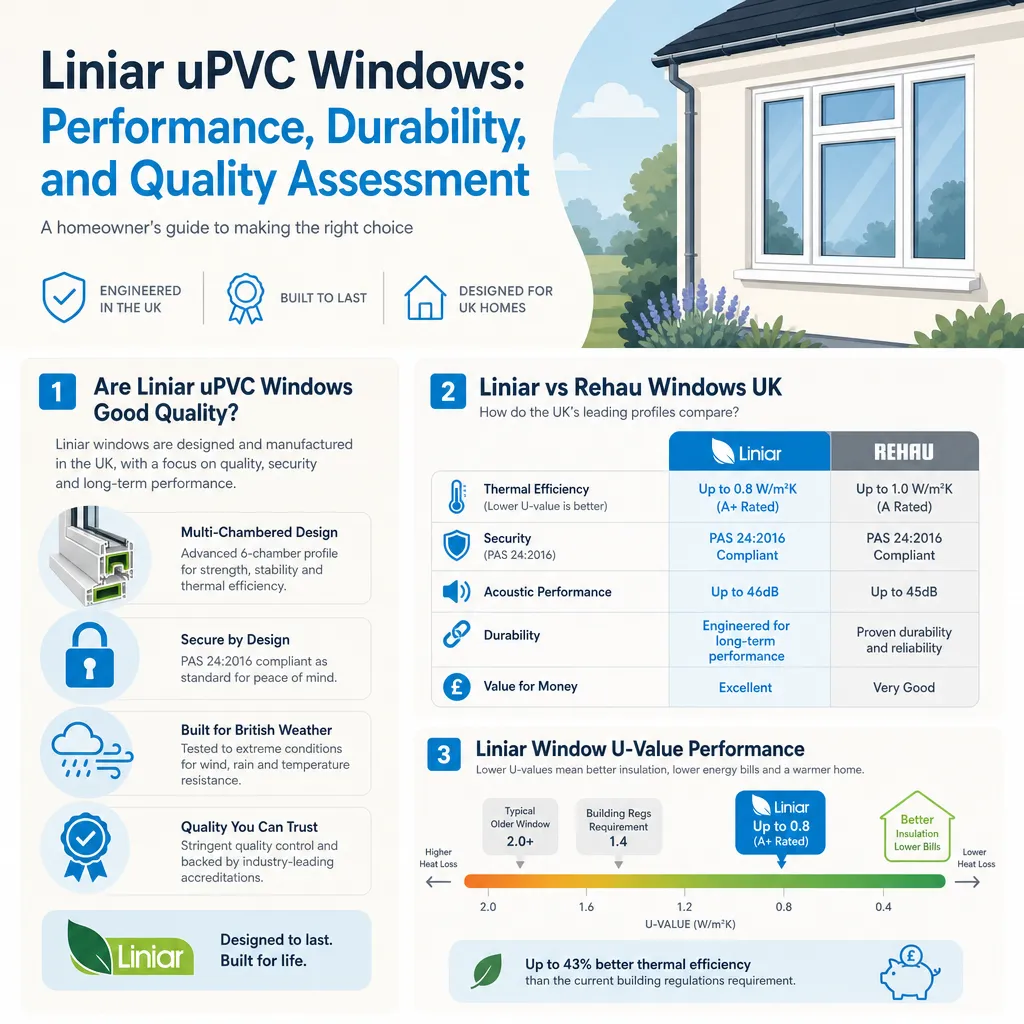
Liniar uPVC Windows: Performance, Durability, and Quality Assessment
Liniar uPVC window profiles are manufactured in the UK using multi-chambered, foamed frames.
 Improvement & Build
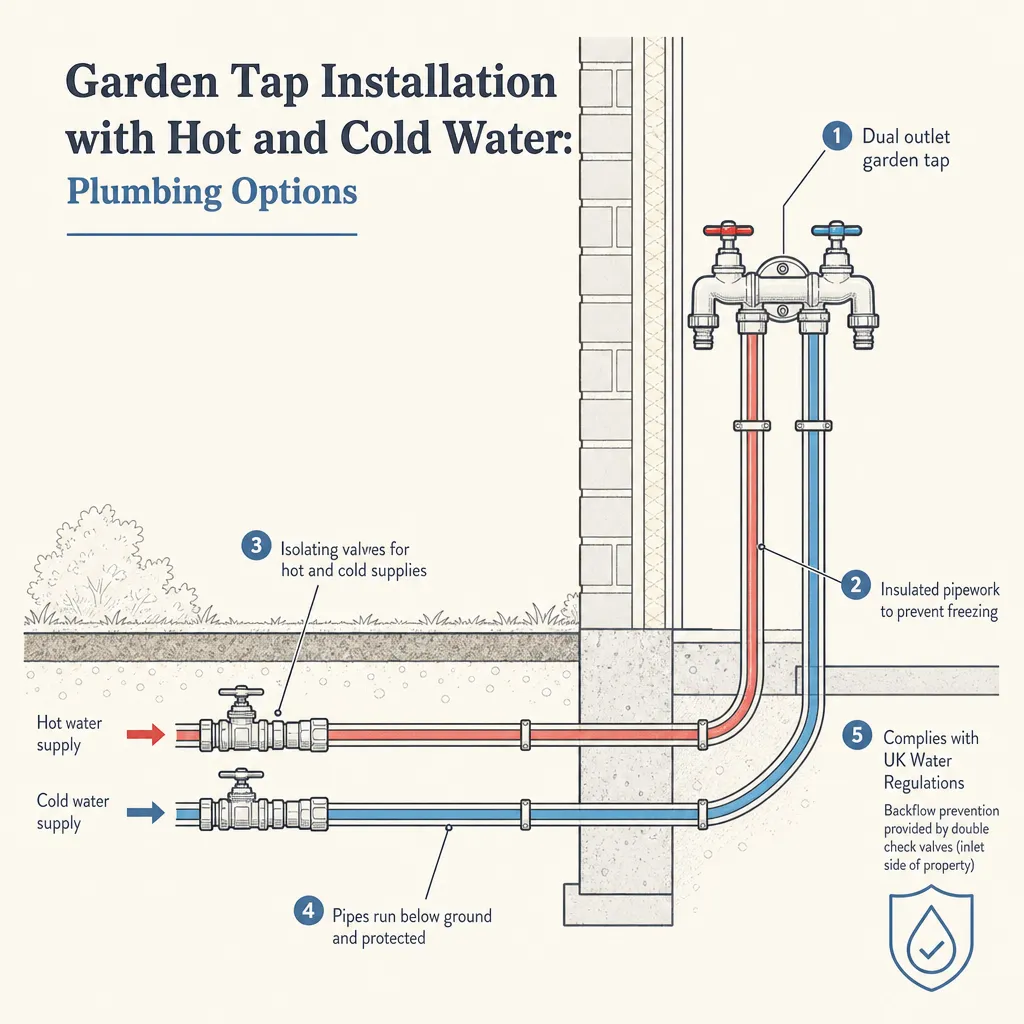
Garden Tap Installation with Hot and Cold Water: Plumbing Options
Adding a cold garden tap is a common DIY project, but routing hot water outdoors requires a plumber to connect to your domestic hot water system and comply with the Water Supply (Water Fittings) Regulations 1999.
 Improvement & Build
Sealing and Maintaining Historic Leaded Glass Windows: Preservation and Performance
Leaded glass windows are maintained using traditional linseed oil cement — not silicone or modern sealants, which prevent natural movement in the lead came.
 Improvement & Build
Greenhouse Construction: Glass Versus Polycarbonate Materials
Glass transmits around 90% of available light and lasts indefinitely if unbroken, but insulates poorly and shatters into sharp fragments.