Professional Drain Cleaning and Maintenance Solutions
By Housey · Last reviewed 30th of May 2026
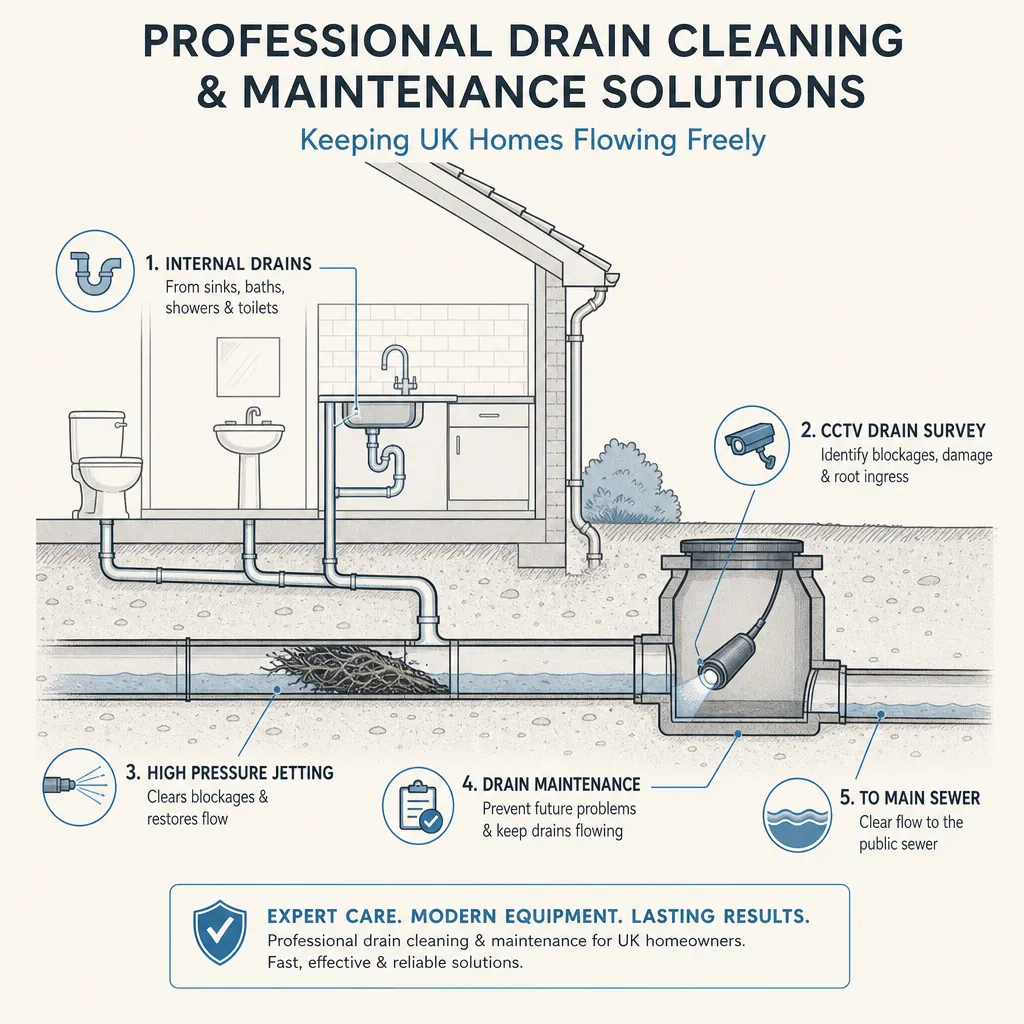
Professional Drain Cleaning and Maintenance Solutions
Blocked or slow drains are among the most common maintenance issues in UK homes, yet they are largely preventable with routine upkeep. Knowing when to deal with a blockage yourself and when to call a professional depends on where the problem is located, how severe it is, and whether a structural issue is the underlying cause. For UK homeowners, understanding which part of the drainage system is your responsibility — and where the sewerage undertaker's obligation begins — is essential before commissioning any work.
Key points
- Under the Water Industry Act 1991 and the Water Industry (Schemes for Adoption of Private Sewers) Regulations 2011, homeowner responsibility for drains typically ends at the property boundary, where the private drain connects to the adopted public sewer.
- High-pressure water jetting (HPWJ), operating at 80–150 bar, is the most effective professional method for clearing grease, scale, root ingress, and general debris in domestic drains.
- CCTV drain surveys — typically costing £150–£400 for a standard domestic inspection (indicative, last reviewed 2026-05-30) — reveal whether blockages result from structural failure such as a collapsed pipe or displaced joint, rather than simple debris accumulation.
- Fatbergs — congealed masses of fat, oil, and non-flushable wipes — are the leading cause of residential drain blockages in the UK, according to Water UK.
- Drainage repairs to shared or adopted public sewers must be carried out by a contractor approved by the relevant sewerage undertaker; check the WaterSafe register or your water company's approved contractor list.
Who is responsible for your drains?
Before arranging any work, establish where responsibility lies — this affects both who pays and who can legally carry out the work.
Your responsibility (private drain): The underground pipework carrying waste from your property to the boundary of your land, serving only your home.
Shared private sewer: Where a drain serves more than one property and has not been formally adopted, responsibility is shared between the affected households. Since the 2011 transfer regulations, most shared private sewers were adopted by water companies — but some remain private. Check with your sewerage undertaker or review your drainage records.
Sewerage undertaker's responsibility: From the point of adoption — usually the boundary, but confirm using your property's drainage plans — onwards. Contact your water company directly if the blockage is in an adopted sewer; you should not pay for work on infrastructure that is their responsibility.
A drainage survey using your property's existing drainage plans can confirm the boundary of responsibility before you commission any contractor.
Common causes of drain blockages
Understanding the cause determines which method will be most effective and prevents repeat callouts.
Cause | Typical location | Recommended treatment |
|---|---|---|
Grease and fat accumulation | Kitchen drain, shared drain run | High-pressure water jetting |
Non-flushable wipes and sanitary products | Soil stack, toilet drain | Rodding or jetting |
Root ingress (early stage) | Underground drain near trees, older clay pipes | Jetting plus CCTV survey |
Root ingress (established) | Underground drain near mature trees | CCTV survey; patch lining or excavation |
Collapsed or displaced pipe joint | Any underground section | CCTV survey to locate; patch lining or excavation repair |
Scale and limescale build-up | Older cast iron or clay pipes | Jetting; specialist descaling where needed |
Hair and soap scum | Bathroom basin, bath, shower trap | Trap cleaning or short-range rodding |
Foreign objects | Toilet, kitchen sink | Rodding or manual extraction |
Professional drain cleaning methods explained
High-pressure water jetting
The most widely used professional technique. A flexible lance delivers a focused jet of water at high pressure — typically 80–150 bar — cutting through grease, debris, and early-stage root ingress and flushing material downstream. Most professional drainage contractors operate vehicles with on-board water tanks and pumps. Jetting is not appropriate for structurally damaged pipes, where it can worsen a collapse or displace loose joints further.
Electromechanical rodding
Flexible rods with cutting or clearing heads are rotated mechanically through the drain. More suited to long, straight runs with manageable blockages or debris. Often used as a first-pass diagnostic step before jetting.
CCTV drain survey
A camera is passed through the drain on a flexible push-rod, recording pipe condition in real time. This is the key diagnostic step for recurring or unexplained blockages. A reputable contractor should provide a copy of the footage along with a written report identifying location, cause, and recommended action.
No-dig drain lining
Where a pipe has minor cracking, displaced joints, or isolated root ingress without full structural collapse, a resin-impregnated liner can be inserted and cured in place. No excavation is required. This is less disruptive and often less expensive than dig-and-replace, but is not suitable for fully collapsed sections.
Excavation and pipe replacement
Required for pipes that have fully collapsed, suffered severe root damage, or are so badly misaligned that lining is not feasible. More disruptive and expensive, but often the only permanent fix for seriously deteriorated drainage.
What to expect from a professional visit
A reputable drainage contractor should:
- Conduct a CCTV survey or visual inspection before jetting if the blockage is recurring or the cause is unclear.
- Agree the scope and indicative cost before starting work.
- Provide before-and-after camera footage for any significant repair.
- Advise in writing on any structural issues identified during the visit.
- Issue a report or completion certificate for repairs beyond straightforward unblocking.
Be wary of contractors who quote a fixed low price by phone without asking about property age, pipe material, blockage history, or access — then escalate the cost once on-site.
Homeowner drain maintenance checklist
Routine upkeep prevents the majority of domestic drain blockages.
- Kitchen sink: pour boiling water with a small amount of washing-up liquid down the sink monthly to help dissolve grease build-up. Never dispose of cooking fat, oil, or grease down the drain.
- Bathroom: clean hair and soap scum from shower, bath, and basin traps monthly — a simple drain guard reduces accumulation significantly.
- Outdoor gullies: clear leaves and debris from yard gullies and gulley pots each autumn before sustained rainfall.
- Inspection chamber: lift the chamber cover annually and check the invert (base channel) for debris accumulation, root ingress, or signs of standing water between uses.
- Trees near drains: if you have mature trees within 3 m of a drain run, arrange a CCTV check every two to three years to catch early-stage root ingress before it becomes structural.
- Never flush: wet wipes (including those labelled "flushable"), cotton buds, sanitary products, or excess food waste — these are the primary cause of household blockages in the UK, according to Water UK.
Red flags that mean call a professional
Some symptoms point to a problem beyond a simple trap or surface blockage:
- Multiple drainage points — sink, bath, toilet — backing up simultaneously, suggesting a blockage in the main drain run rather than an individual trap.
- A sewage smell in the garden or near an inspection chamber with no active blockage, indicating a structural failure or significant root ingress.
- A blockage that recurs within a few weeks of being cleared, suggesting an underlying structural cause is not being addressed.
- Gurgling sounds from multiple fixtures when one drain is in use, indicating a partial blockage or ventilation issue in the soil stack.
- Soft ground or subsidence near a drain run, which may indicate a long-standing pipe failure causing soil washout.
When to get professional help
Simple surface blockages — a hair-clogged trap, a slow shower drain — can often be resolved with a drain guard, a plunger, or a short flexible rod. Beyond that, recurring problems, main drain blockages, and any underground drainage work should be handled by a qualified contractor. For structural repairs, look for a contractor who is a member of the National Association of Drainage Contractors (NADC) or who appears on the WaterSafe approved contractor register.
How Housey can help
Housey connects you with vetted drainage contractors covering your area for unblocking, jetting, and maintenance work. If you have a recurring blockage and need a diagnosis, our network includes specialists who carry out CCTV drain surveys to identify structural issues that jetting alone cannot fix. For a broader picture of your drainage system's condition — before a sale, a renovation, or a major extension — a full drainage survey provides the evidence you need to plan or negotiate with confidence.
Frequently asked questions
How much does professional drain unblocking cost in the UK?
Indicative UK costs, last reviewed 2026-05-30: a standard callout and jetting of a straightforward blockage typically costs £75–£200 for a domestic property; CCTV surveys add £150–£400. Prices vary by region, urgency, and access difficulty. Emergency callouts attract a premium. Always obtain at least two quotes for non-urgent work and confirm whether VAT is included in the figure given.
Is drain cleaning covered by home insurance?
Most standard home insurance policies exclude routine maintenance, including clearing blockages caused by normal use. Some policies include accidental damage or escape-of-water cover that may extend to sudden structural failures, but not gradual blockage. Home Emergency cover — sold as an add-on or standalone policy — more commonly includes drain unblocking. Check your specific policy schedule before assuming cover applies.
How often should I have my drains professionally inspected?
For most UK homes with no known issues, a professional inspection every 3–5 years is reasonable. Older properties with clay or pitch-fibre drainage, homes with mature trees nearby, and properties with a history of recurring blockages benefit from annual or biennial CCTV checks. Landlords with multiple tenanted properties may find planned maintenance more cost-effective than repeated reactive callouts.
Who is responsible if a shared sewer backs up and floods my property?
If the blockage is in an adopted public sewer, contact your sewerage undertaker immediately — clearance is their responsibility. If the sewer is a shared private sewer not adopted under the 2011 regulations, liability depends on your deeds and any shared maintenance agreement with neighbouring owners. Citizens Advice and the Property Ombudsman can advise on disputed drainage responsibility.
Sources and further reading
- GOV.UK: Report a blocked public sewer — GOV.UK
- Water Industry (Schemes for Adoption of Private Sewers) Regulations 2011 — legislation.gov.uk
- Water UK: Protecting sewers from misuse — Water UK
- National Association of Drainage Contractors (NADC) — National Association of Drainage Contractors
- WaterSafe: Approved contractor register — WaterSafe
Useful next reads
 Improvement & Build
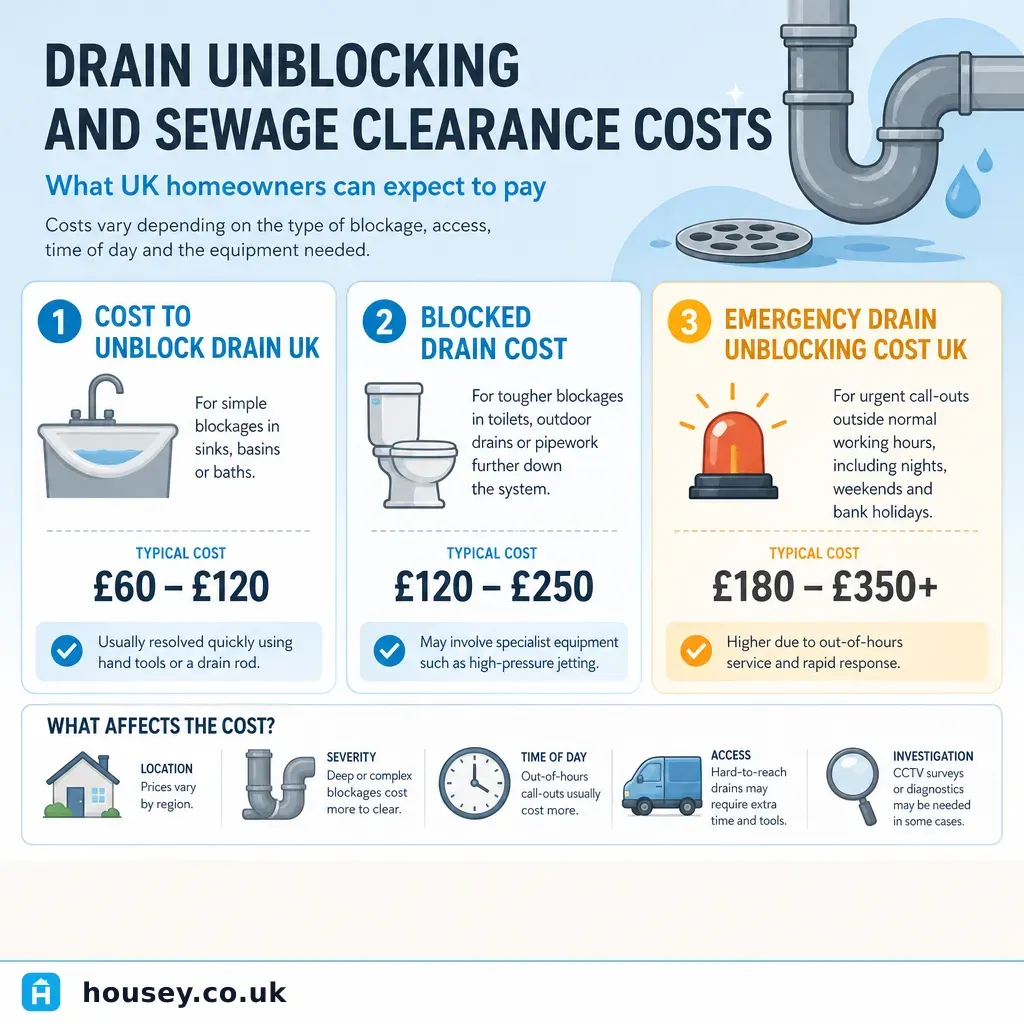
Drain Unblocking and Sewage Clearance Costs
Unblocking a drain in the UK typically costs £80–£400 depending on severity, access, and whether it is an emergency call-out.
 Improvement & Build
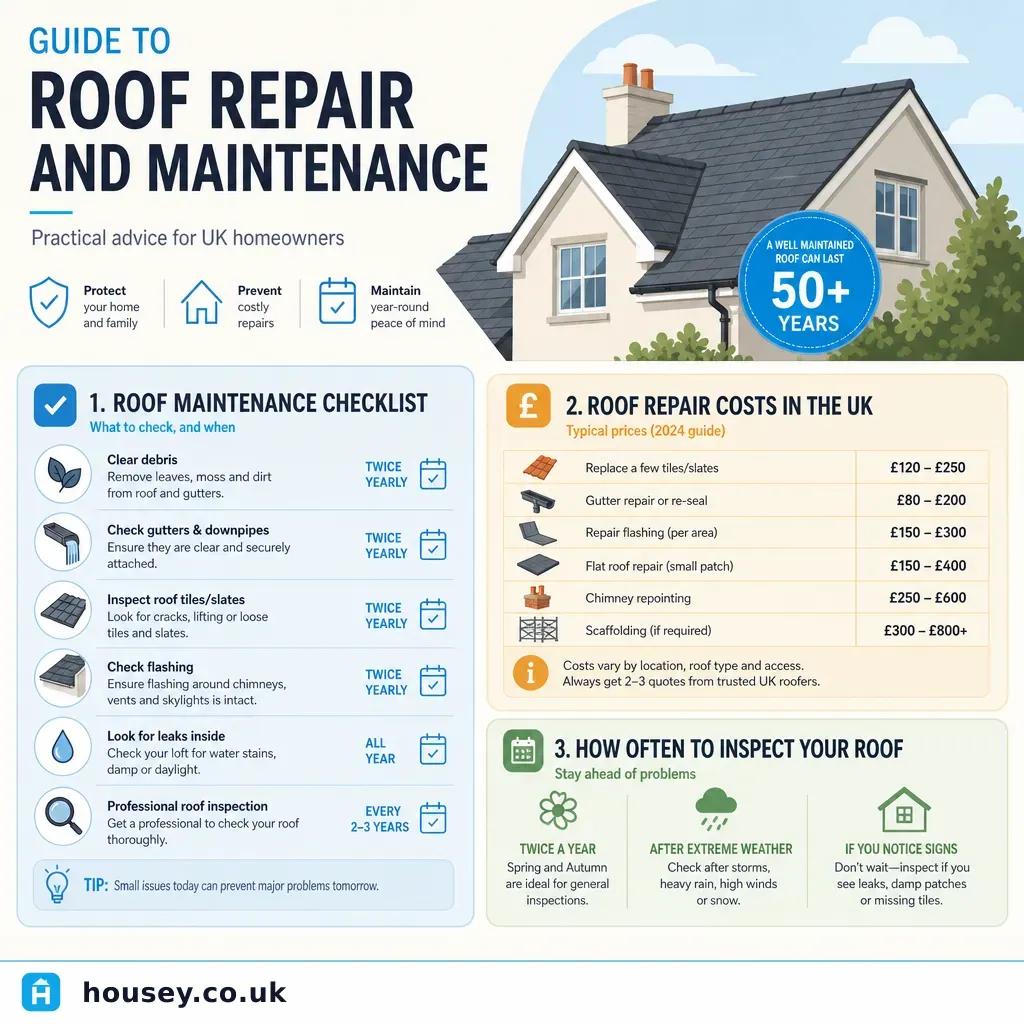
Guide to Roof Repair and Maintenance
Regular roof inspections every 3–5 years, prompt repair of damaged tiles and failed flashings, and annual gutter clearance are the core of effective UK roof maintenance.
 Improvement & Build
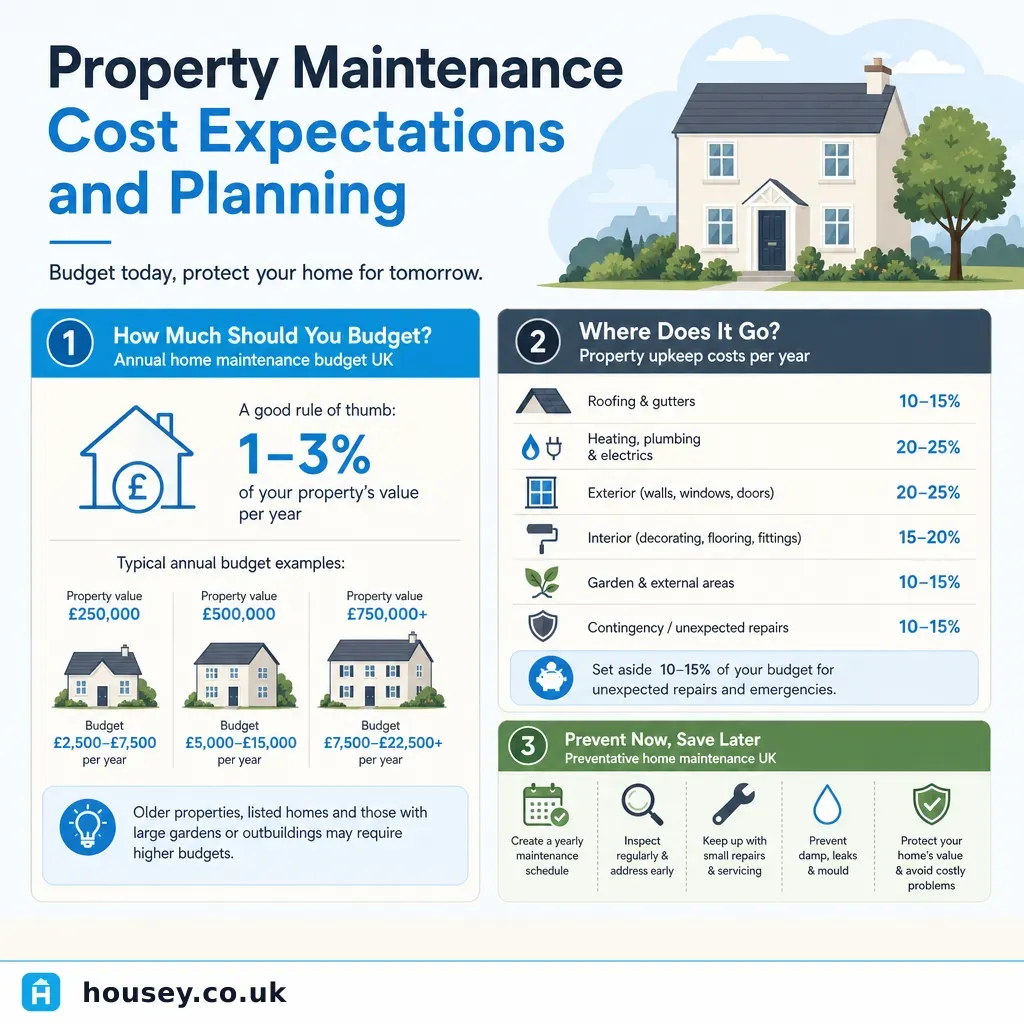
Property Maintenance Cost Expectations and Planning
UK homeowners typically budget between 1% and 3% of their property's value annually for maintenance and repairs.
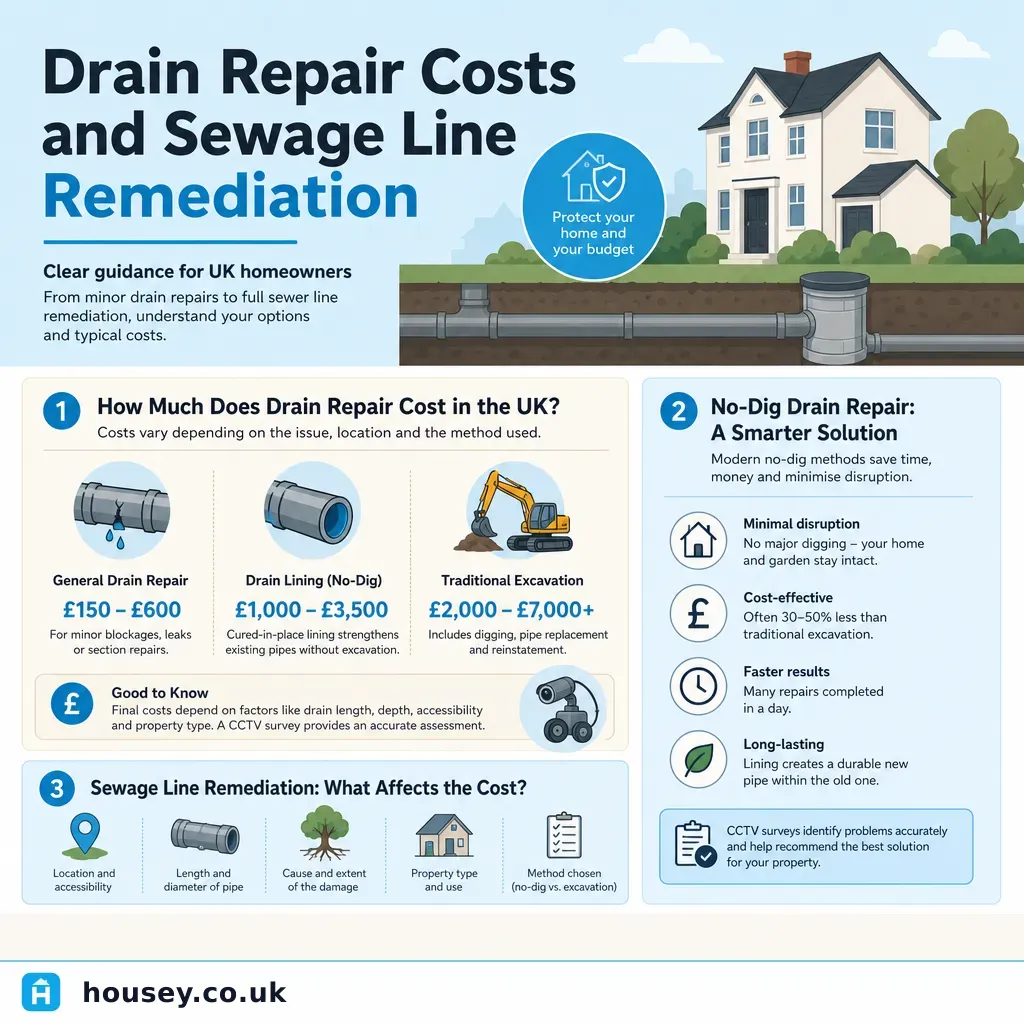 Improvement & Build
Drain Repair Costs and Sewage Line Remediation
Drain repair in the UK typically costs £300–£3,000+ depending on the method, access, and severity.
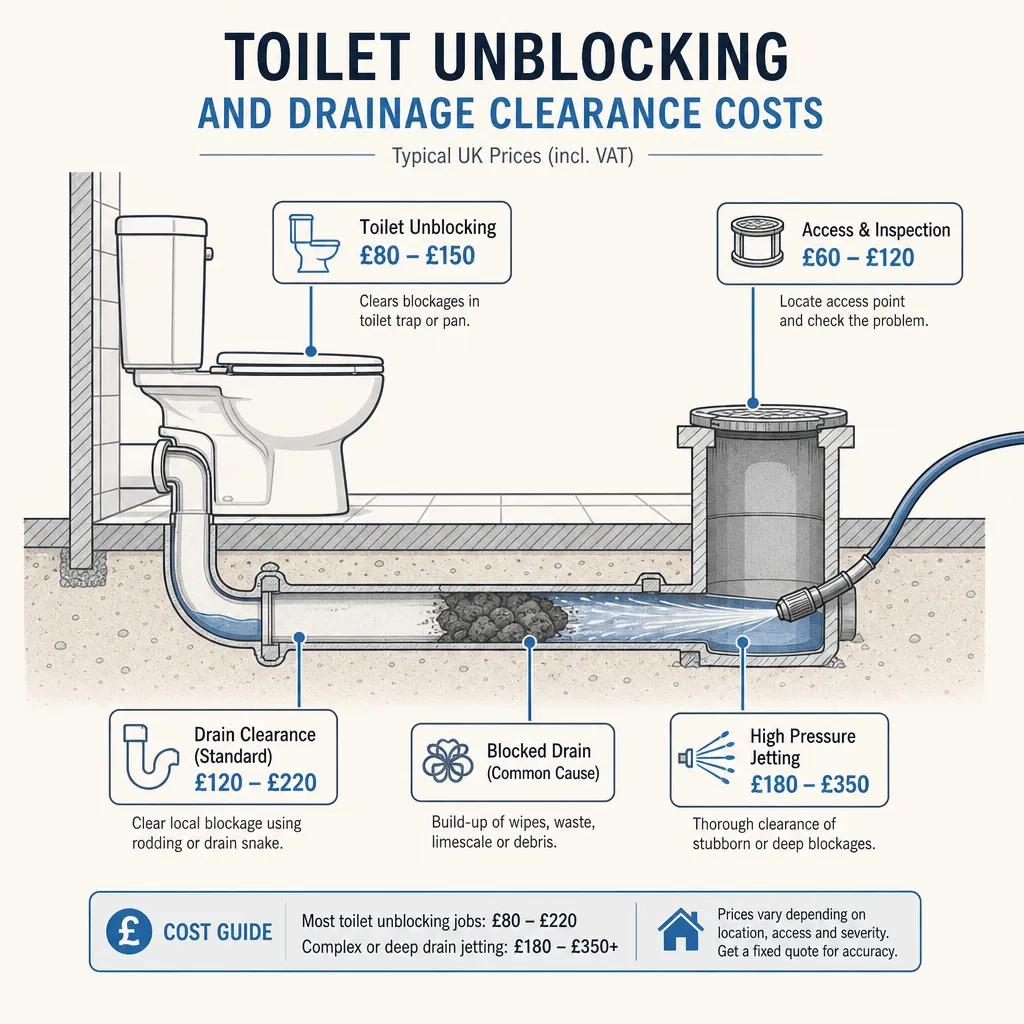 Improvement & Build
Toilet Unblocking and Drainage Clearance Costs
Having a blocked toilet or drain professionally cleared typically costs £80–£350 in the UK, depending on the method used.