Drainage solutions for window wells and basement windows
By Housey · Last reviewed 19th of May 2026
Drainage solutions for window wells and basement windows
Window wells — sometimes called area wells or area lights in older British usage — are common in UK properties with semi-basement rooms, lower-ground-floor flats, and converted cellars, wherever a window sits below or close to external ground level. They create a void between the below-grade window and the surrounding soil, admitting light and ventilation. When drainage fails or was never installed, even moderate rainfall can leave standing water pressing against the window frame, increasing the risk of damp ingress and, in serious cases, flooding the room beyond. Understanding how drainage systems work, and which approach suits your property, helps you make an informed decision before calling a contractor.
Key points
- Building Regulations Approved Document H (Drainage and Waste Disposal) sets out requirements for connecting window well drains to soakaways and existing drainage systems in England and Wales.
- BS 8102:2022 (Protection of below-ground structures against water from the ground) classifies basement moisture protection into four grades — Grade 1 (basic utility) through Grade 4 (archive storage) — and drainage design is a core component of Grades 2–4.
- A gravel-filled sump beneath a window well liner should use clean 20 mm angular aggregate and be at least 200 mm deep to provide meaningful temporary water storage.
- Purpose-made polypropylene window well liners available from UK suppliers include integral 110 mm drain outlets compatible with standard soil-pipe fittings.
- Soakaways receiving window well drainage should be positioned at least 5 m from building foundations under Approved Document H; clay-rich or waterlogged soils may make soakaways impractical without a prior infiltration test.
How window well drainage works
Water enters a window well from rainfall landing directly in it, from surface run-off shedding off adjacent paving, and sometimes from groundwater seeping through the surrounding soil. Without a drain, it accumulates and eventually presses against the window frame or finds its way through the wall.
There are two main drainage approaches in use across UK properties:
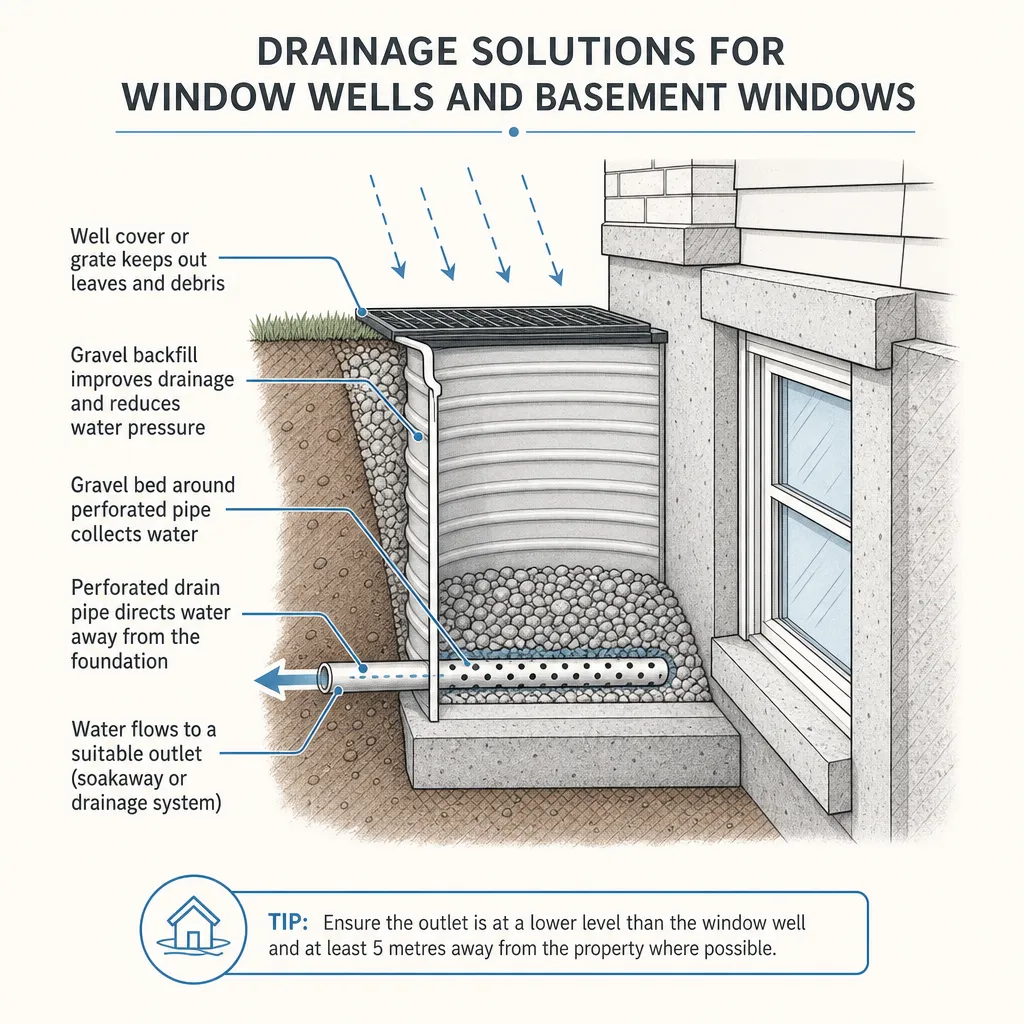
Gravel sump (passive): The base of the well is filled with clean angular stone — typically 20 mm graded aggregate — to a depth of 200–300 mm. Water percolates through the stone and either absorbs into the ground below or discharges to a connected soakaway. This approach works well in free-draining soils (sand, gravel, chalk) but is unreliable in clay or where the water table is elevated.
Drain pipe to soakaway or drainage system (active): A 110 mm pipe runs from the base of the liner to a soakaway at least 5 m from the building, or to a surface water drainage channel. This is more reliable in poor-draining ground and in higher-rainfall parts of England, Wales, and Scotland.
In some properties — particularly those in urban areas with clay subsoils or constrained drainage runs — an electric sump pump is the only practical option, especially where connecting to the surface water drain is not feasible.
Choosing the right drainage solution
Ground and site condition | Recommended approach | Key consideration |
|---|---|---|
Free-draining sandy, gravelly, or chalky soil; low rainfall | Gravel sump only | Inspect and top up gravel every 3–5 years |
Clay or loam soil; moderate rainfall | Gravel sump plus drain pipe to soakaway | Confirm soakaway viability with an infiltration test |
High water table; heavy rainfall location | Drain pipe to surface water drain | Check Approved Document H compliance before connecting |
No soakaway feasible; no surface water drain nearby | Submersible sump pump | Requires power supply; battery back-up strongly recommended |
New build or significant basement alteration | As above, plus building control notification | Approved Document H and potentially BS 8102 apply |
Deciding which solution is right for you
- Choose a gravel sump if your soil is sandy, gravelly, or chalky, the well is small, and rainfall in your area is modest.
- Choose a drain pipe to a soakaway if your soil drains poorly, the well collects significant water during typical rainfall, or you have previously had damp ingress around the window.
- Choose a sump pump if your property sits in a high water table area or if no gravity drain route is feasible given your site layout.
- Consult a drainage contractor if you are unsure of soil type, if the well serves a habitable basement room requiring BS 8102 Grade 2 or above protection, or if water has already entered the basement — groundwater behaves differently from surface water and requires a different remedy.
Red flags that drainage is failing
The following signs indicate your window well drainage needs attention:
- Standing water remains in the well more than 30 minutes after rainfall stops.
- Efflorescence (white salt deposits), damp patches, or mould on the internal wall below or around the window.
- Peeling paint, a swollen timber frame, or rust on the window itself.
- The window is stiff to open, suggesting frame swelling from persistent moisture.
- Gravel in the well has become silted, compacted, or buried under leaf debris.
- The liner is cracked, pulling away from the wall, or no longer correctly pitched toward the drain outlet.
If any of these are present, address drainage before applying any internal waterproofing treatment — sealing in moisture without removing the source is rarely effective long-term.
What a drainage installation involves
A typical drain-pipe installation for a window well follows these steps:
- Excavate or access the base of the well.
- Remove and dispose of old gravel or silted material.
- Fit or replace the liner if damaged or cracked.
- Install a drain outlet in the liner base, connected to a 110 mm pipe.
- Run the pipe to a soakaway, surface water drain, or pump chamber.
- Backfill with clean 20 mm angular aggregate to within 50–75 mm of the liner's top edge.
- Fit a debris cover or grate to exclude leaves while allowing airflow and ventilation.
Where the drain connects to a soakaway or the public surface water drain, a drainage contractor should confirm compliance with Approved Document H before backfilling.
When to get professional help
Most window well drainage projects are relatively contained, but instruct a qualified professional if:
- You are unsure whether you have groundwater ingress rather than surface water run-off — the remedies are fundamentally different.
- The window well serves a habitable basement room where BS 8102 Grade 2 or above protection applies.
- The existing drainage connection needs replacing or extending, particularly where it links to the public sewer.
- Excavation deeper than approximately 1.2 m is required.
- Your property is listed or in a conservation area, where external alterations may require consent.
How Housey can help
If your window well is overflowing, silted, or not draining properly, an experienced drainage contractor can assess your ground conditions, recommend the most suitable drainage solution, and carry out installation to Building Regulations standards. Use Housey to compare quotes from vetted local drainage contractors in your area.
Frequently asked questions
How deep should the gravel be in a window well?
A gravel layer of at least 200 mm is generally recommended, with 300 mm preferred for larger wells or higher-rainfall areas. Use clean 20 mm angular aggregate rather than fine pea gravel, which compacts and reduces drainage capacity over time. Inspect and top up the gravel every few years and clear leaf debris from the surface annually.
Can a window well drain connect to a soakaway?
Yes, in most cases. Under Approved Document H, soakaways should be sited at least 5 m from the building's foundations. In clay-rich or already-saturated ground absorption may be too slow — a drainage contractor can carry out a simple infiltration test to confirm viability before installation.
Do I need planning permission to install a window well drain?
Minor drainage works within the curtilage of a house are generally permitted development. However, connecting to the public sewer or directing run-off onto neighbouring land may require consent. If in doubt, check with your local planning authority or a drainage contractor before starting work.
What causes a window well to flood?
Common causes include an absent or blocked drain, insufficient gravel depth, surrounding ground sloping toward the well rather than away from it, overflowing gutters or downpipes directing water nearby, and high groundwater pressure during wet periods. Identifying the primary cause before installing drainage avoids spending money on the wrong solution.
Sources and further reading
Useful next reads
 Improvement & Build
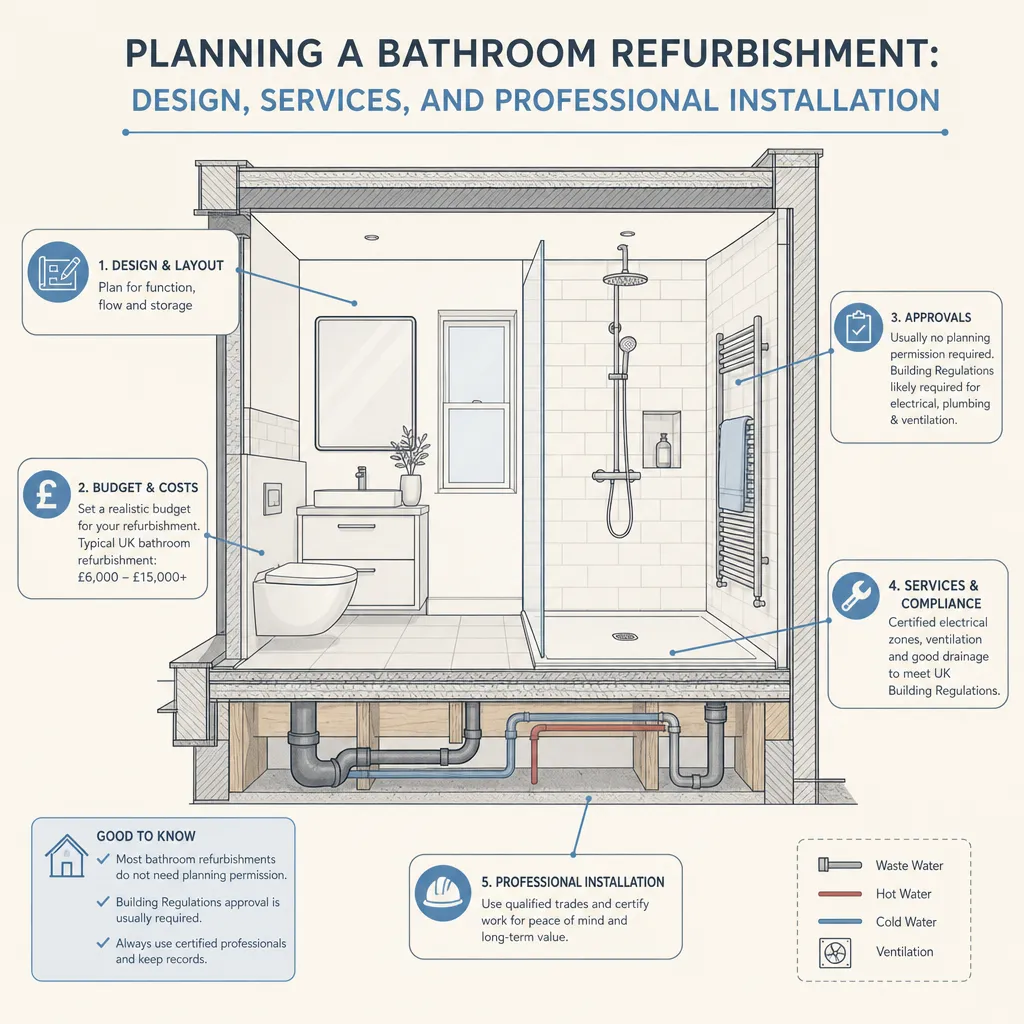
Planning a Bathroom Refurbishment: Design, Services, and Professional Installation
A bathroom refurbishment in the UK typically involves at least three trades — plumber, electrician, and tiler — and costs £4,000–£12,000 for a full project.
 Improvement & Build
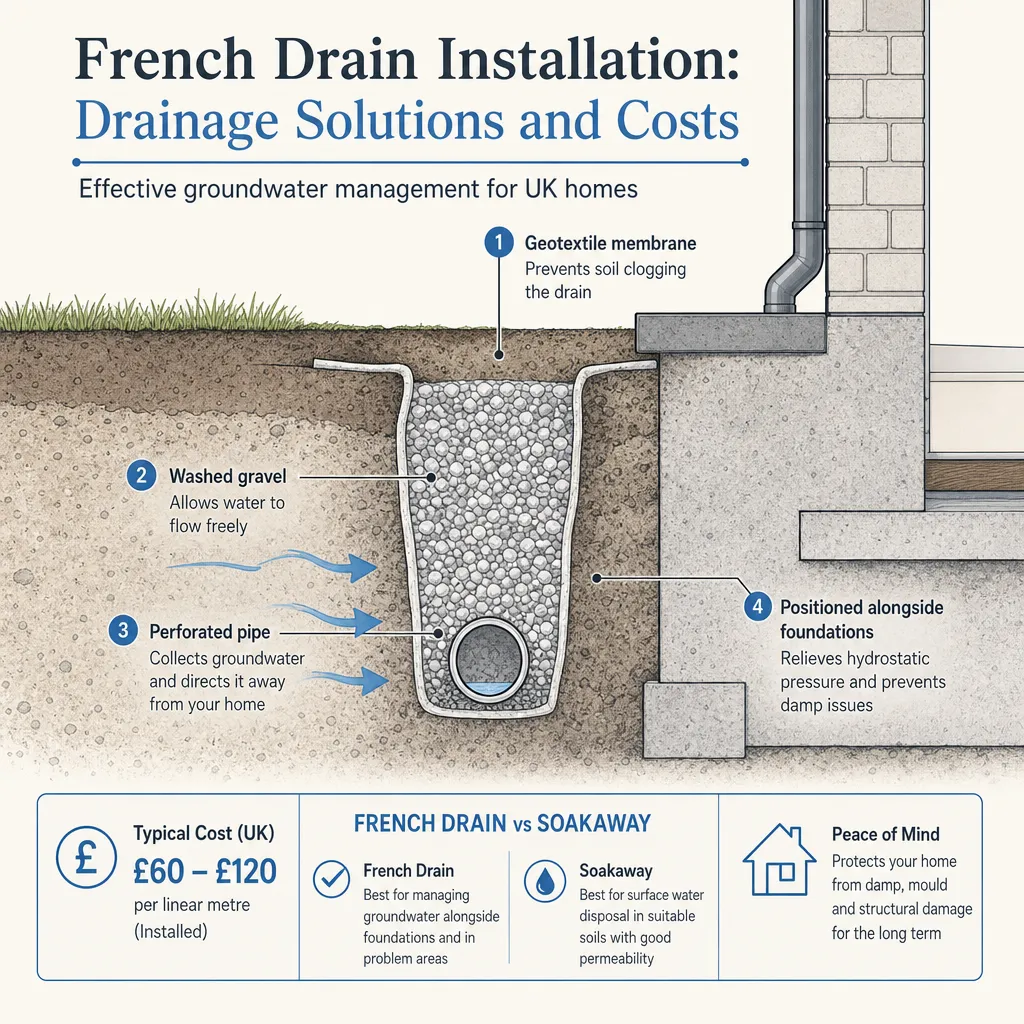
French Drain Installation: Drainage Solutions and Costs
A French drain is a gravel-filled trench containing a perforated pipe that channels subsurface water away from problem areas.
 Improvement & Build
Cost of Zinc Gutters for Property Protection
Zinc gutters cost around £60–£120 per metre installed in the UK, depending on profile complexity, property type, and scaffolding requirements.
 Improvement & Build
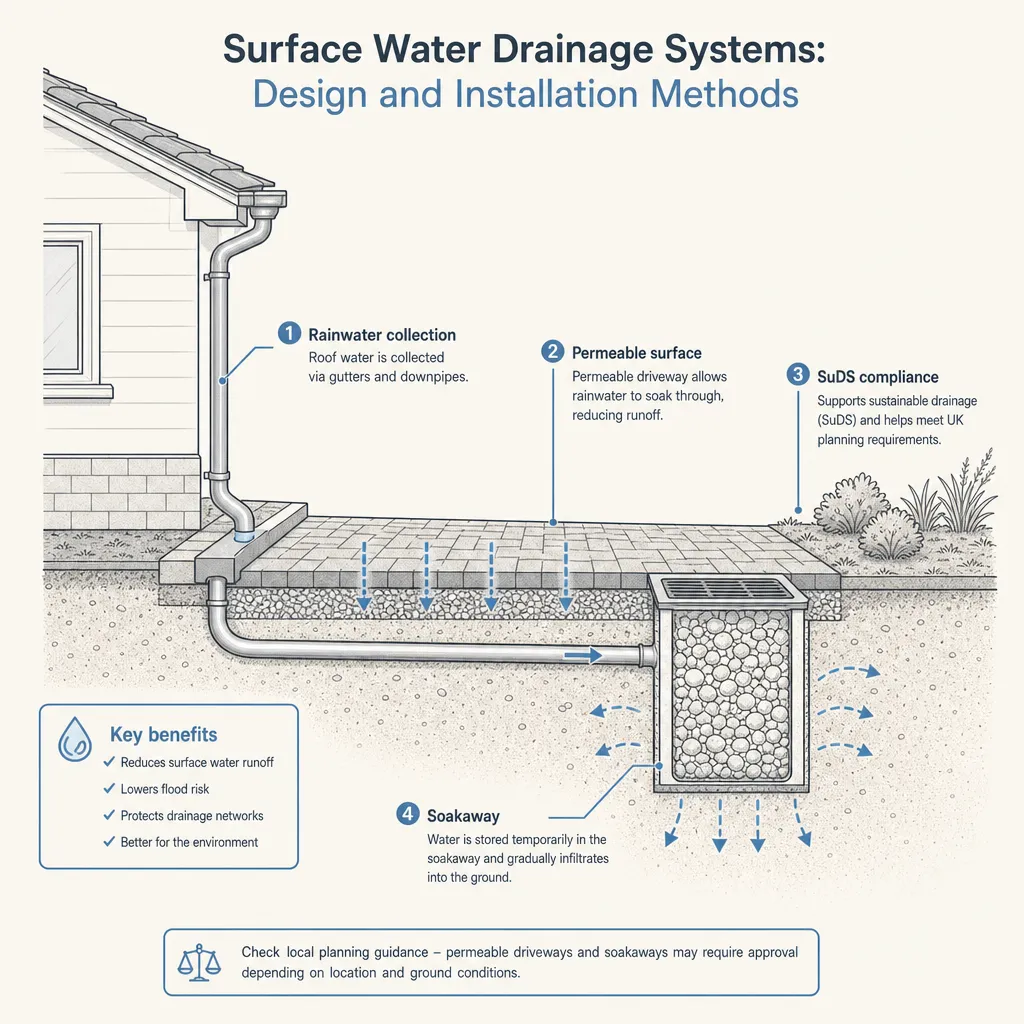
Surface Water Drainage Systems: Design and Installation Methods
Surface water drainage manages rainwater run-off from roofs, driveways, and hard standing.
 Improvement & Build
Drainage Systems: Understanding Your Property's Water Management and Maintenance
Most UK homes have separate foul water and surface water drainage systems.