Draught-Proofing Installation and Weatherproofing Costs
By Housey · Last reviewed 7th of May 2026
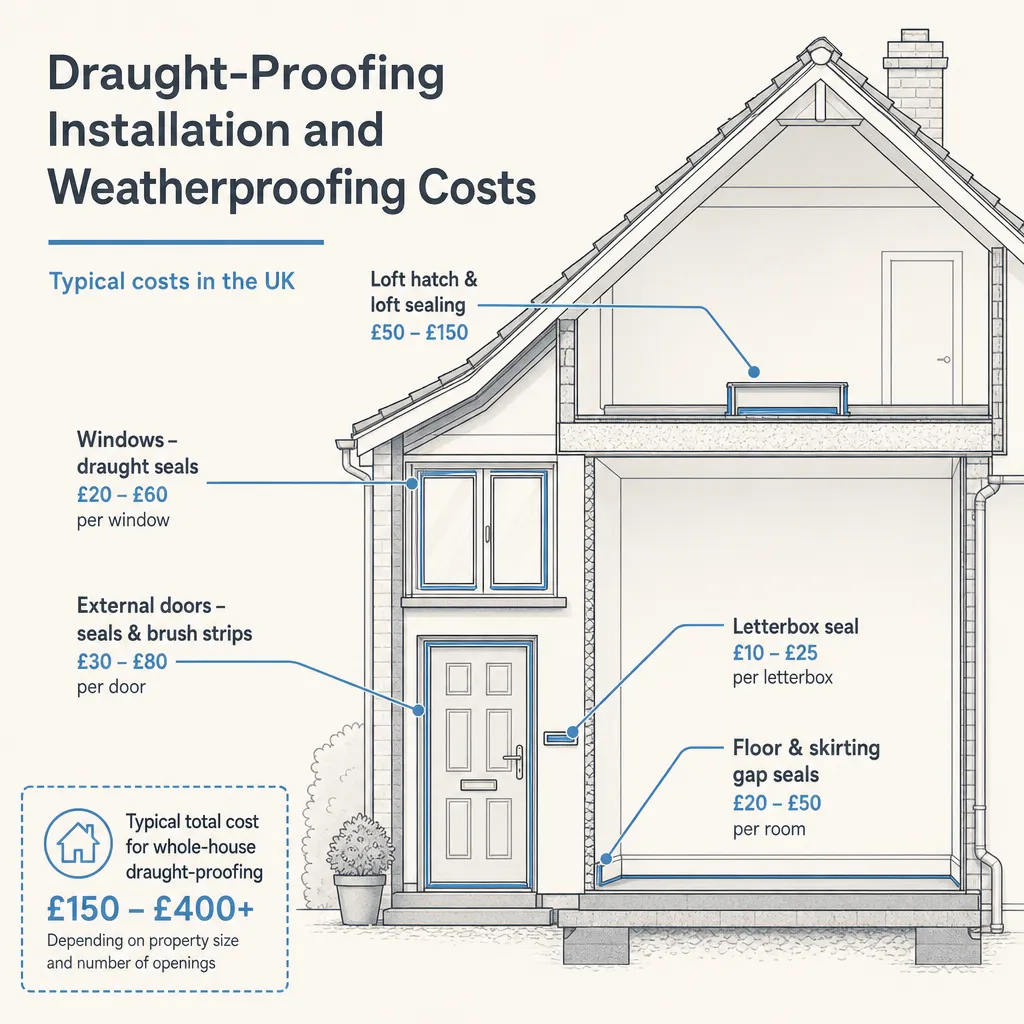
Draught-Proofing Installation and Weatherproofing Costs
Draughts account for a meaningful share of heat loss in UK homes, particularly in properties built before cavity-wall construction became standard in the 1920s. Whether you are tackling a Victorian terrace with rattling sash windows or sealing gaps around pipework in a 1970s semi, understanding what draught proofing and weatherproofing realistically cost — and which jobs are worth prioritising — helps you spend wisely and reduce heating bills year-round.
Key points
- Energy Saving Trust estimates that draught proofing a semi-detached home with gas central heating can save approximately £45–£75 per year on energy bills (figures vary with tariff, occupancy, and airtightness baseline).
- Professional whole-house draught proofing typically costs £150–£450; DIY materials cost £10–£50 depending on product type and quantity.
- ECO4 (Energy Company Obligation 4) and the Great British Insulation Scheme (GBIS) may fund draught-proofing work for eligible households — check GOV.UK for current criteria.
- Common draught entry points beyond windows and doors include letterboxes, keyholes, loft hatches, suspended timber floors, skirting boards, and service penetrations through external walls.
- PAS 2035:2023 requires that retrofit projects including draught proofing in funded schemes be coordinated by a qualified Retrofit Coordinator to manage moisture and ventilation risk.
What does draught proofing actually include?
Draught proofing is the process of sealing uncontrolled gaps in the building fabric that allow cold air to enter and warm air to escape. It differs from ventilation, which is controlled and intentional airflow that buildings need to prevent condensation and maintain air quality.
Common draught-proofing measures include:
- Windows and doors: brush seals, compression seals, silicone beads, and draught-excluding strips for frames and thresholds.
- Letterboxes and keyholes: brush-fitted letterbox plates and keyhole covers.
- Sash windows: specialist brush strips fitted into the parting bead and meeting rail — often the most cost-effective single intervention in Victorian and Edwardian homes.
- Suspended timber floors: insulating and sealing the gaps between floorboards, joists, and skirting boards (a significant source of cold air in pre-1930s homes).
- Loft hatches: compression seals around the hatch frame plus insulation on the hatch board itself.
- Service penetrations: gaps around pipes, cables, and flues that pass through external walls or floors.
- Chimneys and fireplaces: chimney balloons or draught excluders in unused flues.
How much does draught proofing cost in the UK?
Indicative UK costs, last reviewed 2026-05-07. Costs vary by property type, size, number of openings, access difficulty, and contractor.
Measure | DIY material cost | Installed (professional) |
|---|---|---|
Door draught strip (per door) | £5–£15 | £20–£50 |
Window compression seal (per window) | £3–£12 | £15–£40 |
Sash window brush seal (per window) | £10–£25 | £60–£120 |
Letterbox brush replacement | £5–£15 | £20–£40 |
Suspended floor sealing (per room) | £15–£40 | £100–£250 |
Loft hatch seal and insulate | £10–£25 | £40–£100 |
Chimney balloon | £15–£30 | £30–£60 fitted |
Whole-house professional package | £30–£100 materials | £150–£450 labour and materials |
Sources: Energy Saving Trust draught-proofing guidance; TrustMark-registered installer indicative quotes. Costs exclude VAT where applicable. Domestic energy-saving materials are currently zero-rated for VAT under UK VAT relief rules — check HMRC for the current position.
What affects the price?
Several factors can push costs above or below the indicative ranges:
- Property age and construction: Pre-1919 solid-wall homes typically have more complex draught paths than post-1945 cavity-wall properties.
- Number of openings: More windows, doors, and service penetrations means more material and time.
- Access difficulty: Suspended floors that require lifting boards, or sash windows needing specialist tools, add to labour time.
- Condition of existing frames: Warped, rotten, or poorly fitting frames may need repair before new seals can work effectively.
- Combining with other retrofit work: Scheduling draught proofing alongside insulation or heating upgrades can reduce per-visit costs.
Worked UK property scenario
A homeowner in Leeds has a 1904 terraced house with single-glazed sash windows and a suspended timber ground floor. She has three external doors, six sash windows, an unused fireplace, and draughty floorboards in the front room.
A local TrustMark-registered installer quotes:
- Sash window brush seals (6 windows): £480
- Three external door threshold kits: £90
- Chimney balloon: £45
- Suspended floor sealed and insulated (one room): £210
- Total installed: approximately £825
DIY materials for the same scope would run £120–£180, but sash window sealing without experience risks poor fit and wasted product. She decides to DIY the doors and chimney balloon, and hire a professional for the floor and sash windows — total around £700. Energy Saving Trust savings estimates suggest she could save £55–£70 per year, giving a payback period of approximately 10–12 years for the professional elements, though the immediate comfort improvements are a significant part of her decision.
Is DIY draught proofing a good idea?
For straightforward tasks — adding a door sweep, fitting a brush letterbox cover, or placing a chimney balloon — DIY is practical and cost-effective. For more complex work, professional installation is usually better value:
- DIY makes sense for: door thresholds, keyhole covers, letterboxes, chimney balloons, and compression strips on modern window frames.
- Professional installation is advisable for: sash windows (specialist compression-bead fitting required), suspended timber floors (requires safe void access), and any work forming part of a funded retrofit scheme under PAS 2035.
Grants and funding for draught proofing in the UK
Several public schemes may reduce or eliminate your costs:
- ECO4 (Energy Company Obligation 4): Funded through energy suppliers, ECO4 can cover draught proofing for eligible low-income households or those receiving certain benefits. Check GOV.UK for eligibility criteria and how to find a registered installer.
- Great British Insulation Scheme (GBIS): Also supplier-funded; targets homes with low EPC ratings and lower-income households. Draught proofing may qualify as part of a broader package.
- Local authority grants: Some councils offer home improvement grants for older or fuel-poor residents. Check your local authority website.
- Warm Homes Plan: The UK government has signalled a successor to existing schemes; check GOV.UK for the latest on its rollout.
Schemes change frequently. Always verify current eligibility at GOV.UK or via an energy advice service such as Energy Saving Trust or Citizens Advice before commissioning any work privately.
Draught proofing and ventilation: what not to assume
A common mistake is sealing every gap without preserving adequate ventilation. UK buildings need a minimum level of controlled air exchange to:
- Prevent condensation and damp, particularly in kitchens, bathrooms, and bedrooms.
- Meet Building Regulations Approved Document F requirements for habitable spaces.
- Ensure safe operation of open-flued gas appliances, wood-burning stoves, and solid-fuel boilers.
Do not seal:
- Purpose-built trickle vents in window frames.
- Airbricks serving underfloor void ventilation or gas appliances.
- Air supply routes for open-flued combustion appliances without first consulting a Gas Safe-registered or HETAS-registered engineer.
Under PAS 2035:2023, funded retrofit projects must include a ventilation assessment to ensure that draught proofing does not create moisture or indoor air quality problems.
Homeowner draught-proofing checklist
Before hiring a professional or starting a DIY project, work through this list:
When to get professional help
Most draught-proofing work is low-risk and suitable for confident DIYers. Seek professional help when:
- You have an open-flued gas appliance, log burner, or AGA — sealing air paths near these without professional assessment can pose a carbon monoxide risk.
- Your property is a listed building or in a conservation area — some materials and methods may require listed building consent.
- You are applying for ECO4, GBIS, or another funded scheme — PAS 2035 requires a qualified Retrofit Coordinator and TrustMark-registered installers.
- Sash windows are warped or in poor condition — effective sealing requires the frames to be in reasonable repair first.
- You suspect a damp problem — introducing additional airtightness without addressing moisture sources can worsen condensation.
How Housey can help
If you want an expert to assess where your home is losing heat before investing in draught proofing, Housey connects you with qualified energy-efficiency consultants who can carry out a whole-home assessment. For funded insulation and draught-proofing packages, you can also find accredited insulation installers through the platform.
Frequently asked questions
Is draught proofing worth it?
For most UK homes, particularly those built before 1970, draught proofing offers a solid return on investment. Energy Saving Trust estimates annual savings of around £45–£75 for a typical semi-detached home on gas heating. Comfort improvements — fewer cold spots and draughts — are often felt immediately and may be as valuable as the bill savings, especially in older properties.
Can I get a grant for draught proofing in the UK?
Possibly. ECO4 and the Great British Insulation Scheme both allow draught-proofing work as part of funded retrofit packages. Eligibility typically depends on household income, benefit entitlement, and EPC rating. Check GOV.UK or contact Citizens Advice or Energy Saving Trust to establish whether you qualify before commissioning private work, as schemes change frequently.
How long does draught proofing last?
Good-quality compression seals and brush strips typically last 5–15 years, depending on product quality and how often the door or window is used. Foam seals tend to degrade more quickly. Chimney balloons and floor sealing, if undisturbed, can last considerably longer. Checking seals as part of an annual home maintenance routine helps catch failures before heat loss increases.
Can I draught proof a listed building?
Draught proofing is generally possible in listed buildings, but some interventions may require listed building consent — particularly those that alter the appearance of windows, doors, or fireplaces. Brush seals fitted into sash window parting beads are usually acceptable without consent. Always check with your local conservation officer before installing any product that modifies original features.
What is the difference between draught proofing and insulation?
Draught proofing seals uncontrolled gaps that allow cold air in and warm air out. Insulation reduces heat transfer through walls, floors, and roofs by conduction. Both reduce heat loss but in different ways. A draught-proofed but uninsulated wall still loses heat by conduction; an insulated but draughty home still loses heat through air infiltration. They work best used together.
Sources and further reading
- Draught proofing guidance — Energy Saving Trust
- Energy Company Obligation: ECO4 — GOV.UK
- Great British Insulation Scheme — GOV.UK
- Approved Document F: Ventilation — GOV.UK
- VAT relief on energy-saving materials (Notice 708/6) — HMRC / GOV.UK
Useful next reads
 Energy & Retrofit
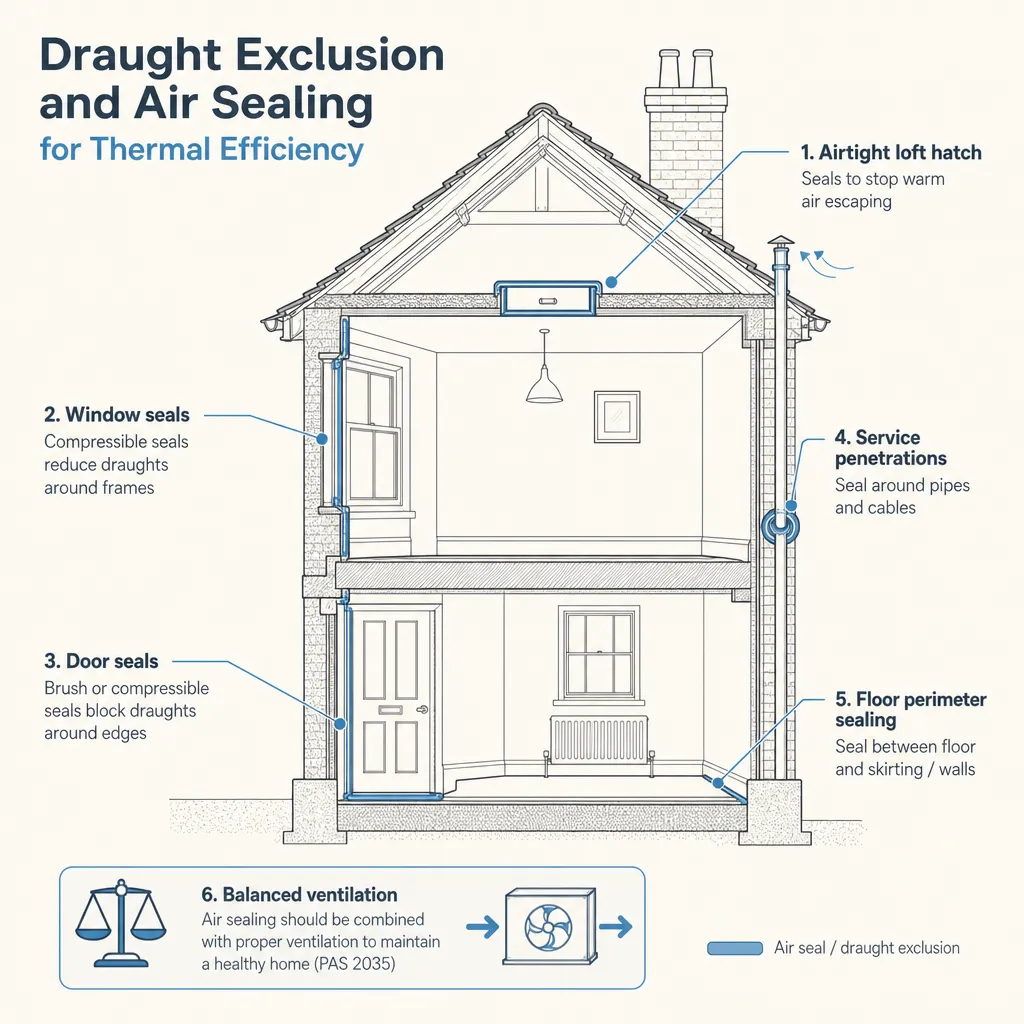
Draught Exclusion and Air Sealing for Thermal Efficiency
Draught proofing and air sealing can cut uncontrolled heat loss by 15–25% in a typical UK home, but sealing a building too tightly without reviewing ventilation risks condensation, mould, and poor air quality.
 Energy & Retrofit
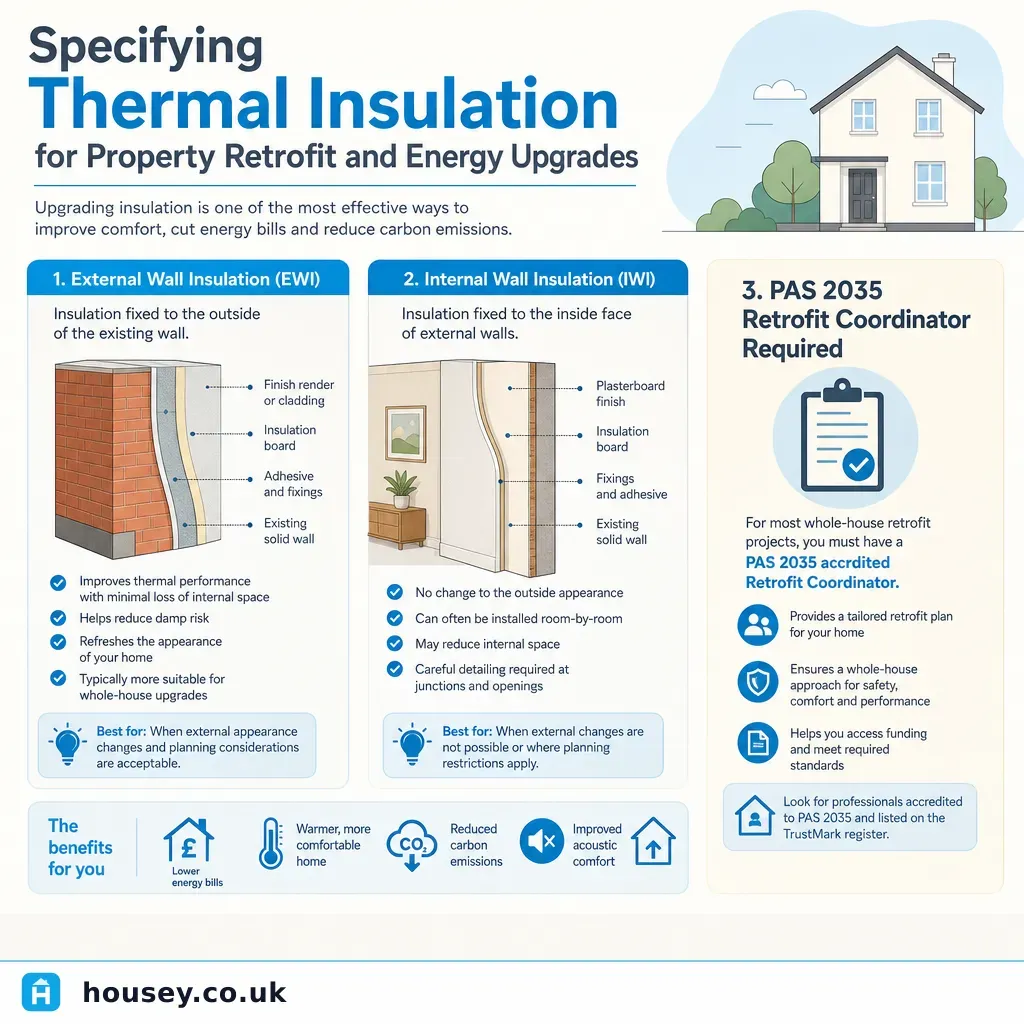
Specifying Thermal Insulation for Property Retrofit and Energy Upgrades
Specifying thermal insulation for UK retrofit requires matching the product to your property's construction, moisture conditions, and heating system.
 Energy & Retrofit
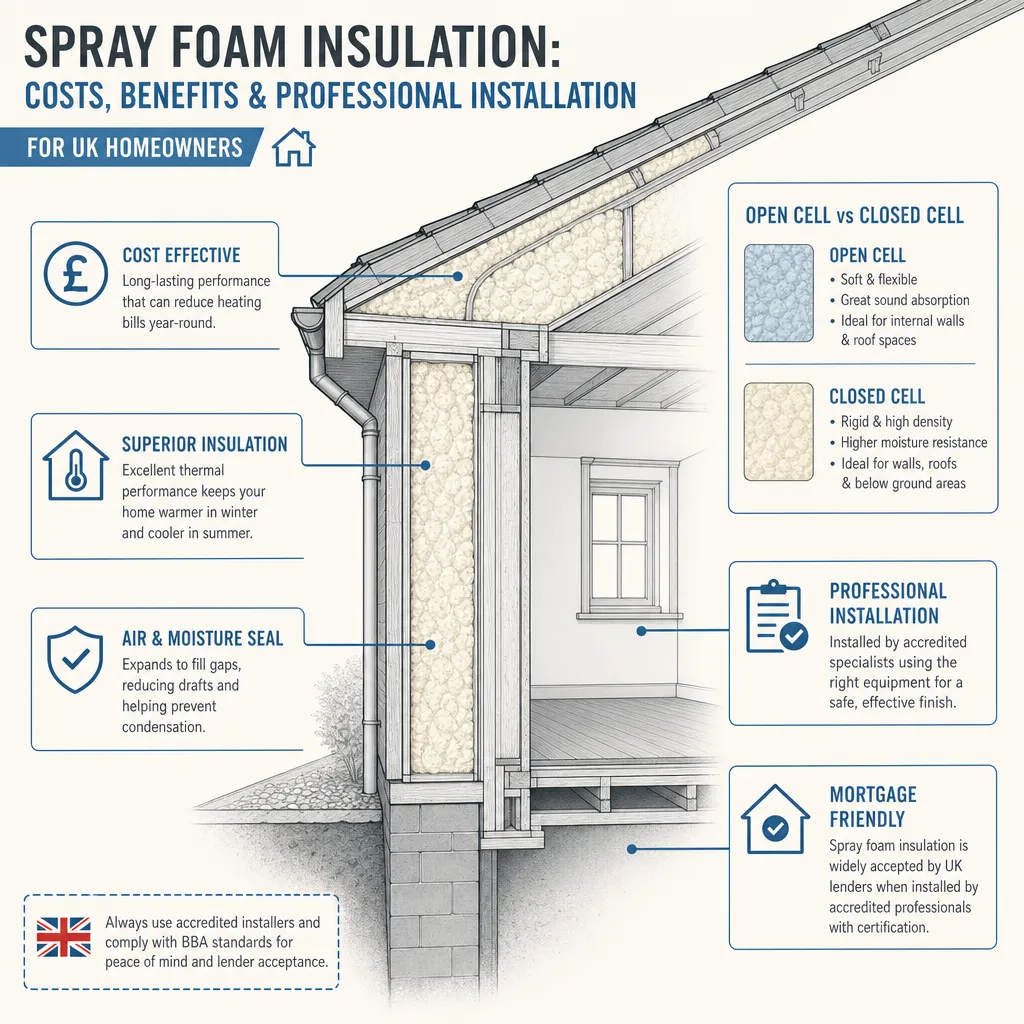
Spray foam insulation: costs, benefits and professional installation
Spray foam insulation costs between £15 and £60 per square metre installed in the UK, depending on whether open-cell or closed-cell foam is used.
 Energy & Retrofit
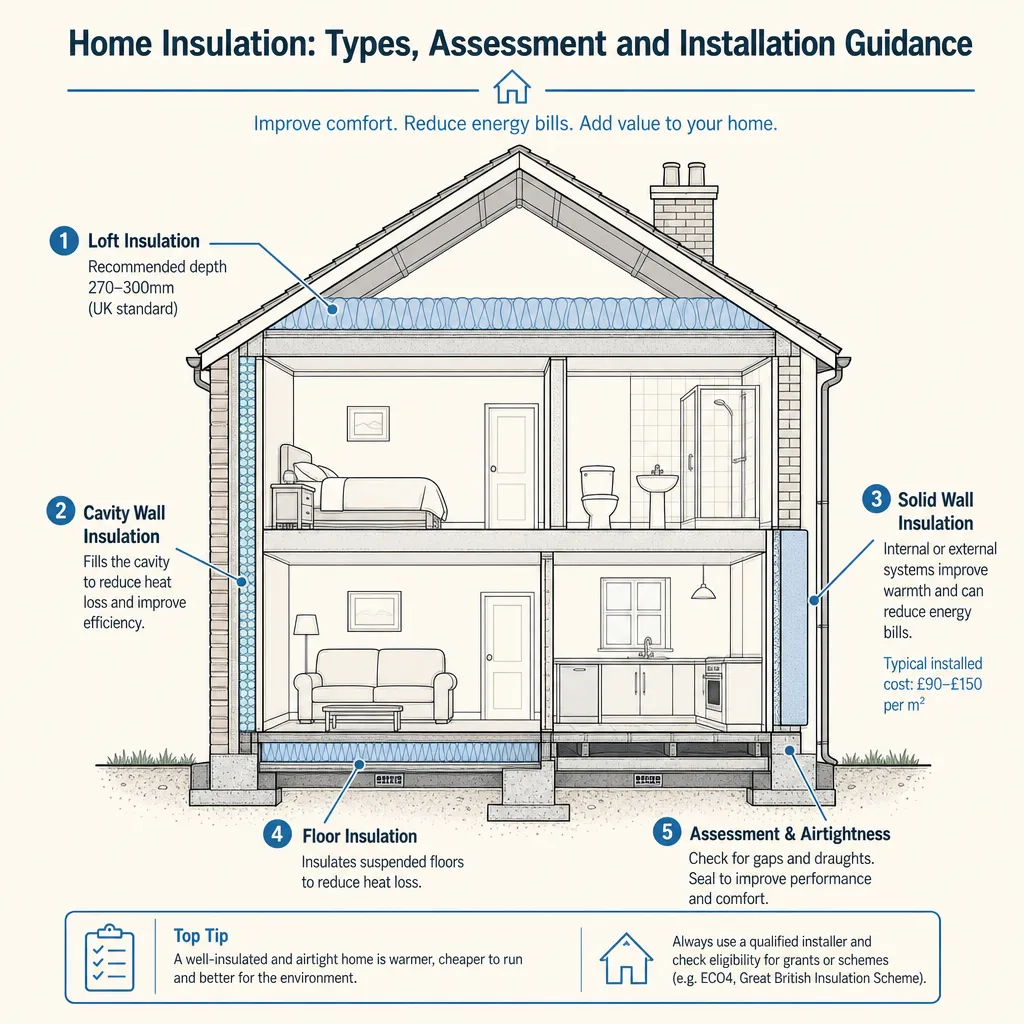
Home Insulation: Types, Assessment and Installation Guidance
Home insulation reduces heat loss through walls, roofs, and floors.
 Energy & Retrofit
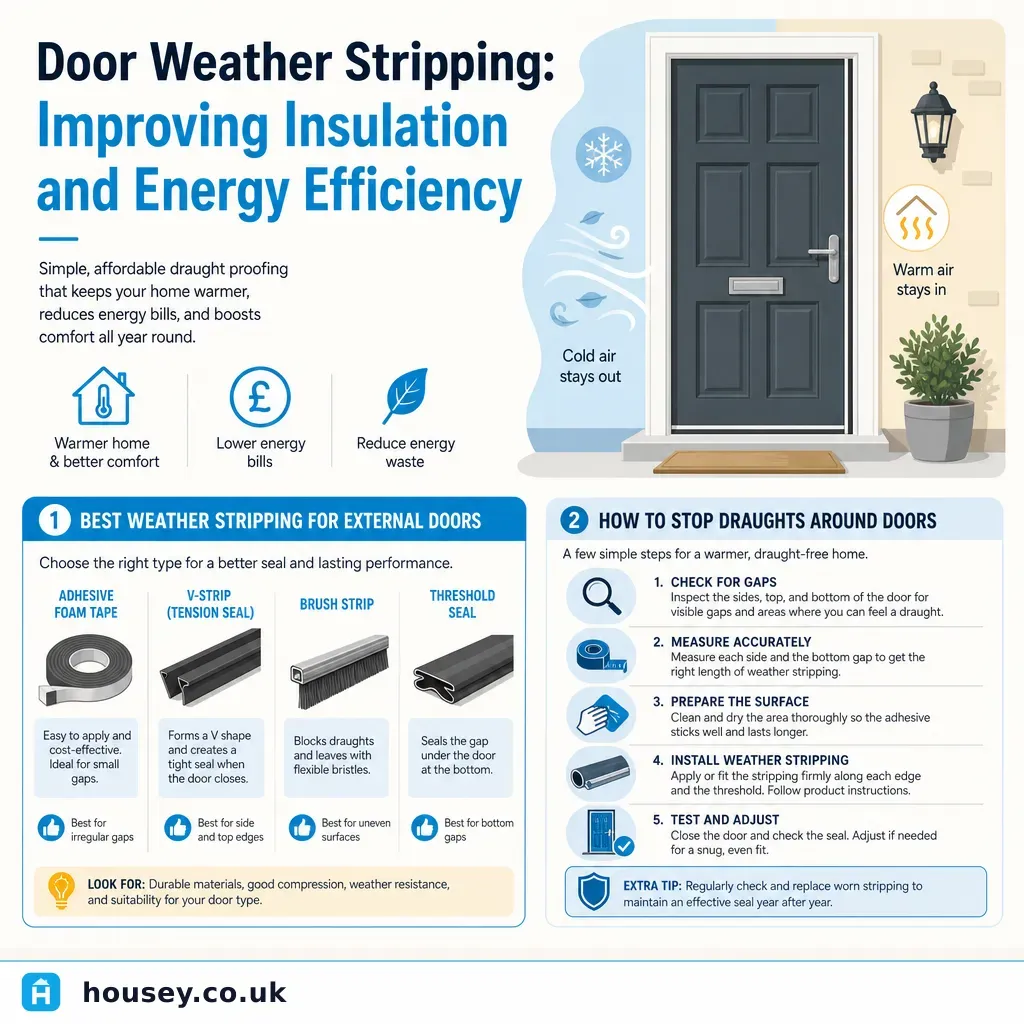
Door Weather Stripping: Improving Insulation and Energy Efficiency
Draught-proofing external doors with well-fitted weather stripping — compression strips at the sides, a threshold seal at the base, and a double-brush letter plate — reduces heat loss and can save around £45 per year in a typical UK semi-detached home, according to the Energy Saving Trust.