Driveway Aesthetic Issues: Managing Colour Variation and Surface Consistency
By Housey · Last reviewed 24th of May 2026
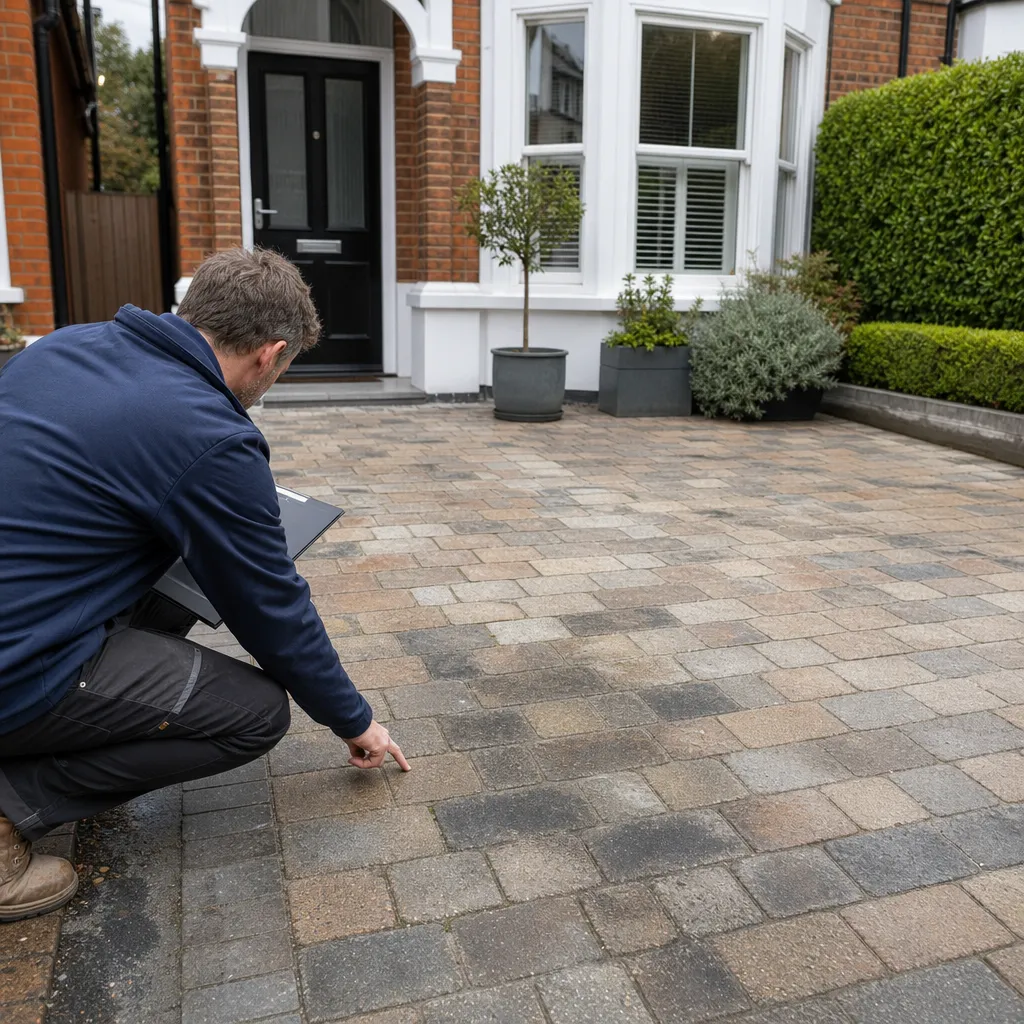
Driveway Aesthetic Issues: Managing Colour Variation and Surface Consistency
Colour inconsistency and uneven surface texture are among the most common complaints homeowners raise after a new driveway is laid — or after several years of weathering on an existing one. Whether you have block paving, resin bound, imprinted concrete, or plain poured concrete, each material behaves differently when exposed to the UK climate, foot traffic, and vehicle loads. Understanding the cause of the problem is what determines whether the fix is a straightforward maintenance task or a more involved remedial treatment.
Key points
- Efflorescence — a white powdery deposit caused by calcium hydroxide migrating to the surface — is a normal reaction in new concrete driveways and typically weathers away within 12–24 months without intervention.
- Block paving from different manufacturing batches often has slight colour differences; always order a 10% surplus from the same batch at installation to allow for future repair matching.
- Resin-bound driveways installed with UV-unstable binders will yellow and fade over time; check that your installer uses UV-stable resin and is registered with TrustMark or an equivalent quality scheme.
- Imprinted (pattern) concrete relies on a UV-stable sealer for colour retention; the sealer typically needs reapplication every 3–5 years.
- Algae, lichen, and moss are a primary cause of patchy green or black staining on block and concrete driveways in shaded UK gardens and should be treated with an appropriate biocidal wash before any cosmetic remediation.
Why driveway surfaces change colour over time
New driveways rarely look exactly the same six months after installation as they did on day one — and this is mostly normal. Concrete cures gradually, releasing calcium hydroxide to the surface in a process called efflorescence, which produces a white, chalky bloom that often alarms homeowners. On most driveways, rain and traffic naturally abrade this layer within one to two years.
Block paving undergoes a similar settling process. Kiln-dried jointing sand redistributes, and the surface texture softens slightly. Colour variation between individual blocks often reflects differences in raw materials or kiln firing between production batches — which is why installers should always order more blocks than strictly needed for the job.
Resin-bound and resin-bonded driveways are particularly susceptible to UV-related fading if the resin matrix is not UV-stable. A reputable installer will specify a UV-stable polyurethane binder; ask to see the product data sheet if you are unsure.
Comparing common causes of colour variation by surface type
Surface type | Common cause of colour variation | DIY-manageable? | Likely remediation |
|---|---|---|---|
Plain concrete | Efflorescence, differential curing | Usually yes — wait and clean | Time or citric-acid wash |
Imprinted concrete | Sealer fade, UV degradation | Partial — resealing is DIY-possible | Professional re-colour and reseal |
Block paving | Batch differences, staining, algae | Partial — cleaning is DIY-able | Replace mismatched blocks; clean and re-seal |
Resin bound | UV yellowing, aggregate shift | No | Professional strip and relay |
Asphalt (tarmac) | Oxidation fading, patching differences | Partial | Professional reinstatement |
Gravel | Contamination, weed ingress | Yes | Rake, top-dress, install membrane |
Surface consistency issues: what causes them
Beyond colour, surface texture problems — pitting, delamination, crazing, or rough aggregate exposure — each point to different underlying causes.
Pitting and scaling in concrete often result from freeze-thaw damage. Water trapped in surface pores expands on freezing, spalling the surface layer. This is more common in concrete laid in cold weather, or where a low water-to-cement ratio was not maintained during mixing.
Delamination and flaking on imprinted concrete typically indicate a poor quality or incorrectly applied surface hardener or colour release agent was used during installation.
Crazing — a network of fine surface cracks — is usually a cosmetic issue caused by rapid surface drying during curing, particularly common when concrete is laid on hot or windy days without adequate wet curing. It is generally not a structural concern but can allow water ingress if left unsealed.
Exposed aggregate on a resin-bound surface suggests the resin has broken down, either through UV exposure, contamination during laying, or under-specification of the binder-to-aggregate ratio.
Homeowner checklist: diagnosing your driveway appearance problem
Use this checklist before calling a contractor to help describe the issue accurately and narrow down likely causes.
Cleaning and maintenance options
Before pursuing any remedial treatment, a thorough clean often resolves or significantly reduces apparent colour inconsistency.
Pressure washing removes surface algae, moss, dirt, and loose deposits. For block paving, use a patio or block paving nozzle and avoid dislodging kiln-dried jointing sand. Re-sand after washing if necessary.
Biocidal wash should be applied before pressure washing where biological growth is present. Allow adequate dwell time as per the manufacturer's instructions. Note that some biocides require careful disposal under the Biocidal Products Regulation — check the label before use.
Efflorescence removers for concrete are typically mild acid-based solutions (citric or phosphoric acid). Always neutralise thoroughly and rinse after application.
Re-sealing imprinted concrete restores colour depth and surface gloss. The surface must be clean and fully dry before application. Use a product compatible with the original sealer — solvent-based or water-based — as incompatible sealers can cloud or peel.
When to get professional help
Some colour variation and surface consistency problems cannot be resolved by cleaning alone. Contact an experienced driveway contractor if:
- The surface is delaminating, flaking, or has deep structural crazing.
- A resin-bound driveway shows aggregate loss across a significant area.
- Imprinted concrete has developed deep colour fade or blotchy patches that resealing fails to resolve.
- Block paving sections are sinking, rocking, or showing differential settlement.
- You need to match new blocks or concrete to existing material after a repair.
- The driveway is less than two years old and the installer is disputing the cause of the problem.
In these cases, seek at least two independent assessments before committing to any remedial spend.
How Housey can help
If you need a professional assessment of your driveway's condition or want quotes for remedial work, Housey can connect you with vetted driveway installers in your area who can advise on the most cost-effective route — whether that is cleaning, resealing, partial re-laying, or full replacement.
Frequently asked questions
Why has my new concrete driveway turned white?
White powdery deposits on new concrete are almost always efflorescence — calcium hydroxide migrating to the surface as the concrete cures. It is not a defect and typically weathers away within one to two years with normal rainfall and traffic. A mild citric-acid wash can speed up removal if the appearance is a concern, but no structural treatment is needed.
Can I paint my block paving driveway to hide colour differences?
Driveway paint or coatings applied over block paving are generally not recommended. Paints trap moisture, can peel as the surface flexes under vehicle loads, and make future replacement or repair harder. A better approach is to replace mismatched blocks with correctly matched stock and apply a dedicated block paving sealer if desired.
How often should I reseal an imprinted concrete driveway?
Most manufacturers and installers recommend resealing imprinted concrete every two to five years, depending on traffic, sun exposure, and the original sealer quality. Signs the sealer needs refreshing include a dull or patchy appearance, loss of water-repellency, and colour looking faded compared to shaded areas of the same driveway.
Does algae damage a concrete or block driveway?
Algae itself causes minimal direct damage but makes surfaces slippery and can mask underlying issues. Left untreated, lichen can slowly etch into softer stone-based products. Clean with an appropriate biocidal wash and pressure rinse. Improving drainage and trimming overhanging vegetation reduces recurrence on both concrete and block paving driveways.
My resin driveway has yellowed — is this fixable?
Yellowing in a resin-bound surface is caused by UV-unstable resin degradation. Cleaning cannot reverse it. In most cases, the affected area needs to be mechanically removed and re-laid using a UV-stable resin system. Ask any contractor for the product data sheet confirming UV stability before proceeding with the work.
Sources and further reading
- Biocides and the Biocidal Products Regulation — Health and Safety Executive (HSE)
- Find a TrustMark registered contractor — TrustMark (Government Endorsed Quality Scheme)
- The Concrete Society: Technical guidance and resources — The Concrete Society
Useful next reads
 Improvement & Build
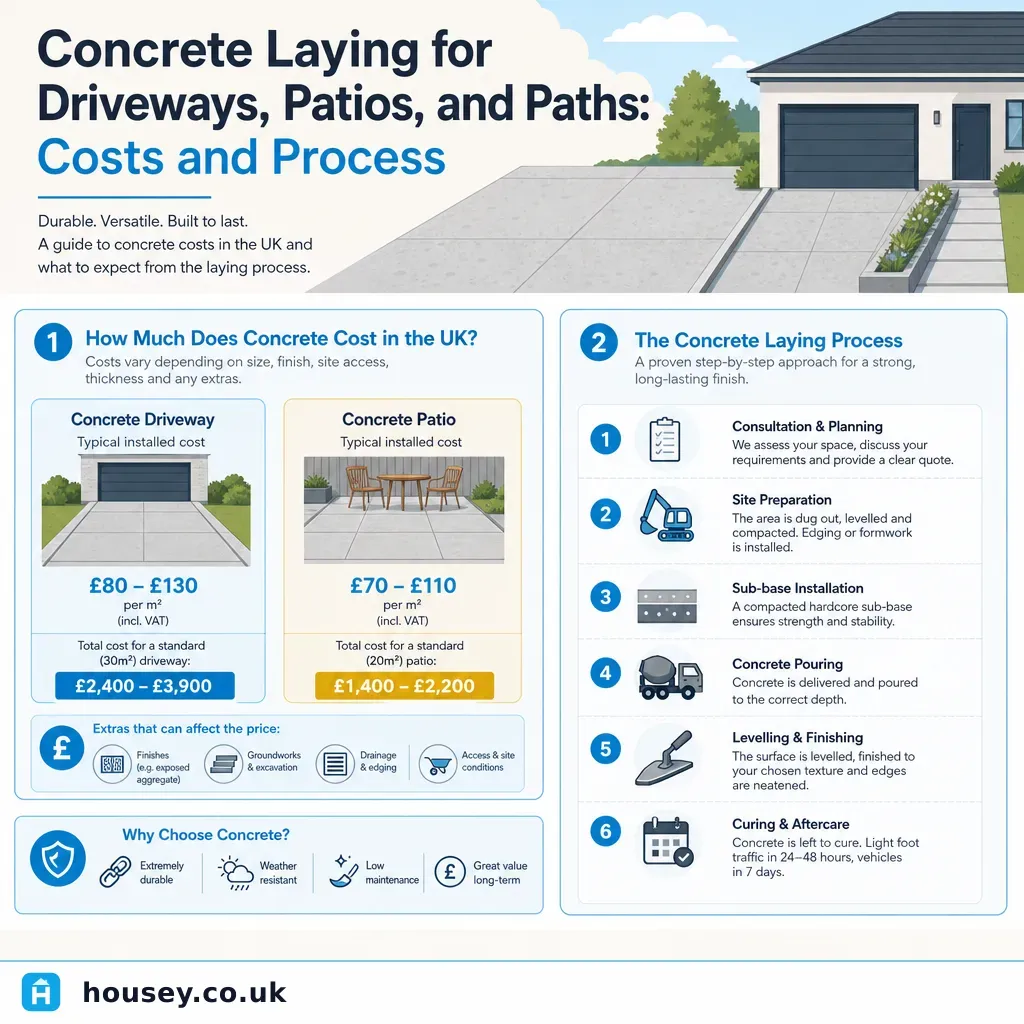
Concrete Laying for Driveways, Patios, and Paths: Costs and Process
Concrete laying for a UK driveway typically costs £65–£110 per square metre, including sub-base, reinforcement, formwork, and finishing.
 Improvement & Build
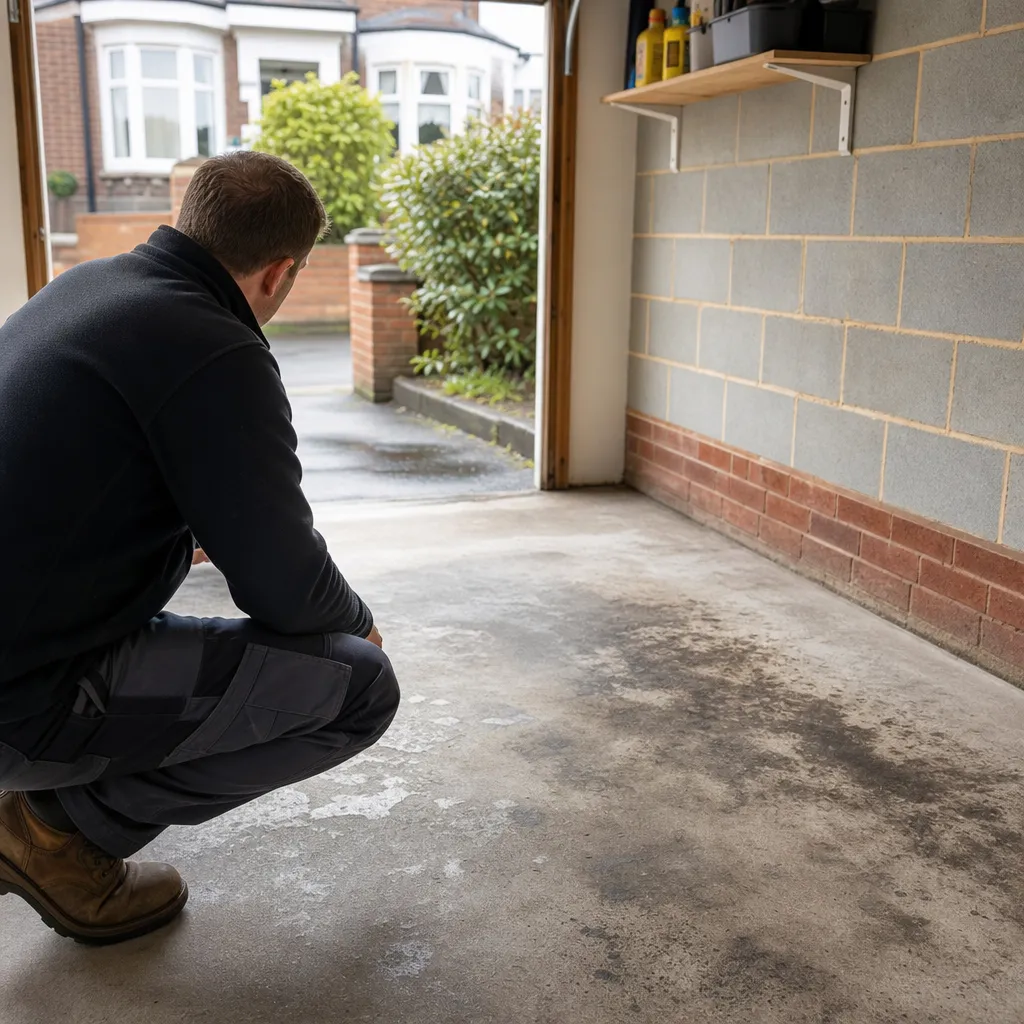
Understanding Concrete Garage Floor Discolouration: Causes and Solutions
Concrete garage floor discolouration in UK homes is most commonly caused by oil or fluid leaks, efflorescence (white mineral deposits from moisture), tyre rubber plasticiser transfer, algae or mould growth, or uneven curing during the original pour.
 Improvement & Build
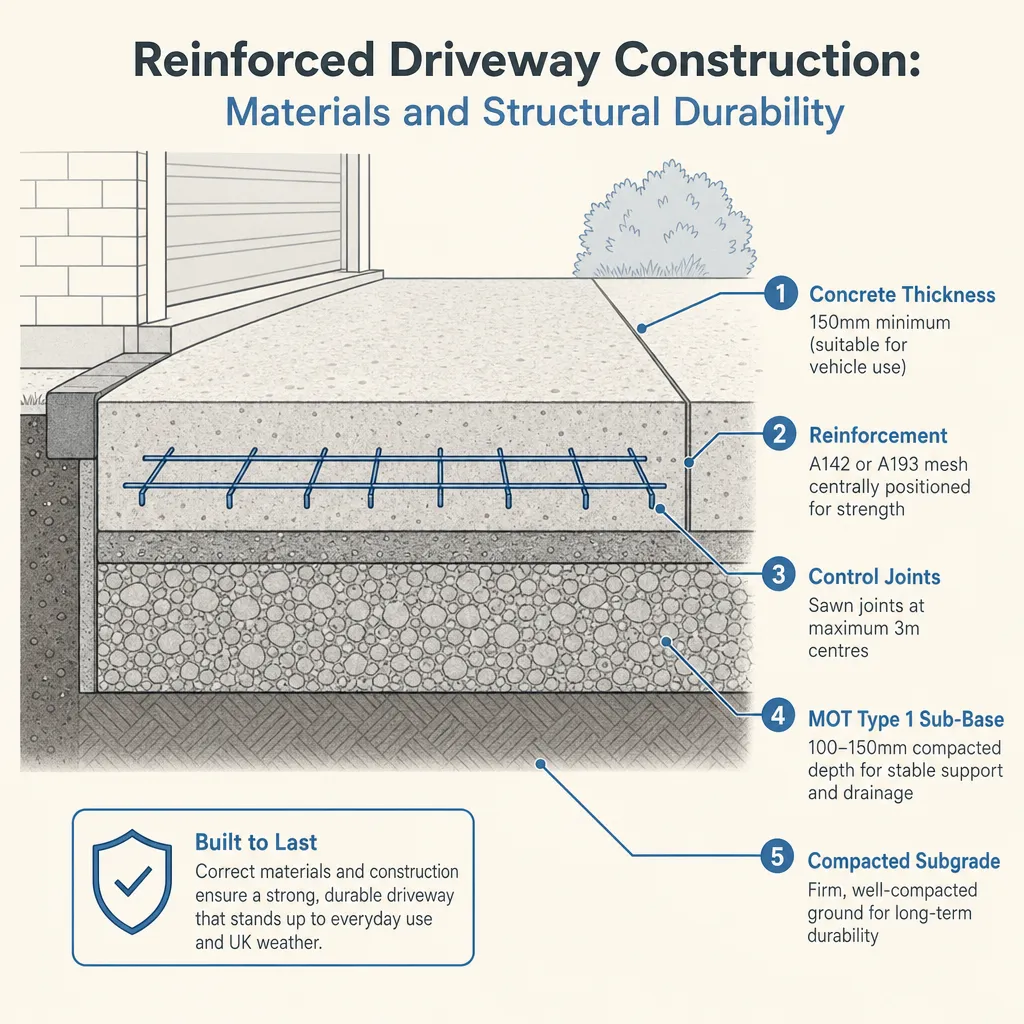
Reinforced Driveway Construction: Materials and Structural Durability
A domestic concrete driveway should be at least 100 mm thick — 150 mm where vans or heavier vehicles use it — on a compacted 100–150 mm MOT Type 1 sub-base, with A142 or A193 steel fabric mesh placed at mid-depth and expansion joints every 3–4 m.
 Improvement & Build
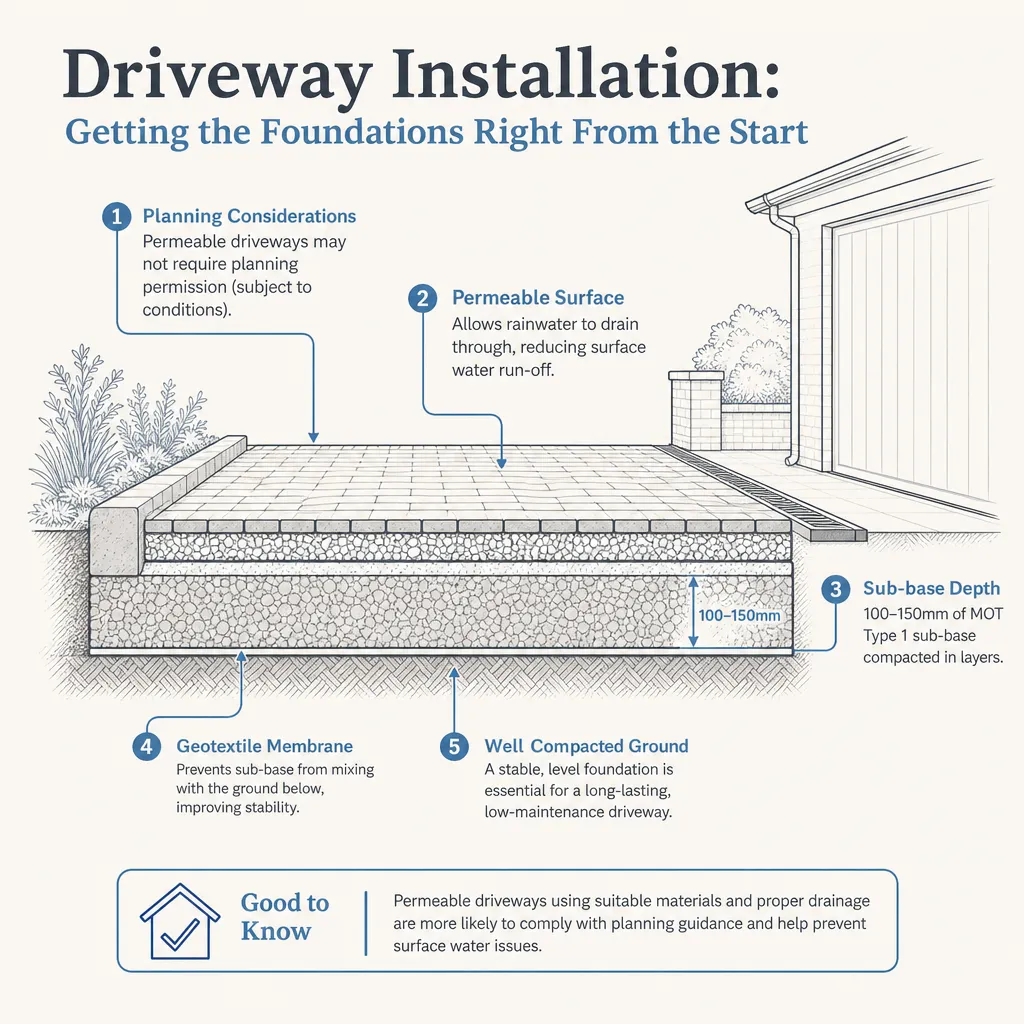
Driveway Installation: Getting the Foundations Right From the Start
A long-lasting driveway depends more on sub-base depth and drainage design than on the surface material chosen.
 Improvement & Build
Winter Damage to Driveways: Repair and Prevention Strategies
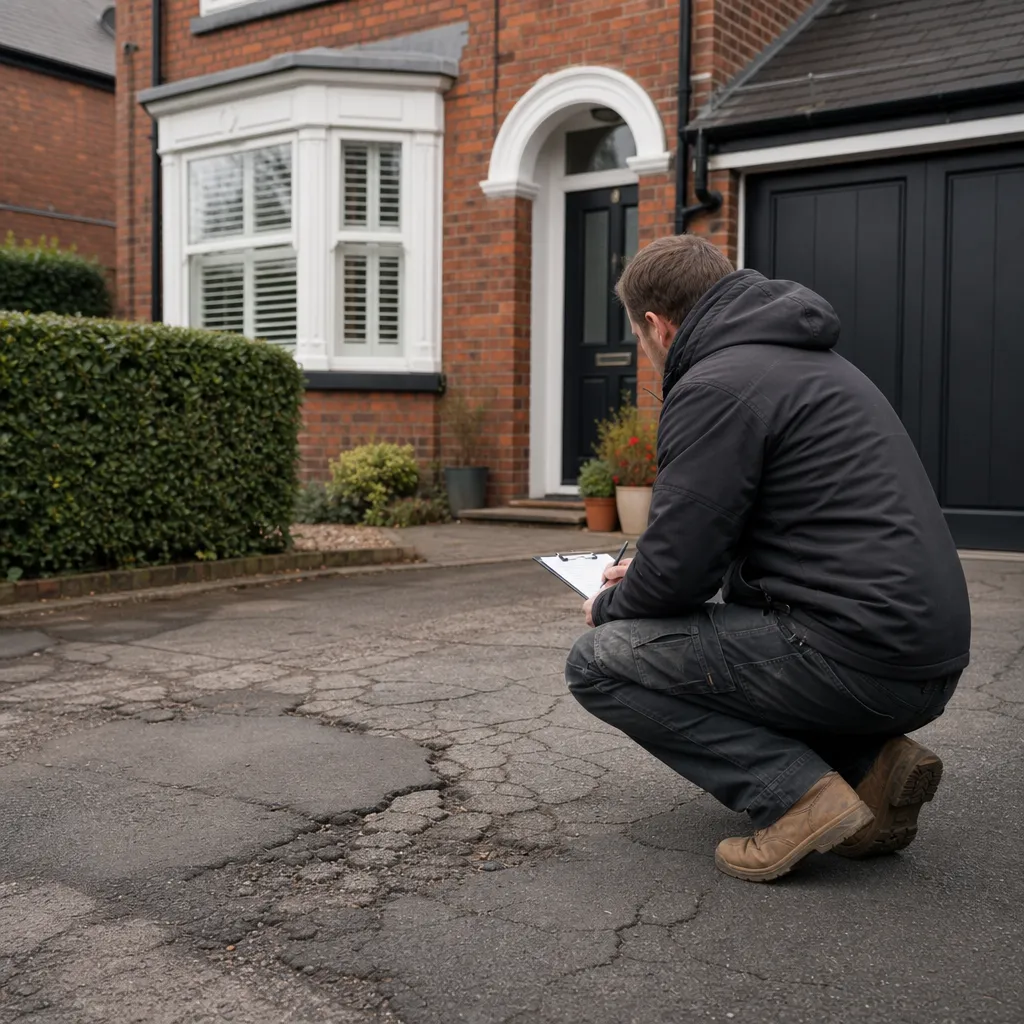
Winter freeze-thaw cycles are the leading cause of UK driveway damage, cracking concrete, lifting block paving, and forming potholes in tarmac.