Winter Damage to Driveways: Repair and Prevention Strategies
By Housey · Last reviewed 24th of May 2026
Winter Damage to Driveways: Repair and Prevention Strategies
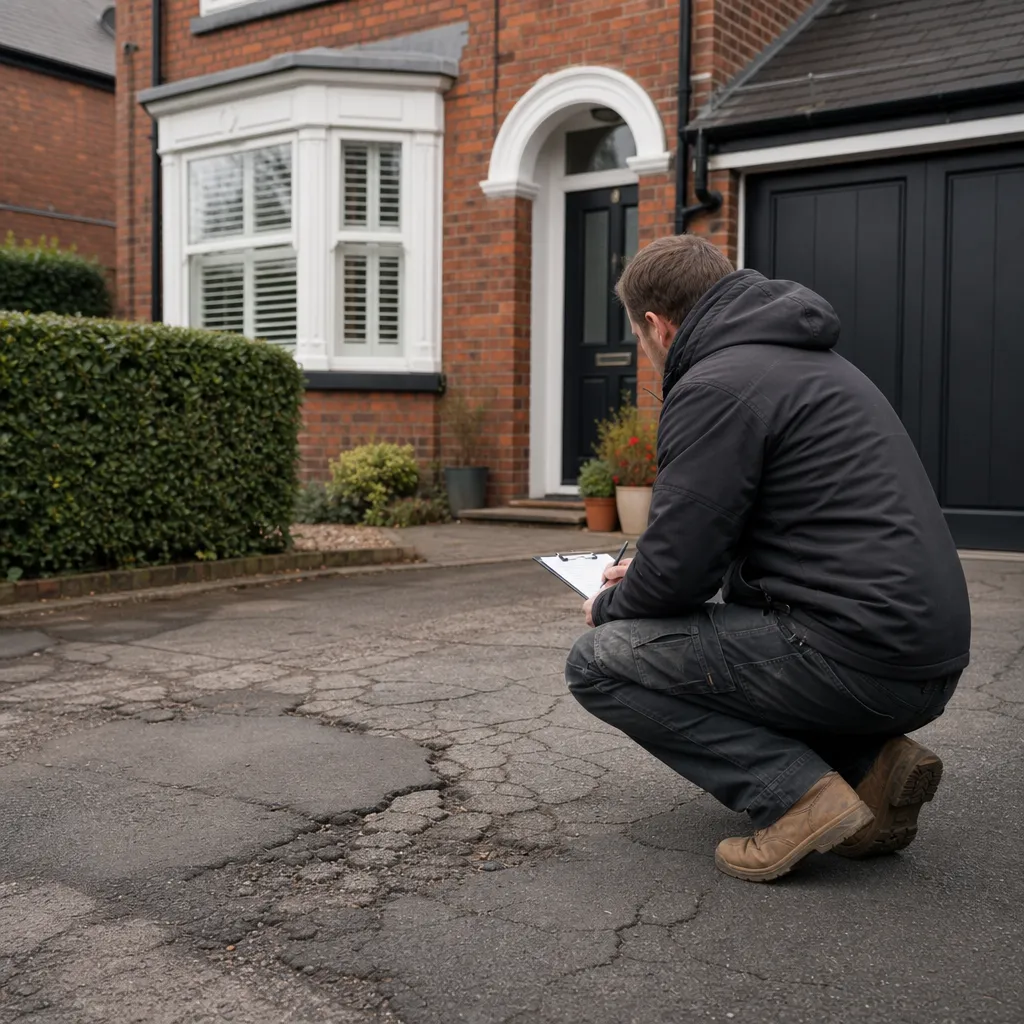
Each winter, freeze-thaw cycling puts UK driveways under repeated stress — water infiltrates surface pores and existing cracks, expands as it freezes, and forces materials apart. The pattern of damage depends on driveway material, sub-base condition, soil type, and drainage quality, which means repair decisions are rarely one-size-fits-all. Getting the diagnosis right before spending money on materials or a contractor is the single most important step a homeowner can take.
Key points
- Water expands by approximately 9% when it freezes, making water trapped in surface cracks the primary driver of winter driveway deterioration.
- Frost heave — upward displacement of the surface caused by ice formation in the sub-base or surrounding soil — is more pronounced in clay and silty soils and requires sub-base remediation, not surface patching alone.
- Sodium chloride de-icing salt accelerates concrete spalling and should not be applied to concrete driveways; sand, grit, or calcium magnesium acetate products are safer alternatives.
- In England, replacing a front driveway with an impermeable material covering more than 5 m² requires either planning permission or a drainage solution such as a permeable border or soakaway — check with your local planning authority before replacement works begin.
- Penetrating surface sealants applied in early autumn reduce water ingress; most products require reapplication every 3–5 years depending on traffic levels and product specification.
How freeze-thaw cycles damage driveways
The freeze-thaw mechanism is cumulative rather than catastrophic. Rainwater and snowmelt infiltrate hairline cracks and the surface pores of concrete, tarmac, or block paving joints. When temperatures drop below 0°C, that water freezes and expands, widening existing cracks and loosening aggregate from the surface matrix. A single hard frost does limited damage; a winter with repeated cycles from above to below zero — common across much of England, Wales, and Scotland — causes the most deterioration.
Three damage mechanisms are most common across UK driveways:
Surface spalling: The outer layer of concrete or tarmac breaks away, exposing aggregate beneath. Most often caused by the combined effect of freeze-thaw stress and de-icing salt use on concrete surfaces.
Crack propagation: Small shrinkage or settlement cracks that would otherwise remain stable are progressively widened and deepened by ice wedging. Left unaddressed before winter, hairline cracks frequently become structural fractures by spring.
Frost heave: Sub-base soil — particularly clay or silt — absorbs water, which freezes and expands, pushing the surface layer upward unevenly. The result is raised or displaced sections and cracking that follows ground movement rather than surface stress.
Matching damage symptoms to repair approach
The right repair depends on identifying the underlying cause. Surface patching applied over a failed sub-base will typically fail within one or two winters. Use this table to match what you see to likely cause and the appropriate response:
Symptom | Likely cause | Recommended action |
|---|---|---|
Hairline cracks (< 3 mm wide) | Surface freeze-thaw stress | Polyurethane or epoxy crack filler, then reseal |
Wide cracks (> 5 mm), irregular pattern | Sub-base movement or frost heave | Investigate sub-base; section-replace if heave confirmed |
Flaking or pitting surface (concrete) | Salt-accelerated spalling | Resurfacing compound on small areas; replacement for large areas |
Sunken or rocking block paving | Sub-base washout or compaction failure | Lift blocks, re-bed on compacted MOT Type 1, relay and repoint |
Raised or bowed section | Frost heave in sub-base | Excavate to sub-base, recompact, relay surface |
Potholes in tarmac | Surface delamination from water ingress | Cold-pour patch (short-term) or hot-mix repair (durable) |
Cracking near drain or gully | Possible drain movement or collapse | Commission CCTV drain survey before committing to surface repair |
Repair options by driveway material
Concrete driveways
Minor cracks (up to around 3 mm wide) can be cleaned out, widened slightly with an angle grinder to improve filler adhesion, and filled with a flexible polyurethane or epoxy filler rated for external use. After filling, apply a penetrating concrete sealer to limit future water ingress.
Spalling or surface scaling across larger areas is best addressed with a concrete resurfacer compound applied to the cleaned surface. Where scaling covers more than a third of a slab panel, full replacement of that section is usually more cost-effective than repeated applications of resurfacer.
Frost heave on concrete requires excavating the affected section, correcting sub-base drainage and compaction, then relaying and finishing. Surface-only repairs will fail repeatedly if the sub-base remains unstable.
Tarmac (asphalt) driveways
Cold-pour tarmac repair compounds provide a reasonable short-term fix for potholes and surface cracks. For a durable repair, a professional using hot-mix asphalt achieves better compaction and bonding to the existing surface.
Where delamination or heave affects more than roughly 20–30% of the driveway, a full resurfacing overlay or replacement is usually more economical than piecemeal patching. Ask any contractor whether the sub-base will be inspected and remediated as part of the work.
Block paving
Frost damage to block paving most commonly presents as sunken, displaced, or rocking blocks — symptoms that usually indicate sub-base washout or compaction failure rather than block failure itself. The repair involves lifting the affected blocks, inspecting the bedding sand and MOT Type 1 sub-base beneath, recompacting, re-laying with fresh sharp sand bedding (typically 50 mm), and finishing with kiln-dried sand joints.
Individually cracked or broken blocks should be replaced like-for-like. Colour matching is easier if spare blocks were retained from the original installation.
Prevention: reducing winter damage before it starts
Autumn sealing
A penetrating or film-forming sealant applied in September or October reduces the amount of water the surface can absorb, directly limiting the freeze-thaw damage mechanism at source. Use a product compatible with your surface material — concrete, tarmac, or natural stone. Most sealants require application above 5°C onto a dry surface. Reapply every 3–5 years or when water no longer beads on the surface.
Maintaining drainage
Standing water on or beside a driveway accelerates sub-base saturation. Check that cross-falls (minimum 1 in 60) direct water toward a drainage channel or permeable border. Clear drainage channels and gullies of leaf debris each autumn. Where water pools near the house, investigate whether downpipes are discharging directly onto the driveway surface.
Avoiding de-icing salt on concrete
Sodium chloride draws moisture into the concrete matrix and significantly worsens freeze-thaw spalling. Use sand, grit, or specialist products based on calcium magnesium acetate on concrete surfaces. Tarmac and block paving tolerate salt somewhat better, but excess should be swept away after use to protect the sub-base and drainage.
Winter driveway maintenance checklist
Complete this checklist each autumn to reduce the risk of costly spring repairs:
Red flags: when surface repair is not enough
Some conditions indicate that a professional assessment or full replacement is warranted rather than DIY patching:
- Widespread frost heave across more than a third of the surface, suggesting systemic sub-base failure rather than localised movement.
- Alligator cracking across tarmac — an interconnected network resembling scales — indicates base layer failure that resurfacing alone will not resolve.
- Settlement near the house, which could indicate drainage issues affecting shallow foundations; seek a structural or drainage assessment before relaying any surface.
- Collapse or sinking near a drain or gully, which may indicate a failed drain beneath the surface; a CCTV drain survey is advisable before committing to repair costs.
- Repairs failing within one winter, which typically means the underlying cause — poor drainage or sub-base failure — has not been addressed.
When to get professional help
Minor crack filling and joint repointing are reasonable maintenance tasks for a competent homeowner. Seek professional help when frost heave has displaced sections by more than 20–30 mm, when cracks suggest sub-base movement rather than surface stress, when settlement is occurring near the house or a drain, when a large tarmac area requires hot-mix repair, or when planning a full replacement that involves drainage compliance.
How Housey can help
If winter has left your driveway needing more than a straightforward patch, Housey can connect you with vetted driveway installers who cover your postcode. Whether the job is a targeted tarmac repair, block paving reinstatement, or a full replacement with improved drainage, comparing at least two or three itemised quotes helps you understand scope, specification, and price before you commit.
Frequently asked questions
Can I repair a frost-damaged concrete driveway myself?
Minor surface cracks up to around 3 mm wide can be filled with polyurethane or epoxy filler and sealed by a confident DIYer. Wider cracks, large-scale spalling, or any section showing heave suggesting sub-base movement are best assessed by a professional — DIY surface repairs on a failing sub-base typically fail within a season or two.
Does home insurance cover winter driveway damage?
Standard UK buildings insurance policies generally exclude gradual deterioration, including freeze-thaw damage. Sudden damage from a specific event — such as a burst pipe washing out the sub-base — may be covered. Check your policy wording carefully and contact your insurer before starting repairs, as prior notification is sometimes required.
How long do driveway crack repairs last?
Surface crack fillers typically last 3–7 years if applied correctly and the underlying sub-base is sound. Hot-mix tarmac patches can last 10 or more years. Block paving re-bedded on a properly compacted sub-base should last as long as the original installation. Repairs fail prematurely when the root cause — poor drainage or sub-base failure — has not been addressed.
Is de-icing salt safe to use on driveways?
Sodium chloride de-icing salt accelerates spalling on concrete driveways by drawing moisture in and worsening freeze-thaw cycles. It is safer on tarmac and block paving, though excess salt should be swept away to protect drainage. Use sand, grit, or calcium magnesium acetate-based products on concrete surfaces.
Sources and further reading
- Paving your front garden — Planning Portal
- The Concrete Society: concrete repair guidance — The Concrete Society
- Winter road maintenance: salt and grit — GOV.UK
- Sustainable drainage and permeable paving — Energy Saving Trust
Useful next reads
 Improvement & Build
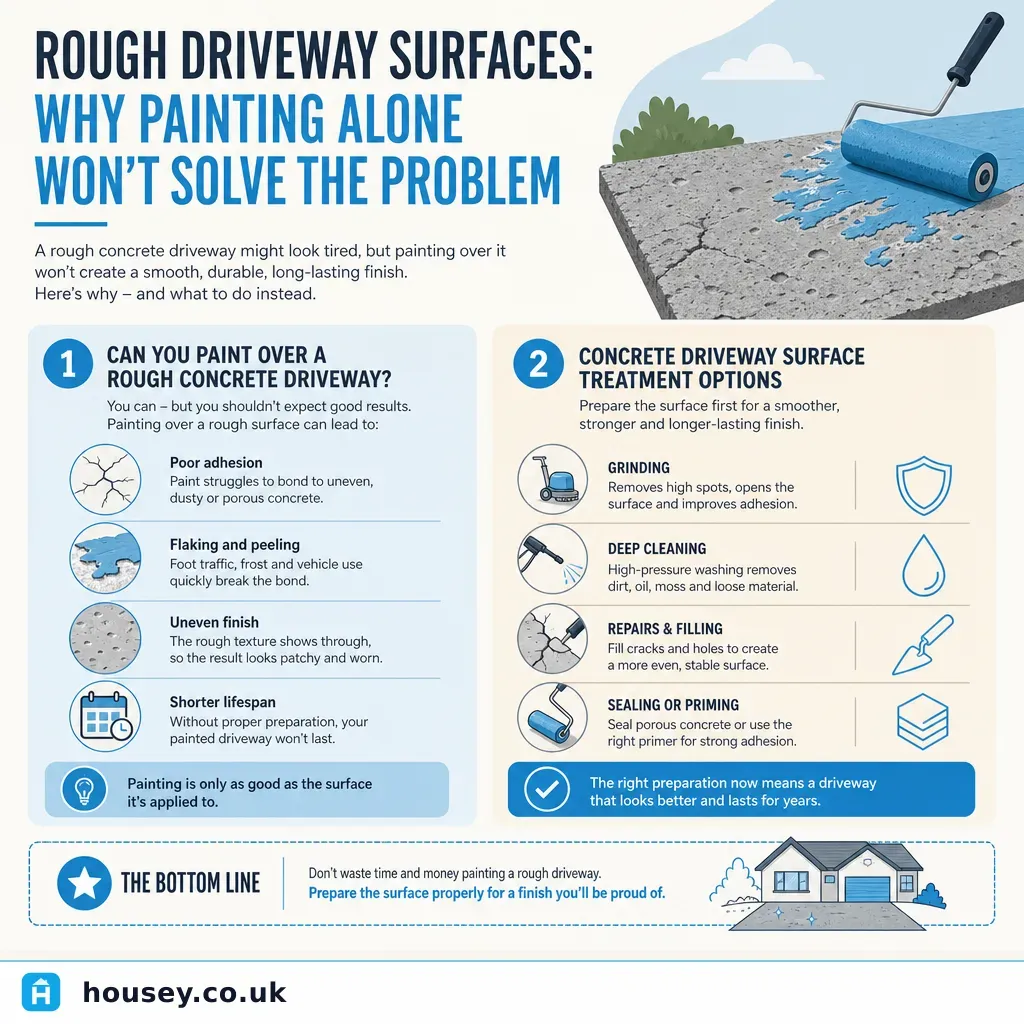
Rough Driveway Surfaces: Why Painting Alone Won't Solve the Problem
Rough driveway surfaces are caused by scaling, aggregate exposure, binder oxidation in tarmac, or sub-base failure — and painting over them won't last.
 Improvement & Build
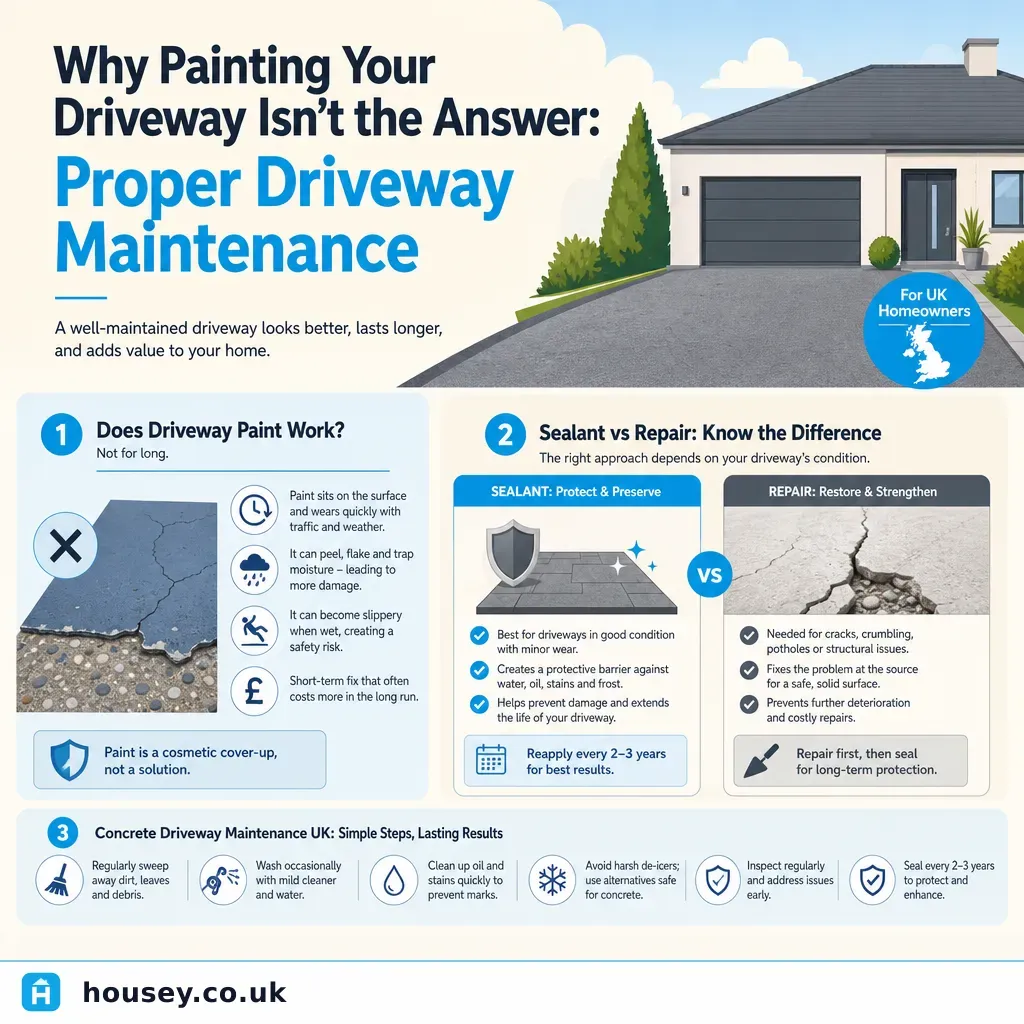
Why Painting Your Driveway Isn't the Answer: Proper Driveway Maintenance
Driveway paint and sealants cannot fix structural cracks, sub-base failure, or freeze-thaw damage — they mask symptoms temporarily.
 Improvement & Build
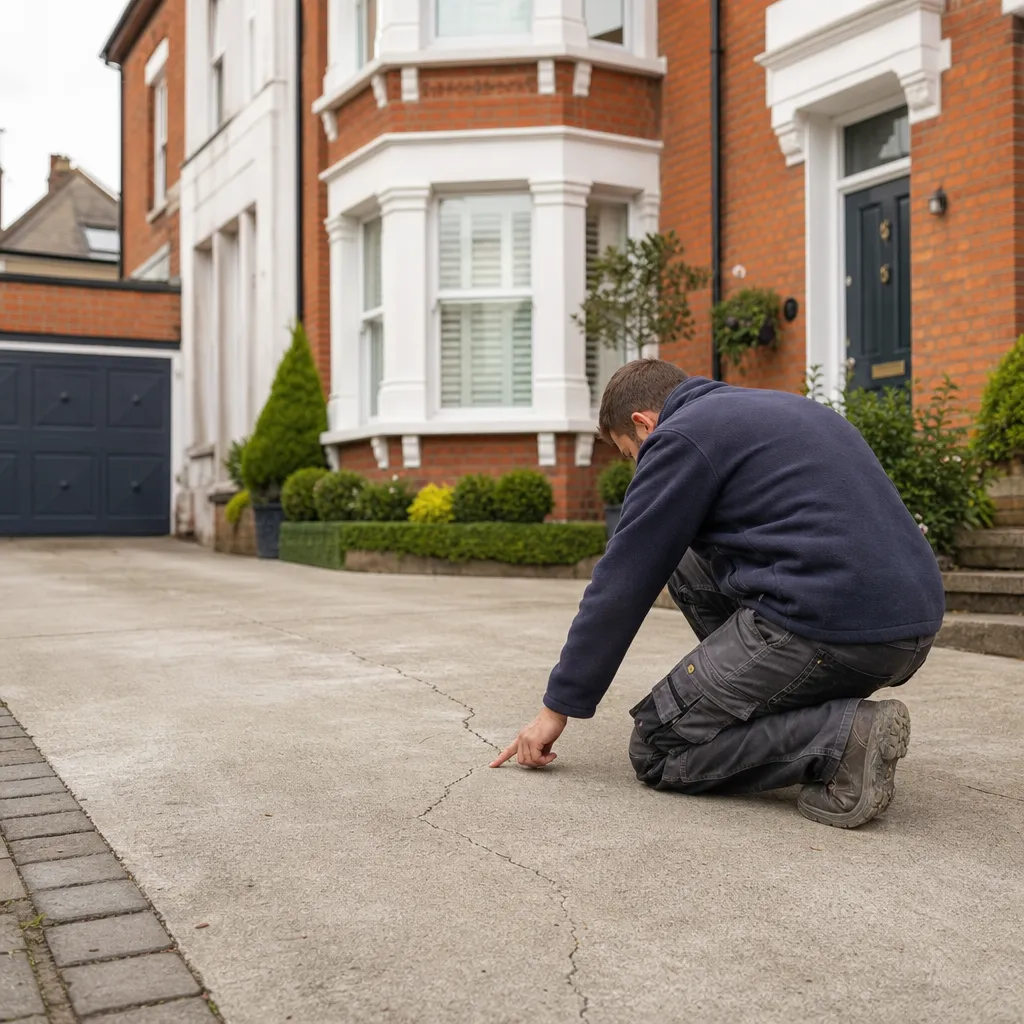
Preventing Deterioration and Cracking in Concrete Driveways and Flatwork
Concrete driveways deteriorate mainly through freeze-thaw cycling, shrinkage cracking, and sub-base failure.
 Improvement & Build
Concrete Laying for Driveways, Patios, and Paths: Costs and Process
Concrete laying for a UK driveway typically costs £65–£110 per square metre, including sub-base, reinforcement, formwork, and finishing.
 Improvement & Build
Understanding Concrete Garage Floor Discolouration: Causes and Solutions
Concrete garage floor discolouration in UK homes is most commonly caused by oil or fluid leaks, efflorescence (white mineral deposits from moisture), tyre rubber plasticiser transfer, algae or mould growth, or uneven curing during the original pour.