Driveway Corner Cracking: Causes and Repair Solutions
By Housey · Last reviewed 25th of May 2026
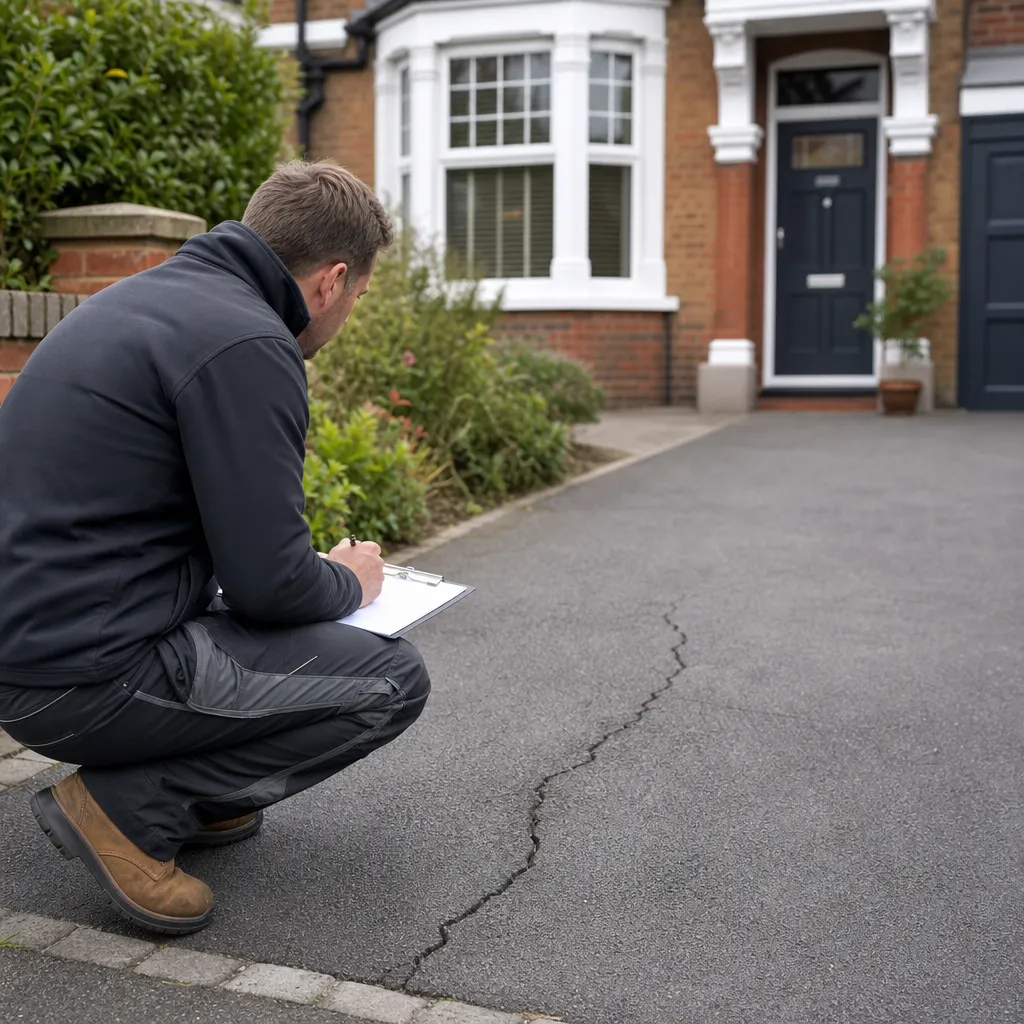
Driveway Corner Cracking: Causes and Repair Solutions
Corner cracking in driveways is one of the most common surface defects UK homeowners notice, typically after the first severe winter or a few years into a new installation. Corners are structurally vulnerable stress points, and cracking that begins at the edges of a driveway slab or block-paved area can progress quickly if left unattended — admitting water, damaging the sub-base, and eventually requiring full section replacement rather than a straightforward repair.
Key points
- Driveway corners crack most often due to inadequate sub-base compaction, insufficient edge restraint, thermal expansion and contraction, and tree root intrusion — each with a different repair approach.
- Concrete driveways should typically be built on a minimum 100 mm slab resting on a compacted 100–150 mm Type 1 MOT sub-base; under-specification is a common cause of premature failure in budget or DIY installations.
- Planning permission is not required for most driveway resurfacing in England, but a new or enlarged driveway fronting a public road requires either a permeable surface or drainage arrangements under Schedule 2, Part 2, Class F of the Town and Country Planning (General Permitted Development) (England) Order 2015.
- Resin-bound surfaces are susceptible to debonding at corners under heavy point loading from tight vehicle turning movements; thermal expansion on south-facing exposures can cause similar delamination.
- Isolated corner cracks on a sound sub-base can often be repaired by removing and relaying the affected section; widespread cracking usually indicates sub-base failure requiring full excavation.
What causes driveway corner cracking?
Corner cracking rarely has a single cause. The most common contributing factors in UK residential driveways:
Inadequate or failing edge restraint: Concrete block paving, resin-bound surfaces, and tarmac all depend on a solid edge restraint — typically a haunched concrete kerb or edging course — to prevent lateral spread at the perimeter. If the haunching is shallow, omitted, or has cracked, corner sections lose confinement and begin to move independently of the main slab.
Sub-base settlement or failure: Corners are loaded heavily during vehicle turning movements. If the Type 1 MOT or recycled aggregate sub-base was poorly compacted — a frequent problem on budget or DIY installations — the surface layer bridges the void until wheel load causes sudden failure at corners and edges.
Thermal movement: Concrete and resin-bound surfaces expand and contract with temperature. In UK conditions, slab surface temperatures can vary from below 0°C in winter to over 50°C on south-facing exposures in summer. Without adequate expansion joints, thermal stresses concentrate at geometric discontinuities such as corners.
Tree root intrusion: Root systems from nearby trees — particularly ash, willow, poplar, and silver birch — can undermine corners and edges of driveways. Even relatively small roots exert significant upward and lateral force as they thicken over time.
Water ingress and frost heave: Water penetrating through surface cracks freezes in winter, expanding the crack by approximately 9% with each freeze-thaw cycle. Each winter progressively enlarges the damage, particularly in clay soils, which also shrink and swell seasonally.
Vehicle overloading: Regular use by heavy vehicles (delivery lorries, skips, crane outriggers) on a driveway designed for domestic car traffic can crack corners and edges through concentrated point loading.
Should you repair or replace? A decision guide
- Repair isolated corner cracking (up to 3–4 slabs or bays affected) if: the sub-base is confirmed sound by probing; cracking is surface-deep and not progressive; the surrounding surface is in good condition.
- Partial relay of affected sections if: corners are cracked across multiple adjacent bays; some sub-base settlement is evident but contained; the rest of the driveway is sound and matching material is available.
- Full replacement if: cracking extends across a significant proportion of the driveway; the sub-base shows widespread failure or contamination; the original specification was inadequate; tree root intrusion is ongoing and unresolved.
- Commission a specific defect survey or structural survey if: cracking is rapid and unexpected on a relatively new installation; it may be a workmanship defect; or cracking is accompanied by movement in adjacent structures such as a garage slab or retaining wall.
Repair methods by surface type
Surface type | Typical corner repair | When it works | When it fails |
|---|---|---|---|
Concrete block paving | Lift blocks, recompact sub-base, relay with matching blocks and haunched edge restraint | Sub-base is sound; isolated failure; matching blocks available | Sub-base contaminated; widespread cracking; original blocks discontinued |
Poured concrete | Cut out affected section, recompact sub-base, pour with bonding agent and expansion joints | Structural integrity of remainder is confirmed | Sub-base failure not resolved; thermal movement not addressed |
Tarmac / asphalt | Cut out and infill with hot or cold-lay asphalt; re-haunch edge | Rapid patch; moderate traffic volumes | Cold-lay patches lose adhesion over time; visible colour mismatch |
Resin-bound aggregate | Remove debonded area, re-prime substrate, re-apply resin layer | Sound concrete or tarmac base; bond failure is surface-level only | Base concrete cracked or moved; primers incompatible with original mix |
Tarmac over concrete | Short-lived unless base is also repaired; thermal mismatch between layers causes recurring failure | Temporary patch only | Any significant thermal or structural movement in the base layer |
Indicative only. Actual repair scope depends on sub-base condition, surface material, and extent of failure.
What to check before instructing a contractor
Homeowner checklist before commissioning driveway corner repairs:
When to get professional help
Most driveway corner cracking can be assessed and repaired by an experienced driveway contractor. Consider professional survey input when:
- The driveway is new or recently installed and cracking appears to be a workmanship defect — a specific defect survey provides an independent report useful for dispute resolution or warranty claims.
- Cracking is accompanied by movement of adjacent structures such as a garage slab, retaining wall, or boundary wall — a structural survey may be needed to rule out sub-soil movement beyond the driveway surface.
- Tree root intrusion is suspected and the tree is protected by a Tree Preservation Order (TPO) or is within a conservation area — removal or pruning without consent is a criminal offence.
- You are planning to sell the property and want an independent assessment of the defect for disclosure purposes.
How Housey can help
For driveway repairs and complete replacements, Housey can connect you with vetted driveway installers experienced with the full range of residential surfaces. If you need an independent assessment of a defect — particularly for a new installation or a dispute — our network includes specific defect survey specialists who can provide formal reports.
Frequently asked questions
Why do driveway corners crack more than the middle?
Corners are stress concentration points. They receive less lateral confinement than central areas (only two edges instead of four), are subject to heavier loading from tight vehicle turning movements, and experience greater thermal cycling on exposed elevations. Any sub-base weakness or insufficient edge restraint is amplified at these points, making corners the most common site of early driveway failure.
Can I repair a cracked driveway corner myself?
Minor block paving corner repairs can be DIY-managed by lifting the affected blocks, recompacting the sub-base with a hand tamper, and relaying. Poured concrete and resin-bound surfaces are harder to repair invisibly without professional equipment, matching materials, and correct primers or mixes. If the sub-base is compromised or cracking is progressive, a professional assessment is advisable before attempting any repair.
Does a cracked driveway need planning permission to repair?
Repair of an existing driveway like-for-like does not generally require planning permission. Installing a new driveway or significantly extending one fronting a public road may require either a permeable surface or surface water drainage arrangements under the Town and Country Planning (General Permitted Development) (England) Order 2015. Consult your local planning authority if you are unsure.
How long should a driveway last before cracking appears?
A well-specified block paving or tarmac driveway should last 20–25 years before significant maintenance is needed. Resin-bound surfaces typically last 15–20 years. Cracking within the first 5 years usually indicates sub-base failure, inadequate edge restraint, or overloading, and may be recoverable under the installer's workmanship guarantee — worth reviewing before commissioning repairs at your own cost.
What does driveway corner repair cost?
Costs vary widely depending on surface material, extent of damage, and whether sub-base reinstatement is needed. Indicative UK costs, last reviewed 2026-05-25: block paving corner repairs from approximately £150–£400 per affected section; tarmac patching from £100–£300; resin-bound section replacement from £200–£600 per square metre. Always obtain at least three quotes and ask for a sub-base assessment to be included.
Sources and further reading
- Permitted development rights for householders: technical guidance — GOV.UK
- Town and Country Planning (General Permitted Development) (England) Order 2015, Schedule 2, Part 2, Class F — legislation.gov.uk
- Interpave: The Precast Concrete Paving and Kerb Association — Interpave
- Resin Bound Paving Association: installation standards — RBPA
- Tree Preservation Orders and trees in conservation areas — GOV.UK
Useful next reads
 Improvement & Build
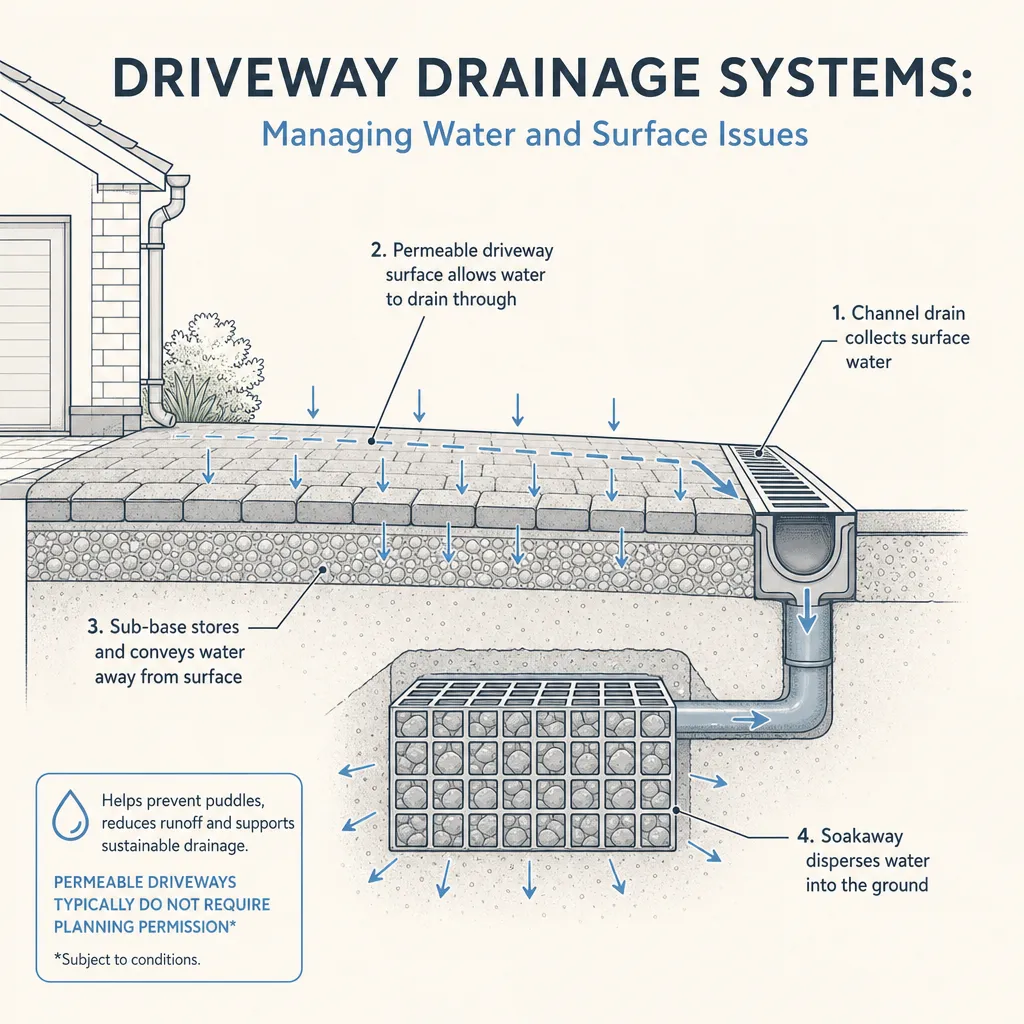
Driveway Drainage Systems: Managing Water and Surface Issues
The right driveway drainage system depends on your surface type, soil permeability, and local flood risk.
 Improvement & Build
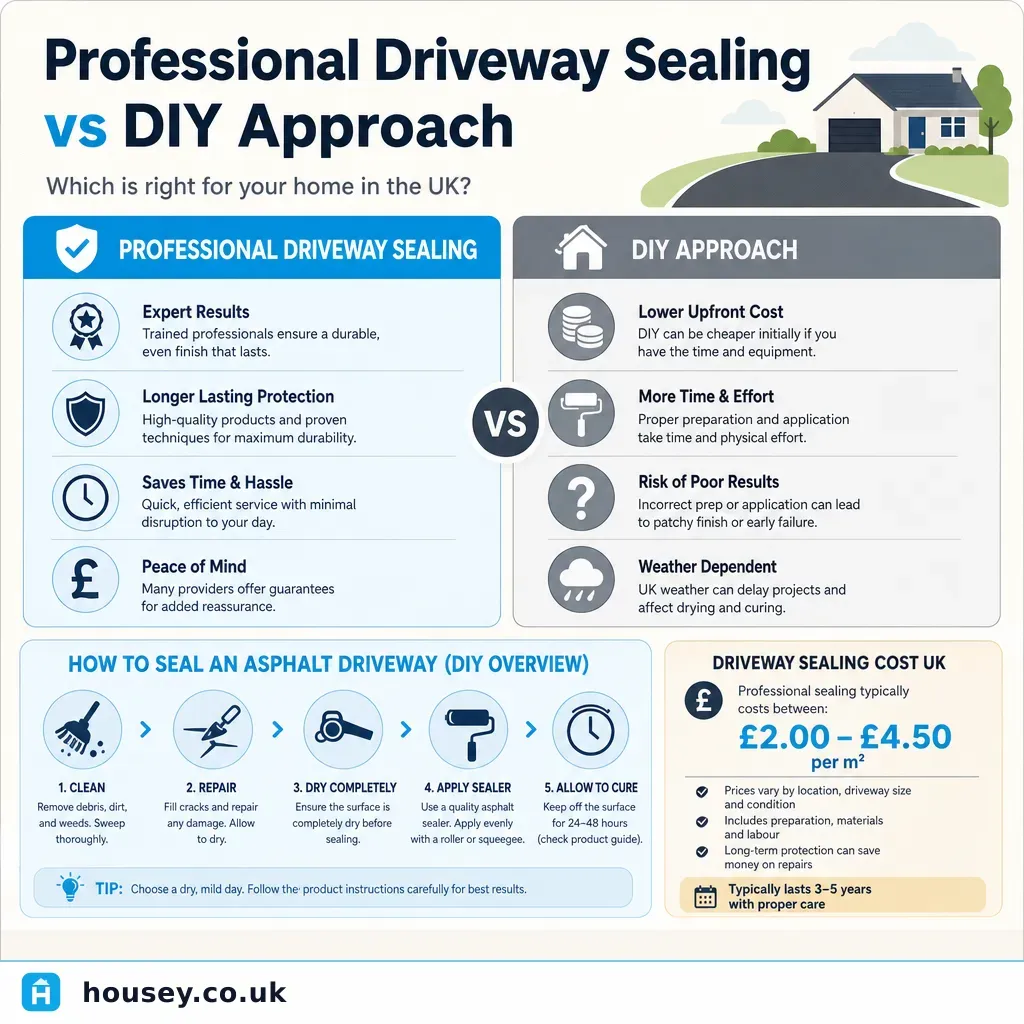
Professional Driveway Sealing vs DIY Approach
Professional driveway sealing offers a more durable, even finish using commercial-grade sealants and specialist equipment, typically costing £150 to £400 for an average drive.
 Improvement & Build
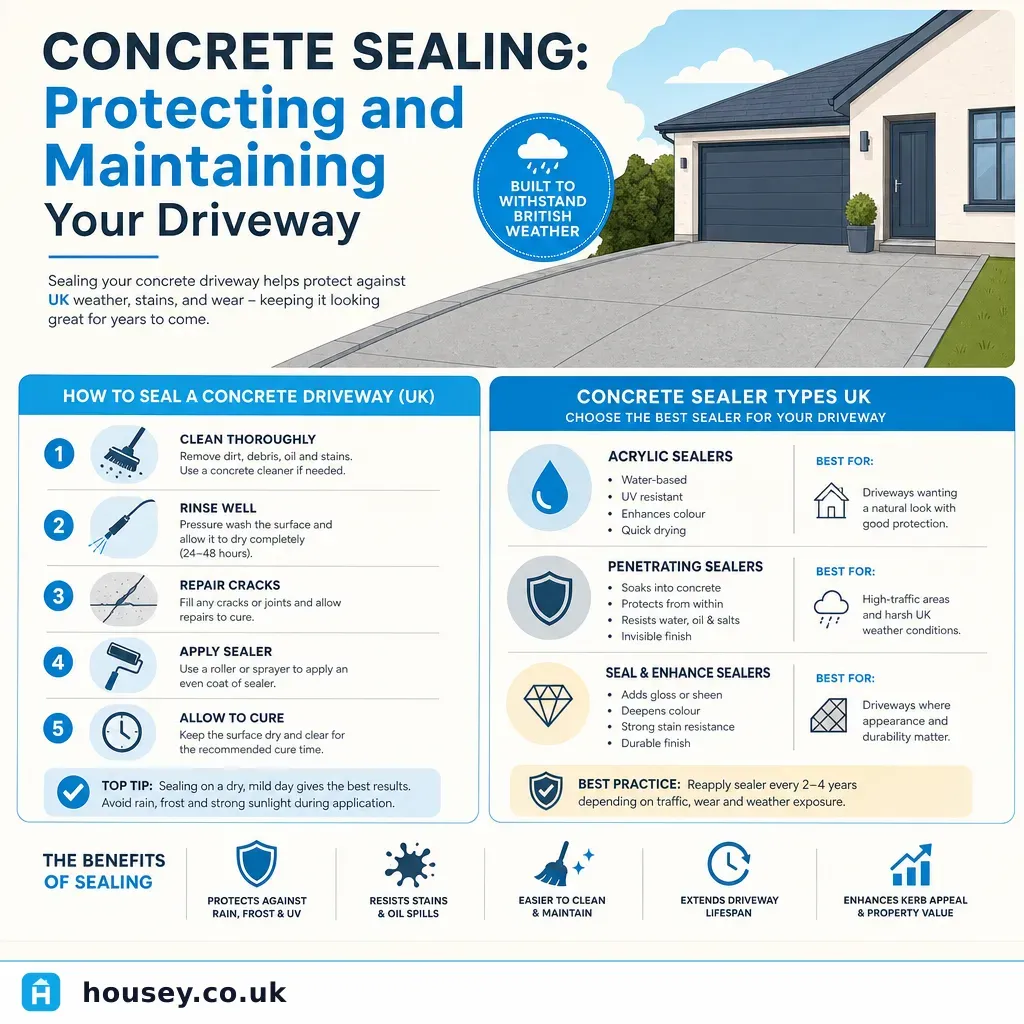
Concrete Sealing: Protecting and Maintaining Your Driveway
Sealing a concrete driveway protects against water ingress, freeze-thaw damage, oil stains, and surface wear.
 Improvement & Build
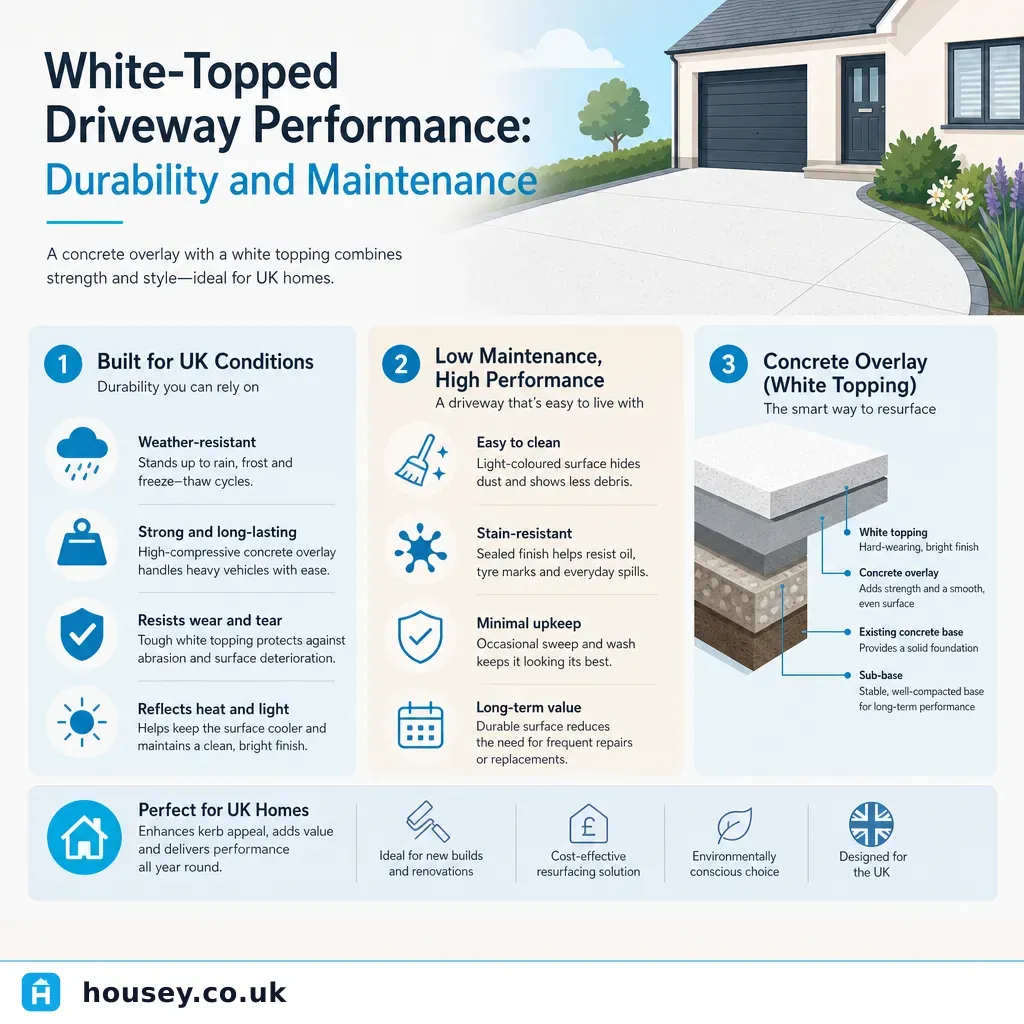
White-Topped Driveway Performance: Durability and Maintenance
A white-topped driveway uses a concrete layer placed over an existing asphalt sub-base, combining the load-spreading of asphalt with the durability of concrete.
 Improvement & Build
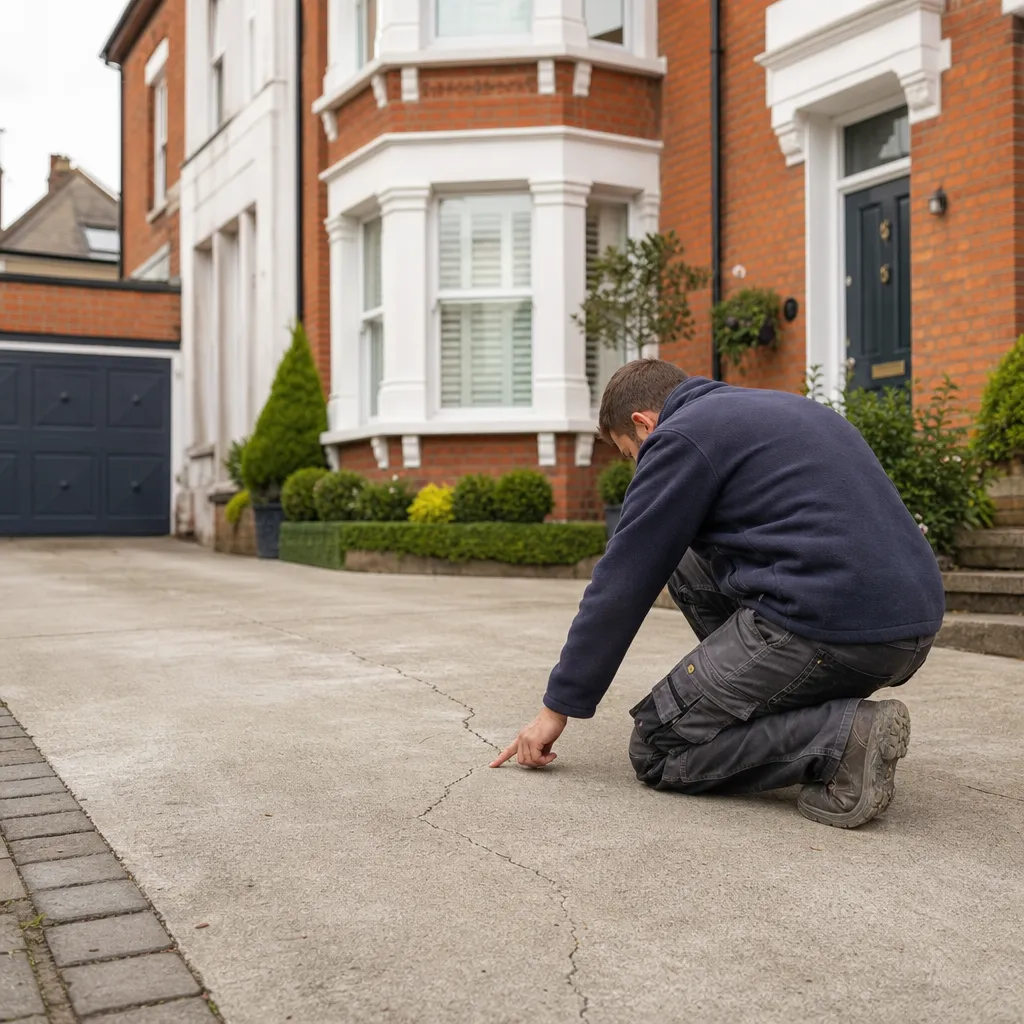
Preventing Deterioration and Cracking in Concrete Driveways and Flatwork
Concrete driveways deteriorate mainly through freeze-thaw cycling, shrinkage cracking, and sub-base failure.