Driveway Sealing: Maintenance and Protection Costs
By Housey · Last reviewed 30th of May 2026
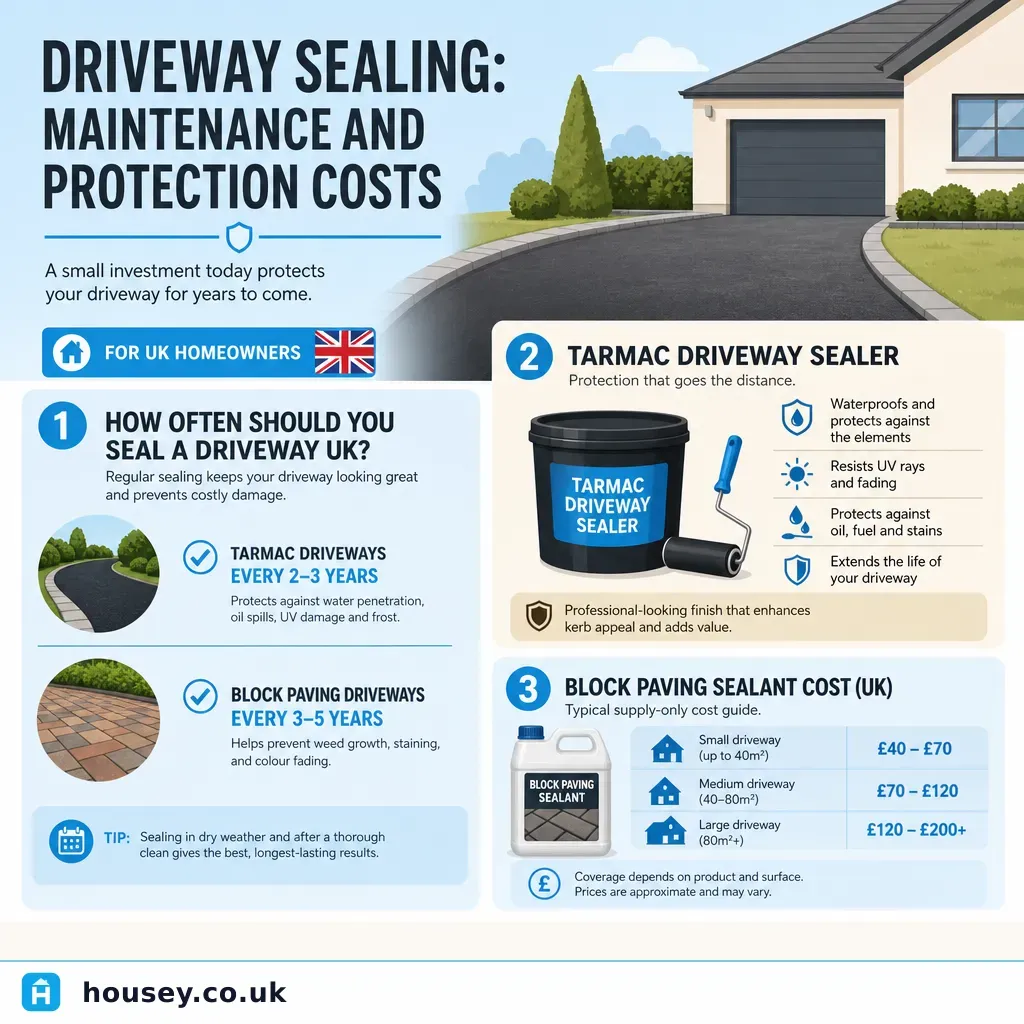
Driveway Sealing: Maintenance and Protection Costs
Driveways take considerable punishment from vehicle loads, UV exposure, freeze-thaw cycles, and the persistent damp of the UK climate. Homeowners often revisit sealing after noticing surface fading, cracking, or weed ingress — or when preparing a property for sale and wanting to refresh kerb appeal without a full replacement. The surface material you have — tarmac, block paving, resin-bound, or concrete — determines both the product type and the approach a contractor will take.
Key points
- Driveway sealing typically costs £3–£8 per m² for labour and materials in the UK; a standard 40 m² driveway often falls between £120 and £320. (Indicative UK costs, last reviewed 2026-05-30 — quotes vary by region, condition, and contractor.)
- Block paving, tarmac, and resin-bound surfaces each require different sealant products; applying the wrong type can trap moisture or cause delamination.
- Most surfaces benefit from resealing every 3–7 years, but heavily trafficked or south-facing driveways exposed to UV degradation may need attention sooner.
- Thorough surface preparation — pressure washing, weed removal, crack filling — is the most critical step; poor prep leads to premature sealant failure regardless of product quality.
- Replacing a driveway surface may require planning permission if the area exceeds 5 m² and impermeable materials are used; sealing an existing surface generally does not trigger this requirement under Schedule 2, Part 8 of the Town and Country Planning (General Permitted Development) (England) Order 2015.
What driveway sealing actually does
Sealants form a protective layer over the surface that reduces water ingress, inhibits weed growth through joints, limits UV fading, and makes cleaning easier. They do not repair structural damage — cracked or sunken sections must be addressed before sealing, or the sealant will bridge a void and crack again within months.
Different products serve different surfaces:
Surface type | Recommended sealant type | Key benefit | Limitation |
|---|---|---|---|
Tarmac / asphalt | Bitumen-based or acrylic tarmac sealer | Restores dark colour, limits water ingress | Cannot disguise deep cracking or ruts |
Block paving | Paving sealant (wet-look, satin, or natural finish) | Stabilises jointing sand, deters weeds | Trapped moisture can cause efflorescence |
Resin-bound | Specialist UV-stable polyurethane or epoxy topcoat | Maintains colour, prevents aggregate loosening | Must be applied by a specialist; DIY risks bond failure |
Concrete | Penetrating or acrylic concrete sealer | Reduces staining and spalling | Shiny finishes can become slippery when wet |
How much does driveway sealing cost in the UK?
Indicative UK costs, last reviewed 2026-05-30. Quotes vary significantly by region, access, surface condition, and whether remedial work is needed before sealing.
Approximate combined labour and materials:
- Small driveway (~25 m²): £75–£200
- Medium driveway (~40–50 m²): £120–£400
- Large driveway (~80–100 m²): £240–£800
Add £50–£200 if crack-filling, re-sanding of block paving joints, or significant pressure washing is required as a separate preparatory step.
Key cost drivers:
- Surface area: sealant is priced per m²; larger areas cost more in total but often less per m².
- Surface condition: extensive remedial work inflates cost; a quote should itemise this separately from the sealing itself.
- Product grade: consumer-grade sealants are cheaper but less durable than professional-grade products.
- Number of coats: worn or porous surfaces often need two coats to achieve adequate protection.
- Access: tight gates, steps, or slopes add time and complexity to the job.
How often should you seal a driveway?
Frequency depends on surface material and exposure:
- Tarmac: every 3–5 years under normal use; more frequently on heavily used surfaces or in areas with pronounced freeze-thaw cycles.
- Block paving: every 5–7 years; sooner if jointing sand is visibly eroding or weeds are penetrating.
- Resin-bound: manufacturer guidance varies, typically 5–10 years; check with the original installer.
- Concrete: every 3–5 years for penetrating sealers; film-forming sealers may need attention sooner.
A simple test for tarmac and concrete: pour a small amount of water on the surface. If it beads up, the existing sealant is still active. If it absorbs quickly, resealing is overdue.
Homeowner checklist: preparing for a driveway sealing job
Use this before the contractor arrives or before accepting a quote:
What to ask before accepting a quote
- What preparation work is included — pressure washing, weed treatment, crack filling?
- Which sealant product will be used, and is it appropriate for this surface type?
- How many coats will be applied, and what is the drying time between coats?
- How long before I can use the driveway again?
- Is VAT included in the quoted price?
- What happens if additional damage is found once preparation begins?
- Does the contractor carry public liability insurance?
When to get professional help
Sealing is one of the more straightforward home-maintenance tasks, and some homeowners apply consumer-grade sealants themselves on tarmac or block paving. However, professional help is advisable when:
- The surface has structural cracks, settlement, or extensive damage that may require resurfacing rather than sealing.
- You have a resin-bound or resin-bonded driveway, where incorrect products can cause costly bond failure.
- A concrete driveway shows significant spalling, staining, or freeze-thaw damage that may need specialist assessment before sealing.
- You are unsure which product is compatible with your surface, particularly if a previous sealant has already been applied.
- The area is large enough that thorough preparation requires professional equipment to achieve an even, lasting result.
Watch for these red flags when reviewing quotes:
- No mention of surface preparation in the price breakdown.
- Contractor unable to name the sealant product or explain its suitability for your surface.
- Quote provided without visiting the site or reviewing photographs of the driveway.
How Housey can help
Housey connects you with vetted driveway installers and maintenance contractors who can assess your surface, recommend the right sealant, and provide itemised quotes. Compare multiple quotes to ensure you are getting the correct product, the right level of preparation, and a realistic price for your driveway type and condition.
Frequently asked questions
How long does driveway sealant last?
Most professional-grade sealants last 3–7 years depending on surface material, traffic levels, UV exposure, and quality of application. Resin-bound surfaces tend to have longer sealant lifecycles than tarmac. Driveways in exposed south-facing positions or on heavily used shared drives typically need resealing at the shorter end of that range.
Can I seal my driveway myself?
For tarmac and block paving, consumer-grade sealants are widely available from builders' merchants and DIY retailers. Success depends heavily on thorough preparation — the surface must be clean, dry, and crack-free before application. Resin-bound and resin-bonded driveways should be handled by a specialist; incorrect products can cause delamination that is expensive to remedy.
Does sealing a driveway add value?
Sealing improves kerb appeal and extends the life of the surface, which can positively affect a buyer's first impression. It is generally considered a maintenance task rather than a value-adding improvement in the same way an extension or kitchen renovation might be. Estate agents typically note it as a presentational positive rather than a primary valuation driver.
What is the best time of year to seal a driveway in the UK?
Late spring through early autumn — May to September — generally provides the most suitable conditions: temperatures consistently above 10 °C, lower rainfall, and sufficient UV for proper curing. Avoid cold snaps, frost, or wet weather during and for 24–48 hours after application. Contractors are often busier in spring, so booking ahead is advisable.
Sources and further reading
- Planning Portal: Driveways and dropped kerbs — Planning Portal
- Town and Country Planning (General Permitted Development) (England) Order 2015, Schedule 2 Part 8 — legislation.gov.uk
- Energy Saving Trust: Surfacing your drive — Energy Saving Trust
Useful next reads
 Improvement & Build
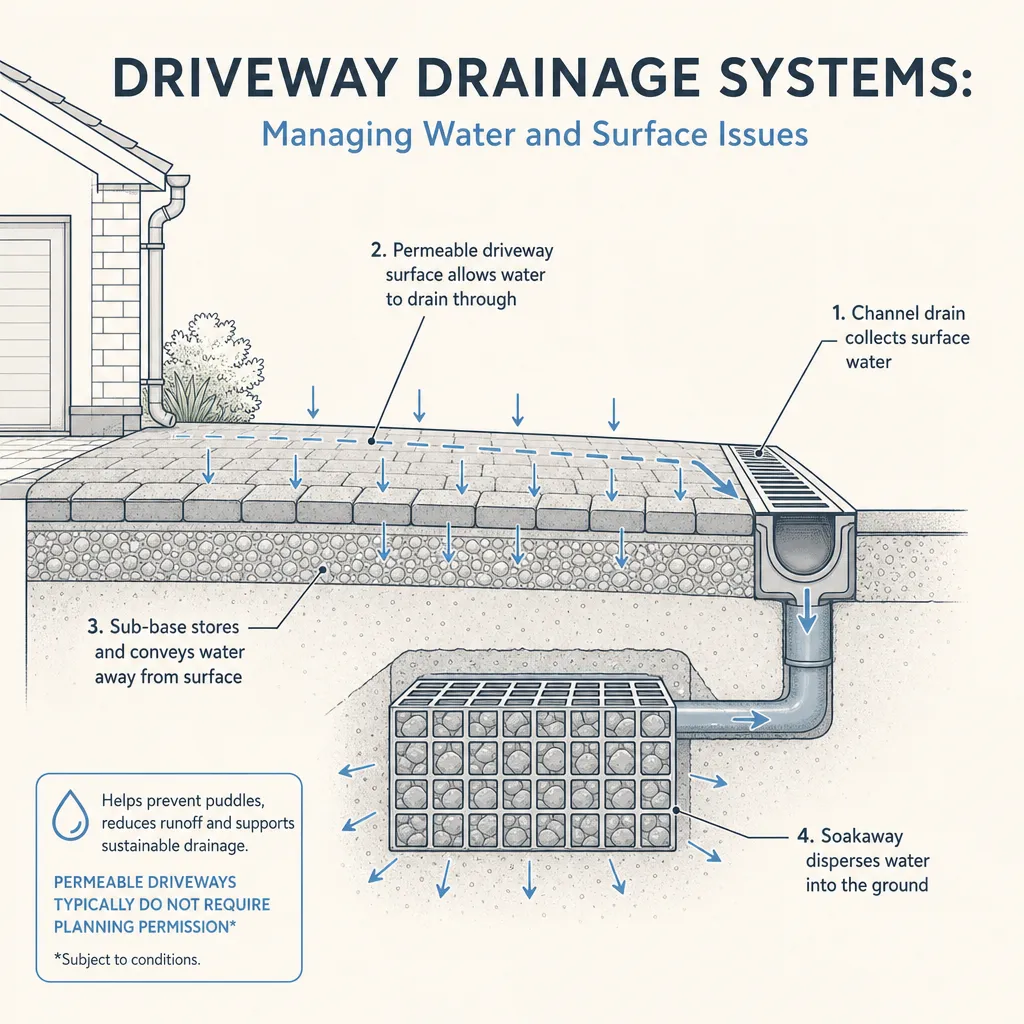
Driveway Drainage Systems: Managing Water and Surface Issues
The right driveway drainage system depends on your surface type, soil permeability, and local flood risk.
 Improvement & Build
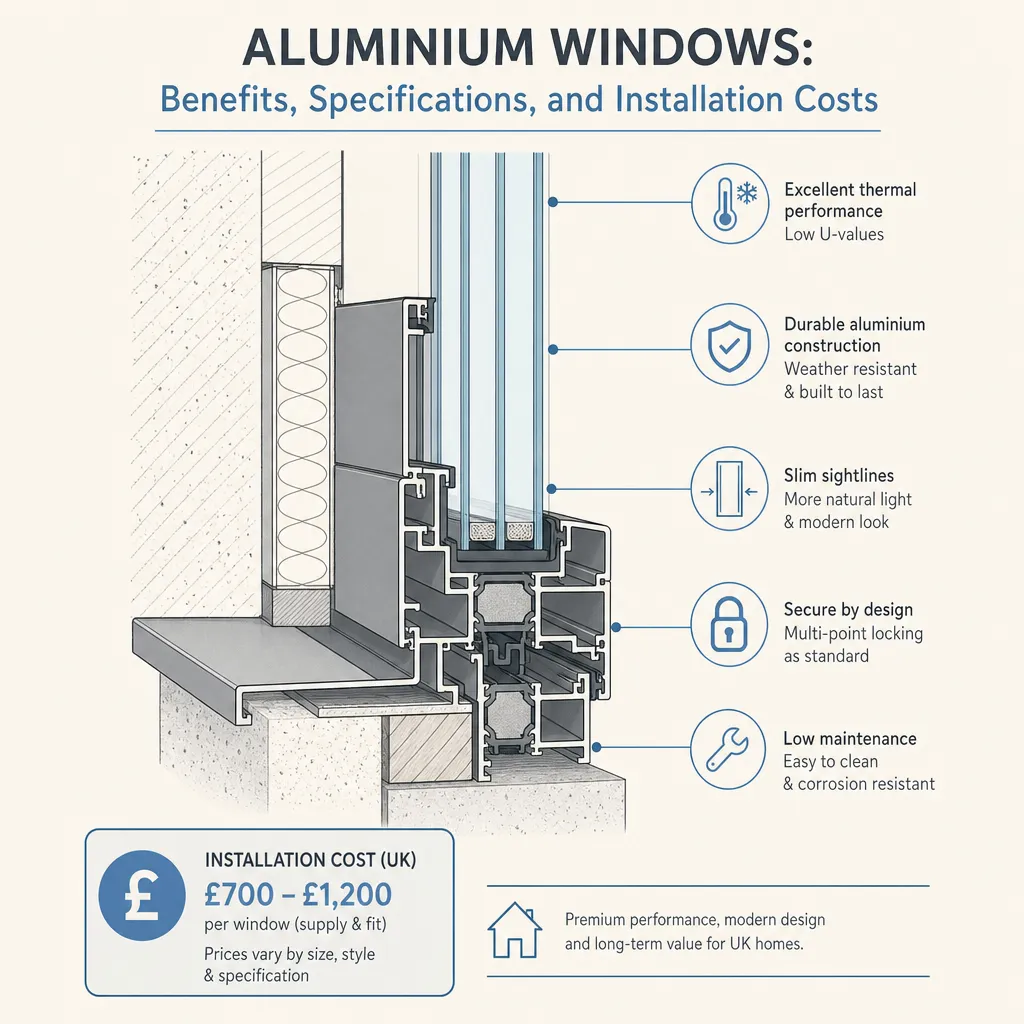
Aluminium Windows: Benefits, Specifications, and Installation Costs
Aluminium windows typically cost £600–£1,800 per window installed in the UK, depending on size and specification.
 Improvement & Build
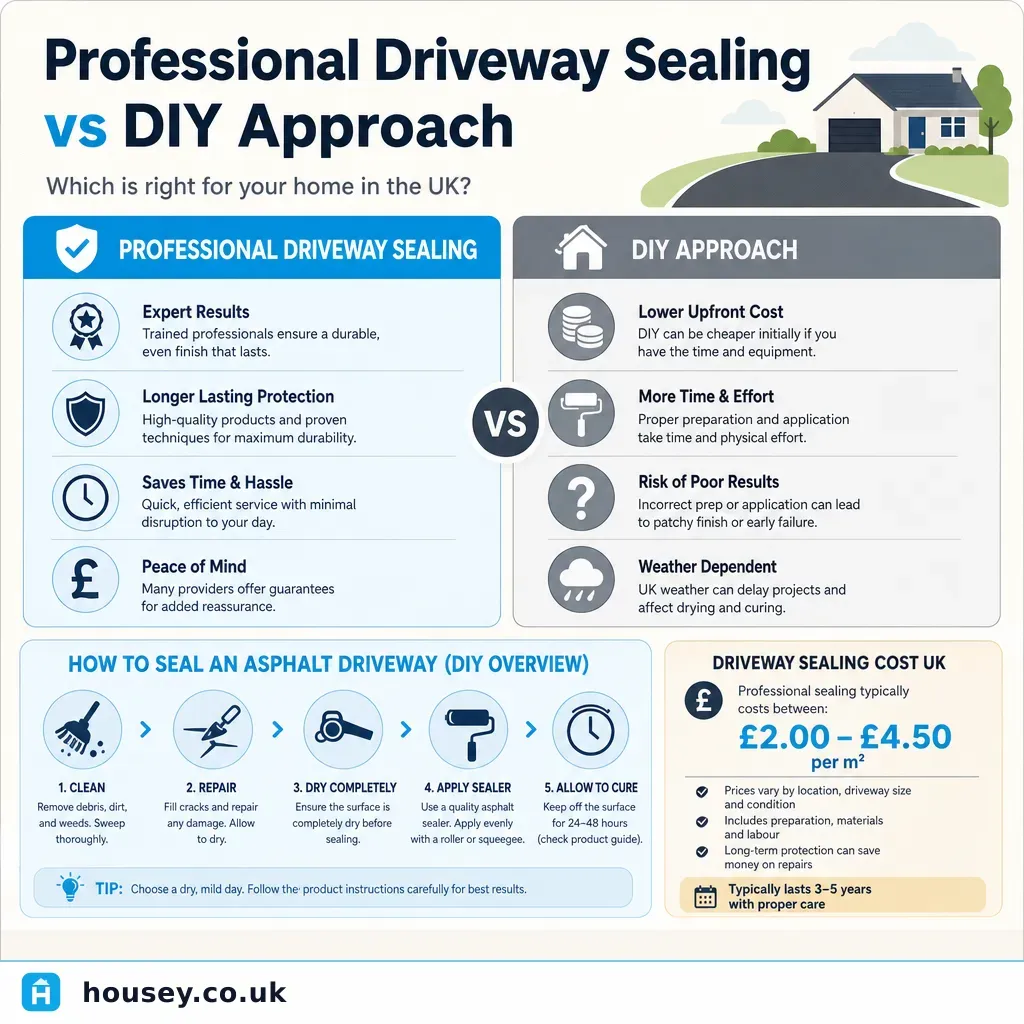
Professional Driveway Sealing vs DIY Approach
Professional driveway sealing offers a more durable, even finish using commercial-grade sealants and specialist equipment, typically costing £150 to £400 for an average drive.
 Improvement & Build
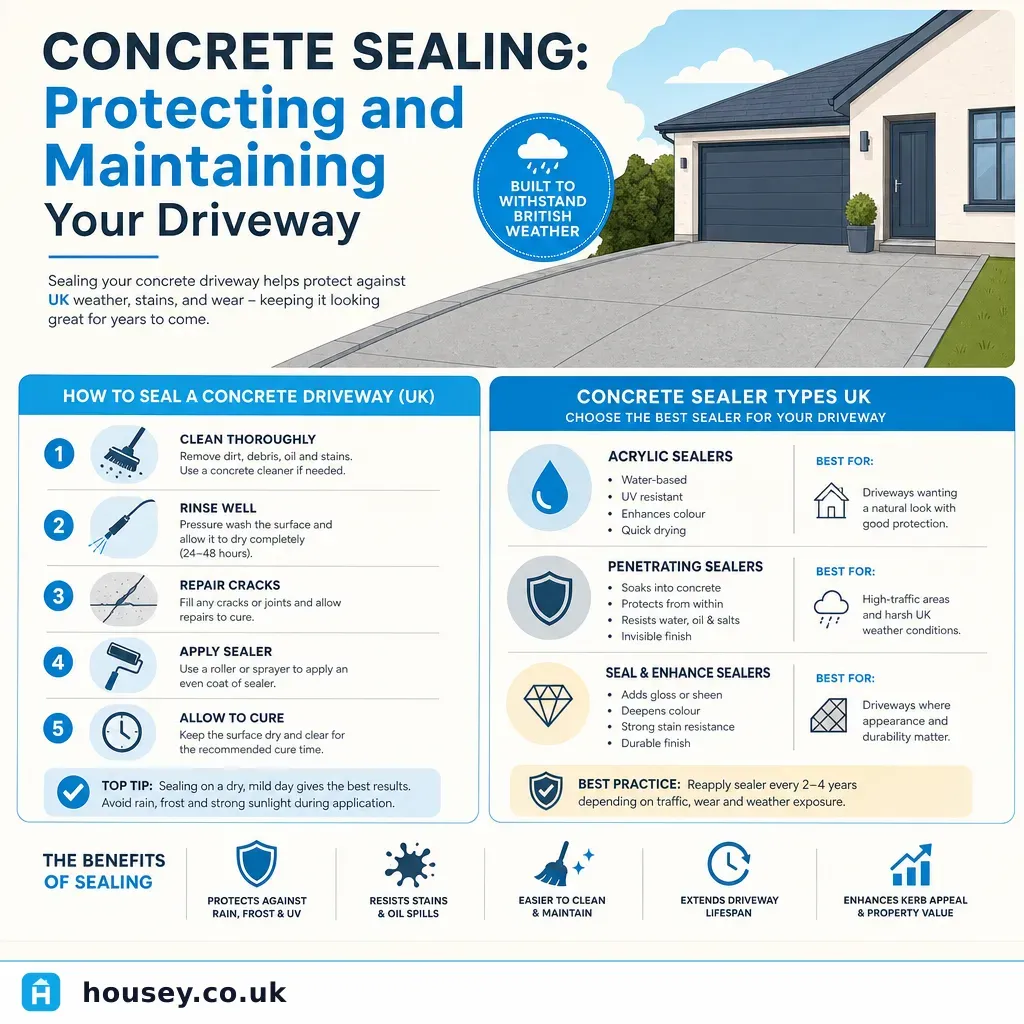
Concrete Sealing: Protecting and Maintaining Your Driveway
Sealing a concrete driveway protects against water ingress, freeze-thaw damage, oil stains, and surface wear.
 Improvement & Build
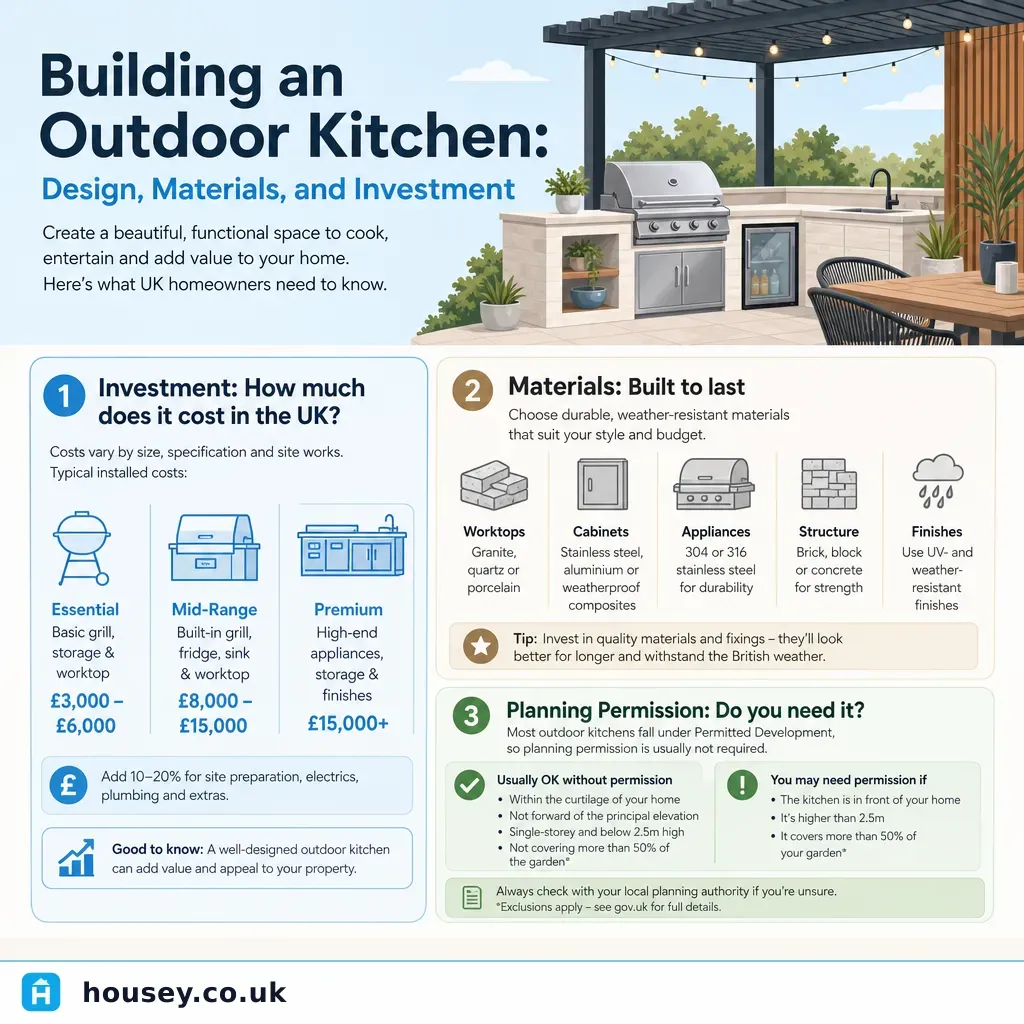
Building an Outdoor Kitchen: Design, Materials, and Investment
Building an outdoor kitchen in the UK costs roughly £3,000–£25,000 depending on size and materials.