Driveway Gate Installation and Access Control Costs
By Housey · Last reviewed 8th of May 2026
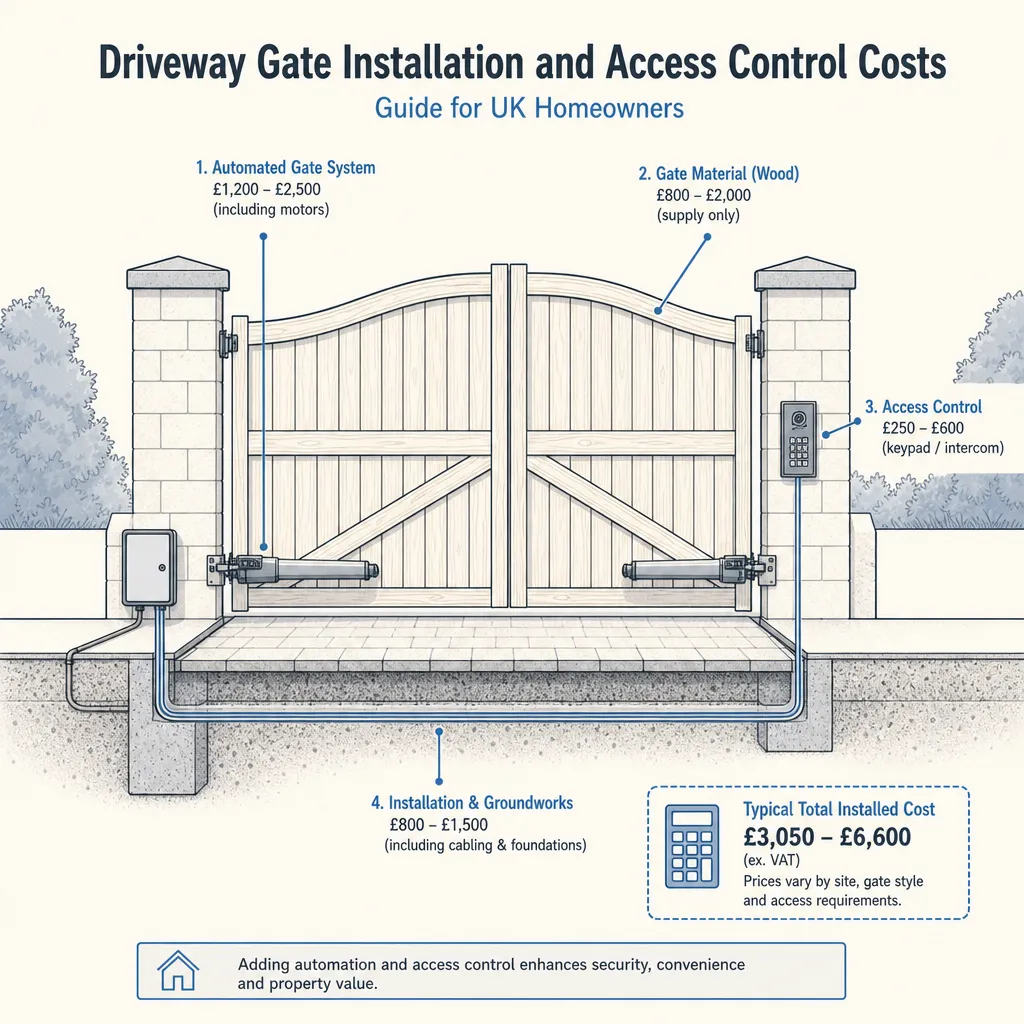
Driveway Gate Installation and Access Control Costs
Installing a driveway gate is one of the most visible improvements a UK homeowner can make — improving security, changing kerb appeal, and deterring opportunistic vehicle crime. The price gap between a simple manual timber pair and a fully automated system with video intercom is substantial, and the range of gate types, materials, and automation technologies means like-for-like quotes are hard to obtain without a clear specification.
Key points
- Manual timber or steel gates for a standard double driveway typically cost £500–£3,000 supplied and installed, depending on material and design.
- Automated electric gates add roughly £1,500–£4,000 to the base gate cost for motors, cabling, safety equipment, and mains connection.
- Automated gates must comply with BS EN 12453 (safety of power-operated doors and gates) and carry UKCA or CE marking on the automation equipment.
- Planning permission is required for gates over 1 metre high adjacent to a highway, or over 2 metres high anywhere else — listed buildings and conservation areas have additional restrictions.
- The mains electrical connection for gate automation is notifiable work under Part P of the Building Regulations; a registered electrician (NICEIC or NAPIT) must carry out or certify it.
What drives the cost of driveway gate installation?
Cost factor | Lower cost | Higher cost |
|---|---|---|
Gate type | Single swing gate | Bi-fold or cantilever sliding |
Material | Treated softwood | Wrought iron or bespoke steel |
Automation | Manual only | Full electric with video intercom |
Opening width | Up to 3m | 5m+ (heavier motors, larger posts) |
Groundwork | Level, stable surface | Sloping drive, excavation needed |
Power supply | Existing circuit nearby | Long cable run, new circuit required |
Access control | None | Keypads, ANPR, smart-app integration |
Posts and pillars | Concrete posts included | Bespoke brick or stone pillars |
Gate types and indicative UK costs
Indicative UK costs, last reviewed 2026-05-08. Costs cover supply and installation by a specialist contractor; excludes planning fees, brickwork pillars, and electrical connection unless stated. Quotes vary by region, specification, and site conditions.
Manual timber gates (treated softwood, standard double, 3m opening): £500–£1,500. Hardwood (iroko, oak): £1,200–£3,000.
Manual steel and wrought iron (powder-coated mild steel double pair): £800–£2,500. Bespoke wrought iron: £2,000–£6,000+.
Automated swing gates (complete installation: gate, motors, fobs, safety edges, cabling): £2,500–£6,000.
Automated sliding gates (4m opening including automation): £3,000–£7,500. Cantilever system adds £500–£1,500.
Automated bi-fold gates (standard double driveway, installed): £4,000–£10,000+.
Access control add-ons
Option | Typical installed cost |
|---|---|
Keypad entry | £150–£400 |
Wired video intercom | £400–£1,000 |
GSM intercom (calls your mobile) | £500–£1,500 |
ANPR (number plate recognition) | £1,500–£4,000+ |
Smart app integration | £300–£800 additional |
Induction loop (vehicle detector) | £400–£900 |
Planning permission for driveway gates
Most residential driveway gate installations in England fall within permitted development, but you need planning permission if:
- The gate is adjacent to a highway and is over 1 metre high.
- The gate is over 2 metres high anywhere on the residential boundary.
- The property is a listed building — consent is required regardless of height.
- The property is in a conservation area and the gate fronts a highway or public footpath.
Rules differ in Scotland, Wales, and Northern Ireland. Always check with your local planning authority before installation — particularly for listed or conservation area properties.
Safety requirements for automated gates
Powered gates in the UK have caused fatalities and serious injuries. The HSE has published guidance on managing the risks. Automated gates are machinery and must comply with:
- BS EN 12453: force limits, safety edges, and obstacle detection requirements.
- UK Machinery Regulations: Declaration of Conformity and UKCA or CE marking required.
- Part P of the Building Regulations: mains electrical connection is notifiable work.
Minimum safety features: pressure-sensitive safety edges, photoelectric beams or induction loops, force-limited motors, and a manual release for power cuts. Ask the installer to demonstrate all safety features and provide the Declaration of Conformity before handover.
What to ask before accepting a quote
- Is the price supply-and-install or supply only?
- What gate material, treatment, and finish is included?
- Is automation included, and which brand and model of operator?
- Does the quote include cable trenching, post foundations, and mains electrical connection?
- Who carries out the electrical work — a Part P-registered (NICEIC or NAPIT) contractor?
- What safety features are included, and will you provide a Declaration of Conformity confirming BS EN 12453 compliance?
- Is VAT included?
- What is the warranty on the gate structure and automation system?
- What maintenance is recommended, and do you offer a service contract?
Worked example: automated gates on a 1990s semi-detached
A homeowner in the East Midlands wants to replace an open 3.5m driveway with automated steel swing gates. The driveway is level; the consumer unit is in the garage, roughly 8 metres from the intended post position.
- Double powder-coated steel swing gates, 1.8m high: £1,400
- Automation (two motors, safety edges, two remote fobs): £2,200
- Electrical connection by NICEIC contractor (new circuit, 8m cable run): £450
- GSM intercom: £700
- Post foundations and cable trench: included in installation quote
- Total: approximately £4,750
Indicative only. Actual costs vary by location, specification, and site. Always obtain at least three written quotes before proceeding.
When to get professional help
- Any mains electrical connection is notifiable work under Part P and must be done by a registered contractor.
- A gate behaving unexpectedly — failing to stop on obstacle contact or applying excessive force — should be taken out of service until a qualified gate engineer inspects it.
- For listed buildings or conservation area properties, seek pre-application planning advice before specifying a gate.
- If the installation is near a shared access, ransom strip, or right of way, take legal advice before proceeding.
How Housey can help
Housey connects homeowners with qualified driveway installers who supply and fit driveway gates, automated entry systems, and access control solutions. Request and compare quotes from vetted local contractors through Housey.
Frequently asked questions
Do driveway gates add value to a home?
Gates can improve kerb appeal and perceived security, supporting saleability where secure off-street parking is in demand. There is no standardised added-value figure — the impact depends on buyer preferences, property type, installation quality, and local market conditions. An estate agent with local knowledge is the best guide.
How long does driveway gate installation take?
A manual gate installation typically takes one day. An automated installation — including post foundations, cable trenching, and mains connection — usually takes two to four days, often spread across more than one visit if the electrical work requires a separate Part P-registered contractor.
Can I install driveway gates myself?
Manual gates are a realistic DIY project if you can set posts accurately in concrete. Automated installation is different: the mains connection is notifiable under Part P, safety testing to BS EN 12453 requires specialist knowledge, and most automation warranties are void without professional installation. DIY automated gate installation is not recommended.
How much does it cost to service automated driveway gates?
An annual service typically costs £80–£200 in the UK, covering lubrication of moving parts, safety edge checks, motor force settings, and structural inspection. Regular servicing is advisable given the safety implications of a malfunctioning automated gate.
What happens to electric gates in a power cut?
All compliant systems must include a manual release so the gate can be moved by hand. Many also offer a battery backup module for a limited number of power cycles. Ask your installer to demonstrate the manual release before handover.
Sources and further reading
- Planning permission: when you need it — GOV.UK
- Approved Document P: Electrical safety in dwellings — GOV.UK
- Powered gates: managing the risks — Health and Safety Executive
- Find a registered electrician — NICEIC
Useful next reads
 Improvement & Build
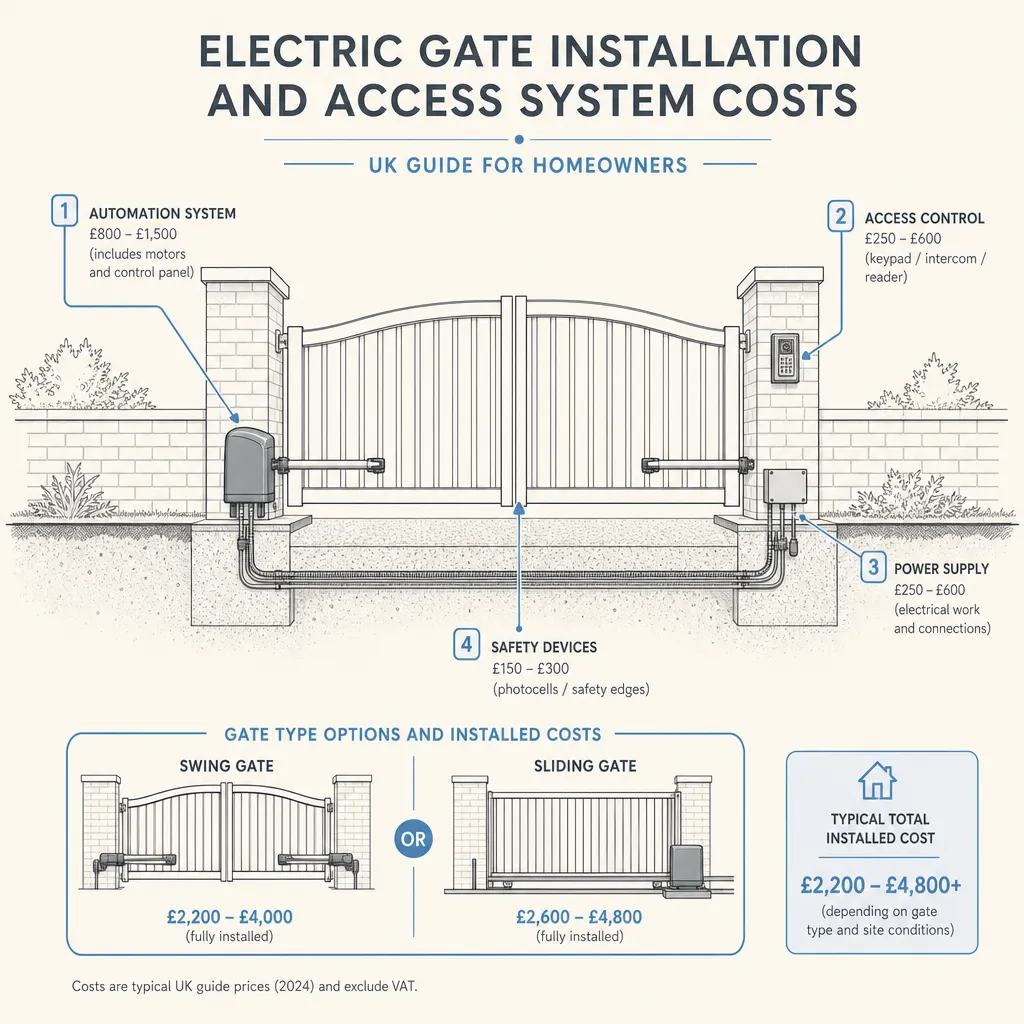
Electric Gate Installation and Access System Costs
Electric gate installation in the UK typically costs between £1,500 and £8,000, depending on gate type, width, material, and automation system.
 Improvement & Build
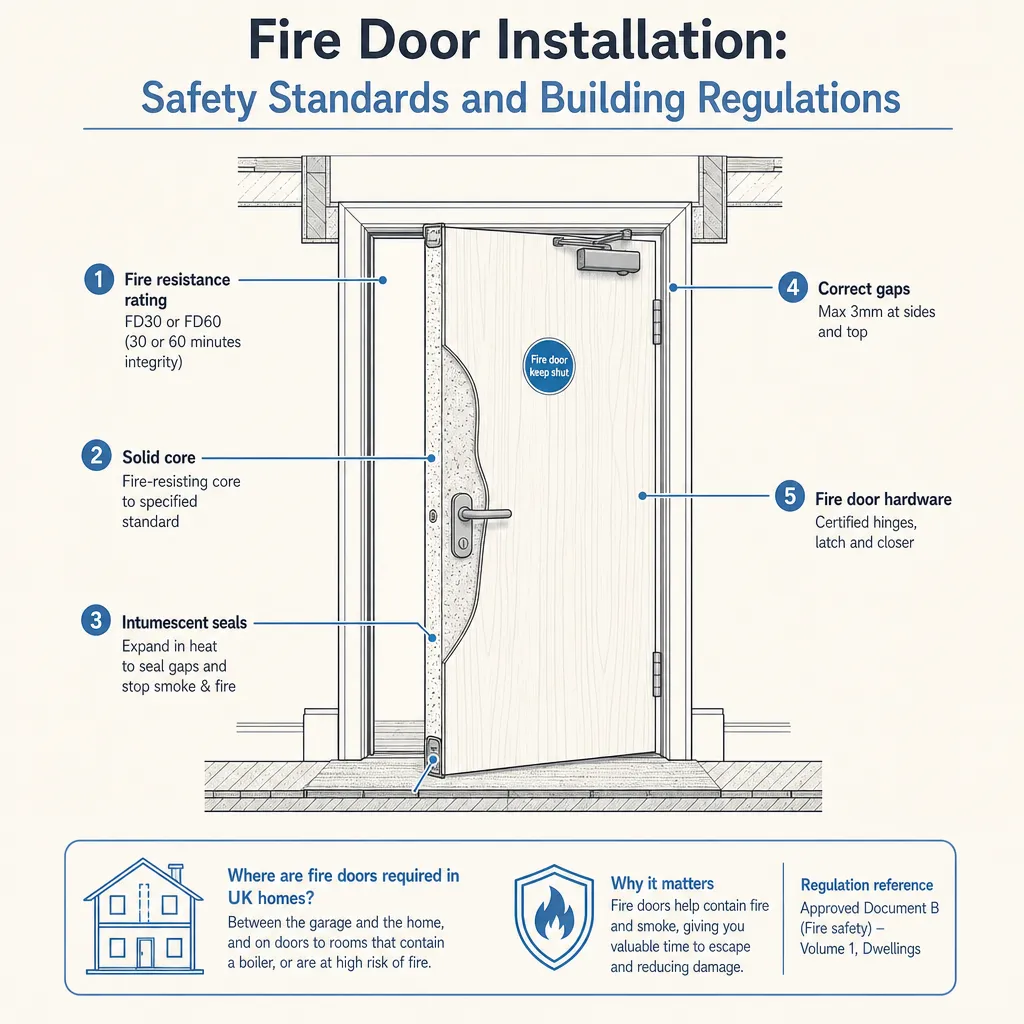
Fire Door Installation: Safety Standards and Building Regulations
Fire doors in UK homes are required by Building Regulations on escape routes, between integral garages and living space, and throughout HMOs.
 Improvement & Build
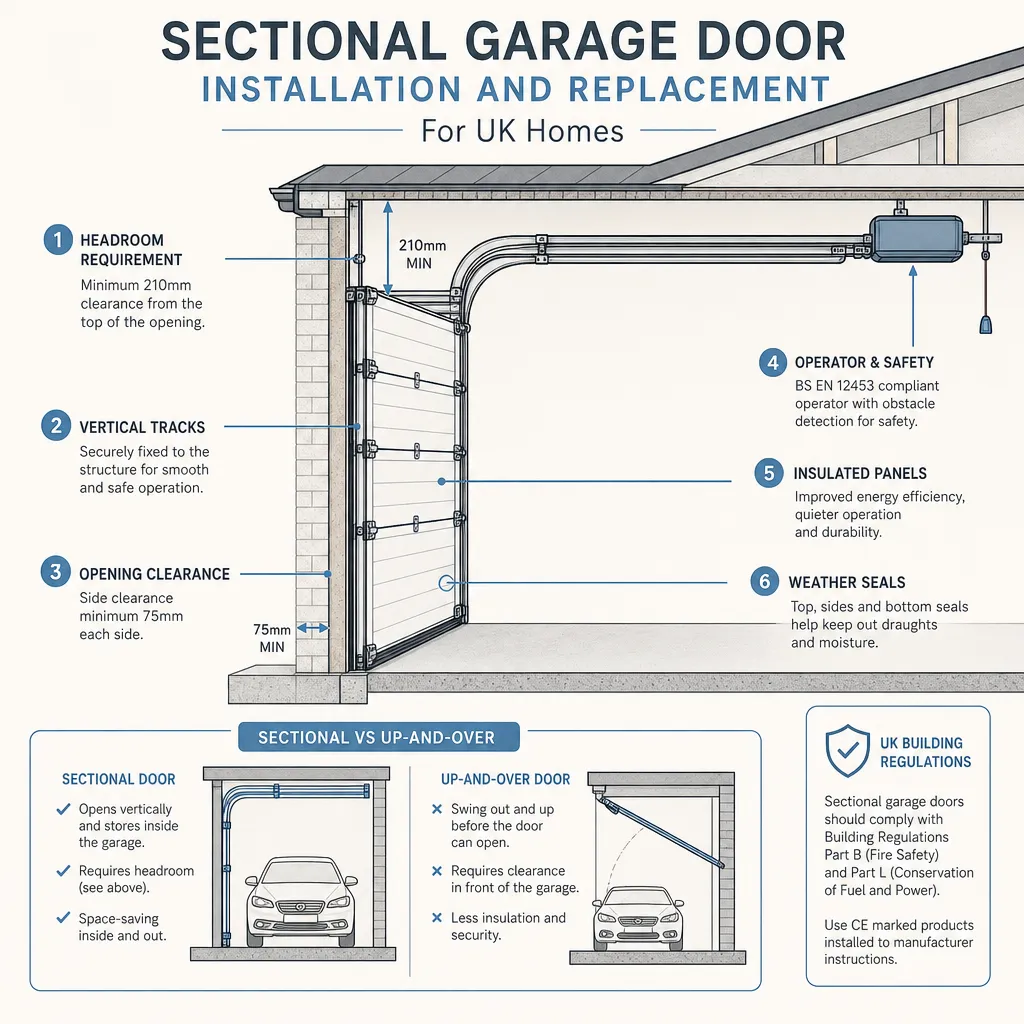
Sectional Garage Door Installation and Replacement
A sectional garage door opens on vertical tracks before folding back overhead, requiring no forecourt clearance to operate.
 Improvement & Build
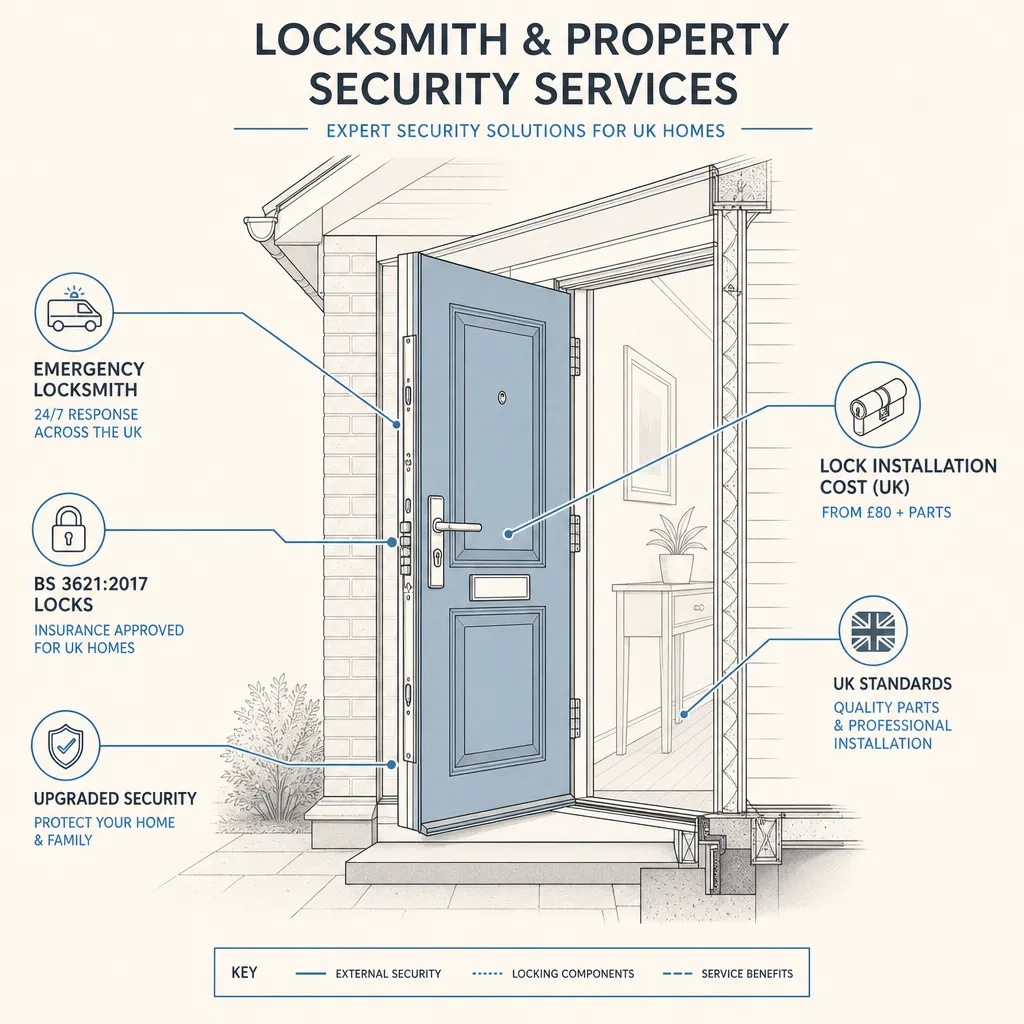
Locksmith and Property Security Services
A UK locksmith can replace, repair, or upgrade door locks, respond to lockouts, and advise on access control.
 Improvement & Build
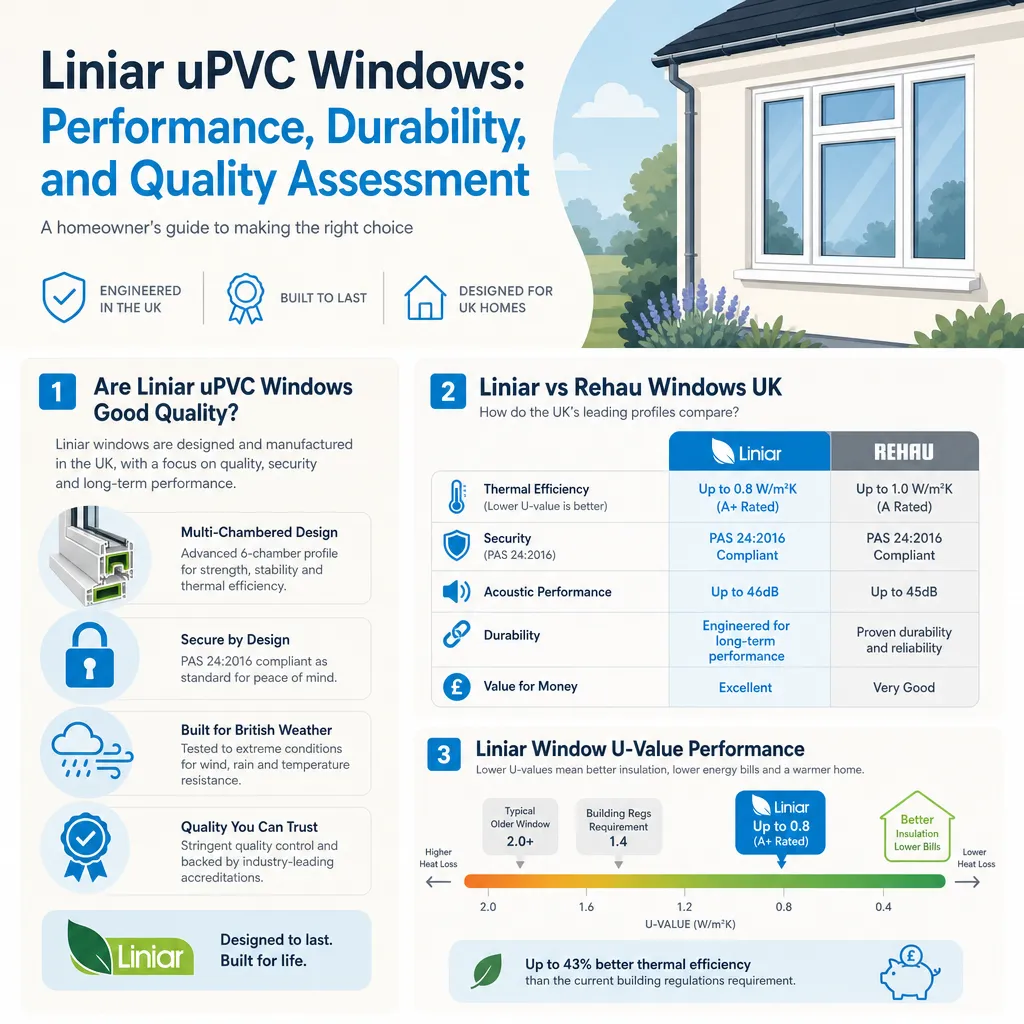
Liniar uPVC Windows: Performance, Durability, and Quality Assessment
Liniar uPVC window profiles are manufactured in the UK using multi-chambered, foamed frames.