Electric Gate Installation and Access System Costs
By Housey · Last reviewed 7th of May 2026
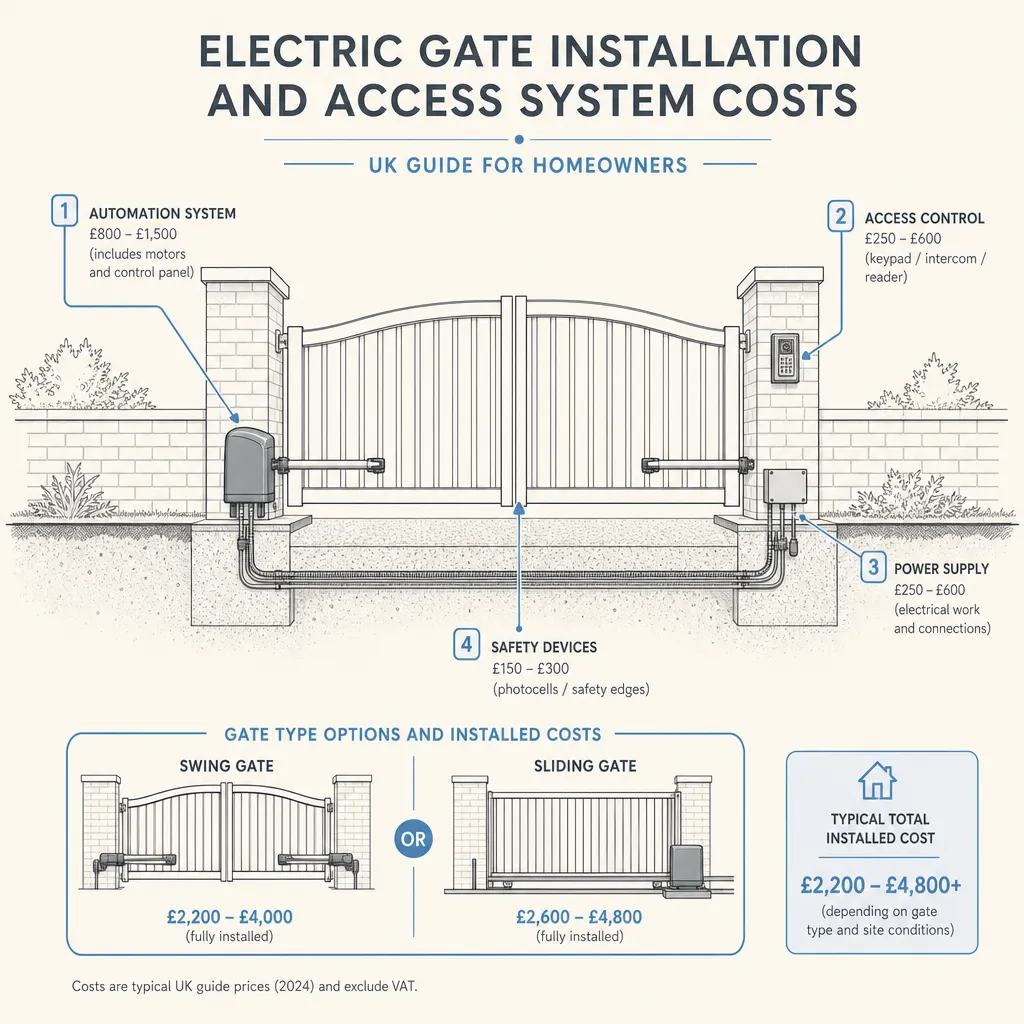
Electric Gate Installation and Access System Costs
Electric gates are a popular security and convenience upgrade for UK homeowners — from terraced houses in suburban streets to rural properties with long approach roads. Cost questions arise most often when comparing installer quotes that can differ by thousands of pounds, or when planning a broader driveway renovation. The final price depends on gate type, drive width, materials, automation system, access control, groundworks, and whether a new electrical supply is needed at the gate position.
Key points
- Electric gate installation in the UK typically costs between £1,500 and £8,000 for standard configurations; bespoke wrought iron or hardwood systems can reach £12,000 or more — indicative UK costs, last reviewed 2026-05-07.
- Swing gates cost less than sliding gates but require a clear opening arc; sliding gates suit tight urban plots, sloping drives, or openings wider than about 4 metres.
- All automated gates must comply with EN 12453, which sets maximum closing-force limits to prevent entrapment — installers must provide a commissioning and compliance certificate on completion.
- In England, residential gates generally fall under permitted development (Part 2, Class A of the Town and Country Planning (General Permitted Development) (England) Order 2015): no higher than 1 metre on a highway boundary or 2 metres elsewhere.
- Access control add-ons — keypads, video intercoms, and GSM diallers — add £150–£2,500 to the base installation cost and carry different maintenance requirements.
How much does electric gate installation cost in the UK?
Indicative UK costs, last reviewed 2026-05-07. Quotes vary by location, site complexity, and specification.
Gate configuration | Approximate installed cost |
|---|---|
Single swing gate — steel, automated | £1,500–£3,000 |
Double swing gates — steel, automated | £2,500–£5,000 |
Double swing gates — timber, automated | £2,000–£4,500 |
Sliding gate — steel, automated | £3,000–£6,000 |
Cantilever sliding gate | £4,000–£7,500 |
Bespoke wrought iron or hardwood | £6,000–£12,000+ |
Figures include gate leaves, motors, control board, safety photocells or pressure-sensitive edges, and a basic remote-fob system. Groundworks, access control upgrades, and electrical supply installation are typically quoted separately.
Swing gates vs sliding gates
Factor | Swing gates | Sliding gates |
|---|---|---|
Typical cost | Lower | Higher |
Space required | Clear opening arc | Clear fence run ≥ gate width + approx. 0.5 m |
Best for | Level drives with adequate clearance | Sloping drives, tight plots, wide openings |
Not ideal for | Steep downhill slopes; tight road junctions | Narrow plots with no clear run |
Wind behaviour | Can swing if motor fails | Stays in last position |
Decision guide:
- Choose swing gates if the drive is roughly level and has a clear arc.
- Choose sliding if the slope is steep, the plot is narrow, or the opening exceeds about 4 metres.
- Consider a cantilever sliding gate if the surface is uneven or you want to avoid a floor track.
Access control options
Most installs include remote fobs. Common upgrades with indicative additional costs:
- Keypad entry: £150–£400 — useful for tradespeople and regular visitors.
- Audio intercom: £200–£500 — voice identification before opening.
- Wired video intercom: £400–£1,200 — popular choice for security-conscious homeowners.
- GSM / smartphone dialler: £300–£800 — remote operation from any mobile signal.
- Battery backup: £150–£350 — important if the gate blocks the only vehicle exit.
Indicative UK costs, last reviewed 2026-05-07.
Planning permission for electric gates
In England, most residential electric gates fall under permitted development and do not need a planning application, provided they are no higher than 1 metre on a highway boundary or 2 metres elsewhere. Conservation areas, listed buildings, and properties subject to Article 4 Directions are exceptions — check with your local planning authority before finalising a specification. Rules differ in Scotland, Wales, and Northern Ireland under devolved planning legislation.
Worked example: double swing gates, 1970s semi, Bristol
A homeowner on a 3.4-metre concrete driveway in Bristol received three quotes for powder-coated steel double swing gates with a video intercom:
- Quote A — £3,100: Gate, posts, motors, photocells, video intercom, two fobs, conduit, and commissioning. Mid-range Italian motor, 2-year parts warranty.
- Quote B — £2,600: Audio intercom only, no battery backup, 1-year warranty. Installer could not confirm trade body membership.
- Quote C — £4,200: Premium motor brand, 5-year parts and labour warranty, stainless-steel intercom panel, first annual service included.
The homeowner chose Quote A after confirming Automated Gate Alliance (AGA) membership and that an EN 12453 commissioning record would be provided on completion.
What to ask an installer before accepting a quote
- Are you a member of the Automated Gate Alliance or another recognised trade body?
- Will you provide an EN 12453 compliance and commissioning certificate on completion?
- What safety devices are included — photocells, pressure-sensitive edges, or both?
- What motor brand and model is specified, and what are the warranty terms for parts and labour?
- Is battery backup included? What happens to the gate in a power cut?
- Are groundworks and cable conduit included in the quote or priced separately?
- Will you carry out the electrical connection, or do I need a separate Part P electrician?
When to get professional help
Electric gate installation involves permanently fixed posts, electrical connections, and automated machinery governed by UK safety law. A qualified installer is required for all automated gate projects.
Additional professional input is needed when:
- The property is in a conservation area or the building is listed — take planning advice before specifying gate height.
- There is no existing power supply at the gate — a Part P-compliant electrician must install one.
- The opening is very wide or gate leaves are unusually heavy — post foundations must be adequate for the load.
Red flags when evaluating installers:
- Cannot provide an itemised written quote separating gate supply, motor, safety devices, and labour.
- Unfamiliar with EN 12453 or unable to provide a compliance certificate.
- Does not carry public liability insurance.
- Requires full payment before work begins.
How Housey can help
Housey helps UK homeowners find and compare quotes from vetted local professionals for driveway gates and access control projects. Use Housey to request quotes from qualified installers in your area.
Frequently asked questions
Do electric gates need planning permission in England?
Most residential installations fall under permitted development rights — no higher than 1 metre on a highway boundary or 2 metres elsewhere. Conservation areas, listed buildings, and properties with Article 4 Directions are exceptions. Always check with your local planning authority before committing to a gate height or specification.
How long does electric gate installation take?
A standard double swing gate installation — post setting, cabling, motor fitting, and commissioning — typically takes one to two days. Jobs involving significant groundworks, long cable runs, or custom-fabricated gate leaves may require three to five days or staged visits.
How often should electric gates be serviced?
Most manufacturers and the Automated Gate Alliance recommend an annual service costing £100–£250, covering lubrication, safety-device force testing, motor inspection, and limit adjustment. Regular servicing is required for ongoing EN 12453 compliance and to maintain the manufacturer warranty. Indicative UK cost, last reviewed 2026-05-07.
Can existing manual gates be automated?
Yes, in many cases. Existing gate leaves and posts can be retrofitted with a motor, control board, and safety devices if the posts are structurally sound and set at the correct geometry for the motor type. A site survey by a qualified installer is needed to confirm feasibility before purchasing equipment.
Are electric gates suitable for sloped driveways?
Swing gates can operate on gentle slopes with motor adjustment, but a steep downhill slope away from the road can prevent proper closing. A sliding gate or uphill-opening configuration is usually the better solution in such cases. Always describe the gradient when obtaining quotes so the installer can recommend the correct mechanism.
Sources and further reading
- Town and Country Planning (General Permitted Development) (England) Order 2015 — legislation.gov.uk
- Planning permission: when you need it — GOV.UK
- Automated Gate Alliance — Automated Gate Alliance
- Approved Document P: Electrical safety in dwellings — GOV.UK
Useful next reads
 Improvement & Build
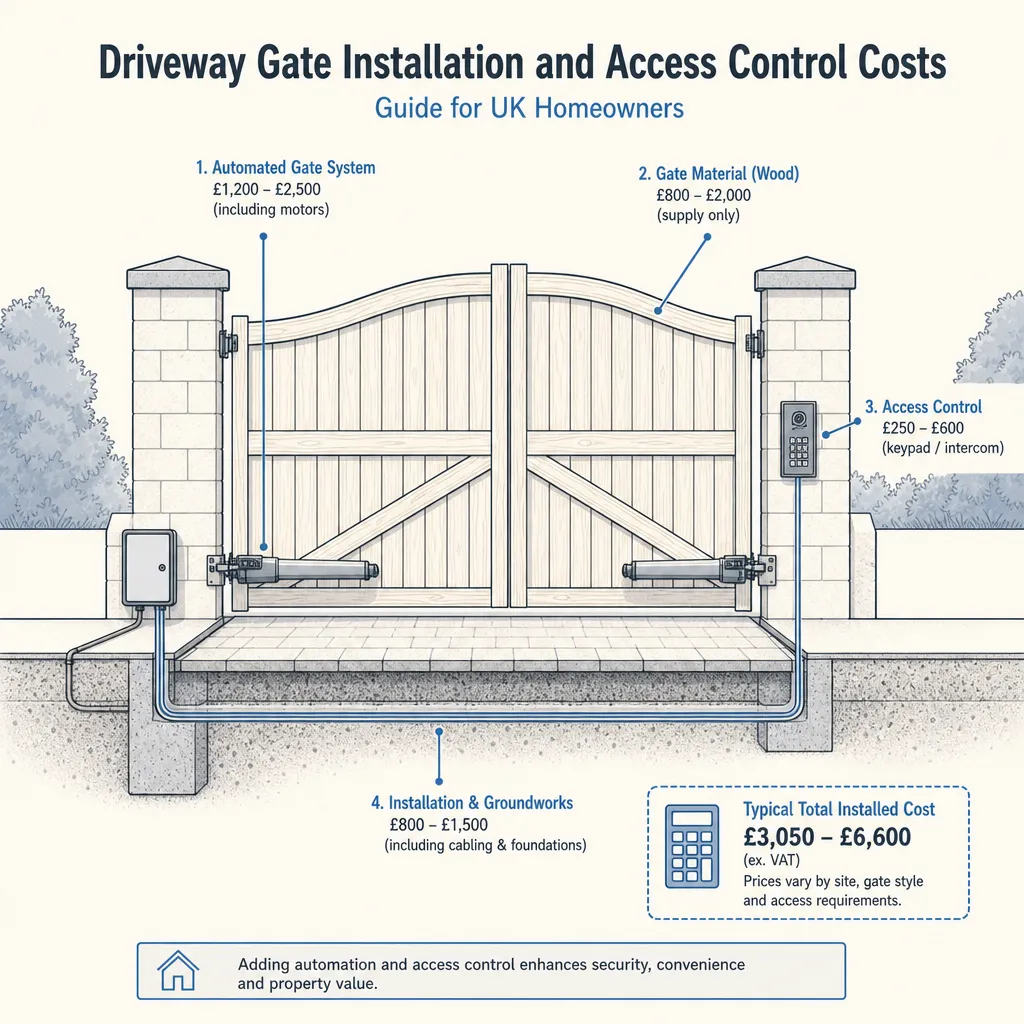
Driveway Gate Installation and Access Control Costs
Manual driveway gates cost roughly £500–£3,000 installed, while automated electric gates typically run £2,500–£10,000 depending on gate type, material, and access control features.
 Improvement & Build
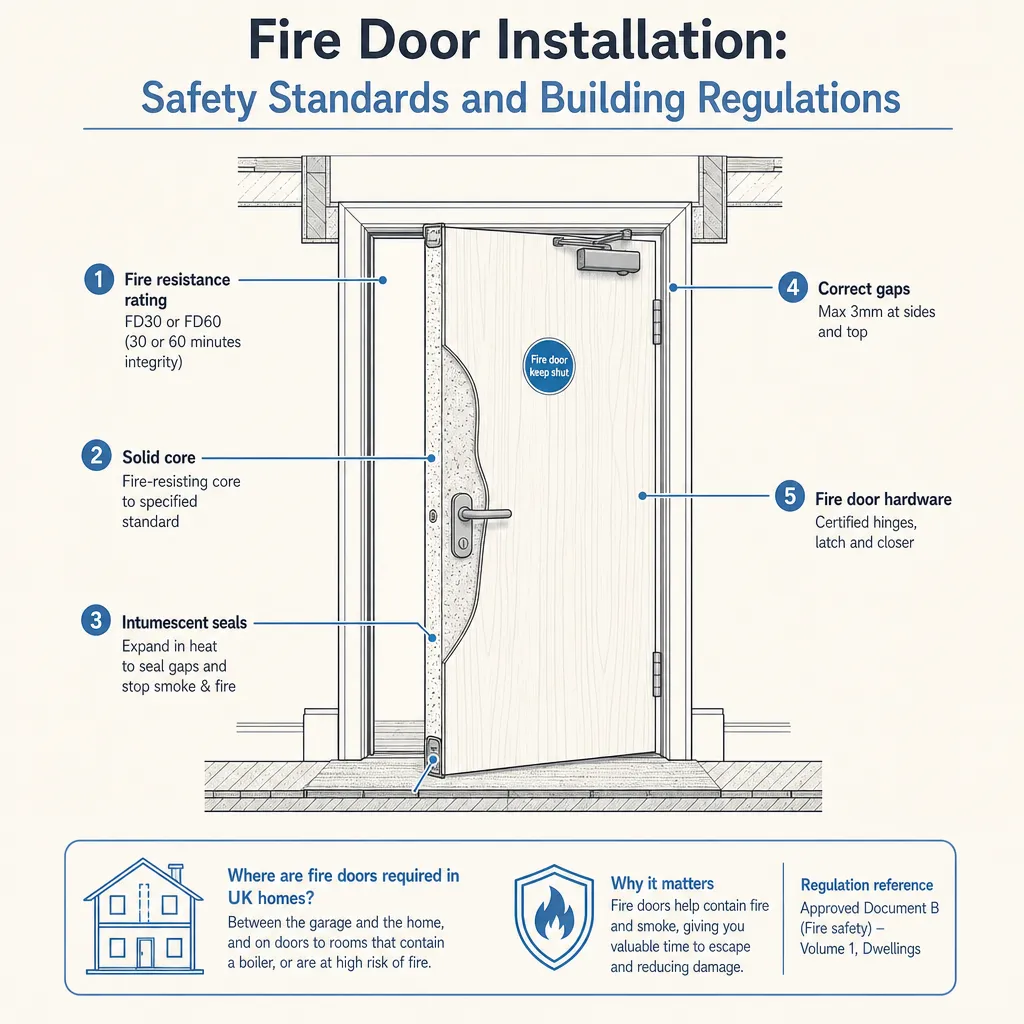
Fire Door Installation: Safety Standards and Building Regulations
Fire doors in UK homes are required by Building Regulations on escape routes, between integral garages and living space, and throughout HMOs.
 Improvement & Build
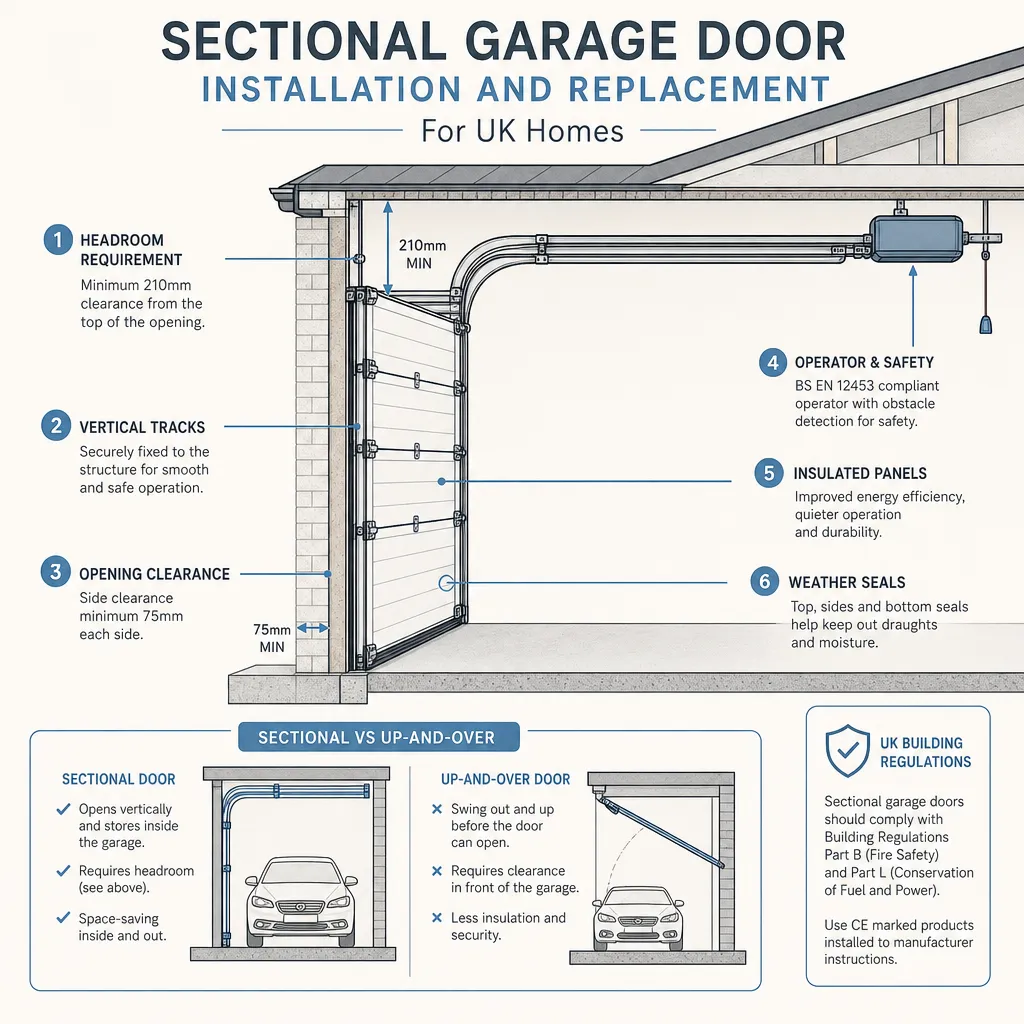
Sectional Garage Door Installation and Replacement
A sectional garage door opens on vertical tracks before folding back overhead, requiring no forecourt clearance to operate.
 Improvement & Build
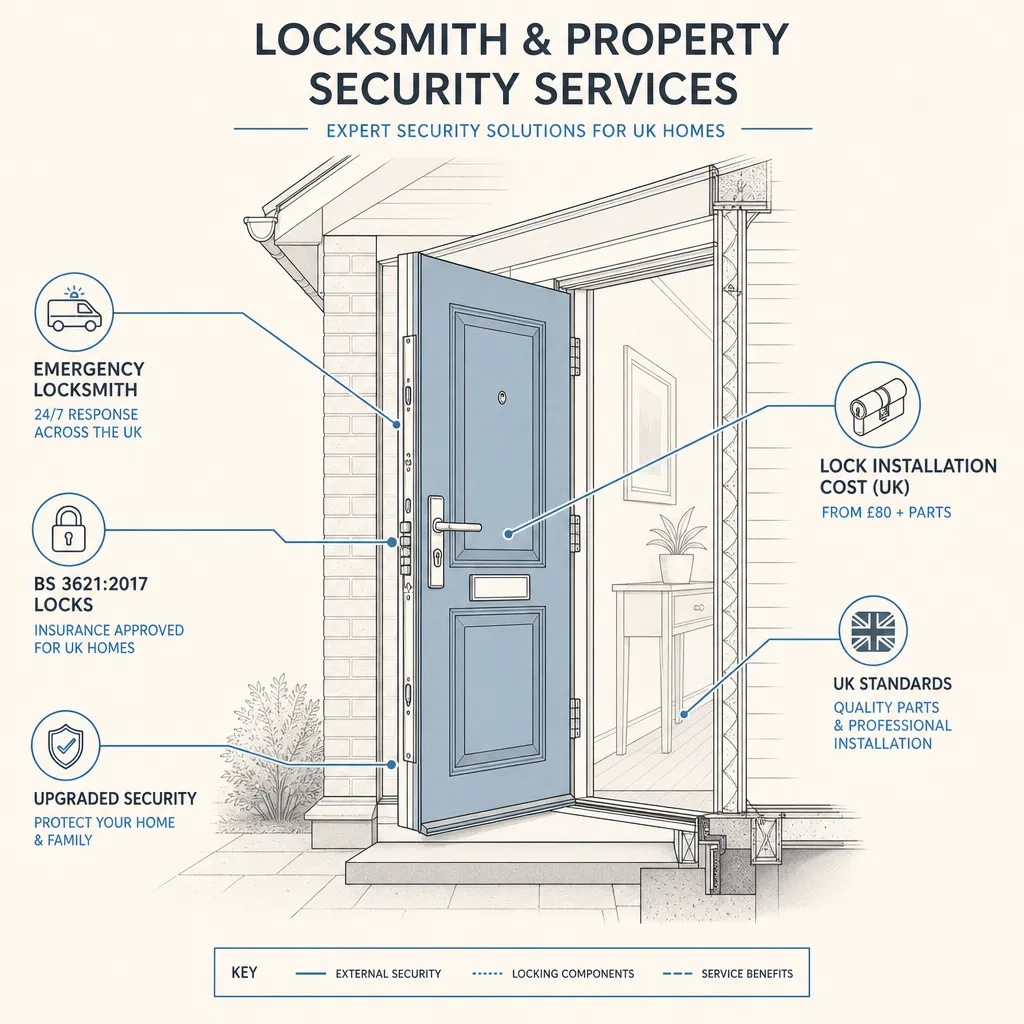
Locksmith and Property Security Services
A UK locksmith can replace, repair, or upgrade door locks, respond to lockouts, and advise on access control.
 Improvement & Build
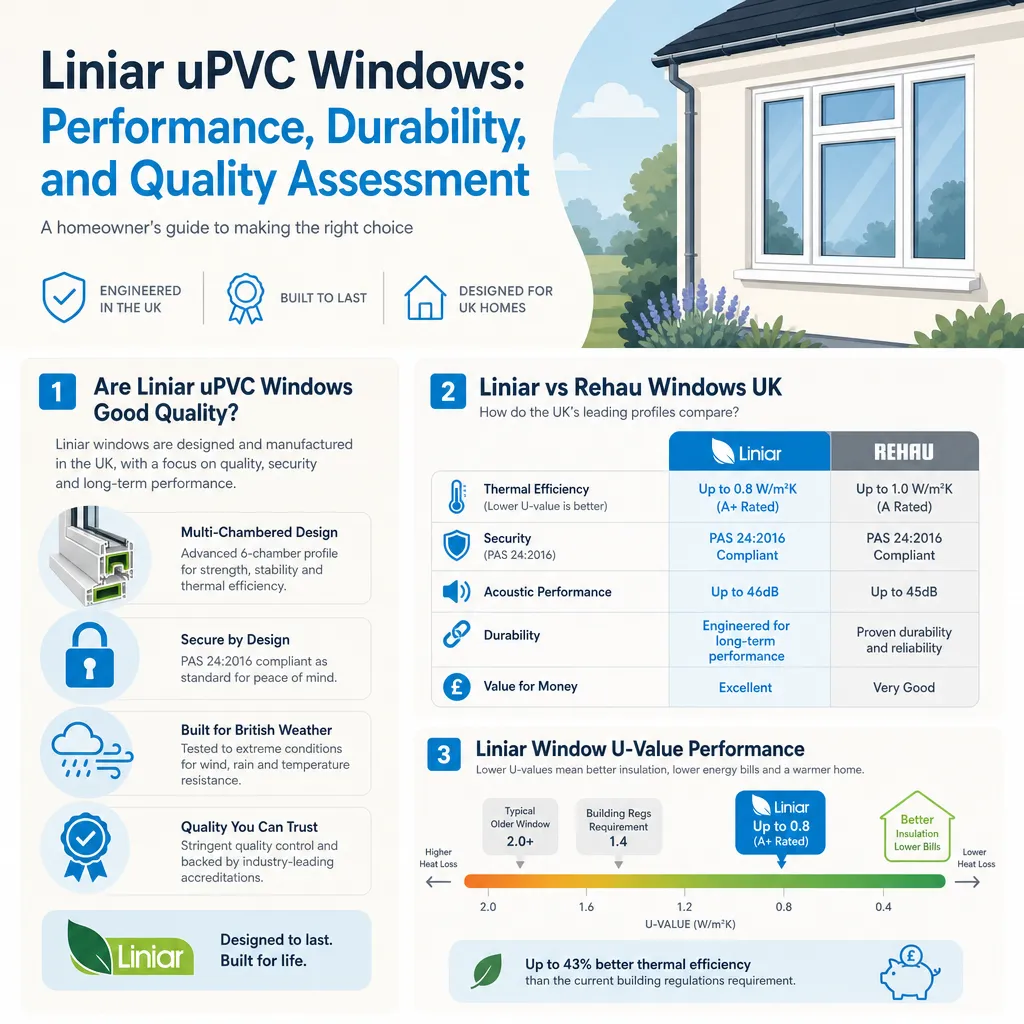
Liniar uPVC Windows: Performance, Durability, and Quality Assessment
Liniar uPVC window profiles are manufactured in the UK using multi-chambered, foamed frames.