Locksmith and Property Security Services
By Housey · Last reviewed 7th of May 2026
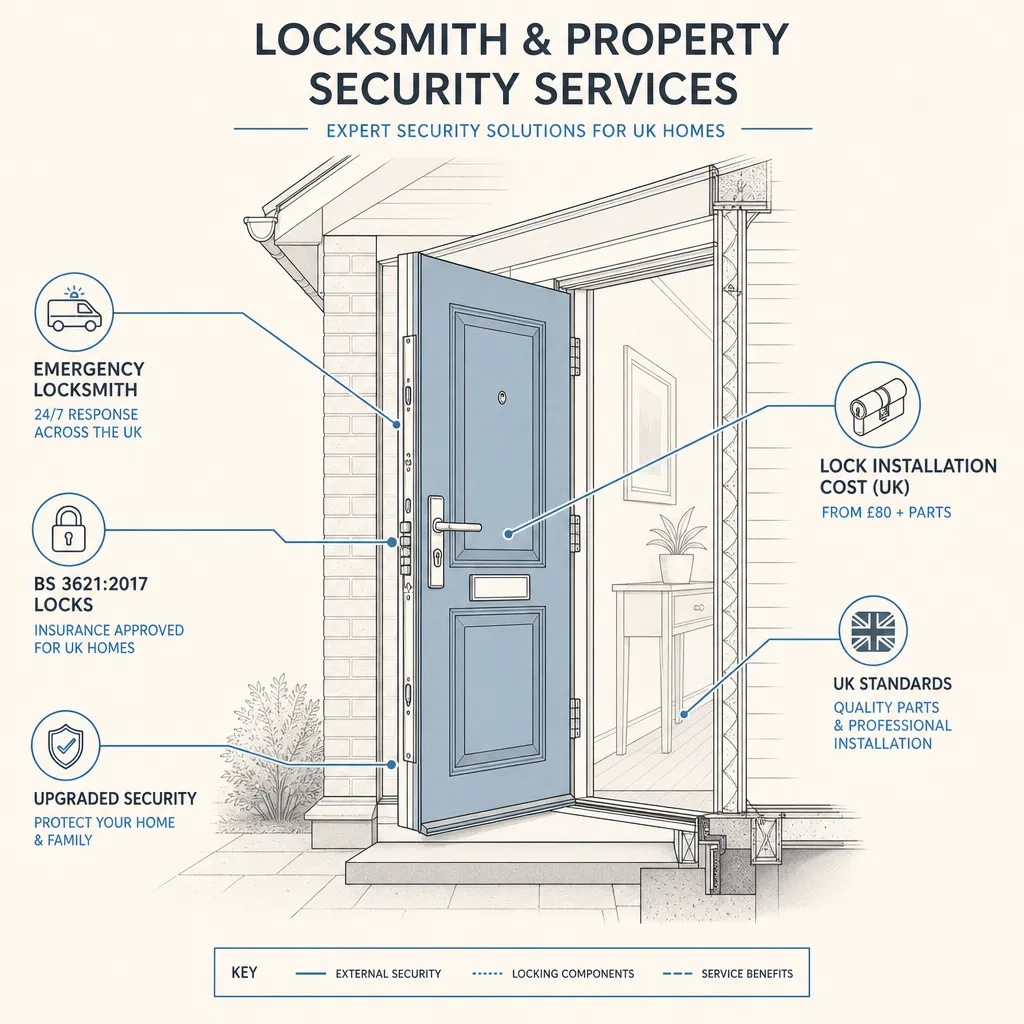
Locksmith and Property Security Services
When a lock fails, keys are lost, or security needs upgrading before moving into a new home, choosing the right locksmith matters more than many homeowners realise. The UK locksmith trade is largely unregulated, which means quality, pricing, and practices vary considerably. Understanding what services are available, which standards to look for, and what fair pricing looks like helps you protect your home and avoid being overcharged.
Key points
- British Standard BS 3621 is the benchmark for mortice deadlocks on UK external doors; most home insurers require BS 3621-certified locks — check your policy schedule before replacing any external lock.
- The Master Locksmiths Association (MLA) is the main UK trade body for locksmith vetting; MLA-approved firms undergo independent inspection and background checks before approval.
- Emergency callout fees vary widely — rogue traders typically quote low over the phone and raise the price on arrival; always agree a confirmed total before authorising any work.
- Multi-point locking systems on uPVC and composite doors require specialist knowledge to repair correctly; a poorly adjusted mechanism can leave a door appearing locked but physically unsecured.
- Smart locks and access control systems should ideally carry Secured by Design (SBD) accreditation or equivalent CPNI-recognised certification for higher-security applications.
What services does a locksmith provide?
A qualified locksmith can carry out a broad range of security-related work beyond emergency lockouts.
Service | What it involves | Typical use case |
|---|---|---|
Emergency lockout | Non-destructive entry, or lock drilling and replacement where unavoidable | Lost keys, broken key in lock, locked out of property |
Lock change or replacement | Removing existing lock and fitting a new cylinder or mortice | After break-in, moving into a new property, key security concern |
Lock upgrade | Fitting higher-security locks (BS 3621, anti-snap, anti-pick cylinders) | Insurance requirement, improving home security |
Multi-point lock repair | Adjusting or replacing locking points on uPVC or composite doors | Door failing to lock correctly, worn or damaged mechanism |
Access control installation | Fitting keypads, key fobs, smart locks, or intercom systems | Landlords, shared access buildings, home offices |
Window lock installation | Fitting sash locks, cockspur handles, or window restrictors | Insurance requirements, child safety |
Security survey | Audit of entry points and locking hardware across the property | Post-burglary, before moving in, insurer recommendation |
Lock types and standards explained
British Standard BS 3621
BS 3621 sets the minimum performance requirements for thief-resistant mortice deadlocks and is referenced by most UK home insurance policies as a condition of cover for external doors. The standard covers resistance to picking, drilling, and sawing. When replacing an external door lock, check your insurer's policy schedule to confirm whether BS 3621 or an equivalent standard is required.
Anti-snap euro-profile cylinders
Euro-profile cylinders — common in uPVC and composite doors — are vulnerable to a forced entry technique called cylinder snapping. Anti-snap cylinders incorporate a sacrificial section that breaks away before the internal locking mechanism is compromised. Look for cylinders tested to TS007 three-star rating or equivalent. The Secured by Design scheme publishes a list of police-preferred specification products.
Multi-point locking systems
Most modern uPVC and composite doors use a multi-point mechanism, typically three to five locking points engaged by lifting the door handle. These systems are more complex to repair than traditional mortice locks and require familiarity with the specific brand — commonly Winkhaus, ERA, or Yale. An incorrectly adjusted mechanism is a significant security risk that may not be immediately apparent from the outside.
Smart locks and access control
Smart locks offer keyless entry via Bluetooth, Wi-Fi, or Z-Wave, and can integrate with home automation systems. They are not inherently less secure than traditional locks when installed correctly to a recognised standard. For rental properties or shared-access buildings, a locksmith with specific access control experience is preferable to a general installer.
Locksmith costs in the UK
Indicative UK costs, last reviewed 2026-05-07. Prices vary by region, time of day, and lock type. Always confirm whether VAT is included.
Job type | Typical cost range | Notes |
|---|---|---|
Emergency lockout (non-destructive) | £80–£150 | Higher rates apply evenings and weekends |
Emergency lockout with lock replacement | £120–£250+ | Includes new cylinder or mortice |
Standard cylinder replacement | £60–£130 | During business hours, straightforward door |
BS 3621 mortice deadlock supply and fit | £80–£180 | Lock cost plus labour |
Anti-snap cylinder upgrade (per door) | £80–£160 | TS007 3-star cylinder |
Multi-point lock mechanism repair | £80–£200+ | Varies by brand and fault complexity |
Smart lock supply and installation | £150–£400+ | Depends on brand and door type |
Home security survey | £50–£150 | Some MLA members offer this as a free service |
How to identify a reputable locksmith
The UK locksmith trade is not regulated by statute, meaning anyone can legally call themselves a locksmith. Use these checks before instructing anyone.
Homeowner checklist: choosing a trustworthy locksmith
Red flags to watch for
- A very low initial quote that is revised sharply upward once the locksmith is on site
- Refusal to confirm a total price before starting work
- Pressure to replace the entire lock when a cylinder change or re-key would suffice
- No verifiable business address or trade body membership
- Cash-only payment demanded
- Unbranded lock cylinders presented as British Standard without visible certification markings
- Aggressive upselling of additional security products not discussed before arrival
Access control and smart security
For properties requiring more sophisticated arrangements — rental flats with multiple tenants, homes with offices, or properties with a history of break-ins — access control systems offer a step beyond traditional key-and-cylinder arrangements.
Key options include:
- Key fob or keypad entry systems (commonly specified in flats and HMOs)
- Smart deadbolts (such as Yale Smart, Ultion Smart, or Schlage products)
- Video doorbell integration (Ring, Nest, or Ajax alarm ecosystems)
- Full access control panels for multi-unit or mixed-use properties
For security-critical installations, look for Secured by Design (SBD) accreditation and choose installers familiar with the specific product lines they are recommending. The Centre for the Protection of National Infrastructure (CPNI) publishes guidance on physical security measures for higher-risk environments.
When to get professional help
An MLA-approved locksmith should be your first call for:
- Any emergency lockout, particularly after dark or in poor weather conditions
- Lock replacement following a break-in or attempted forced entry
- Meeting an insurance requirement for a named lock standard
- Installing or repairing a multi-point locking system
- Any security upgrade to a property in your care as a landlord
Do not attempt to force a lock yourself — this risks door and frame damage and is unlikely to succeed without specialist tools. For a broken key stuck in a lock, many locksmiths can extract it non-destructively without replacing the lock cylinder.
How Housey can help
Housey helps UK homeowners connect with vetted local professionals for property security and home improvement work. If you are planning a lock upgrade, need a security survey before moving into a new property, or want to compare quotes for access control installation, Housey can help you find the right professional for the job.
Frequently asked questions
Does a locksmith need to belong to a trade body?
There is no legal requirement for a locksmith to hold trade membership in the UK. However, MLA membership provides independent vetting, background checks, and a formal complaints process. For any work involving home security — especially post-burglary lock replacement or access control — using an MLA-approved or similarly vetted firm is strongly recommended.
Will changing my lock invalidate my home insurance?
Replacing a lock with an equivalent or higher-specification product — for example, one BS 3621 deadlock for another — will not normally invalidate your policy. Fitting a non-compliant lock, or failing to maintain the standards specified in your policy schedule, could affect a future claim. Check your policy documents or speak to your insurer before making significant changes.
Can a landlord change the locks without telling a tenant?
In England and Wales, a landlord who changes the locks without the tenant's consent (outside of very limited circumstances where a court order has been obtained) may be committing illegal eviction under the Protection from Eviction Act 1977. Landlords should take legal advice before altering access arrangements during an active tenancy.
How long does an emergency locksmith take to arrive?
Response times vary by location and time of day. In most UK urban areas, an MLA-approved locksmith can typically arrive within 30–90 minutes for an emergency callout. Rural locations may face longer waits. Confirm the estimated arrival time when you call and agree the total price before authorising any work to begin.
Is a smart lock more secure than a traditional deadlock?
Smart locks are not inherently more or less secure than well-specified traditional locks. A TS007 3-star anti-snap cylinder with a BS 3621 deadlock provides strong physical resistance at lower cost than most smart lock systems. Smart locks offer genuine convenience benefits — remote access, audit trails, and temporary codes for tradespeople — but require correct installation and regular firmware updates to remain effective.
Sources and further reading
- Find an MLA-approved locksmith — Master Locksmiths Association
- Secured by Design — police-preferred security products — Secured by Design / NPCC
- Illegal evictions and harassment — GOV.UK
- Reporting rogue traders and locksmith scams — Action Fraud / City of London Police
- British Standards Institution — BS 3621 and TS007 — BSI
Useful next reads
 Improvement & Build
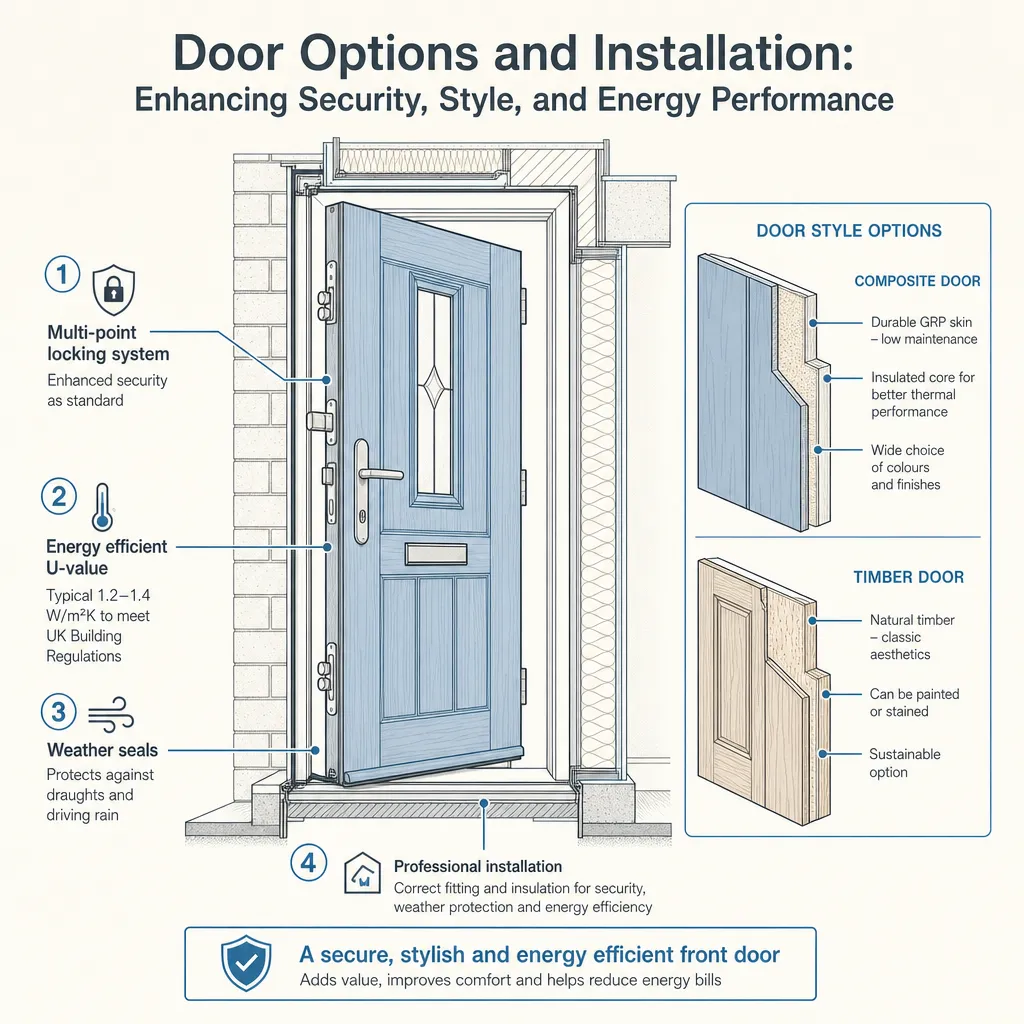
Door Options and Installation: Enhancing Security, Style, and Energy Performance
Choosing a new external door involves balancing security ratings, thermal performance, and style.
 Improvement & Build
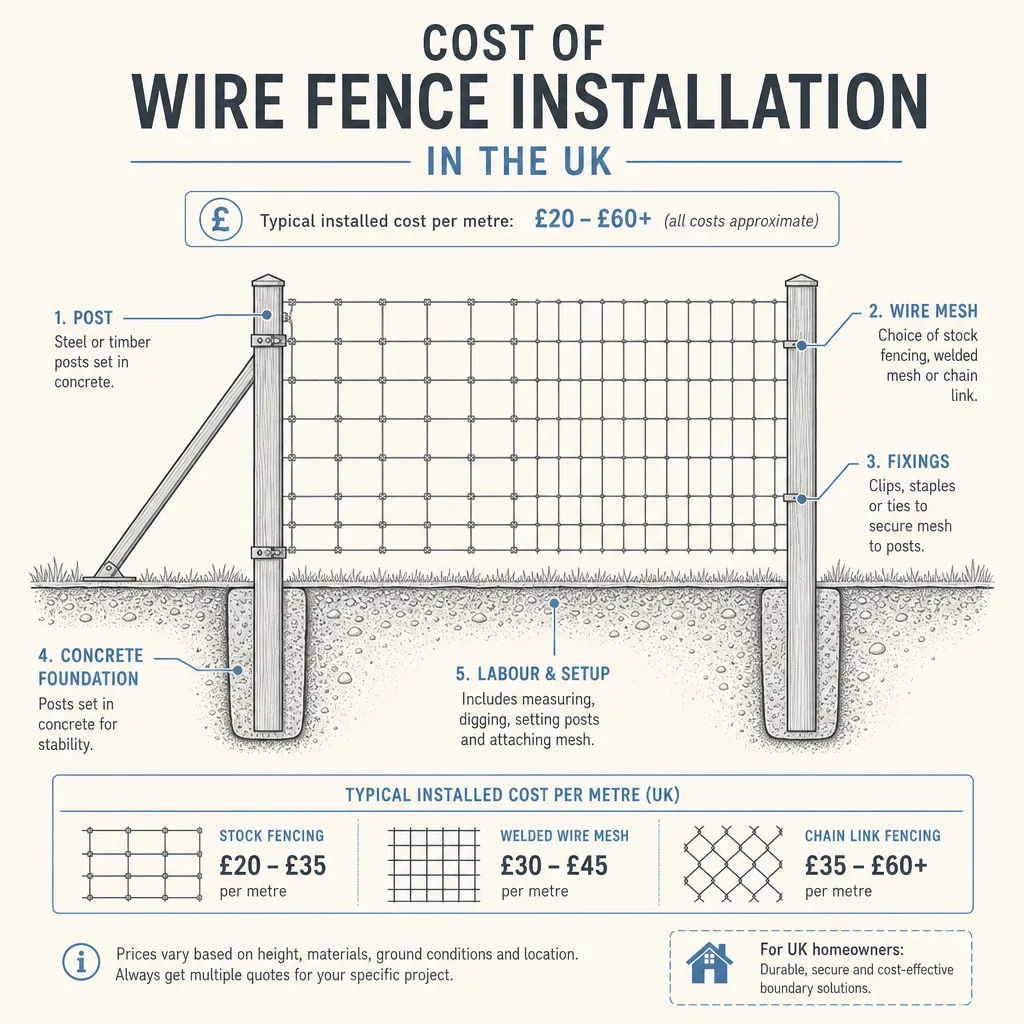
Cost of Wire Fence Installation in the UK
Wire fence installation in the UK typically costs £8–18 per metre for stock fencing, £15–35 per metre for chain-link, and £20–45 per metre for welded wire mesh panels, all installed.
 Improvement & Build
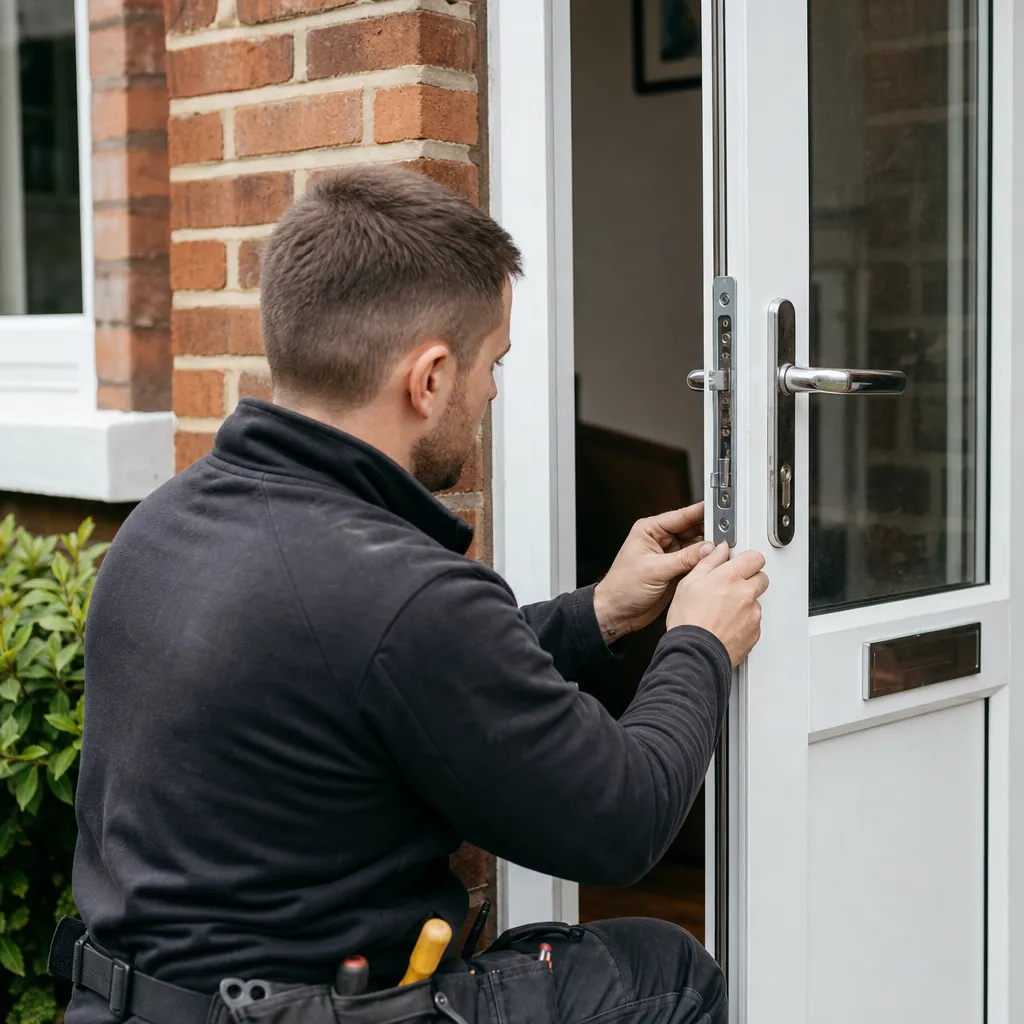
Repairing a Broken uPVC Door Lock: Replacement and Solutions
A broken uPVC door lock usually needs a new cylinder, a replacement multipoint mechanism, or both.
 Improvement & Build
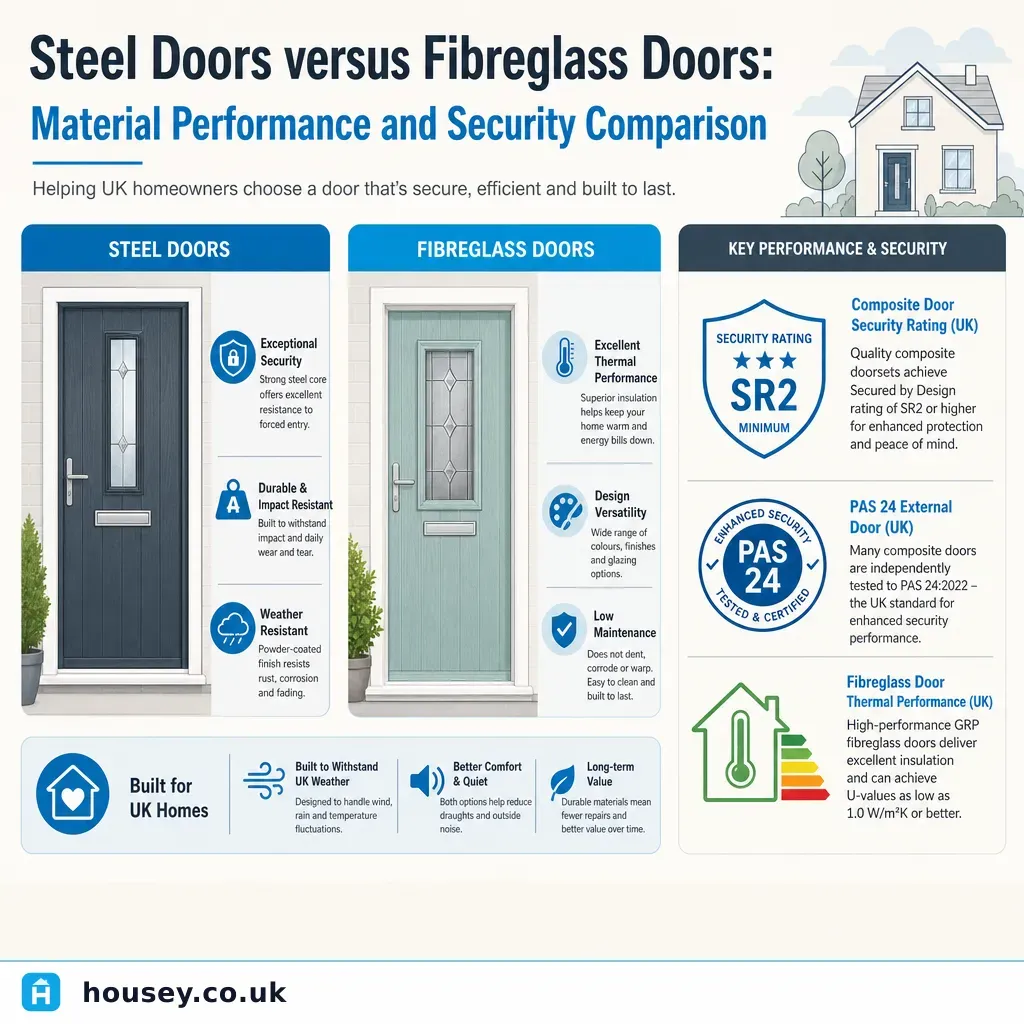
Steel Doors versus Fibreglass Doors: Material Performance and Security Comparison
Steel external doors offer higher forced-entry resistance and suit commercial-grade security requirements.
 Improvement & Build
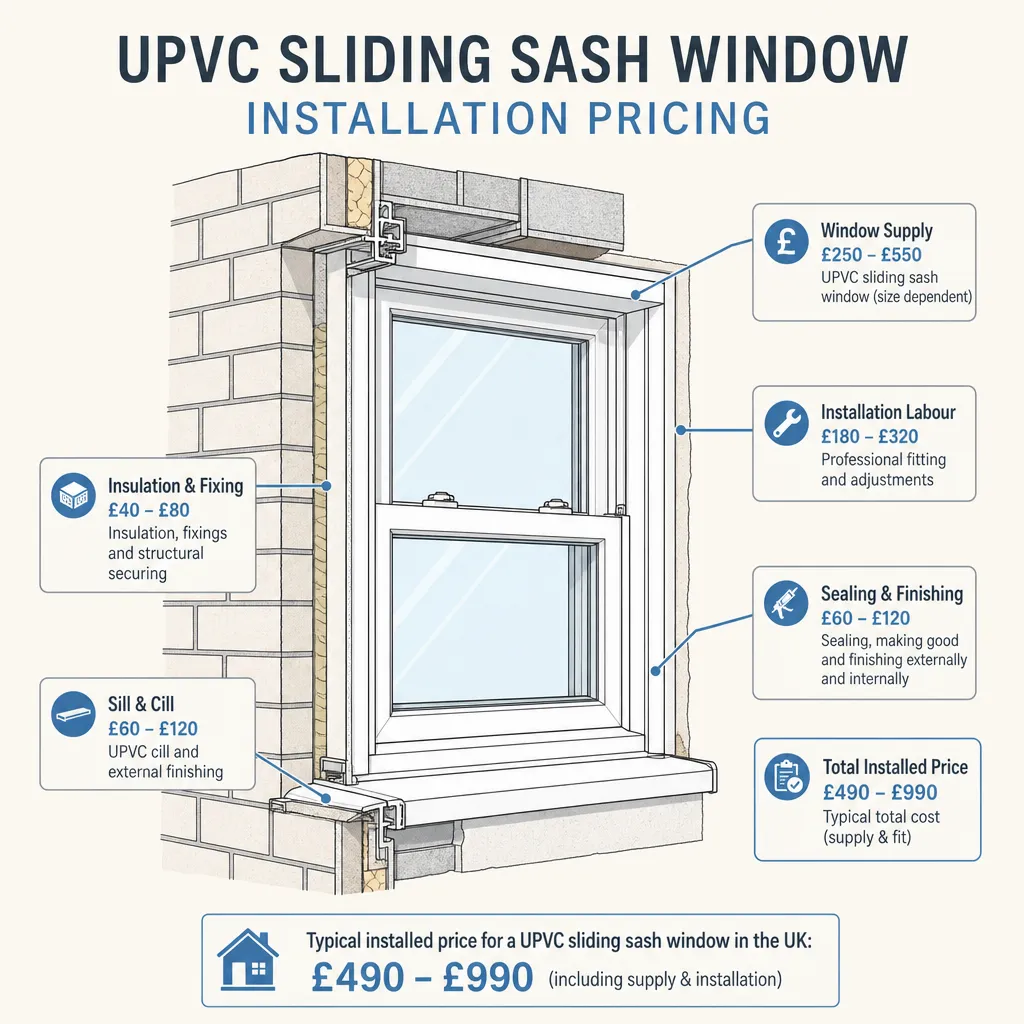
UPVC Sliding Sash Window Installation Pricing
UPVC sliding sash windows are priced by size, glazing specification, balance system, finish, and access requirements.