Driveway Installation Standards: Proper Thickness Tolerances
By Housey · Last reviewed 25th of May 2026
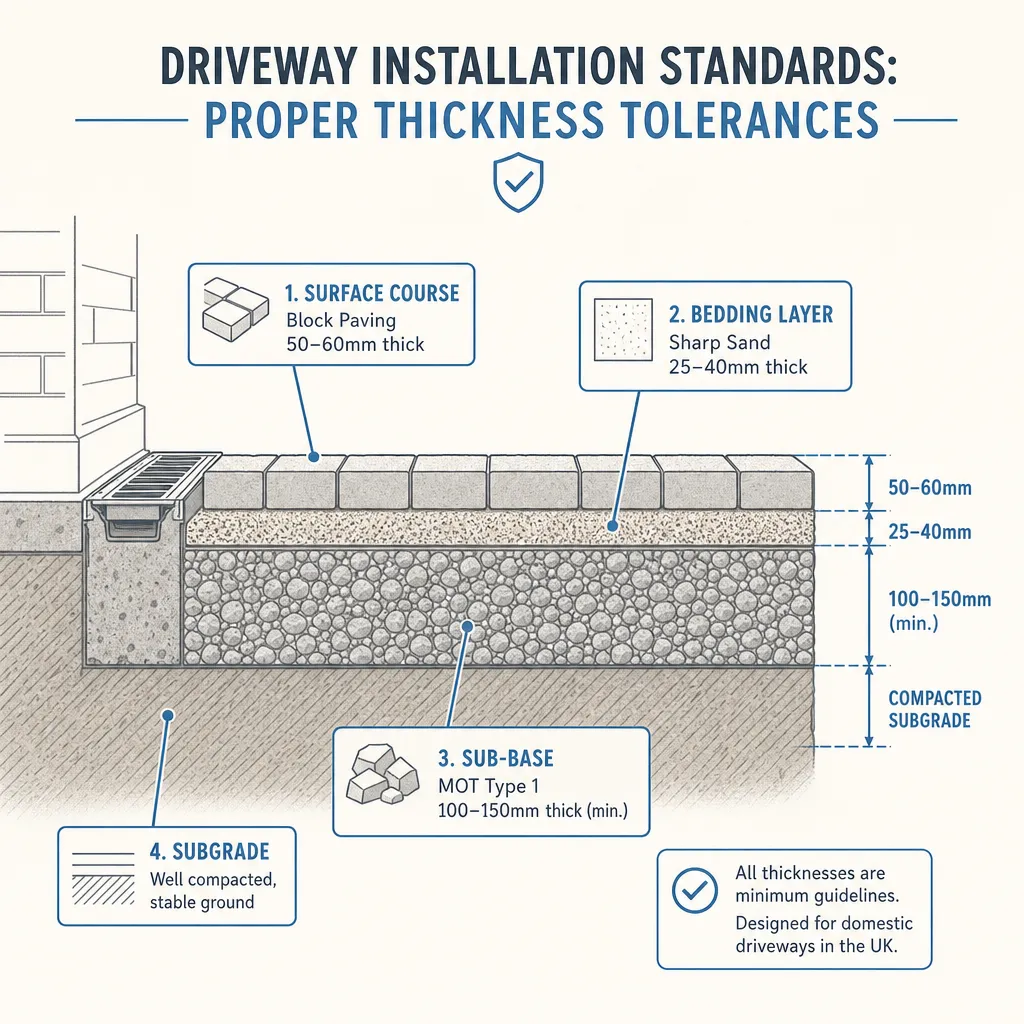
Driveway Installation Standards: Proper Thickness Tolerances
A new driveway is one of those jobs where you only discover the quality of the work after the contractor has been paid and the surface has been in use for a few winters. Sub-base depth, compaction quality, and layer thicknesses are the technical standards that distinguish a driveway lasting 20 years from one that cracks and settles within three — and most of the critical work happens below ground, out of sight. Whether you are specifying block paving, tarmac, concrete, or resin-bound aggregate, understanding UK installation standards helps you write a clear brief, evaluate competing quotes, and inspect the finished work before releasing final payment.
Key points
- A standard residential driveway requires 100–150mm of compacted Type 1 MOT crushed aggregate sub-base — under-depth or poorly compacted sub-base is the primary cause of premature driveway failure.
- Block paving needs a minimum 50mm sharp sand bedding layer over the sub-base, with 65mm concrete pavers for car use and 80mm pavers specified for vehicles over 3.5 tonnes.
- Tarmac (asphalt) driveways typically use a 60–80mm binder course plus a 20–30mm surface (wearing) course on top of the sub-base; surface-only overlays without sub-base improvement carry a significantly shorter service life.
- In England, any new or replacement hard surface over 5m² in a front garden must be permeable or drain to a permeable area under the Town and Country Planning (General Permitted Development) Order — solid impermeable surfaces require planning permission.
- Surface regularity tolerance for finished block paving should be within ±10mm when measured with a 3-metre straight edge, as a practical quality benchmark at completion.
Why layer thickness matters more than surface appearance
Two driveways can look identical on completion but have dramatically different expected service lives depending on what lies beneath. Contractors who under-specify the sub-base save considerable material and labour costs — costs that eventually fall on the homeowner through premature failure.
The principal failure modes in UK residential driveways include:
- Sub-base settlement: insufficient depth or poor compaction allows the sub-base to compress under vehicle loads, producing surface undulation, ponding, and cracked edges.
- Frost heave: inadequate structural depth in clay subgrades causes surface movement through freeze-thaw cycles, common across much of England and Wales.
- Binder course delamination (tarmac/asphalt): when the binder course is under-thickness or the tack coat is omitted, the surface course separates and crumbles.
- Edge failure: block paving without properly haunched concrete edge restraints migrates outward, causing surface creep and widening gaps.
Thickness standards by material type
Driveway type | Sub-base (Type 1 MOT) | Bedding or base layer | Surface or wearing layer | Approximate total depth |
|---|---|---|---|---|
Block paving (cars) | 100–150mm compacted | 50mm sharp sand | 65mm concrete block | 215–265mm |
Block paving (LGV/commercial) | 150–200mm compacted | 50mm sharp sand | 80mm concrete block | 280–330mm |
Tarmac / asphalt | 100–150mm compacted | 60–80mm binder course | 20–30mm surface course | 180–260mm |
Concrete slab | 100–150mm compacted | — | 100mm reinforced concrete | 200–250mm |
Resin-bound aggregate | 100–150mm compacted | 40–50mm asphalt base | 15–18mm resin layer | 155–218mm |
Gravel / permeable block | 100–150mm compacted | 50mm scalpings | 50mm decorative gravel | 200–250mm |
Indicative UK standards, last reviewed 2026-05-25. Clay subgrades or soft ground conditions may require additional depth or a geotextile membrane at formation level. Always confirm the specification with your contractor against actual ground conditions on site.
Permeable surfaces and planning rules
Since 2008, permitted development rights in England no longer cover new or replacement impermeable hard surfaces in front gardens over 5m². Under the Town and Country Planning (General Permitted Development) (England) Order:
- Permeable surfaces — permeable block paving, resin-bound aggregate, gravel, and others designed to allow water through — can be installed without planning permission.
- Impermeable surfaces — solid concrete, standard tarmac without separate drainage — require a planning application if the area exceeds 5m² in a front garden.
- Side and rear driveways are not subject to the same restriction, though they may affect other permitted development calculations.
Rules in Wales, Scotland, and Northern Ireland differ. Always check with your local planning authority before laying a solid front driveway — enforcement action can require removal at your cost.
What good compaction looks like
Compaction is invisible once the surface is laid, but several indicators allow you to assess quality during and after installation:
- Layer thickness: Type 1 MOT sub-base must be compacted in lifts no deeper than 150mm at a time — a single thick lift cannot be adequately compacted throughout its full depth.
- Compaction equipment: vibrating plate compactors or vibrating rollers are required for adequate sub-base compaction; hand tamping is insufficient for depths over 100mm.
- Geotextile membrane: on clay or unstable subgrades, a non-woven geotextile between the formation and the sub-base prevents contamination and improves long-term performance.
- Edge restraints: block paving must be haunched with concrete (typically 150mm deep × 150mm wide) at all free edges to prevent lateral spread.
Homeowner checklist: inspecting the finished driveway
Before signing off and releasing final payment, use this checklist:
What to ask before accepting a quote
- What sub-base depth and material are you specifying, and will you use Type 1 MOT?
- Will the sub-base be compacted in layers, and what equipment will you use?
- Is the surface material compliant with the permitted development rules for front driveways?
- What edge restraint or haunching detail are you providing for block paving?
- Does the quote include excavation and off-site disposal of spoil?
- What drainage provision is included — existing gulley, new channel drain, or soakaway?
- Is VAT included? (Standard-rated at 20% for driveway installation.)
- What written guarantee do you provide, and what does it cover?
When to get professional help
Most driveway installations are straightforward, but seek professional advice before starting work if:
- The driveway passes over a public sewer or drainage easement — check your drainage search or contact your water company before digging.
- Ground conditions are soft, waterlogged, or suspected to be made or filled ground — a ground investigation may be needed to confirm the correct sub-base specification.
- The property is listed or in a conservation area — surface material choices may be restricted.
- You discover the existing sub-base was built over a culverted watercourse or old drainage structure.
How Housey can help
Housey connects homeowners with vetted driveway installers who can quote on block paving, tarmac, resin, and concrete driveways to a written specification. Request and compare quotes with clear details of sub-base depth and materials before committing to a contractor.
Frequently asked questions
What is the minimum sub-base depth for a residential block paving driveway in the UK?
For a standard residential car driveway, a minimum 100mm of compacted Type 1 MOT granular sub-base is the widely accepted standard, sitting below 50mm of sharp sand bedding and 65mm concrete block paving — a total build-up of around 215mm. Clay or unstable subgrades may warrant 150mm of sub-base or the addition of a geotextile membrane at formation level.
Can a new tarmac surface be laid over an existing driveway?
A tarmac overlay is sometimes used for resurfacing where the existing sub-base is sound and finished levels at the threshold remain practical. However, if the existing sub-base is degraded, a full dig-out and reinstatement is better long-term value. Overlays without sub-base improvement carry a significantly reduced service life and are a common source of early failure.
Do I need planning permission for a new driveway in England?
Front driveways over 5m² using an impermeable surface require planning permission in England. Permeable surfaces — including permeable block paving, resin-bound aggregate, and gravel — can be installed under permitted development. Rules differ in Wales, Scotland, and Northern Ireland; always check with your local planning authority before work begins.
How long should a properly installed driveway last?
A block paving driveway laid to correct specification typically lasts 20–30 years with occasional joint re-sanding. A well-laid asphalt driveway lasts 15–25 years. Resin-bound surfaces commonly carry a 10–15 year manufacturer warranty. Early failure within five years is almost always attributable to inadequate sub-base depth or poor compaction.
Sources and further reading
- When is permission required? — GOV.UK Planning Practice Guidance — GOV.UK
- BS EN 1338: Concrete paving blocks — requirements and test methods — British Standards Institution
- Interpave: The Precast Concrete Paving and Kerb Association — Interpave
- The Concrete Centre: driveway and external paving guidance — The Concrete Centre
Useful next reads
 Improvement & Build
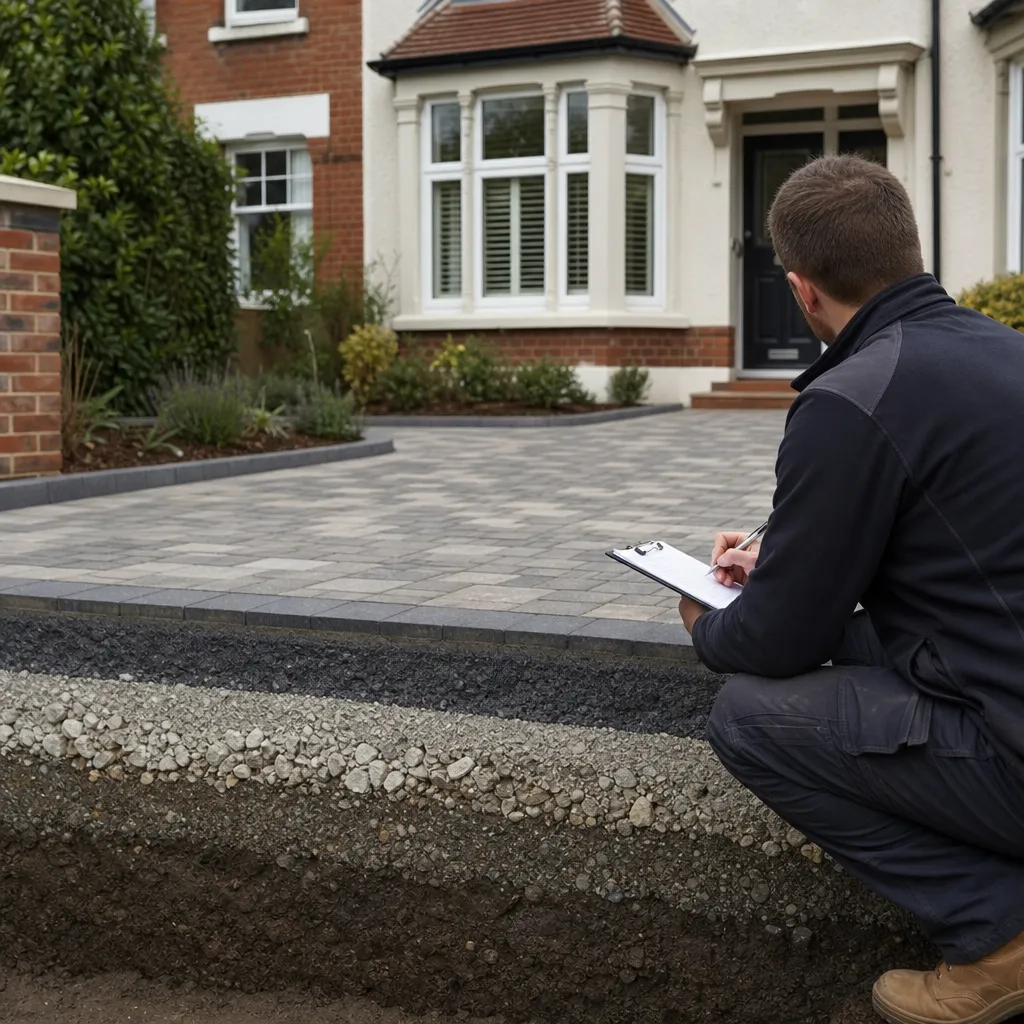
Driveway Thickness: Achieving the Right Specification for Residential Properties
The correct thickness for a residential driveway depends on the surface material and the traffic it will carry.
 Improvement & Build
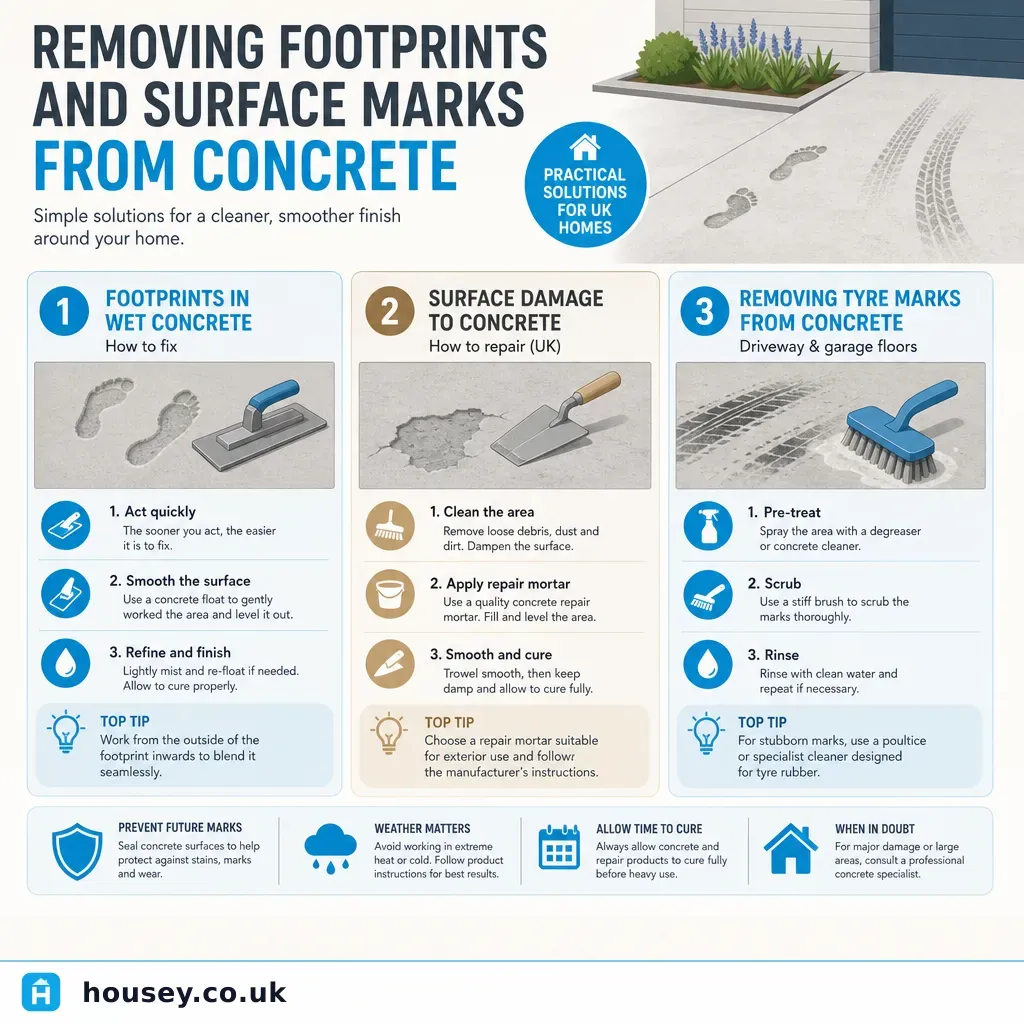
Removing Footprints and Surface Marks from Concrete
Footprints and marks in fresh concrete under 4–6 hours old can often be re-floated or trowelled smooth by a skilled finisher before initial set occurs.
 Improvement & Build
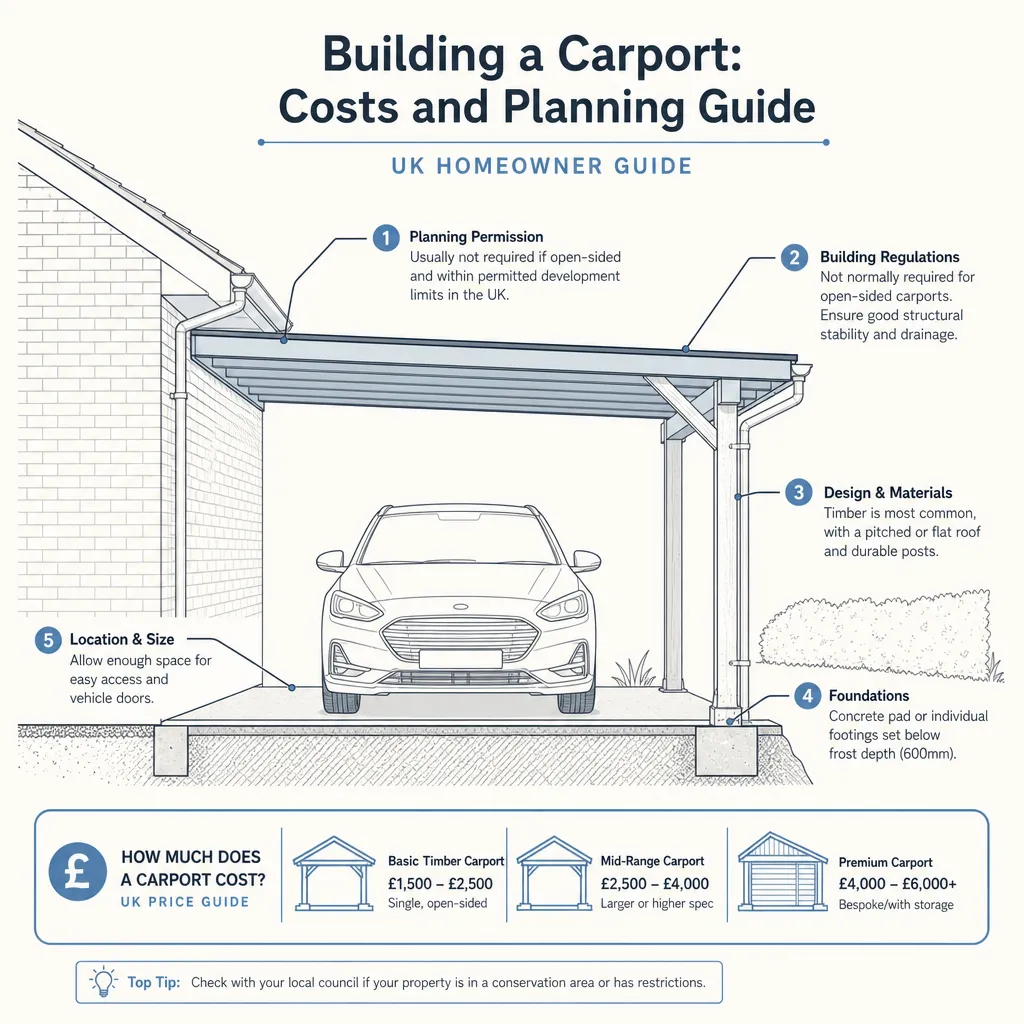
Building a Carport: Costs and Planning Guide
A single-bay carport in the UK typically costs £3,000–£12,000 installed, depending on material and groundworks.
 Improvement & Build
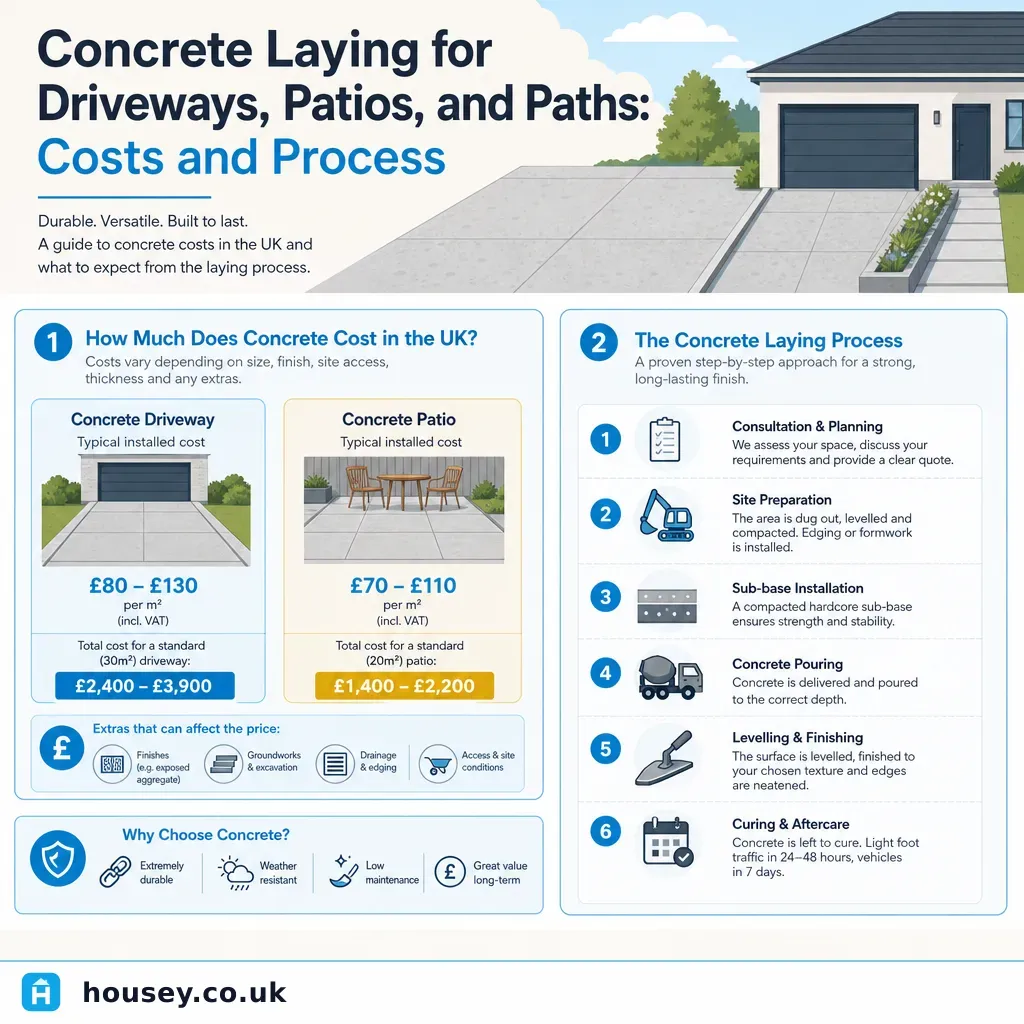
Concrete Laying for Driveways, Patios, and Paths: Costs and Process
Concrete laying for a UK driveway typically costs £65–£110 per square metre, including sub-base, reinforcement, formwork, and finishing.
 Improvement & Build
Window installation checklist for homeowners
Before installation, confirm your installer is registered with FENSA or CERTASS and can self-certify Building Regulations compliance.