Window installation checklist for homeowners
By Housey · Last reviewed 19th of May 2026
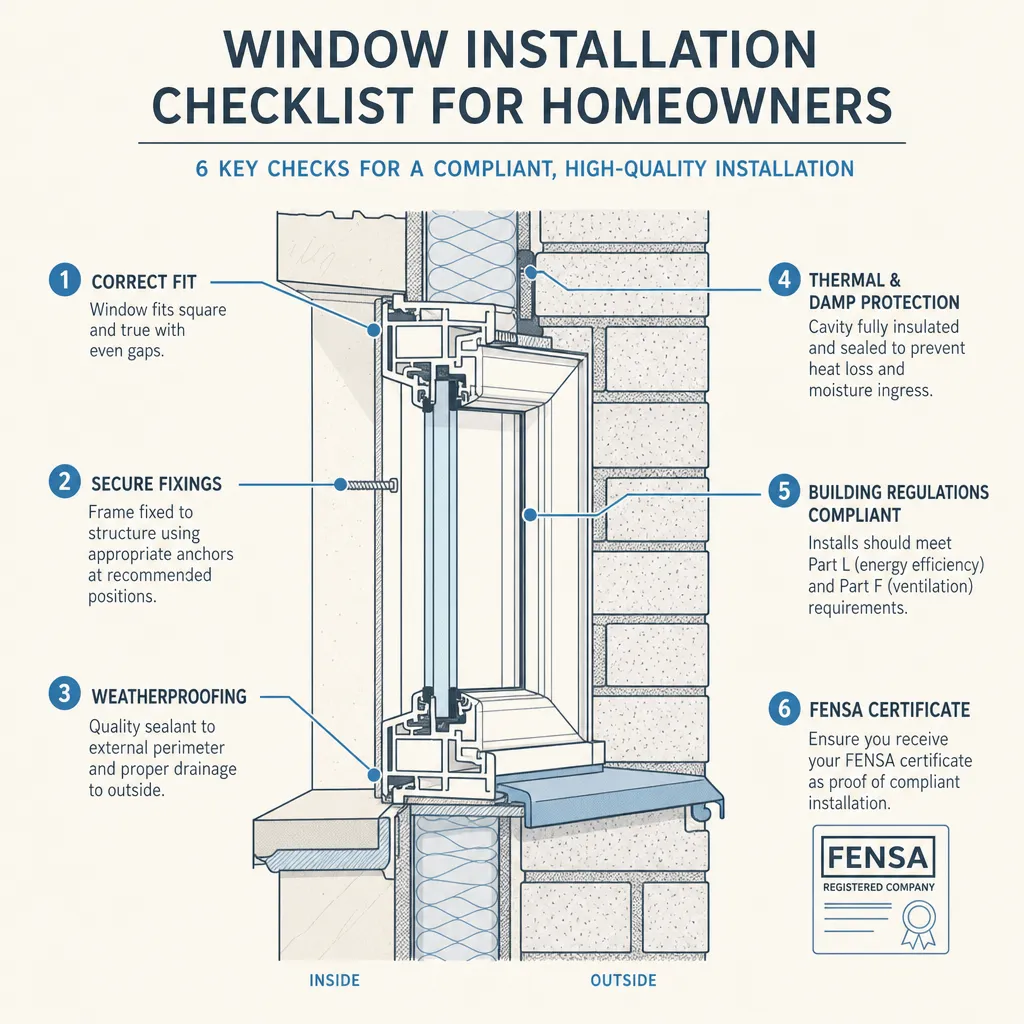
Window installation checklist for homeowners
Replacing windows in a UK home involves more than choosing a frame style and colour — it triggers Building Regulations obligations, may require local authority or historic building consent, and generates paperwork you will need at resale. Whether you are updating a single sash in a 1930s terrace or fitting new double glazing throughout a 1980s semi, a structured checklist at each stage reduces the risk of draughts, water ingress, failed building control inspections, or missing compliance certificates.
Key points
- Replacement windows in England and Wales must meet Building Regulations Part L thermal performance standards; the minimum whole-window U-value is 1.4 W/m²K.
- Installers registered with FENSA or CERTASS can self-certify compliance with Building Regulations, removing the need for a separate local authority building control application or notification fee.
- Properties in a conservation area or those that are listed buildings may require planning permission or listed building consent before window replacement, regardless of who carries out the work.
- Trickle vents must be included in replacement windows under Building Regulations Part F unless the original windows also lacked them — this is not optional.
- A FENSA or CERTASS compliance certificate should be issued within 30 days of completion; solicitors and mortgage lenders request this document on sale or remortgage.
Before installation: preparation checklist
Doing the groundwork before the installer arrives prevents delays, avoids last-minute surprises, and keeps the project on budget.
Permissions and compliance
Specification and ordering
Access and site preparation
On the day: what to check during installation
You do not need to supervise every step, but a brief check at key stages catches problems while they are straightforward to resolve.
Frame fitting and sealing
- Ask the installer to confirm the frame is square and level before it is sealed in place. A frame fitted out of square will prevent the window closing correctly and can cause premature seal wear.
- All gaps between the new frame and the masonry or reveal should be filled with appropriate materials — expanding foam, backed rod, or suitable sealant — and external sills should slope water away from the building.
- Check that no drainage slots (weep holes) in the bottom frame section are blocked by sealant during installation.
Safety glazing
Building Regulations Part K requires toughened or laminated safety glass — to BS EN 12150 or BS EN ISO 12543 respectively — in critical locations: areas within 800 mm of floor level, beside or in doors, and in low-level side panels. Confirm the correct glass specification is fitted in these positions before the installer leaves.
Trickle vents
- Confirm vents are present in rooms that require them.
- Ask the installer to demonstrate that the vents open and close correctly.
After installation: sign-off checklist
What to ask your window installer
Before work begins, ask:
- Are you registered with FENSA, CERTASS, or another government-authorised Competent Person Scheme?
- What whole-window U-value will the completed unit achieve, and will you confirm this in writing?
- Will trickle vents be fitted where required under Part F, and are they sized correctly for the room?
- What safety glazing specification will be used in critical locations under Part K?
- Is your workmanship guarantee transferable to a future owner if I sell the property?
- What happens if a frame or glazed unit is damaged during installation?
- Will you make good any plaster, render, or internal finishes disturbed during removal of the old windows?
- When exactly will the compliance certificate be issued, and how will it be provided?
When to get professional help
Most residential window installations are routine, but seek independent professional advice if:
- Your proposed installer cannot confirm Competent Person Scheme registration and is also unwilling to use the local authority building control notification route.
- You notice cracking, staining, or visible movement around any window reveal before or during installation — a structural survey may be needed before work proceeds.
- Your property is listed or sits within a conservation area and you are uncertain whether existing or proposed consents are sufficient.
- After installation, condensation appears between the glass panes — this indicates a failed sealed unit rather than a surface problem, and is a warranty matter to pursue with the installer promptly.
- Persistent draughts remain after the installer has attempted remediation.
How Housey can help
Housey makes it straightforward to find vetted local professionals for your glazing project. Our window and door installers can advise on compliance, confirm the right glazing specification for your property, and provide FENSA or CERTASS-backed certification on completion. Submit your requirements and compare quotes from installers in your area.
Frequently asked questions
Do I need planning permission to replace my windows?
In most cases, replacing like-for-like windows in a standard residential property falls under permitted development and does not need planning permission. However, if your home is in a conservation area, an Article 4 Direction area, or is a listed building, restrictions apply. Always check with your local planning authority before ordering.
What is a FENSA certificate and why do I need it?
A FENSA certificate confirms that replacement windows comply with Building Regulations. It is issued once work is registered by your FENSA-registered installer. You will need it when you sell your home or remortgage, as solicitors and lenders ask for compliance evidence for windows installed after April 2002.
What U-value should replacement windows achieve?
Building Regulations Part L currently requires a whole-window U-value of no worse than 1.4 W/m²K for replacement windows in England. Many modern double-glazed units achieve 1.2 W/m²K or better. Triple-glazing can reach 0.8 W/m²K or lower. A lower U-value means better thermal performance.
Can I use a window installer who is not FENSA registered?
Yes. If your installer is not registered with a Competent Person Scheme such as FENSA or CERTASS, you or the installer must notify local authority building control before work begins and pay a notification fee. Building control will inspect the work and issue a completion certificate — a valid but more administratively involved route.
Sources and further reading
- Building Regulations Approved Document L: Conservation of fuel and power — GOV.UK
- Building Regulations Approved Document K: Protection from falling, collision and impact — GOV.UK
- Building Regulations Approved Document F: Ventilation — GOV.UK
- FENSA: check your window installer — FENSA
- Planning Portal: windows, doors and other openings — Planning Portal
Useful next reads
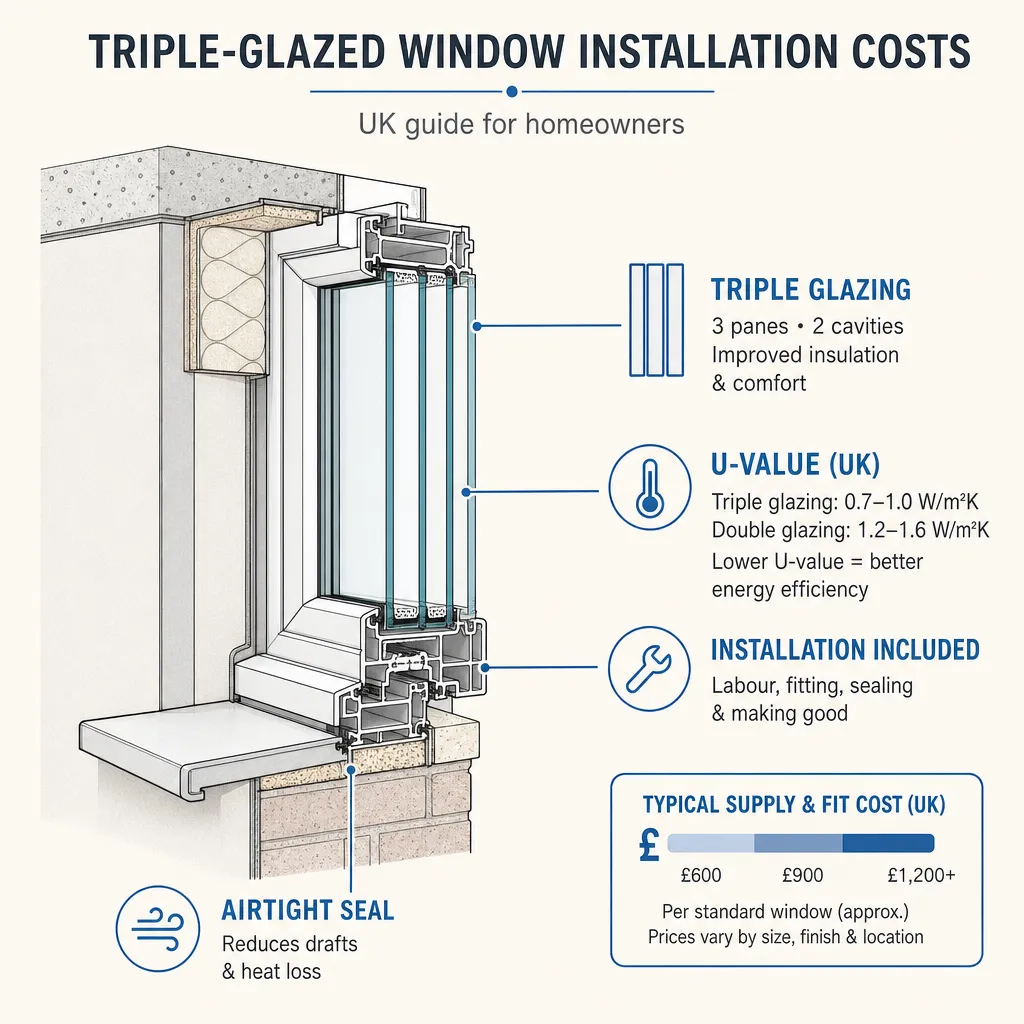 Improvement & Build
Triple-Glazed Window Installation Costs
Triple-glazed window installation in the UK typically costs £800–£1,800 per window, depending on size, frame material, and glazing specification.
 Improvement & Build
Removing Footprints and Surface Marks from Concrete
Footprints and marks in fresh concrete under 4–6 hours old can often be re-floated or trowelled smooth by a skilled finisher before initial set occurs.
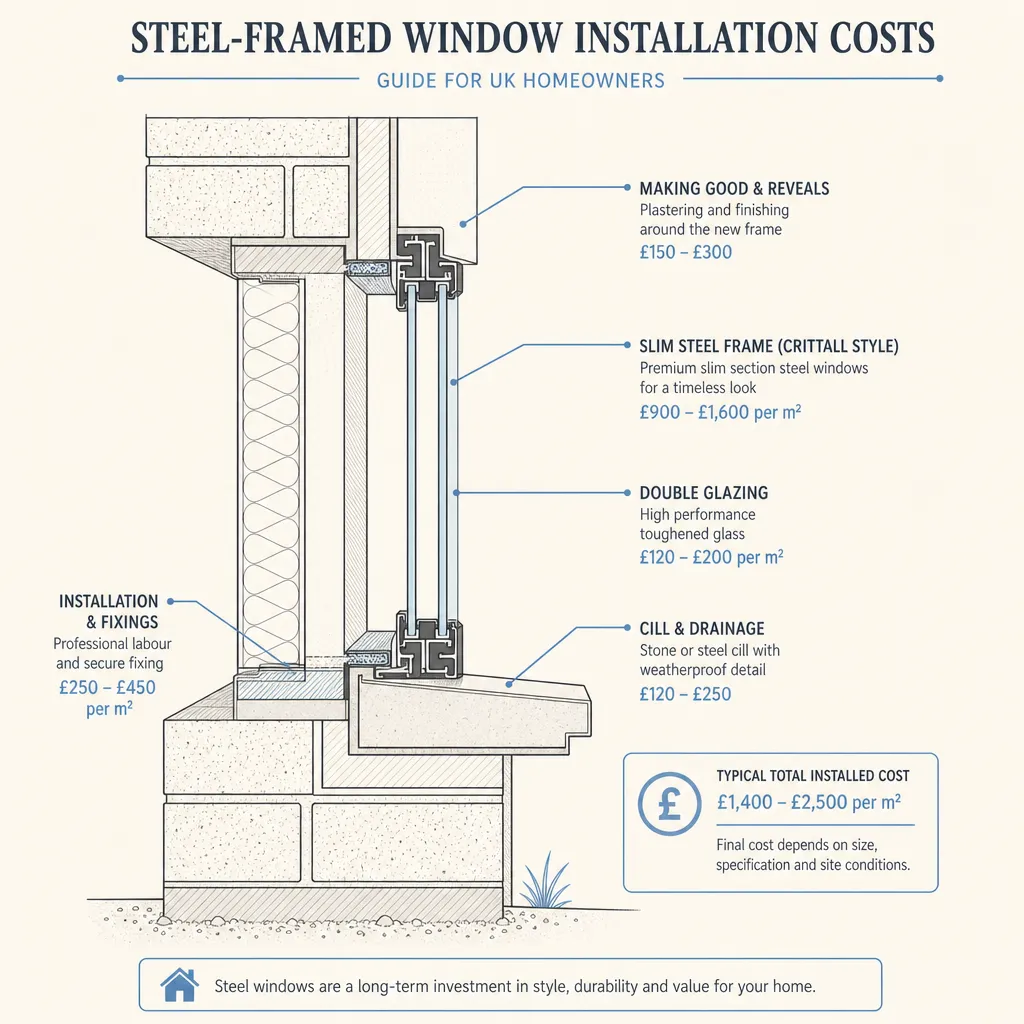 Improvement & Build
Steel-Framed Window Installation Costs
Steel-framed windows cost between £800 and £3,500 or more per window installed in the UK, depending on size, profile type, glazing specification, and whether old frames need removing.
 Improvement & Build
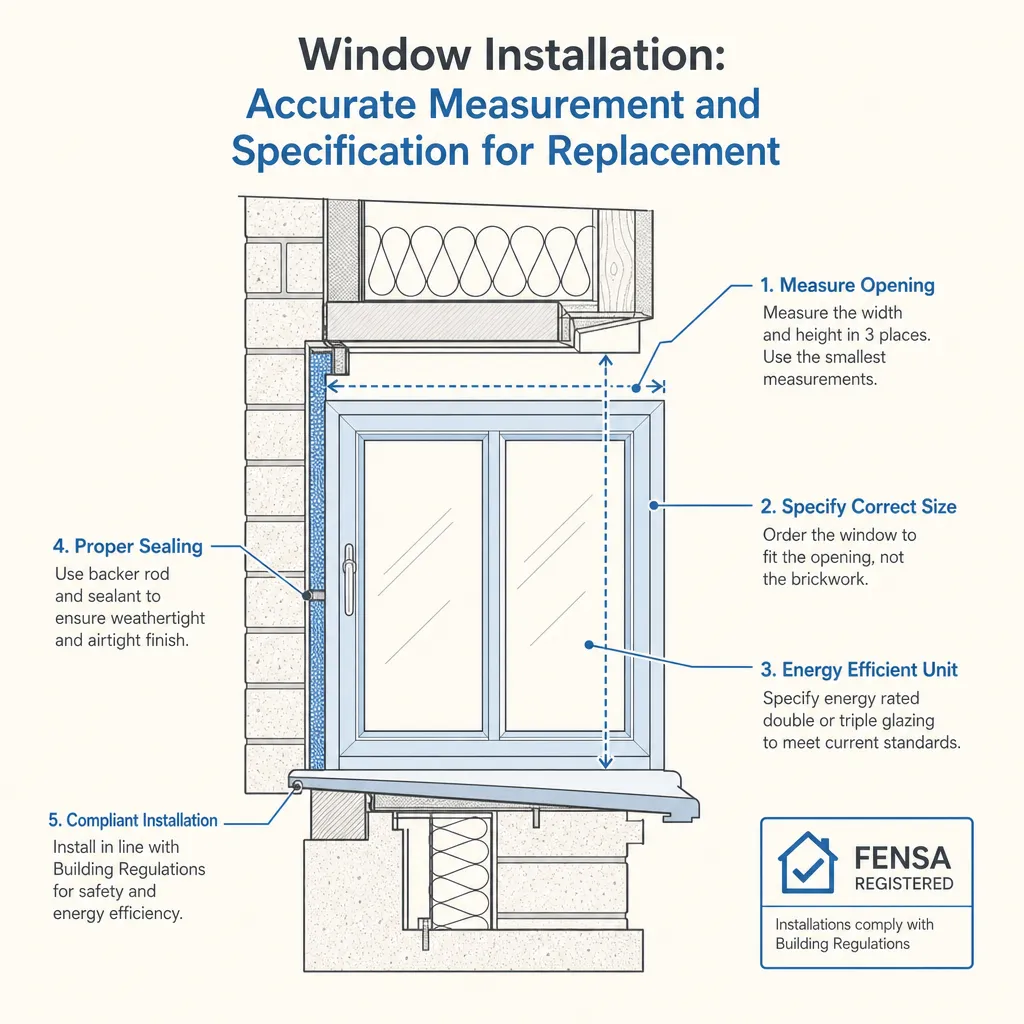
Window Installation: Accurate Measurement and Specification for Replacement
Accurate window measurement for replacement means recording the width and height of the existing frame opening in at least three places, noting the smallest dimension, and providing a full specification to your installer — including frame material, glazing type, opening style, and trickle ventilators.
 Improvement & Build
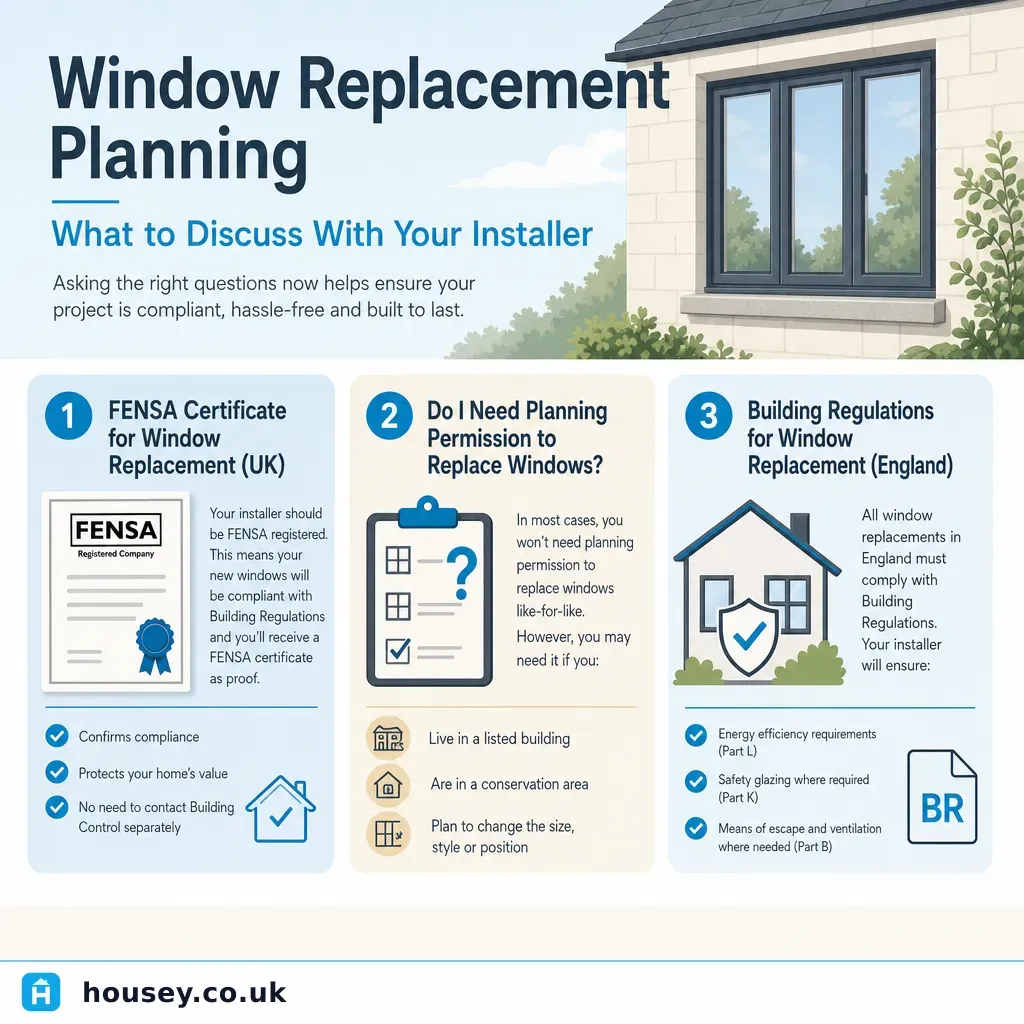
Window Replacement Planning: What to Discuss With Your Installer
Most window replacements in England fall under permitted development rights and do not require planning permission, but they must comply with Building Regulations Part L and Part K.