Driveway Paving: Costs and Material Options Compared
By Housey · Last reviewed 30th of May 2026
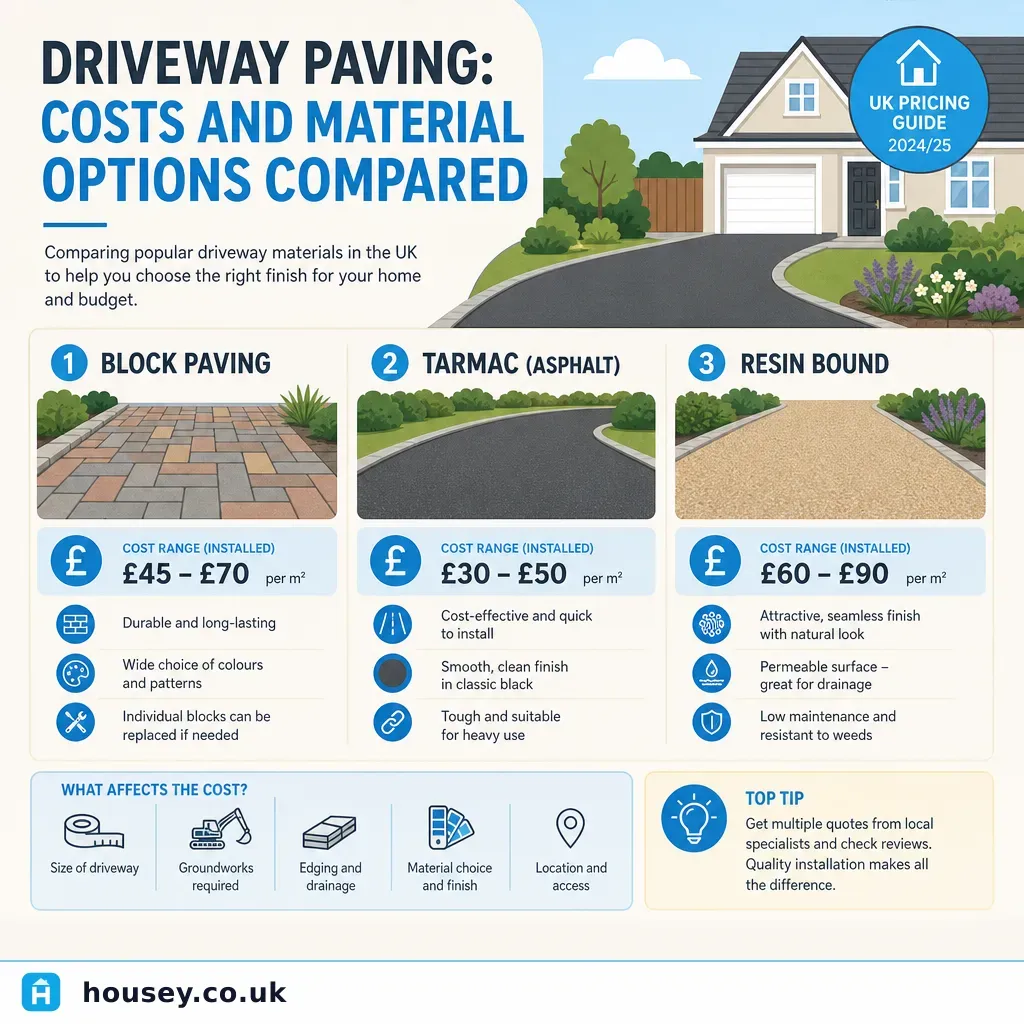
Driveway Paving: Costs and Material Options Compared
Replacing or installing a driveway is one of the more visible home improvements — and one where material choice has real consequences for planning permission, drainage compliance, maintenance demands, and long-term value. Whether you are replacing a crumbling concrete apron on a 1930s semi or laying a new surface on a 1990s estate house, understanding the cost drivers and material trade-offs before requesting quotes helps avoid expensive surprises and planning complications.
Key points
- Front-garden driveways surfaced with impermeable material exceeding 5 m² require planning permission in England under the Town and Country Planning Act 1990 (as amended in 2008); using a permeable surface or directing run-off to a lawn or border is permitted development.
- Block paving typically costs £80–£150 per m² installed; tarmac (macadam) £50–£90 per m²; resin-bound aggregate surfaces £70–£120 per m² (Indicative UK costs, last reviewed 2026-05-30).
- A new vehicle crossing (dropped kerb) requires approval from your local highway authority under the Highways Act 1980 before any contractor begins physical work on the public footway.
- Resin-bound surfaces — where aggregate is fully set in clear resin and poured flush — are permeable and generally satisfy planning rules without additional drainage infrastructure; resin-bonded surfaces are a different, non-permeable product.
- Scottish, Welsh, and Northern Irish planning rules for front-garden surfacing differ from those in England — confirm the applicable framework with your local planning authority before starting work.
Driveway materials compared
Material | Typical installed cost per m² | Lifespan | Permeable? | Best for | Watch out for |
|---|---|---|---|---|---|
Tarmac / macadam | £50–£90 | 15–25 years | No | Budget-conscious projects; large areas; fast installation | Softens in extreme heat; limited kerb appeal; impermeable above 5 m² may require planning permission |
Block paving (concrete or clay) | £80–£150 | 25–40 years | Permeable blocks available | Kerb appeal; traditional look; can be relaid for utility access | Higher upfront cost; weeds in joints without regular maintenance |
Resin-bound aggregate | £70–£120 | 15–25 years | Yes | Permeable surfacing without additional drainage; contemporary finish | Must be professionally laid — amateur mixing almost always leads to delamination |
Exposed aggregate concrete | £75–£110 | 25–40 years | No | Durable; low maintenance; modern appearance | Cracks if sub-base is inadequate; less common on UK residential driveways |
Gravel / self-binding gravel | £20–£45 | Ongoing maintenance | Yes | Low cost; permeable; rural or cottage settings | Migrates onto road; noisy underfoot; poor for steep slopes or mobility access |
Porcelain or natural stone | £120–£200+ | 30+ years with care | No (drainage channel possible) | Premium finish; very durable | Highest cost; slippery if not textured; requires an experienced, specialist installer |
Indicative UK costs, last reviewed 2026-05-30. Costs vary significantly by region, sub-base condition, and site accessibility. Obtain at least three written quotes before committing.
Decision tree: which material suits your project?
- Choose tarmac if you need a cost-effective surface for a large area (over 50 m²), want fast installation, and kerb appeal is a secondary concern.
- Choose block paving if appearance matters, you want a durable surface that can be relaid if utilities need access, and the property is a conventional suburban house or terrace.
- Choose resin-bound if you want a permeable surface that avoids planning permission in England and suits a contemporary or low-maintenance finish; ensure the installer has verifiable, referenced experience with the product.
- Choose gravel if budget is the primary constraint, the area drains naturally, and the driveway is relatively flat.
- Choose porcelain or natural stone if you are investing in a premium property and want a long-lasting, distinctive finish; budget carefully for base preparation and jointing mortar.
- Check planning first in all cases for front gardens in England: impermeable surfaces above 5 m² require planning permission. Conservation areas or listed buildings may impose additional restrictions regardless of material or area.
What drives driveway costs?
Sub-base preparation
The sub-base is the most important — and most frequently under-estimated — cost driver. Excavating to the correct depth (typically 150–250 mm for a domestic driveway, depending on ground conditions and surface material) and installing a compacted Type 1 aggregate base is essential for long-term performance. Existing concrete or tarmac may need breaking out and disposing of, which adds to the overall cost.
Drainage
Block paving and resin-bound surfaces can be laid to fall naturally to a garden or soakaway. Impermeable surfaces — standard tarmac, concrete, and porcelain — require drainage channels connecting to stormwater drains, not the foul sewer. Drainage design and connection adds cost but is required by building regulations where run-off would otherwise reach the highway.
Edging and detailing
Soldier-course edging for block paving, granite kerbs for resin surfaces, and timber boards for gravel all add to material and labour costs. Skimping on edging is a common false economy — spreading or failing edges significantly shorten the surface life.
Size and shape
Non-rectangular shapes with curves increase cutting and laying time considerably for block paving and porcelain. A simple rectangular run is always easier to price and install.
Access and site conditions
Tight urban plots — typical of Victorian and Edwardian terraces — cost more to work on than open suburban plots. Soft clay, high water tables, or significant tree root activity can also increase excavation and preparation costs.
Planning permission and highway rules
For driveways in England, the key rules are:
- Permeable surfaces in front gardens — permitted development regardless of area, provided the material is genuinely permeable and run-off is managed on-site.
- Impermeable surfaces in front gardens above 5 m² — planning permission required under the Town and Country Planning Act 1990 (as amended 2008).
- New vehicle crossing (dropped kerb) — requires separate approval from the local highway authority before any work begins on the public footway. Some authorities charge a fee and require use of an approved contractor.
- Conservation areas and Article 4 directions — may remove permitted development rights for front-garden surfacing entirely. Confirm with your local planning authority before starting.
Scotland, Wales, and Northern Ireland each have distinct frameworks for permitted development and front-garden surfacing. Always confirm locally.
What to ask before accepting a quote
- Is the quote based on full excavation to the correct depth, or an overlay on the existing surface?
- What type and depth of sub-base material is included, and will it be mechanically compacted?
- Does the price include edging, drainage channels, and any soakaway or stormwater connection?
- Who physically carries out the work — the firm you are speaking to, or a subcontractor?
- Is the installer a member of a recognised trade body such as the Interlay Approved Installer scheme or BALI (British Association of Landscape Industries)?
- What guarantee is provided on materials and workmanship, and how are disputes resolved?
- Is VAT included in the quoted price?
- Does the price include waste removal and disposal?
When to get professional help
For most driveway installations you need a competent contractor rather than a regulated professional. However, seek additional advice if:
- The ground shows signs of subsidence, significant uneven settlement, or tree root activity — a structural or geotechnical assessment may be needed before any surface is laid.
- The driveway is within a conservation area or on a listed building curtilage — planning advice is essential before starting work.
- A new vehicle crossing is required — the approval process through the highway authority must be completed before physical work begins on the public footway.
- Drainage needs to connect to existing stormwater infrastructure — a drainage contractor may need to be involved separately from the surfacing installer.
How Housey can help
Housey connects homeowners with vetted driveway installers across the UK. Compare quotes, installation approaches, and guarantees from local specialists before committing to any material or contractor.
Frequently asked questions
Do I need planning permission for a driveway in England?
In England, planning permission is required if you surface more than 5 m² of a front garden with an impermeable material such as standard tarmac or solid concrete. Permeable surfaces — including resin-bound aggregate, permeable block paving, and gravel — are generally permitted development regardless of area. Rules differ in Scotland, Wales, and Northern Ireland, so always confirm with your local planning authority.
How long does a driveway installation take?
A typical domestic driveway of 30–50 m² takes two to four days to install, depending on material and sub-base preparation. Tarmac is usually the quickest option. Block paving and resin-bound surfaces take longer due to the precision required in laying and finishing.
Can I lay a driveway myself?
Gravel and some block paving can be laid by experienced DIYers with sound groundwork knowledge. Tarmac requires specialist plant and materials and is not a practical DIY project. Resin-bound surfaces almost always fail without professional equipment — the resin must be mixed and applied within strict time limits and at the correct ambient temperature.
Does a new driveway add value to a property?
A well-laid driveway providing off-street parking in an area where parking is scarce can add value and improve kerb appeal. The uplift depends on location, finish quality, and local parking demand. A premium stone surface in a low-demand area may not return its full cost, so set realistic expectations before investing in the highest-specification material.
What is the difference between resin-bound and resin-bonded paving?
Resin-bound surfaces mix aggregate with clear resin before laying, fully encapsulating the stone to create a permeable, smooth finish. Resin-bonded surfaces apply resin to a base and scatter loose aggregate on top — the result is not permeable and stones can shed over time. From a planning perspective, only resin-bound reliably qualifies as permeable surfacing under England's permitted development rules.
Sources and further reading
- When is permission required? — planning guidance — GOV.UK
- Driveways — common projects guidance — Planning Portal
- Highways Act 1980 — legislation.gov.uk
- Approved Document H — drainage and waste disposal — GOV.UK Building Regulations
Useful next reads
 Improvement & Build
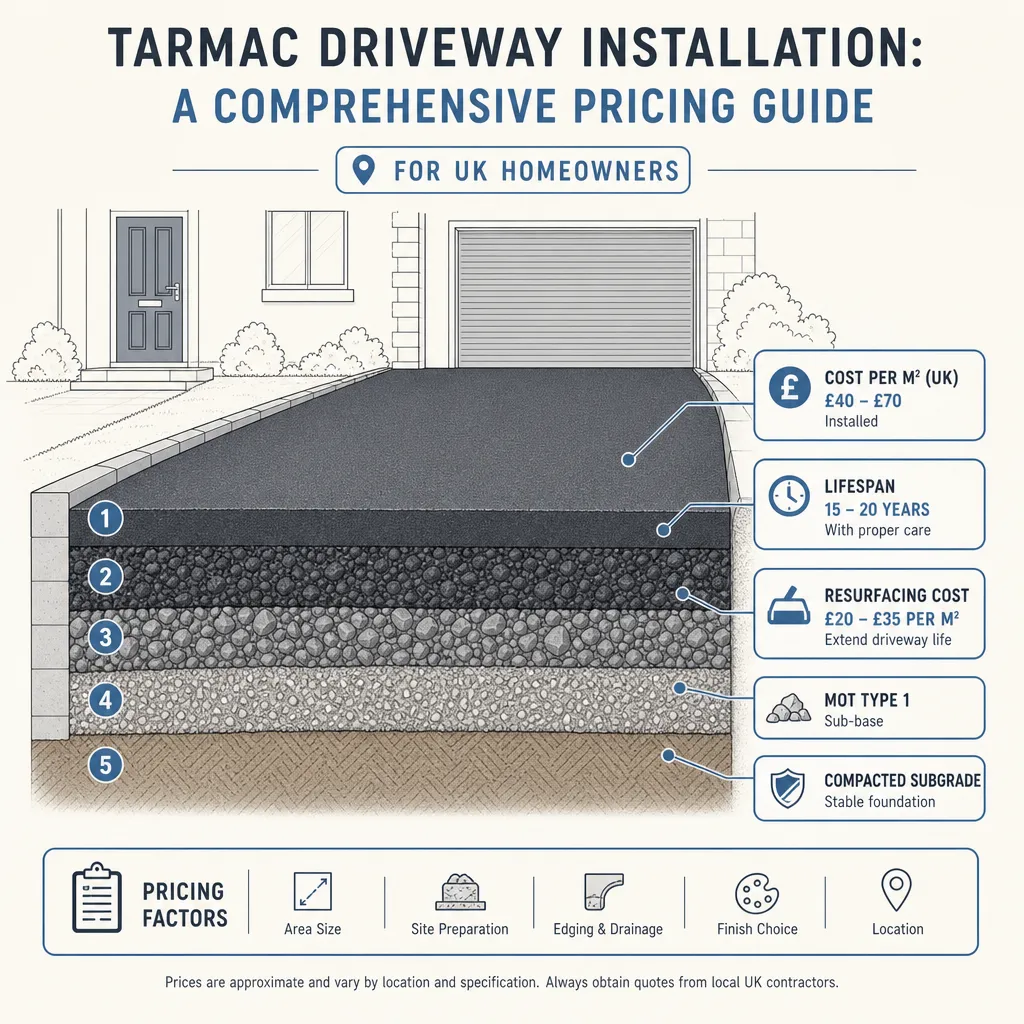
Tarmac Driveway Installation: A Comprehensive Pricing Guide
A tarmac driveway in the UK typically costs £40–£90 per square metre, with a single-car driveway usually totalling £1,200–£2,500 for a full installation.
 Improvement & Build
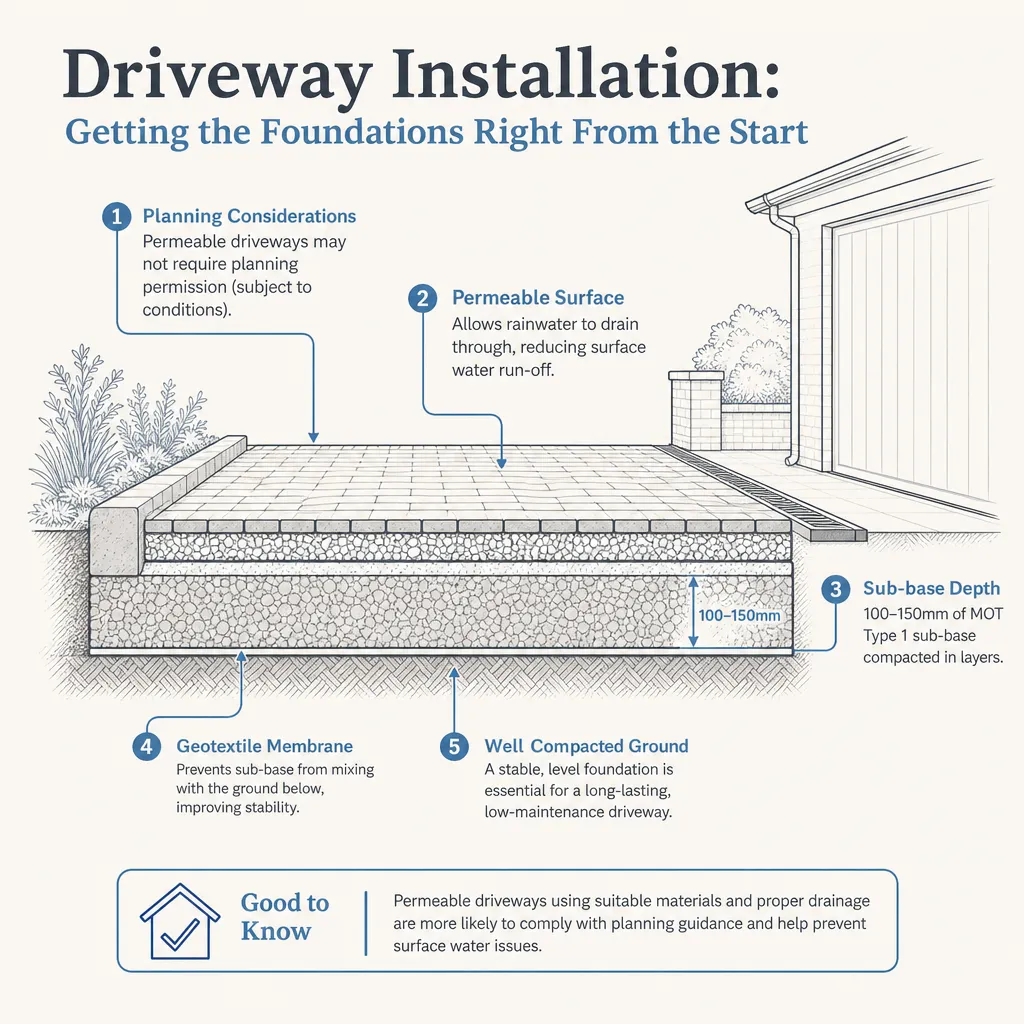
Driveway Installation: Getting the Foundations Right From the Start
A long-lasting driveway depends more on sub-base depth and drainage design than on the surface material chosen.
 Improvement & Build
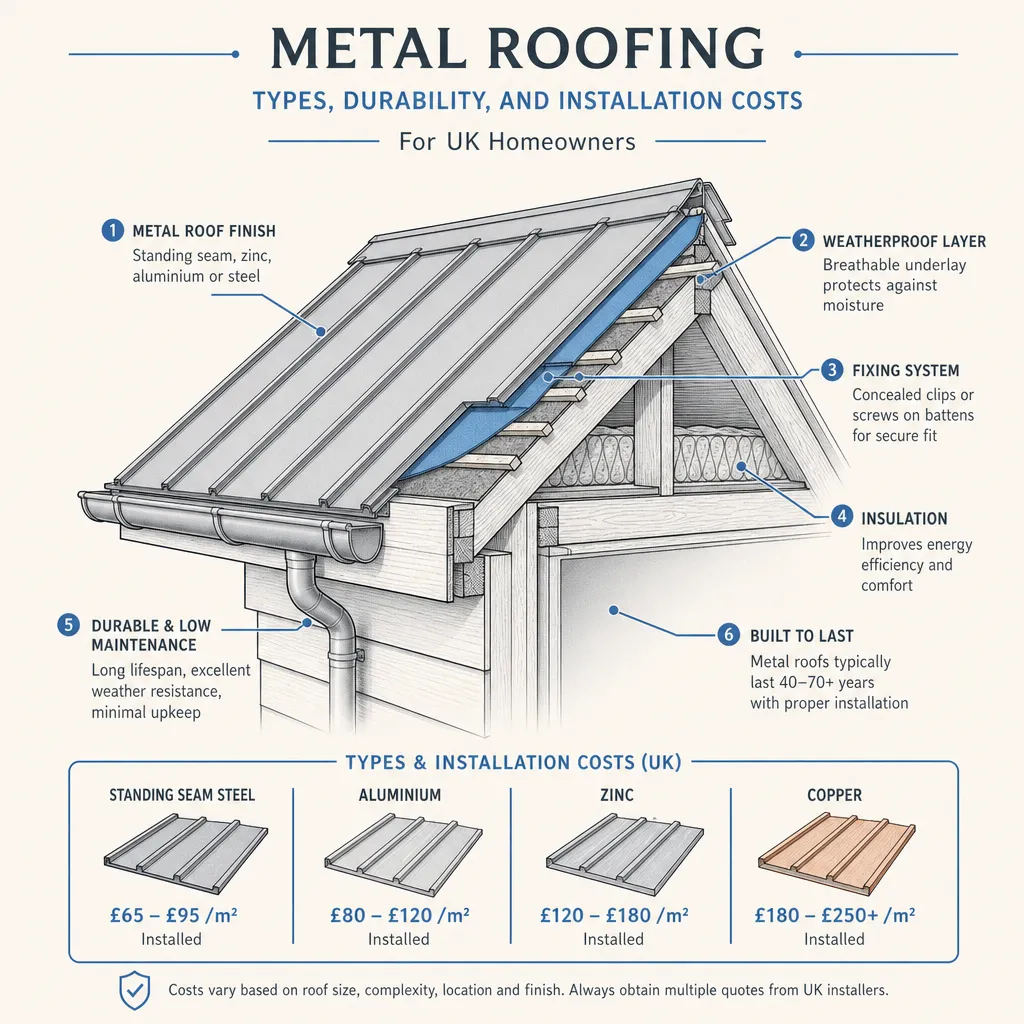
Metal Roofing: Types, Durability, and Installation Costs
Metal roofing in the UK includes standing seam, corrugated sheet, and metal tile systems in steel, aluminium, zinc, or copper.
 Improvement & Build
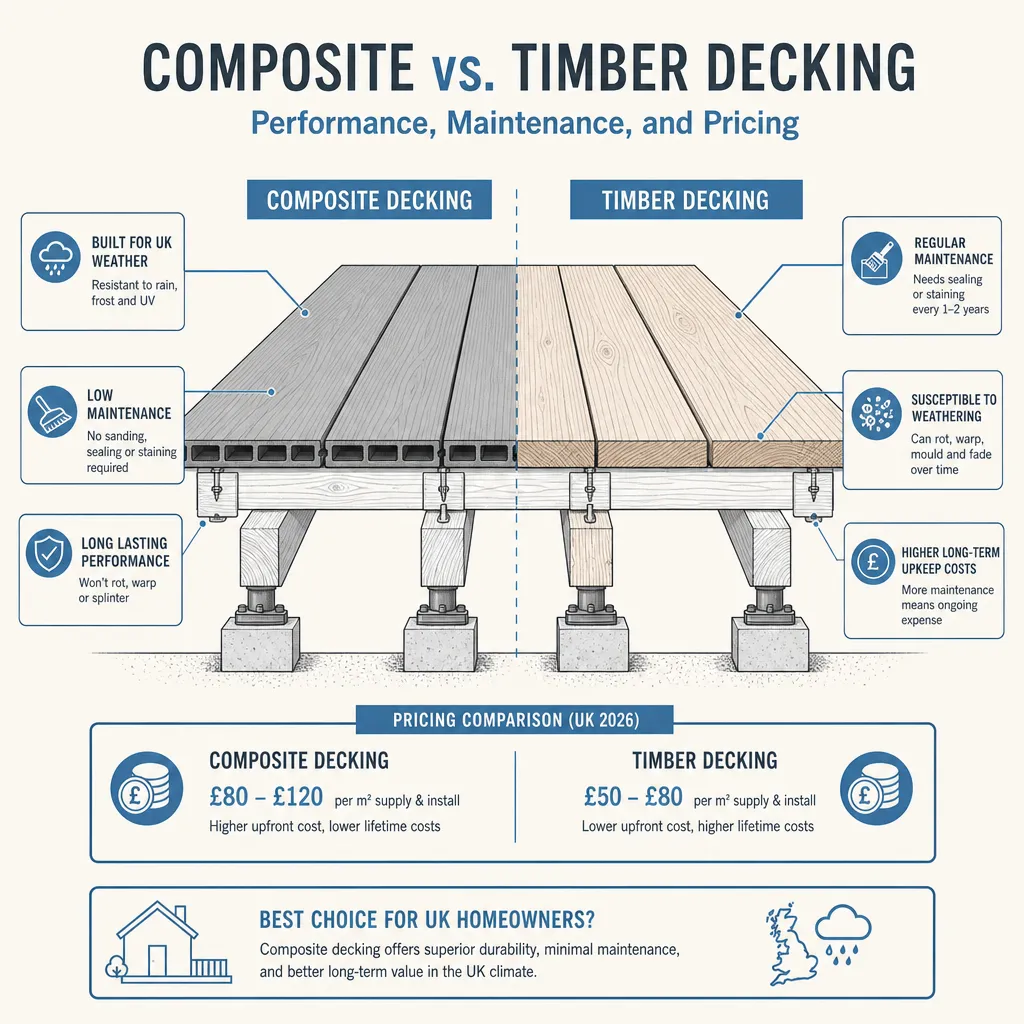
Composite vs. Timber Decking: Performance, Maintenance, and Pricing
Composite decking costs more upfront — typically £120–£220 per m² installed versus £80–£150 for treated softwood — but requires far less maintenance and carries a 25-year warranty.
 Improvement & Build
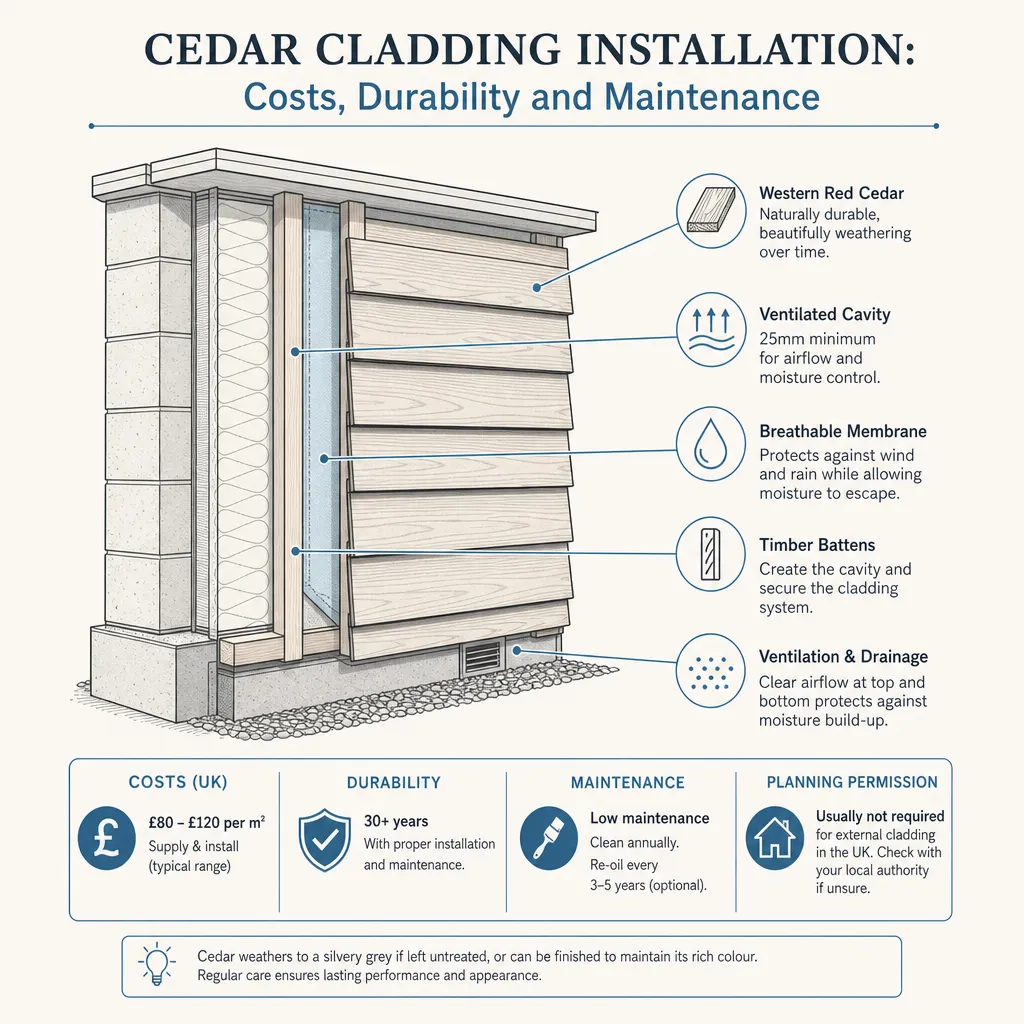
Cedar Cladding Installation: Costs, Durability and Maintenance
Cedar cladding is a natural timber exterior finish popular for UK homes and extensions.