Driveway Repair: Overlay or Full Replacement Options
By Housey · Last reviewed 25th of May 2026
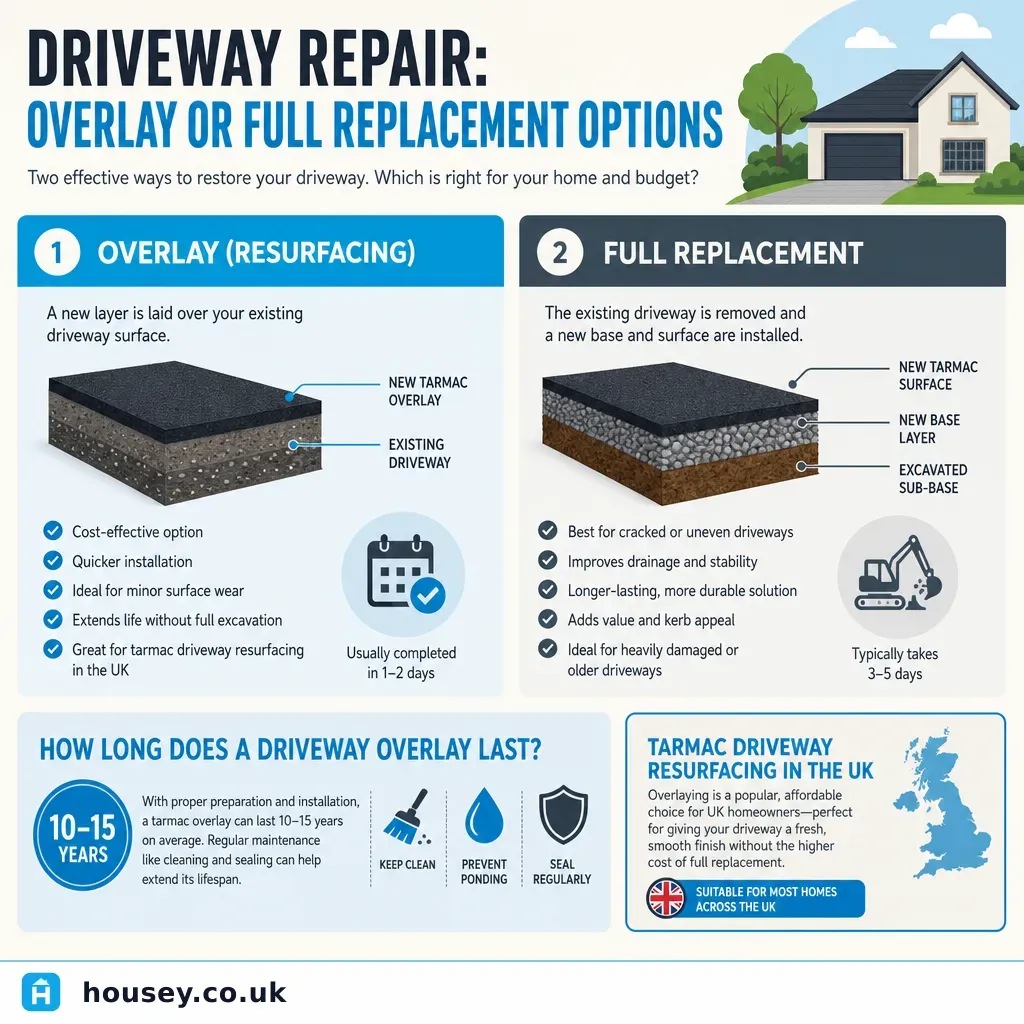
Driveway Repair: Overlay or Full Replacement Options
A damaged driveway is more than a cosmetic concern — cracked, sunken, or potholed surfaces create trip hazards, allow water to pool near the house, and often signal deeper sub-base problems that worsen with time. UK homeowners typically face this decision after ten to twenty years of regular use, following a severe winter, or when buying a property with an ageing surface. Choosing the right approach determines how long the repair lasts and whether money spent now solves the underlying problem.
Key points
- An overlay (also called resurfacing or topping) places new material over the existing surface — quicker and cheaper than full replacement, but only viable when the existing surface and sub-base are structurally sound.
- Full replacement involves breaking out the existing surface to sub-base level, assessing or replacing the sub-base, and laying new material throughout — necessary when the sub-base has failed.
- Under the Town and Country Planning (General Permitted Development) (England) Order 2008, laying or replacing a hard surface of more than 5 m² in a front garden requires planning permission unless the surface is permeable or drains to a permeable area within the curtilage of the property.
- Common UK driveway materials — tarmac, block paving, concrete, resin-bound aggregate, and gravel — each has different overlay and replacement characteristics.
- Indicative UK costs: overlay approximately £30–£70 per m²; full replacement approximately £70–£150+ per m², depending on material, area, sub-base condition, and access. Indicative costs, last reviewed 2026-05-25; always obtain multiple quotes.
Overlay vs full replacement: how to decide
The core question is whether the existing sub-base and surface are capable of supporting a new layer. An overlay applied over a failing sub-base will fail again — often faster than the original surface did.
Decision tree: overlay or replace?
- Choose an overlay if the existing surface has only surface cracking or weathering; the sub-base is level, stable, and draining correctly; and no areas are significantly sunken, heaved, or crumbling.
- Choose full replacement if cracking runs through the full depth of the material; areas are sinking, heaving, or producing loose aggregate; potholes are deeper than 50 mm; tree roots have caused significant upheaval; or drainage around the driveway is failing.
- Consult a specialist contractor if you are unsure whether problems are surface-level or sub-base level; settlement near the house wall may indicate a drainage or ground issue rather than a surface problem; or the driveway is close to service trenches that may have shifted.
Overlay options for UK driveways
Tarmac (asphalt) overlay
A new layer of asphalt is laid over a cleaned and prepared existing tarmac surface. Typical overlay thickness for a driveway is 25–40 mm. This is one of the most common driveway repair methods in the UK.
It works well when the existing tarmac is structurally stable but has surface cracking, light rutting, or a weathered appearance. Deeper potholes should be filled with cold-lay tarmac repair compound and properly compacted before any overlay is applied.
Limitation: if existing cracking runs through the full depth of the tarmac, reflective cracking will appear through the new layer within a few years. A full break-out is more appropriate in that case.
Resin-bound aggregate overlay
A layer of polyurethane-bound decorative aggregate applied over an existing concrete, tarmac, or sound block paving substrate. The finished surface is permeable, providing an attractive appearance and compliance with permitted development drainage requirements for front gardens.
It works well when the substrate is sound, level, and dry. Any movement or cracking in the substrate will cause the resin layer to delaminate or crack at the same locations.
Block paving re-bed or repair
Individual blocks can be lifted, the bedding sand layer topped up or replaced, and blocks re-laid and re-jointed — without full sub-base excavation — when the sub-base beneath is structurally sound. This is common where gradual settlement has created uneven areas or water ponding.
Full replacement: when and what to expect
Full replacement typically involves:
- Breaking out and removing all existing surface material
- Assessing the sub-base and, if necessary, excavating and replacing it with Type 1 MOT compacted aggregate to typically 100–150 mm depth for a domestic driveway
- Laying a new surface in the chosen material to the correct falls for drainage
- Installing or reinstating edge restraints to contain the new surface
Sub-base condition is the critical variable. If the sub-base is sound but only the surface has failed, a contractor may offer a surface-only replacement — a scope that falls between a true overlay and a full excavation in both cost and longevity.
Permitted development and surface drainage
In England, material choice for a front driveway directly affects whether planning permission is required. For surfaces more than 5 m²:
No planning permission required: resin-bound aggregate (permeable), gravel or shingle, permeable block paving with permeable joints and bedding, grass or reinforced grass.
Planning permission required: standard tarmac, concrete, or impermeable block paving draining to the highway, if the area exceeds 5 m².
Scotland, Wales, and Northern Ireland have different rules — check with your local planning authority. Listed buildings and conservation areas may have additional restrictions regardless of surface type or area.
Comparison: overlay vs full replacement by material
Material | Overlay possible? | Full replacement needed when | Permitted dev. compliant? |
|---|---|---|---|
Tarmac (asphalt) | Yes, if sub-base sound | Structural cracking or failed sub-base | No — needs planning if >5 m² draining to road |
Resin-bound aggregate | Yes, over sound substrate | Sub-base failure | Yes (permeable) |
Block paving | Partial — re-bed or replace blocks | Sub-base failure or widespread settlement | Only with permeable joints and bedding |
Concrete | Limited — bonded overlays possible | Cracking throughout or failed sub-base | No — needs planning if >5 m² draining to road |
Gravel or shingle | Add material to existing containment | Failed edge restraints or drainage | Yes (permeable) |
Homeowner checklist before getting quotes
Work through this list before contacting contractors:
What to ask before accepting a quote
- Is the quote for an overlay or a full break-out, and exactly what does the scope include?
- What sub-base preparation is included, and how will you assess sub-base condition before starting?
- What materials and thicknesses will be used, and to what specification?
- Is the proposed surface permeable, and have the permitted development rules been considered?
- What warranty is offered on materials and workmanship?
- Is VAT included in the quoted price?
- What happens if sub-base problems are found once work has started — how will any additional cost be agreed?
- Will you remove and dispose of all existing material, and is disposal included in the price?
When to get professional help
Most driveway repair and replacement can be handled by a competent specialist contractor without a structural engineer or planning consultant. However, seek professional advice if:
- Settlement close to the house wall suggests a drainage or ground problem rather than a simple surface issue
- There is evidence that service trenches beneath the driveway have moved or collapsed
- The property is listed or in a conservation area and the permitted development position is unclear
- Drainage from the new surface could affect neighbouring properties or the public highway
How Housey can help
Housey connects UK homeowners with vetted driveway installers who can assess, quote, and carry out overlay or full replacement work across tarmac, resin-bound, block paving, and other surfaces. Use Housey to compare quotes from local specialists and confirm that your chosen contractor covers the drainage specification and permitted development requirements relevant to your property.
Frequently asked questions
How long does a driveway overlay last compared to a full replacement?
A well-executed tarmac overlay on a sound sub-base typically lasts ten to fifteen years. A full replacement with a properly specified and compacted sub-base can last twenty to thirty years or more, depending on materials and maintenance. Overlaying a failing sub-base will generally fail within a few years, making it a false economy in the long term.
Do I need planning permission to resurface my driveway in England?
In England, replacing a front driveway with more than 5 m² of impermeable surface that drains to the road or pavement requires planning permission. Permeable surfaces — including resin-bound aggregate, gravel, and permeable block paving — do not require permission. Rules differ in Scotland, Wales, and Northern Ireland, and listed buildings or conservation areas may face additional restrictions regardless of surface type.
Can I overlay block paving with tarmac?
It is technically possible but generally not recommended. Tarmac does not bond reliably to block paving, the result may be uneven, and it will not address sub-base problems beneath. In most cases, lifting and re-bedding the existing blocks — replacing any damaged ones — is preferable, or a full break-out if the sub-base has failed.
How do I find a reputable driveway contractor?
Look for members of the British Association of Landscape Industries (BALI) or the Interlay Association. Ask for references and examples of recent local work. Obtain at least three written quotes specifying materials, thicknesses, drainage approach, and warranty terms. Avoid contractors who quote verbally only or decline to put the full scope of work in writing before starting.
Sources and further reading
Useful next reads
 Improvement & Build
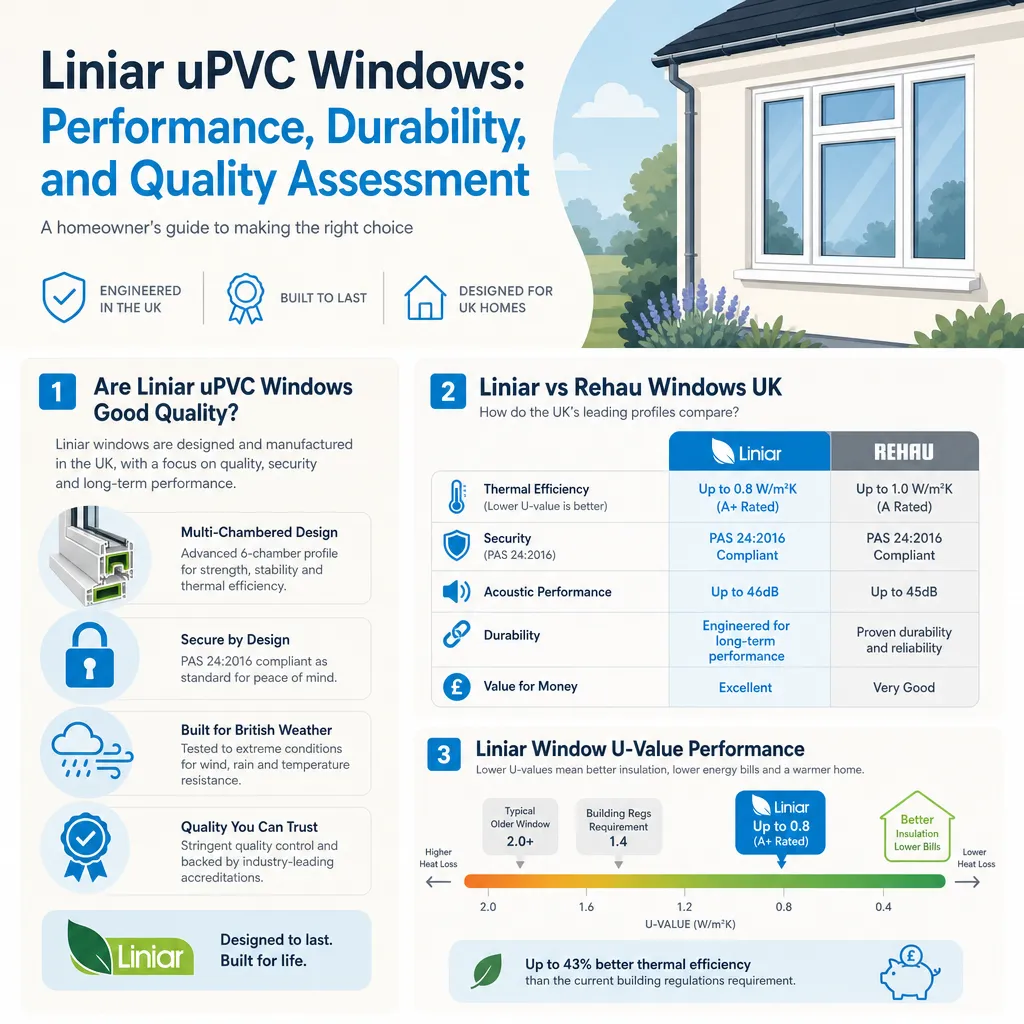
Liniar uPVC Windows: Performance, Durability, and Quality Assessment
Liniar uPVC window profiles are manufactured in the UK using multi-chambered, foamed frames.
 Improvement & Build
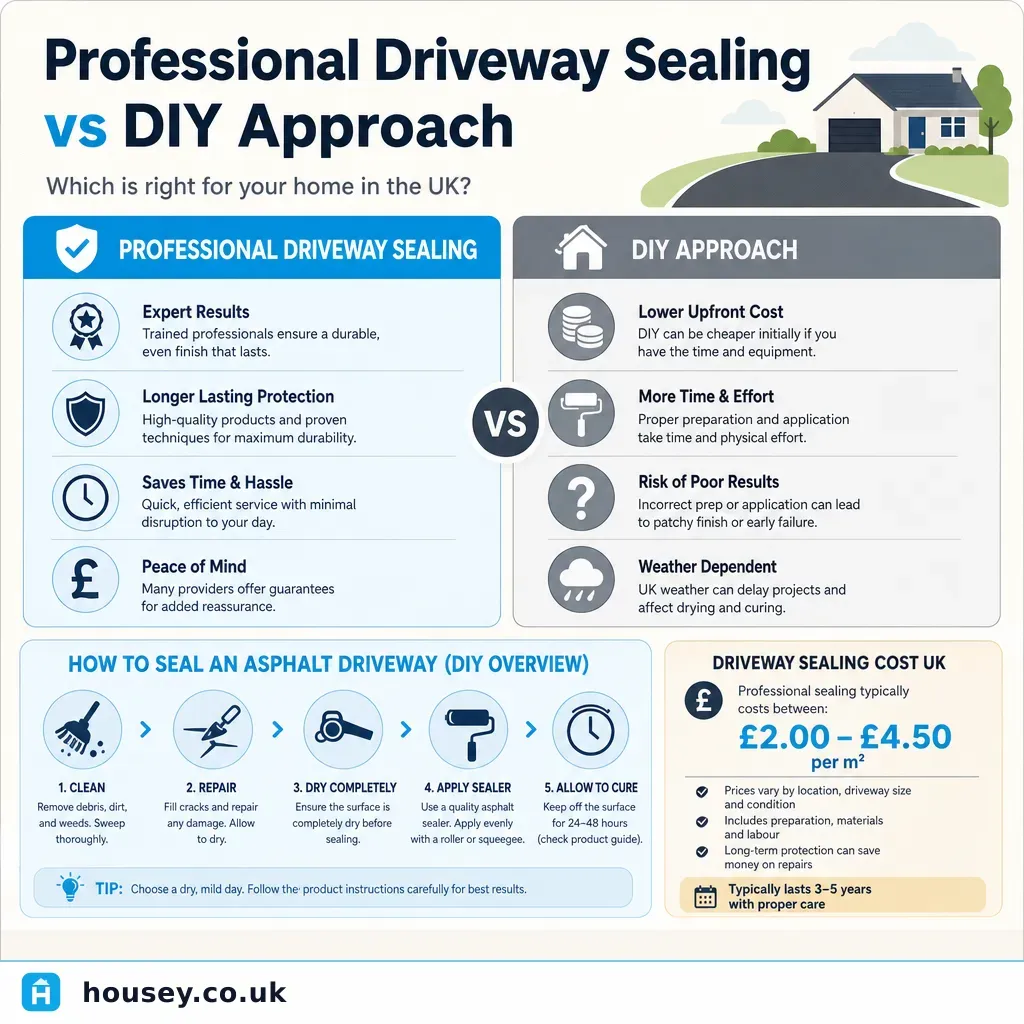
Professional Driveway Sealing vs DIY Approach
Professional driveway sealing offers a more durable, even finish using commercial-grade sealants and specialist equipment, typically costing £150 to £400 for an average drive.
 Improvement & Build
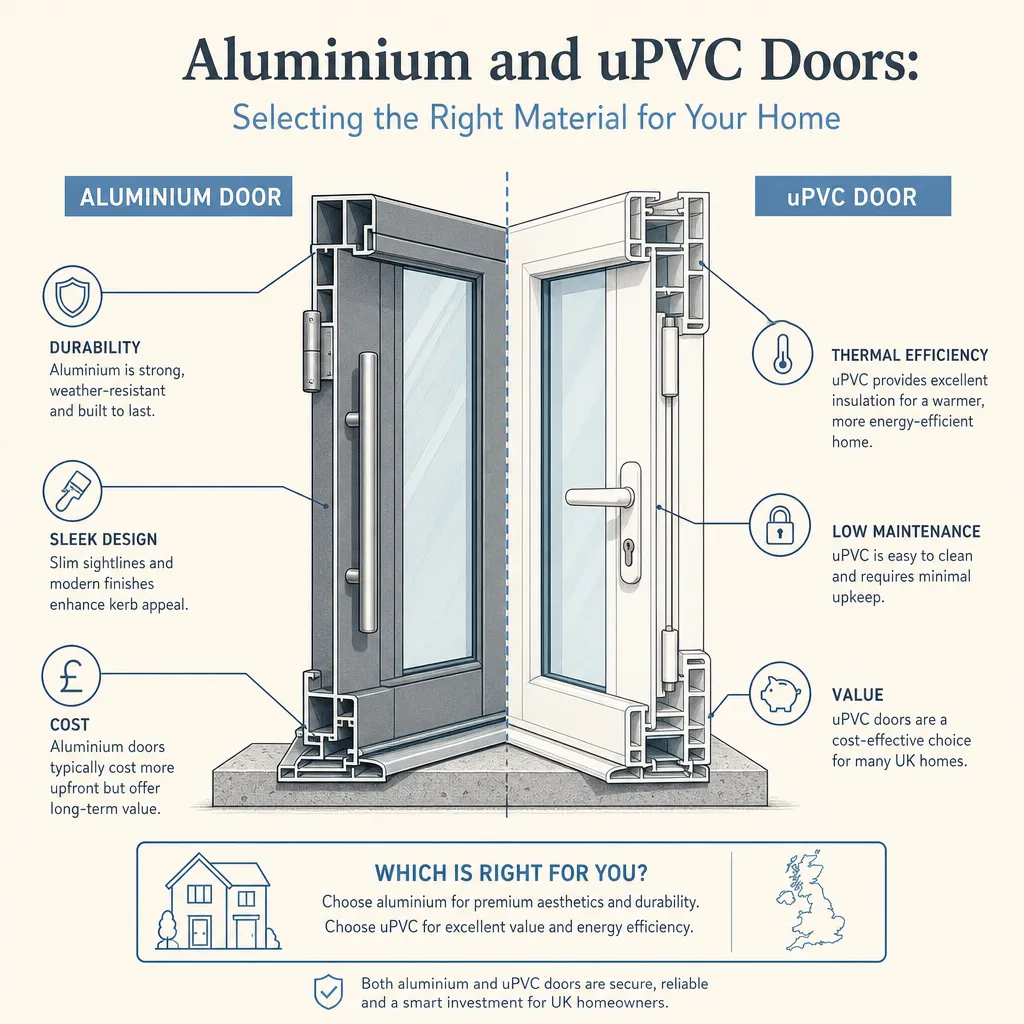
Aluminium and uPVC Doors: Selecting the Right Material for Your Home
uPVC doors are lower-cost and low-maintenance, making them a practical choice for most UK homes.
 Improvement & Build
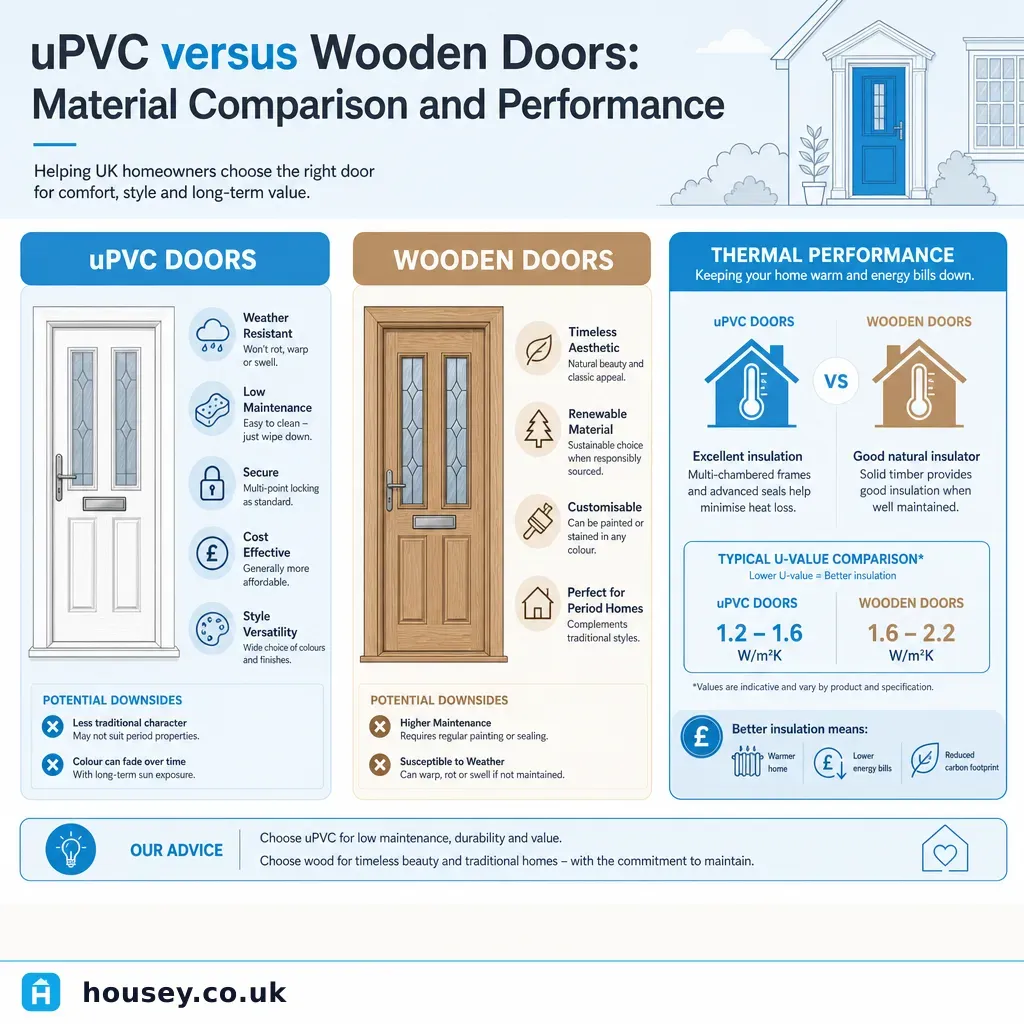
uPVC versus Wooden Doors: Material Comparison and Performance
uPVC doors are generally lower maintenance, better draught-sealed from the factory, and cheaper to install than timber doors.
 Improvement & Build
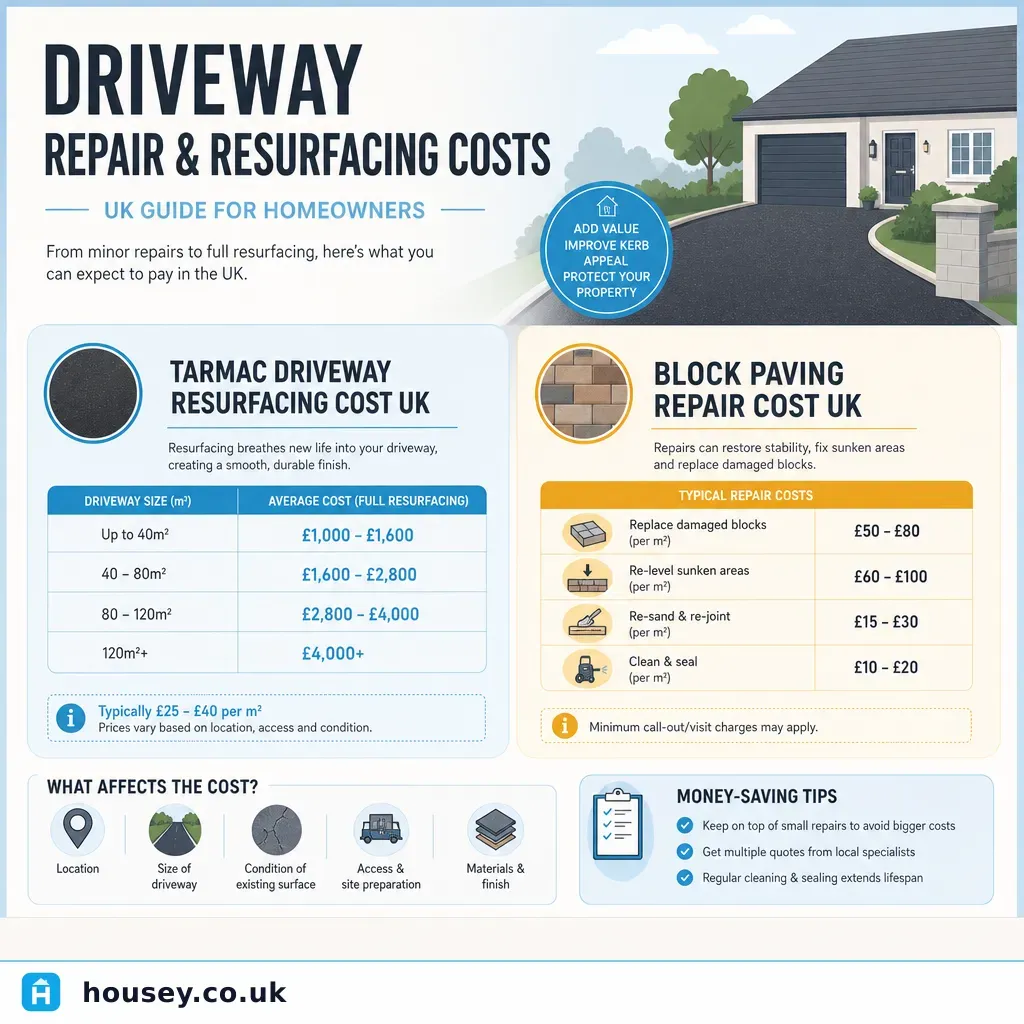
Driveway Repair and Resurfacing Costs
Driveway repair costs in the UK range from around £150 for a single pothole patch to £5,000–£12,000 or more for a full dig-out and replacement on a double driveway.