Driveway Resurfacing and Repairs Cost Estimates
By Housey · Last reviewed 6th of May 2026
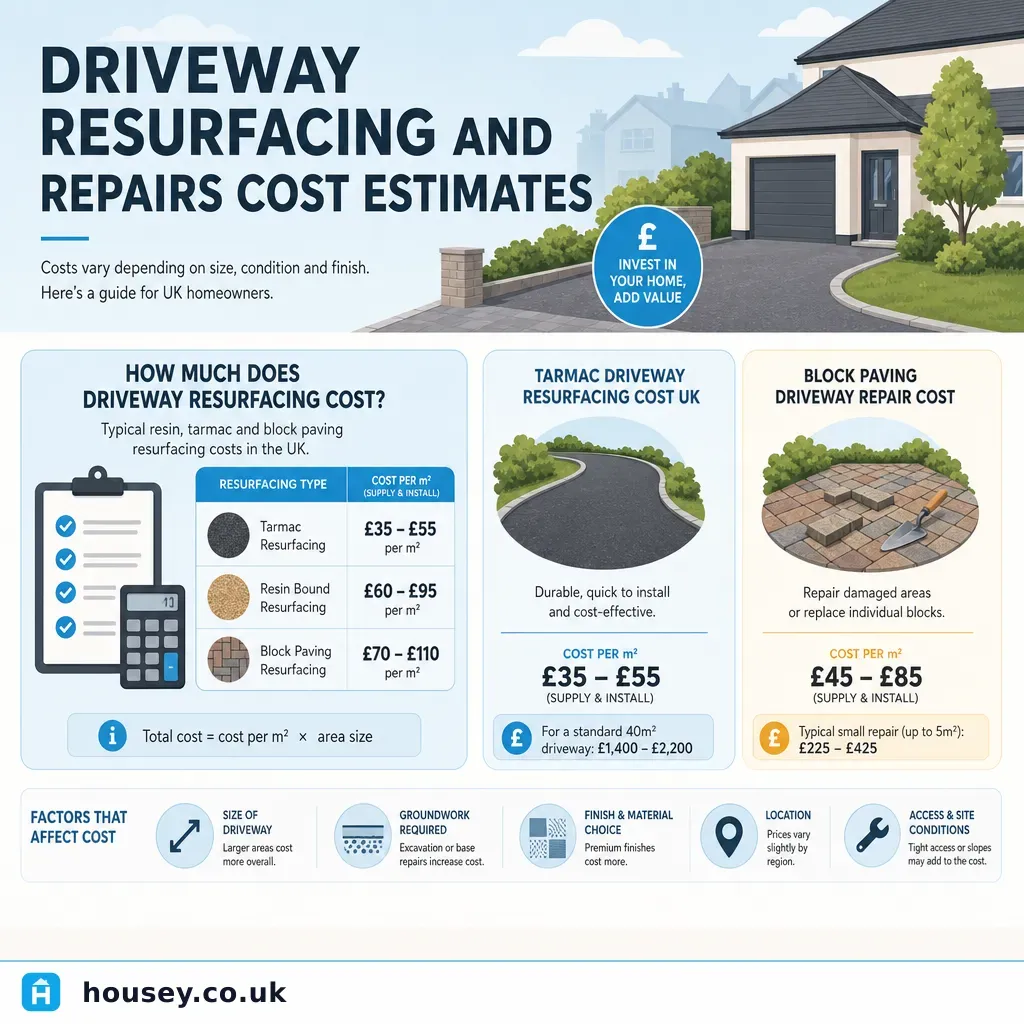
Driveway Resurfacing and Repairs Cost Estimates
A cracked, sunken, or potholed driveway is one of the most common home improvement questions UK homeowners raise — particularly on post-war estates where original tarmac surfaces are now 30 or more years old. The decision is rarely simple: minor patch repairs, partial resurfacing, and full replacement sit at very different price points, and choosing the wrong approach can mean spending money twice.
Key points
- Driveway repair costs range from around £150–£400 for minor pothole patching to £1,200–£2,500 or more for full tarmac resurfacing of a typical 40m² surface (Indicative UK costs, last reviewed 2026-05-06).
- Resurfacing is only viable if the existing sub-base is structurally sound — overlaying new material on a failing base will produce early failure regardless of surface quality.
- Tree roots, poor drainage, and freeze-thaw cycles are the three most common causes of driveway deterioration; fixing the surface symptom without addressing the underlying cause leads to repeat spending.
- Block paving repair typically involves lifting individual units and re-laying on fresh bedding sand; widespread rocking underfoot across multiple areas usually indicates bedding sand has been lost through drainage failure.
- Like-for-like resurfacing generally does not require planning permission, but changing to a non-permeable surface in a front garden may trigger obligations under Planning Portal guidance.
What does driveway resurfacing and repair cost in the UK?
Costs depend on the surface type, the extent of damage, and whether the sub-base needs attention. The indicative ranges below cover the most common repair and resurfacing scenarios.
Repair or resurfacing type | Indicative cost | Notes |
|---|---|---|
Tarmac pothole patching (1–3 potholes) | £150–£400 | Cold-lay or hot-lay; hot-lay lasts significantly longer |
Tarmac crack sealing | £100–£300 | Surface sealant or specialist crack compound |
Full tarmac resurfacing (40m²) | £1,200–£2,500 | New 40mm layer over a sound existing sub-base |
Block paving re-sanding and compaction | £300–£800 | Joints re-pointed with kiln-dried sand |
Block paving area repair (per m²) | £50–£100/m² | Lifting, re-laying, new bedding sand |
Resin-bound patch repair | £200–£600 | Colour matching on older surfaces can be difficult |
Concrete crack repair | £150–£500 | Specialist epoxy or polyurethane filler |
Full concrete resurfacing (40m²) | £2,000–£4,500 | Often replaced rather than resurfaced |
Indicative UK costs, last reviewed 2026-05-06. Prices exclude VAT unless stated. Source: Checkatrade national cost data and Rated People trade pricing guides.
Repair, resurface, or replace? How to decide
Before committing to any driveway work, establish what is wrong beneath the surface. The right intervention depends on sub-base condition, not just visible surface damage.
- Choose patch repair if damage is limited to isolated cracks or potholes, the surrounding surface is generally sound, and there are no signs of sub-base movement.
- Choose resurfacing if the surface is extensively cracked, faded, or showing aggregate loss, but the sub-base is stable and even — confirmed by the absence of rutting, sinking, or widespread water pooling after rain.
- Choose full replacement if the sub-base is failing (evidenced by widespread sinking, rutting, or heave), if roots or drainage have undermined the base, or if the surface is over 25 years old and showing failure across most of its area.
- Ask a drainage contractor or ground investigation specialist if you suspect the sub-base has been compromised — spending on resurfacing without addressing the root cause is rarely cost-effective.
What causes driveway deterioration?
Freeze-thaw cycles
Water penetrates surface cracks, freezes, expands, and widens the crack further. Surfaces without adequate drainage falls are most vulnerable. Repeated freeze-thaw cycles over several winters progressively weaken both asphalt and concrete.
Tree roots
Roots from nearby trees can lift block paving or crack tarmac from below. If tree roots are the cause, addressing the root run — sometimes including physical root barriers — is necessary before resurfacing.
Poor original sub-base
Many older driveways were laid with insufficient compaction depth. These fail from the bottom up and cannot be corrected by surface repair alone.
Standing water and drainage failure
Pooling water indicates either a blocked or failed drainage channel, or that the surface has settled unevenly. Resurfacing without fixing drainage will not resolve the underlying problem.
Oxidation and UV degradation
Tarmac naturally oxidises over time, becoming brittle and prone to surface loss. Regular sealing every three to five years can meaningfully extend useful life.
Red flags that repair alone will not be enough
Look out for these signs that indicate deeper structural problems:
- Widespread rutting or sinking across the surface — indicates sub-base failure or soft ground beneath.
- Alligator cracking (an interconnected network of cracks across a wide area) — characteristic of base failure, not surface wear.
- Water pooling across large sections more than 30 minutes after rain — drainage or gradient failure.
- Edges lifting or crumbling across most of the perimeter — edging restraint or sub-base failure.
- Block paving rocking underfoot in multiple areas — bedding sand has been lost, likely through drainage failure.
- Heaving or mounding in specific areas — almost certainly tree roots or frost acting on the sub-base.
If three or more of these signs are present, the long-term cost of repeated repairs is likely to exceed the cost of a full replacement within five years.
What affects the cost of resurfacing?
Extent of surface damage
More extensive cracking, potholing, or subsidence requires more preparation before a new surface can be laid. Contractors who skip preparation — trimming crumbling edges, checking drainage — deliver a cheaper but shorter-lived result.
Surface material
Tarmac overlay is the most cost-effective resurfacing method. Block paving repair is more labour-intensive. Resin-bound patch repairs are particularly difficult to colour-match on weathered existing surfaces.
Drainage work
Attending to a failed channel drain, gully, or soakaway adds to the project cost but is almost always worthwhile.
Access constraints
Restricted access for equipment or materials adds to day rates, sometimes requiring hand-mixing or smaller machinery.
What to ask before accepting a resurfacing quote
- Has the existing sub-base been assessed before quoting, and how?
- What preparation work is included — crack filling, edge trimming, drainage inspection?
- What thickness of new surface course is proposed?
- Is the tarmac hot-lay or cold-lay? (Hot-lay lasts significantly longer.)
- Will drainage be checked and repaired if needed?
- Is VAT included?
- What warranty applies to the completed work?
- Does the contractor hold public liability insurance and a registered waste carrier licence?
When to get professional help
Most driveway resurfacing is routine work for an experienced contractor. However, seek a structural or drainage assessment before proceeding if:
- The surface shows widespread sinking or heave rather than isolated cracks.
- There are large trees within five metres of the driveway edge.
- The property is on a slope and water routinely moves towards the house foundations.
- Previous repair attempts have failed within two to three years.
- You suspect the driveway was laid over a former garage pit, cellar access, or other void.
How Housey can help
Housey can connect you with vetted driveway installers who carry out both repair and full resurfacing work across the UK. Describe your driveway's condition and receive up to four written quotes to compare on method, materials, and total cost.
Frequently asked questions
Can you resurface a driveway without planning permission?
Like-for-like resurfacing of an existing driveway generally does not require planning permission. However, changing from a permeable surface to a non-permeable one in a front garden may trigger planning requirements under Planning Portal front garden guidance. If the hardstanding area is also being extended, a householder planning application may be needed. If in doubt, check with your local planning authority before work starts.
How long does tarmac resurfacing last?
A well-laid tarmac overlay on a sound sub-base typically lasts 15–20 years. Sealing every three to five years helps prevent oxidation and extends service life towards the upper end of that range. The most important factor is the condition of the existing sub-base — resurfacing over a failing base will deteriorate far faster regardless of the quality of the new surface layer.
Is it worth repairing an old block paved driveway?
For isolated settled or loose areas, lifting and re-laying blocks with fresh bedding sand is usually cost-effective. If large sections are rocking, jointing sand has been extensively washed out, or the sub-base has failed across a wide area, a full refurbishment — lifting all blocks, relaying the base, and re-setting — may be more economical than repeated patch repairs over a ten-year period.
What is the cheapest way to repair a cracked tarmac driveway?
Cold-lay tarmac patching compound, available from builders' merchants, can be applied by a homeowner to small potholes and cracks for around £20–£50 in materials. However, cold-lay repairs are a temporary measure and typically last no more than two to three years. For lasting results, hot-lay tarmac applied by a professional is more cost-effective over the medium term despite the higher upfront cost.
How do I know if my driveway needs replacing rather than repairing?
Widespread alligator cracking, multiple sunken areas, or water pooling across large sections after rain are strong indicators that the sub-base has failed. Surface repair or overlay will not provide a lasting result in these cases. A contractor who recommends assessing the sub-base before proceeding is generally giving more reliable advice than one who skips straight to a surface treatment without investigation.
Sources and further reading
- Driveways — planning permission guidance — Planning Portal
- Driveway resurfacing cost guide — Checkatrade
- Association of Paving Contractors — Association of Paving Contractors
- CIRIA SuDS Manual C753 — CIRIA
Useful next reads
 Improvement & Build
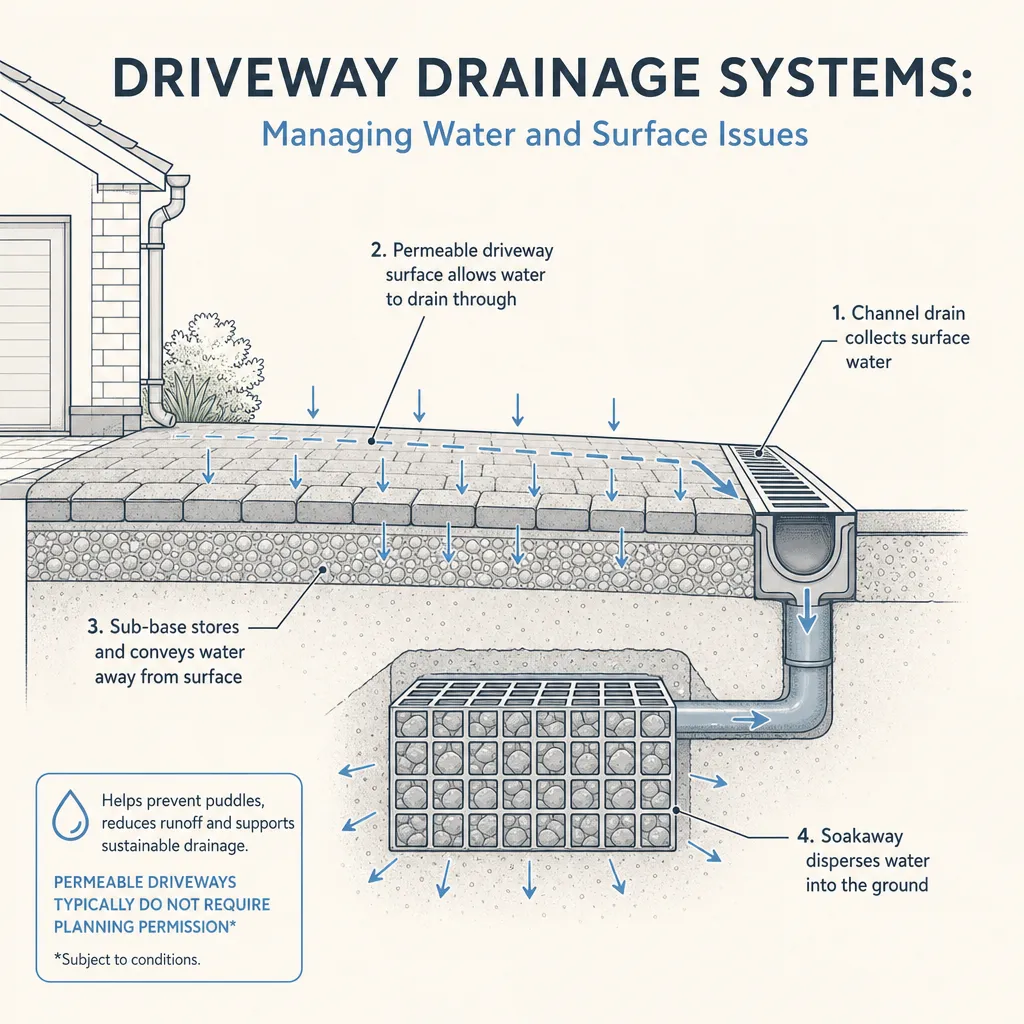
Driveway Drainage Systems: Managing Water and Surface Issues
The right driveway drainage system depends on your surface type, soil permeability, and local flood risk.
 Improvement & Build
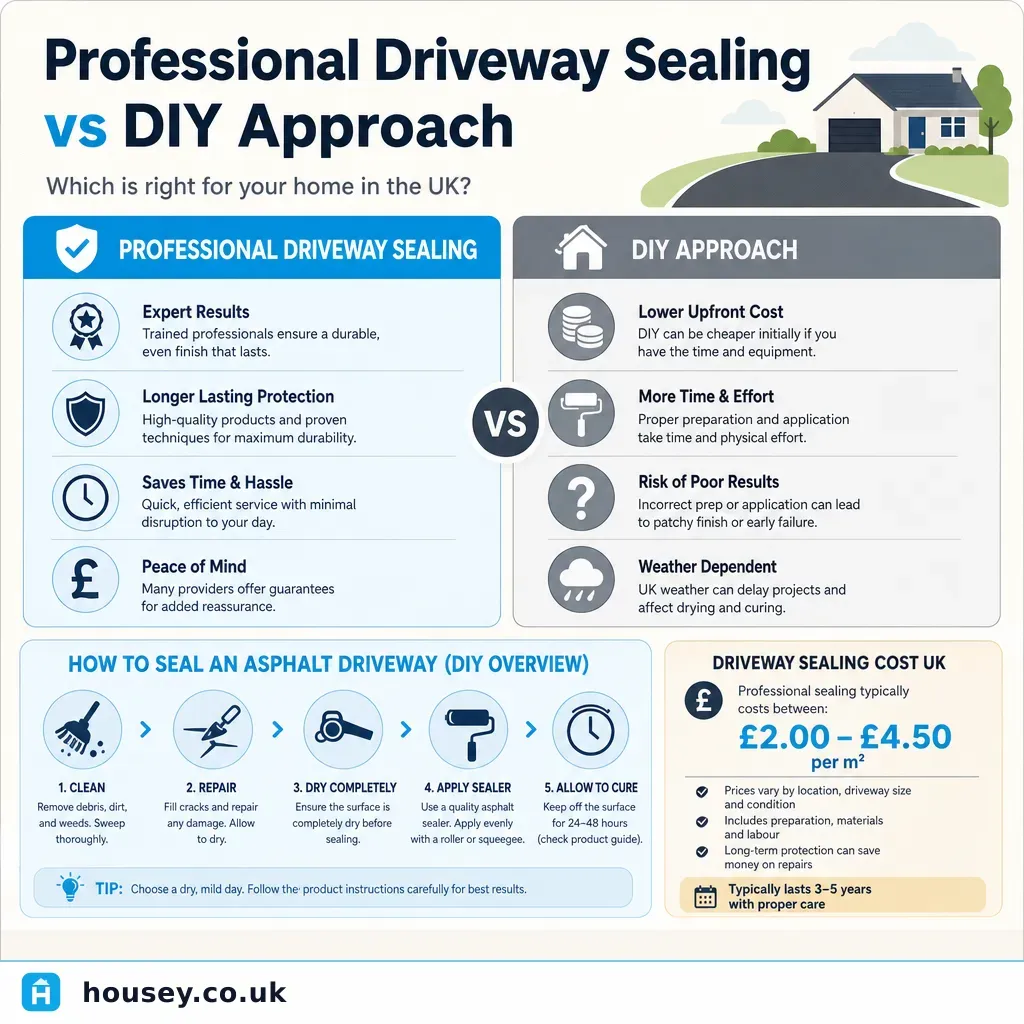
Professional Driveway Sealing vs DIY Approach
Professional driveway sealing offers a more durable, even finish using commercial-grade sealants and specialist equipment, typically costing £150 to £400 for an average drive.
 Improvement & Build
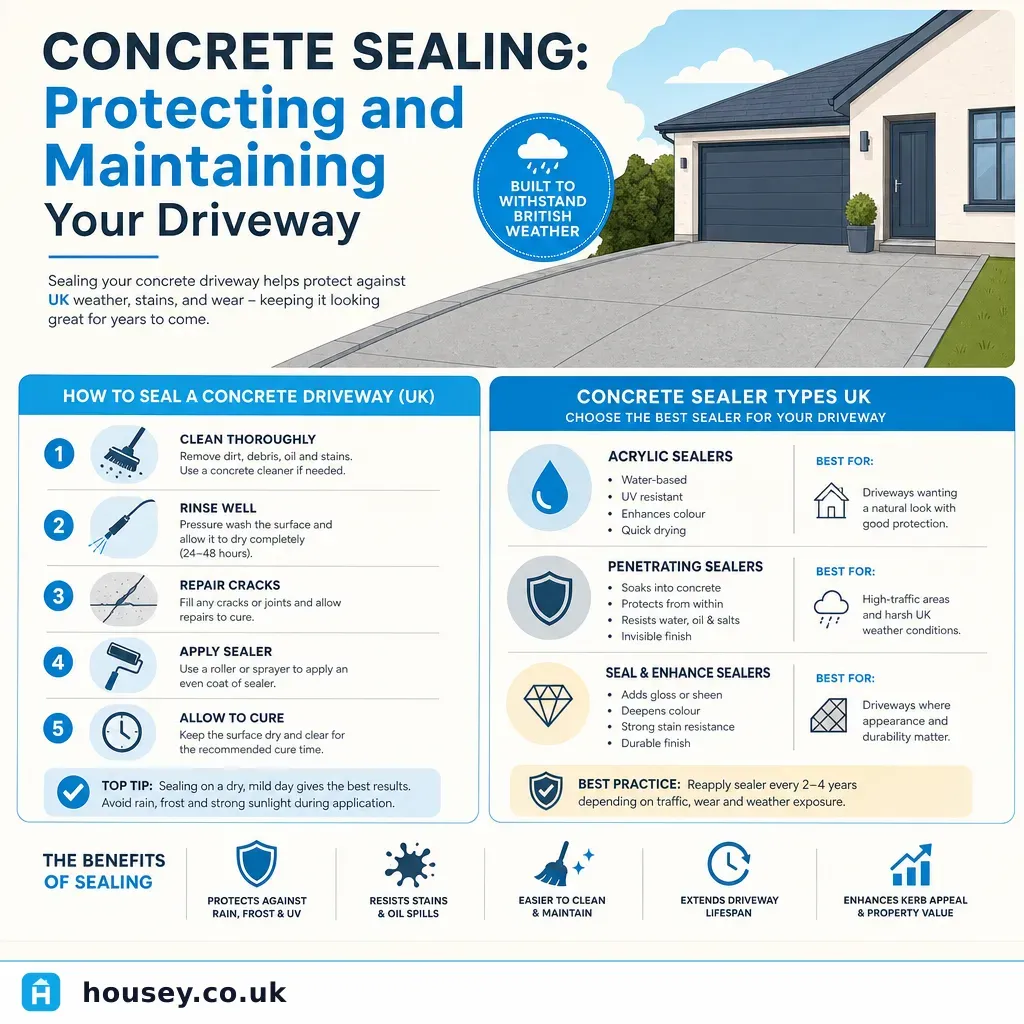
Concrete Sealing: Protecting and Maintaining Your Driveway
Sealing a concrete driveway protects against water ingress, freeze-thaw damage, oil stains, and surface wear.
 Improvement & Build
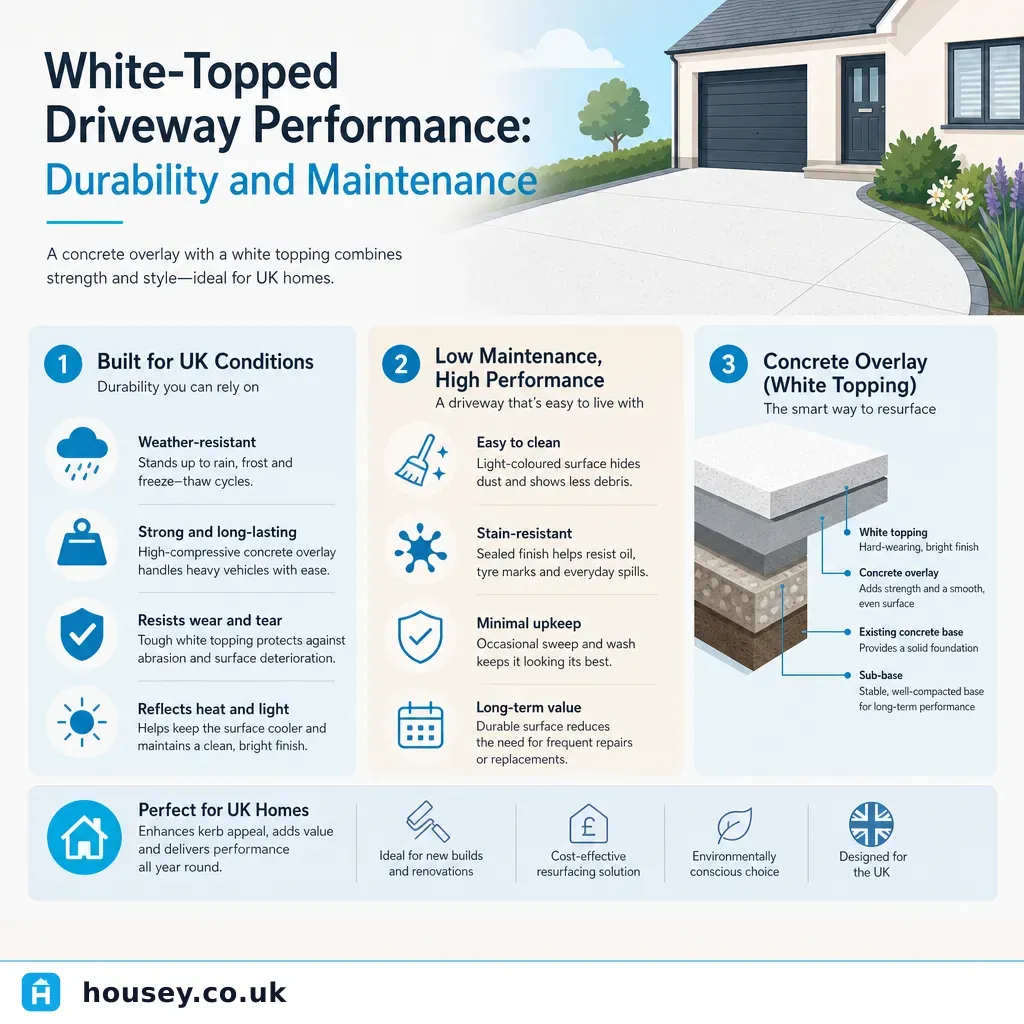
White-Topped Driveway Performance: Durability and Maintenance
A white-topped driveway uses a concrete layer placed over an existing asphalt sub-base, combining the load-spreading of asphalt with the durability of concrete.
 Improvement & Build
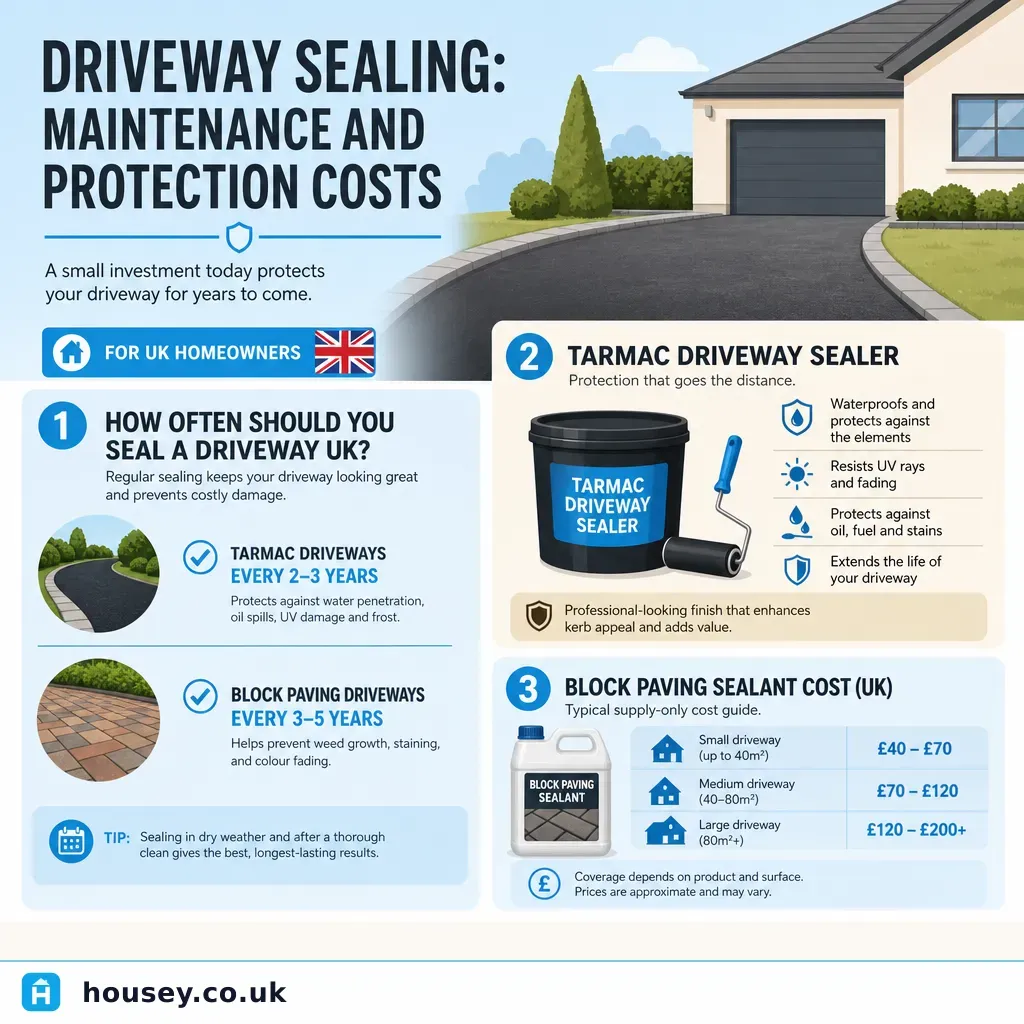
Driveway Sealing: Maintenance and Protection Costs
Sealing a driveway typically costs £3–£8 per m² in the UK, depending on the surface material, area size, and condition.