Driveway Sealer Options: Water-Based vs Oil-Based Comparison
By Housey · Last reviewed 11th of May 2026
Driveway Sealer Options: Water-Based vs Oil-Based Comparison
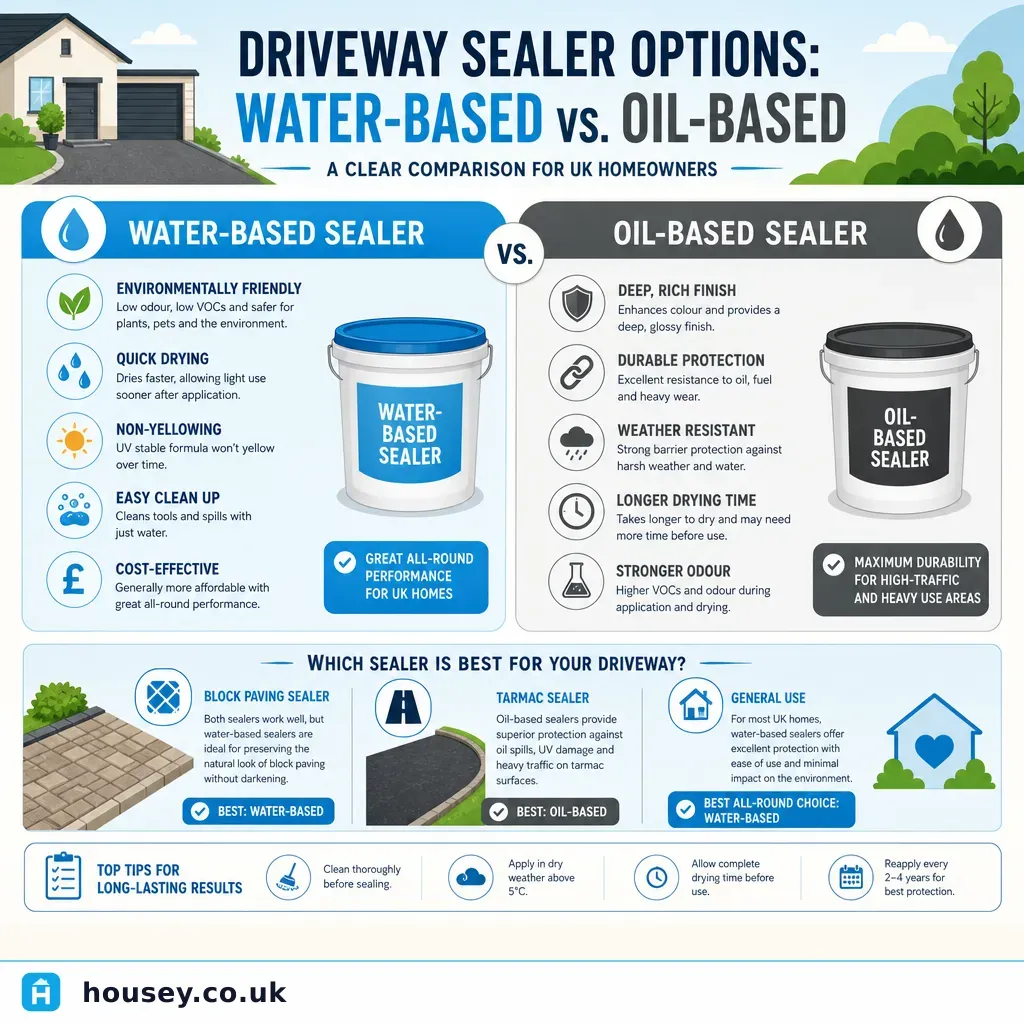
Choosing a driveway sealer is a practical decision many UK homeowners face when block paving, tarmac, or concrete begins to look faded, stained, or weathered after a few years of use. The market divides broadly into water-based and oil-based (also called solvent-based) formulations — and while both protect a surface from water ingress, UV degradation, and oil staining, they behave quite differently in application, curing time, and long-term performance. Getting the choice wrong can mean poor adhesion, surface discolouration, or a finish that degrades faster than expected in the UK's variable, damp climate.
Key points
- Water-based sealers contain lower levels of volatile organic compounds (VOCs) and are generally easier to apply on block paving and new concrete surfaces.
- Oil-based (solvent-based) sealers penetrate more deeply into porous substrates such as tarmac and aged concrete, making them better suited to heavily weathered surfaces.
- Under changes to permitted development rules introduced in 2008, front driveways resurfaced with impermeable materials may require planning permission; check GOV.UK guidance before any significant surface treatment.
- Curing times differ significantly: water-based sealers are typically ready for foot traffic in 2–4 hours and vehicles in 24 hours; oil-based products usually require 48–72 hours before full use.
- Some gloss-finish sealers can reduce surface friction when wet — check slip resistance suitability before applying to pedestrian or sloped areas.
Water-based vs oil-based sealers: a direct comparison
Feature | Water-based sealer | Oil-based / solvent-based sealer |
|---|---|---|
Best for | Block paving, new concrete, light-traffic areas | Tarmac, asphalt, aged or heavily porous concrete |
Not ideal for | Heavily weathered, very porous tarmac | Indoor or low-ventilation areas |
Finish options | Matt, satin, wet-look gloss | Satin, high gloss |
VOC content | Low | Higher (solvent fumes during application) |
Cure time | 2–4 hours foot traffic; 24 hours vehicles | 48–72 hours full traffic |
Typical durability | 2–4 years | 3–5 years on a suitable surface |
Application ease | Easy — brush, roller, or pump sprayer | Moderate — ventilation required; runs harder to correct |
Environmental notes | Lower VOCs; water cleanup | Higher VOCs; solvent required for cleanup |
Indicative cost (5 litres) | £20–£50 | £30–£70 |
Indicative UK costs, last reviewed 2026-05-11. Prices vary by brand, coverage rate, and supplier.
Which sealer should you choose?
Use this decision tree to narrow down your options before comparing specific products.
- Choose water-based if your driveway is block paving or new concrete, the surface is in reasonable condition, you want a quick curing time, or lower-VOC products are important to you.
- Choose oil-based if your driveway is tarmac or asphalt, the surface is aged or heavily porous, you need deep penetration rather than a surface film, or you previously used an oil-based product and want compatibility.
- Ask a driveway professional if the surface has cracks, significant oil contamination, efflorescence (white salt deposits on block paving), or has never been sealed before and you are unsure of the substrate.
- Check planning guidance if your front driveway is currently permeable and you are uncertain whether a dense film-forming sealer could affect drainage compliance — GOV.UK's guidance on paving front gardens is the starting point.
Surface preparation: the step that matters most
No sealer performs well on a poorly prepared surface. These steps apply to most driveway materials before sealing.
- Clean thoroughly. Pressure-wash at the appropriate pressure for your surface (block paving tolerates higher pressure than aged tarmac). Remove moss, algae, and loose debris.
- Treat stains. Oil and fuel stains should be removed with a proprietary degreaser before sealing — stains sealed in often bleed through water-based film products.
- Allow to dry fully. Both sealer types require a dry substrate, typically 24–48 hours of dry weather after cleaning. Applying to a damp surface is the most common cause of adhesion failure.
- Re-sand block paving joints. Refill any depleted jointing sand before sealing. Some products lock sand in place; check the product specification.
- Check the weather forecast. Apply when temperatures are between 10°C and 25°C and when no rain is expected for the curing period stated on the label.
Application tips
Water-based sealers. Apply with a brush, roller, or low-pressure pump sprayer. Work in manageable sections to avoid puddling. Two thin coats generally outperform one thick coat.
Oil-based sealers. Ensure good ventilation — solvent fumes are more significant. Use brushes and rollers suitable for solvent products. Avoid applying in direct strong sunlight, which can cause uneven curing. Keep children and pets away until the product is fully cured.
For both types: avoid applying below 5°C or above 30°C, and check the manufacturer's datasheet confirms suitability for your specific substrate.
What not to assume
- Not all 'block paving sealers' are the same. A jointing stabiliser that locks sand and suppresses weeds is a different product from a surface coating sealer that changes finish and adds water repellence. Read product descriptions carefully before purchase.
- A sealer is not a repair product. Cracked tarmac, broken block paving, or loose mortar should be repaired before sealing, not sealed over. Sealing over damage can trap moisture and accelerate deterioration.
- Gloss can mean slip risk. High-gloss finishes may reduce surface friction when wet — particularly relevant on sloped driveways or near entrance steps where elderly or mobility-impaired people use the surface.
- Previous sealer compatibility matters. Applying a water-based product over a solvent-based sealer (or vice versa) can cause adhesion failure and peeling. If unsure what was previously applied, test a small, discreet area first.
When to get professional help
Consider contacting a professional driveway contractor if:
- The surface has significant structural issues — heave, subsidence, major cracking, or failed joints.
- A previous sealer has flaked, peeled, or discoloured and the old product needs removing before recoating.
- You want a workmanship guarantee or a commercial-grade result on a large or high-traffic surface.
- You are unsure whether your surface is permeable or impermeable and want advice on drainage compliance before applying any product.
How Housey can help
If your driveway needs professional preparation, repair, or a full resealing service, driveway installers listed on Housey can assess your surface and provide written quotes. Comparing multiple providers helps you understand what preparation is genuinely needed before any product goes down.
Frequently asked questions
How often should I seal my driveway in the UK?
Most water-based sealers last 2–4 years under typical UK conditions; oil-based products on suitable surfaces can last 3–5 years. Heavy traffic, frequent pressure-washing, and exposure to road salt or de-icing products reduce longevity. Inspect the surface annually — if water is no longer beading on the surface or colour looks noticeably faded, it is usually time to reseal.
Can I apply driveway sealer myself?
Yes, for most residential driveways in reasonable condition. Both water-based and oil-based sealers are available in DIY grades and can be applied with standard tools. Thorough surface preparation and choosing the right product for your substrate are more important than application technique. Large areas, badly weathered surfaces, or driveways with previous sealer failures are better handled by a professional.
Does sealing a driveway affect planning permission or drainage rules?
Sealing an existing surface does not typically constitute new surfacing under permitted development rules. However, if you are considering resurfacing a front driveway visible from a public road with an impermeable material, planning permission may be needed under rules introduced in 2008. Check GOV.UK's guidance on paving your front garden or consult your local planning authority if uncertain.
How long does driveway sealer last in the UK?
As a general guide: water-based sealers last 2–4 years; oil-based sealers 3–5 years on appropriate substrates. Products applied to poorly prepared or unsuitable surfaces may fail significantly sooner. UV exposure, traffic levels, and winter de-icing treatments all affect how quickly a sealer degrades.
Sources and further reading
- GOV.UK: Paving your front garden — GOV.UK
- The Paints, Varnishes and Vehicle Refinishing Products (VOC) Regulations 2012 — legislation.gov.uk
- Planning Portal: Driveways and front gardens — Planning Portal
- RHS: Hard landscaping and drainage — Royal Horticultural Society
Useful next reads
 Improvement & Build
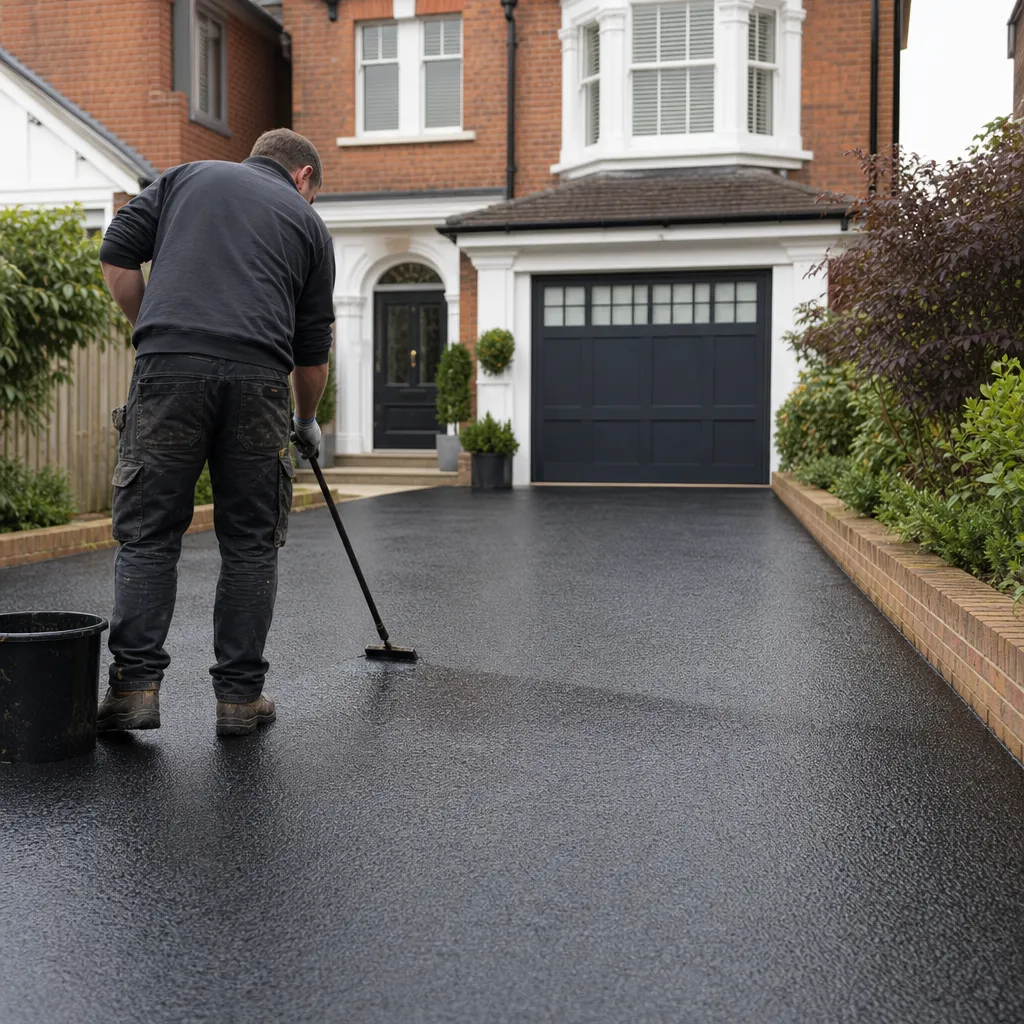
Driveway Sealers: Protection, Maintenance, and Longevity
Driveway sealers fall into two main categories: penetrating types absorbed into the substrate that leave no surface film, and film-forming types that coat and protect the surface.
 Improvement & Build
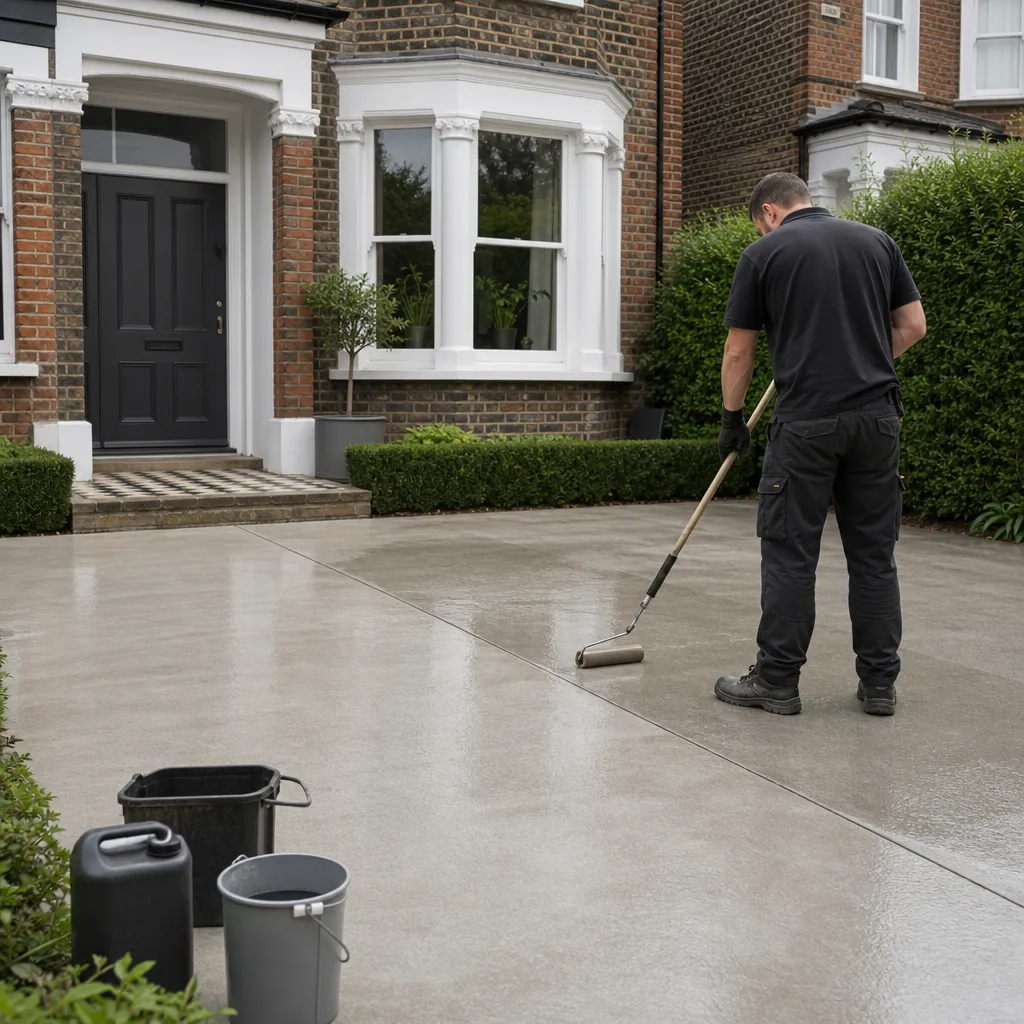
Which products to use for sealing your concrete driveway
Concrete driveway sealers divide into two types: penetrating sealers that absorb into the concrete without changing its look, and film-forming sealers that coat the surface.
 Improvement & Build
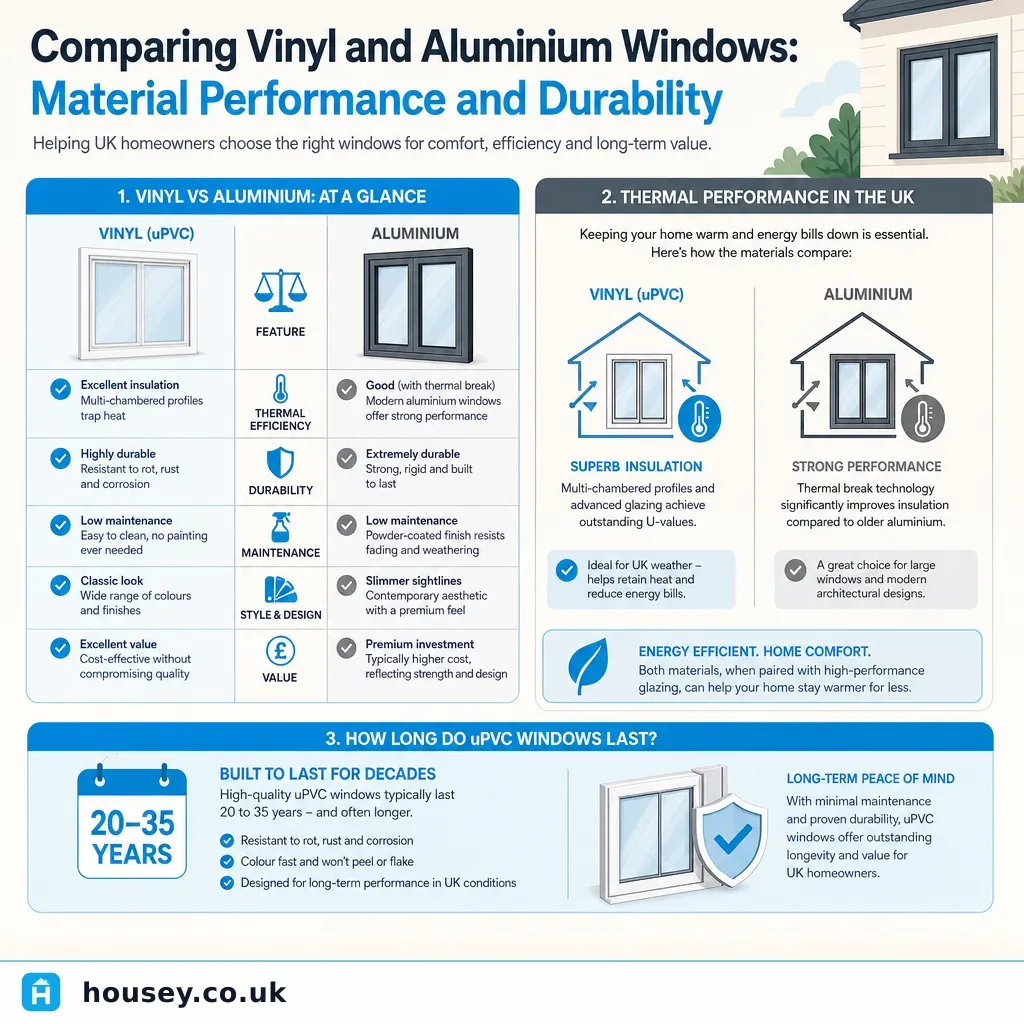
Comparing Vinyl and Aluminium Windows: Material Performance and Durability
uPVC (vinyl) and aluminium windows both meet UK Building Regulations Part L when properly specified.
 Improvement & Build
Professional Roofing Solutions: Expert Installation and Maintenance
A professional roofer should hold relevant trade qualifications such as NVQ Level 2 in Roofing Occupations, carry public liability insurance, and provide a written quotation.
 Improvement & Build
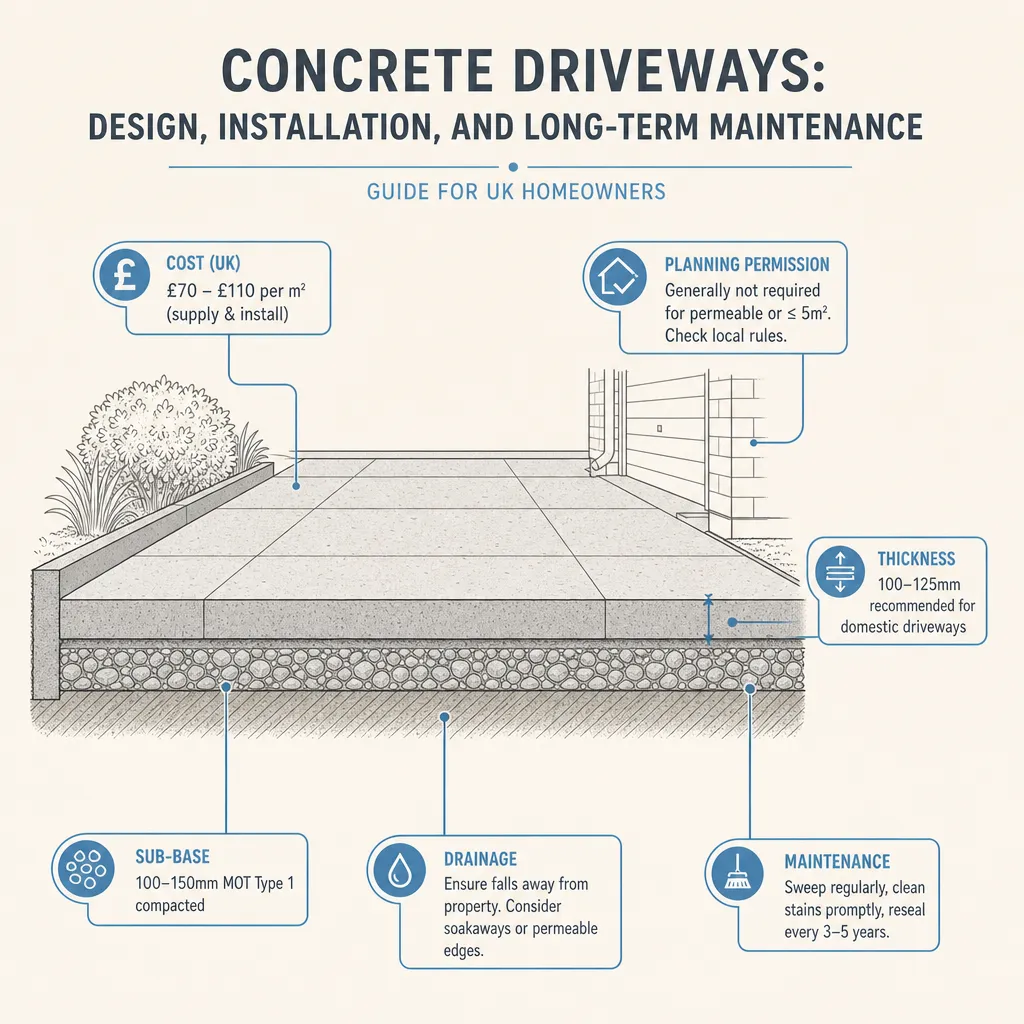
Concrete Driveways: Design, Installation, and Long-Term Maintenance
A concrete driveway requires a compacted sub-base of at least 150mm and a concrete slab of at least 100mm for domestic use.