Driveway Sealing: Concrete and Asphalt Maintenance Strategies
By Housey · Last reviewed 1st of June 2026
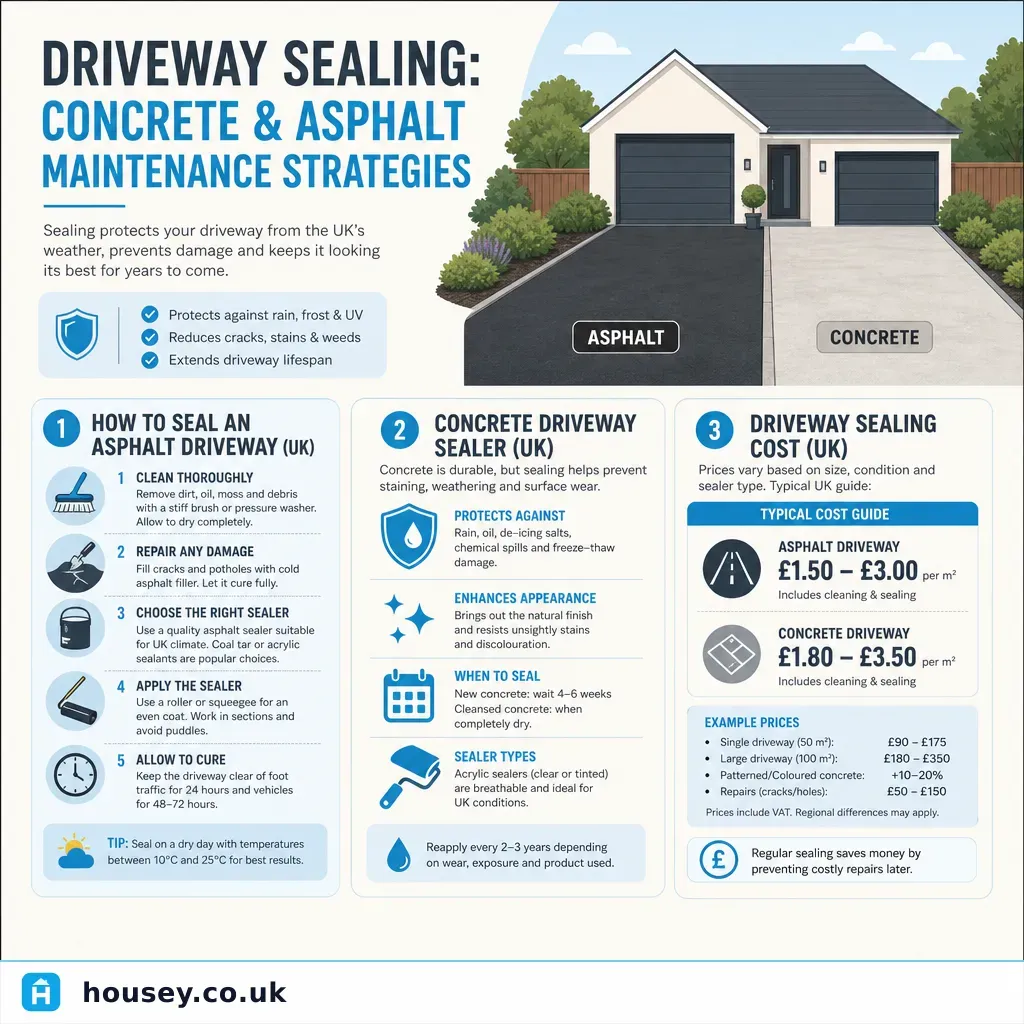
Driveway Sealing: Concrete and Asphalt Maintenance Strategies
Driveways take a constant battering from vehicles, weathering, freeze-thaw cycles, and oil spills — yet they are often left untreated until visible damage appears. Understanding whether your driveway is concrete or asphalt, and which sealing approach suits each surface, can extend its lifespan significantly and avoid the far greater cost of resurfacing or full replacement. This decision typically arises when cracks begin to appear, after a harsh winter, or when a driveway shows surface fading, pitting, or spalling.
Key points
- Asphalt driveways should generally be sealed every 3–5 years using a bitumen-based emulsion sealcoat; sealing too frequently can cause product build-up and premature cracking.
- Concrete driveways benefit from penetrating sealers (silane or siloxane-based) rather than film-forming coatings, which can peel and trap moisture beneath the surface.
- New asphalt must cure for a minimum of 90 days before sealing is applied — sealing too soon locks in solvents and weakens the surface.
- Surface preparation — cleaning, degreasing, and crack filling — accounts for the majority of a successful sealing job; skipping it causes early failure of the treatment.
- Indicative UK costs for professional driveway sealing range from approximately £200–£700 for a standard single or double driveway, depending on size, condition, and product (Indicative UK costs, last reviewed 2026-06-01).
Concrete vs asphalt: which sealer is right for your driveway?
Concrete and asphalt behave very differently under sealer, and using the wrong product can cause more harm than leaving the surface untreated.
Concrete driveways are porous and susceptible to water ingress, de-icing salt damage, and surface spalling (flaking). Penetrating sealers — typically silane or siloxane-based — soak into the surface and repel moisture without forming a film. This allows the concrete to breathe while blocking water and chloride penetration. Acrylic or epoxy film-forming sealers can be used on decorative or pattern-imprinted concrete but require more frequent re-application and may peel if moisture is present during application.
Asphalt driveways contain bitumen that slowly oxidises and becomes brittle when exposed to UV light, water, and petrol or oil spills. Bitumen-based sealcoats replenish this binder and restore flexibility. Coal tar sealants — once common — are now largely avoided due to their polycyclic aromatic hydrocarbon (PAH) content. Asphalt emulsion sealers are the standard choice for residential driveways in the UK.
Comparison table: concrete vs asphalt sealing
Feature | Concrete driveway | Asphalt driveway |
|---|---|---|
Recommended sealer type | Penetrating silane or siloxane | Asphalt emulsion sealcoat |
Sealing frequency | Every 5–10 years (penetrating) | Every 3–5 years |
New surface wait time | 28 days minimum (full cure) | 90 days minimum |
Main damage risks | Frost spalling, salt damage, oil staining | UV oxidation, cracking, oil penetration |
DIY feasibility | Moderate (penetrating sealers) | Moderate (emulsion sealers) |
Risk of wrong product | Peeling, moisture trapping | Soft surface, premature cracking |
Professional recommended when | Cracking present; pattern-imprinted surface | Cracks >6 mm; extensive pitting; oil contamination |
When to seal and when to repair first
Sealing an already-damaged surface seals in the problem rather than solving it. Before any sealing work, assess the driveway carefully:
- Hairline cracks (≤3 mm): can usually be filled with a compatible crack filler or joint sealant before sealing.
- Moderate cracks (3–6 mm): require proper crack filling and potentially patching. Sealing over unfilled cracks will cause the sealer to fail rapidly at those points.
- Wide cracks or potholes (>6 mm): consult a driveway professional — patch repairs or partial resurfacing may be needed before sealing adds any lasting value.
- Active heave or sinkage: sealing will not address underlying sub-base failure. A driveway professional should inspect the cause before any surface treatment is applied.
If the driveway is heavily contaminated with oil or fuel, degreasing with a specialist cleaner is essential before sealing. Oil contamination prevents the sealer from bonding properly to the surface.
Pre-sealing checklist for homeowners
Before sealing your driveway — whether you are doing it yourself or using a contractor — work through this preparation checklist:
What does professional driveway sealing include?
A professional sealing service should typically include: surface cleaning and degreasing, crack filling, a minimum of two sealer coats applied by roller or spray, edge detailing, and a curing period before vehicle access is restored. Some contractors include a weed barrier treatment along the edges.
Before accepting a quote, ask:
- What specific sealer product will be used, and can you provide the technical data sheet?
- How many coats are included, and what is the recommended drying time between coats?
- What preparation work is included, and are large crack repairs quoted separately?
- What is the expected lifespan, and does any warranty apply?
- Is VAT included in the quoted price?
Indicative UK costs for professional driveway sealing range from approximately £200–£350 for a standard single driveway to £400–£700 for a double, though larger or decorative driveways will cost more. Costs vary by region, surface condition, and product specification (Indicative UK costs, last reviewed 2026-06-01).
When to get professional help
For most standard sealing jobs on a driveway in reasonable condition, a confident DIY-er can achieve good results. Contact a professional driveway contractor when:
- Cracks are widening, deep, or accompanied by uneven settling of sections
- There is visible sub-base failure — sunken areas or persistent puddling after rain
- The driveway is pattern-imprinted or resin-bound, where incorrect sealer can permanently alter the surface appearance
- Oil contamination is extensive and has penetrated deeply into the surface
- The driveway serves a listed property or sits within a conservation area — some surface treatments may require planning consent
How Housey can help
If your driveway needs more than sealing — or if you want a professional to assess whether sealing is the right treatment — Housey can connect you with vetted driveway installers and maintenance specialists in your area. Get quotes from local professionals to compare costs and approaches before committing to any work.
Frequently asked questions
How often should I seal my asphalt driveway in the UK?
Most manufacturers and driveway contractors recommend sealing asphalt every 3–5 years under typical UK weather conditions. Sealing annually can cause product build-up and surface cracking. Driveways with light traffic in sheltered locations may stretch to five years between treatments, while exposed or heavily used driveways may benefit from treatment at the shorter end of the range.
Can I seal a concrete driveway myself?
Penetrating silane or siloxane sealers are generally suitable for confident DIY application on flat, structurally sound concrete, provided the surface is thoroughly cleaned and conditions are dry and above 5°C. Film-forming or decorative sealers on pattern-imprinted concrete are better left to a professional to avoid streaking or uneven coverage.
Will sealing fix cracks in my driveway?
Sealer alone will not repair cracks. It can bridge very fine surface crazing but will not fill or stabilise structural cracks. Any cracks should be cleaned out and filled with a compatible product before sealing. Ignoring cracks before sealing causes the treatment to fail prematurely at those points, and in cold weather, trapped moisture can worsen freeze-thaw damage.
Is driveway sealing worth the cost in the UK?
In most cases, yes. Regular sealing extends driveway lifespan by protecting against water ingress, frost damage, and UV oxidation. The cost of sealing is typically a fraction of resurfacing or full replacement. However, a surface nearing structural end of life may be better replaced than sealed — a driveway contractor can help you assess which approach makes sense.
Sources and further reading
- The Concrete Society — guidance on concrete surfaces in use — The Concrete Society
- National Highways — road surface maintenance guidance — National Highways
- Citizens Advice — hiring tradespeople and getting quotes — Citizens Advice
Useful next reads
 Improvement & Build
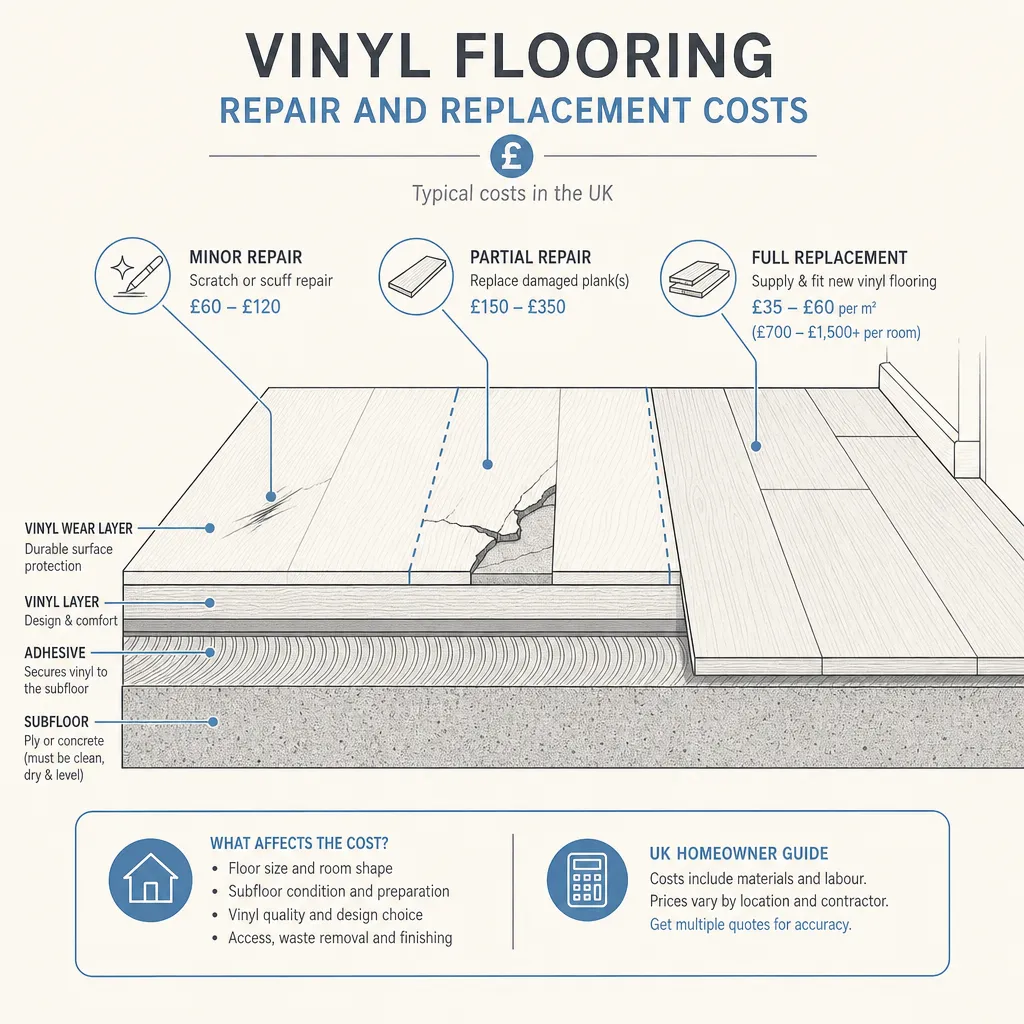
Vinyl Flooring Repair and Replacement Costs
Repairing a small area of vinyl flooring typically costs £50–£200 in the UK, while full replacement runs from £15–£35 per m² for luxury vinyl tile (LVT) plus labour of £10–£25 per m².
 Improvement & Build
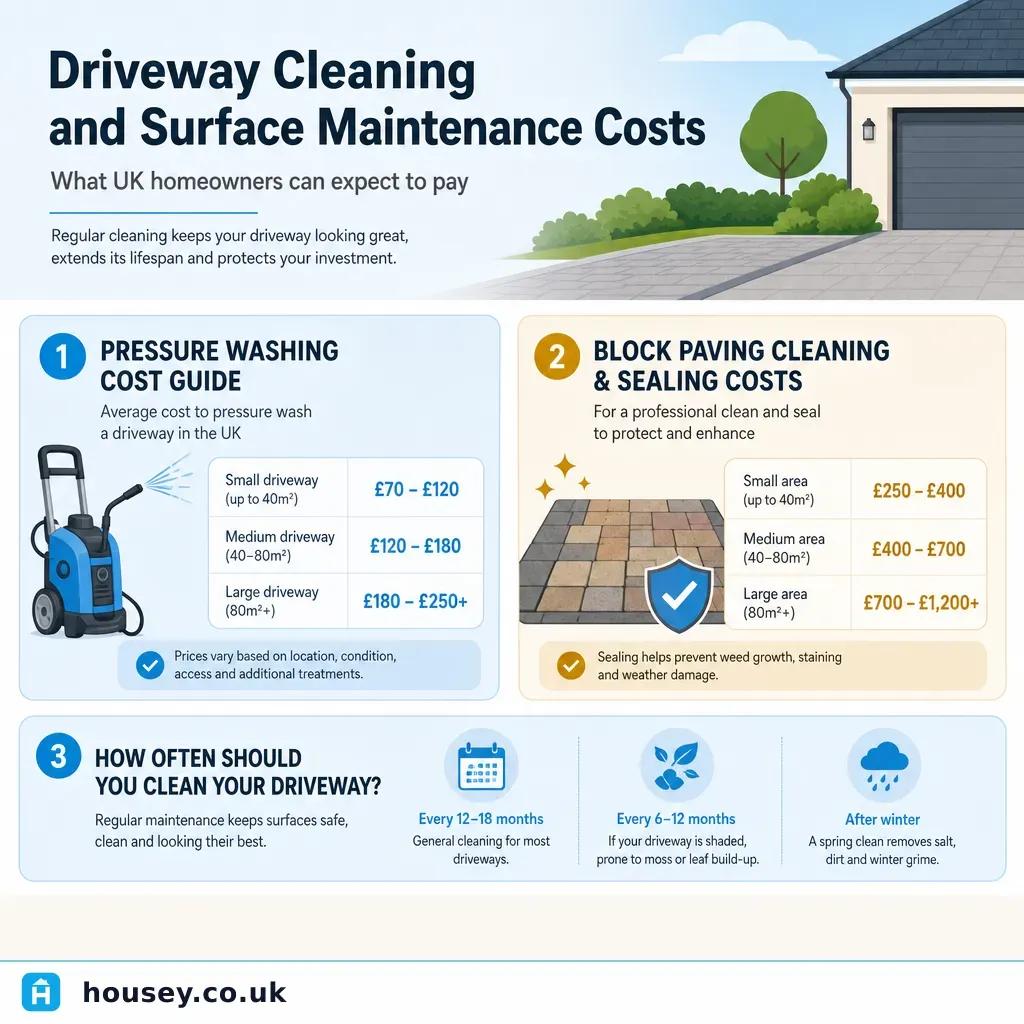
Driveway Cleaning and Surface Maintenance Costs
Professional driveway cleaning in the UK typically costs £100–£300 for pressure washing an average single driveway, rising to £300–£600 if block paving sealing and re-jointing are included.
 Improvement & Build
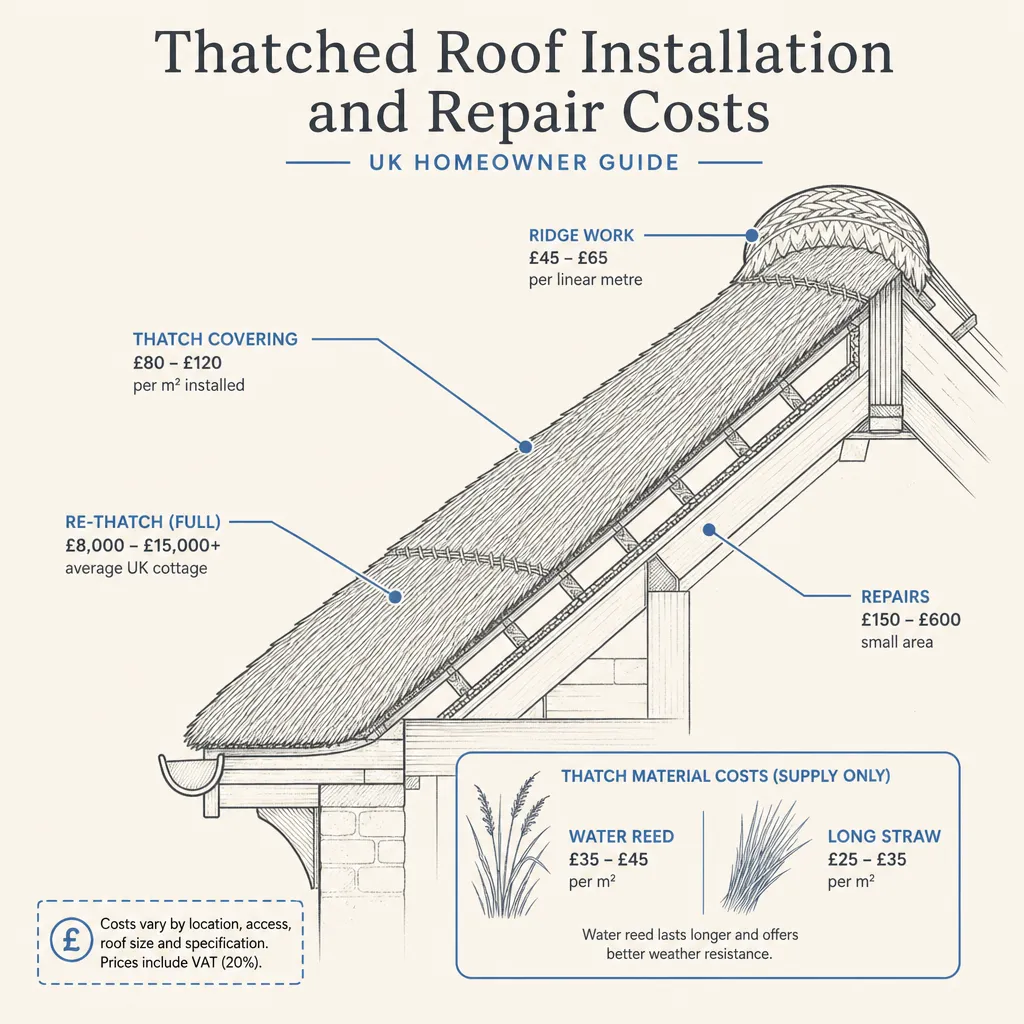
Thatched Roof Installation and Repair Costs
A full re-thatch on a typical UK cottage costs £15,000 to £30,000 or more, depending on material, size, and location.
 Improvement & Build
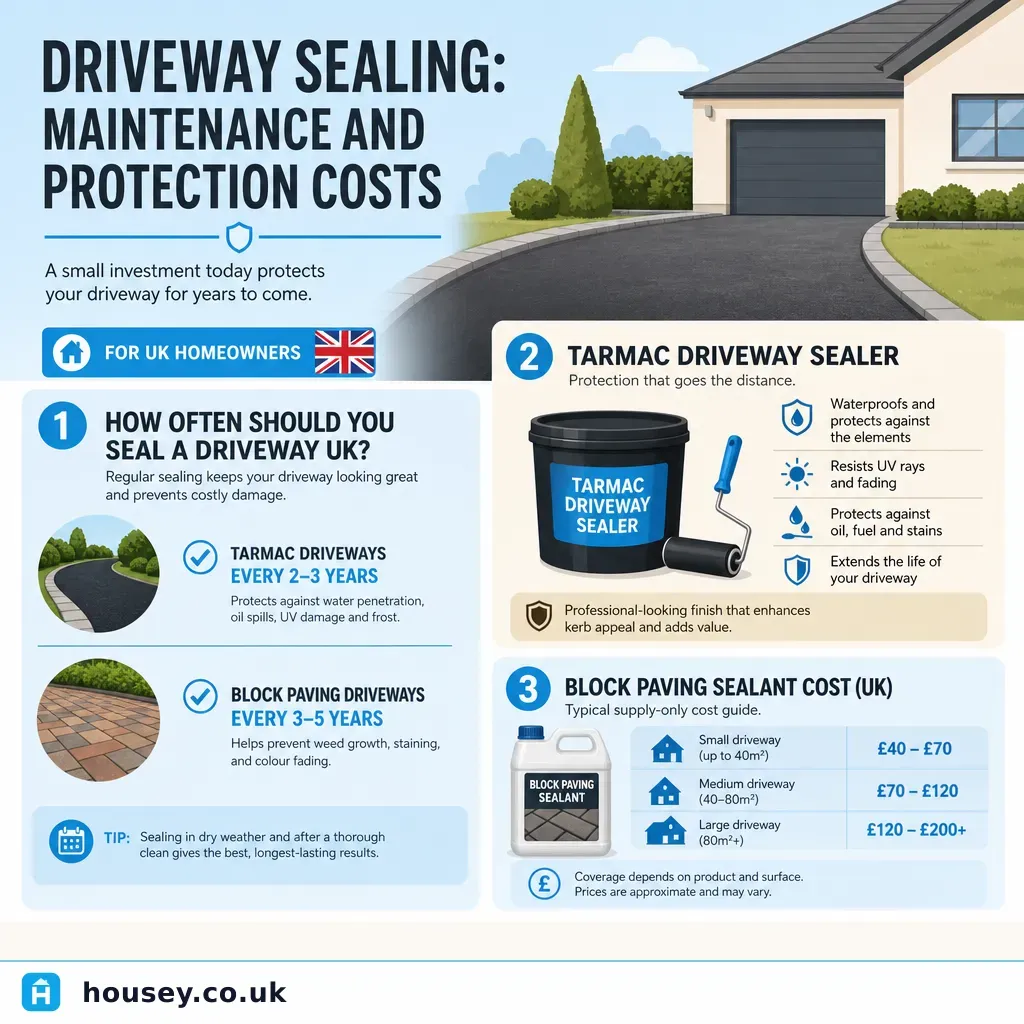
Driveway Sealing: Maintenance and Protection Costs
Sealing a driveway typically costs £3–£8 per m² in the UK, depending on the surface material, area size, and condition.
 Improvement & Build
Understanding Annual Property Maintenance Budgets and Running Costs
UK homeowners typically budget 1–3% of their property's purchase price each year for maintenance and repairs, with older properties at the higher end.