Thatched Roof Installation and Repair Costs
By Housey · Last reviewed 11th of May 2026
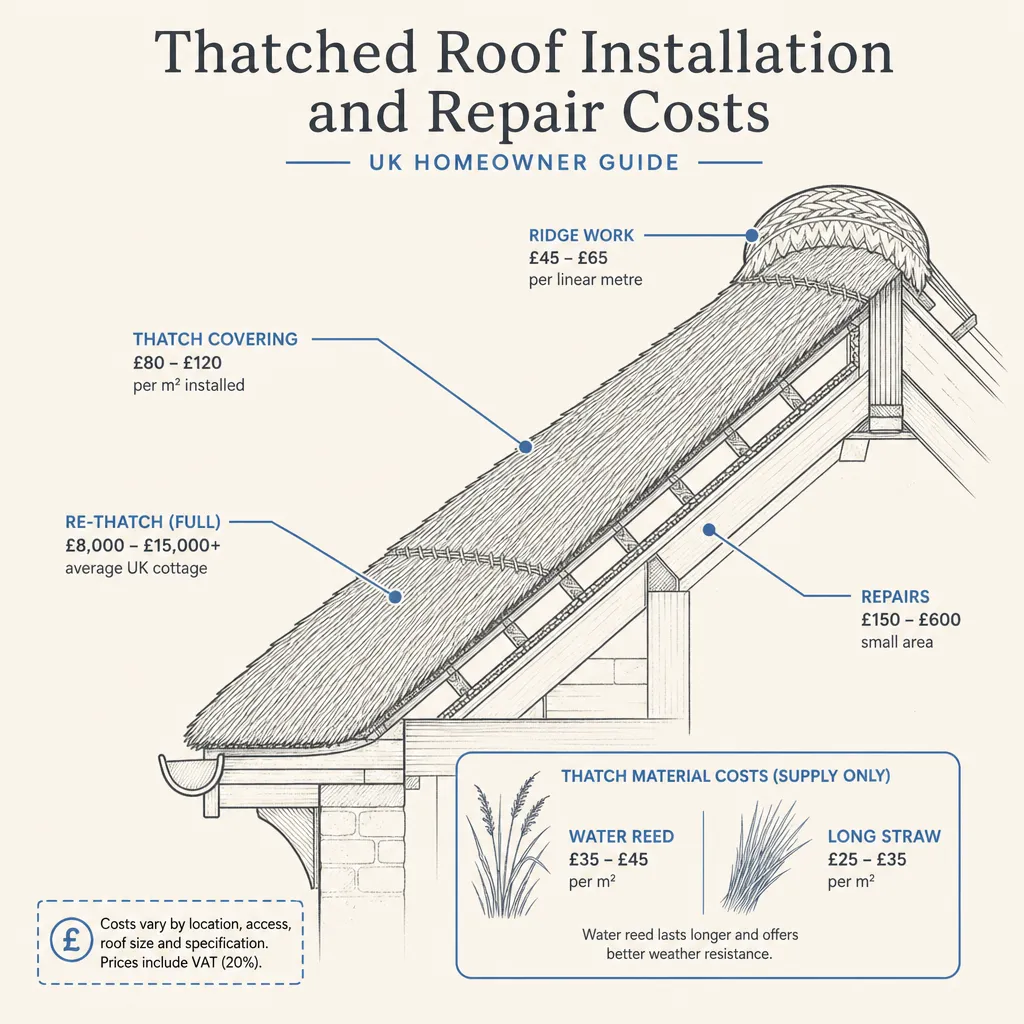
Thatched Roof Installation and Repair Costs
Thatch is one of Britain's oldest roofing materials and remains in active use across tens of thousands of properties in England — concentrated in Devon, Dorset, Norfolk, Suffolk, and the Cotswolds. Owning a thatched property brings distinctive character alongside specialist maintenance demands: a thatched roof requires skilled craft workers, appropriate insurance, and periodic investment to remain weatherproof and compliant with any planning conditions. Whether you are buying a thatched cottage, dealing with storm damage, or planning a full re-thatch, understanding costs, materials, and professional requirements will help you make confident decisions.
Key points
- A full re-thatch on a typical cottage (50–75 m² roof area) costs approximately £15,000 to £30,000 or more, depending on material, roof complexity, pitch, and location (Indicative UK costs, last reviewed 2026-05-11).
- The three main thatching materials differ significantly in lifespan: water reed 25–40 years, combed wheat reed 25–35 years, and long straw 15–25 years.
- Ridges are the shortest-lived element of a thatched roof and typically need replacing every 8–15 years, even when the main coat remains in good condition.
- Always use a thatcher who is a member of the National Society of Master Thatchers (NSMT) — membership requires demonstrated competence and professional conduct.
- Listed buildings require Listed Building Consent from the local planning authority before significant thatching works, including any change of material or ridge construction that alters the character of the roof.
How much does thatched roof work cost?
Thatching costs reflect specialist skill, material sourcing, and labour intensity — per-square-metre rates are significantly higher than those for most conventional roofing types. Work is typically quoted per m² of roof area or as a project total.
Type of work | Indicative cost | Typical lifespan before next intervention |
|---|---|---|
Full re-thatch — water reed | £15,000–£35,000+ | 25–40 years |
Full re-thatch — combed wheat reed | £13,000–£28,000 | 25–35 years |
Full re-thatch — long straw | £10,000–£22,000 | 15–25 years |
Ridge replacement only | £2,500–£6,000 | 8–15 years |
Partial repairs or patching | £500–£3,000 | Varies |
New installation (barn conversion or new build) | £18,000–£45,000+ | Varies by material |
Indicative UK costs, last reviewed 2026-05-11. Costs vary significantly by region, roof complexity, pitch, dormers, chimneys, and site access.
Water reed full re-thatching typically runs from £200 to £400 per m² including materials and labour. A steep pitch, valleys, dormers, and chimneys all add to total project cost. In popular thatching regions — Devon, Dorset, and the Cotswolds in particular — lead times of six to twelve months or more are common due to high demand and a limited pool of skilled thatchers.
Thatching materials compared
The choice of material depends on the property's history, regional tradition, budget, and in some cases the requirements of the local planning authority or Historic England.
Material | Lifespan | Appearance | Regional association | Notes |
|---|---|---|---|---|
Water reed | 25–40 years | Crisp, layered finish | East Anglia, coastal areas | Longest lifespan; highest cost per m² |
Combed wheat reed | 25–35 years | Similar to water reed | West Country (Devon) | Also called Devon reed; similar durability |
Long straw | 15–25 years | Shaggy, traditional look | East Midlands, southern England | May be specified by planners for listed properties |
Ridge material and construction method also affect longevity and appearance. Block-cut and wrap-over ridges differ in look and durability; conservation officers may specify ridge style for listed properties. Always discuss ridge options with your thatcher and, where relevant, with your local authority conservation team before work begins.
Does thatching work need planning permission?
For most properties, routine maintenance and like-for-like repair is permitted development and requires no planning permission. However, the rules are more complex in certain situations:
- Listed buildings: changes to roofing material, construction method, or ridge style — including re-ridging that alters the character of the roof — may require Listed Building Consent. Consult your local authority's conservation officer before commissioning any non-routine work.
- Conservation areas: works visible from the street on unlisted properties may need planning permission in some cases.
- Article 4 Directions: some local authorities remove permitted development rights in sensitive areas. Check with your local planning authority if you are uncertain about the status of your property.
Red flags: signs your thatch needs urgent attention
Arrange an annual visual inspection by a qualified thatcher. Contact one promptly if you notice any of the following:
- Sagging or dipped areas in the main coat — may indicate failed spars or liggers, or wet structural timbers beneath.
- Dark patches or deep moss growth penetrating the thatch — a sign of water ingress rather than surface growth.
- Ridge lifting, splitting, or detachment — any loose ridge section should be repaired promptly to prevent water tracking down into the main coat.
- Bird or rodent activity within the roof — nesting causes rapid and extensive damage in a short period.
- Water staining on interior ceilings directly below the roof — an urgent indicator of active water penetration.
- Coat depth below approximately 23 cm (9 inches) — experienced thatchers use a steel spike to test depth; below this threshold the roof may no longer be reliably weatherproof.
Insurance and fire risk
Standard building insurance policies frequently exclude thatched properties or apply significantly higher premiums. Key points for thatched property owners:
- Use a specialist thatched property insurer rather than a standard home insurance comparison site. Disclose the thatching material, approximate age of the coat, and any open fires or woodburning stoves at the outset.
- Insurers commonly require a spark arrestor or approved spark guard fitted to the chimney stack if there is an open fire or solid fuel stove.
- Some policies specify approved fire retardant treatments applied to the thatch — check your policy schedule before instructing a thatcher, and confirm any treatment is acceptable to your insurer.
- Inform your insurer before and after significant thatching work. An undisclosed material change could affect the validity of your cover.
Homeowner thatch maintenance checklist
- ☐ Arrange an annual visual inspection by a National Society of Master Thatchers member.
- ☐ Keep gutters and downpipes clear — blockages can force water back against the eaves and into the lower thatch.
- ☐ Trim overhanging trees and vegetation that shade the roof and encourage moss growth.
- ☐ Check chimney flashing and spark arrestor condition annually, especially before the winter heating season.
- ☐ Review specialist thatched property insurance at each renewal and confirm your insurer is satisfied with current materials and any recent works.
- ☐ Keep records of all thatching works: material, date, thatcher's name, and any planning consents obtained. Useful for future re-thatching specifications and insurance purposes.
- ☐ Confirm listed building consent requirements with your local planning authority before instructing any non-routine repair or material change.
When to get professional help
Thatching is specialist craft work that should never be attempted as a DIY project. Working at height on a thatched roof without proper scaffolding is dangerous, incorrect repairs can shorten the life of the whole coat, and unauthorised works on a listed building may create legal liability. Contact a qualified master thatcher if you notice any of the red flags above, if the coat depth is approaching the end of its serviceable life, or if you are buying a property with a thatched roof and want a specialist condition report before exchange.
If structural issues are found beneath the thatch — failed rafters, wet purlins, or rotten wall plates — you should involve a structural engineer or specialist timber-frame contractor alongside your thatcher.
How Housey can help
Housey can connect you with specialist roofers and thatching contractors experienced in heritage and traditional properties across the UK. Compare quotes from local specialists to find a thatcher suited to your property's material and regional tradition.
Frequently asked questions
How often does a thatched roof need replacing?
This depends on the material: water reed typically lasts 25 to 40 years, combed wheat reed 25 to 35 years, and long straw 15 to 25 years. Ridges need replacing more frequently — every 8 to 15 years — regardless of the condition of the main coat. Regular maintenance and timely minor repairs extend the life of the whole roof considerably.
Is a thatched roof more expensive to insure?
Yes, in almost all cases. Thatched roofs carry a higher fire risk and require specialist underwriting. Standard home insurance policies often exclude thatched properties or charge significantly higher premiums. Use a specialist rural and heritage property insurance broker rather than a standard comparison website, and always disclose the full details of the roof material and any heat sources.
Can I change from thatch to tiles?
For a listed building, replacing thatch with tiles will almost certainly require Listed Building Consent, and applications are often refused where thatch is a defining character feature. For unlisted properties in conservation areas, planning permission may still be required. Always consult your local authority conservation officer and check current planning policy before considering this option.
Will my thatcher need scaffolding?
Yes. Safe working at height on a thatched roof requires scaffolding or a mobile elevated work platform. Any contractor who proposes to carry out roof-height work without appropriate access equipment should be treated with serious caution. Scaffolding hire is generally included within a full re-thatching quote — confirm this before accepting the contract.
Sources and further reading
- Listed Building Consent — Historic England — Historic England
- When is permission required? — GOV.UK — GOV.UK Planning Portal
- National Society of Master Thatchers — NSMT
- Fire safety in thatched buildings — National Fire Chiefs Council — NFCC
Useful next reads
 Improvement & Build
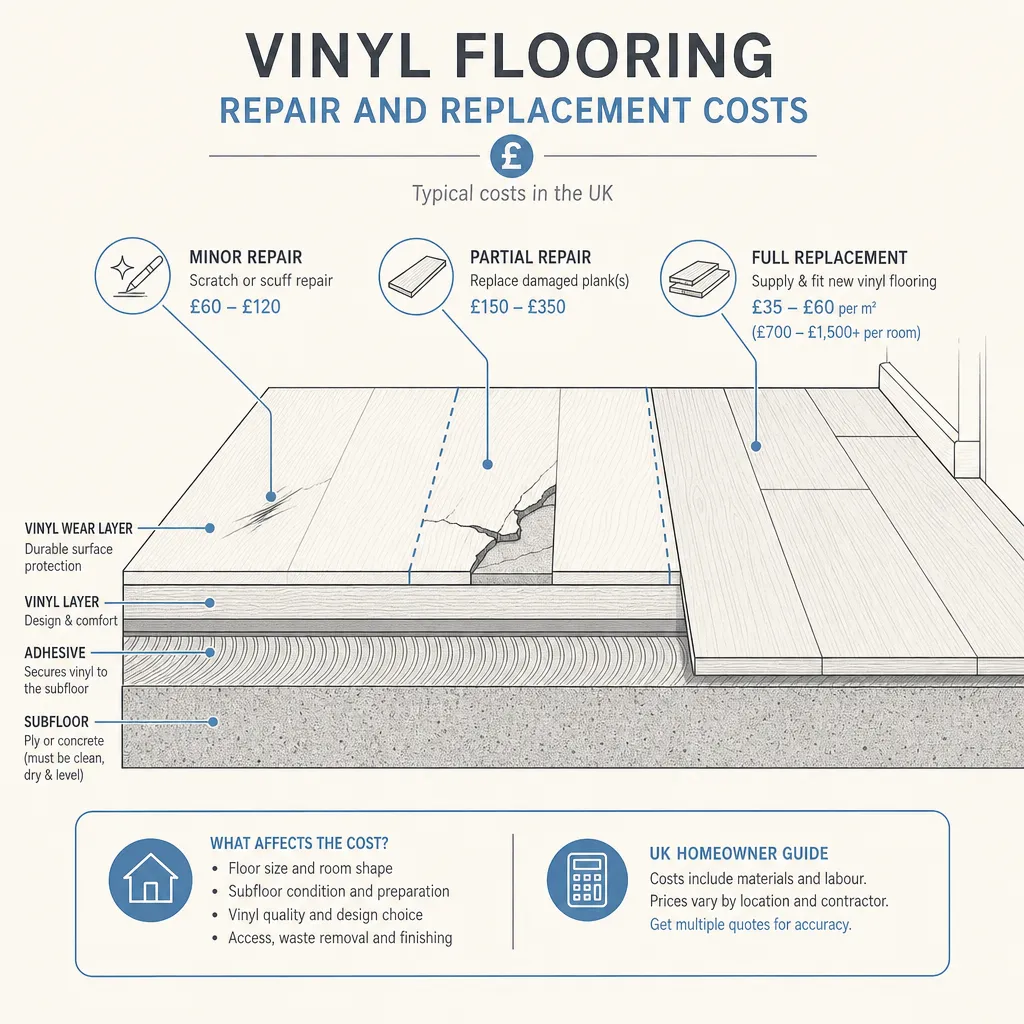
Vinyl Flooring Repair and Replacement Costs
Repairing a small area of vinyl flooring typically costs £50–£200 in the UK, while full replacement runs from £15–£35 per m² for luxury vinyl tile (LVT) plus labour of £10–£25 per m².
 Improvement & Build
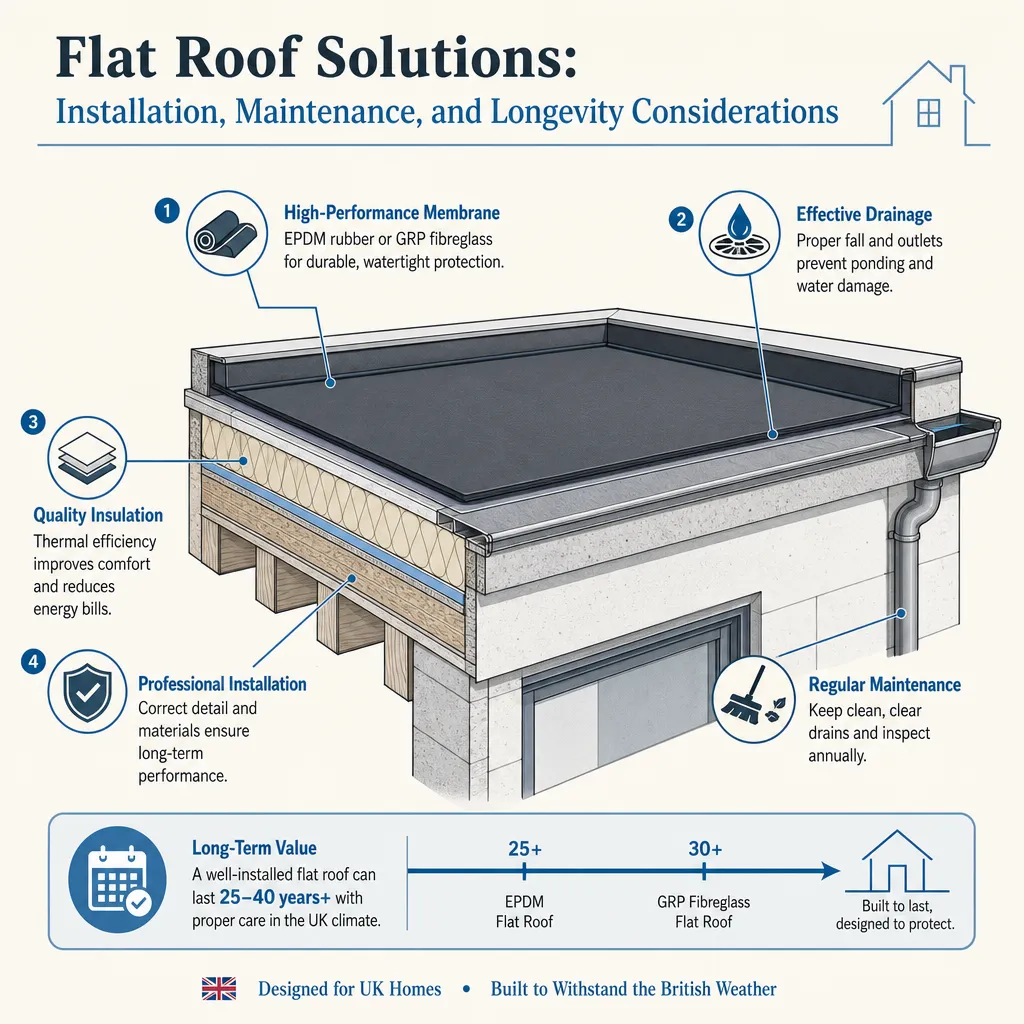
Flat Roof Solutions: Installation, Maintenance, and Longevity Considerations
Flat roofs use several waterproofing systems — EPDM rubber, GRP fibreglass, liquid-applied coatings, modified bitumen felt, lead, and zinc — each with different lifespans and installation requirements.
 Improvement & Build
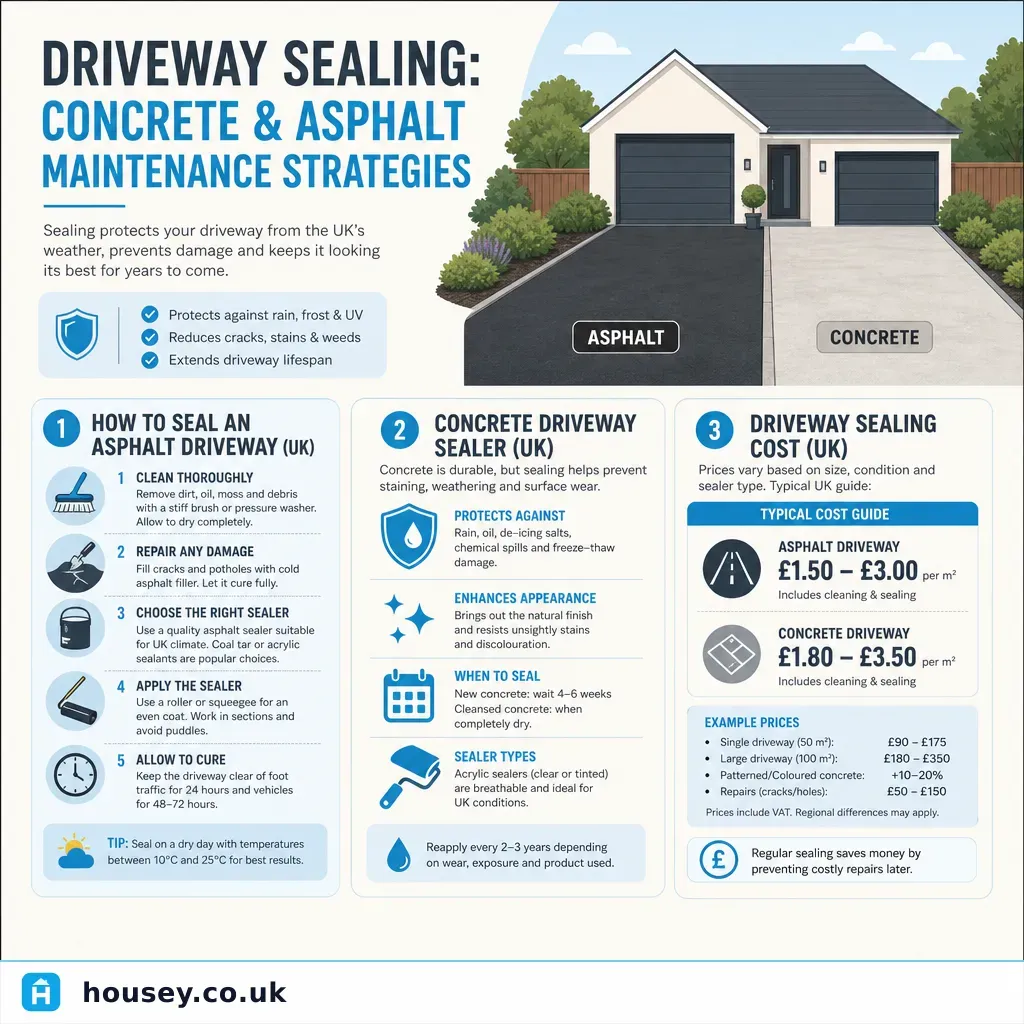
Driveway Sealing: Concrete and Asphalt Maintenance Strategies
Sealing an asphalt driveway every 3–5 years with a bitumen emulsion, or a concrete driveway with a penetrating silane or siloxane sealer, protects against frost damage, UV oxidation, and water ingress.
 Improvement & Build
Maintaining And Caring For Thatched Properties
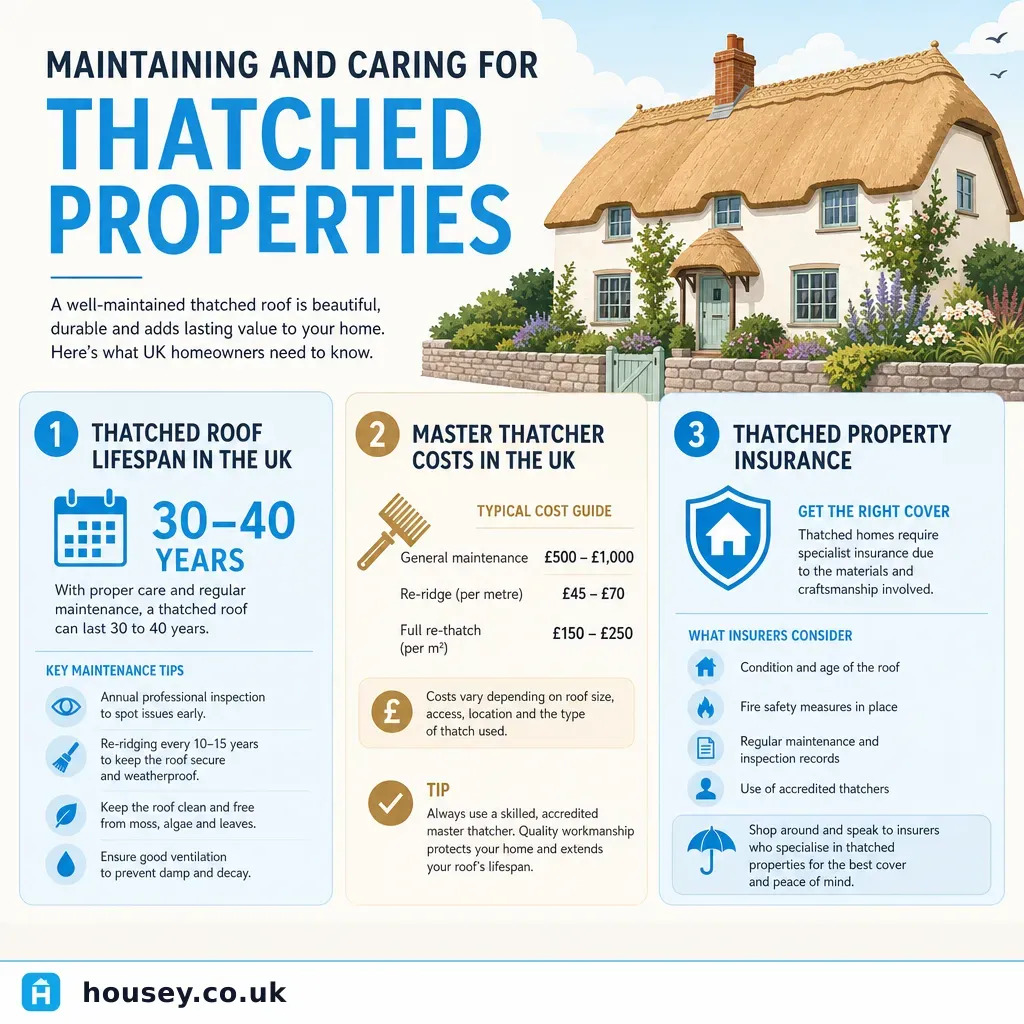
A thatched roof needs inspection by a master thatcher every one to two years, with ridge replacement every 10–15 years and a full re-thatch every 25–40 years depending on the material.
 Improvement & Build
Understanding Annual Property Maintenance Budgets and Running Costs
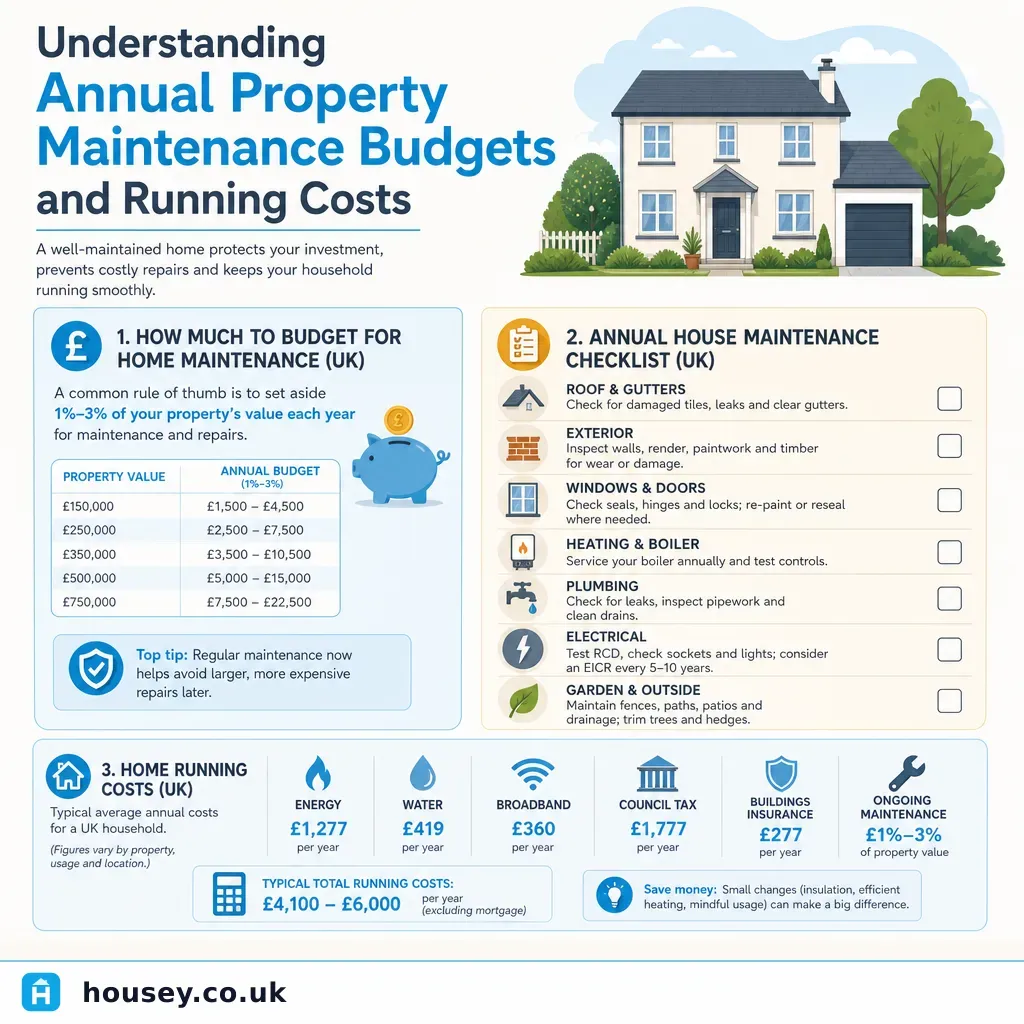
UK homeowners typically budget 1–3% of their property's purchase price each year for maintenance and repairs, with older properties at the higher end.