Driveway Widening: Planning Permission and Installation Requirements
By Housey · Last reviewed 31st of May 2026
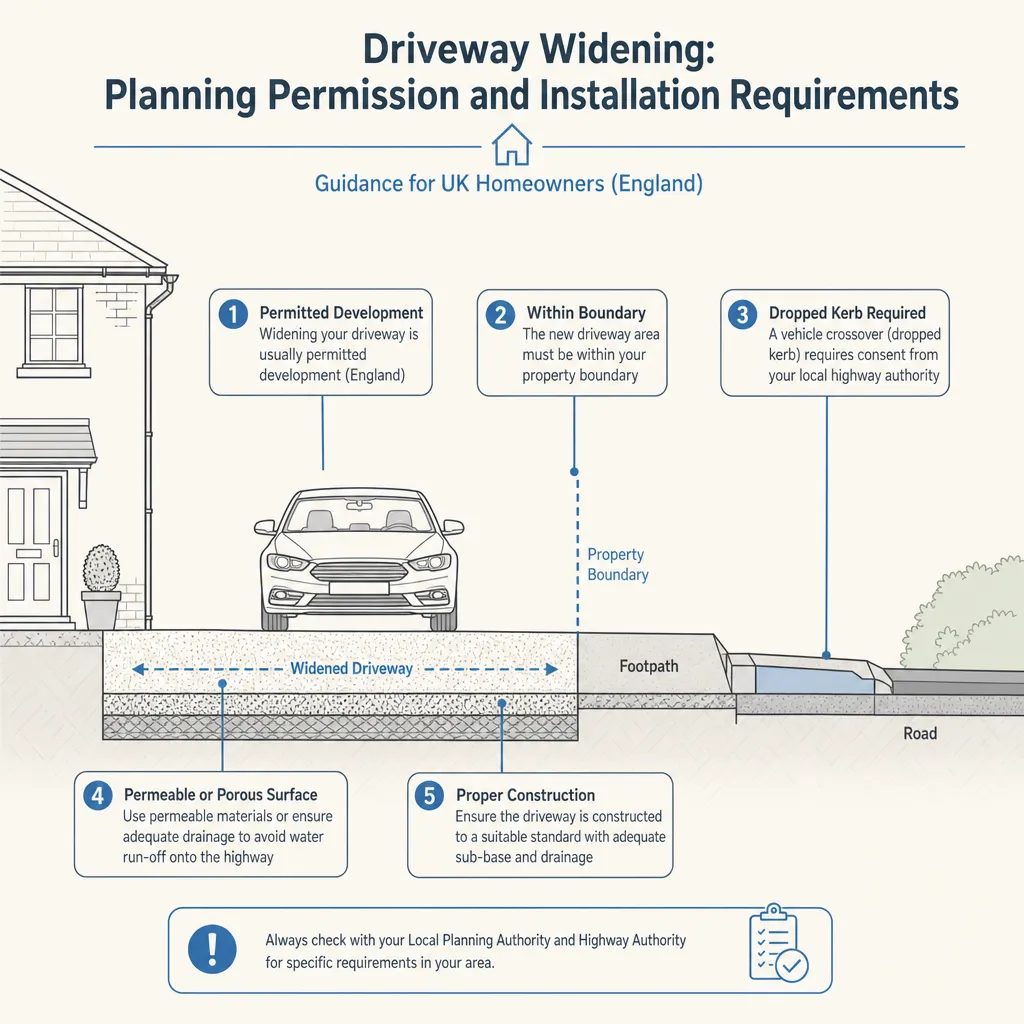
Driveway Widening: Planning Permission and Installation Requirements
Whether you are buying a larger car, creating off-street parking for the first time, or reconfiguring a shared access, widening a driveway is a project many UK homeowners find more regulated than expected. The question of planning permission arises early and the answer turns almost entirely on the surfacing material and drainage arrangement you choose — not on the size of the project alone.
Key points
- In England, widening a front driveway using permeable surfacing — gravel, permeable block paving, or resin-bound aggregate — is generally permitted development under Schedule 2, Part 1 of the Town and Country Planning (General Permitted Development) (England) Order 2015; no planning application is needed provided water drains on-site.
- Any impermeable surface (standard tarmac, concrete, or close-butted clay paviours) covering more than 5 m² in a front garden requires planning permission in England.
- A dropped kerb (vehicle crossover) always requires a separate licence or permit from the local highway authority, regardless of the planning status of the driveway itself.
- Conservation area designation or an Article 4 Direction can remove permitted development rights, requiring a full planning application even for permeable surfaces — check with your local planning authority (LPA) first.
- Surface water from a new driveway must not discharge onto the public highway; the Highways Act 1980 makes the property owner liable for damage caused by water running from private land onto the road.
Do you need planning permission?
The key test in England is surface type and drainage. The rules changed in 2008 following concerns about flash flooding caused by impermeable front gardens in urban and suburban areas.
Permeable surfaces — gravel, permeable block paving, resin-bound aggregate, grass grid — are permitted development in most cases, provided water drains on-site through the surface itself or onto a lawn or planted border.
Impermeable surfaces — standard tarmac, concrete, close-butted clay brick paviours — require planning permission if the driveway area in the front garden exceeds 5 m².
Wales, Scotland, and Northern Ireland have separate planning frameworks and the 5 m² threshold does not apply in those nations. Always check with your LPA before starting work.
Which planning route applies to your project?
- Use permeable surfacing if you want to avoid a planning application and your front garden can accommodate on-site drainage.
- Apply for householder planning permission if you want impermeable tarmac or concrete and the new front-garden area will exceed 5 m².
- Check with your LPA first if the property is in a conservation area, is listed, or if an Article 4 Direction has been served — permitted development rights may be removed entirely.
- Contact the highway authority separately in all cases where you need a new or widened dropped kerb; this is a distinct process from planning permission.
- Seek pre-application advice from your LPA if the project involves removing a boundary wall or is close to a road junction or traffic management order.
Dropped kerbs and highway authority approval
A dropped kerb — also called a vehicle crossover or vehicular access point — lowers the kerbstone along the adopted public footway so a vehicle can cross safely onto private land. Because the footway is public highway, any alteration requires formal permission from the highway authority, typically your county or unitary council.
Key points about dropped kerbs:
- You must not drive across a footway regularly without an approved crossover; doing so may damage underground services and creates legal liability for any resulting damage.
- Most councils operate a residential crossover application scheme. Some carry out the works themselves (you pay the council); others approve a list of qualified contractors to carry out the work.
- Applications are refused if the proposed access creates unacceptable sight-line hazards, conflicts with a traffic regulation order, or is too close to a road junction.
- Indicative UK costs for a standard residential crossover: £800–£3,000, depending on kerb type, footway construction, and the highway authority's rates. Last reviewed 2026-05-31 — always obtain a quote directly from your council or approved contractor.
Permeable vs impermeable surfacing: a comparison
Surface type | Planning needed (>5 m², front garden, England)? | Drainage | Indicative installed cost per m² |
|---|---|---|---|
Gravel (loose bound) | No | Drains through naturally | £20–£50 |
Permeable block paving | No | Drains through joints | £60–£120 |
Resin-bound aggregate | No (if installed permeable) | Drains through surface | £70–£130 |
Tarmac (impermeable) | Yes, if >5 m² | Must not discharge to highway | £40–£80 |
Concrete (impermeable) | Yes, if >5 m² | Must not discharge to highway | £50–£100 |
Clay paviours (close-butted) | Yes, if >5 m² | Must not discharge to highway | £80–£150 |
Indicative UK costs, last reviewed 2026-05-31. Prices vary by region, access difficulty, and sub-base specification. Obtain at least three written quotes.
Homeowner installation checklist
Before instructing a contractor, work through this list:
Important limitations
This article provides general information about planning rules and highway procedures in England as at 2026-05-31. Planning policy is administered locally — rules, fee levels, and application timescales vary between local planning authorities. Conservation area restrictions and Article 4 Directions can override permitted development rights without prior warning to homeowners. Wales, Scotland, and Northern Ireland have different planning frameworks. This article does not constitute professional planning or legal advice. Consult your LPA's pre-application service or instruct a planning consultant for site-specific guidance.
What to ask a qualified professional
If you are unsure whether planning permission applies, or your property is in a complex location, ask a planning consultant or your LPA:
- Does this property have any Article 4 Directions removing permitted development rights for front garden surfacing?
- Is the property in a conservation area or does it have listed building consent implications?
- Will the highway authority require a technical sight-line assessment for the crossover application?
- What is the typical determination time for a householder planning application at this LPA?
- Are there local requirements on sustainable drainage or surface water attenuation I should be aware of?
- Which team at the highway authority handles residential crossover applications, and what is the current wait time?
When to get professional help
Seek advice from a planning consultant or contact your LPA before starting work if:
- The property is in a conservation area, is listed, or has been served with an Article 4 Direction notice.
- You need to remove or relocate a boundary wall or gate pier close to the highway boundary.
- You are unsure whether your chosen surface meets the permeable drainage test.
- The highway authority has previously refused a crossover application at your address.
- Your property is in Wales, Scotland, or Northern Ireland — planning rules differ materially from England's.
How Housey can help
Housey connects you with vetted driveway installers who understand the planning and highway requirements that apply to widening and resurfacing projects across the UK. If your project involves a planning application or your property is in a complex area, our planning consultancy partners can advise on permitted development thresholds, pre-application enquiries, and the crossover licence process.
Frequently asked questions
Do I need planning permission to widen my driveway in England?
Not always. Using permeable surfacing — gravel, permeable block paving, or resin-bound aggregate — with on-site drainage is usually permitted development. Planning permission is required for impermeable surfaces such as tarmac or concrete if the new front-garden area exceeds 5 m². Conservation area status or an Article 4 Direction can remove these permitted development rights even for permeable surfaces.
What is a dropped kerb and do I always need permission for one?
A dropped kerb is a vehicle crossover where the kerbstone on the public footway is lowered to allow vehicle access onto private land. You must always obtain approval from the local highway authority before creating or widening a crossover — this is entirely separate from any planning permission for the driveway surface. Driving over an unofficial crossover regularly is illegal and may damage underground services.
How much does driveway widening cost in the UK?
Permeable block paving typically costs £60–£120 per m² installed, tarmac £40–£80 per m², and resin-bound surfaces £70–£130 per m². A new residential dropped kerb from a local highway authority or approved contractor usually costs £800–£3,000. These are indicative UK costs, last reviewed 2026-05-31 — always obtain at least three written quotes as prices vary by region, site conditions, and specification.
Can I use any driveway material without planning permission?
You can avoid a planning application in England by using a permeable surface — gravel, permeable block paving, resin-bound aggregate, or a grass grid system — provided rainwater drains on-site rather than onto the public highway. Standard tarmac and concrete are impermeable and trigger the planning requirement if the total front-garden area exceeds 5 m². Always check with your LPA if you are in a conservation area or if an Article 4 Direction may apply.
Sources and further reading
- Planning Portal: Driveways and other surfaces — Planning Portal
- Town and Country Planning (General Permitted Development) (England) Order 2015, Schedule 2 Part 1 — legislation.gov.uk
- Highways Act 1980 — legislation.gov.uk
- Paving your front garden — GOV.UK
Useful next reads
 Improvement & Build
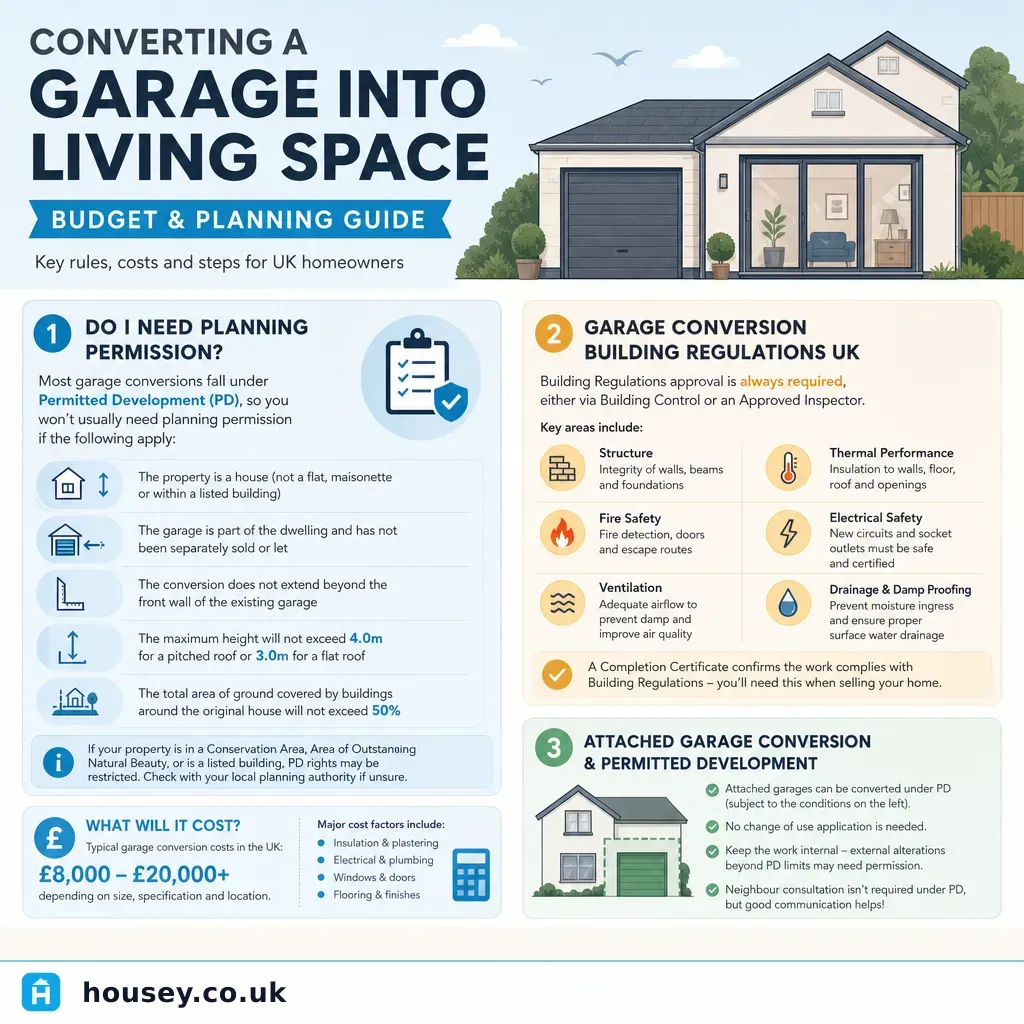
Converting a Garage into Living Space: Budget and Planning Guide
A single-garage conversion typically costs £8,000–£20,000 in the UK.
 Improvement & Build
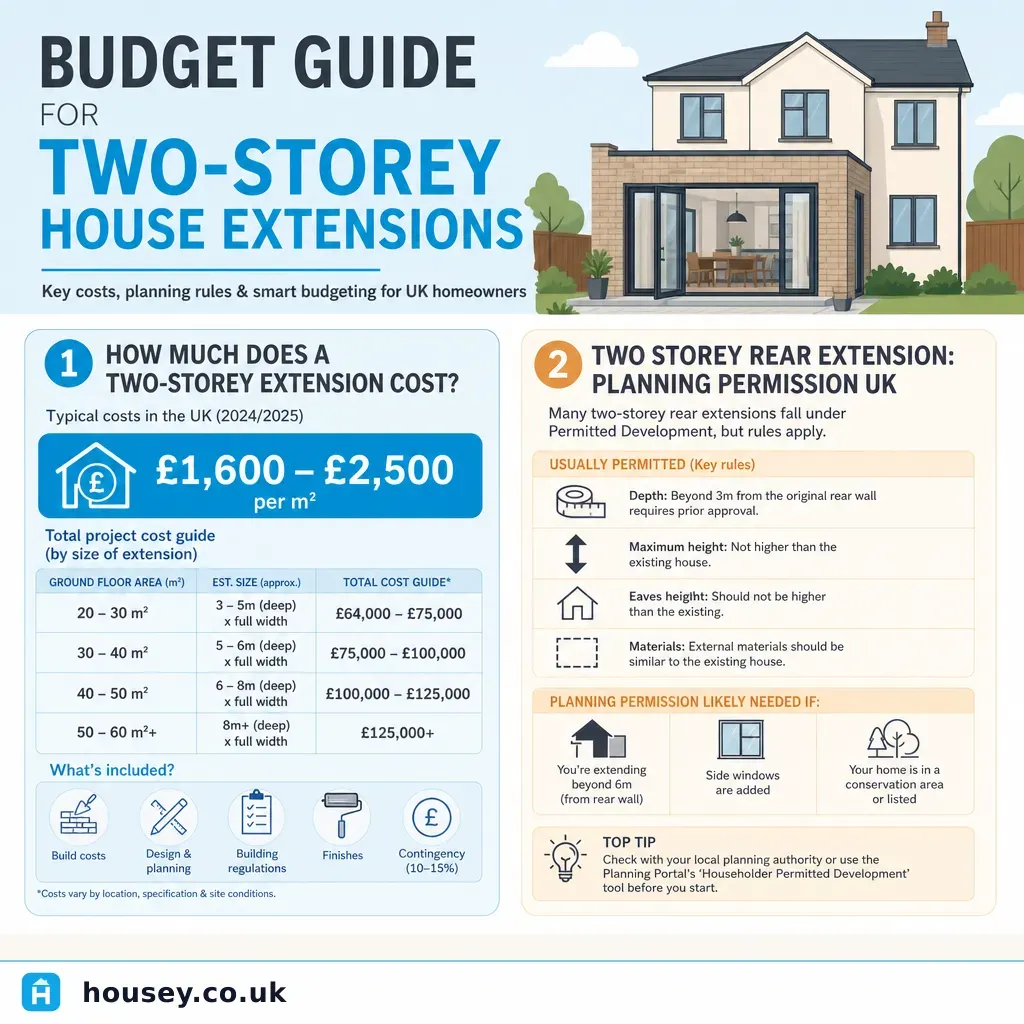
Budget Guide for Two-Storey House Extensions
A two-storey house extension in the UK typically costs £1,800–£3,000+ per square metre for the build alone.
 Improvement & Build
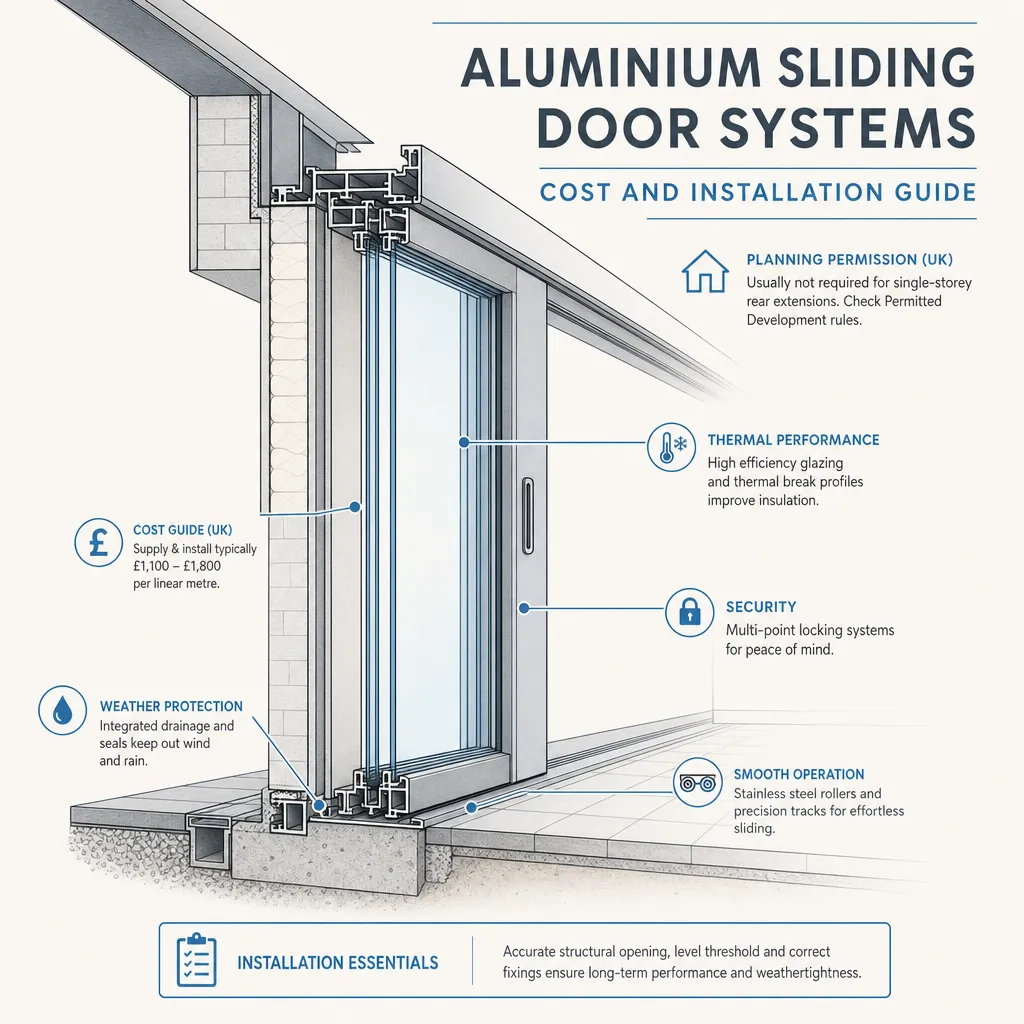
Aluminium Sliding Door Systems: Cost and Installation Guide
Aluminium sliding doors typically cost £2,500–£7,000 supply and fitted for a standard opening.
 Improvement & Build
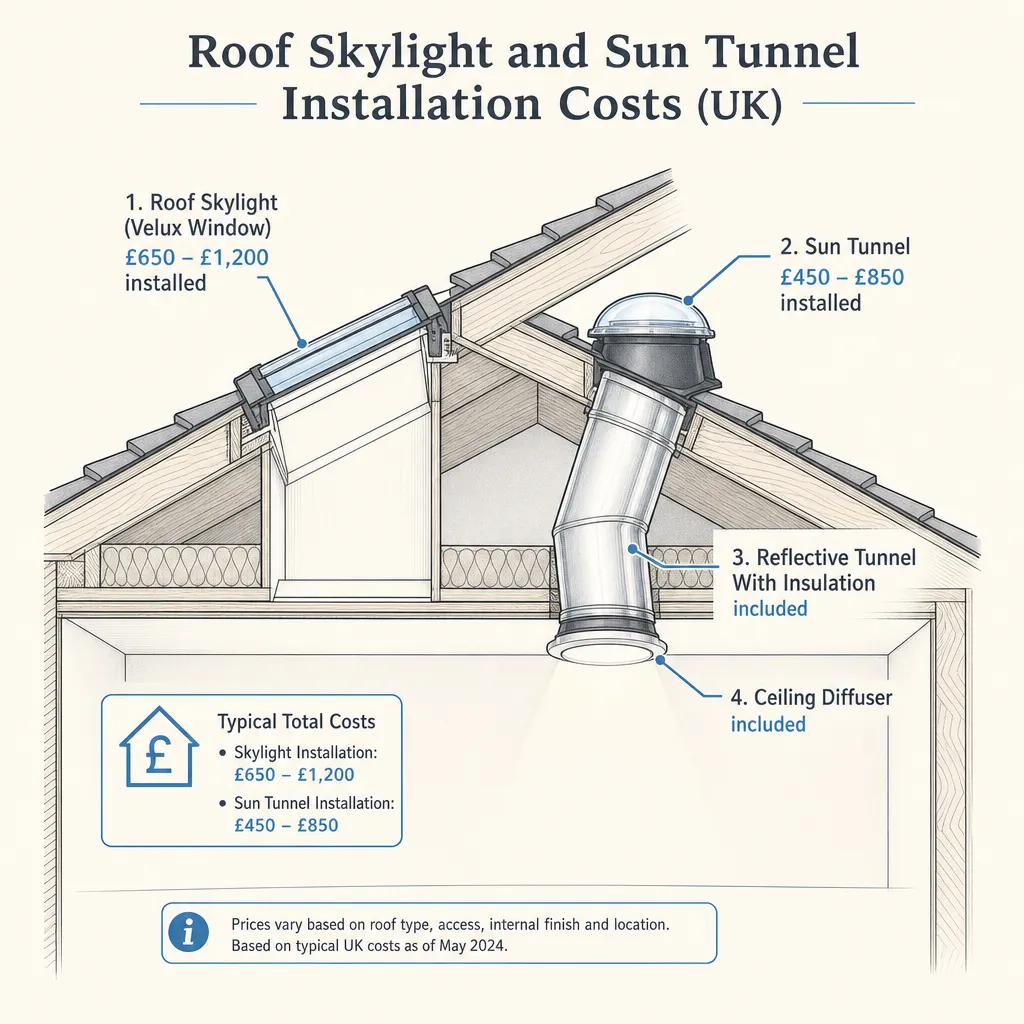
Roof Skylight and Sun Tunnel Installation Costs
A standard pitched-roof skylight costs £800–£3,000 installed in the UK, including flashings and basic making good.
 Improvement & Build
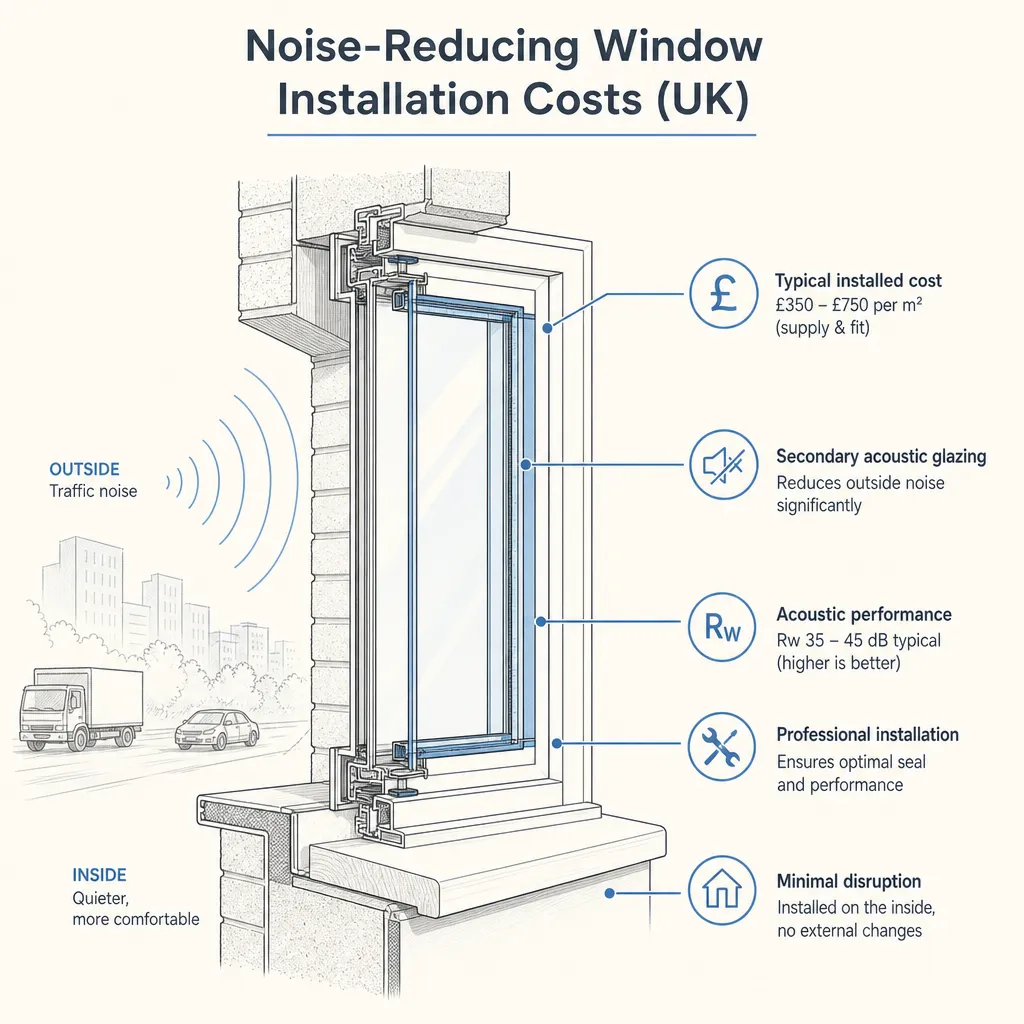
Noise-Reducing Window Installation Costs
Noise-reducing window installation in the UK typically costs £400–£1,500 per window depending on glazing specification, frame material, and property type.