Dropped Kerb Installation and Driveway Access Costs
By Housey · Last reviewed 6th of May 2026
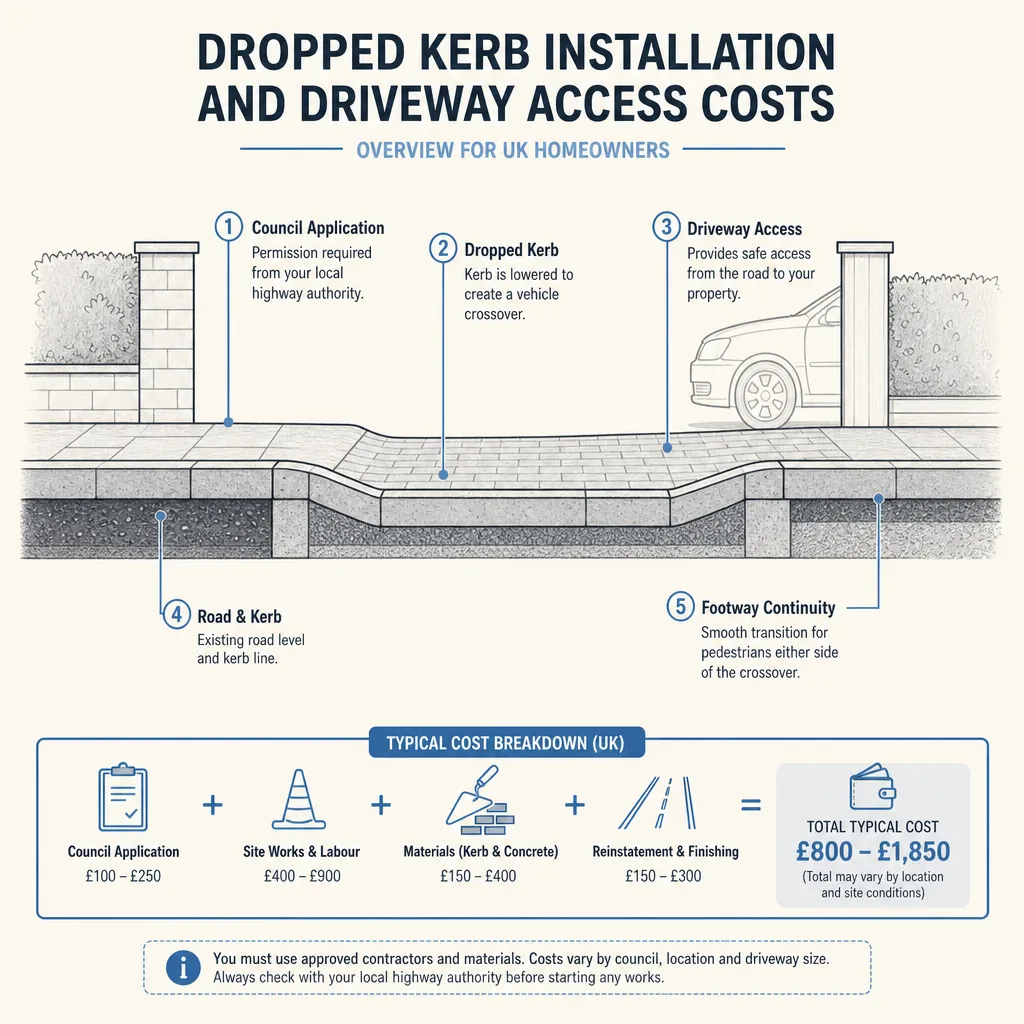
Dropped Kerb Installation and Driveway Access Costs
Wanting to park on your own driveway is one of the most common home improvement ambitions in the UK, but access from the road is controlled by your local highway authority — not simply your property boundary. Whether you are creating a new driveway or widening an existing one, understanding the approval process and realistic costs upfront will save you delays, abortive work, and unexpected bills.
Key points
- You must apply to your local highway authority before any kerb-lowering work begins — working without approval is an offence under Section 184 of the Highways Act 1980 and can result in forced reinstatement at your cost.
- The council or its appointed contractor carries out the kerb-lowering on the public highway; you commission separate groundworks on your own land.
- Indicative total costs range from £1,000 to £3,500 depending on council fees, pavement construction type, and crossing width (Indicative UK costs, last reviewed 2026-05-06).
- Planning permission may also be required if the new driveway surface is impermeable and exceeds 5 square metres, or the property is listed or in a conservation area.
- Scotland's process is governed by the Roads (Scotland) Act 1984 — apply to your local roads authority rather than an English highway authority.
What is a dropped kerb and why do you need approval?
A dropped kerb (also called a vehicle crossing or lowered kerb) is a section of kerbstone that is lowered to pavement level so a vehicle can cross from the road onto private land. The kerb sits within the public highway, which is maintained by the local highway authority — usually the county or unitary authority for residential streets.
Because the kerb is public infrastructure, only the highway authority or a contractor it appoints can carry out the lowering. Instructing a private builder to chip out and lower a kerb without permission is unlawful under Section 184 of the Highways Act 1980. If the council discovers unauthorised work, it can require reinstatement of the original kerb at your expense and may pursue further costs.
Who approves a dropped kerb application?
Your application goes to the local highway authority. For most residential streets in England and Wales this is the county or unitary authority — separate from your district or borough council's planning department, though planning permission may be a parallel requirement (see below).
Some councils have online application portals; others use paper forms. The authority will typically assess:
- Whether the crossing location has adequate sight lines for vehicles entering and exiting.
- The construction type of the existing pavement, which affects reinstatement cost.
- Whether underground utilities — gas, water, electricity, or telecoms — lie beneath the proposed crossing point.
- Whether existing parking restrictions or waiting zones would be affected.
Processing times vary from four weeks to three months. Check your local authority's current timescales before scheduling any groundworks contractor.
Do you also need planning permission?
In many cases, creating a driveway is permitted development — meaning no planning application is needed — provided the surface is permeable (gravel, block paving with drainage channels, or porous asphalt). A planning application is required if:
- The new surface is impermeable (standard concrete or tarmac) and the driveway area exceeds 5 square metres.
- The property is in a conservation area.
- The property is listed.
- The frontage is in a controlled parking zone with specific restrictions.
The relevant rules for England are set out in the Town and Country Planning (General Permitted Development) (England) Order 2015. Scotland, Wales, and Northern Ireland each have their own permitted development frameworks — check the relevant planning authority before assuming the same rules apply.
How much does a dropped kerb cost?
Costs fall into two main parts: the highway authority's fee for the kerb-lowering work on the public highway, and any private groundworks on your land.
Cost component | Indicative range | Notes |
|---|---|---|
Highway authority fee (kerb lowering and pavement reinstatement) | £500 – £1,500 | Set by the council; covers survey, traffic management, and reinstatement |
Private groundworks (crossing apron and driveway base) | £500 – £2,000 | Depends on width, excavation depth, and surface material |
Planning application fee (if required) | £258 (England, 2026) | Householder application — check GOV.UK for current rates |
Total indicative cost | £1,000 – £3,500 | Wider crossings, utility diversions, and complex pavements add cost |
Indicative UK costs, last reviewed 2026-05-06. Quotes vary significantly by council and region — always request itemised written quotes.
Why do costs vary?
- Council fee schedules differ. Some authorities charge a fixed fee; others price per metre of crossing width.
- Pavement construction type. Breaking out and reinstating a deep-concrete footway costs more than a tarmac one.
- Utility conflicts. A gas main, water main, or electricity duct beneath the proposed crossing requires engineering around it — adding both time and cost.
- Crossing width. A standard single-car crossing (2.7–3.6 m wide) costs less than a double-car crossing.
- Traffic management. Busier roads may require temporary traffic signals or lane closures, charged to the applicant.
Decision tree: which steps do I need?
- Apply for a vehicle crossing if you are creating any new access from a public road onto private land — even if a gap in a hedge or fence already exists.
- Check existing records first if the property has a driveway from a previous owner — an approved crossing may already be recorded with the highway authority.
- Apply for planning permission separately if the proposed driveway surface is impermeable and over 5 square metres, or the property is listed or in a conservation area.
- Commission private groundworks only after approval is confirmed — do not book a groundworks contractor until the highway authority has formally approved the crossing.
- Contact your local roads authority (Scotland) or Transport for Wales (trunk roads) if the road is not a standard residential street, as different procedures apply.
What to ask before accepting a quote
When comparing quotes for the private groundworks element (the crossing apron and driveway):
- Does this quote assume highway authority approval is already in place?
- What width and depth of crossing apron is included?
- What surface material is specified, and is it permeable under the permitted development rules?
- What happens if utilities are found beneath the proposed crossing?
- Is VAT included in the price?
- Will existing kerb materials be removed and disposed of?
- What reinstatement standard applies — will the pavement finish match the surrounding footway?
Common red flags
- A contractor offers to lower the kerb themselves without mentioning the highway authority — this is unlawful.
- No written quote or itemised specification is provided.
- The quote does not address whether planning permission is needed.
- A price significantly below others that excludes traffic management or utility checking.
- The contractor cannot confirm who will carry out the highway works or under what authority.
When to get professional help
A straightforward dropped kerb application on a quiet residential road is something most homeowners can manage directly with the council. Consider professional support if:
- The road is a classified A or B road — approval processes are more complex and refusals more common.
- The property is listed or in a conservation area.
- You suspect utilities are routed directly under the proposed crossing point.
- The frontage is near a junction, pelican crossing, or pedestrian island — highway authorities scrutinise these locations closely.
- You are planning a double-width crossing with substantial driveway works.
How Housey can help
Once your highway authority approval is confirmed, Housey can help you request and compare quotes from local driveway installers for the private groundworks — including crossing aprons, base preparation, and your chosen driveway surface.
Frequently asked questions
Can I lower my own kerb without council permission?
No. Lowering a kerb on a public highway without your local highway authority's approval is an offence under Section 184 of the Highways Act 1980. The council can require you to reinstate the original kerb at your own cost and may pursue you for associated highway authority expenses. Always apply and receive written approval before any groundworks begin.
How long does a dropped kerb application take?
Processing times vary by local authority but are typically four to twelve weeks in England. Some councils offer faster processing; others have backlogs, particularly during spring and summer. Check your authority's current guidance before booking any contractor, as approval must be confirmed before the kerb-lowering work can start.
Does a dropped kerb add value to my home?
Off-street parking is consistently valued by buyers in the UK, particularly in urban areas where on-street parking is scarce. The likely uplift depends on location and local demand. An estate agent or RICS-registered valuer can give a specific view for your property and area rather than a generic estimate.
Can a dropped kerb application be refused?
Yes. Common reasons for refusal include inadequate sight lines, proximity to a junction or pedestrian crossing, restricted parking zones, or structural concerns about the highway at that point. The authority will state its reasons in writing. You may amend the proposal and reapply, or in some circumstances appeal the decision.
Who is responsible for maintaining a dropped kerb once it is installed?
The kerb itself is part of the public highway and is maintained by the highway authority. The crossing apron — the section of hardstanding on your land leading from the kerb — is your responsibility to maintain. If the kerb is subsequently damaged by highway authority works, you may be entitled to request reinstatement.
Sources and further reading
- Highways Act 1980, Section 184 — legislation.gov.uk
- Town and Country Planning (General Permitted Development) (England) Order 2015 — legislation.gov.uk
- Driveways: do you need planning permission? — Planning Portal
- Roads (Scotland) Act 1984 — legislation.gov.uk
Useful next reads
 Improvement & Build
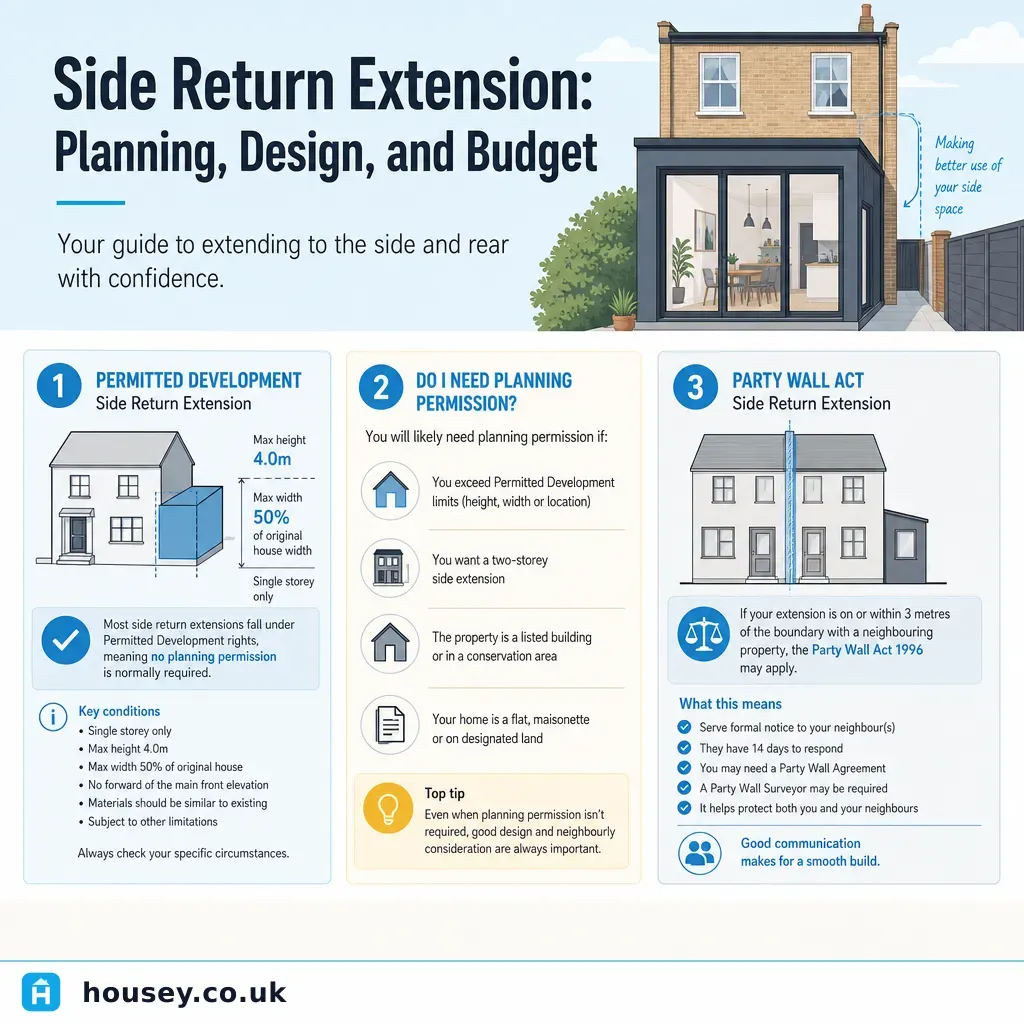
Side Return Extension: Planning, Design, and Budget
A side return extension fills the narrow alley alongside a Victorian or Edwardian terrace to create a larger kitchen or living space.
 Improvement & Build
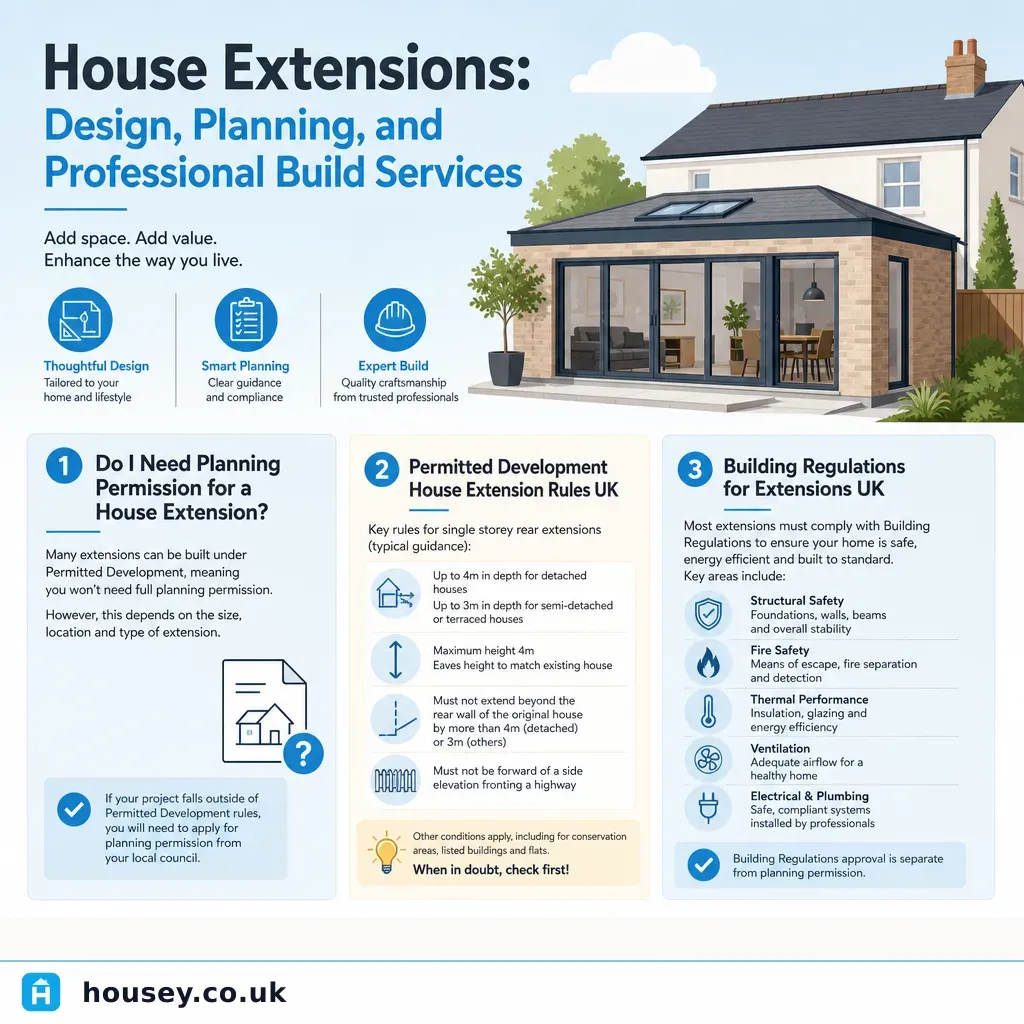
House Extensions: Design, Planning, and Professional Build Services
A UK house extension requires careful planning, structural design, and regulatory approval.
 Improvement & Build
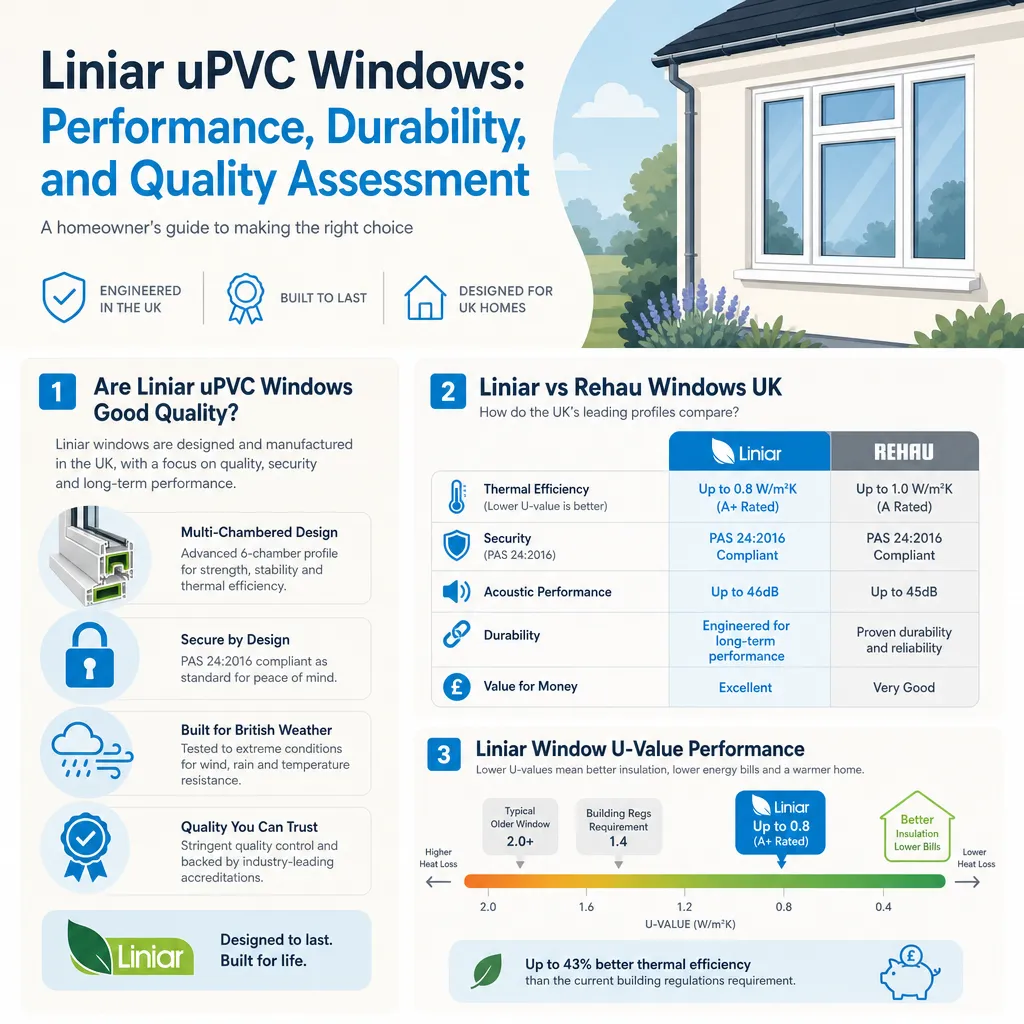
Liniar uPVC Windows: Performance, Durability, and Quality Assessment
Liniar uPVC window profiles are manufactured in the UK using multi-chambered, foamed frames.
 Improvement & Build
Garden Tap Installation with Hot and Cold Water: Plumbing Options
Adding a cold garden tap is a common DIY project, but routing hot water outdoors requires a plumber to connect to your domestic hot water system and comply with the Water Supply (Water Fittings) Regulations 1999.
 Improvement & Build
Sealing and Maintaining Historic Leaded Glass Windows: Preservation and Performance
Leaded glass windows are maintained using traditional linseed oil cement — not silicone or modern sealants, which prevent natural movement in the lead came.