Side Return Extension: Planning, Design, and Budget
By Housey · Last reviewed 10th of May 2026
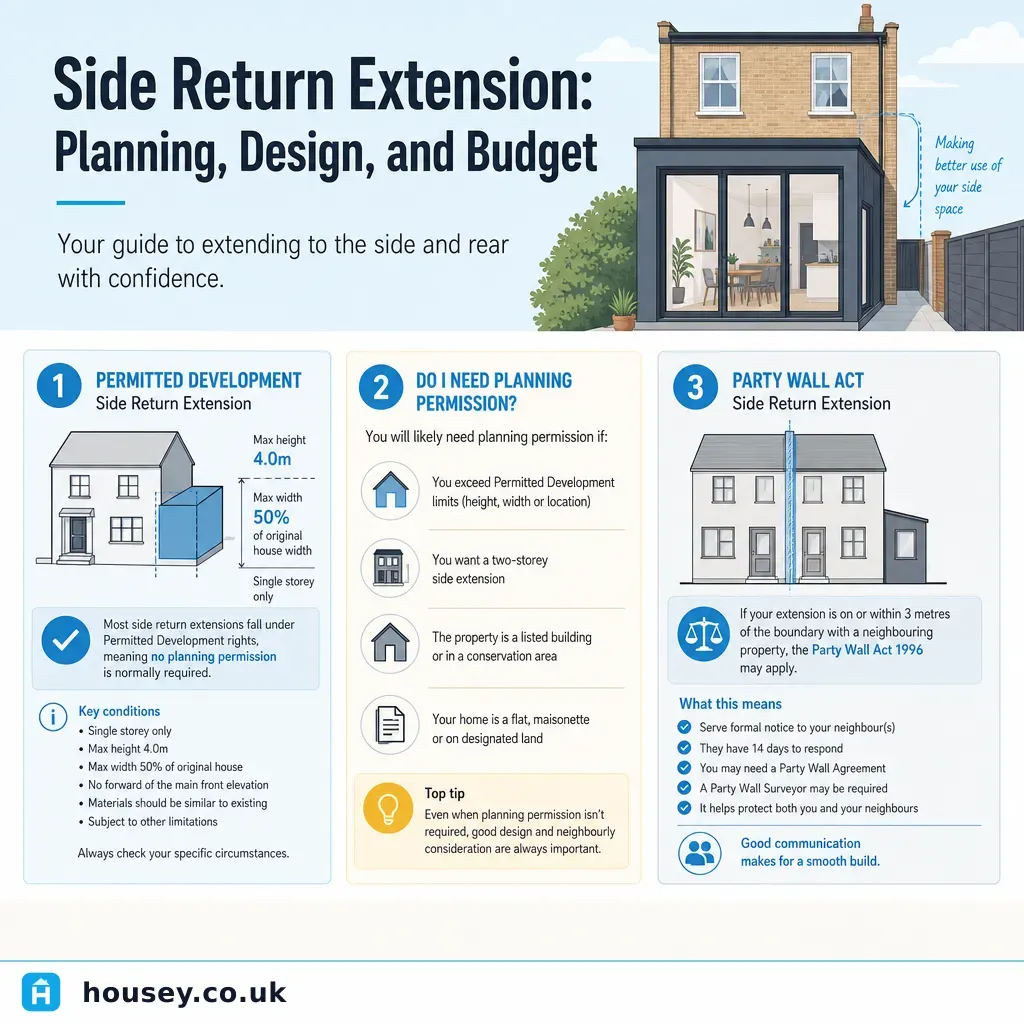
Side Return Extension: Planning, Design, and Budget
The side return extension is one of the most transformative improvements available to owners of Victorian and Edwardian terraced or semi-detached houses. The narrow alley running alongside the kitchen — typically 1 to 2.5 metres wide and often used for bins or bicycles — can be enclosed to create a significantly larger, better-lit ground-floor living space. Planning, structural, and budget decisions interact closely, and getting the design right before instructing a builder avoids expensive changes further down the line.
Key points
- Side return extensions may fall under permitted development (Class A) for householders, subject to a maximum height of 4 metres (3 metres if within 2 metres of a boundary) — but permitted development does not apply in conservation areas, and many Victorian streets are designated conservation areas.
- Building Regulations approval is required for all side return extensions under Approved Documents A (structure), C (damp-proofing), L (thermal performance), and F (ventilation), among others.
- The Party Wall etc. Act 1996 applies in almost all side return extensions where work is undertaken on or near the shared boundary with an adjoining owner — notices must be served before work begins.
- A structural engineer must design any steel beam required where an existing wall is partially or fully removed to connect the extension to the main house.
- Indicative costs in England range from £25,000–£60,000 for a straightforward single-storey side return; London and South East costs are typically 20–30% above regional averages. Indicative UK costs, last reviewed 2026-05-10.
Important limitations
This article provides general guidance on planning, regulatory, and budget considerations for side return extensions. Planning permission requirements, permitted development thresholds, Party Wall Act obligations, and structural requirements all depend on the specific property, its planning history, the local authority's policies, and adjacent ownership. A qualified architect (ARB-registered), structural engineer, and party wall surveyor should assess your circumstances before any work is commissioned. Cost ranges are indicative only.
What is a side return extension?
A side return extension fills the narrow passageway alongside the ground floor — typically alongside the rear kitchen or rear reception room — to create additional internal floor area. It is distinct from:
- A rear extension — built behind the house rather than into the side alley.
- A wrap-around extension — combines side return and rear extension in an L-shape, typically the largest format available to a terraced house.
- A side extension on a detached or semi-detached property — involves a wider side plot and different planning and structural considerations.
The side return is almost always single storey, though two-storey schemes are possible on wider plots where planning constraints allow.
Planning permission: do you need it?
Whether a side return extension requires a planning application depends on several property-specific factors.
Factor | Permitted development may apply | Planning permission likely required |
|---|---|---|
Location | Standard residential street | Conservation area, listed building, AONB, National Park |
Prior extensions | No previous extensions using the PD allowance | Prior works have used the Class A volume allowance |
Height at the boundary | Max 3 m if the wall is within 2 m of the boundary | Taller structure proposed at the boundary |
Article 4 Direction | None in place on the property | Local Article 4 removes householder PD rights |
Property type | Detached, semi-detached, or terraced house | Flat, maisonette, or converted property |
Conservation areas are common in Victorian neighbourhoods — many London boroughs, northern cities, and market towns have significant conservation area coverage. Always confirm with your local planning authority or a planning consultant before relying on permitted development.
The Party Wall etc. Act 1996
For most side return extensions, the Party Wall etc. Act 1996 applies because work is undertaken at, on, or near the shared boundary. The required notice period depends on which sections of the Act are triggered:
- Section 2 (works to an existing party wall or shared structure): at least two months notice before work begins.
- Section 1 (new wall built on or at the boundary line): at least one month notice.
- Section 6 (excavation within 3–6 metres of the neighbour's foundations, depending on depth): at least one month notice.
If the adjoining owner consents in writing, a surveyor's award is not required. If they do not consent or fail to respond within 14 days, the dispute resolution procedure begins and a party wall surveyor must be appointed.
Failing to serve correct notices does not make the work illegal, but it removes your legal protections and can lead to injunctions, compensation claims, and cost disputes.
Design considerations
Roof form: A flat roof with rooflights, a pitched roof matching the host property, or a full-width glazed roof are the most common options. In conservation areas, planning officers often have strong preferences on roof material and appearance.
Structural work: If part of the existing rear or side wall of the kitchen is removed to connect the extension to the main house, a structural steel beam is required. This must be designed by a structural engineer and specified in the Building Regulations submission.
Natural light: The enclosed side passage is often north- or east-facing with limited direct sunlight. A glazed rear wall, roof lantern, or rooflight is usually needed to achieve adequate daylighting in the extended space.
Drainage: Existing below-ground drainage may run through the side return. A CCTV drain survey before construction identifies the location and condition of any drains, preventing costly diversions during the build.
Decision tree: which route applies to you?
- Are you in a conservation area or is the property listed? → Planning permission (and for listed buildings, Listed Building Consent) is required. Engage an architect with local conservation experience before preparing any designs.
- Has a previous extension already been built? → Check with a planning consultant whether permitted development allowances have already been used.
- Does work come within 3–6 metres of the neighbour's foundations? → Party wall notice is required. Budget for a party wall surveyor's fee (typically £700–£1,500 per affected owner).
- Does the scheme involve removing part of the original house wall? → A structural engineer must design the steel beam specification.
- Is the side passage less than 1 metre wide? → Building Regulations minimum floor-to-ceiling height requirements and structural constraints may limit what is achievable — discuss with an architect before committing.
Indicative cost breakdown
The following provides a general cost guide for a single-storey side return extension of approximately 12–18 m² in England, excluding the London and South East premium.
Item | Indicative cost range |
|---|---|
Architect fees (RIBA Stages 1–5) | £4,000–£10,000 |
Structural engineer | £1,000–£2,500 |
Party wall surveyor (if required) | £700–£2,500 per adjoining owner |
Planning application fee (England, 2026) | £258 — confirm current fee on the Planning Portal |
Building Regulations (full plans application) | £500–£1,500 |
Construction (groundworks, structure, roof, glazing, first fix, plasterwork) | £18,000–£45,000 |
Kitchen reconfiguration or refit (if applicable) | £5,000–£20,000+ |
Indicative total | £25,000–£80,000+ |
Indicative UK costs, last reviewed 2026-05-10. London and South East costs are typically 20–30% higher. VAT at the standard rate applies to most construction work on existing dwellings.
Homeowner checklist: side return extension
When this becomes urgent
- Building work has started without the correct planning permission or building regulations approval in place.
- A crack has appeared in the party wall or the adjoining property during or after construction.
- A party wall dispute has escalated and no surveyor has been appointed.
- You are purchasing a property with an existing side return extension and cannot obtain planning permission confirmation, a building regulations completion certificate, or a structural warranty.
What to ask a qualified professional
- Is this property in a conservation area, and how does that affect the design options and planning route?
- Does permitted development apply, or is a full planning application needed?
- Which adjoining owners require party wall notices, and under which sections of the Act?
- Will the existing kitchen wall become a structural element, and what beam specification is required?
- What glazing specification is achievable in terms of both thermal performance and planning acceptability?
- What building regulations submissions and stage inspections are required?
- What structural warranty or latent defects insurance is available for this project?
How Housey can help
Housey connects you with experienced extension builders, structural engineers, and building control consultants who understand the planning, structural, and regulatory requirements of side return extensions from initial design through to completion and certification.
Frequently asked questions
Does a side return extension always need planning permission?
Not always — many single-storey side return extensions fall within permitted development for householders. However, conservation areas (common in Victorian neighbourhoods), prior extensions that have used the Class A allowance, and Article 4 Directions can all remove permitted development rights. Always confirm with your local planning authority before starting any work.
How long does a side return extension take from start to finish?
From first appointment with an architect to practical completion, allow 9–18 months: 2–4 months for design and planning, 1–2 months for tendering and pre-construction, and 3–5 months on site. Complex planning negotiations, party wall disputes, or unforeseen ground conditions can extend the programme significantly.
Do I always need a party wall agreement for a side return extension?
In most cases, yes. If the extension is built at or near the boundary, or if foundation excavation comes within 3–6 metres of the neighbour's foundations, the Party Wall etc. Act 1996 applies and notice must be served. A party wall surveyor can advise on which sections of the Act are triggered and manage the notice and award process.
Will a side return extension add value to my home?
Side return extensions are generally considered high-value improvements for Victorian terraced and semi-detached homes, as they address the common constraint of a narrow rear kitchen. Added value depends on design quality, specification, and local market conditions — no specific uplift is guaranteed. A RICS-registered valuer can provide a realistic assessment if needed.
Sources and further reading
- Permitted development rights for householders — Planning Portal
- Party Wall etc. Act 1996: guidance — GOV.UK
- Approved Document L: Conservation of fuel and power — GOV.UK
- Find an Architect — Royal Institute of British Architects
- Conservation areas: designation, appraisal and management — Historic England
Useful next reads
 Improvement & Build
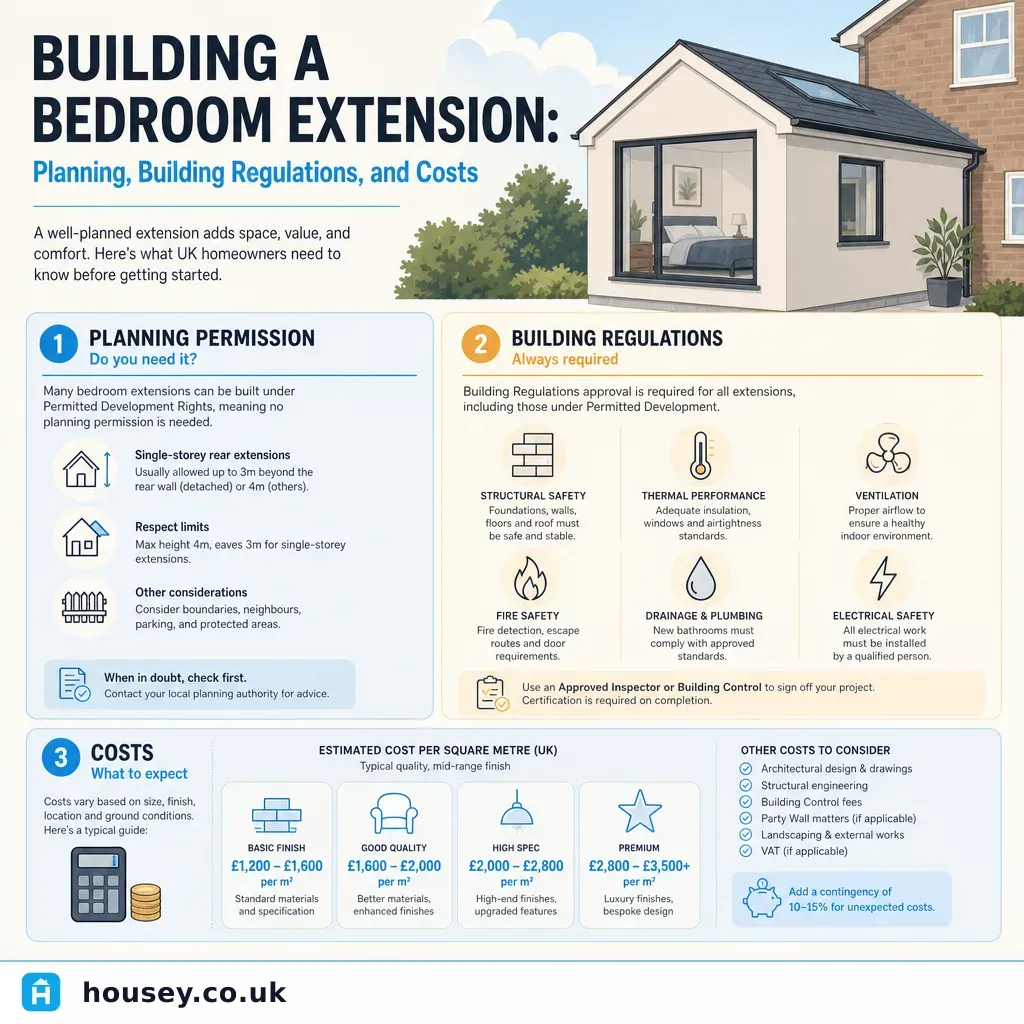
Building a Bedroom Extension: Planning, Building Regulations, and Costs
A bedroom extension requires either permitted development approval or full planning permission, plus building regulations sign-off in all cases.
 Improvement & Build
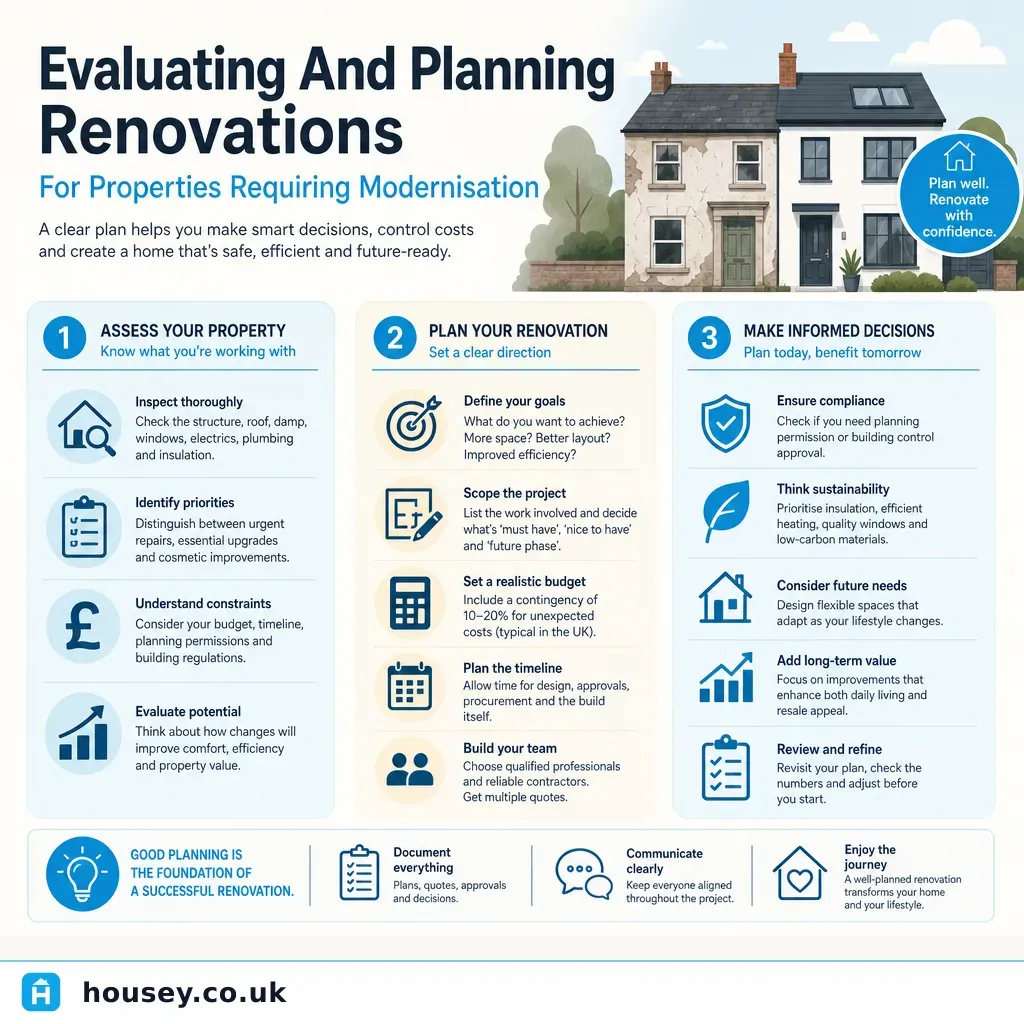
Evaluating And Planning Renovations For Properties Requiring Modernisation
Start by commissioning a condition survey — RICS Level 3 for pre-1919 properties — to identify structural defects, damp, and services issues before finalising a budget.
 Improvement & Build
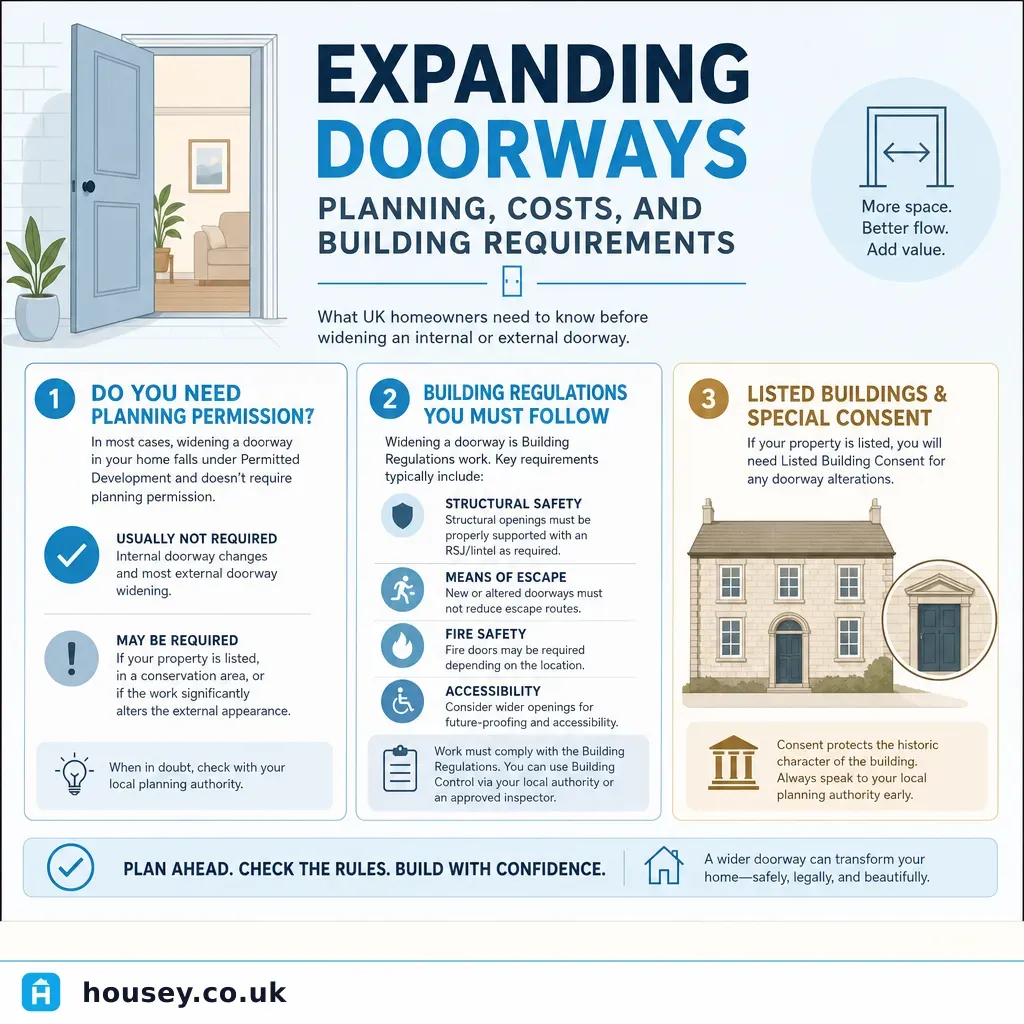
Expanding Doorways: Planning, Costs, and Building Requirements
Expanding a doorway in a load-bearing wall requires Building Regulations Part A approval and a structural engineer's lintel design.
 Improvement & Build
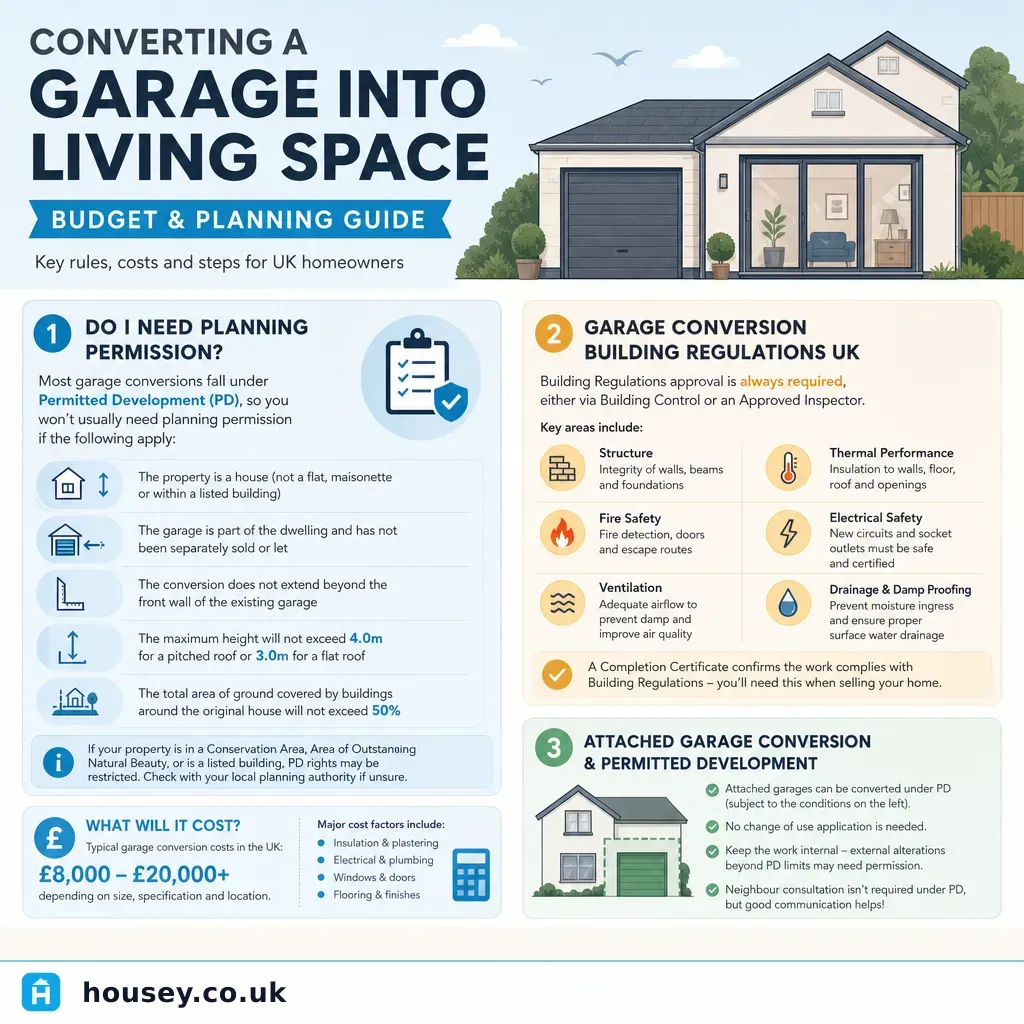
Converting a Garage into Living Space: Budget and Planning Guide
A single-garage conversion typically costs £8,000–£20,000 in the UK.
 Improvement & Build
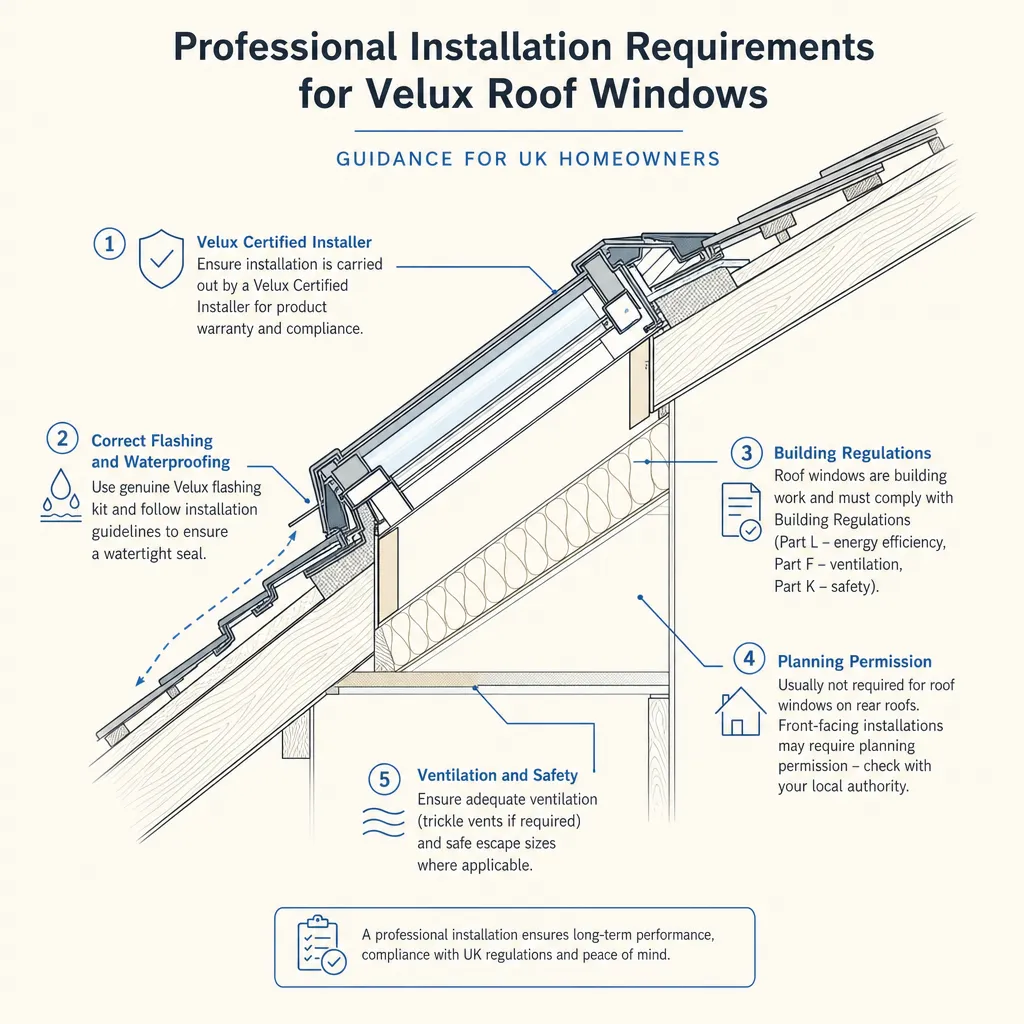
Professional Installation Requirements for Velux Roof Windows
Velux roof windows installed as replacements in the same opening usually fall under permitted development, but new openings or changes on listed buildings or in conservation areas require planning permission.