Dry Ridge System Installation and Roofing Costs
By Housey · Last reviewed 6th of May 2026
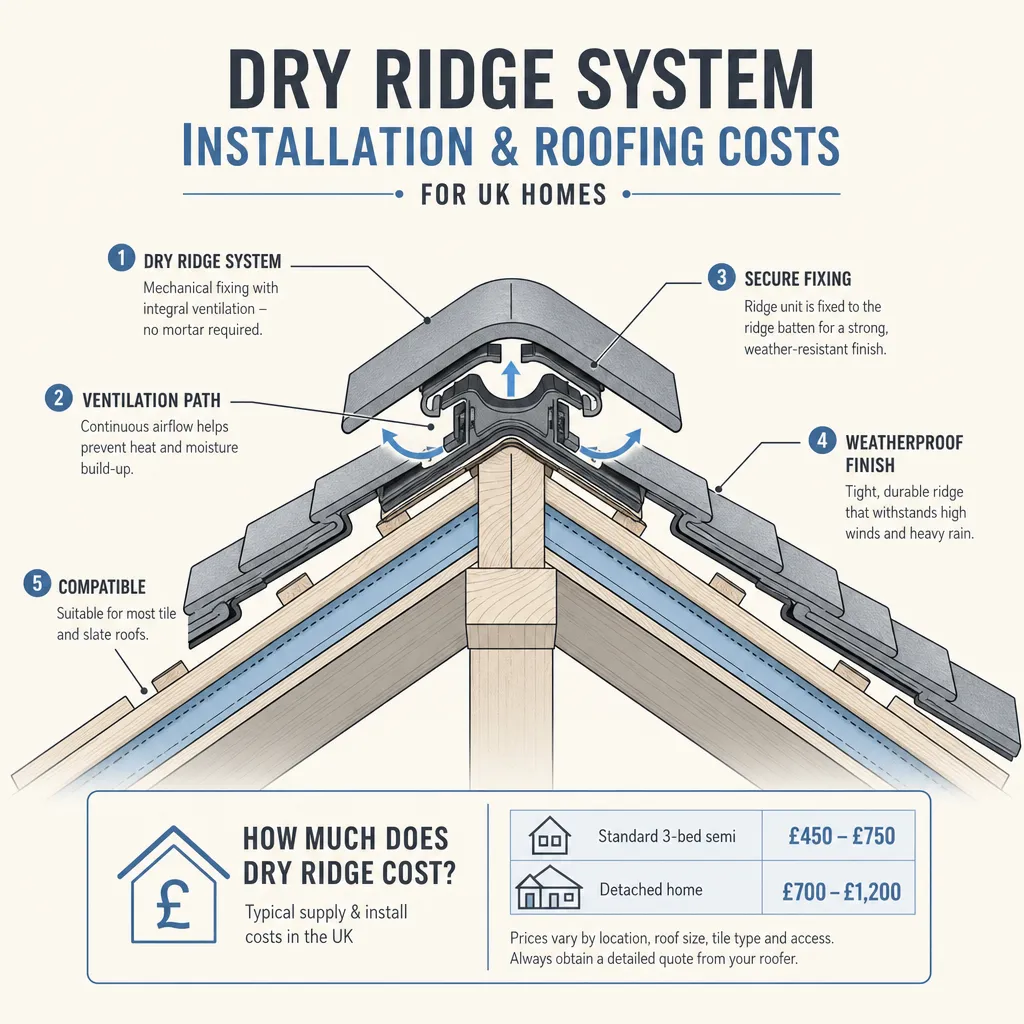
Dry Ridge System Installation and Roofing Costs
Ridge tiles bedded in mortar are one of the most common sources of ongoing roof maintenance problems in the UK. Mortar cracks under thermal movement, allowing water to penetrate and wind to displace tiles over time. When a roof is reroofed or ridge tiles need replacing, many homeowners and roofers now specify a dry ridge system as the more durable alternative — and BS 5534, the British Standard for slating and tiling, has required mechanically fixed ridges for new and re-roofing work since 2014.
Key points
- BS 5534:2014+A2:2018 (Slating and Tiling for Pitched Roofs and Vertical Cladding) requires ridge tiles on new-build and re-roofed properties to be mechanically fixed — mortar-only bedding is no longer compliant for new work.
- A dry ridge system uses mechanical fixing clips or screws, union pieces to accommodate thermal movement, and a foam or rubber eaves filler to seal the ridge without cement.
- Indicative costs for a typical semi-detached house are £600–£1,500 for ridge installation plus £300–£1,000 for scaffolding where required (Indicative UK costs, last reviewed 2026-05-06).
- Dry ridge systems often include built-in ventilation, supporting compliance with Building Regulations Part C (moisture resistance) and Part L (energy efficiency).
- Like-for-like ridge tile replacement does not normally require planning permission or building control approval — listed buildings and conservation area properties should check with the local planning authority before proceeding.
What is a dry ridge system?
A dry ridge system is a mechanically fixed roof-ridge assembly that replaces the traditional practice of bedding ridge tiles in sand-and-cement mortar. The main components are:
- Ridge tiles: standard half-round, angular, or mono-pitch tiles in concrete or clay.
- Fixing batten or bracket: secured to the roof structure to provide the mechanical anchor point.
- Dry fix clips or screw fixings: hold the ridge tile to the batten without mortar.
- Union pieces: join adjacent ridge tiles and allow for thermal movement — something mortar cannot accommodate.
- Foam or rubber eaves filler: seals the underside of the ridge tile against wind, rain, and bird ingress without blocking ventilation.
- Ridge vent roll (optional): a breathable membrane or ventilated roll that allows warm, moist air to escape along the full ridge length, reducing condensation risk in the roof space.
Dry ridge vs mortar bedding: a comparison
Feature | Dry ridge system | Mortar-bedded ridge |
|---|---|---|
Compliant with BS 5534 for new work | Yes | No — mortar-only not compliant for new or re-roofing work |
Typical lifespan | 25–50+ years (manufacturer-dependent) | 5–15 years before repointing is needed |
Thermal movement accommodation | Yes — union pieces allow flex | No — mortar cracks under movement |
Built-in ventilation option | Usually included | None — mortar forms a sealed joint |
Ongoing maintenance requirement | Very low | Regular inspection and repointing |
Indicative installed cost (semi-detached, ex. scaffold) | £600 – £1,500 | £300 – £900 |
Suitable for new-build and full re-roofing | Yes | No |
Indicative UK costs, last reviewed 2026-05-06. Scaffolding is additional in both cases.
How much does dry ridge installation cost?
Costs depend on ridge length, roof pitch, tile profile, access requirements, and whether underlying battens or roofing felt need attention at the same time.
Property type | Approximate ridge length | Indicative installed cost |
|---|---|---|
Mid-terrace house | 5–8 m | £400 – £900 |
Semi-detached house | 8–12 m | £600 – £1,500 |
Detached house | 12–20 m | £1,000 – £2,500 |
Large detached or complex roofline | 20 m+ | £2,000 – £4,000+ |
Indicative UK costs, last reviewed 2026-05-06. Scaffolding (typically £300–£1,000 depending on height and duration) is usually priced separately.
Key cost drivers
- Ridge length: most materials are priced per linear metre; labour is usually a day rate.
- Roof pitch: steeper pitches take longer and may require additional safety equipment or specialist access.
- Scaffolding: required for safe ridge access on most properties — do not allow work to proceed from a ladder alone at ridge height.
- Hip ridges and junctions: hipped roofs have additional hip-to-ridge junctions requiring specialist hip tiles and union pieces, adding materials and time.
- Underlying condition: deteriorated ridge battens, roofing felt, or hip mortar should be addressed in the same scaffold visit — failing to do so may mean returning to scaffold sooner.
- Tile profile: some proprietary dry ridge systems are designed for specific tile profiles and are not interchangeable across manufacturers.
Does dry ridge installation need planning permission or building control approval?
For like-for-like replacement of ridge tiles on an existing domestic roof, planning permission is not normally required — this is treated as routine maintenance under the Town and Country Planning Act 1990's permitted development provisions.
Building control approval is not required for straightforward ridge tile replacement. However, if the work is part of a larger re-roofing project affecting thermal performance or ventilation, Building Regulations Parts C and L may become relevant — and if structural elements are touched, Part A may apply. A competent roofer can confirm whether a building regulations application is needed for your specific scope.
Exception: listed buildings and properties in conservation areas should check with the local planning authority before changing any element of the roof, including ridge tiles, as listed building consent or conservation area consent may be required even for maintenance work.
Homeowner checklist: before getting quotes
Which dry ridge system should you choose?
Several proprietary systems are available in the UK market. When comparing options with your roofer:
- Confirm the system is compliant with BS 5534:2014+A2:2018 — ask for written confirmation.
- Look for a British Board of Agrément (BBA) certificate, which provides an independent technical assessment of fitness for purpose.
- Check compatibility with your existing tile profile — not all clips and union pieces are universal.
- Clarify the guarantee length and what it covers — some cover materials only; better guarantees include workmanship.
- Ask whether the system includes ridge ventilation — particularly useful if your roof space is poorly ventilated or you are planning insulation improvements.
When to get professional help
Ridge work requires access at height and should always be carried out by a qualified roofer with appropriate scaffold or fall-arrest equipment in place. Do not attempt to inspect or repair ridge tiles from a ladder without adequate safety measures — falls from height are a leading cause of serious injury in the UK.
Arrange a professional assessment if:
- Ridge tiles are visibly displaced, cracked, or missing.
- Mortar is crumbling or absent along any section of the ridge.
- You can see daylight around the ridge from inside the loft.
- Water ingress appears at ceiling level after heavy rain or strong winds.
- The ridge has not been inspected within the past ten years.
For a broader view of the roof's overall condition, a RICS-affiliated building surveyor can provide an independent assessment alongside any other defects or maintenance items identified during the inspection.
How Housey can help
Housey connects homeowners with local, qualified roofers who can inspect your ridge, specify the right dry ridge system for your tile profile, and provide itemised quotes covering installation, scaffolding, and any additional roof repairs identified during access.
Frequently asked questions
Is a dry ridge system better than mortar bedding?
For new work and full re-roofing, yes — dry ridge is required by BS 5534:2014+A2:2018. It accommodates thermal movement, typically lasts longer, and often improves roof-space ventilation. For a small section of loose mortar on an otherwise sound ridge, a roofer may recommend targeted repointing instead. The right approach depends on the overall condition of the existing ridge.
How long does dry ridge installation take?
For a standard semi-detached house, ridge replacement using a dry fix system typically takes one to two days of roofing work, plus scaffolding erection and strike time — usually an additional day each. More complex rooflines, with multiple hips or where battens and felt need replacing, will take longer. Ask your roofer for a realistic programme before work begins.
Can I get a grant for dry ridge installation?
Dry ridge installation alone is not covered by energy-efficiency grant schemes such as ECO4 or the Great British Insulation Scheme. If you are undertaking a wider energy retrofit — including roof insulation and ventilation improvements — a TrustMark-registered retrofit coordinator can advise on what funding may apply to the broader project rather than the ridge work in isolation.
Do I need to tell my home insurer about ridge replacement?
You should notify your home insurer when carrying out significant roofing works. Some policies require prior notification; others ask for an update once works are complete. Failure to notify could affect a future claim. Check your policy terms or contact your insurer before work begins rather than assuming roofing maintenance is automatically covered without notification.
What is a hip-to-ridge junction and does it cost more?
A hip-to-ridge junction is where a hipped section of the roof meets the main ridge. It requires a specialist hip tile and junction union piece. These junctions take additional time and materials to dry-fix correctly and will add to the overall cost. Ask your roofer to identify all junction points in the written specification so there are no surprises in the final invoice.
Sources and further reading
- BS 5534:2014+A2:2018 — Slating and tiling for pitched roofs and vertical cladding — BSI Group
- Building Regulations Approved Document C — Resistance to contaminants and moisture — GOV.UK
- Building Regulations Approved Document L — Conservation of fuel and power — GOV.UK
- British Board of Agrément certificate search — British Board of Agrément
- Planning Portal — roofs and permitted development — Planning Portal
Useful next reads
 Improvement & Build
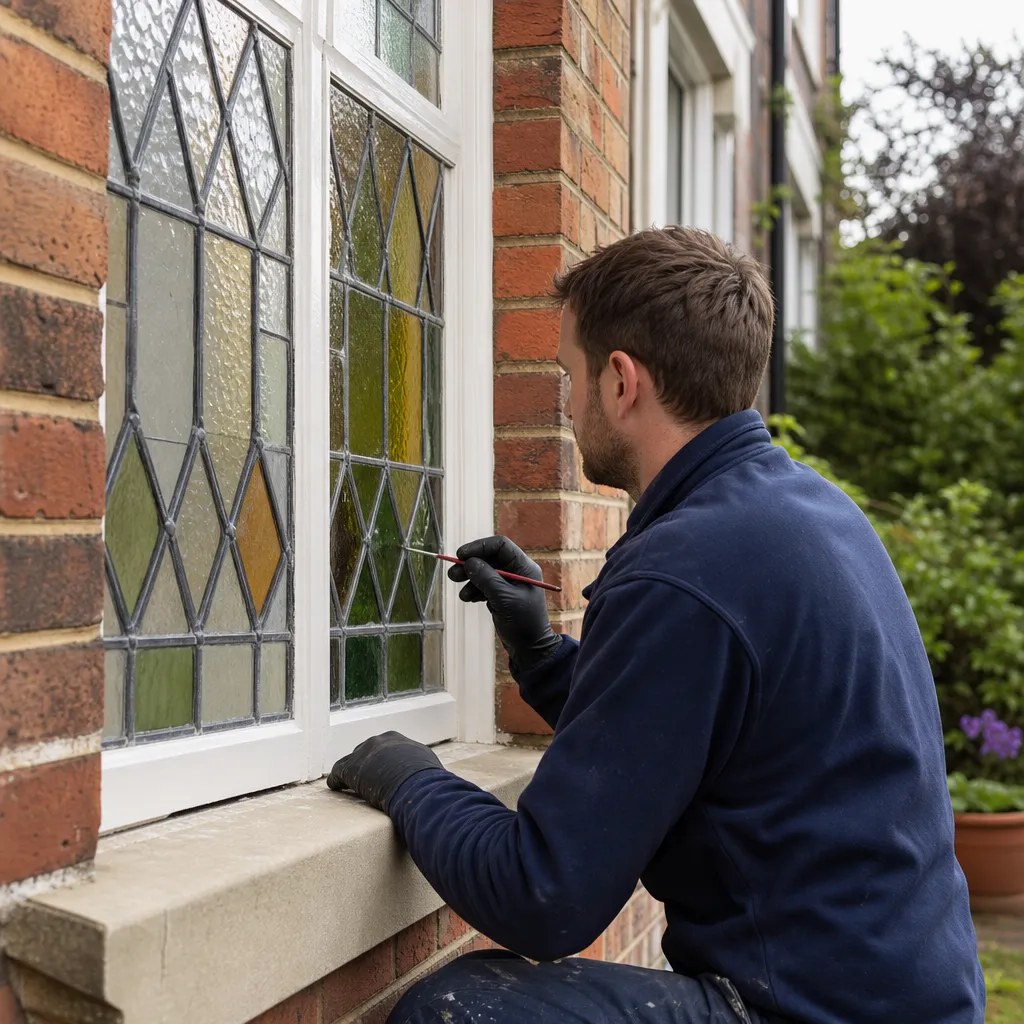
Sealing and Maintaining Historic Leaded Glass Windows: Preservation and Performance
Leaded glass windows are maintained using traditional linseed oil cement — not silicone or modern sealants, which prevent natural movement in the lead came.
 Improvement & Build
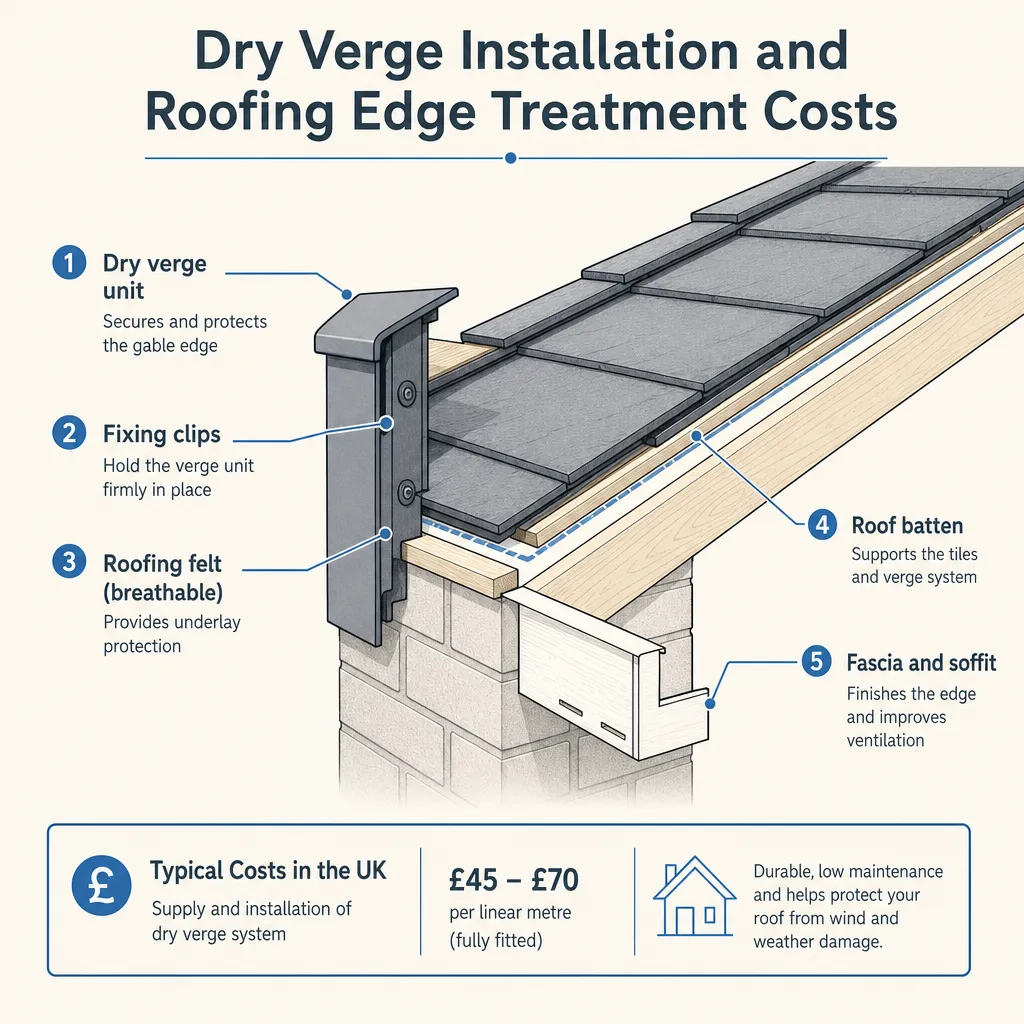
Dry Verge Installation and Roofing Edge Treatment Costs
A dry verge system replaces mortar bedding along the gable edge of a pitched roof with interlocking uPVC or aluminium units.
 Improvement & Build
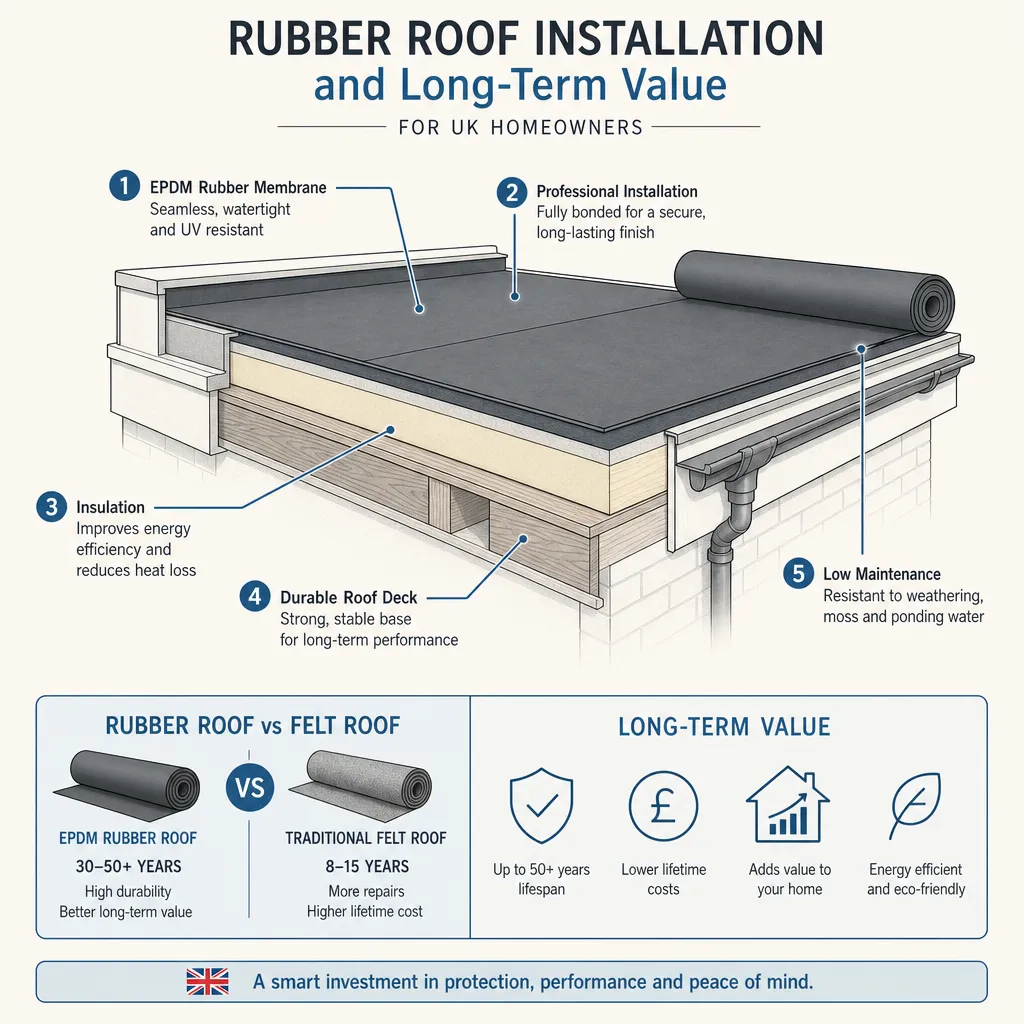
Rubber Roof Installation and Long-Term Value
EPDM rubber roofing is a synthetic membrane for flat and low-pitch roofs that typically lasts 30–50 years with minimal maintenance.
 Improvement & Build
Silicone Render Application and Maintenance Costs
Silicone render typically costs £30–£70 per square metre installed across the UK, making a standard semi-detached house treatment around £3,000–£8,000.
 Improvement & Build
Storm Doors versus Screen Doors: Seasonal Purpose and Protection Compared
Storm doors are secondary outer doors that reduce draughts, rain ingress, and heat loss year-round, while screen doors are lightweight mesh panels that block insects during warm-weather ventilation.