Silicone Render Application and Maintenance Costs
By Housey · Last reviewed 10th of May 2026
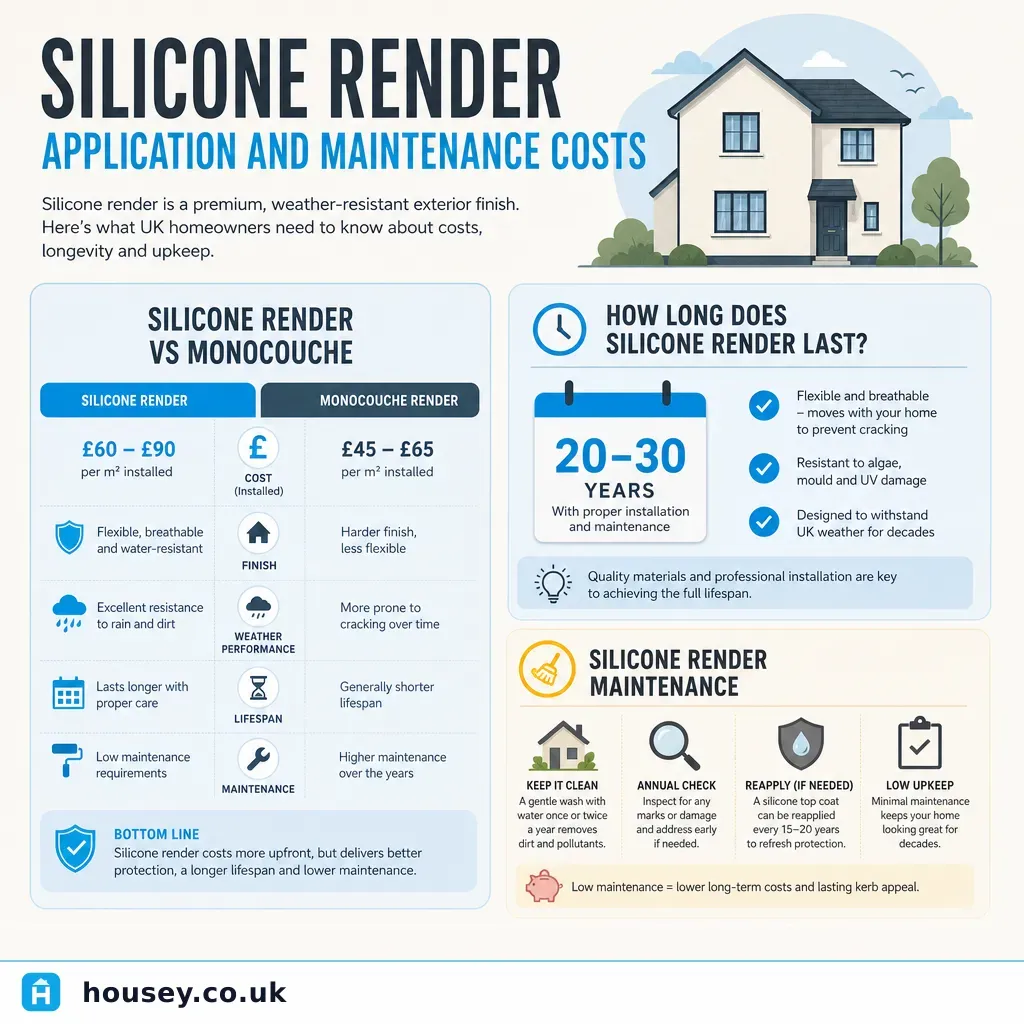
Silicone Render Application and Maintenance Costs
Silicone render has become one of the most widely specified external coating systems for UK homes, particularly for older solid-wall properties and post-war estate houses where breathability and weather resistance matter. The decision to render — and to choose silicone over alternatives — typically arises during a major exterior refresh, following a defect diagnosis, or when adding external wall insulation under a retrofit programme. Costs, substrate condition, and building type all affect the right approach.
Key points
- Silicone render is vapour-permeable (breathable), making it suitable for solid-wall properties where trapped moisture can cause lasting damage.
- Indicative installed costs range from £30–£70 per square metre (Indicative UK costs, last reviewed 2026-05-10), depending on access, prep work, and specification.
- Most silicone render systems require a primer coat and a sound, crack-free substrate — preparation work adds time and cost to any project.
- Manufacturer guarantees typically run 15–25 years; many systems claim a 20–30-year service life when correctly applied to a prepared surface.
- Conservation areas and listed buildings require additional checks — standard silicone render may not be appropriate for historic masonry.
What is silicone render and how does it differ from traditional render?
Silicone render is a polymer-modified coating applied to external walls to protect masonry from rain, frost, and biological growth. Unlike traditional sand-and-cement render, silicone systems are flexible and crack-resistant, helping them cope with minor structural movement common in older UK homes. Their hydrophobic surface sheds water while remaining vapour-permeable — moisture vapour can escape outward, reducing the risk of interstitial condensation that can damage solid-brick or stone walls.
Traditional cement render tends to be rigid and can trap moisture if applied to porous historic masonry. Lime-based renders are the preferred alternative for genuine heritage buildings, but for a standard 1930s semi or post-war estate house, a silicone system is often the most practical all-round solution.
Silicone render comes pre-mixed and pre-coloured in a wide range of through-colours, which means repainting is not necessary — colour is integral to the product itself.
How much does silicone render cost in the UK?
Costs depend on property size, wall height, surface condition, access requirements, and the specification chosen.
Cost factor | Typical range (indicative, 2026-05-10) |
|---|---|
Material cost (per m²) | £8–£18 |
Labour and application (per m²) | £18–£50 |
Total installed cost (per m²) | £30–£70 |
Scaffolding (per week, single storey) | £500–£900 |
Pre-render crack and substrate repair | £200–£1,500+ depending on severity |
Full house (average semi-detached, ~100 m²) | £3,000–£8,000 |
Indicative UK costs, last reviewed 2026-05-10. Quotes vary by region and contractor. Always obtain at least three itemised quotes.
VAT at 20% applies to standard render work. Reduced-rate VAT (5%) may apply if the render is part of a qualifying energy efficiency improvement — check with HMRC or your contractor before assuming a reduced rate applies.
How is silicone render applied?
A correctly applied silicone render system involves:
- Substrate inspection and preparation — existing loose render, paint, or biological growth is removed. Cracks are filled and the surface is made structurally sound.
- Priming — a manufacturer-specified primer is applied to promote adhesion and stabilise the surface.
- Base coat (if required) — some systems include a fibreglass mesh-reinforced base coat, particularly when applied over external wall insulation (EWI) boards.
- Silicone topcoat — applied by hand or machine in one or two passes to achieve the specified texture and thickness.
- Curing — the render must be protected from frost and rain during curing (typically 24–72 hours depending on temperature and humidity).
Application temperature matters: most manufacturers specify between 5°C and 30°C, making spring and early autumn the most reliable seasons in the UK.
Silicone render vs monocouche vs K-rend: which system?
System | Best for | Not ideal for | Breathability | Typical lifespan |
|---|---|---|---|---|
Silicone render | Solid-wall homes, post-war masonry, EWI overcoat | Listed buildings, genuine historic masonry | High (vapour-permeable) | 20–30 years |
Monocouche render | New-build or cavity-wall homes needing a decorative finish | Damp or defective substrates | Moderate | 15–25 years |
K-rend (polymer-based) | General-purpose exterior finish, most construction types | High-humidity environments without appropriate primer | Moderate to high | 15–25 years |
Lime render | Listed buildings, pre-1919 solid-wall properties | Modern cavity-wall construction | Very high | 25–50+ years with maintenance |
K-rend is a trademarked product range; similar polymer renders are available from multiple manufacturers.
What not to assume about silicone render
- Do not assume all surfaces are suitable — silicone render applied over loose or contaminated masonry will fail prematurely. A professional substrate assessment is essential before committing to any contract.
- Do not assume colour holds indefinitely — while integral colour is long-lasting, UV exposure and environmental pollution gradually affect appearance, particularly in darker shades.
- Do not assume one coat is always sufficient — some manufacturers specify two topcoats for exposed locations or to achieve specific colour depths.
- Do not assume planning permission is never needed — properties in conservation areas or with an Article 4 direction may need permission even for like-for-like re-rendering.
- Do not assume the cheapest quote includes all prep work — always confirm that crack repair, priming, and scaffolding are included before accepting any quote.
Maintenance checklist
When to get professional help
Silicone render is not a DIY product for most homeowners. Instruct a professional rendering contractor if:
- The property has not been rendered before, or existing render is coming away in large sections.
- There are signs of structural cracking — diagonal cracks above door or window openings may indicate movement that should be assessed before any cosmetic treatment.
- The property is in a conservation area or is listed — consult your local planning authority and consider a heritage specialist.
- The render is part of an external wall insulation system under ECO4 or a local authority grant scheme — PAS 2035 requirements apply to the whole system, not just the finish coat.
If you suspect structural movement is causing cracking, arrange a structural inspection before committing to a render contract. Rendering over active movement will not resolve the underlying problem.
How Housey can help
If your render project involves building regulation compliance — for example, as part of an external wall insulation scheme where the upgraded thermal performance must meet Part L — Housey can connect you with experienced building control consultants who understand both the technical requirements and the local authority approval process.
Frequently asked questions
Does silicone render require planning permission?
In most cases, applying silicone render to an existing exterior wall is classed as maintenance and does not require planning permission. However, if your home is in a conservation area or is listed, check with your local planning authority before proceeding. Changing the external appearance in a conservation area can require householder planning consent, and listed building consent applies regardless of location.
Can I apply silicone render myself?
Silicone render is a specialist product requiring trained application. Improper priming, mixing, or technique causes poor adhesion, cracking, and colour variation. Most manufacturers void their guarantees for DIY application. Professional rendering contractors with silicone system experience are strongly recommended, particularly for anything above ground level or where the substrate requires careful preparation.
How do I clean and maintain silicone render?
Silicone render's hydrophobic surface is largely self-cleaning, but sheltered areas can accumulate moss or algae. An annual inspection and periodic cleaning with a soft brush and low-pressure water keeps most homes in good condition. Use only manufacturer-approved cleaning products and avoid high-pressure jet washing, which can damage the surface texture and may void the manufacturer's guarantee.
Is silicone render appropriate for listed buildings?
Generally no. Listed buildings require specialist advice before any external alteration. Applying silicone render to a listed building may require listed building consent, and Historic England recommends lime-based renders for historic masonry as they are breathable and reversible. Consult your local planning authority and a heritage specialist before carrying out any external render work on a listed building.
Sources and further reading
- Planning permission: when you need it — GOV.UK
- External wall insulation — Energy Saving Trust
- Practical Building Conservation: Mortars, Renders and Screeds — Historic England
- Approved Document L: Conservation of fuel and power — GOV.UK
Useful next reads
 Improvement & Build
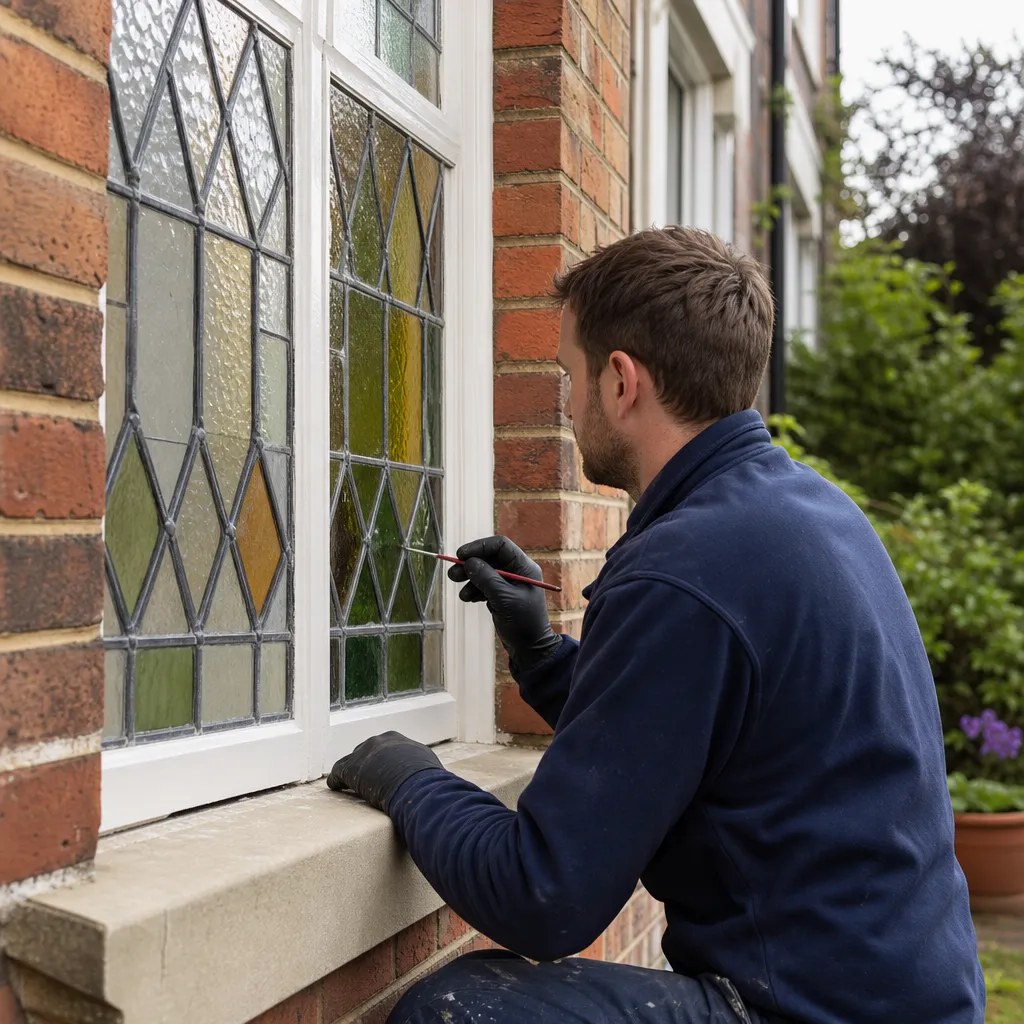
Sealing and Maintaining Historic Leaded Glass Windows: Preservation and Performance
Leaded glass windows are maintained using traditional linseed oil cement — not silicone or modern sealants, which prevent natural movement in the lead came.
 Improvement & Build
Fence Painting and Exterior Wood Treatment Costs
Professional fence painting or wood treatment in the UK typically costs £150–£400 for an average 30-panel garden fence, or roughly £5–£15 per panel.
 Improvement & Build
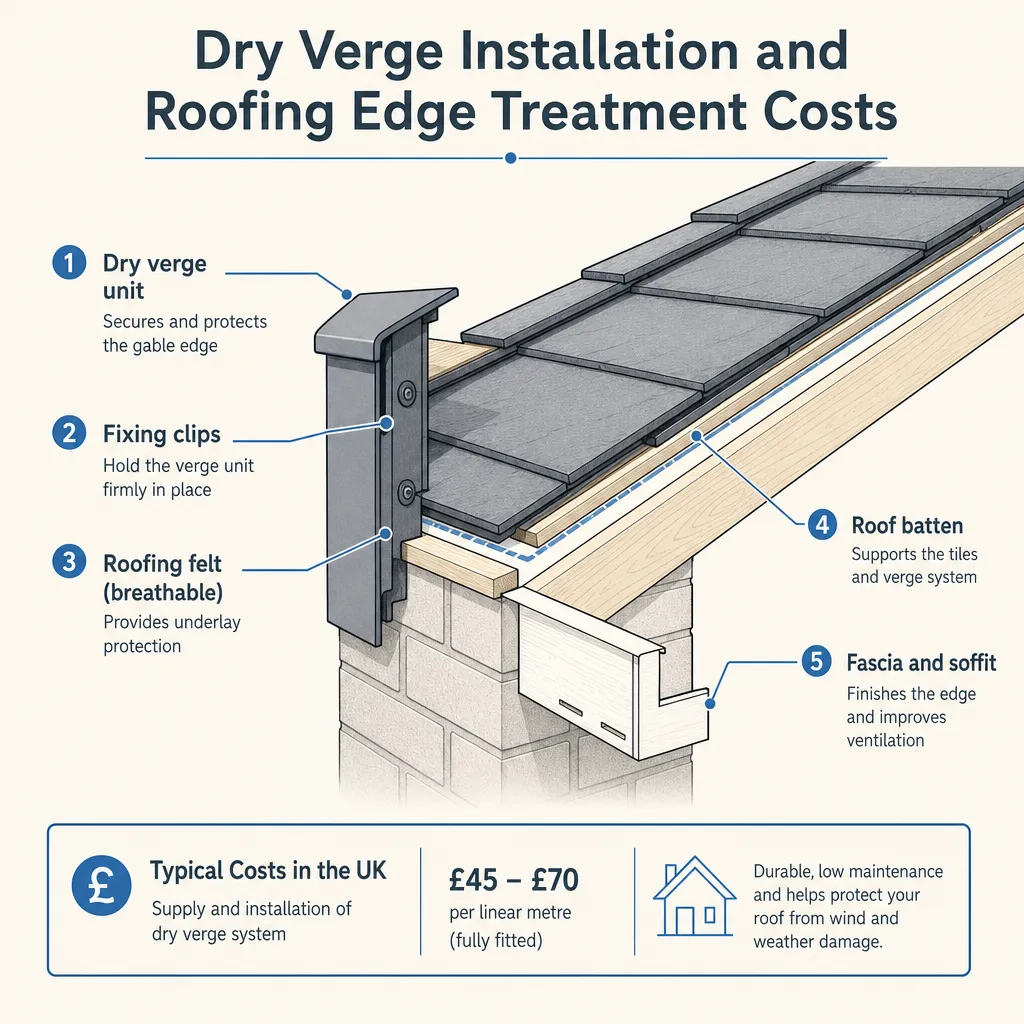
Dry Verge Installation and Roofing Edge Treatment Costs
A dry verge system replaces mortar bedding along the gable edge of a pitched roof with interlocking uPVC or aluminium units.
 Improvement & Build
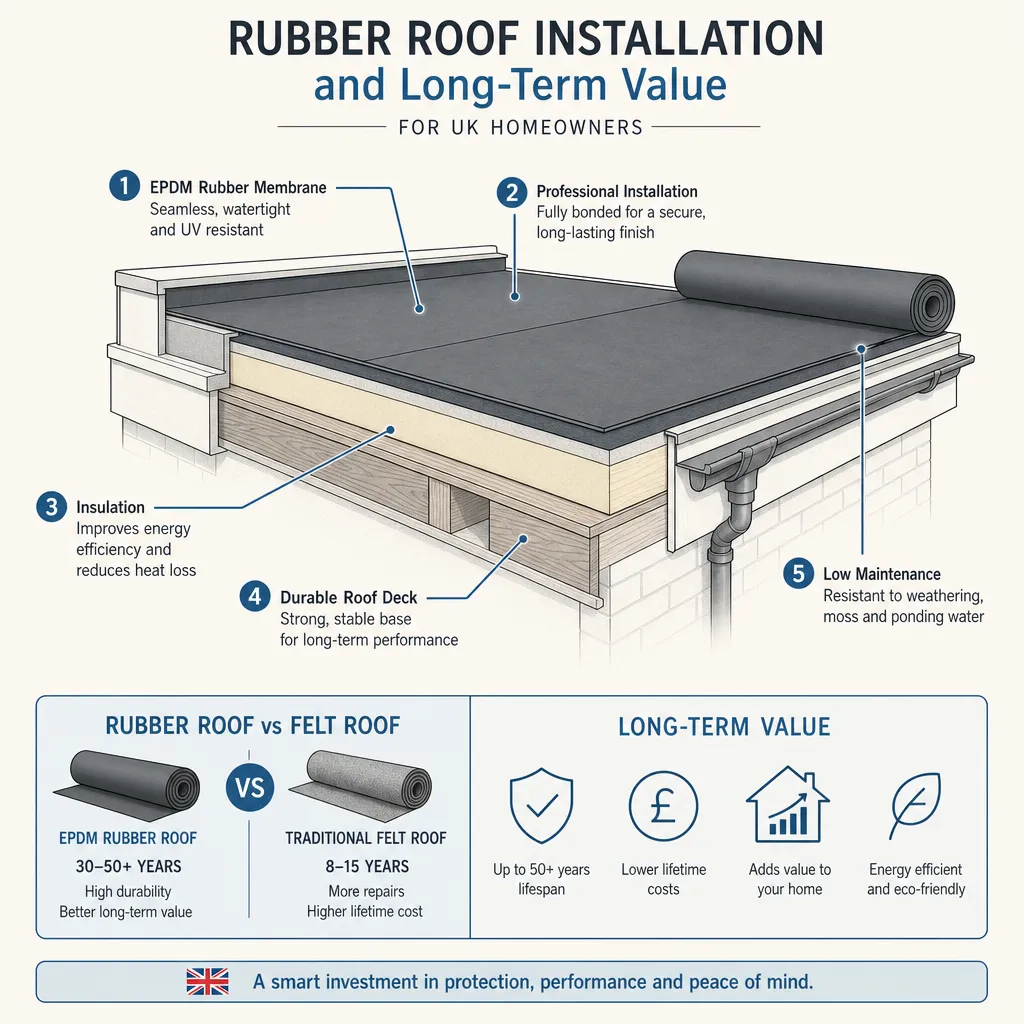
Rubber Roof Installation and Long-Term Value
EPDM rubber roofing is a synthetic membrane for flat and low-pitch roofs that typically lasts 30–50 years with minimal maintenance.
 Improvement & Build
Storm Doors versus Screen Doors: Seasonal Purpose and Protection Compared
Storm doors are secondary outer doors that reduce draughts, rain ingress, and heat loss year-round, while screen doors are lightweight mesh panels that block insects during warm-weather ventilation.