Drywall and Plasterboard Repair Services
By Housey · Last reviewed 11th of May 2026

Drywall and Plasterboard Repair Services
Plasterboard walls and ceilings are standard in UK homes built from the 1970s onward, and damage — from accidental impacts, door handle strikes, water ingress, or building work exposing concealed services — is common. Knowing what kind of repair is needed, which trade to call, and what a properly finished result looks like helps you scope the job accurately and budget without guesswork.
Key points
- Standard plasterboard used in UK homes is most commonly 12.5mm thick; moisture-resistant board (often pink or green-faced) is specified for bathrooms and kitchens under BS EN 520.
- Small holes up to approximately 50mm across can usually be filled using a repair patch and jointing compound; larger sections require new board, taped joints, and a skim coat.
- Moisture-damaged plasterboard should be replaced rather than patched — board that has been wet loses its core integrity and may harbour mould behind the facing paper.
- Most plasterboard repair work does not require building regulations consent, but work affecting a fire-rated partition or structural element may need approval from your local building control authority.
- UK plasterers carrying out dry-lining work may hold an NVQ in Plastering (Dry Lining) Level 2 or Level 3 (CITB-accredited), a useful indicator of competence when selecting a contractor.
What types of plasterboard damage are common in UK homes?
Damage falls into a few clear categories. Understanding which type you have helps you scope the job accurately before requesting quotes.
Damage type | Typical cause | Likely repair method |
|---|---|---|
Small hole (up to 50mm) | Door handle, picture hook, accidental impact | Repair patch or back plate, fill, sand, spot skim |
Medium hole (50–150mm) | Removed fixings, cable routing, plumbing access | Back plate, new board section, taped joints, skim |
Large section missing or cracked | Building works, major impact, damp damage | New full or large cut section, taped joints, full skim |
Wet or mould-affected board | Water ingress, leak, condensation | Source resolved first, full board replacement |
Screw or nail pops | Board movement or settling | Fill, sand, re-skim or spot prime |
Hollow-sounding area (dot-and-dab) | Failed adhesive behind board | Assessment of extent, possible full bay replacement |
DIY or hire a professional?
Not all plasterboard repairs need a tradesperson — but the right choice depends on hole size, desired finish quality, and whether there is an underlying cause to investigate.
Choose professional help if:
- The damage is larger than roughly 150mm across.
- The damaged area is in a ceiling.
- You suspect water ingress as the underlying cause — the source must be identified and resolved before any board replacement.
- A skimmed finish is needed rather than a filled-and-sanded surface.
- The wall is in a high-visibility location such as a living room, hallway, or open-plan space.
- The board forms part of a fire-rated partition in a flat, conversion, or HMO — do not disturb without checking the specification.
DIY may be appropriate if:
- The hole is small (under 50mm) and a filled, lightly sanded finish is acceptable.
- You have experience with jointing compound and understand the drying times involved.
- There is no risk of hidden cables or pipes behind the board — always use a cable and pipe detector before cutting into any wall.
- The area is low-visibility, such as inside a cupboard or utility room.
Finding a qualified plasterboard repair contractor
For most repair work you need a plasterer with dry-lining experience, or a qualified dryliner who also provides finishing and skimming services. Useful indicators of competence include:
- NVQ in Plastering (Dry Lining) Level 2 or Level 3 — awarded through CITB-accredited assessment centres.
- TrustMark registration — the government-endorsed quality scheme for home improvement tradespeople, covering plastering and dry-lining work.
- Federation of Plastering and Drywall Contractors (FPDC) membership — the recognised trade body for the sector.
- References from comparable repair jobs with photographs of completed skims in similar properties.
For jobs involving fire-rated partitions — common in purpose-built flats, loft conversions, and properties used as HMOs — confirm that the contractor understands the fire performance specification of the existing board and can match it correctly.
Homeowner checklist before work starts
Use this checklist to prepare for a plasterboard repair visit and avoid common delays:
When to get professional help
Call a professional rather than attempting DIY repair when:
- Damp or discolouration around the damage suggests an active or historic water leak — the source must be found and fixed first.
- The damage is on a ceiling above a bathroom, kitchen, or shower room where moisture levels are elevated.
- The plasterboard forms part of a fire-rated partition in a flat, conversion, or HMO.
- A hollow sound covers a large area, suggesting a dot-and-dab board bay may be separating from the masonry behind.
- Mould is visible on or behind the facing paper of the board.
How Housey can help
Housey makes it straightforward to find local plastering and dry-lining contractors for repair work across the UK. Submit your job details to receive quotes from tradespeople experienced in plasterboard patching, skim finishing, and moisture-damaged board replacement.
Frequently asked questions
What is the difference between plasterboard and drywall in the UK?
The terms refer to the same product: a gypsum plaster core faced on both sides with paper. Plasterboard is the standard UK trade term; drywall is the American term also used informally in the UK. Products from British Gypsum (Gyproc), Knauf, and others are broadly interchangeable at equivalent grades.
Can plasterboard be repaired without re-skimming the whole wall?
Yes, for small holes a patch and jointing compound, once primed and painted, can be blended well enough to be barely visible. For larger areas, a full skim of the wall or ceiling gives a more consistent finish, as spot repairs can leave visible ridges under raking light or sheen paint.
How long does a plasterboard repair take to dry before painting?
Jointing compound typically takes 24 hours per coat to dry at normal room temperatures (around 20°C). A skim coat of finishing plaster needs a minimum of 24–48 hours before priming and painting, and longer in cool or humid conditions. Painting too early can cause efflorescence and poor adhesion.
Do I need building regulations approval for plasterboard repairs?
Straightforward repairs to an existing wall or ceiling do not require building regulations consent. If the work affects a fire-rated partition, a structural element, or involves notifiable electrical alterations, separate approvals may apply. If in doubt, check with your local building control authority before proceeding.
How much does plasterboard repair cost in the UK?
Small patch repairs typically range from £80–£200 including labour and materials. Larger section replacements with a skim finish may cost £200–£600 or more depending on area and access. Ceiling repairs generally cost more than wall repairs. Obtain at least two or three written quotes before committing. (Indicative UK costs, last reviewed 2026-05-11.)
Sources and further reading
- TrustMark: find a registered tradesperson — TrustMark
- CITB: plastering and dry lining qualifications — Construction Industry Training Board
- Federation of Plastering and Drywall Contractors — FPDC
- BS EN 520: gypsum plasterboards — specifications — BSI Group
Useful next reads
 Improvement & Build
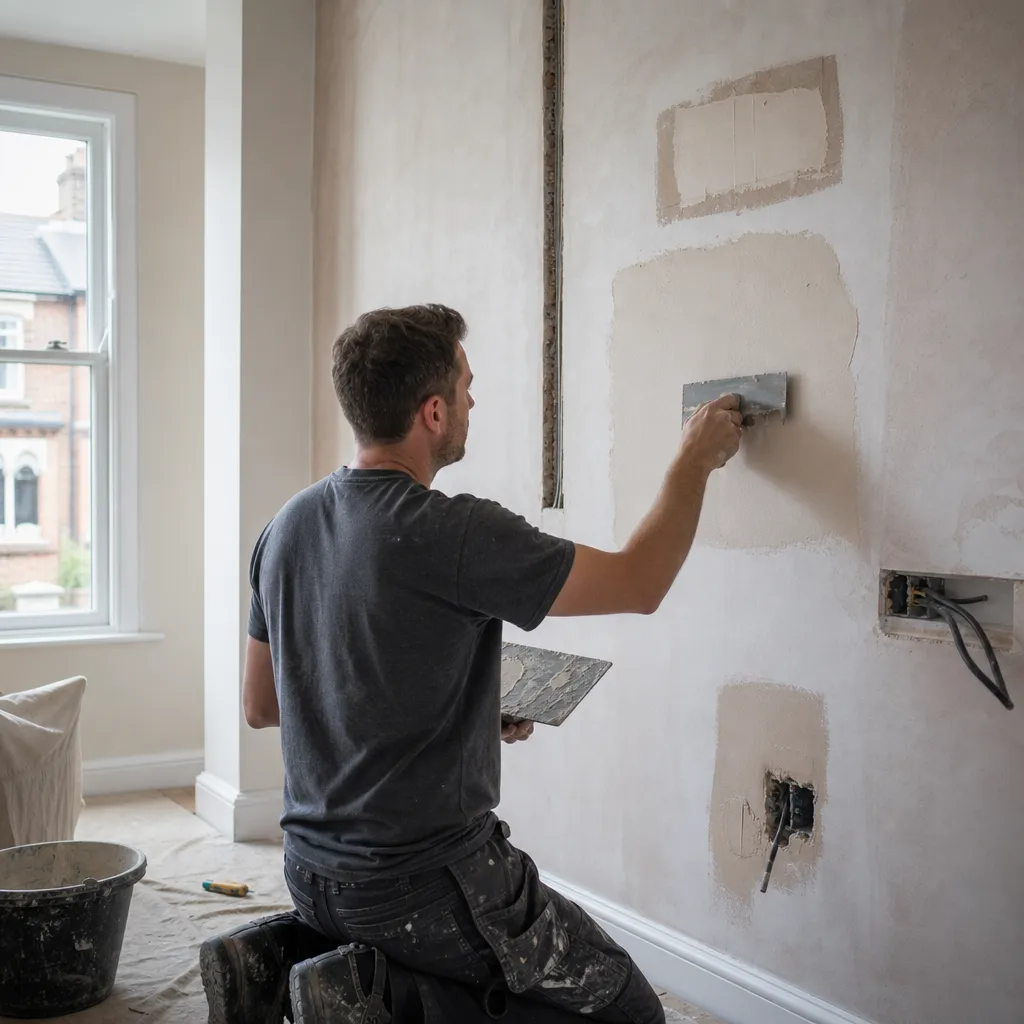
Wall Patching After Plumbing and Electrical Work
Wall patching after plumbing or electrical work typically involves filling the chase or opening with bonding coat plaster or repair mortar, then applying a skim coat.
 Improvement & Build
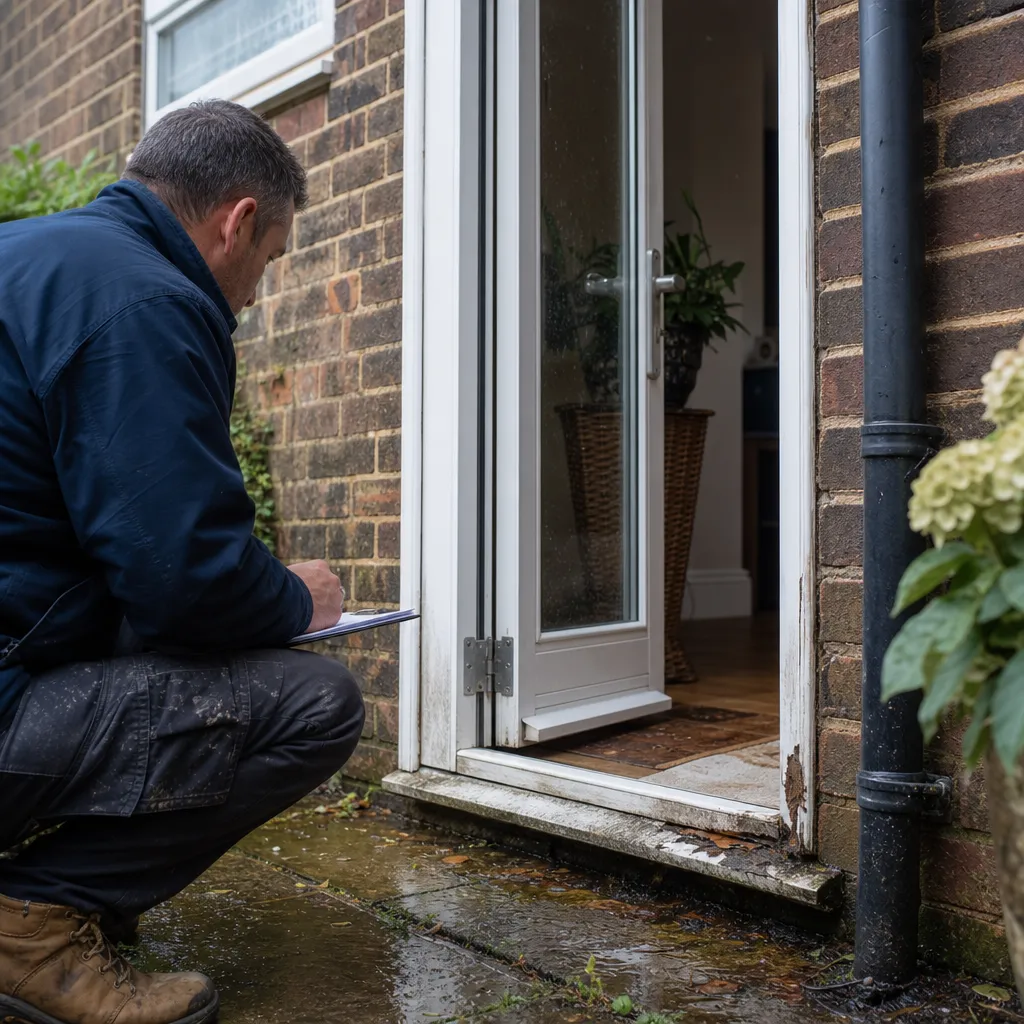
Fixing Leaking Back Doors and Water Ingress
Most leaking back doors in UK homes fail at one of three points: the threshold or door sill joint, the frame-to-masonry mastic seal, or the door weatherstrip.
 Improvement & Build
Who Provides House Demolition Services
House demolition in the UK is carried out by specialist demolition contractors, often members of the National Federation of Demolition Contractors (NFDC).
 Improvement & Build
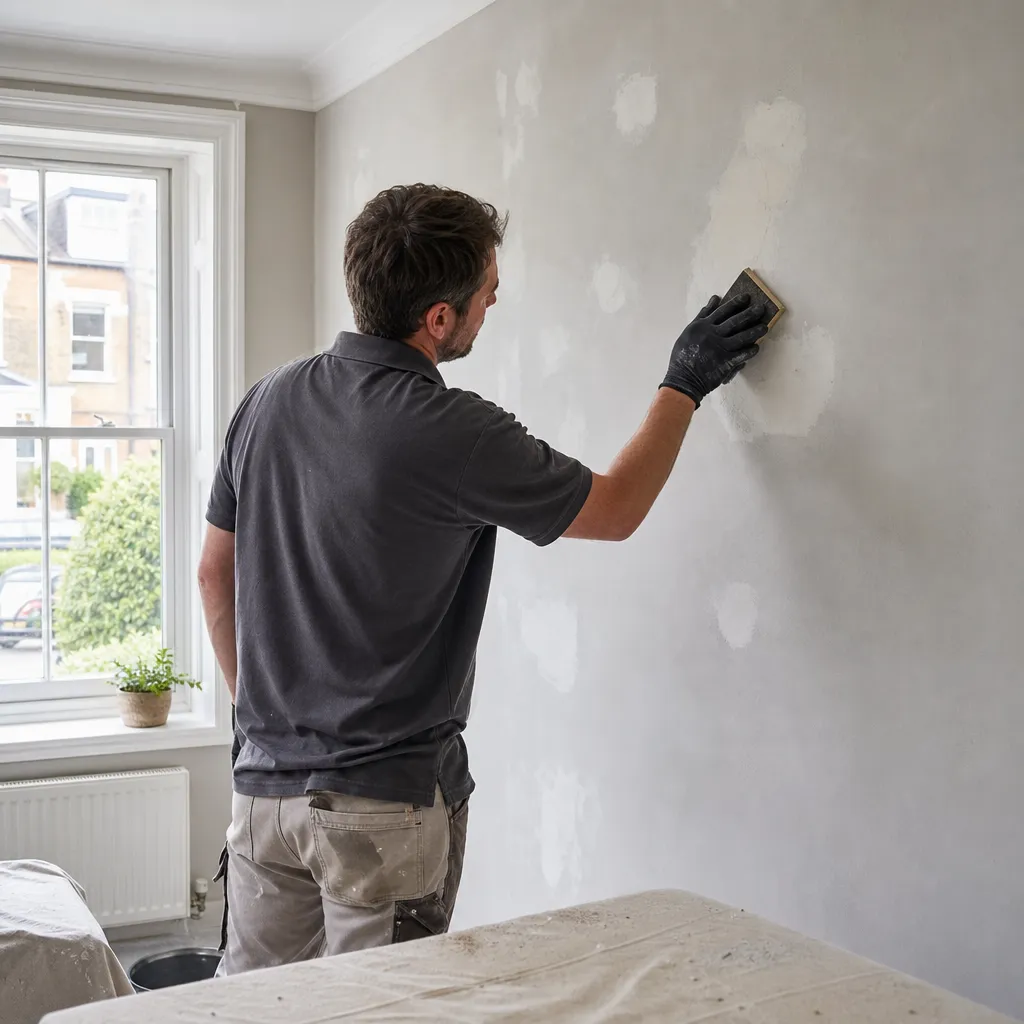
Preparing Walls for Patching: Surface Preparation Best Practice
Durable wall patching starts with removing all loose material, cutting back to a clean and stable edge, cleaning the substrate, and priming with a construction-grade PVA bonding agent before applying any filler or plaster.
 Improvement & Build
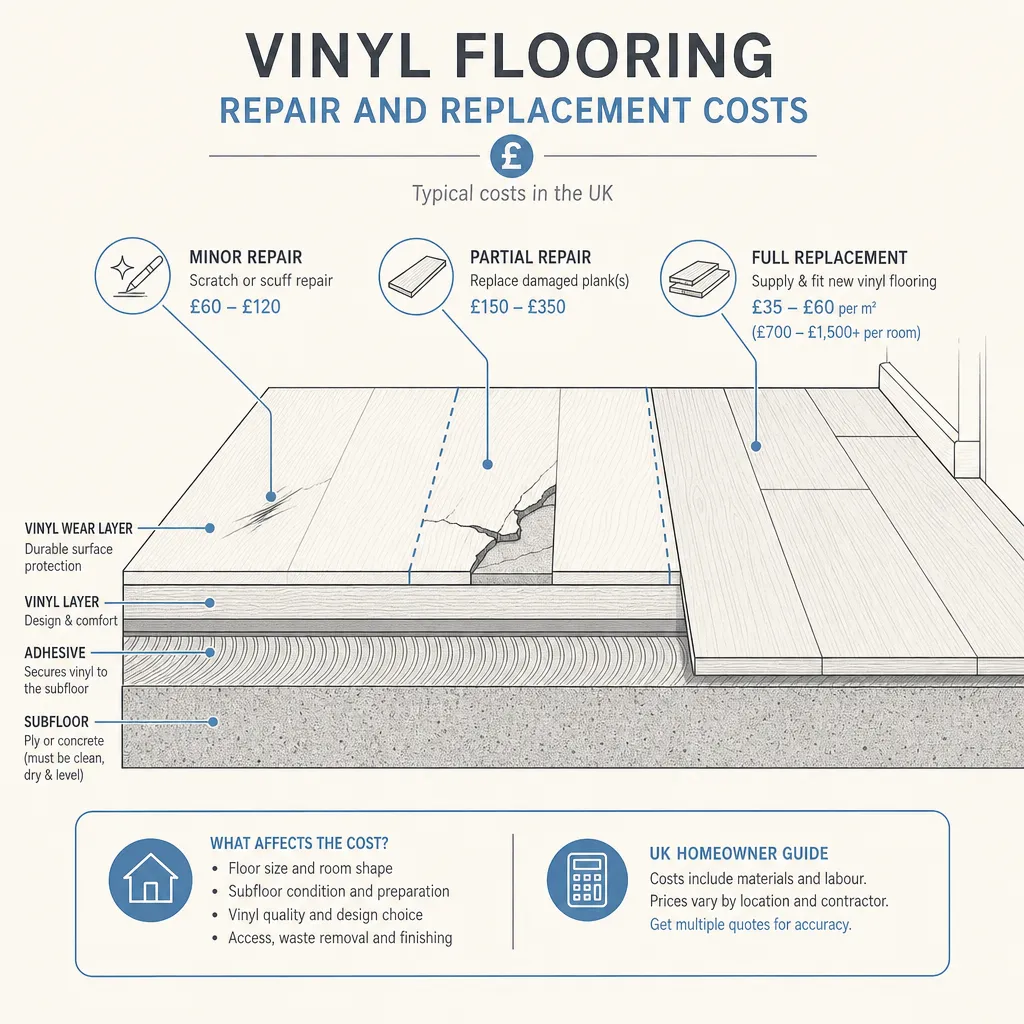
Vinyl Flooring Repair and Replacement Costs
Repairing a small area of vinyl flooring typically costs £50–£200 in the UK, while full replacement runs from £15–£35 per m² for luxury vinyl tile (LVT) plus labour of £10–£25 per m².