Wall Patching After Plumbing and Electrical Work
By Housey · Last reviewed 31st of May 2026
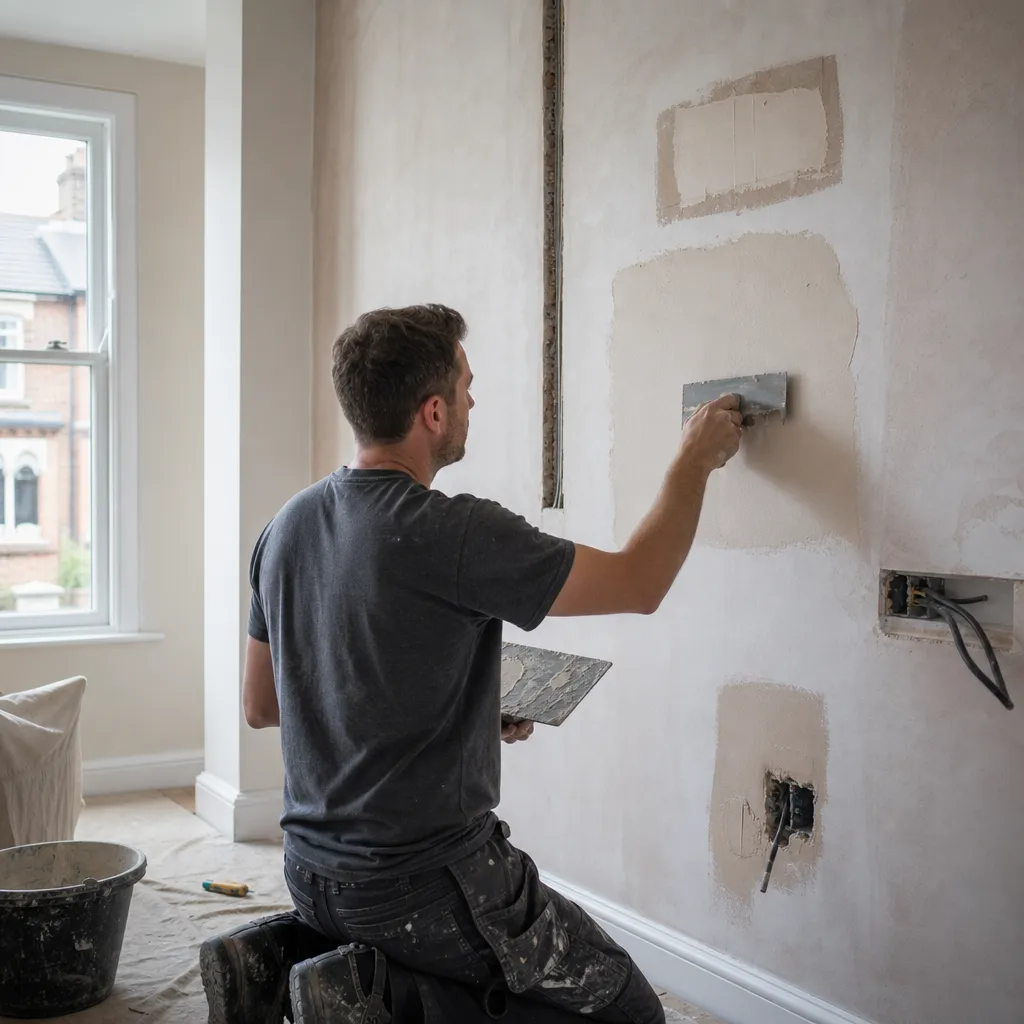
Wall Patching After Plumbing and Electrical Work
Once a plumber has chased a wall to run new pipework or an electrician has cut conduit channels for cables, the finishing work that follows is often treated as an afterthought — but it is anything but. Poor patching can result in visible cracks, paint that will not key to the surface, or repairs that detach months later. Choosing the right materials, following the correct sequence, and knowing when to hire a plasterer will save you time, money, and frustration.
Key points
- Plasterboard holes smaller than approximately 50 mm can usually be filled with a ready-mixed jointing compound or fine-surface filler; larger openings require a plasterboard patch or backing board before any skim finishing is applied.
- Solid plaster walls common in pre-1960s UK homes require a bonding coat to build up depth before any finish coat — applying Thistle FinishCoat or similar directly into a deep chase will cause cracking as it dries and shrinks.
- Part P of the Building Regulations requires electrical first-fix work to be certified before walls are permanently closed — do not patch over chases until you have an Electrical Installation Certificate (EIC) or Minor Electrical Installation Works Certificate (MEIWC) from a registered electrician.
- Drying time is critical: bonding coat needs 24–48 hours before finish skim is applied, and new plaster should dry for at least 4–6 weeks before painting with conventional emulsion.
- If pipework or cables pass through load-bearing walls, any structural lintels or supports disturbed during the works must be fully reinstated before patching begins.
Which patching approach do you need?
The right method depends on the wall construction, the depth of the opening, and the finish you need to match.
Situation | Recommended approach | Typical product | When to use a plasterer |
|---|---|---|---|
Small hole (up to 50 mm) in plasterboard | Ready-mixed filler, sand flush | Gyproc Easi-Fill or similar | Only if close finish-matching is critical |
Large hole in plasterboard | Plasterboard patch and mesh tape, then skim | Gyproc plasterboard, multi-finish skim | If you are not confident taping and feathering edges |
Shallow chase (up to 15 mm) in solid plaster | One-coat filler or finish plaster, sand | Thistle FinishCoat or similar | If the area is large or must match closely |
Deep chase (over 15 mm) in solid plaster | Bonding coat to build up, then finish skim | Thistle BondingCoat and FinishCoat | Almost always advisable |
Exposed brick behind old plaster | PVA bonding agent, bonding coat, finish skim | Thistle BondingCoat | Always recommend a plasterer |
Textured finish or Artex ceiling | Specialist texture compound or re-texturing | Artex Ceilings and Walls or equivalent | Yes — matching texture is skilled work |
Get sign-off before you close the wall
Before any wall is permanently patched, confirm the following:
- Electrical certification received: under Part P of the Building Regulations, notifiable electrical work — including new circuits and work in kitchens, bathrooms, and outdoors — must be certified by a Part P-registered electrician (NICEIC, NAPIT, or equivalent) or inspected by building control. Obtain the EIC or MEIWC before the wall is sealed. A list of registered electricians is available through NICEIC.
- Plumbing pressure test passed: any new or modified pipework should be pressure-tested and confirmed leak-free by the plumber before the wall is closed. Ask for written confirmation.
- Chase routes photographed: photograph all chases showing pipe and cable positions before patching. Keep these images with your property documents — they are invaluable if anyone drills into the wall in future.
Homeowner checklist: before and after patching
Before patching begins:
After patching and before decorating:
Matching the existing finish
Achieving an invisible repair is often the most challenging part of wall patching, particularly in older UK homes.
- Age of existing plaster — old lime plaster and modern gypsum plaster behave differently; a plasterer experienced with older properties will select lime-compatible materials to avoid shrinkage cracking.
- Texture — smooth skim, sand finish, pebbledash, and textured coatings all require different techniques. Artex and similar finishes are best matched by a specialist texturing contractor.
- Paint history — walls that have been painted many times have a raised film around any fresh patch; lightly sanding the surrounding area before priming improves blending significantly.
- Sheen level — using the same paint product and finish level as the original wall helps, but paint from the original tin (if still available) gives the closest colour match.
When to get professional help
A skilled plasterer is worth engaging for:
- Any deep chase or opening wider than 150 mm where building up depth and achieving a flat surface requires experience.
- Matching an existing fine skim finish in a room that will be decorated to a high standard.
- Solid plaster walls — bonding and finishing solid plaster is a trade skill; poorly applied plaster will crack across the repair line.
- Pre-1919 properties with original lime plaster — lime-compatible materials are essential to avoid cracking and long-term moisture problems.
Red flags that mean calling a professional rather than patching yourself:
- The surrounding plaster sounds hollow or is visibly lifting from the wall when tapped.
- The repair is in a corner, a reveal, or against an architrave where forming a clean straight arris is difficult.
- The patched area will be seen in raking light — for example, on a wall immediately beside a window.
- Damp is present — patching over active damp without treating the source causes rapid failure and may conceal a more serious moisture problem.
How Housey can help
Housey helps homeowners find trusted tradespeople for remedial and finishing work, including plastering and wall repairs following plumbing and electrical installation. Describe your job on the Housey platform to receive and compare quotes from vetted local professionals — so your walls are finished to a standard you are proud of.
Frequently asked questions
Can I patch a wall myself after a plumber or electrician has been?
For small holes and shallow chases in plasterboard, a competent DIYer with the right filler and technique can achieve an acceptable result. For solid plaster walls, deep chases, or where a close finish-match is important, hiring a plasterer is advisable. Never patch over electrical chases before you have received a signed Electrical Installation Certificate or Minor Electrical Installation Works Certificate from a registered electrician.
How long should I wait before painting over patched plaster?
New finish plaster typically needs at least one week before painting, and new bonding coat needs 24–48 hours before a finish skim is applied. A full re-plaster should dry for 4–6 weeks before topcoating. Apply a mist coat — approximately 1 part water to 9 parts emulsion — as the first coat over new plaster. Applying full-strength emulsion too early can cause the surface to flake.
What is the difference between bonding coat and skim coat?
Bonding coat (such as Thistle BondingCoat) is a gypsum-based undercoat plaster used to build up depth and create a mechanical key on dense or porous backgrounds. Skim coat (finish plaster, such as Thistle Multi-Finish) is a thin final layer applied over bonding coat or plasterboard to create a smooth, paintable surface. Deep chases need bonding coat first; plasterboard holes and shallow chases may only need skim coat or jointing compound.
What if my patched wall keeps cracking?
Recurring cracks are often caused by patching drying too quickly in a draughty room, applying finish plaster before bonding coat has fully dried, or using incompatible materials on old lime plaster. Strip back, identify the cause, and re-apply with appropriate materials. Cracks that follow the original chase line and grow over time may indicate building movement and are worth flagging to a structural surveyor.
Sources and further reading
- Approved Document P: Electrical safety — dwellings — GOV.UK
- Gyproc technical advice — British Gypsum — British Gypsum
- Find a registered electrician — NICEIC — NICEIC
Useful next reads
 Improvement & Build
Preparing Walls for Patching: Surface Preparation Best Practice
Durable wall patching starts with removing all loose material, cutting back to a clean and stable edge, cleaning the substrate, and priming with a construction-grade PVA bonding agent before applying any filler or plaster.
 Improvement & Build
Drywall and Plasterboard Repair Services
Plasterboard repair in UK homes covers small holes from accidental impacts through to large sections of damaged boarding caused by water ingress or building work.
 Improvement & Build
Fixing Leaking Back Doors and Water Ingress
Most leaking back doors in UK homes fail at one of three points: the threshold or door sill joint, the frame-to-masonry mastic seal, or the door weatherstrip.
 Improvement & Build
Who Provides House Demolition Services
House demolition in the UK is carried out by specialist demolition contractors, often members of the National Federation of Demolition Contractors (NFDC).
 Improvement & Build
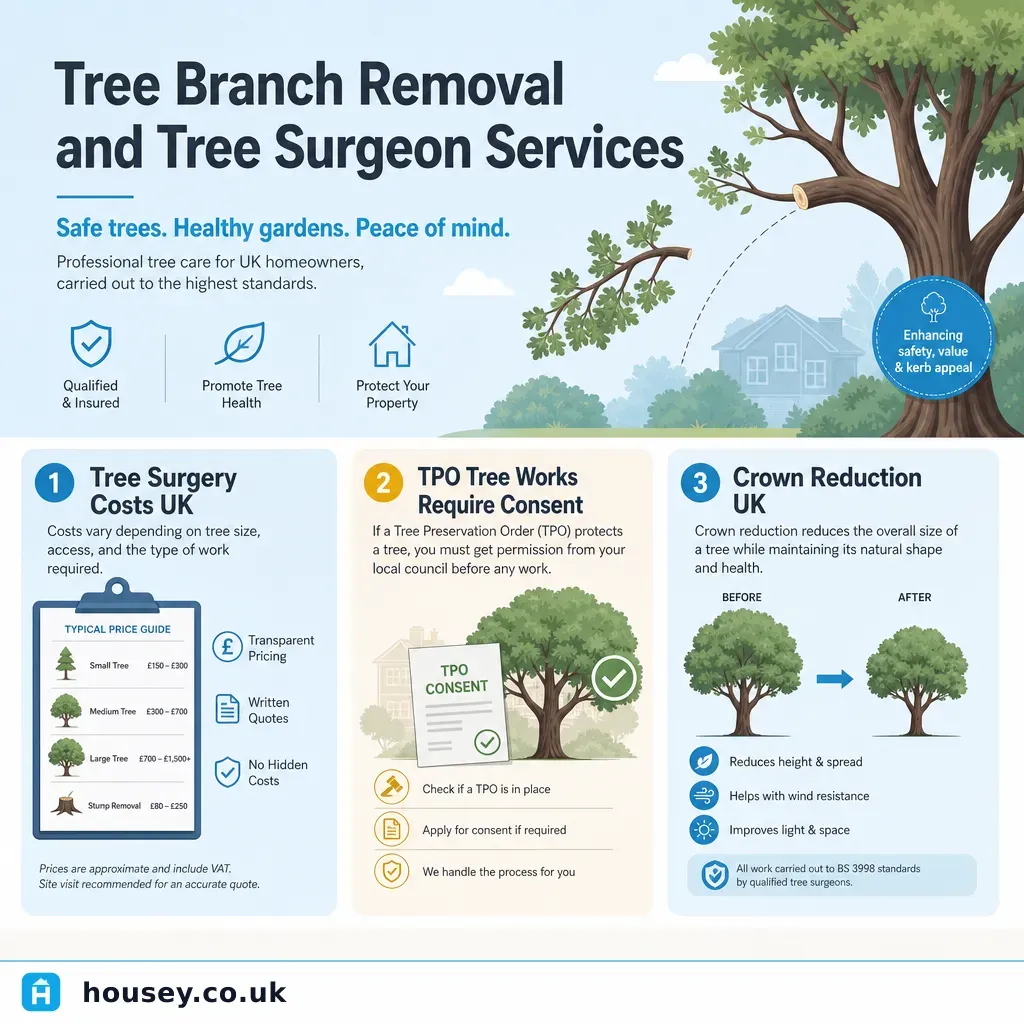
Tree Branch Removal and Tree Surgeon Services
Tree surgery — from deadwooding and crown reduction to branch removal and felling — must be carried out by qualified, insured contractors in the UK.