Drywall Installation: Process and Associated Costs
By Housey · Last reviewed 12th of May 2026
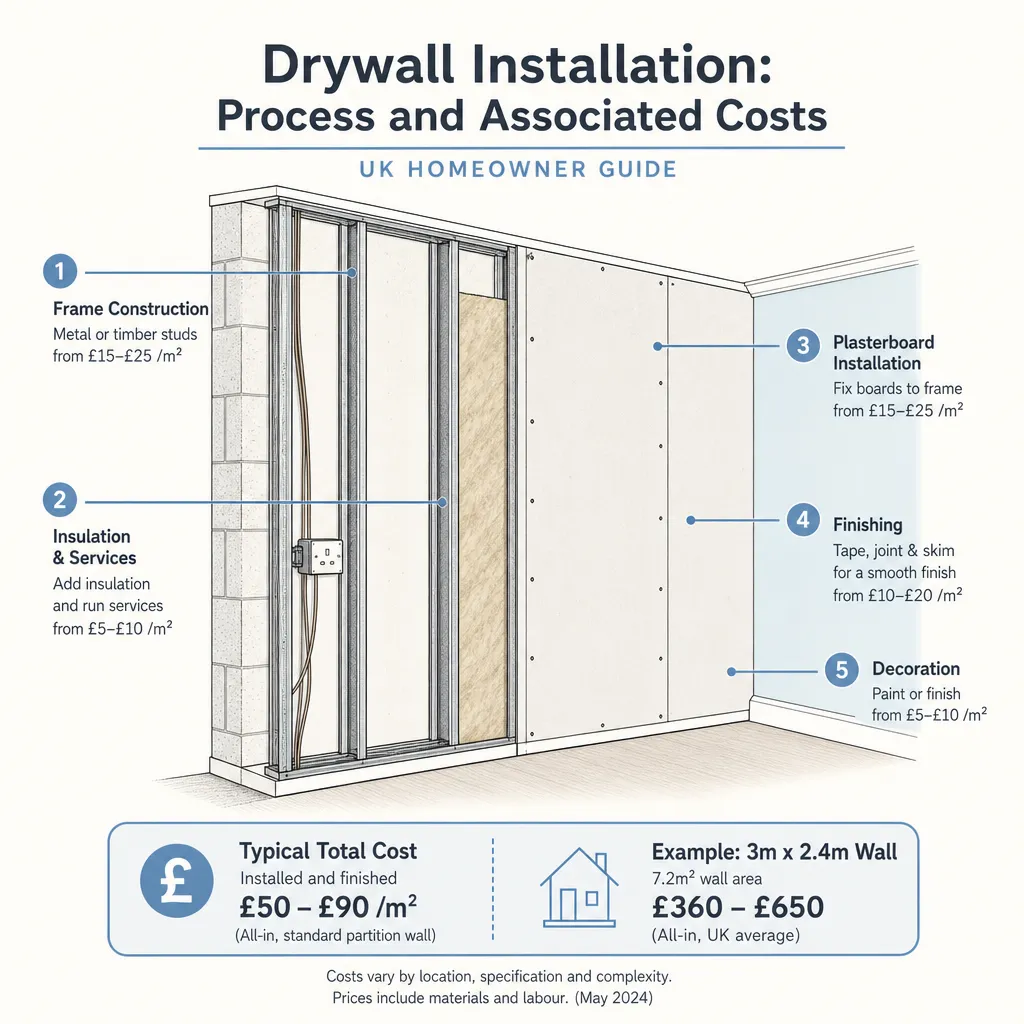
Drywall Installation: Process and Associated Costs
Whether you are partitioning a room, lining a cold external wall, or finishing a loft conversion, installing plasterboard — known as drywall in North American terminology — is one of the most common interior construction tasks in UK homes. It typically arises during extensions, renovations, or after first-fix electrical and plumbing work is complete. Done well, it creates a smooth, stable substrate for decoration; done poorly, it leads to cracking, cold bridging, and poor acoustic or fire performance.
Key points
- In the UK, plasterboard (also called drywall or gypsum board) is the standard interior lining material; common thicknesses are 12.5 mm for walls and 9.5 mm for ceilings, with 15 mm, fire-rated, and acoustic boards available for specific applications.
- The dot-and-dab method — bonding compound applied in dabs directly to masonry — is used for lining brick or block walls; timber or metal stud frames are used for new partition walls and where a services cavity is required.
- Building Regulations Approved Document E (resistance to sound) sets minimum acoustic performance requirements for partition walls in new dwellings, flats, and buildings undergoing a material change of use such as conversion to HMOs.
- A standard plasterboard finish in the UK requires a 2–3 mm skim coat of finishing plaster applied after boards are taped and jointed; tape-and-joint-only finishes are uncommon in UK residential work.
- Indicative costs for supply and installation of standard 12.5 mm plasterboard are £20–£35 per m² for walls and £25–£55 per m² for ceilings, with skim coating adding a further £8–£18 per m² (Indicative UK costs, last reviewed 2026-05-12).
How plasterboard is installed in UK homes
There are two principal installation methods, each suited to different situations.
Method 1: Dot and dab (direct bonding)
Plasterboard is adhered directly to a masonry wall using a gypsum-based bonding compound applied in a pattern of dabs. This is fast and cost-effective for lining solid walls, but leaves a small void behind the board that can carry sound and makes it difficult to run services retrospectively. It is most suitable for solid brick or block internal walls that are reasonably flat and dry.
Method 2: Stud partition (timber or metal frame)
A frame of vertical studs — typically 89 mm or 63 mm C-section metal studs, or 75 mm × 50 mm sawn timber — is constructed between floor and ceiling, and plasterboard is fixed with drywall screws on both faces. This allows insulation and services to run within the cavity and offers better acoustic and thermal performance than dot and dab.
Method | Best for | Not ideal for | Acoustic performance | Services cavity? |
|---|---|---|---|---|
Dot and dab | Masonry wall lining, quick finishes | Uneven or damp masonry, HMOs | Lower (void amplifies sound) | No |
Timber stud | New partitions, loft conversions, thermal lining | Tight spaces, very low ceilings | Moderate (add acoustic insulation) | Yes |
Metal stud | Commercial finish, fire or acoustic specification | Wet rooms without specialist board | Higher with acoustic board | Yes |
The skim coat
Most plasterboard finishes in the UK require a 2–3 mm skim coat of multi-finish or board-finish plaster, applied by a plasterer after the boards are taped and jointed. This gives the smooth surface required for emulsion paint or wallpaper. Tape-and-joint finishes used in North American construction are less common in UK residential work, where a plastered skim finish is the norm.
What does plasterboard installation cost in the UK?
Indicative UK costs, last reviewed 2026-05-12. Costs vary significantly by region, access, and specification. Always obtain at least three quotes.
Scope | Indicative cost range |
|---|---|
Supply and fix standard 12.5 mm wall board (per m²) | £20–£35 |
Supply and fix with metal stud partition (per m²) | £30–£45 |
Ceiling boarding (per m²) | £25–£55 |
Skim coat (per m²) | £8–£18 |
Acoustic or fire-rated board — supply and fix (per m²) | £35–£60+ |
Full stud partition — typical 3 m × 2.4 m wall, labour, materials, skim | £600–£1,500+ |
London and the South East typically attract a premium of 15–25% above these figures. The skim coat is usually priced separately by the plasterer.
What drives the cost?
- Board specification: Moisture-resistant, acoustic, and fire-rated boards cost more than standard 12.5 mm board.
- Access: Ceilings cost more than walls; stairwells and rooms with low headroom add time and cost.
- Prep work: Uneven or damp masonry may need treatment or battening before boarding can begin.
- Quantity: Larger areas benefit from economies of scale; small patch jobs are proportionally more expensive.
- Plastering finish: The skim coat typically adds 30–50% to the board-only cost and is usually a separate contract.
Building Regulations considerations
Installing a non-structural partition wall is generally low-risk from a Building Regulations perspective, but approval is needed in several situations:
- Acoustic performance (Part E): In flats, houses in multiple occupation (HMOs), and buildings undergoing a material change of use, new partition walls between units must meet minimum airborne sound insulation targets. Specialist acoustic boards and correctly detailed junctions are required.
- Fire resistance (Part B): Walls enclosing protected escape routes must achieve a defined fire-resistance period — typically 30 or 60 minutes. Fire-rated plasterboard and correctly detailed joints are needed.
- Structural implications: If a partition wall bears any load, structural engineering input is required before proceeding.
- Services: Running new electrical circuits within a stud wall is notifiable work under Building Regulations Part P; plumbing within a partition may also require notification.
Contact your local building control body if you are unsure whether your project requires approval.
Checklist: preparing for plasterboard installation
What to ask before accepting a quote
- What board specification are you pricing — standard, moisture-resistant, or acoustic?
- Does the quote include fixing compound or screws, taping, and jointing?
- Is the skim coat included in this price, or is it a separate contract?
- Will the work require Building Regulations approval, and if so, will you manage that process?
- What assumptions has the quote been based on — what happens if the substrate is damp or uneven?
- Is VAT included in the quoted price?
- How long will boards need to settle before skimming, and what is the expected programme?
When to get professional help
Plasterboard installation is a skilled job that most homeowners should leave to a qualified dryliner and plasterer — particularly for ceilings (where flat, accurate fixing to joists requires experience and proper lifting equipment), rooms that need to comply with Building Regulations for acoustic or fire performance, and major fit-out works in extensions and loft conversions. A competent dryliner will also advise on the correct board specification: using standard board in a bathroom, for example, risks delamination and mould growth over time.
How Housey can help
For extensions, loft conversions, and renovation projects where plasterboard installation is part of a wider build programme, Housey can connect you with experienced extension builders who manage the complete interior fit-out, including drylining, plastering, and the associated building control requirements.
Frequently asked questions
What is the difference between plasterboard and drywall?
They are essentially the same product — a gypsum core faced with paper on both sides. Plasterboard is the standard UK term; drywall is the North American term increasingly used in the UK trade. The main practical difference is the finish: UK residential work almost always requires a final skim plaster coat, whereas North American drywall is tape-and-jointed and sanded smooth without a plaster skim.
Do I need planning permission to build a stud partition wall?
In most cases, no. Internal partition walls do not affect the building's external appearance and are generally exempt from planning permission. Building Regulations may apply — particularly for acoustic and fire performance in flats or HMOs — and any electrical work within the partition must comply with Part P of the Building Regulations, which usually requires notification to a building control body or use of a registered electrician.
How long does plasterboard installation take?
For a typical 3 m × 2.4 m stud partition wall, a skilled dryliner might board both sides in half a day. The skim coat is usually applied the following day and needs 3–7 days to dry fully before painting, depending on temperature and ventilation. A larger project such as a complete loft conversion may take 2–5 days for boarding, followed by several days of plastering work.
Can I install plasterboard myself?
Boarding walls is within the capability of a confident DIYer with the right tools — a drywall saw, rasp, screw gun, and straight edge. Achieving a flat, well-jointed finish suitable for skimming is harder than it appears. Ceiling boarding is significantly more difficult and should not be attempted without proper lifting equipment. The plastering skim coat is a skilled trade; most DIYers achieve a poor result without substantial prior practice.
Sources and further reading
- Approved Document E: Resistance to the passage of sound — GOV.UK
- Approved Document B: Fire safety — GOV.UK
- Technical advice centre — British Gypsum
- Manual handling in construction — Health and Safety Executive
Useful next reads
 Improvement & Build
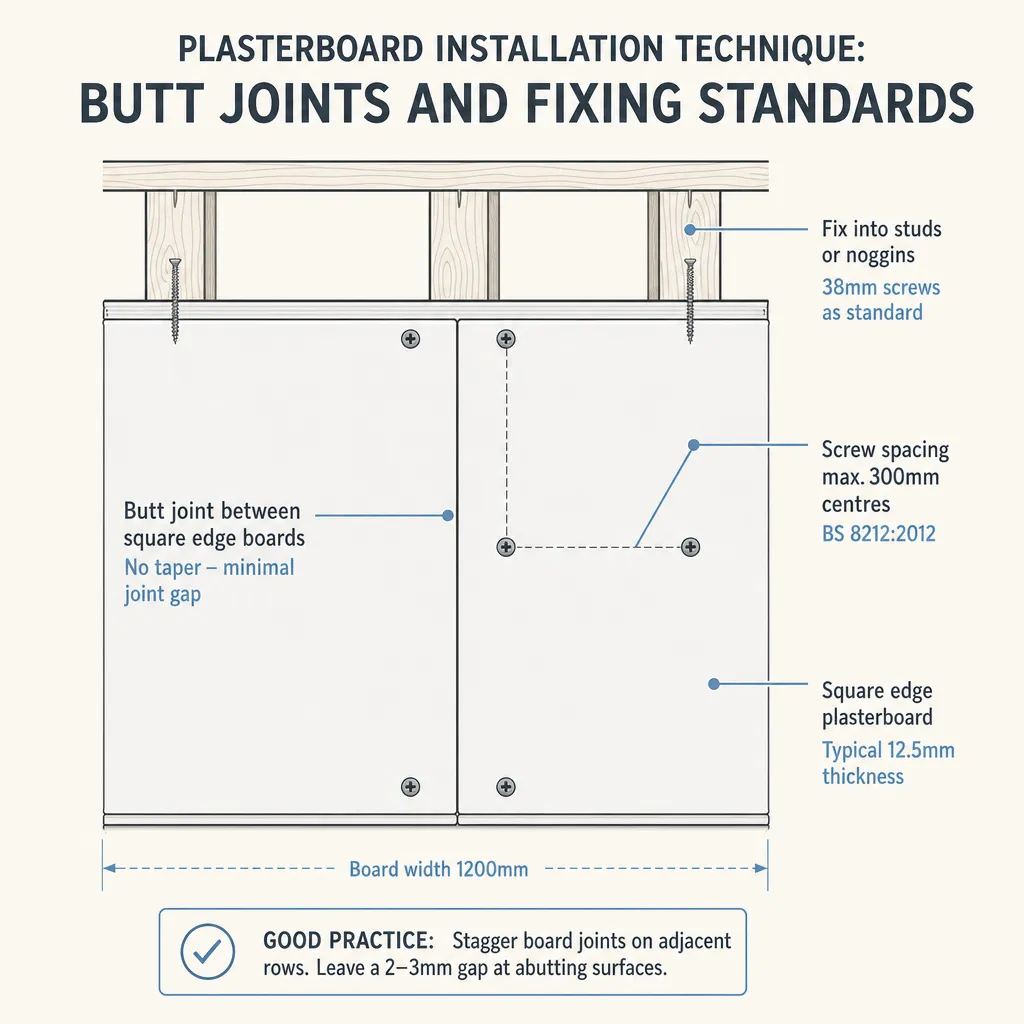
Plasterboard Installation Technique: Butt Joints and Fixing Standards
Butt joints in plasterboard — where two square-cut edges meet — need jointing compound feathered over at least 200mm each side to avoid a visible ridge after decoration.
 Improvement & Build
Laundry Room Renovation and Fitting Costs
A basic UK laundry room fit-out typically costs £2,000–£6,000 where plumbing and electrics are already in place, rising to £8,000–£15,000 or more when structural work, new drainage connections, or new electrical circuits are needed.
 Improvement & Build
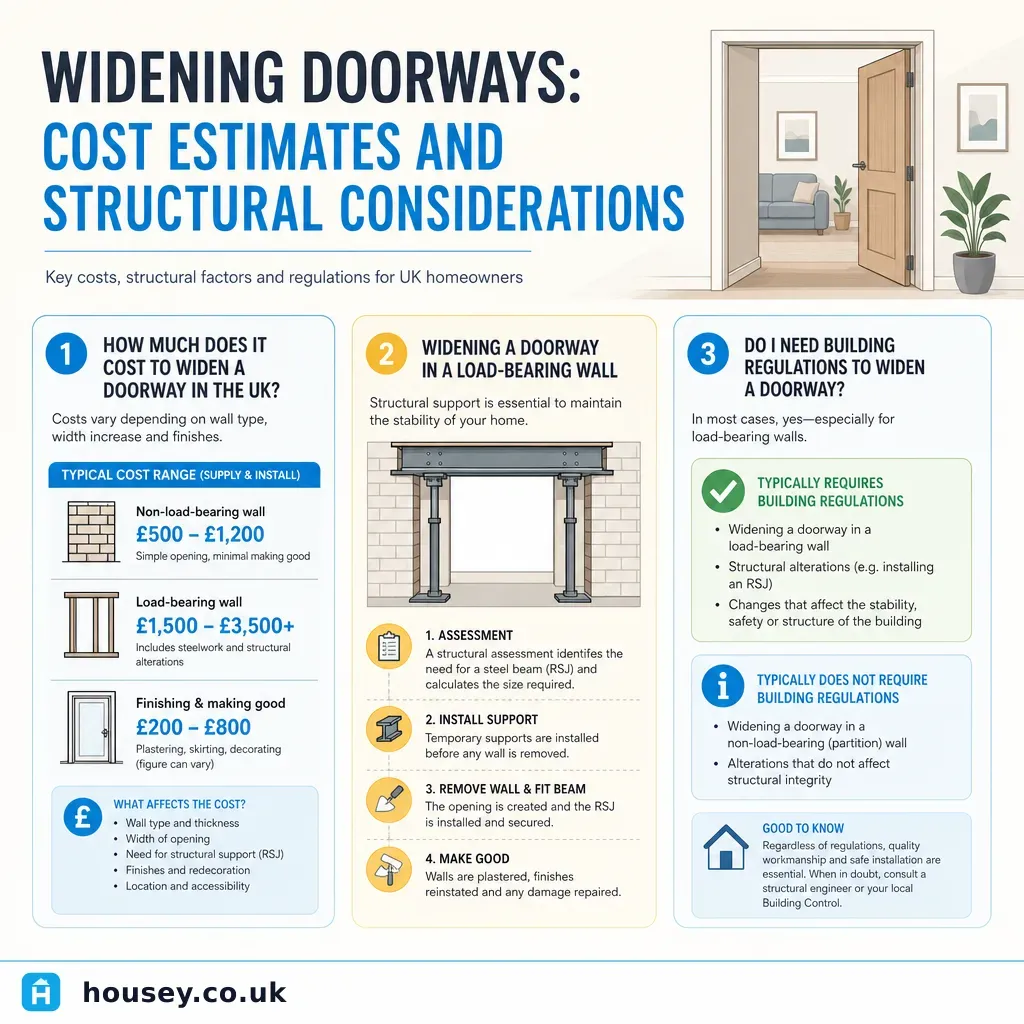
Widening Doorways: Cost Estimates and Structural Considerations
A doorway in a non-load-bearing partition can usually be widened for £500–£1,500.
 Improvement & Build
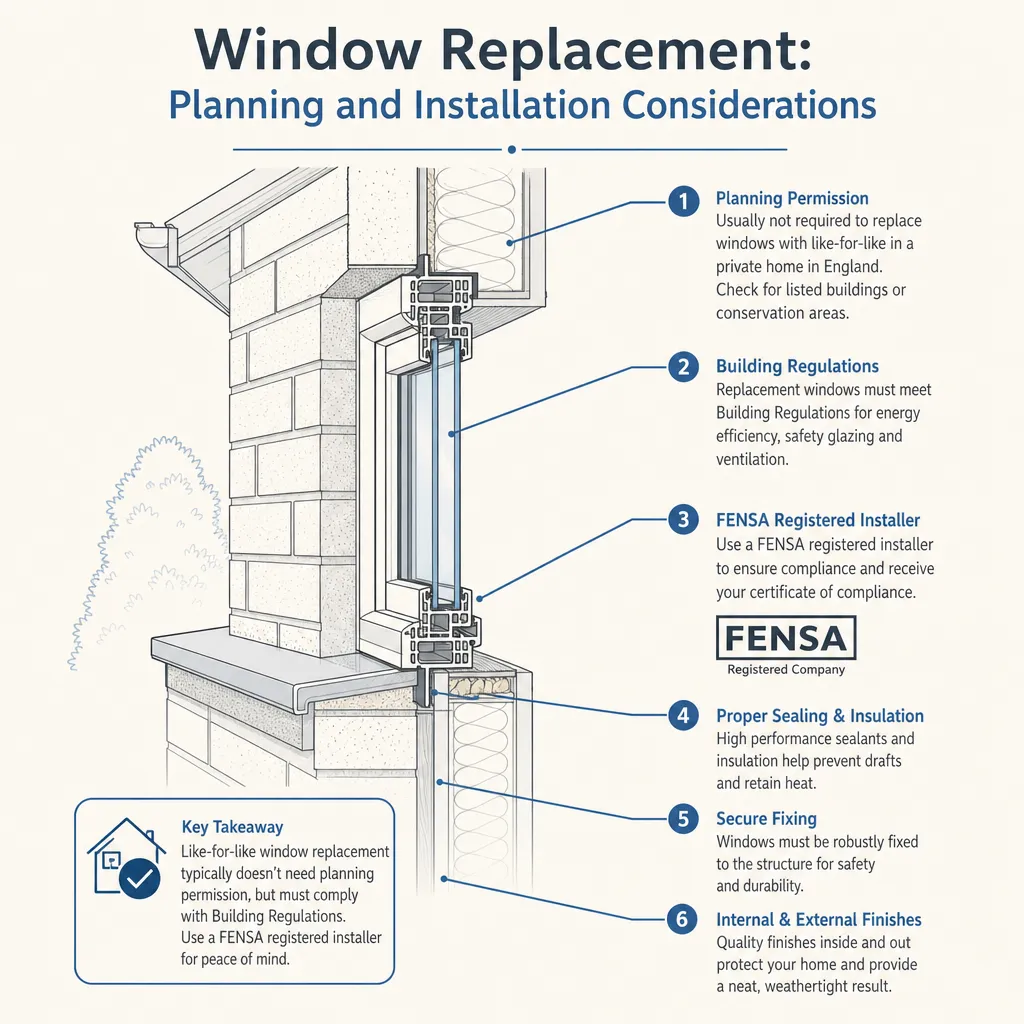
Window Replacement: Planning and Installation Considerations
Most window replacements in England fall under permitted development and do not need planning permission, though listed buildings, flats, and conservation areas are exceptions.
 Improvement & Build
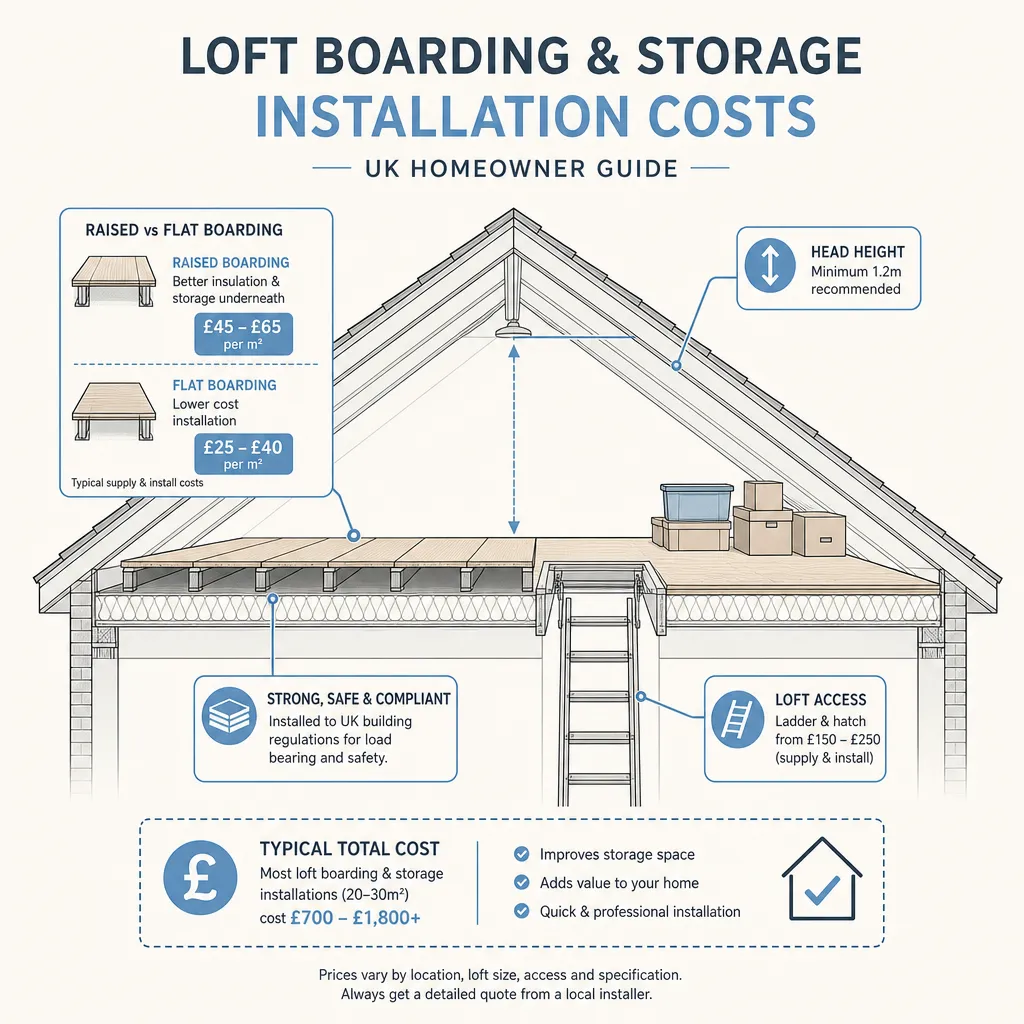
Loft Boarding and Storage Installation Costs
Basic loft boarding for an average semi-detached home costs £500–£1,500; a raised system that preserves insulation runs £800–£2,500.