Dutch Door Installation and Design for Period Properties
By Housey · Last reviewed 1st of June 2026
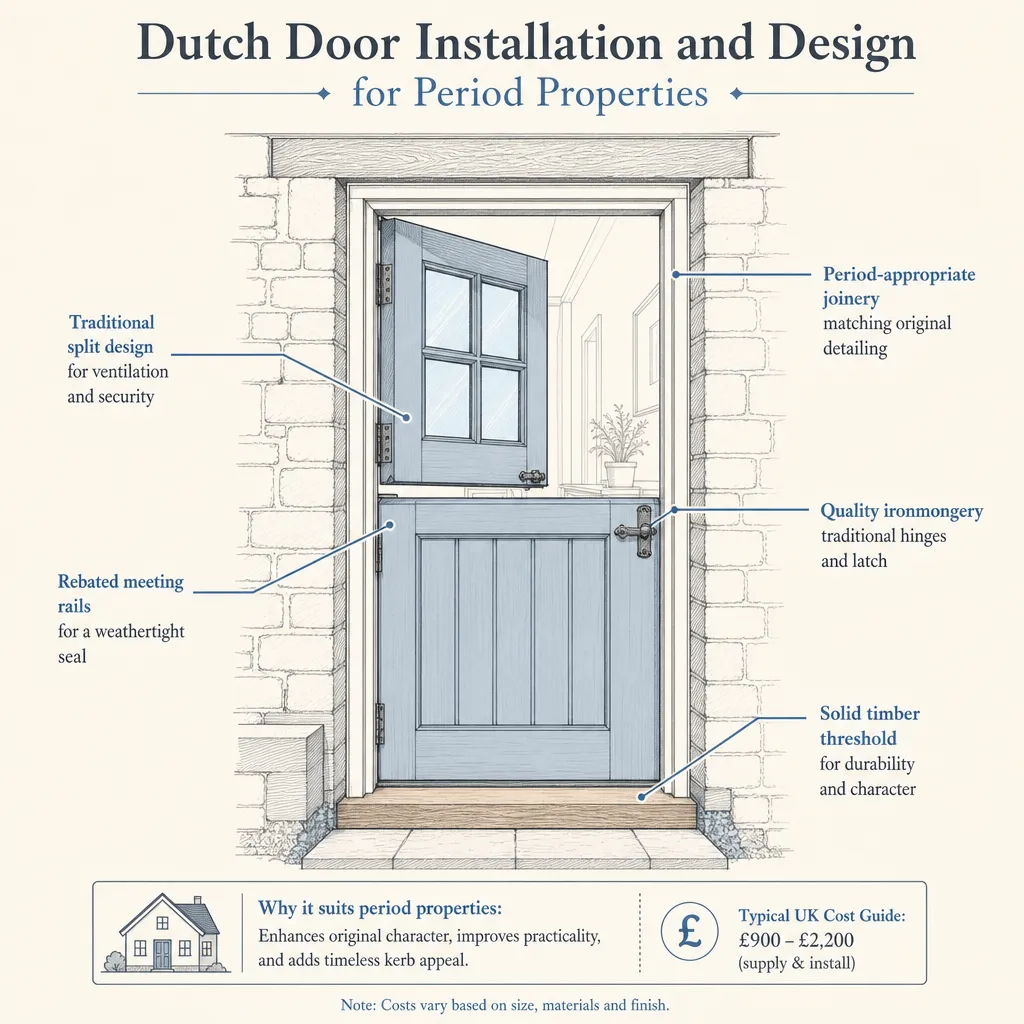
Dutch Door Installation and Design for Period Properties
Dutch doors — traditionally known in the UK as stable doors — divide horizontally so the upper and lower halves can operate independently, a practical feature with deep roots in British agricultural and vernacular architecture. The decision to fit one typically arises during a kitchen or rear extension refurbishment, or when restoring a cottage, farmhouse, or Victorian terrace back to period character. Getting the installation right matters both for weathertightness and, in some cases, for satisfying planning and listed-building requirements.
Key points
- External door replacements in England must comply with Building Regulations Approved Document Q (security) and Approved Document L (thermal performance), with a minimum U-value of 1.4 W/m²K for the overall door assembly including the frame.
- Listed building consent is required to alter or replace any external door on a listed property, regardless of permitted development rights — this applies to all grades.
- In a conservation area, permitted development rights for door changes may be removed by an Article 4 Direction; check with your local planning authority before ordering.
- Timber is the traditional and usually most appropriate material for a dutch door in a pre-1919 period property; uPVC is typically refused in conservation areas and for listed buildings.
- A FENSA- or CERTASS-registered installer can self-certify building regulations compliance for replacement doors, removing the need for a separate building control application.
What is a dutch door and how does it work?
A dutch door (stable door) is divided horizontally, usually at approximately mid-height, with each half hung independently on separate sets of hinges. When both halves are closed, they latch together as a single unit; when only the lower half is closed, the upper swings open to provide ventilation and light while keeping children or animals inside — the original purpose in working farmhouses and rural cottages.
In contemporary UK homes, they are most commonly fitted at rear kitchen doors, cottage entrances, and utility-room exits to gardens. A fixed or sliding bolt on the interior face connects the two halves when they are to be operated together, and a separate latch or lock on the lower half secures the door when fully closed.
Which option should you choose?
- Choose a dutch door if the opening is an exterior doorway at least 762 mm wide, you want independent top/bottom ventilation, and the aesthetic suits the property — particularly pre-1919 vernacular, cottage, or rural styles.
- Consider an alternative if the opening is in a narrow side passage, subject to very high wind exposure, or the property has a contemporary design where the split-door style may look incongruous.
- Consult your local planning authority if the property is listed, in a conservation area, or if an Article 4 Direction is in force.
- Commission a heritage joiner if the property is Grade I or Grade II* listed and requires like-for-like replacement using traditional methods and materials.
Planning permission and listed building consent
For most standard residential properties in England and Wales, replacing an existing external door is considered permitted development — no planning application is required, provided the replacement matches the existing opening and does not form part of a material change of use.
However, several circumstances require formal consent:
Listed buildings: Any alteration to a listed building — including replacing an external door — requires listed building consent from the local planning authority, regardless of how minor the change appears. This applies to all grades (Grade I, Grade II*, and Grade II). Replacing a period door with an inappropriate modern alternative can constitute a criminal offence under the Planning (Listed Buildings and Conservation Areas) Act 1990.
Conservation areas: Permitted development rights for door replacements may be restricted by an Article 4 Direction. Some local authorities have blanket Article 4 Directions covering front elevations; others are more selective. Always check with your local planning authority's conservation officer before proceeding.
Scotland and Wales: Permitted development rules differ from England. In Scotland, consult your local planning authority or Historic Environment Scotland; in Wales, consult Cadw and your local authority.
A pre-application enquiry to your local authority costs relatively little and can confirm whether consent is needed before you commit to a design or place an order.
Building regulations for external doors
Even where planning permission is not required, Building Regulations apply to the installation of a new external door in England.
Thermal performance (Part L): A replacement external door must achieve a maximum U-value of 1.4 W/m²K for the whole assembly including the frame, in line with Approved Document L (2021 edition). Fitting a well-insulated door helps reduce heat loss at a vulnerable junction — particularly relevant in older solid-wall properties where the fabric has limited insulation elsewhere.
Security (Part Q): Approved Document Q requires that new external doors resist physical attack to a minimum standard. For most residential applications, the door, frame, and ironmongery should comply with PAS 24:2016 or equivalent. Timber dutch doors can be specified to meet this standard, but confirm with your supplier that the product has been tested and certified as a complete assembly.
Fire safety: If the dutch door is positioned in a fire-protected route — for example, between an integral garage and the house — it must be a fire-resisting doorset complying with Approved Document B. Most garden-facing dutch doors are not in this position, but check if in doubt before specifying.
Materials and design: a comparison for period properties
Material | Best for | Drawbacks | Planning acceptability |
|---|---|---|---|
Solid timber (oak, Douglas fir, pine) | Pre-1919 properties, listed buildings, conservation areas | Higher cost; requires periodic painting or oiling | Generally accepted by conservation officers |
Engineered timber | Where dimensional stability matters; moderate period settings | Less traditional appearance than solid timber | Usually acceptable with a painted finish matching period character |
Composite (timber-framed, GRP skin) | Thermal performance with reduced maintenance | May not satisfy listed building consent requirements | Varies by conservation officer and area |
uPVC | Budget-conscious post-1980 properties | Rarely appropriate for pre-1919 buildings; typically refused in conservation areas and for listed buildings | Often refused in conservation areas and for listed buildings |
Aluminium (powder-coated) | Contemporary extensions on period homes | Modern appearance; may not suit traditional openings | Case-by-case; discuss with conservation officer before ordering |
For the great majority of Victorian terraces, Edwardian semis, Georgian townhouses, or rural cottages, solid or engineered timber with a painted or oiled finish is the most appropriate and least contentious choice.
Weatherproofing and draught-proofing details
The horizontal joint between the upper and lower halves is the principal vulnerability of a dutch door. When specifying, look for:
- A continuous compression seal (brush or rubber-foam) along the meeting rail on both halves.
- A weather bar and sill on the lower half to deflect rainwater away from the threshold.
- An overhang or canopy above the door opening to reduce direct rain exposure in exposed positions.
- Stainless-steel or hot-dip galvanised ironmongery to resist corrosion — particularly important in coastal or rural settings.
What to ask before accepting a quote
- Is the door assembly — frame, threshold, and hardware — tested to PAS 24:2016 for security compliance under Approved Document Q?
- What U-value does the completed assembly achieve, and will this be documented for building regulations Part L compliance?
- Are you FENSA- or CERTASS-registered, and will you self-certify the installation?
- What timber species and treatment are you recommending, and what is the factory paint or stain warranty period?
- Will the threshold be ramped or levelled to provide step-free access if required?
- What does the quote include for making good masonry, plasterwork, or decoration around the new frame?
- Is VAT included in the quoted price?
- What is the lead time from order to installation, and what deposit is required?
Pre-installation homeowner checklist
Costs
Indicative UK costs, last reviewed 2026-06-01.
Dutch door costs vary considerably by material, size, specification, and location:
- Supply only (off-the-shelf softwood dutch door kit): approximately £300–£700
- Supply and installation (standard opening, FENSA-registered installer): approximately £800–£2,000
- Bespoke joinery (hardwood, made-to-measure, period properties): £2,000–£5,000 or more
- Listed building or conservation-area projects may incur additional costs for pre-application enquiries, heritage joiner premium, and specialist period ironmongery.
Always obtain itemised quotes separating supply, installation, making good, and VAT. Costs vary by region, access conditions, and the state of the existing frame and reveals.
Source: indicative market research. Costs vary by specification and contractor; obtain multiple quotes before committing.
When to get professional help
For most standard domestic dutch door installations, a FENSA-registered window and door installer can handle the project without additional specialist input. However, seek further professional advice if:
- The property is listed — engage a heritage joiner with listed-building experience and liaise with the conservation officer before ordering.
- The existing lintel or frame shows cracking, settlement, or rot that may require assessment before replacement.
- The door opening is to be widened or reduced — this may require structural engineer input and a building control application.
- You are unsure whether planning or listed building consent applies — a pre-application enquiry to the local authority is the appropriate first step.
- The door opens onto a fire-protected route such as an integral garage — the assembly must be specified as a certified fire doorset.
How Housey can help
Finding a reliable installer for a period-property dutch door is easier when you can compare tradespeople who understand heritage joinery and local planning requirements. Housey connects you with vetted window and door installers who can advise on material choice, building regulations compliance, and whether your project needs listed building or conservation-area consent.
Frequently asked questions
Do I need planning permission to fit a dutch door on my house?
For most standard residential properties in England and Wales, replacing an external door is permitted development — no planning application is required. However, listed building consent is always needed for listed properties, and conservation areas may have Article 4 Directions that restrict door changes. Check with your local planning authority before ordering.
What is the difference between a dutch door and a stable door?
They are the same thing in practice. In the UK, "stable door" is the traditional term; "dutch door" is more common in North American usage but widely understood in the UK trade. Both describe a door divided horizontally so the upper and lower halves can open independently.
How long does a timber dutch door last?
A well-made and properly maintained solid hardwood or engineered timber dutch door can last 30–50 years or more. Softwood doors typically require repainting every 5–7 years and may have a shorter service life in exposed positions. Regular inspection of seals, ironmongery, and the meeting rail joint helps extend the lifespan considerably.
Can I fit a dutch door myself?
External door installation is subject to Building Regulations Parts L and Q. Unless you are registered with a competent-person scheme such as FENSA or CERTASS, you must notify building control before starting work and obtain a completion certificate. For period properties with conservation-area or listed-building requirements, professional installation is strongly advisable.
Sources and further reading
- Building Regulations Approved Document Q: Security — GOV.UK
- Building Regulations Approved Document L: Conservation of fuel and power — GOV.UK
- Planning permission: windows, doors and rooflights — Planning Portal
- Owning a listed building — Historic England
- FENSA: competent persons scheme for windows and doors — FENSA
Useful next reads
 Improvement & Build
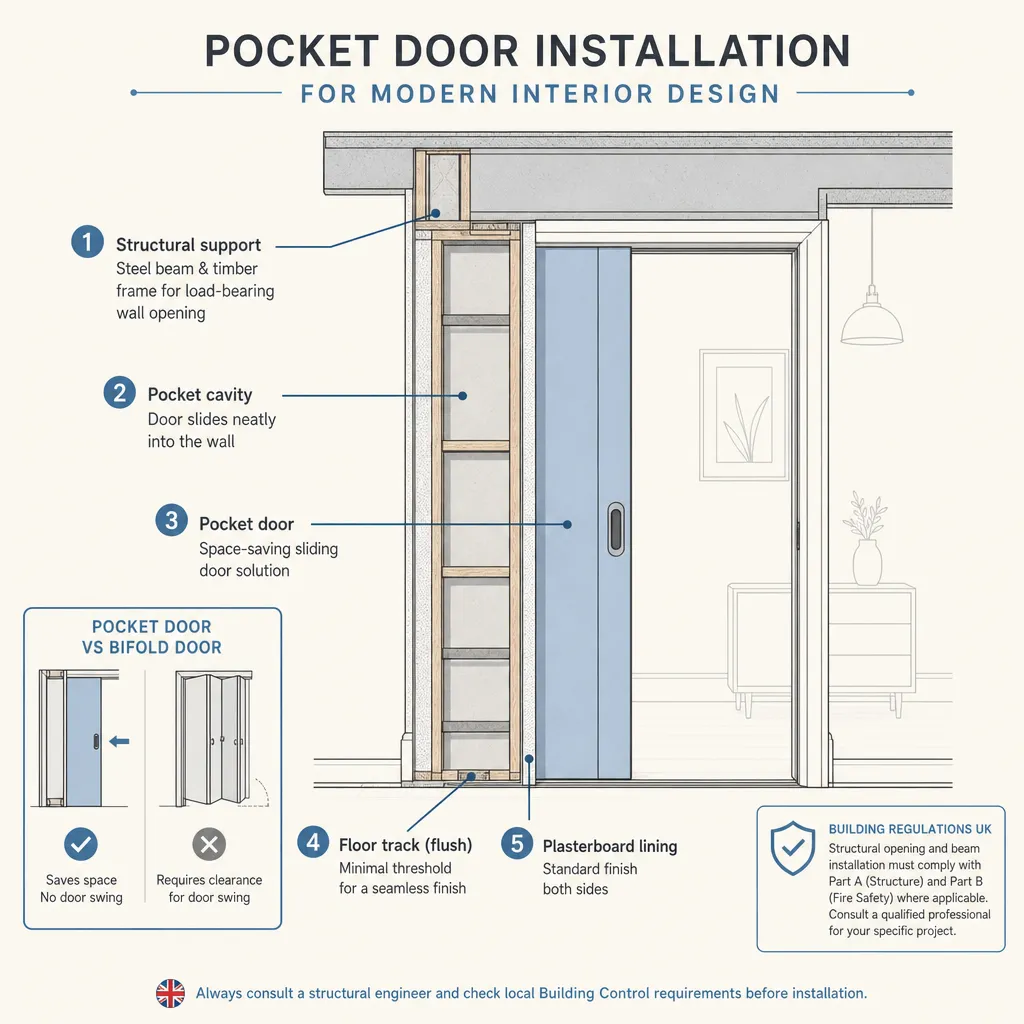
Pocket Door Installation for Modern Interior Design
A pocket door slides into a wall cavity on a top-hung track, saving the swing space of a standard hinged door.
 Improvement & Build
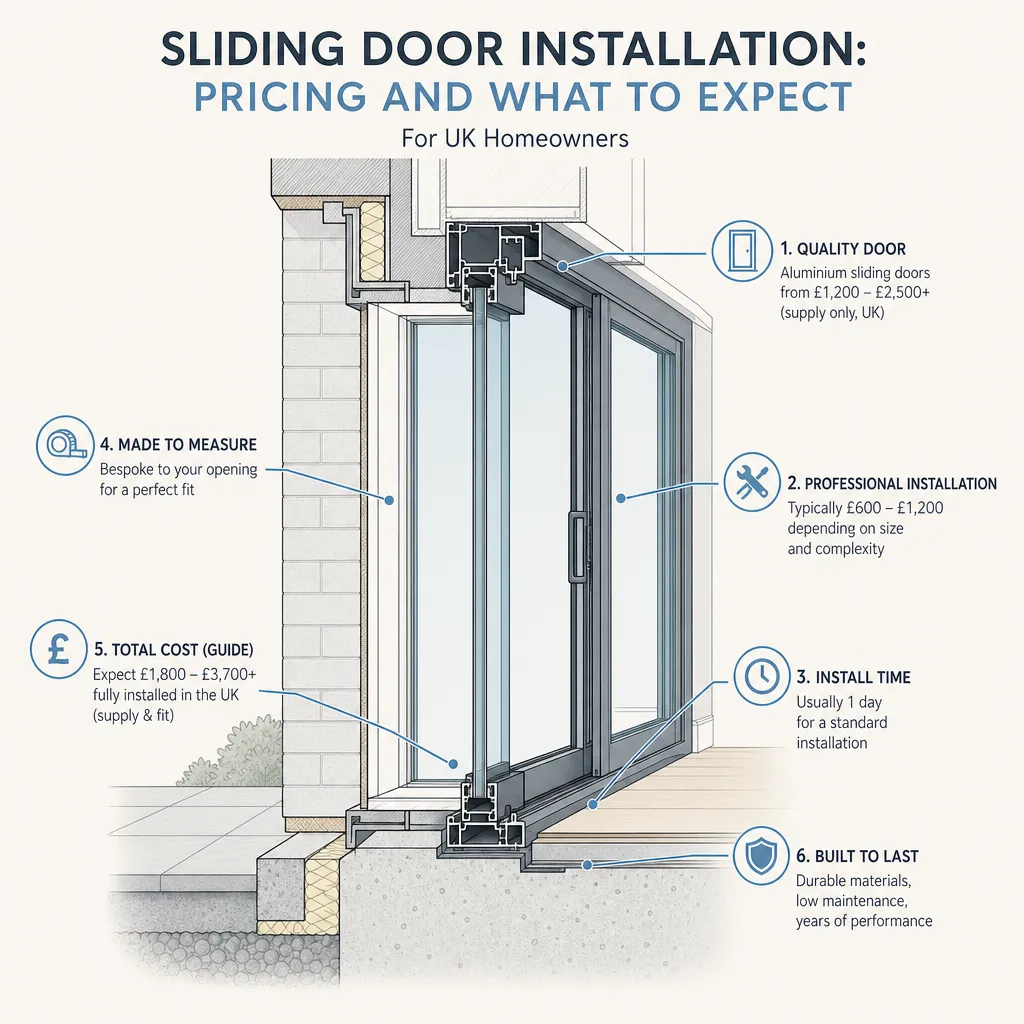
Sliding door installation: pricing and what to expect
A new sliding patio door in the UK typically costs £800–£3,000 fully installed, depending on size, material, and glazing specification.
 Improvement & Build
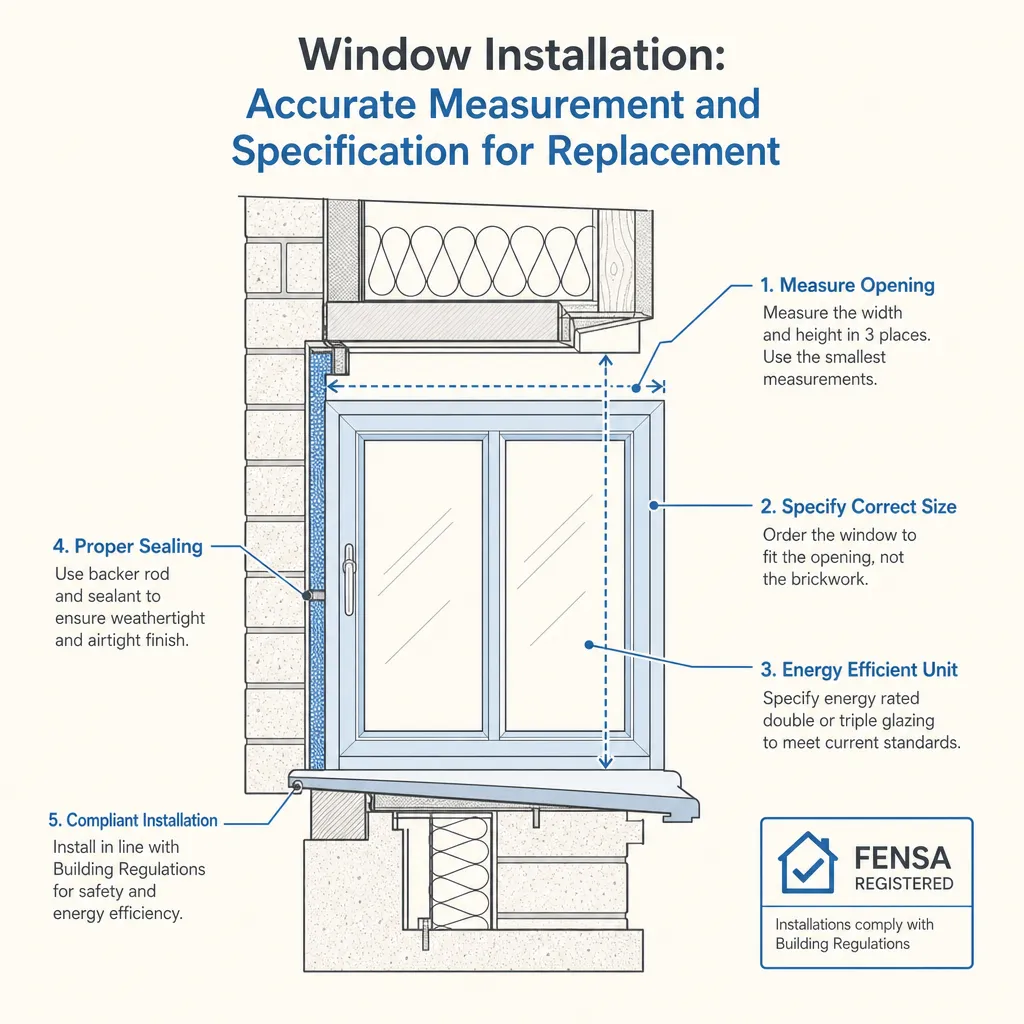
Window Installation: Accurate Measurement and Specification for Replacement
Accurate window measurement for replacement means recording the width and height of the existing frame opening in at least three places, noting the smallest dimension, and providing a full specification to your installer — including frame material, glazing type, opening style, and trickle ventilators.
 Improvement & Build
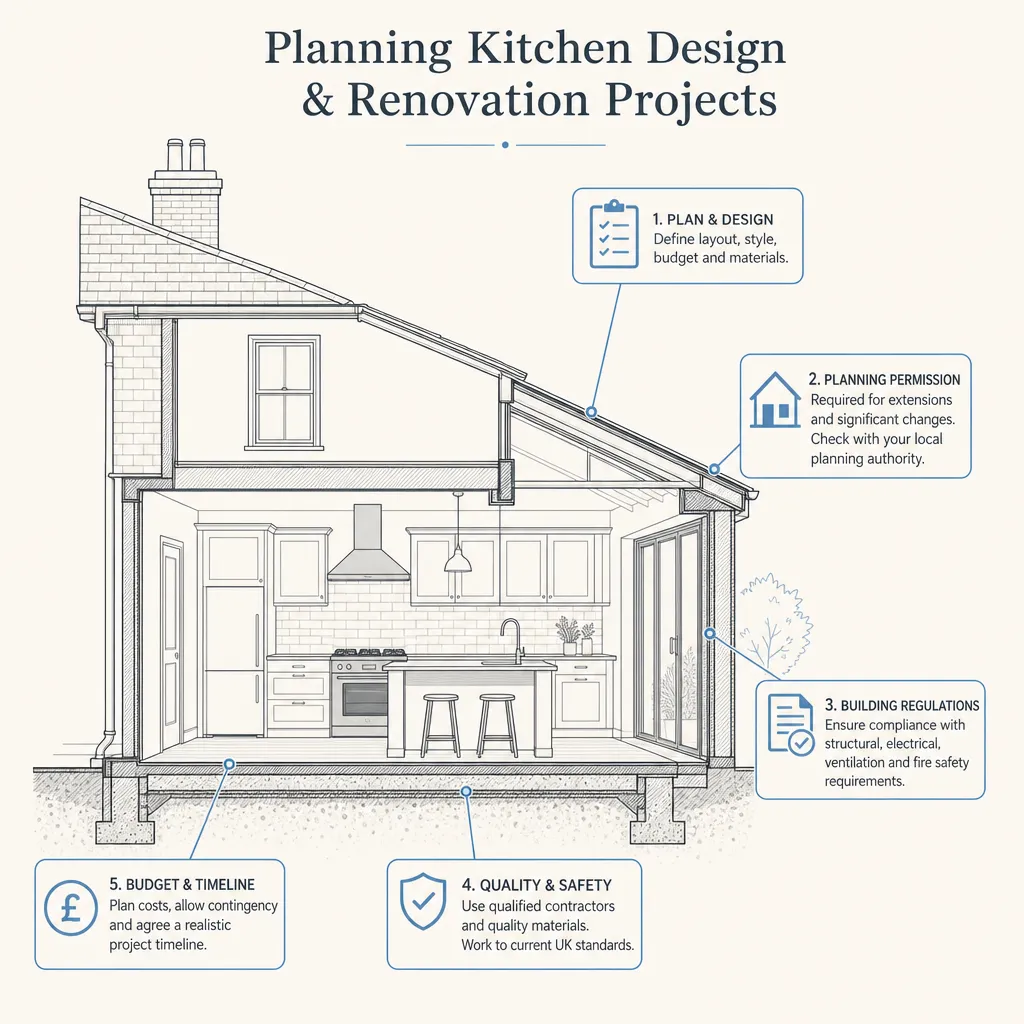
Planning kitchen design and renovation projects
Planning a kitchen renovation in the UK typically involves choosing a layout, setting a budget, deciding which contractors you need, and understanding which regulations apply.
 Improvement & Build
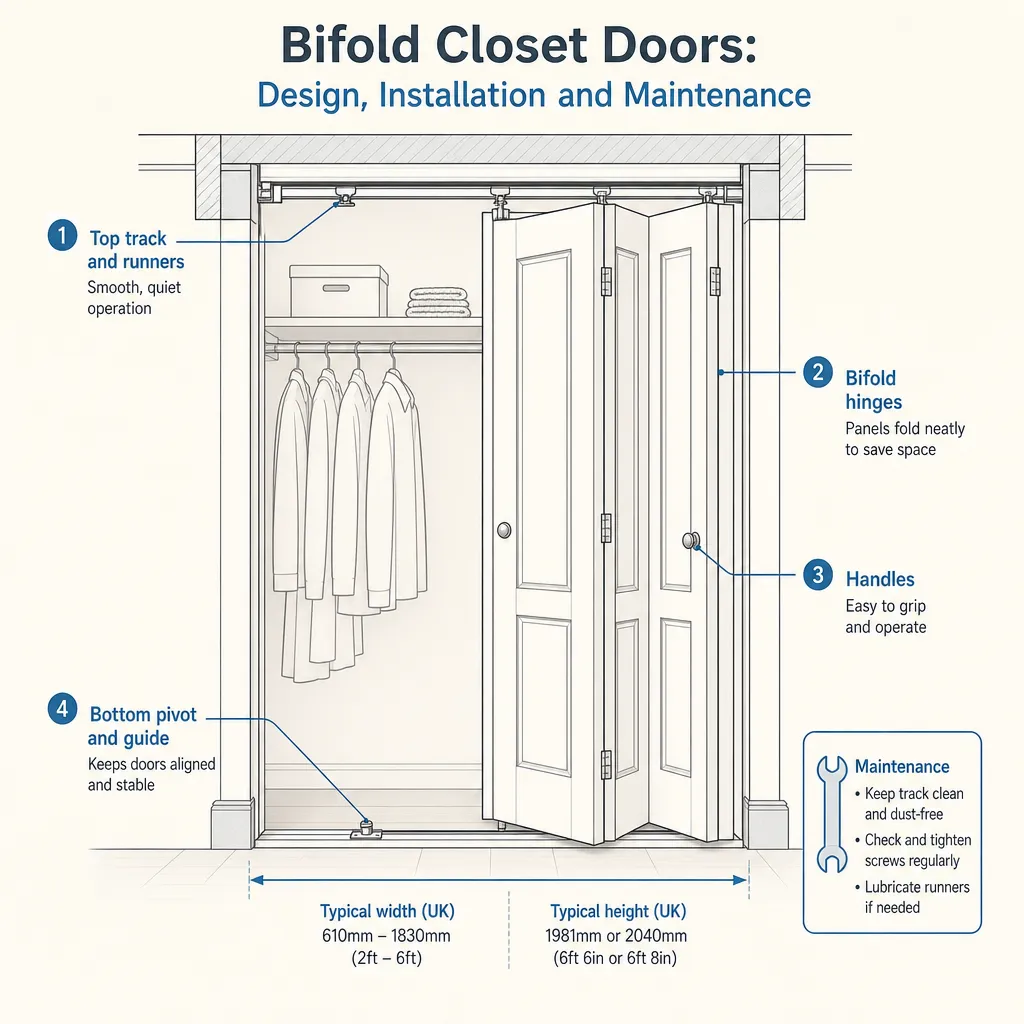
Bifold Closet Doors: Design, Installation and Maintenance
Bifold closet doors fold in on themselves along a top-mounted track, making them well suited to spaces where floor clearance in front of the wardrobe is limited.