Pocket Door Installation for Modern Interior Design
By Housey · Last reviewed 1st of June 2026
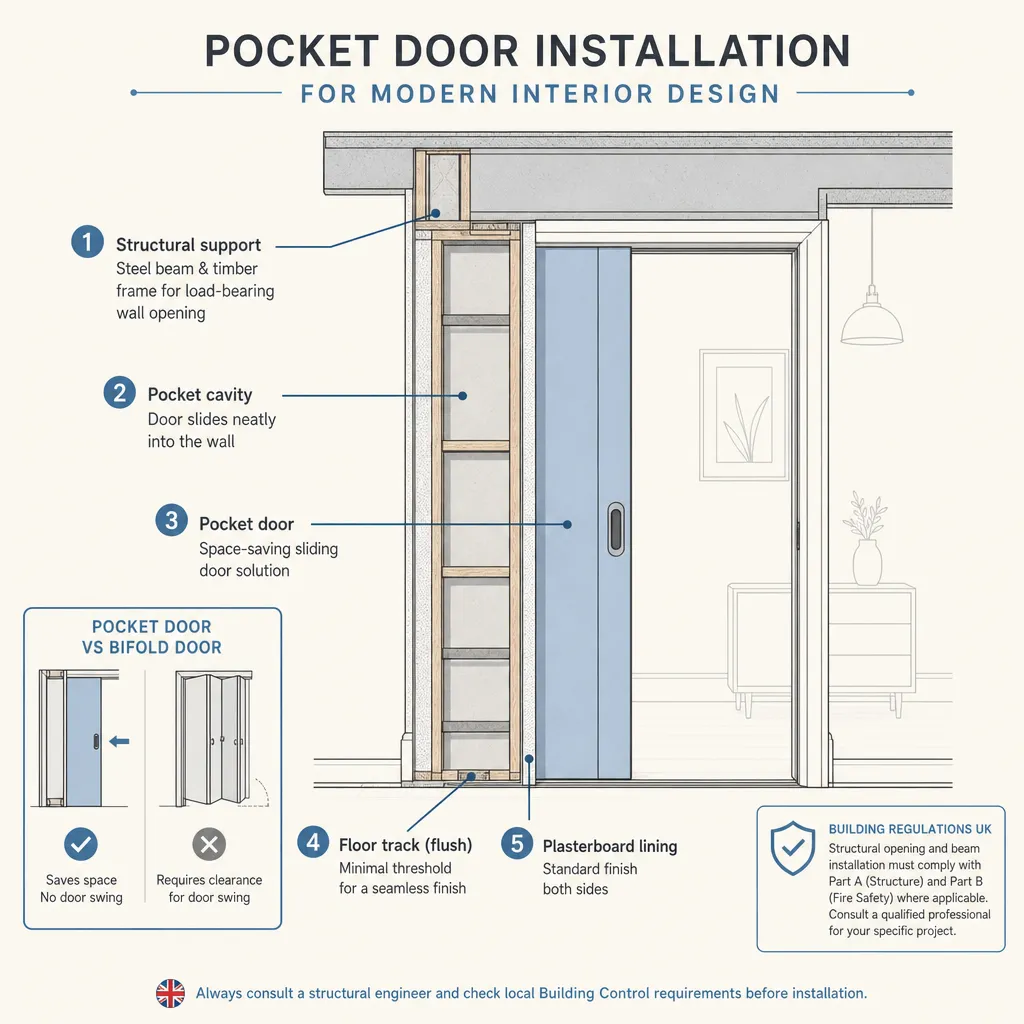
Pocket Door Installation for Modern Interior Design
Pocket doors have become an increasingly popular choice in UK home improvements — particularly in open-plan conversions, through-room projects, and tight hallway configurations where a standard swing door eats into usable floor space. The decision to fit one usually arises during a kitchen extension, a bathroom renovation, or a general interior reconfiguration, and the right choice depends on wall construction, structural constraints, and how the space is used day to day.
Key points
- A pocket door frame kit must match the door leaf dimensions; standard UK door heights are 2040 mm and 2100 mm, with widths from 626 mm to 926 mm.
- The wall receiving the pocket must be non-load-bearing, or a structural solution (such as a steel or engineered timber head beam) must be specified by a structural engineer.
- Building Regulations Approved Document M requires a minimum 750 mm clear opening width for doorways in dwellings.
- Pocket doors typically transmit more sound than solid-core hinged doors; acoustic frame kits with perimeter seals are available but add cost.
- Most internal pocket door installations do not require planning permission, but listed building consent is likely required in a listed property.
How does a pocket door work?
A pocket door operates on a track-and-carrier system housed within a dedicated frame kit built into the wall cavity. The door leaf slides horizontally on a top-hung track (most common in the UK) or, less frequently, a bottom-rolling track. The frame kit replaces a standard stud partition section and must be assembled before plastering.
Frame kits widely used by UK joiners and builders include those from Eclisse, Hafele, Johnson Hardware, and Hawa. Kits are available in three main types:
- Steel-stud kits — lighter and quicker to install; suitable for most residential stud walls.
- Timber-stud kits — compatible with traditional timber framing and easier for joiners to fix to.
- Double-pocket kits — for two door leaves that meet in the centre, suitable for wider openings of 1200 mm or more.
Flush-pull hardware is standard for pocket doors; conventional lever or knob handles cannot be used on the face as the door recesses fully into the wall.
Pocket door, bifold, or swing door? Comparison
Door type | Best for | Not ideal for | Clear opening | Sound insulation | Approx. extra cost vs swing |
|---|---|---|---|---|---|
Swing (hinged) | Most applications; best acoustic performance | Tight spaces where swing arc obstructs use | Full width minus frame | Good with solid-core leaf | Baseline |
Pocket (slides into wall) | Tight hallways; bathrooms; open-plan dividers | Walls with pipes or cables; load-bearing walls without structural work | Full width | Moderate (improvable with acoustic kit) | +£300–£800 for kit and labour |
Bifold | Wide openings; occasional room division | Small openings; where partial opening is needed | ~75% of opening width | Moderate | +£200–£600 |
Barn door (wall-mounted slider) | Feature aesthetic; where wall cavity is unavailable | Sound separation; fire door applications | Full width | Poor | +£150–£500 |
Indicative UK costs, last reviewed 2026-06-01. Costs vary by supplier, door finish, and installer. Obtain at least three quotes.
Is my wall suitable for a pocket door?
This is the critical question before any kit is ordered. The wall must be non-load-bearing, or a structural engineer must make it safe before the pocket is formed. A partition wall in a modern post-1960s house is usually non-load-bearing if it runs parallel to the floor joists. Walls running perpendicular to joists, or any wall with a chimney breast nearby, may carry structural load. If in doubt, instruct a structural engineer before ordering the frame kit.
Also check for:
- Pipes and cables within the wall — a pocket door cavity cannot accommodate services; rerouting adds cost and may require a Gas Safe engineer or NICEIC-registered electrician.
- Wall thickness — standard 100 mm stud walls work with most kits; solid masonry walls require a stud frame built in front, reducing room width.
- Door leaf weight — heavier solid-core or glazed leaves require a heavy-duty track specification; confirm the maximum rated weight with the kit manufacturer before ordering.
Decision guide: is a pocket door right for your space?
- Choose a pocket door if you have a non-load-bearing partition, no services in the wall, and need to maximise usable floor area.
- Choose a bifold if the opening is wide (900 mm or more) and you want occasional room division rather than a dedicated access point.
- Choose a swing door if acoustic separation is important — for example, a home office, bedroom, or media room — and you do not want to spend on acoustic seals.
- Choose a barn door if the wall cavity is not available but you want a sliding aesthetic; note that sound insulation is poor and wall space beside the opening is consumed.
- Ask a structural engineer if you are unsure whether the wall is load-bearing before any structural work or kit installation.
- Ask a joiner if the existing door lining is irregular or the wall thickness is non-standard.
Sound insulation and fire compliance
Pocket doors perform less well acoustically than solid-core hinged doors because the perimeter seal cannot be as tight. For spaces where sound separation matters:
- Specify an acoustic frame kit with brush or compression seals on the head and jambs.
- Use a solid-core door leaf — 45 mm thickness is preferable to the standard 35 mm hollow-core leaf.
- Consider whether Building Regulations Approved Document E sound performance standards apply to the space, particularly in a conversion or new-build scenario.
For fire doors — for example, between an integral garage and a house, or in a flat — pocket door systems with FD30 fire certification are available, but this must be specified explicitly. A standard residential pocket kit does not provide fire resistance. Confirm fire compliance requirements with your local building control body before work starts.
Red flags to watch for
- An installer who proposes fitting a pocket door into a masonry wall without first checking whether it is structural.
- A quote that does not include replastering, redecorating, and skirting or architrave reinstatement — these are always required.
- A frame kit with no manufacturer weight rating stated — door leaf weight must be matched to the track specification.
- Any proposal to route existing plumbing or wiring through the pocket cavity.
- No provision for accessing the door mechanism after plastering — most quality kits include a head-access panel; insist on one.
When to get professional help
Most pocket door installations are suitable for an experienced joiner or general builder. Involve a structural engineer if the target wall appears to carry load, if the opening exceeds around 900 mm in an older property where timber framing may be undersized, or if pipes or cables need rerouting. For fire-rated applications in a garage, HMO, or flat, confirm the specification with your building control body before work starts.
How Housey can help
If you are planning a pocket door installation as part of a wider refurbishment or extension, Housey can connect you with experienced window and door installers who can assess your wall construction, specify the right frame kit, and complete the installation to Building Regulations standards.
Frequently asked questions
Do I need planning permission for a pocket door installation?
In most cases, no. Installing a pocket door is an internal alteration and does not require planning permission in a standard residential property. If the property is listed, listed building consent is likely required for internal alterations including changes to doors and walls. Check with your Local Planning Authority if you are uncertain about your property's designation.
Can a pocket door be fitted in a load-bearing wall?
Yes, but not without structural work first. A structural engineer must assess the wall and specify an appropriate head beam — typically a steel RSJ or engineered timber — to redistribute load around the opening. Never remove or alter structural elements without a formal assessment from a qualified structural engineer.
How much does a pocket door installation cost in the UK?
Frame kit costs typically range from £150 to £600 depending on size and specification; door leaves add £100 to £500 or more; installation labour typically adds £300 to £700, depending on replastering and finishing requirements. Indicative UK costs, last reviewed 2026-06-01. Always obtain at least three quotes as prices vary by region and specification.
Are pocket doors suitable for bathrooms?
Yes, pocket doors are commonly used in bathrooms and en suites, particularly where the swing of a standard door would obstruct the basin or bath. Specify a frame kit rated for damp environments and ensure mechanical ventilation requirements under Building Regulations Approved Document F are met — typically a continuous or intermittent extract fan for internal bathrooms.
Sources and further reading
- Approved Document M: Access to and Use of Buildings — GOV.UK
- Approved Document E: Resistance to the Passage of Sound — GOV.UK
- Approved Document B: Fire Safety — GOV.UK
- Planning Portal: listed buildings guidance — Planning Portal
Useful next reads
 Improvement & Build
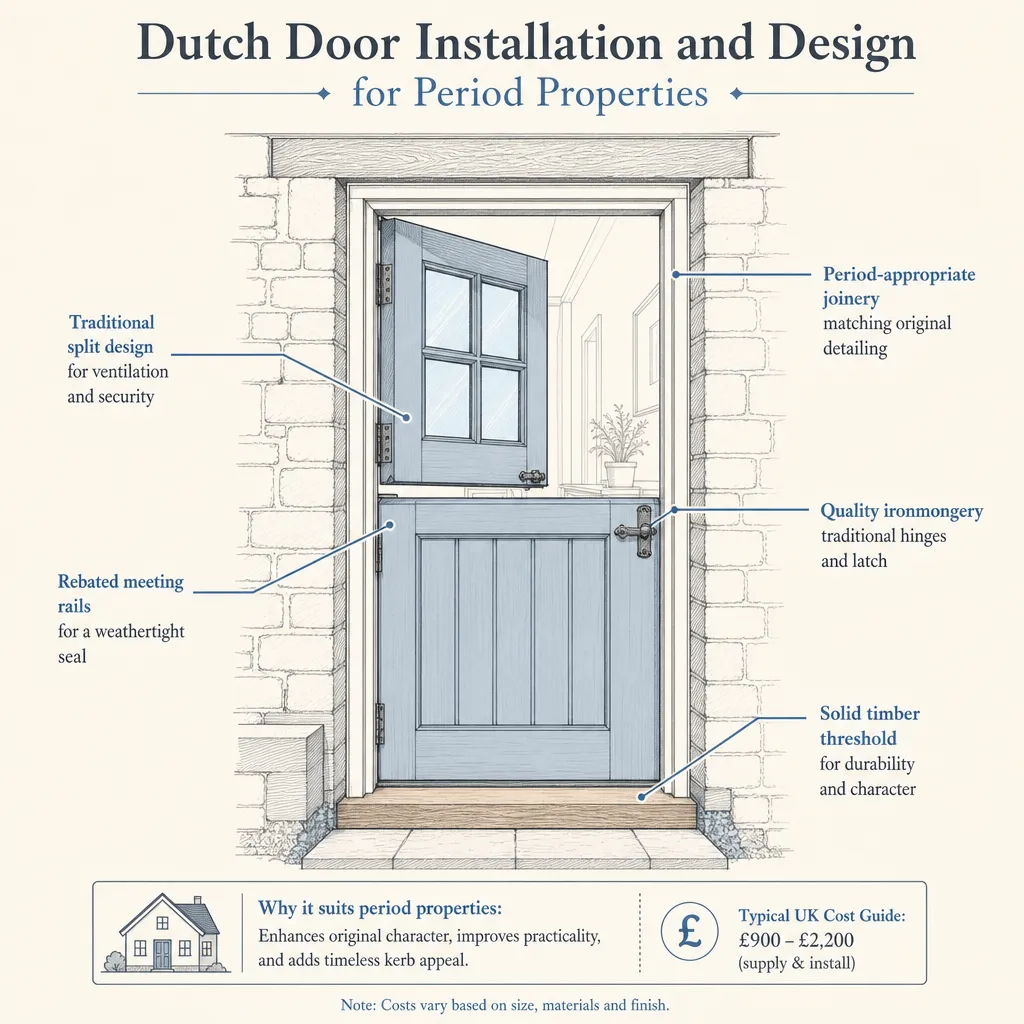
Dutch Door Installation and Design for Period Properties
A dutch door — also called a stable door — divides horizontally so the top and bottom halves open independently.
 Improvement & Build
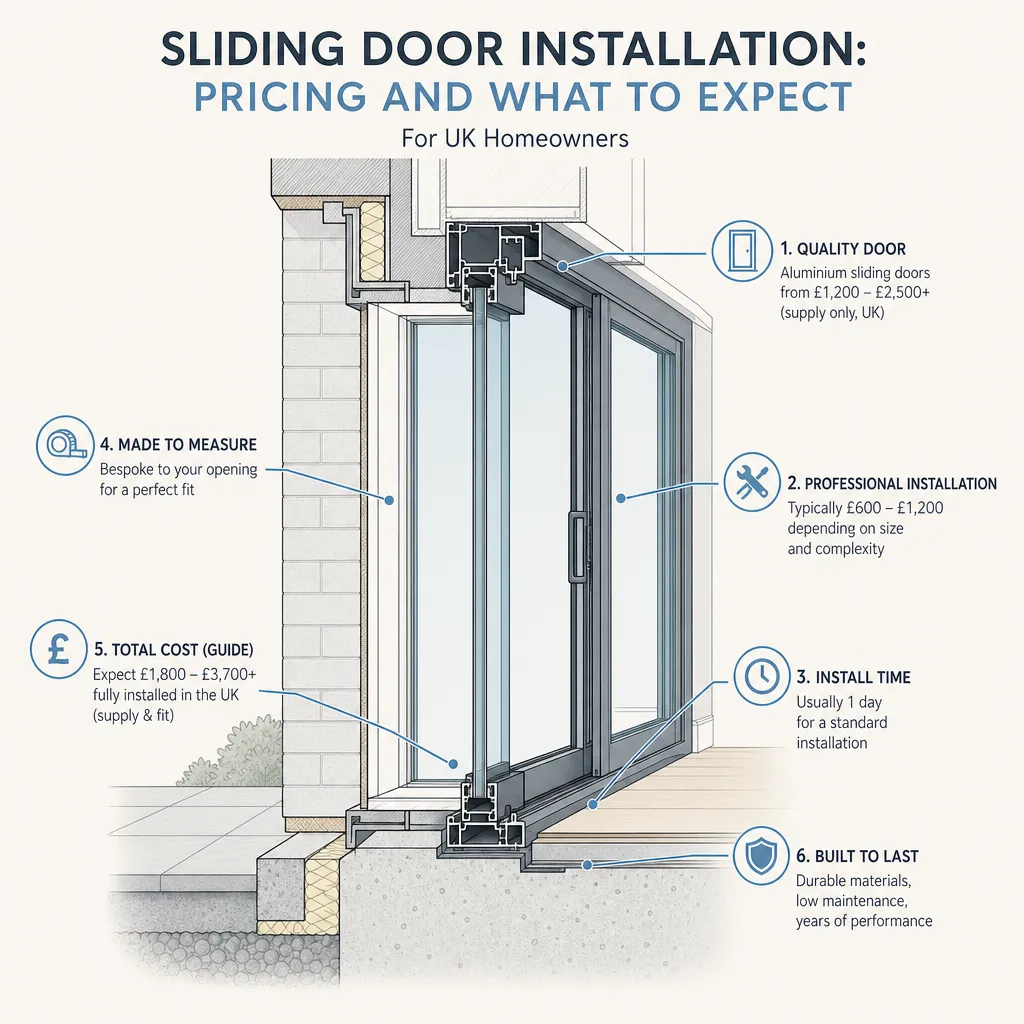
Sliding door installation: pricing and what to expect
A new sliding patio door in the UK typically costs £800–£3,000 fully installed, depending on size, material, and glazing specification.
 Improvement & Build
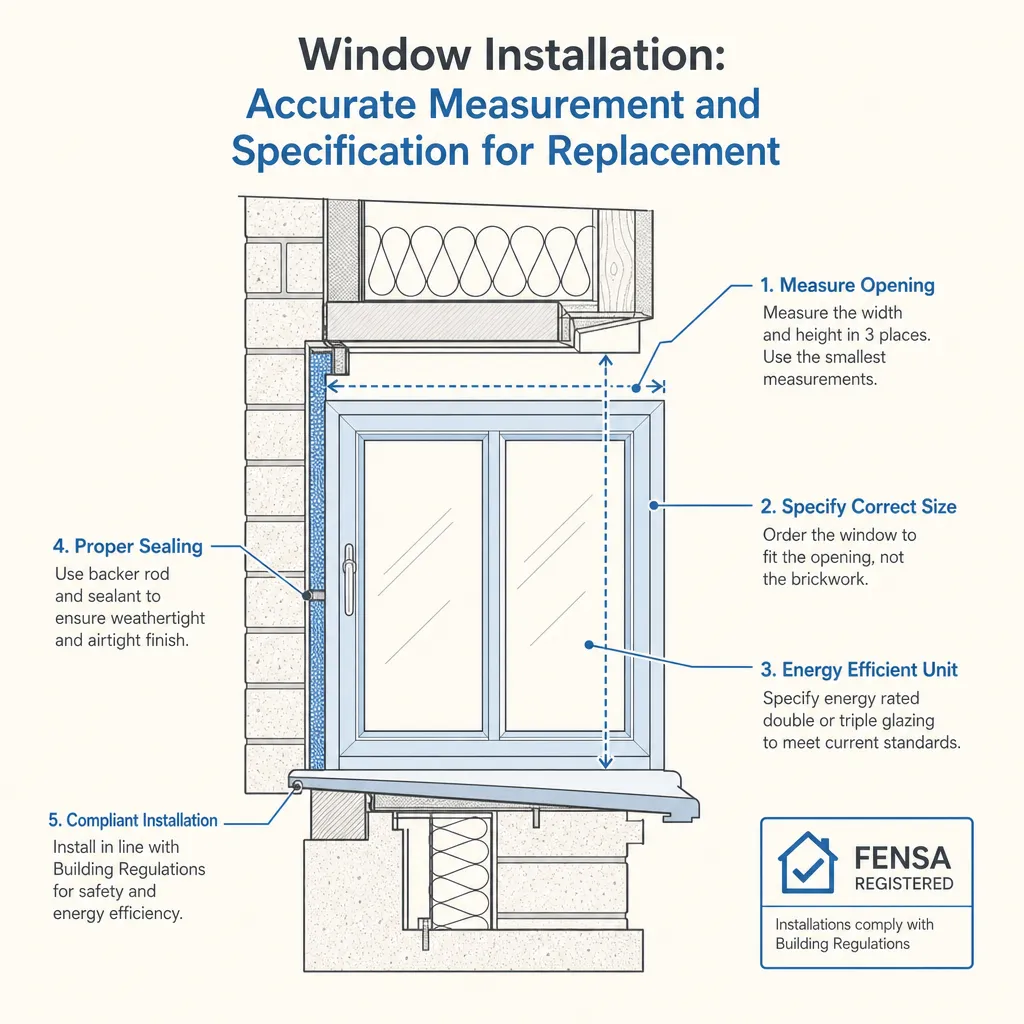
Window Installation: Accurate Measurement and Specification for Replacement
Accurate window measurement for replacement means recording the width and height of the existing frame opening in at least three places, noting the smallest dimension, and providing a full specification to your installer — including frame material, glazing type, opening style, and trickle ventilators.
 Improvement & Build
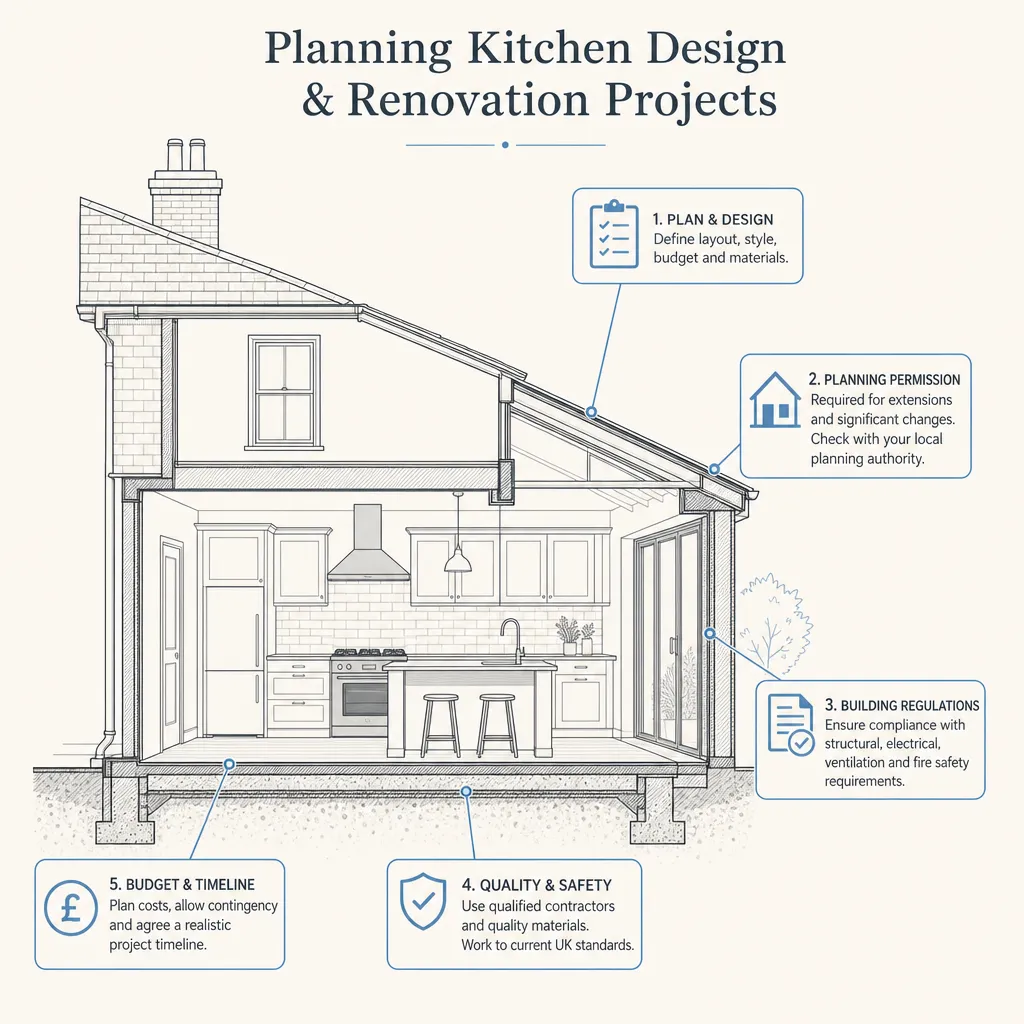
Planning kitchen design and renovation projects
Planning a kitchen renovation in the UK typically involves choosing a layout, setting a budget, deciding which contractors you need, and understanding which regulations apply.
 Improvement & Build
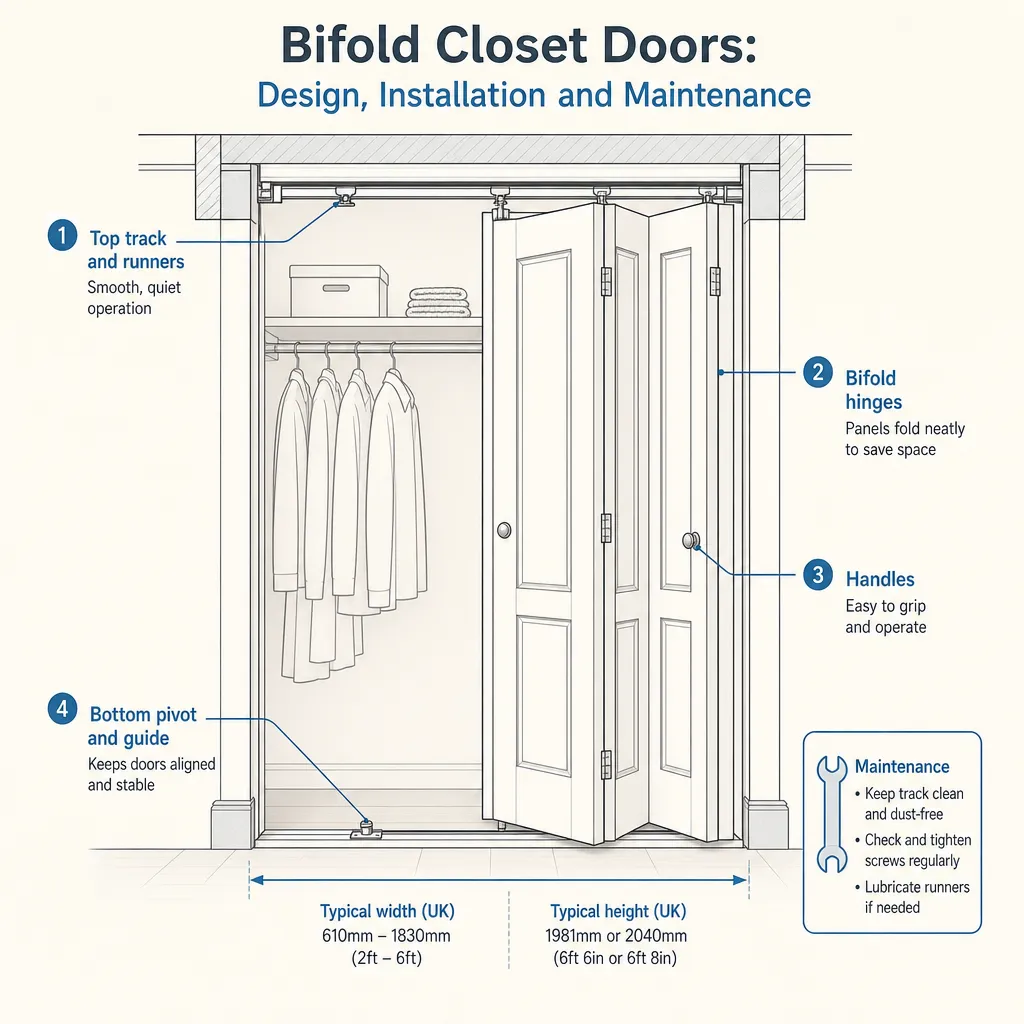
Bifold Closet Doors: Design, Installation and Maintenance
Bifold closet doors fold in on themselves along a top-mounted track, making them well suited to spaces where floor clearance in front of the wardrobe is limited.