Eco-Friendly Homes and Sustainable Property Features
By Housey · Last reviewed 30th of May 2026

Eco-Friendly Homes and Sustainable Property Features
For UK homeowners, interest in eco-friendly improvements has shifted from aspiration to practical necessity. Rising energy bills, stricter EPC requirements for landlords, and the transition away from gas boilers under government policy are all creating pressure to act — but the risk of doing the right measures in the wrong order is real. Adding insulation to a home with unresolved damp, or installing a heat pump without calculating heat loss first, can result in condensation, mould, or a heating system that costs more to run than the one it replaced.
Key points
- Building Regulations Part L (Conservation of Fuel and Power) sets minimum thermal performance requirements for new builds and some refurbishment works in England; equivalent provisions apply under Part L in Wales and the Scottish Building Standards.
- The Boiler Upgrade Scheme (BUS) offers a grant of £7,500 toward an air source heat pump or ground source heat pump (as of May 2026); only MCS-certified installers can generate the certificate required to claim the grant.
- PAS 2035 is the UK standard for domestic whole-house retrofit and is mandatory for most publicly funded retrofit projects; it requires a qualified Retrofit Assessor to carry out a whole-building assessment before measures are specified.
- Solar PV systems above 3.68 kW per phase require G99 approval from your Distribution Network Operator (DNO) before connection, which adds time to the installation process.
- Solid-wall homes — typically pre-1920 construction — lose around 45% of heat through the walls according to the Energy Saving Trust, making wall insulation one of the highest-impact measures available, but also one that carries meaningful moisture risk if not properly specified.
Why the order of eco improvements matters
The conventional sequence recommended by energy professionals and required under PAS 2035 is often called the fabric-first approach:
- Air tightness (draughtproofing, sealing gaps around pipes, loft hatches, and service penetrations)
- Insulation (loft first, then floor, then walls — roughly in order of cost-effectiveness for most UK homes)
- Controlled ventilation (particularly important once a home becomes more airtight — inadequate ventilation in a sealed home worsens air quality and can cause structural damp)
- Low-carbon heating (heat pump, once the building fabric is ready to support lower flow temperatures)
- Renewable generation (solar PV or solar thermal, once demand has been reduced)
Installing a heat pump or solar panels before addressing fabric performance means sizing and specifying those systems against a home that is working harder than it needs to. The result is either an oversized system, higher running costs, or both.
The most impactful eco home improvements
Measure | Best for | Indicative installed cost (2026) | Grant available? | Key risk to manage |
|---|---|---|---|---|
Loft insulation (top-up to 270 mm) | Most UK homes with accessible loft space | £300–£600 | ECO4 (means-tested) | Minimal if correctly installed; check for existing asbestos insulation board before disturbing |
Cavity wall insulation | Post-1920 homes with unfilled wall cavities | £500–£1,500 | ECO4; Great British Insulation Scheme | Can introduce damp in exposed or high-rainfall locations — site suitability assessment required |
External wall insulation (EWI) | Solid-wall homes; significant EPC improvement | £8,000–£20,000 | Great British Insulation Scheme; ECO4 | Planning permission check needed; moisture management critical; visual impact on property |
Internal wall insulation (IWI) | Solid-wall homes where EWI is not possible | £5,000–£15,000 | ECO4 (means-tested) | Vapour control layer essential; condensation risk if poorly specified |
Air source heat pump | Well-insulated homes replacing gas or oil boilers | £8,000–£15,000 installed | Boiler Upgrade Scheme: £7,500 | Heat loss calculation and radiator assessment required; MCS installer essential |
Solar PV panels | South-, east-, or west-facing roofs in reasonable condition | £5,000–£10,000 (3–4 kWp) | Smart Export Guarantee (export tariff) | Roof structural condition; DNO approval for systems over 3.68 kW per phase |
Mechanical ventilation with heat recovery (MVHR) | High air-tightness retrofits and Passivhaus-standard builds | £2,500–£6,000 | None typically | Incorrect commissioning can worsen indoor air quality; duct design matters |
Indicative UK costs, last reviewed 2026-05-30. Costs vary significantly by property size, access, region, and specification. Obtain at least three quotes from accredited installers before committing.
Heat pumps: what to know before you commit
Heat pumps are the UK government's primary replacement technology for fossil fuel boilers under the Heat and Buildings Strategy. They work by extracting heat from the outside air (air source) or ground (ground source) and delivering it to the home at a lower flow temperature than a conventional gas boiler — typically 35–45°C rather than 60–80°C.
This lower flow temperature is the key variable: it means heat pumps work most efficiently in well-insulated homes with large surface-area heat emitters (either oversized radiators or underfloor heating). In a poorly insulated property, the heat pump must work harder, reducing the coefficient of performance (COP) and potentially making the system more expensive to run than a comparable gas system.
A professional heat pump survey carries out a room-by-room heat loss calculation under BS EN 12831. This determines the correct heat pump output and identifies whether existing radiators are adequate or need upgrading. Sizing errors — undersizing or oversizing — are among the most common causes of heat pump underperformance.
Only MCS-certified heat pump installers can generate the MCS certificate required to claim the £7,500 Boiler Upgrade Scheme grant. Check the MCS installer directory before accepting quotes.
Solar panels and battery storage
Solar photovoltaic (PV) panels generate electricity from daylight and are suitable for most UK roof types, provided the orientation and pitch are reasonable and shading from trees or neighbouring buildings is limited. A 3–4 kWp system on a south-facing roof in southern England typically generates 2,600–3,800 kWh per year — roughly the annual electricity consumption of an average household.
Key points for UK homeowners:
- Systems under 3.68 kW per phase can usually be connected under G98 (simplified notification to your DNO).
- Systems above this threshold require G99 approval, which involves a formal application and a response period of up to 45 working days in some areas.
- The Smart Export Guarantee (SEG) requires licensed energy suppliers to offer an export tariff for any electricity generated and fed back to the grid; rates vary by supplier.
- Battery storage allows excess generation to be stored for use in the evening, improving self-consumption rates; it adds cost but can improve the overall economics depending on usage patterns and export tariff rates.
A solar survey assesses your roof's orientation, pitch, shading, and structural condition and provides a generation estimate before you commit to installation.
Government grants and funding schemes
Scheme | Eligible recipients | What it covers | Where to apply |
|---|---|---|---|
Boiler Upgrade Scheme (BUS) | Owner-occupiers in England and Wales replacing fossil fuel heating | £7,500 toward air or ground source heat pump | GOV.UK |
ECO4 (Energy Company Obligation) | Low-income households; EPC D–G ratings | Insulation, heating upgrades; installer-led | GOV.UK / energy suppliers |
Great British Insulation Scheme | Broader eligibility; EPC D–G | Single insulation measure per household | GOV.UK / energy suppliers |
Smart Export Guarantee (SEG) | Solar PV owners with a system under 5 MW | Ongoing export payments for grid-exported electricity | Energy supplier tariff comparison |
Warm Homes: Local Grant (England) | Low-income owner-occupiers and private renters | Heat pumps, insulation, glazing, ventilation | Local authority |
Eligibility criteria, funding levels, and scheme availability change. Always verify current terms on GOV.UK energy efficiency guidance or with an energy-efficiency consultant before planning work around a specific grant.
Retrofit readiness checklist
Before commissioning any significant eco improvement:
Important limitations
This article provides general information about eco-friendly home improvements for UK homeowners. Specific recommendations — particularly relating to heat pump sizing, wall insulation in exposed or high-rainfall locations, and ventilation in tightly sealed buildings — depend on your individual property type, construction, local climate, and existing condition. An incorrectly specified or installed measure can cause condensation, damp, overheating, or structural problems that are expensive to rectify. This article does not constitute technical, structural, or legal advice. Always instruct a qualified, accredited professional to assess your specific property before commissioning any significant retrofit work.
What to ask a qualified professional
Retrofit assessor (PAS 2035):
- Are you TrustMark-registered and qualified to carry out PAS 2035 Retrofit Assessments?
- Will you provide a Retrofit Improvement Plan that sequences measures to prevent moisture or ventilation risks?
- Do you have experience with this wall construction type — solid brick, solid stone, cavity, timber frame?
- Will you flag any existing damp or structural issues before measures are specified?
Heat pump installer (MCS-certified):
- Will you carry out a full room-by-room heat loss calculation to BS EN 12831 before sizing the system?
- Are existing radiators adequate, or will they need to be upgraded?
- What seasonal coefficient of performance (SCOP) can I realistically expect for this property?
- Will you handle the MCS certification and Boiler Upgrade Scheme application on my behalf?
Solar PV installer (MCS-certified):
- What shading analysis have you carried out, and what assumptions does your generation estimate rely on?
- What DNO notification or approval process is required for my system size, and will you manage it?
- Is my roof structurally sound and suitable, and does the pitch and orientation make solar viable?
When to get professional help
If you notice new condensation, damp patches, or mould appearing after any insulation or draughtproofing work, stop further airtightness measures immediately and seek advice from a qualified retrofit assessor or RICS Building Surveyor. Tightening a home without providing adequate controlled ventilation consistently causes moisture problems. If you are considering any insulation measure on a property that already has damp issues, always identify and address the source of moisture before adding insulation — trapping moisture behind insulation accelerates decay and is expensive to remediate.
How Housey can help
Housey connects UK homeowners with accredited eco and retrofit professionals. Start with an energy-efficiency consultant to understand your home's current performance and identify the highest-impact measures, book a PAS 2035 retrofit assessment to ensure improvements are sequenced safely and in compliance with grant requirements, or find MCS-certified assessors for solar surveys and heat pump surveys before committing to installation.
Frequently asked questions
Do I need planning permission to install solar panels on my home?
Solar panels on most dwellings are permitted development under Schedule 2, Part 14 of the Town and Country Planning (General Permitted Development) (England) Order 2015, subject to conditions including size limits and positioning. Restrictions apply to listed buildings and in some conservation areas. Rules differ slightly in Scotland and Wales. Always check with your local planning authority if your property is listed or in a designated area before commissioning installation.
What is PAS 2035 and do I need it?
PAS 2035 is the British Standard for whole-house domestic retrofit. It requires a qualified Retrofit Assessor to carry out a whole-building assessment and a Retrofit Coordinator to oversee the project and sequence measures safely. PAS 2035 compliance is mandatory for most publicly funded retrofit schemes including ECO4 and the Warm Homes: Local Grant. It is designed to prevent poorly sequenced improvements from causing condensation, damp, or overheating.
Will a heat pump work in an older UK home such as a Victorian terrace?
A heat pump can be installed in an older UK home, but the building fabric and heating distribution system must be assessed first. Solid-wall Victorian or Edwardian homes typically require insulation and draughtproofing improvements, and often radiator upgrades, before a heat pump will operate efficiently at the lower flow temperatures it requires. A professional heat pump survey will assess your home's suitability and calculate the correct output size.
How much can I save on energy bills with eco improvements?
Savings depend on your property's starting point, the measures installed, and prevailing energy prices. Adding loft insulation to a previously uninsulated home can save approximately £150–£300 per year at current prices. A heat pump replacing an oil boiler in a well-insulated home may cut heating costs by 30–50%. The Energy Saving Trust's online tools provide indicative savings estimates for individual measures. Indicative figures; actual savings will vary.
Sources and further reading
- Boiler Upgrade Scheme: apply for a grant — GOV.UK
- Energy Company Obligation (ECO4) — GOV.UK
- Building Regulations Approved Document L: Conservation of Fuel and Power — GOV.UK
- PAS 2035 and TrustMark retrofit standards — TrustMark
- MCS: find a certified installer — Microgeneration Certification Scheme
- Home insulation guide — Energy Saving Trust
Useful next reads
 Energy & Retrofit
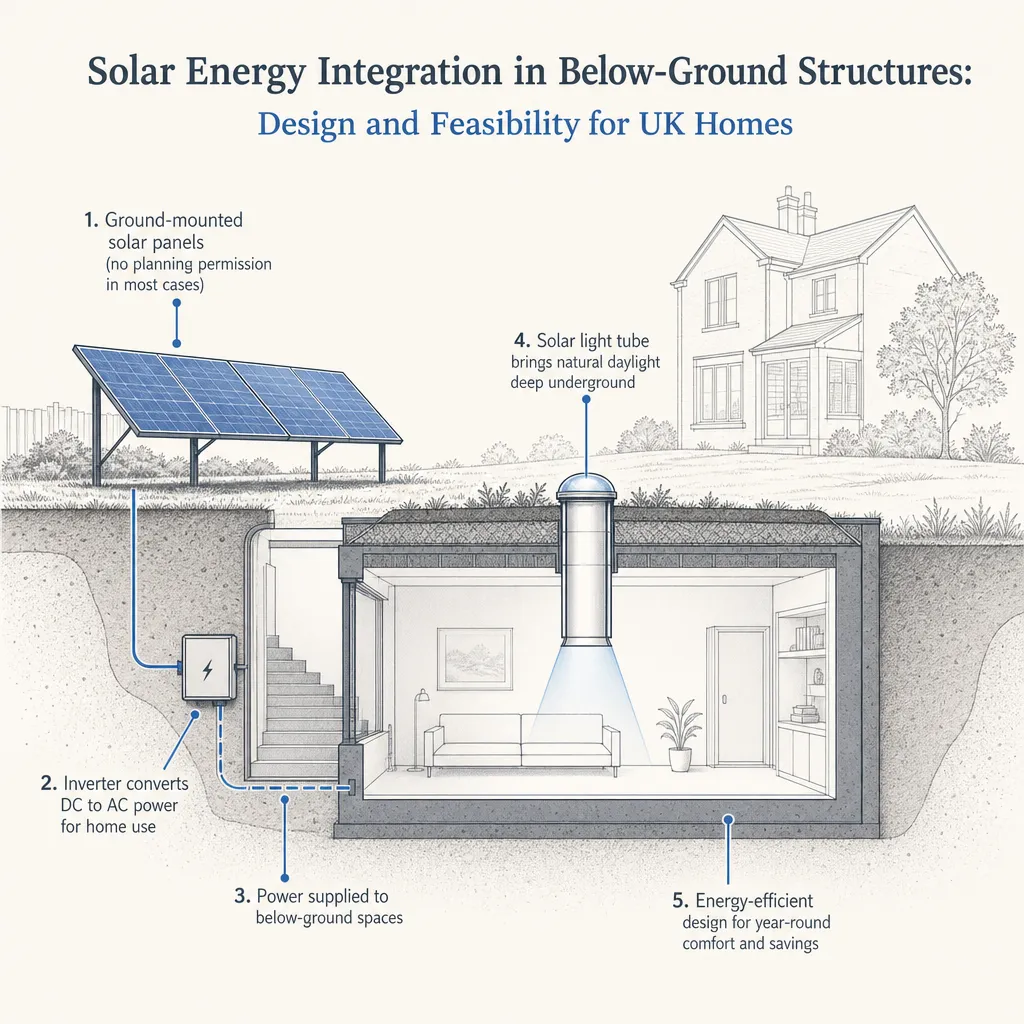
Solar Energy Integration in Below-Ground Structures: Design and Feasibility
Below-ground structures cannot host solar panels on their own roofs but can use surface-mounted panels connected via cable runs, solar light tubes for daylighting, and battery storage.
 Energy & Retrofit
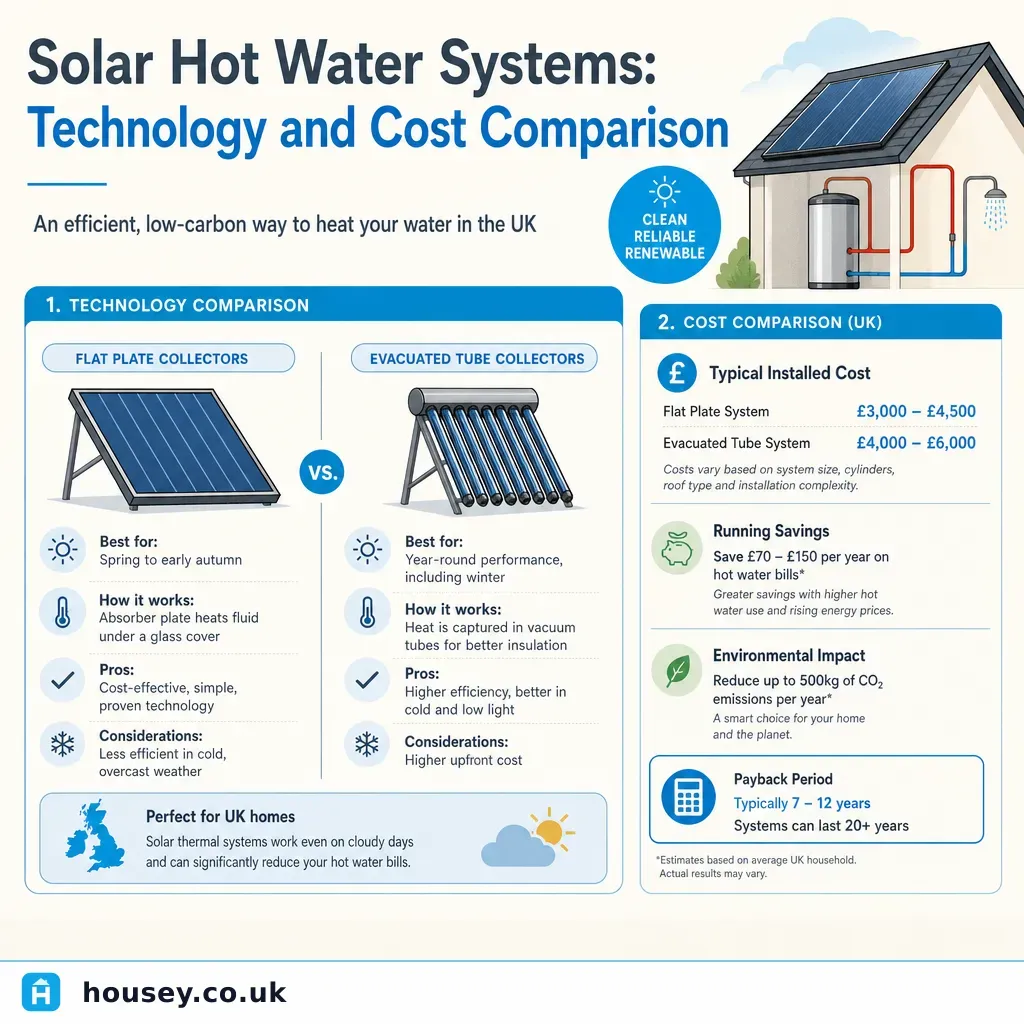
Solar Hot Water Systems: Technology and Cost Comparison
Solar thermal systems use roof-mounted collectors to heat domestic hot water via a glycol circuit and twin-coil cylinder.
 Energy & Retrofit
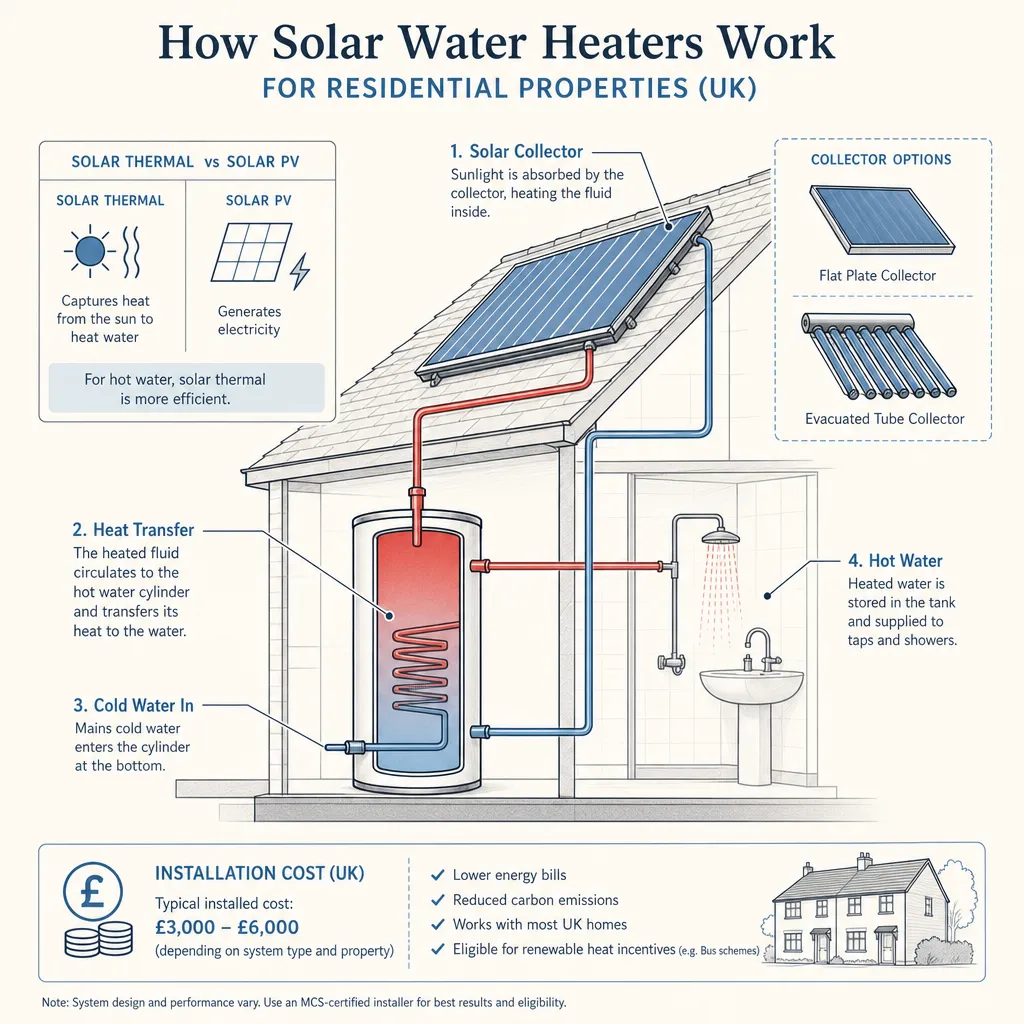
How Solar Water Heaters Work for Residential Properties
Solar water heaters use roof-mounted collectors to capture heat from sunlight and transfer it to a hot water cylinder via a fluid circuit.
 Energy & Retrofit
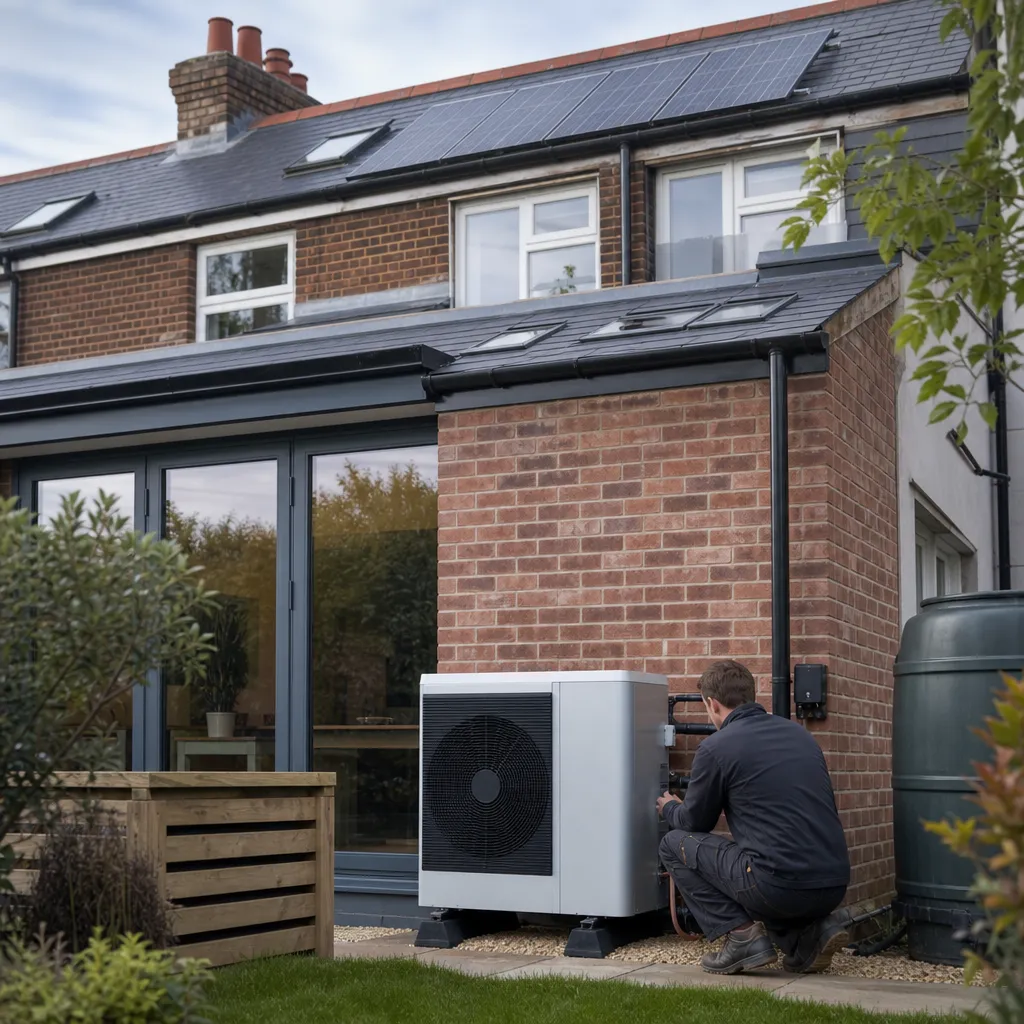
Renewable Energy Technologies for Homes
UK homes can choose from solar photovoltaic panels, air source heat pumps, ground source heat pumps, and battery storage as the main residential renewable technologies.
 Energy & Retrofit
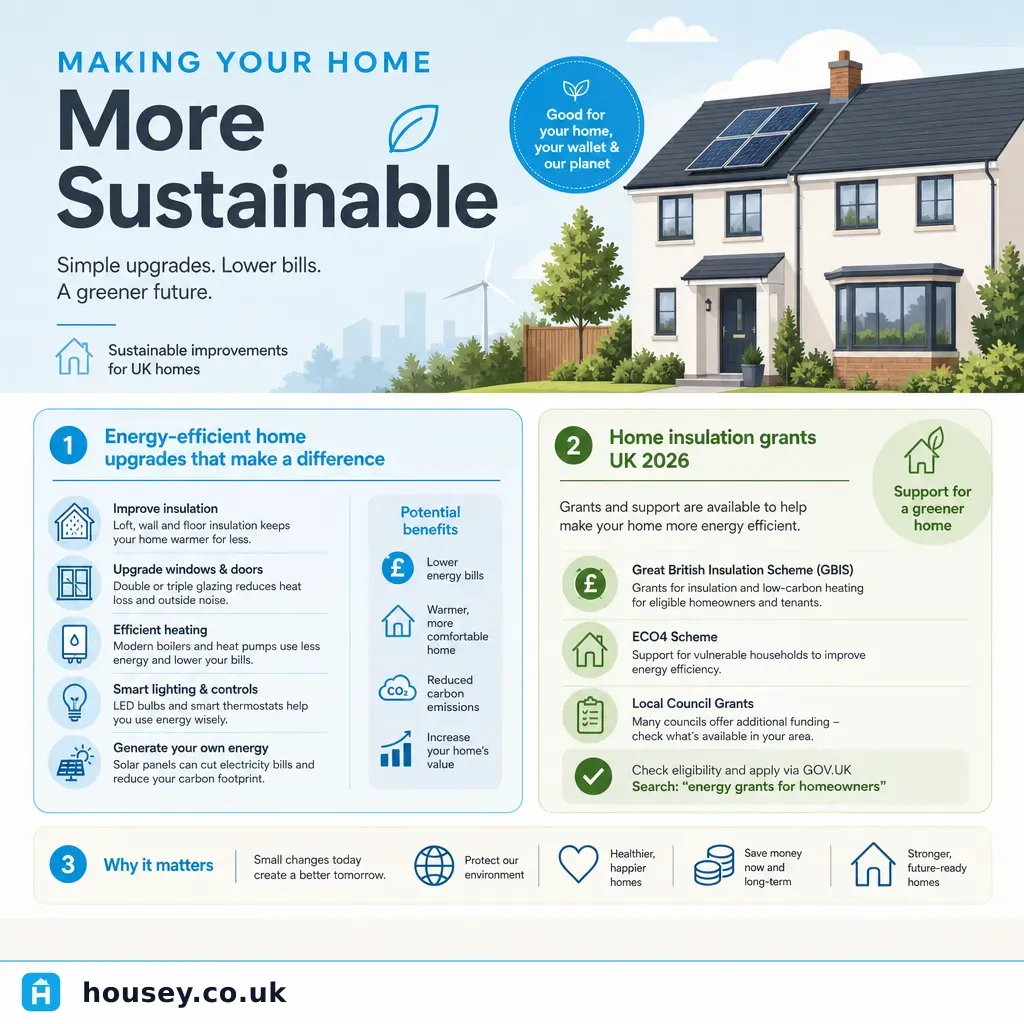
Making your home more sustainable
Making a UK home more sustainable usually starts with fabric-first improvements such as insulation, draught-proofing, and efficient glazing before adding renewable energy systems like solar panels or a heat pump.