Professional Driveway Installation and Repair Services in Your Area
By Housey · Last reviewed 24th of May 2026
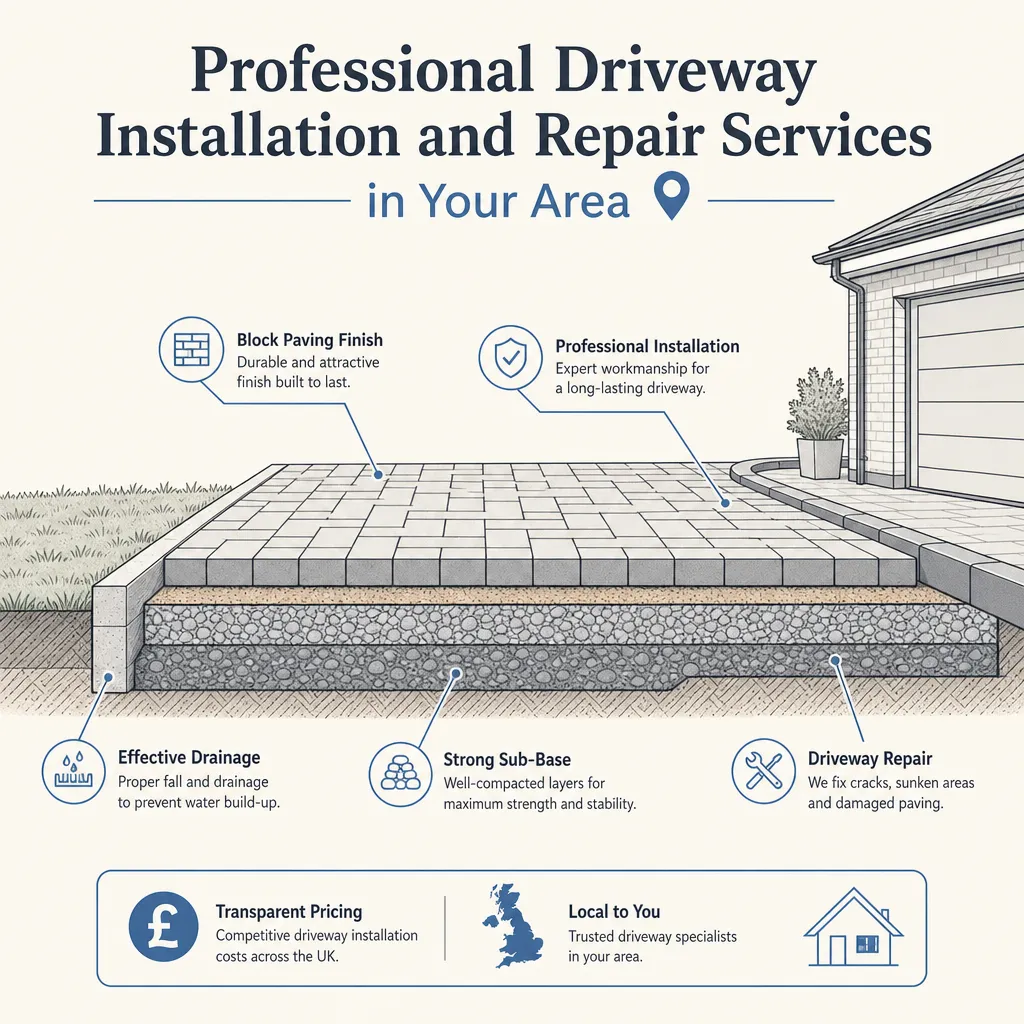
Professional Driveway Installation and Repair Services in Your Area
Driveways are among the more accessible home improvements in terms of scope, but they carry specific regulatory requirements that catch many UK homeowners off guard. Whether you are replacing a worn tarmac surface, converting a front garden into parking, or repairing sunken block paving, understanding the rules around drainage and materials will save time, money, and potential enforcement problems.
Key points
- In England, replacing or installing a front driveway using non-permeable materials over an area greater than 5 m² requires planning permission, under changes to the General Permitted Development Order introduced in 2008.
- Permeable surfaces — including permeable block paving, gravel, and resin-bound systems — are generally permitted development in England provided drainage flows to a lawn or border rather than the public highway.
- Building Regulations do not typically apply to standard driveway replacement, but any new vehicle crossover from the pavement to the public highway requires separate consent from the local highway authority.
- Resin-bound and resin-bonded driveways are different products: resin-bound is permeable and generally permitted development; resin-bonded is non-permeable and may require planning permission.
- Indicative UK driveway installation costs range from approximately £30–£80 per m² for tarmac to £60–£120 per m² for resin-bound, though prices vary significantly by region, specification, and ground conditions (Indicative UK costs, last reviewed 2026-05-24).
Do you need planning permission for a driveway?
The planning rules for driveways in England depend on the surface material and how drainage is managed. Scotland, Wales, and Northern Ireland have separate planning frameworks — check with your local planning authority if you are outside England.
In England:
- Permeable surfaces (permeable block paving, gravel, resin-bound): generally permitted development — no planning application required, provided drainage does not flow directly to the public highway.
- Non-permeable surfaces (standard concrete, standard tarmac, resin-bonded): planning permission required if the driveway area exceeds 5 m² and drainage runs to the highway or public sewer.
A vehicle crossover — the dropped kerb and pavement crossing — must be approved by the local highway authority regardless of the driveway surface material. Many councils charge a fee for this, and the physical works must typically be carried out by an approved contractor.
Decision tree: which route applies to your project?
- Choose permeable materials (gravel, permeable block paving, resin-bound) if you want to avoid a planning application and manage drainage on site.
- Apply for householder planning permission if you intend to use non-permeable materials and the total driveway area exceeds 5 m².
- Contact your local planning authority first if your property is in a conservation area, is listed, or is subject to an Article 4 Direction — permitted development rights may not apply.
- Contact your local highway authority before installing any dropped kerb or vehicle crossover, regardless of the driveway surface.
Driveway surface materials: comparison
Material | Best for | Not ideal for | Typical lifespan | Permeable? | Approx. cost per m² |
|---|---|---|---|---|---|
Block paving | Kerb appeal, flexibility, individual block repairs | High traffic without a quality sub-base | 25–30 years | Options available | £50–£120 |
Tarmac (macadam) | Large driveways, budget-conscious projects | Aesthetic limitations; heat sensitivity | 15–25 years | No (standard) | £30–£80 |
Resin-bound | Modern finish, low maintenance, drainage compliance | Risk of poor finish if poorly mixed or laid | 15–25 years | Yes | £60–£120 |
Loose gravel | Lowest cost, instant drainage | Gravel migration, regular raking needed | 5–10 years | Yes | £10–£30 |
Concrete | Durability, clean appearance | Can crack if sub-base or jointing is poor | 20–30 years | No (standard) | £50–£100 |
Indicative UK costs, last reviewed 2026-05-24. Prices exclude VAT and any groundwork preparation. Obtain quotes from at least three contractors.
What affects driveway installation cost?
The headline per-m² rate is only part of the picture. Key cost drivers include:
- Size: Total area in m² is the primary variable.
- Existing surface: Removal and disposal of an old surface adds material and labour cost.
- Sub-base condition: Soft ground, tree roots, or poor drainage may require additional excavation and hardcore, sometimes significantly increasing the overall cost.
- Edging and drainage: Channel drains, edging blocks, and gully connections increase material and labour costs.
- Dropped kerb: A new crossover from a council-maintained pavement typically costs £500–£1,500 depending on the local authority and highway contractor used (Indicative UK costs, last reviewed 2026-05-24).
- Material premium: Porcelain or natural stone flags cost significantly more per m² than tarmac or standard block paving.
Driveway repair: when to repair versus replace
Repairs are generally more cost-effective for localised problems. Consider a full replacement if:
- More than 30–40% of the surface area is affected by cracking, subsidence, or delamination.
- The sub-base has failed — visible as multiple sunken areas across the driveway or persistent standing water after rain.
- The surface is more than 20–25 years old and showing widespread deterioration rather than isolated damage.
For block paving, individual sunken or cracked blocks can often be lifted, sub-base material added, and the blocks relaid at relatively modest cost. For tarmac, localised patching is feasible but may look uneven on an older surface — full resurfacing is sometimes more economical.
What to ask before accepting a driveway quote
Before committing to a contractor, ask the following:
- Is this quotation for a permeable or non-permeable surface, and have you confirmed whether planning permission is required for this property?
- Is a dropped kerb or crossover included, and will you liaise with the local highway authority on my behalf?
- What sub-base specification will you use, and how deep will the excavation be?
- Will you remove and dispose of the existing surface, and is this included in the price?
- What edging, drainage, and channel drain provision is included?
- Is VAT included in this quotation?
- What guarantee do you offer on materials and workmanship, and is this in writing?
- Are you a member of a recognised trade body such as the British Association of Landscape Industries (BALI) or an Interlay Approved Contractor?
When to get professional help
Driveway installation is not regulated work in the same way as gas or electrical services, but poor sub-base preparation is the most common cause of driveway failure and is not a DIY fix. Always engage an experienced contractor who can demonstrate previous similar projects, provide a written specification, and confirm whether drainage or planning requirements apply to your property. If your property is on a steep slope, near a soakaway, or has existing drainage problems, a drainage engineer may also need to assess the site before work begins.
How Housey can help
Housey makes it straightforward to find and compare driveway installers in your area. Submit your job details, receive quotes from vetted local contractors, and compare them side by side — including verified reviews from other homeowners who have had similar work carried out.
Frequently asked questions
Do I need planning permission for a resin driveway?
Resin-bound driveways are permeable and are generally permitted development in England, so planning permission is not usually required. Resin-bonded driveways, however, are non-permeable and may require permission if the area exceeds 5 m² and drainage runs to the highway or public sewer. Always confirm with your local planning authority if you are unsure.
How long does driveway installation take?
Most residential driveways take 1–3 days for surface installation, depending on size and material. If a new dropped kerb is needed, the highway authority's lead time can add several weeks to the overall programme. The crossover application process varies by council, so check with your local authority early in the planning process.
Can a driveway increase my home's value?
A well-installed driveway can improve kerb appeal and is particularly valued in urban areas where off-street parking is at a premium. Estate agents frequently cite off-street parking as a material factor in buyer decisions for city and suburban properties, though any price uplift varies significantly by location and property type.
What is the difference between resin-bound and resin-bonded?
Resin-bound uses aggregate mixed with resin before laying — the result is a permeable, smooth, durable surface. Resin-bonded applies resin to the surface and scatters aggregate on top; it is less durable, not permeable, and more prone to stone loss over time. Resin-bound is generally the preferred choice for new residential installations.
Sources and further reading
- When is permission required? Guidance on permitted development — GOV.UK
- Paving your front garden: planning requirements — GOV.UK
- Sustainable drainage systems (SuDS) guidance — GOV.UK
- British Association of Landscape Industries: find a contractor — BALI
- Interlay: natural stone and concrete block paving approved contractors — Interlay
Useful next reads
 Improvement & Build
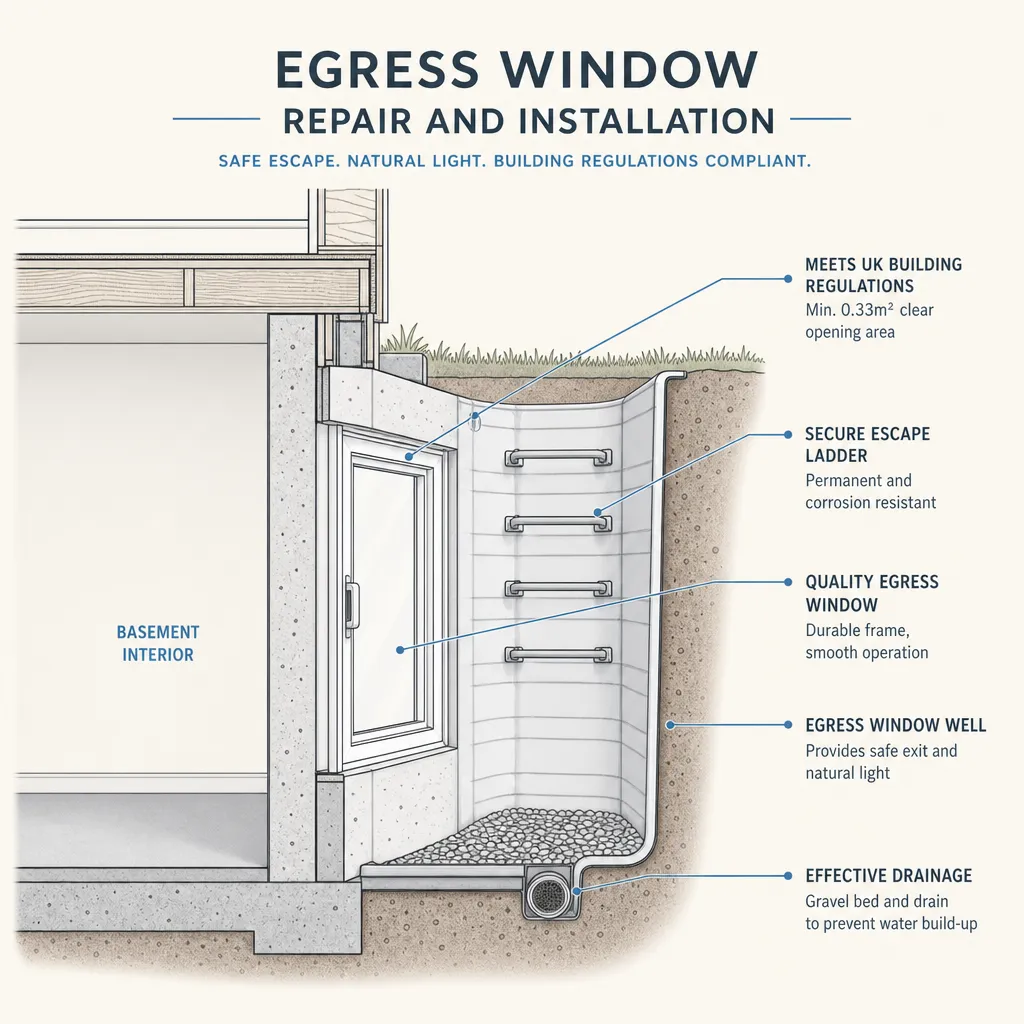
Egress Window Repair and Installation
An egress window is a window large enough to serve as an emergency escape route from a habitable room.
 Improvement & Build
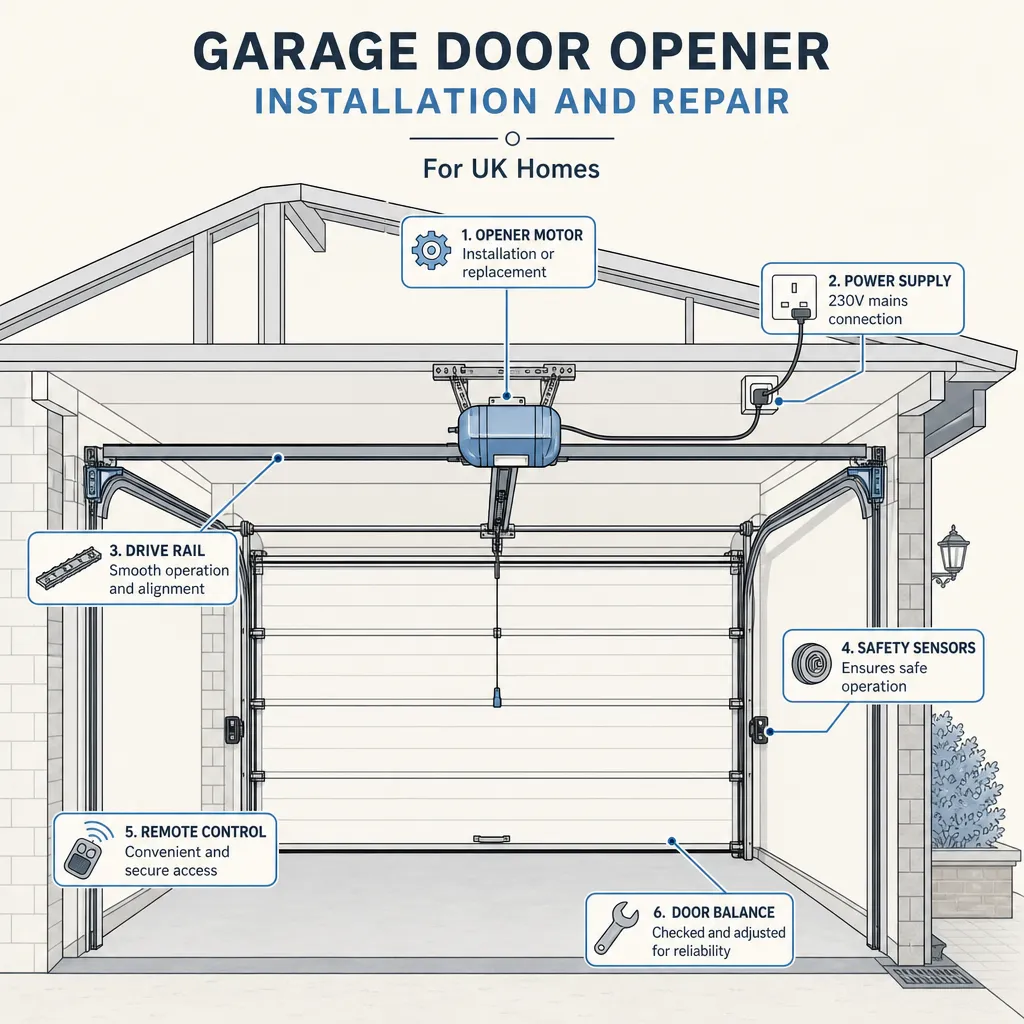
Garage Door Opener Installation and Repair
A garage door opener automates raising and lowering a garage door via an electric motor, drive rail, and remote or keypad control.
 Improvement & Build
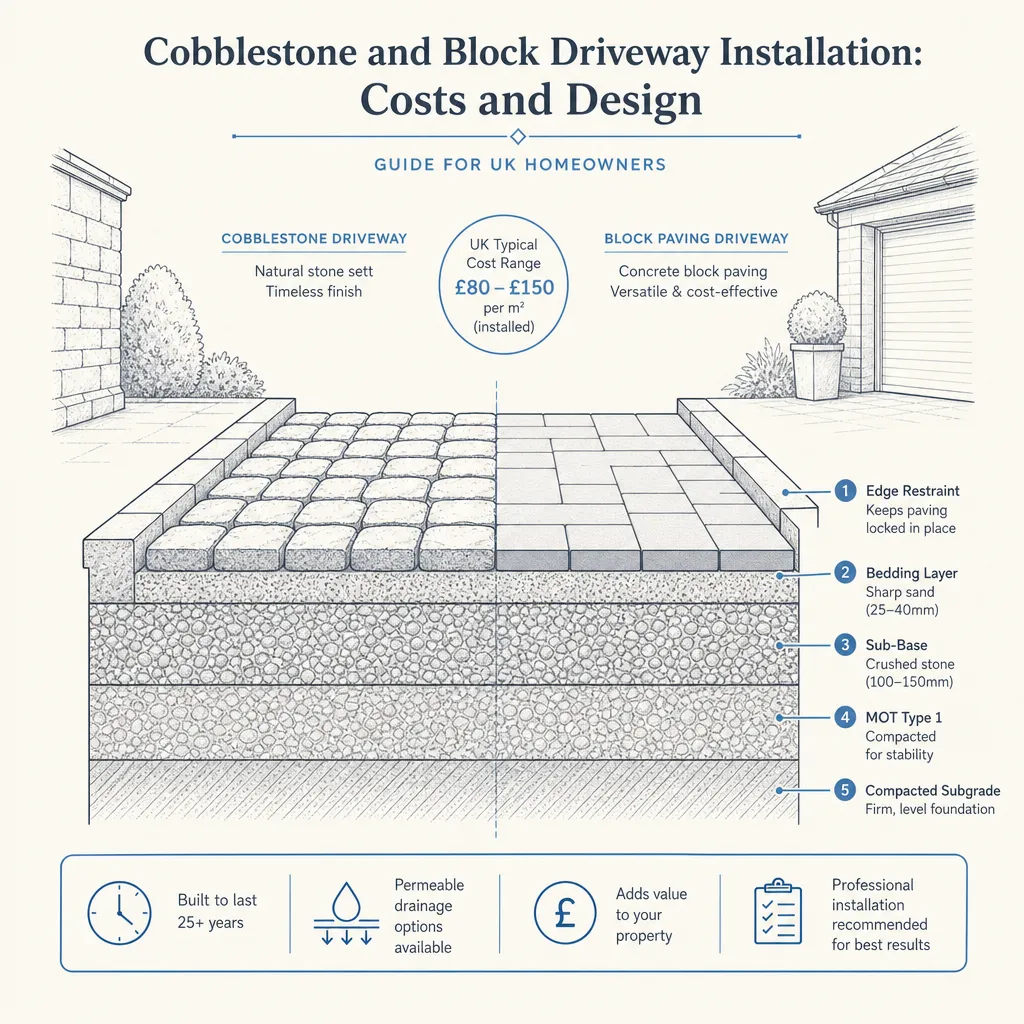
Cobblestone and Block Driveway Installation: Costs and Design
Cobblestone and block paving driveways cost roughly £50–£200 per m² installed in the UK, depending on material and site conditions.
 Improvement & Build
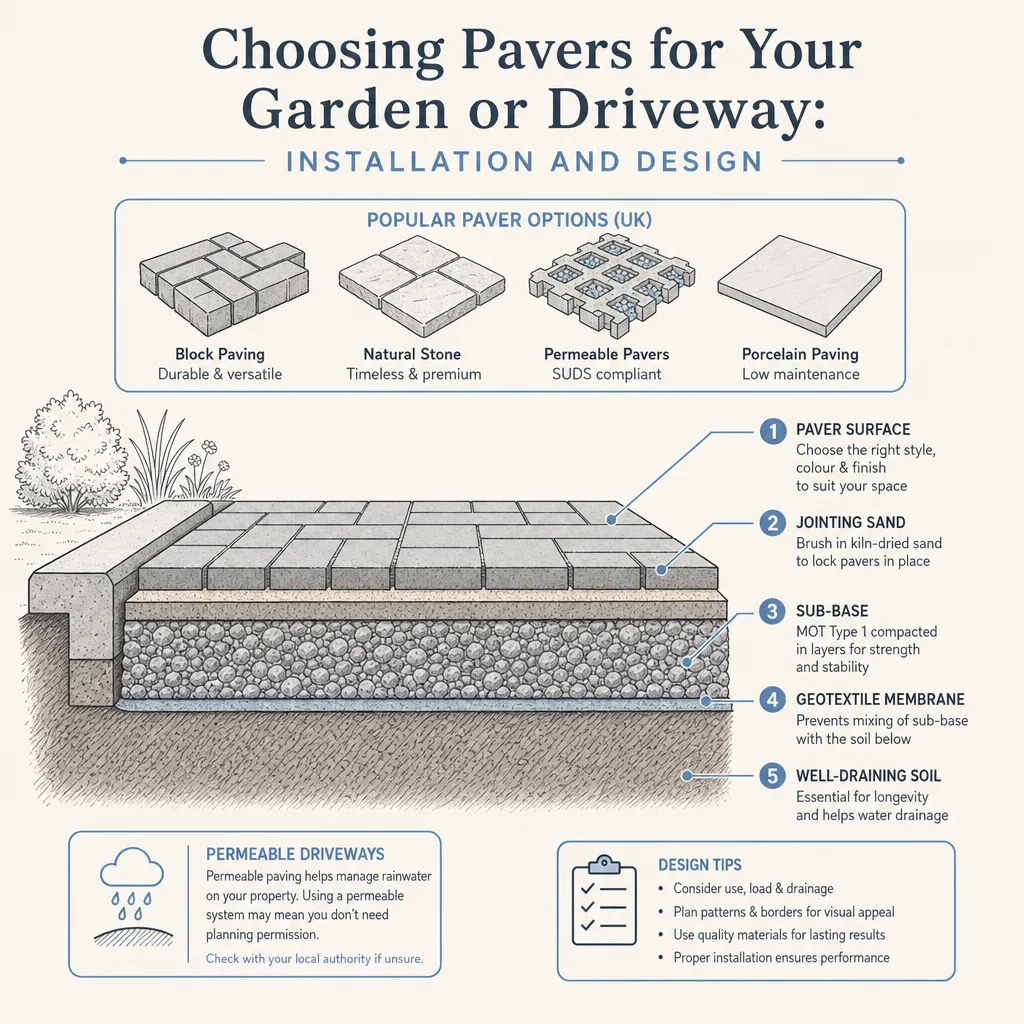
Choosing Pavers for Your Garden or Driveway: Installation and Design
For UK driveways and garden surfaces, block pavers, natural stone, concrete flags, and porcelain are the main options.
 Improvement & Build
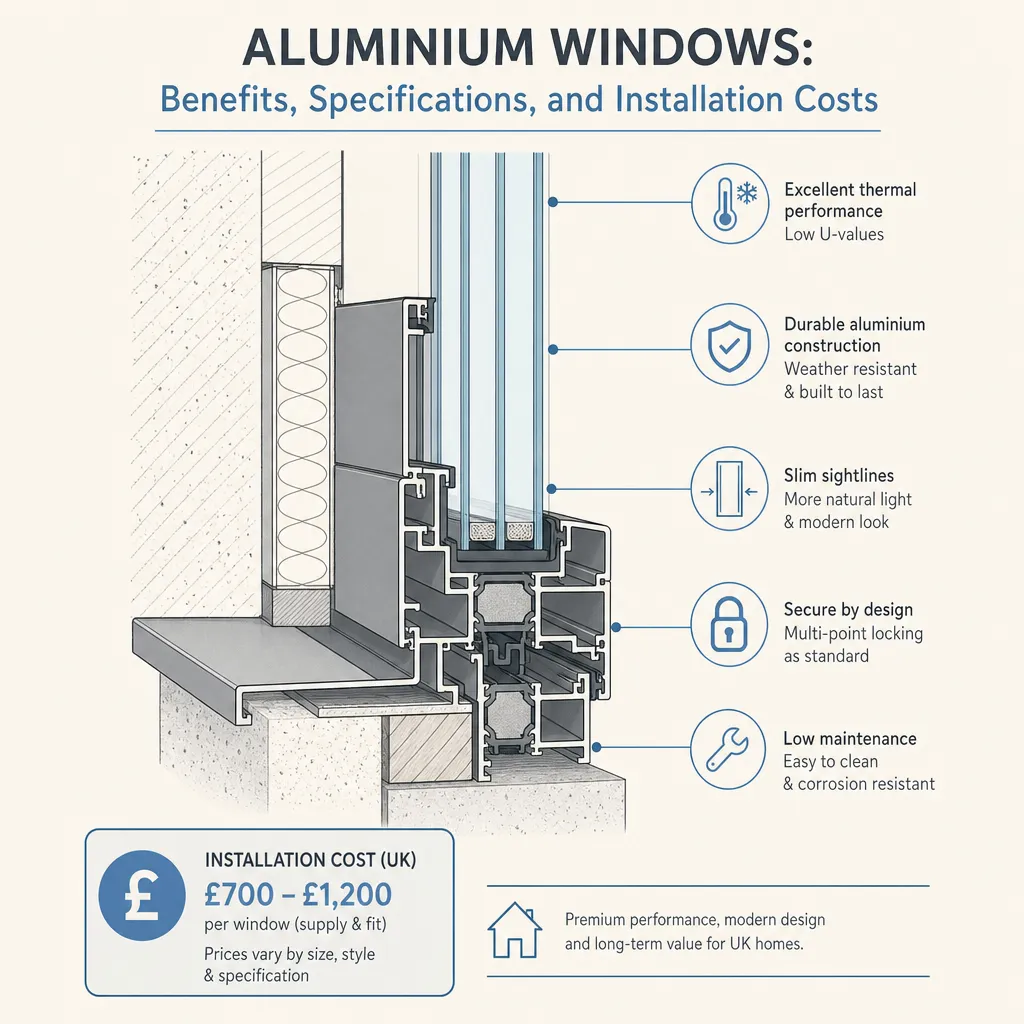
Aluminium Windows: Benefits, Specifications, and Installation Costs
Aluminium windows typically cost £600–£1,800 per window installed in the UK, depending on size and specification.